
2026 Guide to Android TV Box OEM/ODM: Driving Competitive Advantage with Custom Firmware Solutions
Strategic Insight for B2B Cross-Border Electronics: Beyond Hardware Assembly
As the global B2B cross-border electronics landscape shifts from volume-driven retail to specialized solution-oriented ecosystems, the Android TV Box industry is undergoing a profound transformation. In 2026, the competitive moat for enterprises no longer lies in hardware assembly, but in the depth of firmware-level engineering and the ability to deliver vertically integrated solutions.
1. The Paradigm Shift: 2026 B2B Android Terminal Trends
The market has moved beyond the "commoditization trap." While generic retail sales face stagnant margins, B2B sectors—specifically IPTV, Digital Signage, and Edge Computing—are seeing unprecedented growth. Modern enterprises are moving away from "off-the-shelf" hardware in favor of highly specialized terminals.
Success in 2026 is defined by technical sophistication. Implementing features like Gaussian blur UI elements, system-level optimization for modern SoCs (Amlogic, Rockchip), and seamless integration with IoT infrastructures has become the minimum entry requirement for high-end procurement.
2. Decoding OEM vs. ODM: Strategic Selection for Enterprises
Choosing between OEM and ODM is a foundational strategic decision. In the context of 2026, the lines are drawn by the level of engineering involvement:
| Feature | OEM (Original Equipment Manufacturer) | ODM (Original Design Manufacturer) |
|---|---|---|
| Focus | Branding existing hardware architectures. | Custom hardware and firmware development. |
| Customization | Logo, packaging, and pre-installed apps. | PCB redesign, kernel optimization, UI/UX. |
| Moat | Market Speed. | Proprietary Technology & Stability. |
3. The SZTomato Edge: Firmware-Level Engineering
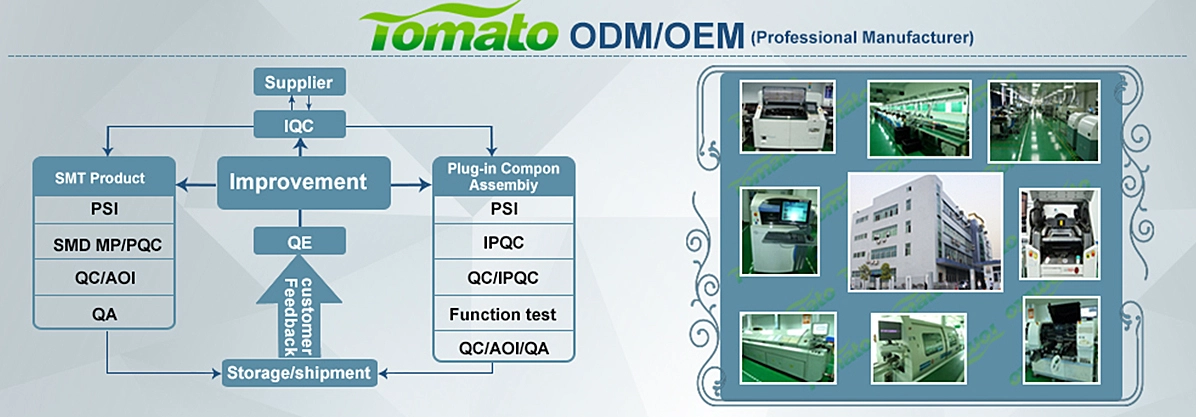
At the heart of the industry-leading approach is Firmware-Level Engineering. For SZTomato, the hardware is merely the vessel; the firmware is the intelligence. Our 2026 suite of solutions focuses on OS-level customization that empowers B2B clients:
- System-Level OS Customization: Deep-rooted development of boot animations and custom Launchers designed for specific industrial UIs.
- MDM Integration: Seamless Mobile Device Management systems allowing for remote troubleshooting and silent app installation.
- 7/24 Stability: Optimization for industrial signage, including auto-reboot and power-on-play via specialized kernel flags.
4. Avoiding the "Invisible Costs" in B2B Procurement
Strategic sourcing requires looking beyond the unit price. We identify three critical "Invisible Costs":
- Certification Risks: Navigating the difference between GMS (Google Mobile Services) certified devices and non-certified alternatives for regional market entry.
- Technical Debt: The lack of Over-the-Air (OTA) update support can render a 10,000-unit deployment obsolete within months.
- Supply Chain Volatility: The necessity of long-term component (DDR/EMMC) securing strategies to avoid mid-project price spikes.
