
How to make a Google TV Box?
In the rapidly evolving streaming and OTT ecosystem, creating a high-quality Google TV box has become a strategic opportunity for suppliers, brands and distributors. As a B2B manufacturer with deep expertise in Android TV boxes, smart TV boxes and set-top boxes, SZTomato is positioned to help you design, prototype and launch your custom Google TV box. This article explains the end-to-end process: from concept and hardware selection to firmware, certification and market launch. Follow this guide to ensure your device is competitive, compliant and ready for volume production.
Why Develop a Google TV Box?
Your decision to make a Google TV box can be driven by several strong business rationales:
-
Market demand for affordable smart TV solutions is growing globally. A device branded as a Google TV box or Android TV box can reach non-smart TVs or upgrade existing sets. For example, “What is an Android Box and how to turn your TV into a smart TV” outlines this trend.
-
Differentiation through custom features (4K HDR, voice remote, AI integration) becomes a value-add for OEM/ODM customers who want to stand out.
-
Control over hardware, firmware and branding enables you to tailor cost structure, performance and branding, rather than sourcing off-the-shelf commodity boxes.
-
As SZTomato emphasises, offering "custom B2B website for customers to tailor products" means you can respond to niche demand (e.g., digital signage, set-top box in hospitality) rather than just generic retail boxes.
Key Hardware Selection Criteria
When you embark on making a Google TV box, the hardware specification is foundational — it determines performance, cost and future-proofing.
Processor & Graphics
Choose an SoC (system-on-chip) that supports modern codecs (H.265/HEVC, VP9/AV1), HDR formats (Dolby Vision, HDR10+), and smooth UI transitions. Weak chipsets often result in sluggish behaviour — as one DIY example on Raspberry Pi showed, Google TV UI was “a bloated nightmare” on low-end hardware.
Memory & Storage
At minimum, 4 GB RAM and 32 GB flash storage is recommended for a smooth Android/Google TV experience, with higher specs (e.g., 8 GB RAM, 64 GB storage) for premium devices or custom applications.
Connectivity
Gigabit Ethernet, WiFi 6 (or WiFi 6E), Bluetooth 5.x, HDMI 2.1 (for 4K @60/120Hz) — these features make the device future-ready.
Remote & UI
A properly paired remote with voice control, navigation keys, dedicated buttons (e.g., “Free TV” button on new Google TV devices) strengthens user experience.
Thermal & Power Design
Ensure proper cooling for sustained use. Cheap boxes often overheat or throttle performance. Choose quality enclosures, power supplies and thermal design.
Firmware Integration
Having selected the hardware, you need to integrate firmware and navigate certification requirements — this is where many projects struggle.
Operating System / UI Layer
You will install Android TV/Google TV OS onto the device. The official setup process is documented by Google: for example, how to set up a Google TV device and remote. For commercial devices you intend to market under the Google brand or with Google services, you’ll need to ensure compatibility and licensing (GMS, Widevine L1, DRM).
App Ecosystem & Content Providers
Ensure the device supports popular streaming apps (Netflix, Disney+, YouTube) and meets certification. Poorly-certified boxes may miss app availability, suffer playback issues, or be blocked by service providers.
Manufacturing and Supply Chain Considerations
Having a viable design and firmware is one part; manufacturing and supply chain execution is equally critical.
Component sourcing & Bill of Materials (BOM)
Lock in long-life components (SoC, memory, WiFi modules) to avoid last-minute changes. Ensure you account for inflation, customs, logistics.
Prototype → Pilot → Mass Production
Start with a small pilot run to validate PCB, enclosure, firmware stability, packaging. Then scale to mass production.
Quality Control & Traceability
Implement QC at incoming components, during assembly, and final product. Use SN trackers, batch coding.
Logistics & Minimum Order Quantities (MOQs)
As a B2B supplier, plan for MOQs, lead times, and buffer stock for critical components.
Support & After-Sales
Your customers expect B2B supply of long-term consistent devices. Plan firmware update mechanism, warranty, part replacement strategy.
How SZTomato Supports Your Custom Google TV Box Project
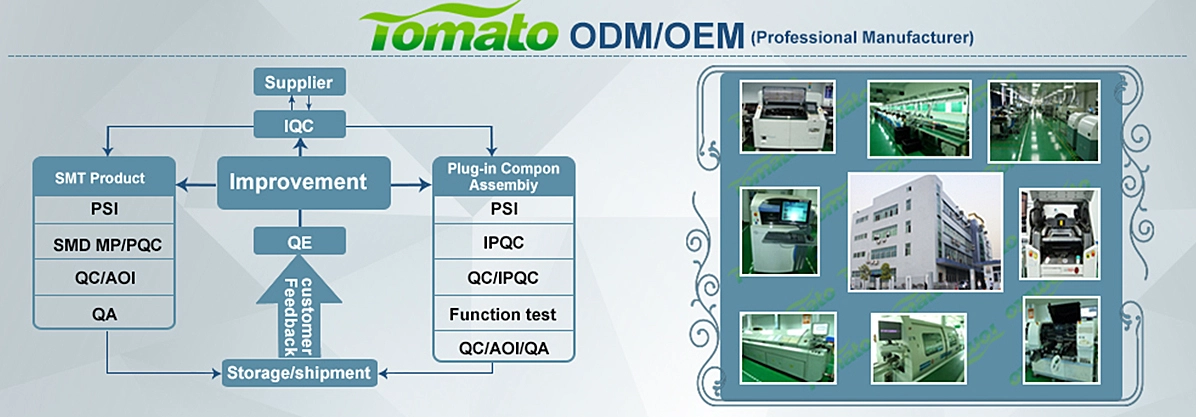
At www.sztomato.com, you will find a partner who understands the B2B independent site model and offers tailored production services. Here is how SZTomato differentiates the offering:
-
Custom OEM/ODM design and manufacturing: SZTomato can adapt the hardware and firmware to your brand requirements — whether you need an Android TV box, Google TV box, set-top box, or mini PC streaming media player.
-
Full support from specification to shipment: From initial consultation, BOM planning, firmware integration, certification support to volume production and shipping.
-
Focus on quality and compliance: As you are selling to distributors, retailers or global markets, SZTomato emphasises quality components, stable firmware and compliant devices.
-
Flexible small-batch runs: For initial market testing, SZTomato supports lower quantities, enabling you to validate the market before scaling up.
-
Post-launch support: Firmware updates, remote key mapping, packaging customisation and supply continuity.
Launching Your Google TV Box — Market & Growth Tips
Once manufacturing is set, consider the marketing, distribution and growth aspects to maximise success.
Positioning & Unique Value Proposition
Clarify what makes your box unique: superior HDR support, voice remote, regional streaming partnerships, enterprise or signage features, competitive pricing.
Target Channels
If your aim is B2B, you may target distributors, hospitality chains, signage integrators, streaming service partners. Adjust packaging and software accordingly.
Sales Support & Documentation
Provide datasheets, user manuals, marketing collateral, firmware update process, certification info.
After-Sales & Firmware Updates
Ensure you offer OTA update capability, remote management, and an upgrade path. This builds trust and differentiates over commodity boxes.
Evaluate Trends
Stay ahead of market shifts: e.g., FAST (Free Ad-Supported Television) channels are gaining traction via Google TV platforms. New WiFi standards, AV1 codec adoption, AI voice assistants all matter for next-gen devices.
Common Pitfalls to Avoid
-
Selecting low-end hardware and expecting premium performance — the DIY Raspberry Pi experience shows the UI can become unusable.
-
Ignoring certification and app availability — uncertified boxes may miss key streaming services.
-
Underestimating firmware complexity — many OEMs treat it as commodity but ultimately it defines user experience.
-
Poor supply-chain planning — component shortages, high MOQs and logistics can derail timelines.
-
No plan for updates and support — in B2B space your clients expect longevity and reliability.
Conclusion
Developing a Google TV box is a significant undertaking, but if done right it opens valuable B2B opportunities. By carefully selecting hardware, integrating firmware and certification, setting up manufacturing correctly, and aligning with a partner like SZTomato you can deliver a differentiated, robust product. In a fast-moving streaming ecosystem your device must perform reliably, support modern features and be backed by a supply-chain you can trust. If you are ready to proceed, demand more than just “box manufacturing” — aim for full-service OEM/ODM collaboration with firmware, branding and long-term support.
At SZTomato, you’re empowered to create your custom Google TV box that meets market demands and positions your brand for growth. Let’s build the next generation of smart TV solutions together.
