
Rockchip RK3566 SoC Explained: 1 TOPS NPU, 4K Video and Flexible Embedded Applications
Rockchip RK3566 SoC Explained: 1 TOPS NPU, 4K Video and Flexible Embedded Applications
For embedded hardware developers, choosing a processor is rarely about CPU speed alone. A practical product may need reliable multimedia processing, local AI acceleration, high-speed storage, multiple I/O interfaces, long-term software support and controlled BOM cost at the same time.
This is where the Rockchip RK3566 remains an attractive embedded SoC platform.
The Rockchip RK3566 combines a quad-core ARM Cortex-A55 CPU, ARM Mali-G52 graphics processor, dedicated NPU, 4K video decoding, 8MP ISP and a broad range of peripheral interfaces in a compact application processor. Rockchip officially positions the RK3566 for products that require a balance between performance, power efficiency and multimedia capability.
For manufacturers developing Android TV boxes, OTT devices, digital signage players, smart home terminals, industrial HMI systems, edge gateways and other embedded products, the RK3566 provides a practical foundation for building customized hardware rather than relying on a one-size-fits-all consumer platform.
What Makes the Rockchip RK3566 Relevant for Embedded Products?
The key advantage of the Rockchip RK3566 is balance.
It is not designed to compete with high-end AI processors or flagship application processors. Instead, it targets applications where stable CPU performance, efficient graphics, 4K multimedia, local AI acceleration and extensive connectivity are more important than achieving maximum benchmark scores.
The processor uses four ARM Cortex-A55 CPU cores and an ARM Mali-G52-2EE GPU. The platform supports modern graphics APIs including Vulkan 1.1 and OpenCL, giving developers sufficient resources for graphical user interfaces, multimedia applications and other embedded workloads.
For B2B product developers, this balance can be more valuable than raw processing power. A platform that delivers the required performance while keeping thermal design and overall hardware complexity under control can make the difference between a commercially viable project and an expensive engineering exercise.
RK3566 CPU: Quad-Core Cortex-A55 for Efficient Embedded Computing
The Rockchip RK3566 uses a quad-core ARM Cortex-A55 CPU architecture.
Cortex-A55 is designed around efficiency and sustained embedded workloads. This makes the RK3566 suitable for applications that need to run continuously, including smart terminals, industrial controllers, information displays, gateways and media players.
For an OEM or ODM project, CPU selection should be based on the actual workload rather than headline frequency. If the application primarily involves Android system operation, application processing, network communication, UI rendering and multimedia management, four Cortex-A55 cores can provide a sensible performance-to-power balance.
The RK3566 can therefore be a practical option for products that need more processing capability than entry-level embedded platforms but do not require the CPU resources of premium processors.
RK3566 GPU: Mali-G52 for UI and Multimedia Graphics
Graphics processing is another important part of the Rockchip RK3566 platform.
The processor integrates an ARM Mali-G52-2EE GPU and supports OpenGL ES, OpenCL and Vulkan 1.1.
For commercial Android hardware, this is particularly useful because modern products often require more than basic video playback. Interactive menus, animated interfaces, browser-based applications, digital signage layouts and customized launcher interfaces all require consistent GPU performance.
For example, a customized Android TV box may use the GPU for system UI rendering while the dedicated multimedia hardware handles video decoding. A digital signage player can similarly use GPU resources for graphical content while maintaining stable background system operations.
RK3566 NPU: Local AI Acceleration for Edge Devices
One of the most commercially interesting features of the Rockchip RK3566 is its dedicated NPU.
Rockchip's current product information lists up to 1 TOPS AI computing performance, while earlier Rockchip materials also referenced the RK3566 as a 0.8 TOPS platform in certain product contexts. For product specifications, manufacturers should therefore use the value applicable to the exact RK3566 revision, SDK and product configuration rather than blindly copying older marketing specifications.
The NPU supports common AI model frameworks and data types, making the platform suitable for selected edge-AI workloads.
Typical applications can include:
-
Image classification
-
Object detection
-
Face-related AI functions
-
OCR and document recognition
-
Voice-related edge processing
-
Smart camera applications
-
AI-assisted industrial inspection
-
Local sensor and vision analysis
The important point is that RK3566 AI acceleration is designed for practical edge inference, not large-scale generative AI.
For manufacturers, this distinction matters. If a project requires lightweight AI inference close to the device, RK3566 can reduce dependence on cloud processing. If the project requires large language models, advanced computer vision or heavy multi-stream AI workloads, a newer and more powerful AI SoC should be considered instead.
RK3566 Video Capability: 4K Multimedia for TV Boxes and Commercial Displays
Multimedia processing is one of the strongest reasons to consider the Rockchip RK3566.
The platform supports hardware decoding of 4K@60fps H.265, H.264 and VP9 video, together with H.264/H.265 video encoding up to 1080p@60fps according to Rockchip's official specifications.
This makes the RK3566 particularly relevant to:
-
Android TV boxes
-
OTT media players
-
IPTV terminals
-
Digital signage players
-
Commercial display controllers
-
Video playback terminals
-
Smart home multimedia hubs
-
Embedded entertainment systems
For a TV box manufacturer, hardware video decoding is much more important than simply looking at CPU specifications. Dedicated video engines allow supported codecs to be processed efficiently without forcing the CPU to handle every frame.
This architecture can provide a better foundation for long-duration 4K playback, customized media applications and commercial display projects.
RK3566 Connectivity and Peripheral Integration
Another reason the Rockchip RK3566 is attractive for embedded development is its extensive peripheral architecture.
The official datasheet lists USB 3.0 Host, USB 2.0 Host, USB 2.0 OTG, PCIe 2.1, SATA 3.0, Gigabit Ethernet through an RGMII interface, SDIO, multiple UART, SPI, I2C, PWM and GPIO interfaces.
This broad interface selection gives hardware engineers considerable flexibility.
For example, an embedded gateway may combine Ethernet, USB, storage and serial interfaces. A commercial media player may use USB peripherals and high-speed storage. An industrial HMI may require UART, GPIO, SPI and I2C connections to external controllers and sensors.
Wireless connectivity such as Wi-Fi and Bluetooth can also be added through suitable modules in the final hardware design. This is a more accurate way to describe the product architecture than treating Wi-Fi 5 or Bluetooth as native RK3566 SoC features.
RK3566 Display and Camera Support
The RK3566 also provides multiple display and camera interfaces, including HDMI 2.0, eDP, MIPI-DSI and LVDS-related display support, together with an 8MP ISP and MIPI CSI-2 camera interfaces.
This expands the potential use of RK3566 beyond conventional TV boxes.
Manufacturers can develop:
-
Interactive displays
-
Smart panels
-
Industrial HMI terminals
-
Educational devices
-
E-paper products
-
Smart cameras
-
POS terminals
-
Digital signage systems
-
Embedded multimedia controllers
The combination of display interfaces, camera processing and NPU acceleration is particularly useful when a project requires both visual input and intelligent local processing.
RK3566 for Android TV Box and OTT Product Development
For the Android TV Box market, processor selection has to consider more than 4K output.
A commercially successful Android TV box may require:
-
Stable Android operation
-
Hardware video decoding
-
Fast application response
-
Customized launcher and UI
-
DRM or middleware integration
-
Remote device management
-
OTA firmware updates
-
Customized boot animation
-
Pre-installed applications
-
Ethernet and wireless networking
-
Long-term firmware maintenance
The Rockchip RK3566 provides a solid hardware foundation for these requirements.
Rockchip's official SDK information lists Linux 4.19/5.10 and Android 11/12 support for RK3566.
For B2B buyers, this software flexibility can be more important than a specification sheet alone. A hardware platform only becomes commercially useful when the manufacturer can turn the SoC into a stable, upgradeable and maintainable product.
RK3566 for Digital Signage and Commercial Displays
Digital signage is another strong application area for the Rockchip RK3566.
A commercial signage player may need to run for extended periods while displaying 4K promotional videos, images, web content and customized UI elements.
The combination of quad-core Cortex-A55 processing, Mali-G52 graphics and hardware 4K video decoding provides an appropriate foundation for this class of application.
For system integrators, the more important advantage is customization.
The same RK3566 hardware platform can be adapted for different screen sizes, storage configurations, network interfaces, enclosure designs and software requirements. This makes it suitable for OEM projects where the buyer needs a product designed around a specific commercial application rather than a standard retail box.
RK3566 for AIoT and Edge Computing
The RK3566 can also serve as an entry-level edge-AI platform when the AI workload is relatively lightweight.
Instead of transferring every image, sensor reading or recognition task to the cloud, a device can perform selected inference locally. This can reduce network dependency and potentially improve response time for applications that do not require remote processing.
Examples include smart access terminals, intelligent displays, smart home controllers, educational devices and selected industrial monitoring systems.
However, system architects should carefully evaluate the model size, input resolution, inference framework and number of simultaneous AI streams before selecting RK3566. A 1 TOPS-class NPU should not be positioned as a replacement for high-end edge AI platforms.
That practical approach to processor selection helps avoid over-specification and unnecessary BOM cost.
Why Choose SZTomato for RK3566 OEM and ODM Projects?
For B2B buyers, selecting an RK3566 platform is only the first step. The more difficult part is turning the SoC into a production-ready product.
SZTomato supports customized RK3566 hardware and software solutions for OEM and ODM customers.
Instead of treating the RK3566 as a generic development-board processor, SZTomato can build the platform around the customer's target application, enclosure, connectivity, memory, storage and firmware requirements.
Customization can include:
-
Custom RK3566 motherboard design
-
RAM and storage configuration
-
HDMI and USB interface configuration
-
Ethernet and wireless module integration
-
Customized enclosure and industrial design
-
Android firmware customization
-
Linux-based system development
-
Customized launcher and UI
-
Pre-installed applications
-
Boot animation and logo customization
-
OTA update mechanisms
-
Remote device management
-
Middleware and application integration
-
Customized production firmware
-
OEM branding and packaging
This approach is particularly valuable for importers, distributors, IPTV operators, digital signage integrators, project contractors and brand owners that need a repeatable hardware platform rather than a retail product purchased off the shelf.
RK3566 Specification Overview
| Feature | RK3566 Specification |
|---|---|
| CPU | Quad-core ARM Cortex-A55 |
| GPU | ARM Mali-G52-2EE |
| NPU | Up to 1 TOPS, depending on applicable specification/revision |
| Video Decoder | 4K@60fps H.265/H.264/VP9 |
| Video Encoder | Up to 1080p@60fps H.264/H.265 |
| ISP | Up to 8MP |
| Display | HDMI 2.0, eDP, MIPI-DSI, LVDS and related interfaces |
| Memory | DDR3/DDR3L/DDR4/LPDDR3/LPDDR4/LPDDR4X |
| Storage | eMMC 5.1, SD and other supported storage interfaces |
| Ethernet | Gigabit Ethernet interface |
| USB | USB 3.0 Host, USB 2.0 Host and USB 2.0 OTG |
| Expansion | PCIe 2.1, SATA 3.0, UART, SPI, I2C, PWM, GPIO |
| Camera | 8MP ISP, MIPI CSI-2 |
| OS | Android 11/12 and Linux SDK support |
Specifications can vary according to the exact chip revision, board design, memory configuration and software platform, so production projects should be validated against the final hardware BOM and required software stack.
Is RK3566 Still a Good Choice for a New Project?
The answer depends on the project.
If the application requires advanced generative AI, high-end computer vision, multiple simultaneous 4K video streams or significantly higher CPU/GPU performance, a newer SoC should be evaluated.
But if the requirement is a stable embedded platform combining quad-core processing, 4K multimedia, practical local AI acceleration, extensive I/O and flexible operating-system support, the Rockchip RK3566 remains a technically reasonable option.
For B2B manufacturers, the strongest value of RK3566 is not a single benchmark number. It is the combination of multimedia capability, embedded interfaces, software flexibility and relatively straightforward product integration.
Final Verdict: RK3566 Is About Balance, Not Maximum Performance
The Rockchip RK3566 is best understood as a balanced embedded SoC rather than a flagship processor.
Its quad-core Cortex-A55 CPU provides efficient general-purpose processing. The Mali-G52 GPU supports modern graphics APIs. The dedicated NPU adds local AI acceleration, while the hardware multimedia engine supports 4K video decoding. Extensive peripheral interfaces further allow the platform to be adapted to different embedded product architectures.
For Android TV boxes, OTT media players, digital signage, smart terminals, edge gateways, industrial HMI systems and selected AIoT products, RK3566 can provide a strong starting point for a customized B2B solution.
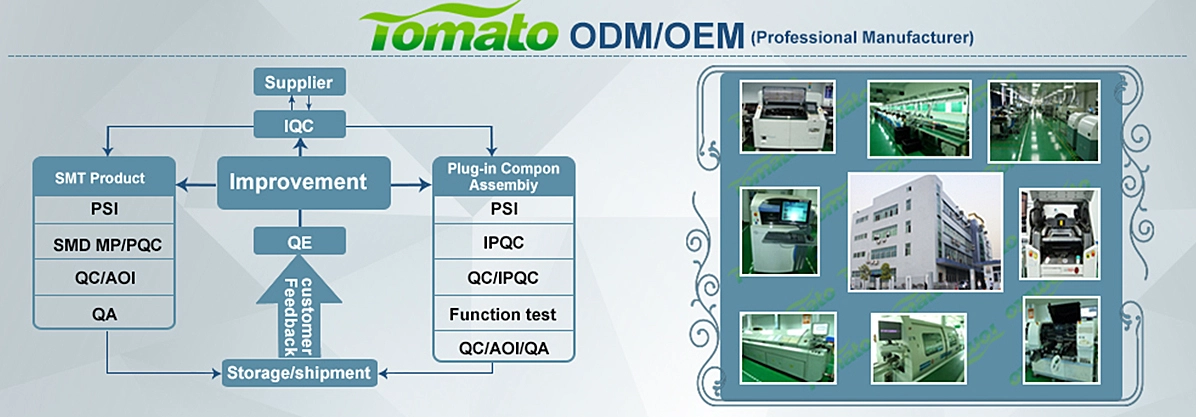
For companies that need more than a standard development board, SZTomato combines RK3566 hardware integration, firmware customization and OEM/ODM engineering to help turn the SoC into a production-ready commercial device.
If your project requires a customized RK3566 TV box, multimedia player, digital signage player or embedded Android/Linux terminal, SZTomato can evaluate the hardware configuration, operating system, interfaces and application requirements and develop the solution around your actual project.
