
Smart TV Box Private Label Customization: How to Choose the Right Linux Box for Commercial Projects
Smart TV Box Private Label Customization: How to Choose the Right Linux Box for Commercial Projects
Many Smart TV Box projects fail for a simple reason: buyers choose a low-cost consumer device when the real requirement is a commercial-grade Linux platform.
At the quotation stage, the difference may look small. A standard retail TV box can be cheaper and easier to source. But once hundreds or thousands of devices are deployed in stores, schools, digital signage networks, hotels, or other commercial environments, the weaknesses quickly become visible. Firmware cannot be modified, applications cannot be deeply integrated, devices become unstable during long-term operation, and system maintenance turns into an expensive problem.
For B2B buyers, a Smart TV Box is not simply a hardware product. It is part of a complete commercial system.
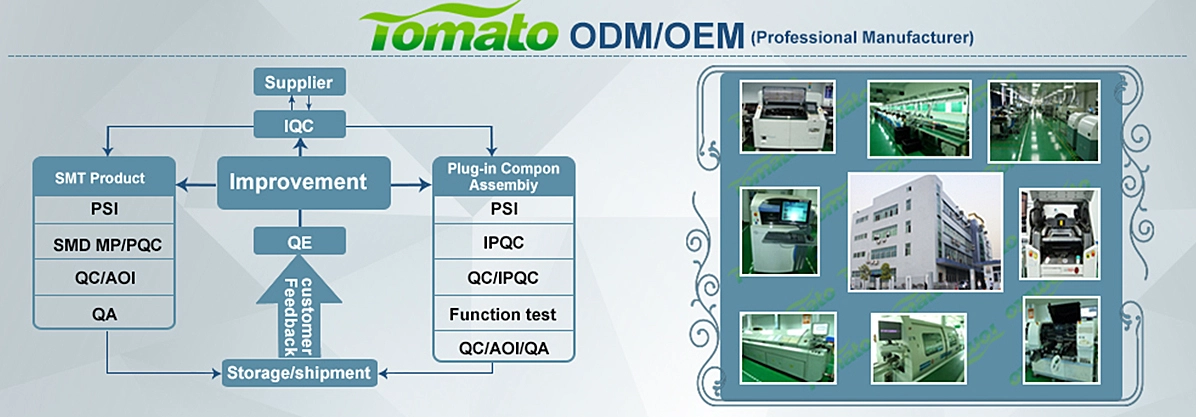
As an OEM and ODM manufacturer of Android TV boxes, Linux boxes, digital signage players and embedded smart devices, SZTomato provides customized hardware and firmware solutions for global B2B customers. From chipset selection and PCB configuration to Linux system customization, private labeling and mass production, the company supports projects that require more than standard off-the-shelf devices.
Why Consumer Smart TV Boxes Often Fail in Commercial Deployment
1. Private Labeling Without Firmware Control Is Not Real Customization
Many buyers assume private labeling means adding a logo to the device and printing custom packaging. In reality, commercial Smart TV Box customization often requires much deeper control.
A standard retail device may use locked firmware. The boot animation cannot be changed, applications cannot be preinstalled at the system level, unwanted services cannot be removed, and the device cannot be configured to automatically launch the customer's application after startup.
For a commercial project, this creates unnecessary limitations.
SZTomato supports Smart TV Box customization at both the hardware and firmware levels. Depending on the project, customers can request customized boot logos, branded user interfaces, application preinstallation, auto-start functions, restricted system access and optimized Linux firmware.
2. Commercial Projects Need 24/7 Stability
A consumer Smart TV Box may only operate for several hours per day. A commercial device can be expected to run continuously.
Digital signage displays, restaurant menu screens, educational terminals and information kiosks cannot depend on frequent manual maintenance. If a device crashes or fails to recover after a power interruption, the operational cost can quickly exceed the original hardware savings.
A commercial Linux Smart TV Box should therefore be designed around long-term stability. Key functions may include watchdog support, automatic startup, scheduled reboot, log monitoring, remote OTA updates and optimized thermal management.
SZTomato can customize the system configuration according to the actual operating environment, helping customers build a Smart TV Box solution suitable for long-term unattended deployment.
3. Commercial Applications Require Secondary Development Capability
In many B2B projects, the hardware is only the platform. The real value comes from the customer's software, cloud platform or industry application.
This is where an open and customizable Linux environment becomes important.
A Linux-based Smart TV Box can be adapted for digital signage platforms, educational software, remote management systems, IoT gateways and other embedded applications. Depending on the chipset platform and project requirements, SZTomato can support system customization, driver integration, SDK-based development and peripheral adaptation.
How to Choose the Right Smart TV Box Chipset
The best Smart TV Box is not necessarily the most powerful one. The correct platform depends on the application, performance requirements, development workload and target budget.
S905W: Entry-Level Linux Smart TV Box for Cost-Sensitive Projects
The Amlogic S905W platform is suitable for projects where basic multimedia performance and cost control are the primary requirements.
It can be used for entry-level Smart TV Box applications, simple advertising displays, electronic menu systems and other single-screen deployments.
For customers who need a straightforward Linux Smart TV Box for standardized projects, SZTomato can provide customized firmware, branding and hardware configurations based on project requirements.
S905X3: A Flexible Smart TV Box Platform for Global B2B Markets
The Amlogic S905X3 is a stronger option for mainstream Smart TV Box projects. Its Cortex-A55 architecture provides a balanced combination of performance and power efficiency.
This platform is suitable for overseas distribution, commercial media players, customized Linux terminals and general-purpose Smart TV Box projects.
With dual-band Wi-Fi, Gigabit Ethernet and flexible peripheral connectivity, the S905X3 platform can support a wide range of B2B applications.
RK3566: Smart TV Box Customization for Digital Signage and Commercial Displays
The Rockchip RK3566 platform is particularly suitable for commercial display and embedded projects that require stronger interface expansion and display flexibility.
It can be adapted for digital signage, information displays, educational terminals and customized Smart TV Box applications. Depending on the hardware design, the platform can support additional display interfaces and peripheral expansion.
For system integrators, the ability to customize the Linux environment and connect project-specific peripherals can be more valuable than simply increasing CPU specifications.
S922X: Higher Performance for Advanced Smart TV Box Projects
The Amlogic S922X platform provides stronger CPU and graphics performance for applications that require more processing power.
With a combination of Cortex-A73 and Cortex-A53 CPU cores, the S922X can support demanding multimedia workloads, 4K content playback and more complex Linux applications.
This makes it suitable for higher-performance Smart TV Box projects, multi-display applications, commercial multimedia systems and customized embedded terminals.
Linux System Selection Matters as Much as Hardware
Choosing the right chipset is only the first step. The Linux system, kernel, drivers and application environment must also be matched to the final application.
Depending on the platform, SZTomato can support customized Linux solutions based on Ubuntu, Debian and other suitable embedded Linux environments.
System customization may include:
- Boot logo and branded startup screen customization
- Application preinstallation and auto-start configuration
- System service optimization
- Removal of unnecessary components
- Read-only system configuration where required
- Watchdog and automatic recovery functions
- Remote OTA update support
- Peripheral driver integration
- Customized APIs and software environment preparation
For commercial Smart TV Box projects, these software-level details often determine whether the final deployment is stable and scalable.
Common Smart TV Box Private Label Mistakes to Avoid
Choosing by Specification Sheet Alone
Two Smart TV Box products can show similar CPU, RAM and storage specifications while delivering very different results in actual deployment.
Firmware quality, thermal design, wireless performance, power stability and driver compatibility all affect the final product.
Ignoring Long-Term Supply Requirements
A commercial project may require the same hardware platform for months or years. Before starting customization, buyers should evaluate chipset availability, component supply stability and the manufacturer's ability to maintain consistent production.
Starting Firmware Development Too Late
Many projects focus on industrial design and hardware first, then discover that the required Linux drivers or application environment need additional development.
A better approach is to evaluate hardware and software requirements together at the project planning stage.
SZTomato works with customers on chipset selection, interface requirements and system customization before mass production, helping reduce unnecessary redesign and integration risks.
SZTomato: Smart TV Box OEM and Linux Customization from Development to Mass Production
SZTomato focuses on B2B OEM and ODM projects for Smart TV Box products, Linux boxes, Android TV boxes, streaming media players and digital signage hardware.
The company provides a complete customization process covering:
- Project requirement evaluation
- Chipset and hardware platform selection
- RAM, storage and interface configuration
- PCB and peripheral customization
- Linux and firmware customization
- Boot logo and UI branding
- Application preinstallation
- Private label and packaging customization
- Sample testing and project validation
- Mass production and quality control
- Technical support and firmware maintenance
Whether the requirement is a cost-sensitive Smart TV Box for digital menus, a customized Linux terminal for education, a commercial media player for digital signage, or a higher-performance embedded platform for multi-screen applications, the solution should be built around the actual deployment environment.
Choose a Smart TV Box Solution, Not Just a Cheap Device
For commercial buyers, the most important questions are not simply how much RAM or storage a Smart TV Box has.
The real questions are:
- Can the firmware be customized?
- Can the system support the required Linux environment?
- Can applications be preinstalled and launched automatically?
- Can the device operate reliably for long periods?
- Can the hardware support project-specific peripherals?
- Can the manufacturer support both prototype development and mass production?
A Smart TV Box that meets these requirements can become a reliable platform for commercial deployment instead of a disposable consumer device.
SZTomato provides customized Smart TV Box and Linux box solutions for B2B customers worldwide. From OEM branding and firmware development to hardware customization and large-scale manufacturing, the company helps customers turn project requirements into production-ready devices.
If you are planning a Smart TV Box private label project, Linux box deployment, digital signage system or customized embedded solution, working with an experienced OEM and ODM manufacturer from the beginning can reduce development risk and shorten the path to mass production.
