
What is the Best Android TV Box?
Silicon and Architecture: What Criteria Define the Best Android TV Box for B2B Fleets?
In the cross-border electronics sector, procurement teams often ask a misleading question: What is the best Android TV Box? In consumer retail, "best" is defined by interface simplicity and low pricing. For enterprise system integrators managing thousands of active field endpoints, defining the "best" hardware requires looking past the surface. It demands a rigorous evaluation of component choices, thermal design parameters, and firmware openness.
A device that performs adequately as a standalone home media player will frequently fail when subjected to continuous 24/7 operational duty cycles, unventilated mounting spaces behind commercial displays, or strict enterprise network security protocols. Securing a reliable deployment depends on matching specific commercial applications with the appropriate silicon microarchitecture, hardware layout, and security framework.
1. Core Processor Selection: Matching the SoC to the Enterprise Workload
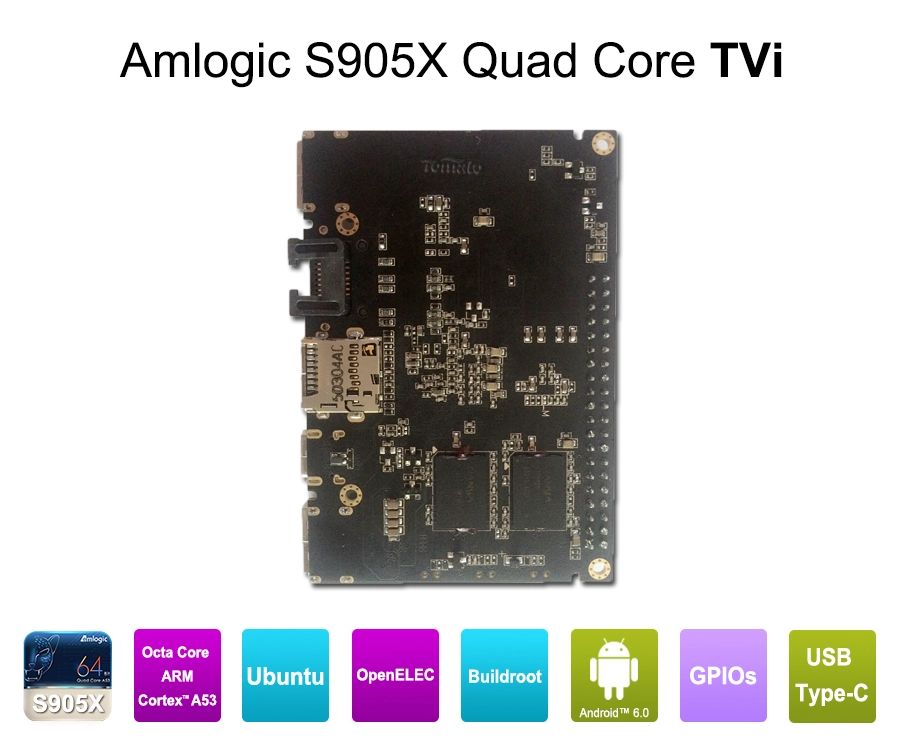
The primary determinant of an Android TV Box's capabilities is its System-on-Chip (SoC). Hardware architects evaluate processor options based on raw compute capacity, hardware decoding engines, and long-term manufacturing lifecycles.
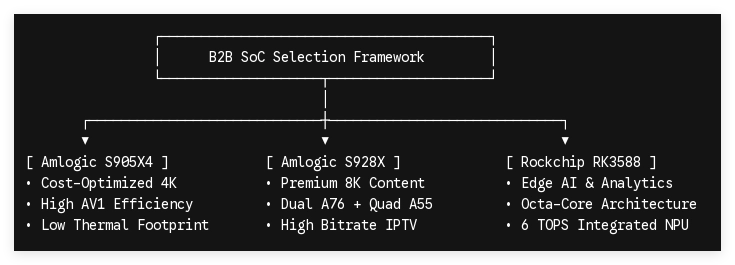
The Cost-Optimized 4K Tier: Amlogic S905X4 / S905X5
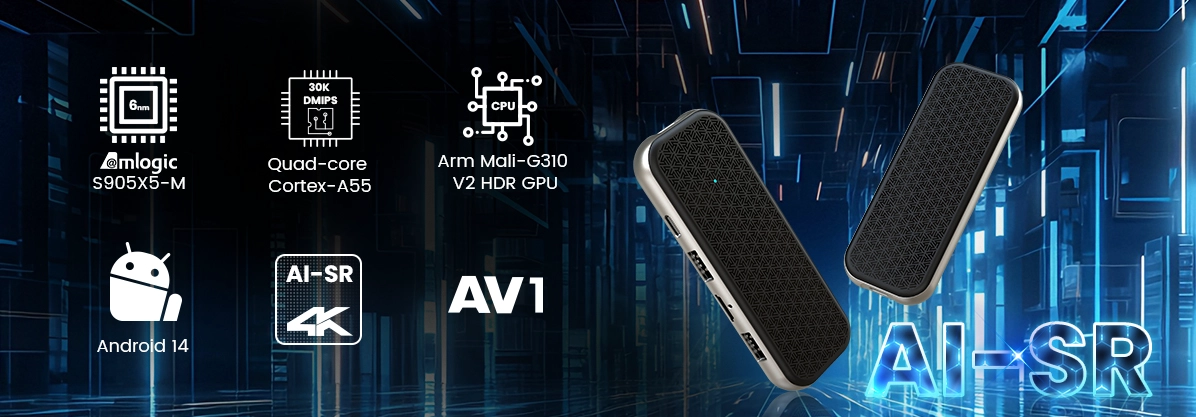
For large-scale deployments in hospitality IPTV and standard digital signage networks, the Amlogic S905X4 or its 6nm successor, the S905X5, represent the industry benchmark. These chips combine low-power ARM Cortex-A55 cores with specialized hardware decoding pipelines for the AV1 codec. This codec optimization allows enterprise networks to slash data bandwidth costs by up to 30% compared to legacy H.264 streams without sacrificing image fidelity.
The Flagship 8K Media Tier: Amlogic S928X
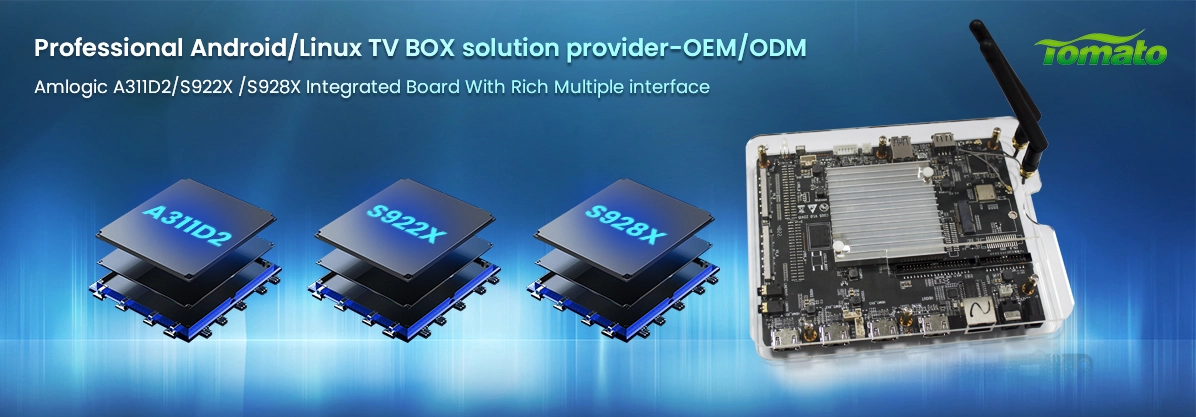
When deployments require high-bitrate rendering, complex multi-channel Electronic Program Guides (EPGs), or native 8K display support, the Amlogic S928X serves as the optimal platform. Utilizing a performance-oriented architecture (Cortex-A76 and Cortex-A55 cores) along with advanced image enhancers, this chip handles dense local media playback loads without dropouts or UI stuttering.
The Edge AI and Multi-Display Tier: Rockchip RK3588
For intelligent retail setups, video walls, or interactive kiosks, the Rockchip RK3588 is the preferred choice. It includes an integrated Neural Processing Unit (NPU) delivering up to 6 TOPS of compute power. This hardware configuration enables local computer vision, real-time audience demographic analytics, and synchronous video output across multiple independent displays from a single PCBA.
2. Security and Compliance: Isolating DRM Tiers and Widevine Keys
The structural integrity of a commercial media fleet depends directly on its digital rights management (DRM) certification level. The best hardware must feature silicon-level key provisioning to support protected enterprise content delivery.
-
Widevine L1 Validation: To display encrypted premium content at resolutions above 480p, the hardware platform must incorporate factory-provisioned cryptographic keys secured within the SoC’s Trusted Execution Environment (TEE). Without verified Widevine L1 integration, systems are capped at standard definition, rendering them unsuitable for high-end corporate or hospitality environments.
-
HDCP 2.2 Compliant Pipelines: Field hardware must enforce High-bandwidth Digital Content Protection (HDCP 2.2) across the physical HDMI 2.1 circuitry. This compliance prevents authentication dropouts when interfacing with commercial-grade displays, projectors, or distribution matrices.
3. Industrial PCBA Layouts: Engineering for 24/7 Thermal Stability
Consumer boxes feature slim, fully enclosed plastic housings that trap ambient heat. Under sustained, heavy decoding tasks, internal temperatures can cross 85∘C, triggering severe thermal throttling, system latency, and eventual hardware degradation.
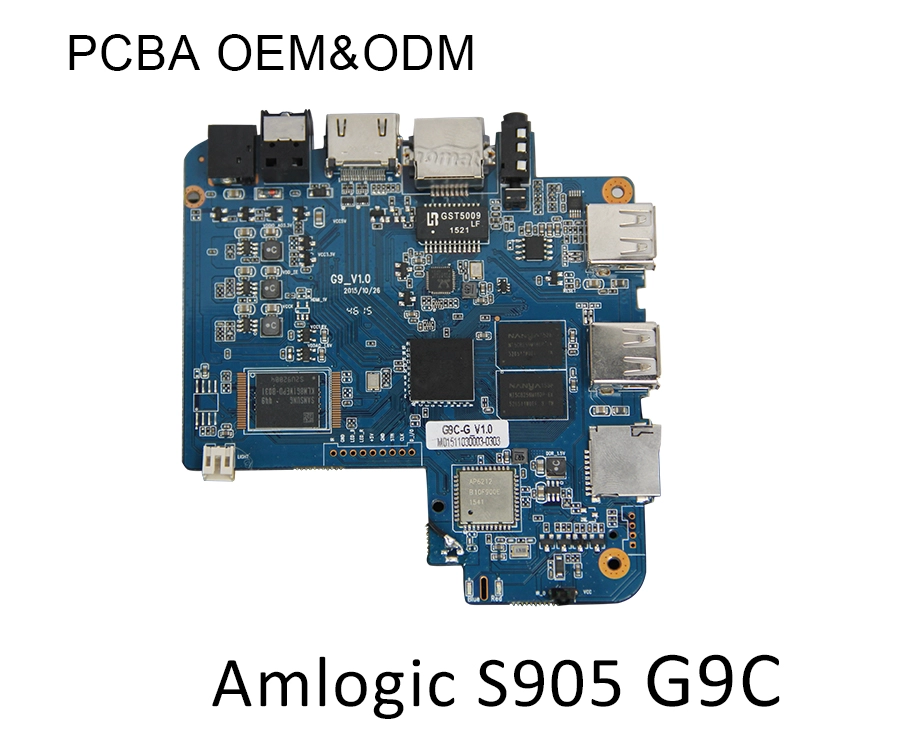
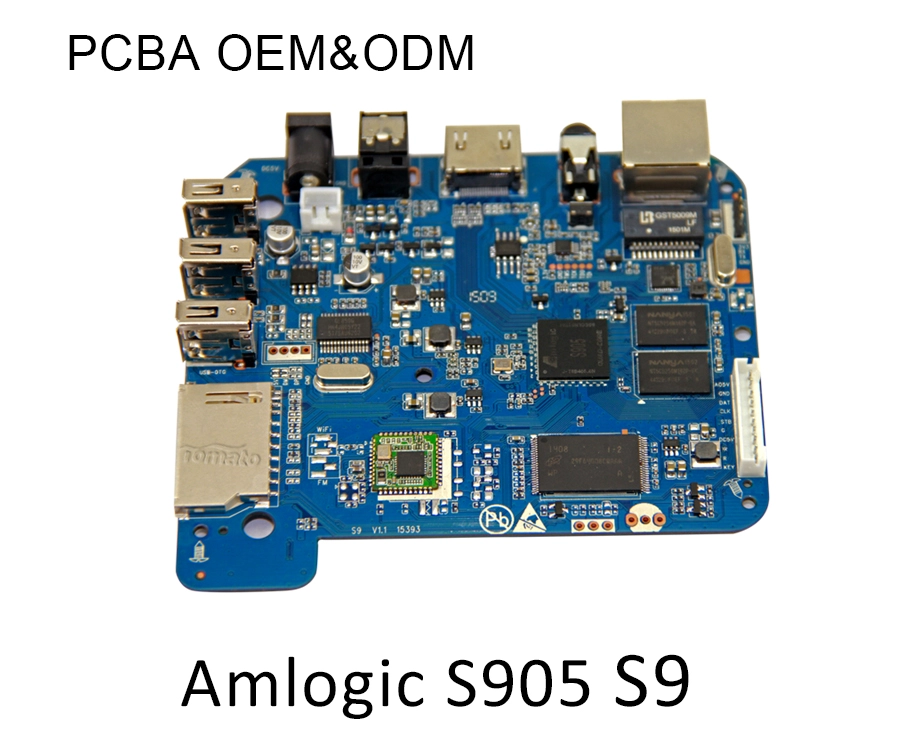
The ideal commercial Android TV Box uses a custom, multi-layer Printed Circuit Board Assembly (PCBA) paired with heavy-duty passive cooling systems:
-
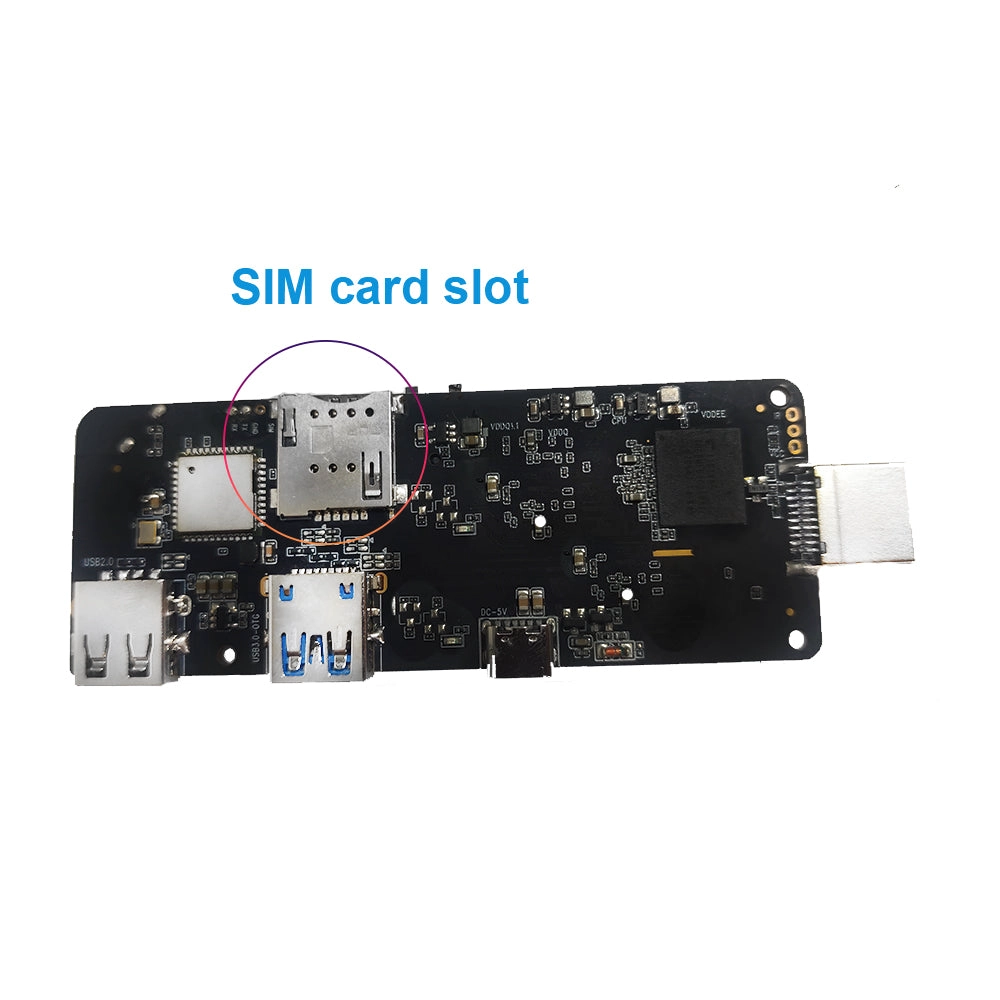
Direct Thermal Couplings: High-conductivity thermal pads bridge the gap between the SoC, RAM, and a thick aluminum or steel internal heatsink.
-
Metal Enclosures: The metal housing functions as a large radiator, dissipating thermal loads across its surface area.
-
Component-Level Durability: Replacing standard electrolytic capacitors with solid-state alternatives improves voltage stability and system lifespan under high operational temperatures.
4. Firmware Flexibility: The Value of Custom Android OS Customization
Hardware capability is limited without corresponding control over the software stack. Enterprise deployments require a custom Board Support Package (BSP) optimized to secure and streamline operations.
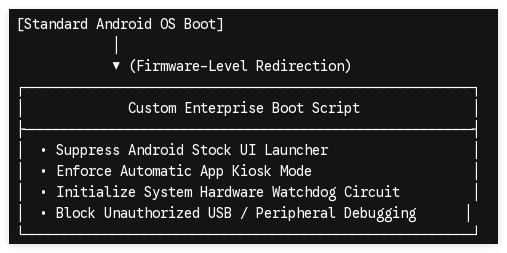
By working with an OEM/ODM manufacturing partner capable of firmware-level modification, engineering teams can implement critical security protocols:
-
True Kiosk Mode: Locks down the user environment, forcing the box to boot directly into a specific application while completely disabling access to global settings panels or the Google Play Store.
-
Hardware Watchdog Timers: Connects an independent timer circuit on the PCBA to monitor system responsiveness. If an unhandled application freeze occurs, the watchdog triggers a hardware-level reboot to restore service automatically without field technician intervention.
-
Persistent Over-The-Air (OTA) Delivery: Implements dedicated, private server pathways to push security patches and application updates to specific device clusters without user interaction.
Partner with an OEM/ODM Hardware Engineering Expert
The definitive Android TV Box for your enterprise fleet is not found on retail shelves. It is engineered to order—configured at the component level to fulfill your technical requirements, performance metrics, and cost targets.
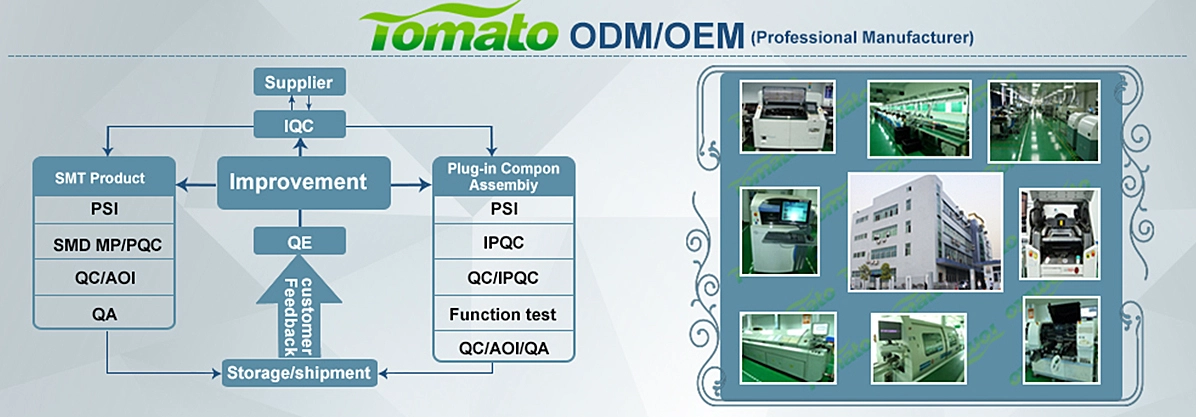
As a senior cross-border electronics manufacturer specializing in custom PCBA engineering, specialized industrial housings, and customized Android firmware modifications, we develop durable hardware platforms built for long-term stability. From high-volume hospitality IPTV deployments utilizing Amlogic chipsets to complex edge-AI projects powered by Rockchip processors, our team provides the engineering expertise needed to optimize your fleet's return on investment.
Contact our technical sales team today to review your project blueprints, request custom firmware builds, or order a hardware evaluation sample.
To see a practical analysis of modern, high-performance chip configurations and their capabilities in real-world scenarios, check out this Amlogic S928X Hardware Benchmark Review. This technical assessment demonstrates how advanced flagship processors handle complex media rendering and local customization, highlighting the performance differences between basic consumer options and high-tier hardware configurations.
