
What's the most powerful Set-Top Box (STB)?
In the consumer market, "power" is often a vague marketing term thrown around to sell budget devices. However, for B2B operators managing digital signage networks, luxury hospitality entertainment systems, or high-bitrate IPTV nodes, "power" is a measurable technical metric. It is not just about raw clock speed; it is about the sustained ability to process 8K content, handle AI-driven upscaling, and manage high-throughput connectivity without thermal throttling.
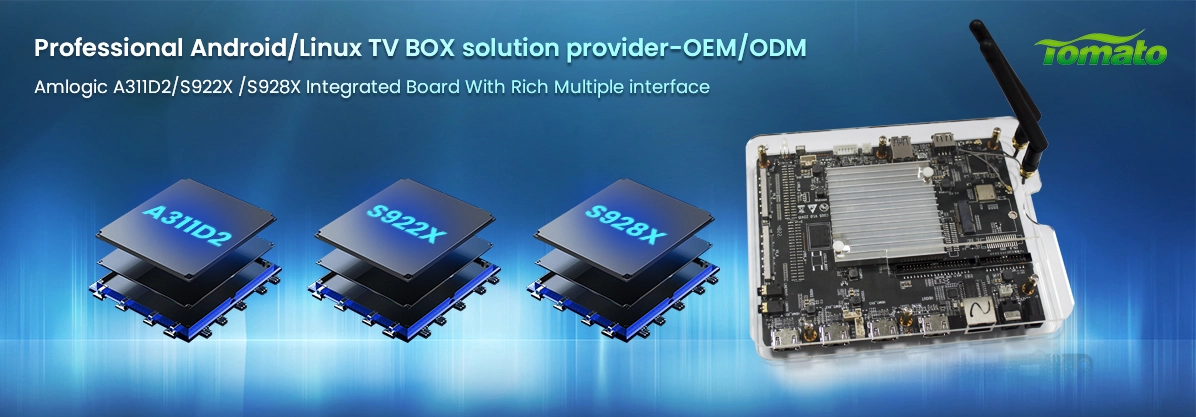
As of 2026, the benchmark for the most powerful Set-Top Box is defined by the integration of the Amlogic S928X SoC combined with industrial-grade connectivity standards. Here is the technical breakdown of what constitutes a true flagship device for enterprise deployment.
1. The Silicon Core: Amlogic S928X and the Penta-Core Advantage
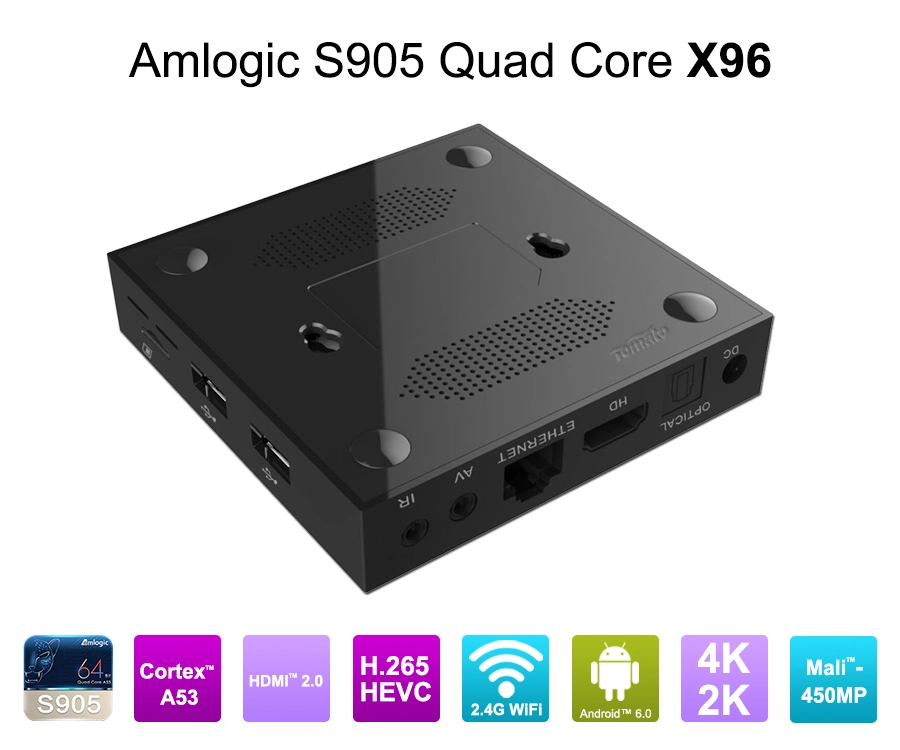
The era of the Quad-core S905 series being the "top tier" has ended for high-end applications. The current definition of a powerhouse Set-Top Box centers on the Amlogic S928X chipset.
-
Architecture: Unlike standard boxes, this SoC utilizes a hybrid "1+4" architecture—one high-performance Cortex-A76 core dedicated to heavy lifting (like UI rendering and app launching) and four Cortex-A55 cores for efficiency.
-
8K Capabilities: A powerful Set-Top Box in 2026 must support native 8K decoding at 60fps. This is critical not just for 8K screens, but for "video wall" processors where a single box drives multiple 4K displays.
-
NPU Integration: The inclusion of a dedicated Neural Processing Unit (NPU) allows for AI-SR (Super Resolution). This technology intelligently upscales 1080p or 4K streams to 8K, reducing bandwidth costs for ISPs while delivering a premium viewing experience.
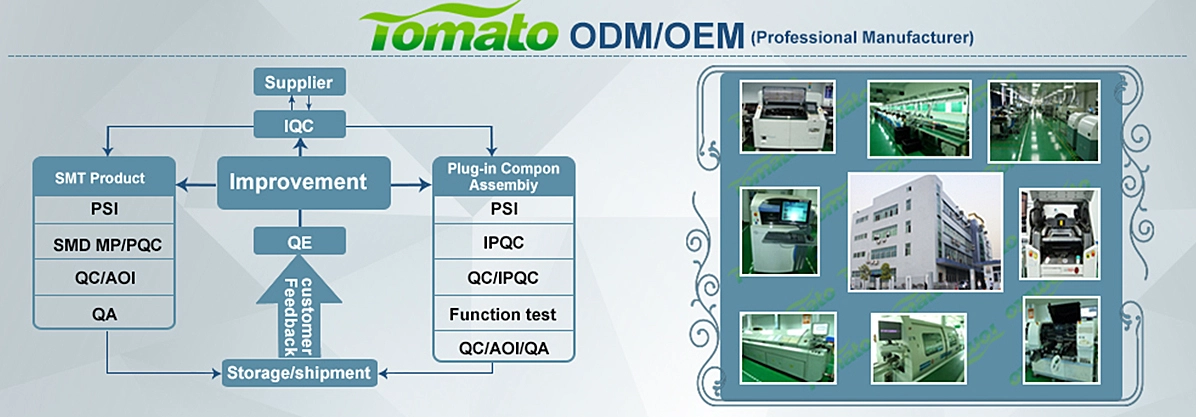
At SZTomato, our engineering team has successfully optimized the S928X kernel for OEM projects, ensuring the NPU activates correctly for specific industry applications, from medical imaging displays to high-end home theaters.
2. Connectivity: Throughput Beyond the Port
A powerful processor is useless if the data pipeline is choked. The most powerful Set-Top Box requires connectivity specifications that match its processing speed.
-
Wi-Fi 6E & Wi-Fi 7: High-density environments (like stadiums or hotels) require the 6GHz spectrum to avoid interference. We customize our ODM solutions with internal MIMO antennas or external high-gain SMA antennas to guarantee consistent throughput.
-
Gigabit & 2.5G Ethernet: For commercial digital signage, reliability is non-negotiable. We offer PCBA modifications to include 2.5G Ethernet ports, ensuring that uncompressed heavy media files transfer instantly from local servers.
3. The "Invisible" Power: Thermal & Firmware Engineering
Raw specs on a datasheet do not guarantee performance; implementation does. A poorly designed box with an S928X chip will overheat and throttle within 20 minutes of 8K playback.
-
Thermal Dissipation: True power requires cooling. For our high-performance Set-Top Box lines, we utilize automotive-grade heat sinks and vented metal enclosures. This allows the Cortex-A76 core to run at peak frequency indefinitely.
-
Firmware Optimization: A powerful box allows for granular control. Through our ODM services, we provide root-level access and SDKs that allow your software team to interact directly with the hardware decoder, bypassing the limitations of the standard Android Framework.
Conclusion The most powerful Set-Top Box is not simply the one with the highest specs on Amazon. It is an industrial-grade unit built on the Amlogic S928X, engineered with superior thermal management, and equipped with firmware tailored to your specific deployment environment.
