
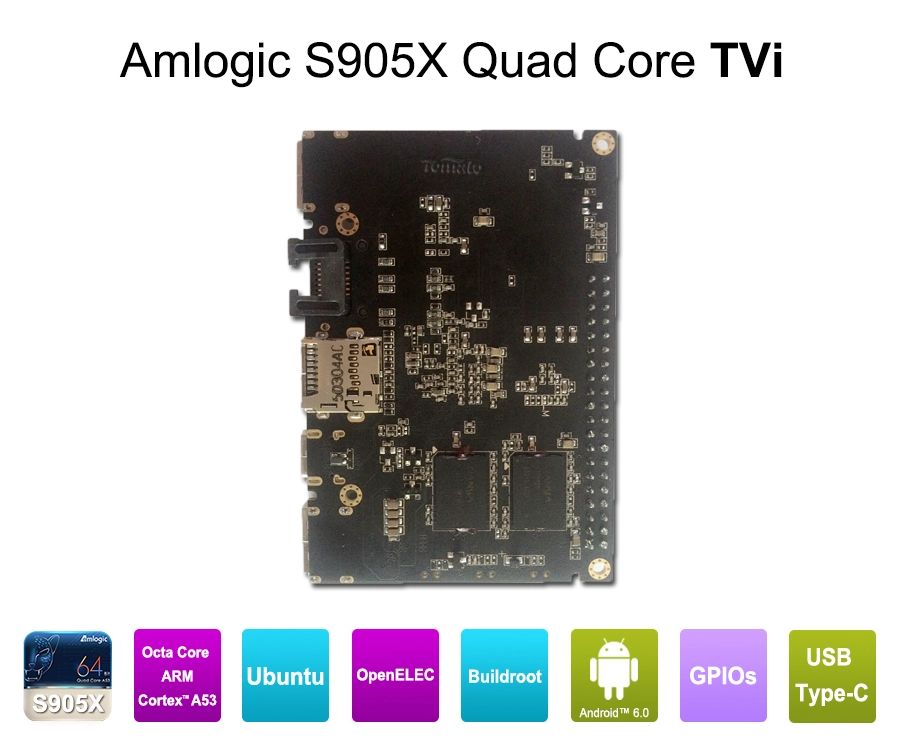
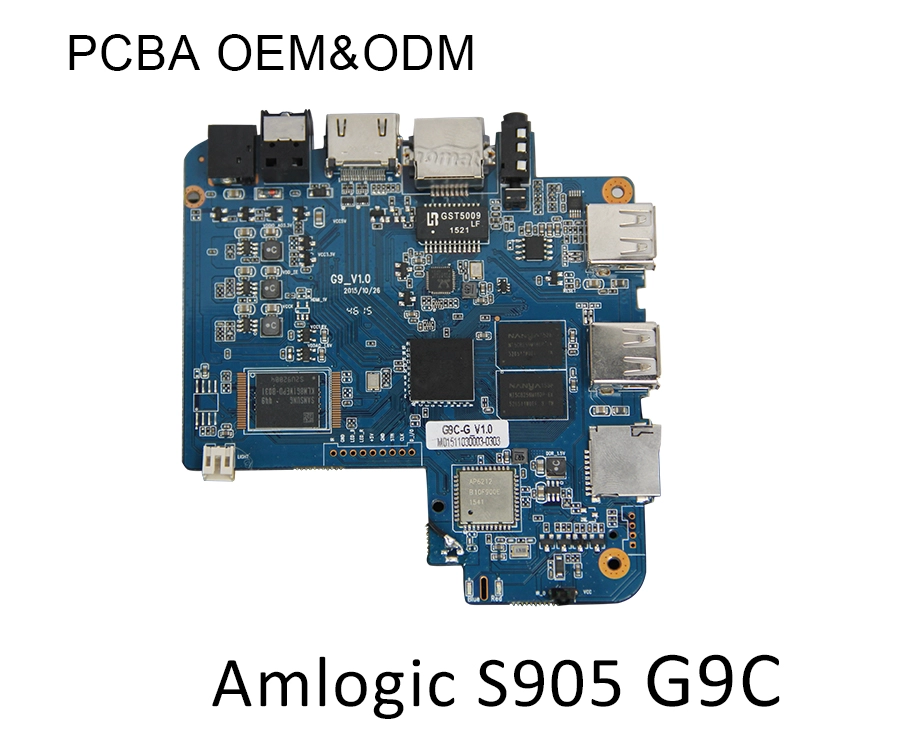
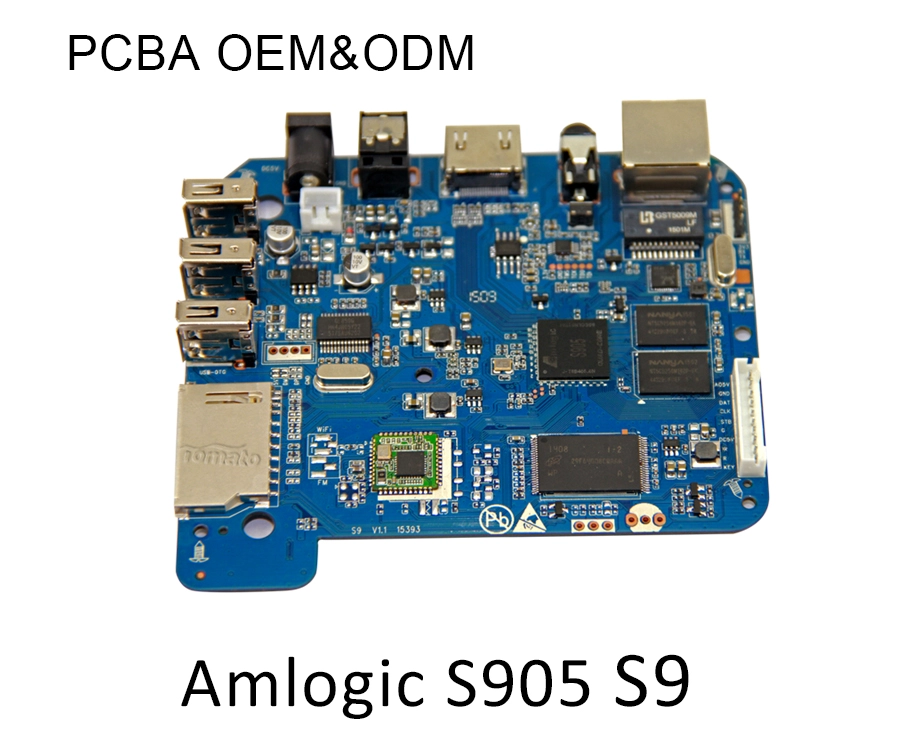
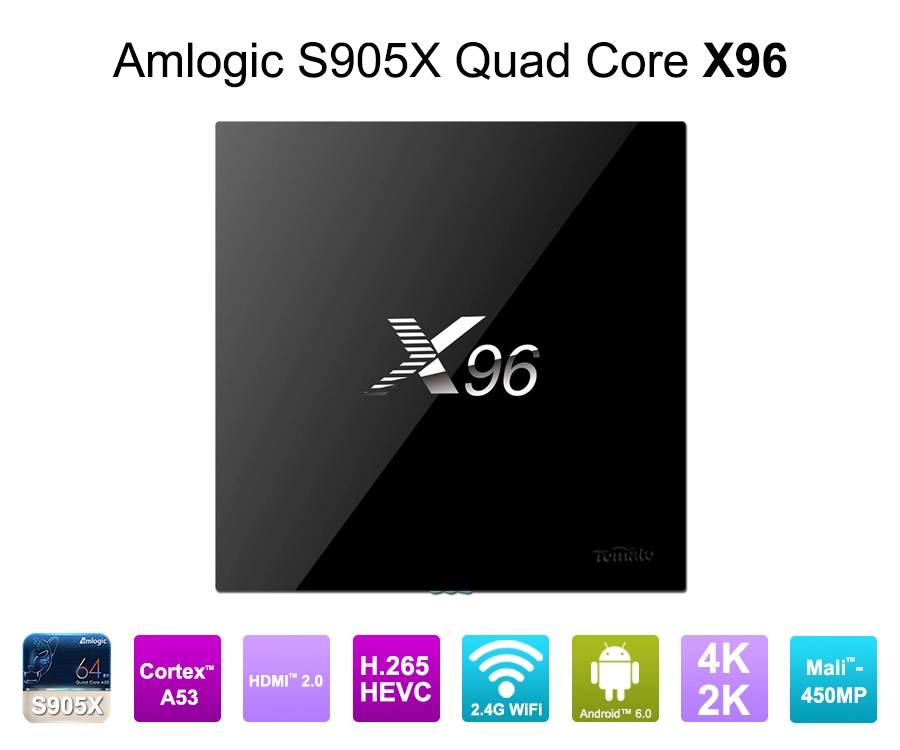
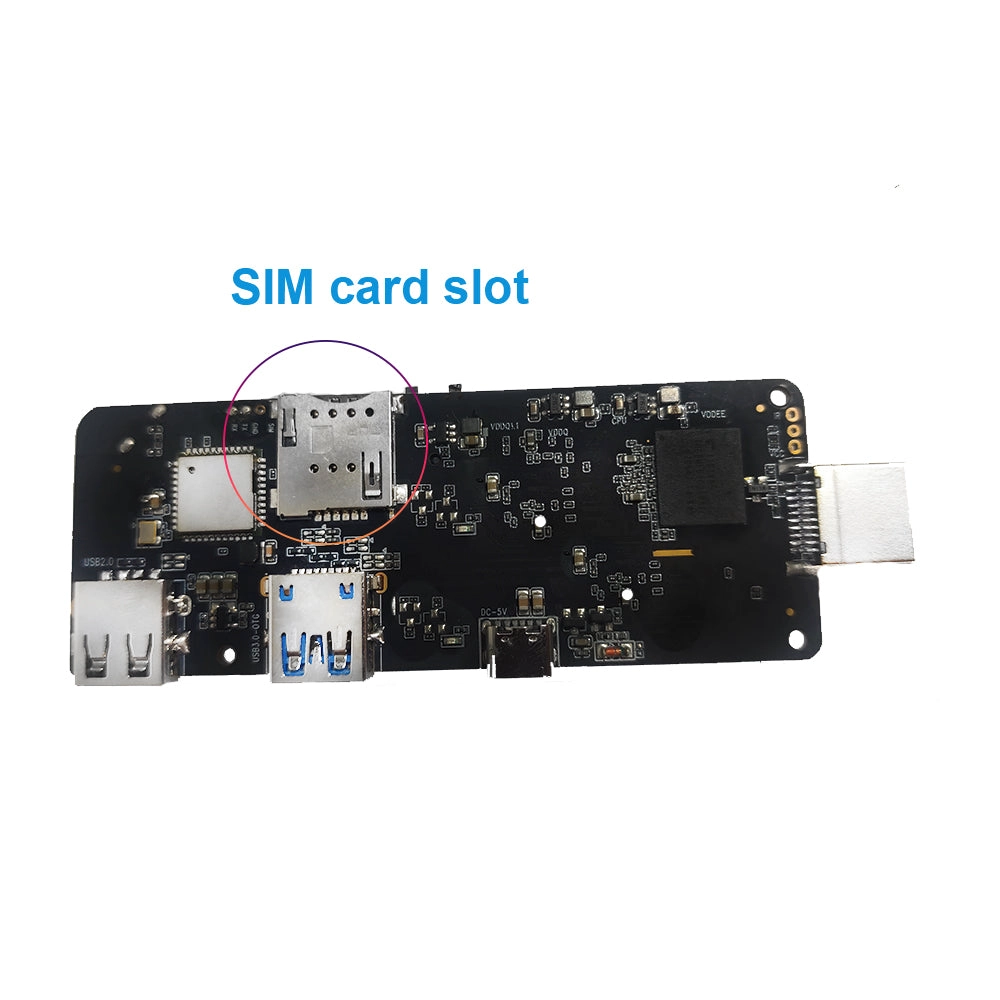
Amlogic S928X / S905X5 / A311D2 Quad/Octa Core Android TV Box hardware architecture
Amlogic S928X / S905X5 / A311D2 Android TV Box Hardware Architecture
Amlogic’s latest SoC platforms are changing what an Android TV Box can represent in a commercial product. The key issue is no longer whether a box can decode 4K video. For B2B projects, the harder questions are whether the SoC provides sufficient CPU/GPU headroom, AV1 capability, AI acceleration, I/O flexibility, thermal stability, and long-term firmware support for the intended workload.
S928X, S905X5, and A311D2 target different performance classes. Treating them as interchangeable “quad-core or octa-core Android TV Box chips” leads to poor hardware selection, unnecessary BOM costs, or insufficient processing capacity after deployment. A proper architecture starts with the application workload and works backward to the SoC, memory, storage, PCBA layout, thermal design, Android/Linux software stack, and OTA strategy.
S928X vs S905X5 vs A311D2: Architecture Starts with the Workload
The first distinction is CPU architecture.
The S928X platform is positioned toward high-performance Android TV Box applications where CPU/GPU resources, 8K-class media processing, and high-speed connectivity are important. Its architecture provides substantially more processing headroom than entry-level TV box platforms and is suitable for demanding multimedia interfaces, high-resolution video playback, multi-application environments, and customized commercial systems.
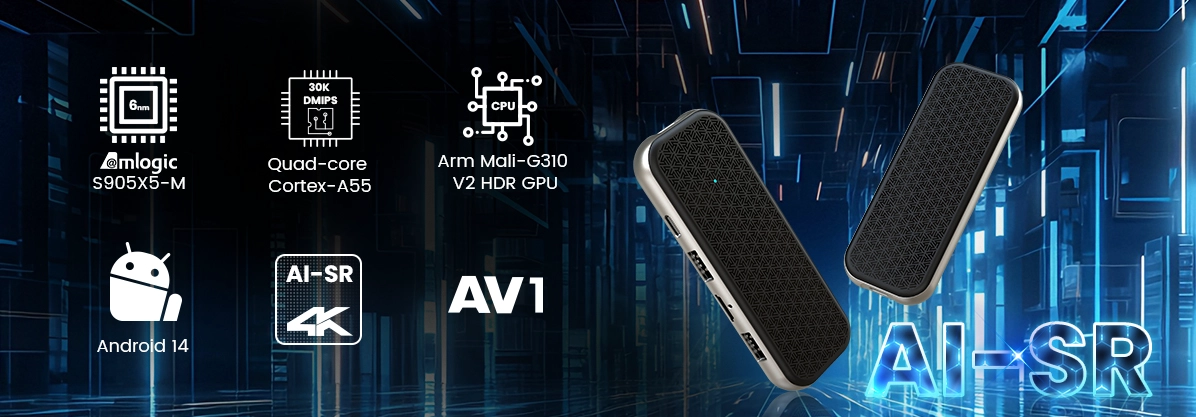
S905X5 takes a different approach. It is designed around a newer-generation architecture with strong multimedia efficiency and AV1 decoding capability, making it attractive for mainstream 4K streaming products where power consumption, platform cost, and modern codec support need to remain balanced.
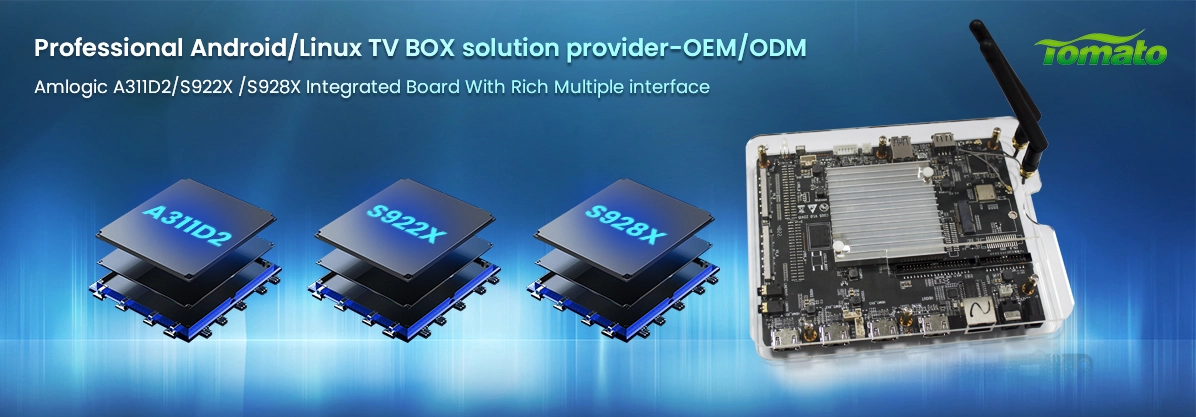
A311D2 sits in another category. Its value is not simply the number of CPU cores. The platform combines multi-core ARM processing with an integrated NPU, making it more relevant when an Android TV Box becomes an edge-computing terminal rather than a pure media player.
For a B2B buyer, the basic architecture can therefore be viewed as:
| Platform | Typical positioning | Key architectural consideration | Suitable project direction |
|---|---|---|---|
| Amlogic S905X5 | Mainstream / efficient | Modern multimedia + AV1 | Streaming, IPTV, commercial TV |
| Amlogic S928X | High-performance multimedia | Higher CPU/GPU and media-processing headroom | 8K, premium STB, advanced Android UI |
| Amlogic A311D2 | AI + multimedia | CPU/GPU + NPU acceleration | Edge AI, vision, smart retail, interactive terminals |
The important point is that “octa-core” does not automatically mean better for every project. An application that only requires 4K AV1 playback and a lightweight launcher may gain little from an oversized SoC. Conversely, a product requiring computer vision, local inference, multiple displays, or heavy background services can quickly expose the limitations of a mainstream streaming platform.
S905X5: Efficient Architecture for Mainstream Android TV Box Projects
S905X5 is particularly relevant to the next generation of mainstream Android TV Box designs because AV1 has become an increasingly important codec requirement.
AV1 reduces bandwidth requirements while maintaining high visual quality, making hardware decoding increasingly valuable for OTT, IPTV, streaming, and digital media applications. For a commercial Android TV Box, hardware AV1 decoding prevents unnecessary CPU utilization and provides a more efficient media pipeline.
The architecture should not, however, be evaluated from the codec specification alone.
A production-grade S905X5 Android TV Box also requires:
-
Appropriate LPDDR memory configuration
-
Stable eMMC storage
-
HDMI output implementation
-
HDCP integration where required
-
Gigabit Ethernet or appropriate wireless networking
-
Wi-Fi and Bluetooth RF layout
-
USB and other peripheral interfaces
-
PMIC selection and power sequencing
-
Proper PCB impedance control
-
Thermal validation under sustained playback
The PCBA is particularly important.
Two Android TV Boxes using the same S905X5 SoC can behave very differently because of differences in DDR routing, power design, RF layout, storage quality, PCB stack-up, and thermal management.
For OEM customers, this is one reason reference-board copying is not equivalent to engineering a production product.
A commercial Android TV Box may operate continuously for many hours each day. A PCBA that performs correctly during a 15-minute laboratory test may still experience thermal throttling, storage instability, Wi-Fi degradation, or power-management problems during long-duration operation.
S928X: When 8K and High Processing Headroom Matter
S928X belongs to a higher-performance class of Android TV Box architecture.
The attraction is not simply “8K support.” An 8K-capable SoC provides additional processing resources for demanding multimedia workloads, high-resolution UI rendering, advanced codecs, and applications that need more CPU/GPU capacity.
For system integrators, the more useful question is:
What processing margin remains after the Android operating system, launcher, background services, DRM components, networking, and customer applications are running simultaneously?
This distinction matters in commercial products.
A consumer box might spend most of its time executing one streaming application. A hotel TV system, IPTV terminal, enterprise media player, or customized operator box can have considerably more software running in parallel.
The architecture therefore needs to consider:
SoC → DDR → storage → multimedia engine → HDMI/HDCP → networking → Android framework → application layer
rather than evaluating the processor in isolation.
For an S928X project, higher memory capacity can also become relevant when the product requires complex UI, multiple services, browser-based applications, remote management, or customized multimedia software.
This is where OEM/ODM engineering becomes materially different from conventional product sourcing.
If the required interface cannot be achieved with the original PCBA, the design may require:
-
PCB component changes
-
Memory configuration changes
-
Additional USB or serial interfaces
-
Ethernet modifications
-
GPIO expansion
-
Display-interface changes
-
Power-supply redesign
-
Connector repositioning
-
Thermal-mechanical redesign
These are PCBA-level engineering tasks rather than enclosure customization.
A311D2: Android TV Box Architecture with AI at the Edge
A311D2 is more interesting when the Android TV Box is expected to perform local AI processing.
The addition of an NPU changes the architecture from a conventional media playback device into a potential edge-computing terminal.
Possible workloads include:
-
Computer vision
-
Object detection
-
Face-related applications where legally and operationally appropriate
-
People counting
-
Retail analytics
-
Industrial monitoring
-
Intelligent advertising
-
Gesture or interaction recognition
-
Local inference
-
Smart signage
The critical architecture is no longer simply:
CPU → GPU → video decoder → HDMI
It becomes:
CPU → GPU → NPU → camera/input → AI framework → application → display
This distinction has major implications for software engineering.
An NPU is useful only when the software stack can actually utilize it. Model conversion, runtime compatibility, quantization, memory allocation, inference scheduling, and API integration all influence the real-world performance.
A project that specifies an A311D2 because it has an NPU but continues to execute AI workloads primarily on the CPU has not fully utilized the platform.
For this class of product, Android/Linux kernel optimization and SDK-level integration become important parts of the hardware architecture.
The Hidden Architecture: Firmware Is Part of the Hardware
For B2B Android TV Box development, the physical board is only one layer of the product.
The complete architecture should include:
SoC + PCBA + BSP + kernel + Android framework + middleware + UI + applications + OTA
This is especially important for customized products.
A customized launcher may require changes to Android system behavior. A hotel deployment may require automatic boot configuration and remote device management. An IPTV operator may need middleware integration. A digital signage system may require scheduled playback, device monitoring, content synchronization, and remote updates.
These requirements cannot always be solved by installing an APK.
At the BSP and kernel level, projects may require:
-
Linux/Android kernel optimization
-
Device-tree modification
-
Driver integration
-
GPIO configuration
-
Display-interface configuration
-
Ethernet/Wi-Fi/Bluetooth optimization
-
USB peripheral support
-
Hardware codec integration
-
Power-management tuning
-
Watchdog configuration
-
OTA update mechanisms
At the application layer, the requirements may include:
-
SDK/API integration
-
Custom launcher development
-
Custom UI/UX
-
Device-management APIs
-
Remote-control integration
-
Content-management integration
-
IPTV middleware
-
Digital-signage CMS integration
This is why the correct OEM partner should be evaluated by engineering capability rather than factory capacity alone.
Thermal Architecture Is a Product Requirement, Not an Accessory
High-performance Android TV Box hardware generates substantially more heat than entry-level streaming devices.
Thermal design therefore needs to begin during PCBA development.
A typical engineering process should evaluate:
-
SoC thermal power under continuous workload
-
Heat-spreader contact
-
Thermal-pad selection
-
Heatsink geometry
-
Enclosure airflow
-
PCB copper distribution
-
Component thermal limits
-
Sustained CPU/GPU/NPU workloads
-
Ambient-temperature testing
-
Performance degradation under thermal throttling
For industrial and commercial projects, SZTomato can integrate specialized cooling solutions into the product architecture rather than treating thermal management as a final-stage mechanical adjustment.
This becomes particularly important for S928X and A311D2 designs where sustained high-performance workloads can generate more heat than a conventional low-cost TV Box enclosure was designed to dissipate.
A good thermal design should maintain predictable performance rather than simply preventing immediate shutdown.
How to Select the Right Android TV Box SoC for a B2B Project
The selection process should start with the application requirements.
Choose S905X5 when efficiency and mainstream multimedia are the priority
S905X5 is appropriate when the product primarily requires:
-
4K streaming
-
AV1 decoding
-
IPTV
-
OTT applications
-
Commercial TV
-
Standard digital media playback
-
Cost-sensitive mass production
The objective is to achieve sufficient performance without unnecessarily increasing BOM cost.
Choose S928X when processing margin and high-resolution multimedia are important
S928X becomes more relevant when the project requires:
-
Higher CPU/GPU performance
-
8K-class multimedia
-
Complex Android UI
-
High-resolution media processing
-
Multiple background services
-
Premium STB functionality
-
Advanced commercial applications
The additional processing headroom can provide greater flexibility for future software requirements.
Choose A311D2 when local AI is part of the product specification
A311D2 should be considered when the Android TV Box must perform:
-
Local AI inference
-
Computer vision
-
Intelligent advertising
-
Smart retail analysis
-
Edge AI processing
-
Camera-based applications
-
AI-enabled interactive terminals
The key requirement is to validate the entire AI software chain rather than evaluating NPU TOPS alone.
Why OEM/ODM Architecture Matters
A standard Android TV Box supplier typically provides an existing PCBA, enclosure, firmware image, and packaging.
That model works for buyers who only need a catalog product.
It becomes restrictive when the project requires hardware or firmware changes.
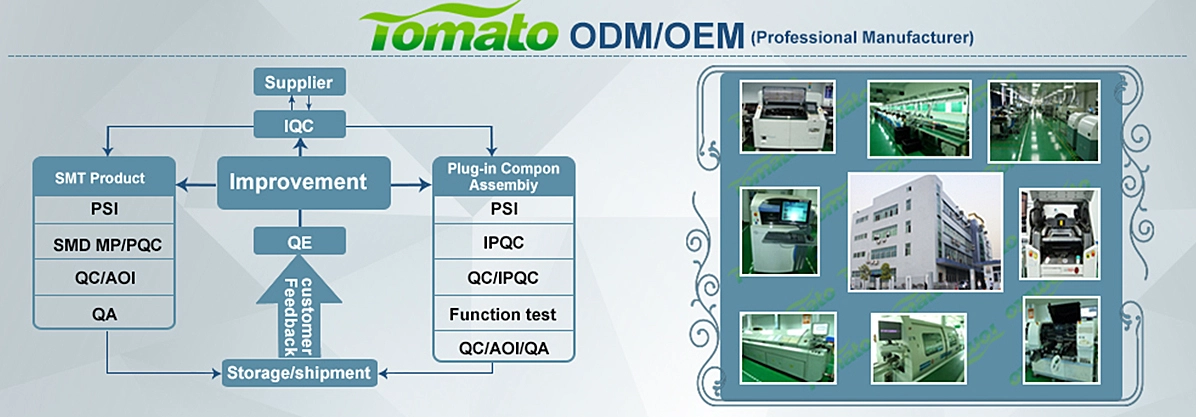
SZTomato approaches these projects from the engineering side, supporting PCBA hardware modification, SDK/API integration, custom UI/UX firmware, and specialized cooling solutions for commercial and industrial deployments.
The practical workflow can include:
Requirement analysis → SoC selection → PCBA architecture → prototype → BSP/SDK integration → firmware customization → thermal validation → compliance testing → pilot production → OTA deployment → mass production
This approach also allows the hardware and software layers to be developed together.
For example, a project requiring an additional peripheral interface should not wait until firmware development to discover that the selected board lacks the necessary GPIO, USB bandwidth, power budget, or physical connector.
Likewise, a product requiring long-term OTA updates needs an update architecture considered before mass production rather than added after deployment.
Conclusion: Select the Architecture Before Selecting the Box
S905X5, S928X, and A311D2 represent different Android TV Box architecture strategies rather than three interchangeable processors.
S905X5 emphasizes efficient mainstream multimedia processing and modern codec support. S928X provides a higher-performance platform for demanding multimedia and premium Android applications. A311D2 extends the Android TV Box concept toward edge AI and local inference.
For procurement managers and system integrators, the critical decision is therefore not simply which SoC has more cores or higher headline specifications. The correct question is whether the complete hardware-software architecture can support the project's workload, interfaces, thermal conditions, firmware requirements, and deployment lifecycle.
For projects requiring a customized Android TV Box, SZTomato supports customization from PCBA hardware modification and SoC platform selection through SDK/API integration, Linux/Android optimization, custom UI/UX firmware, thermal engineering, and production deployment. This is the level of engineering required when an Android TV Box is being developed as a commercial product rather than purchased as a generic retail device.
