Android TV Box OEM/ODM Guide
Android TV Box OEM/ODM Guide: From SoC Selection to Mass Production
The Android TV Box market is moving beyond standard 4K streaming hardware. New SoCs are adding stronger AV1 decoding, higher AI compute capability, faster I/O, improved display pipelines, and longer software support requirements. For B2B buyers, the difficult part is no longer finding a factory that can assemble a box. It is finding an OEM/ODM partner that can translate a product specification into a stable hardware and firmware platform.
A reference board with a customized enclosure may be enough for a retail product. It is rarely enough for an operator deployment, digital signage network, hospitality system, IPTV project, or branded Android TV Box that requires proprietary functions.
The right OEM/ODM process starts with the platform architecture and ends with controlled mass production.
1. Start Android TV Box OEM/ODM Projects With the SoC and Application Requirements
SoC selection determines much more than CPU performance. It affects video codecs, display output, memory architecture, AI capability, peripheral interfaces, Linux/Android compatibility, power consumption, and long-term software maintenance.
For an Android TV Box OEM project, the engineering team should define the application before selecting the chipset.
Key parameters include:
-
CPU architecture and core configuration
-
GPU architecture and graphics API support
-
NPU performance for AI workloads
-
4K or 8K video decoding and encoding
-
AV1, H.265, VP9 and H.264 codec support
-
HDMI version and HDCP requirements
-
RAM type and capacity
-
eMMC or other storage configuration
-
Wi-Fi and Bluetooth generation
-
USB, Ethernet, MIPI, PCIe and other interfaces
-
Android or Linux operating system requirements
-
Operating temperature and power consumption
A media-focused Android TV Box may prioritize hardware video decoding and wireless connectivity. An industrial edge device may require additional Ethernet ports, RS-232, GPIO, PCIe, M.2, CAN or other interfaces.
This is where OEM/ODM engineering becomes important.
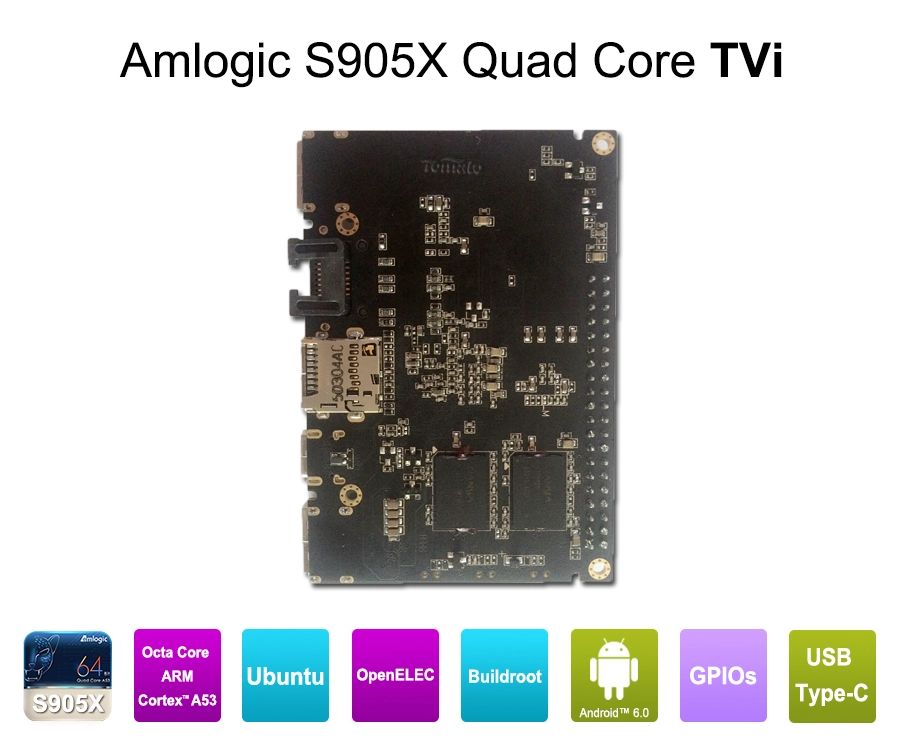
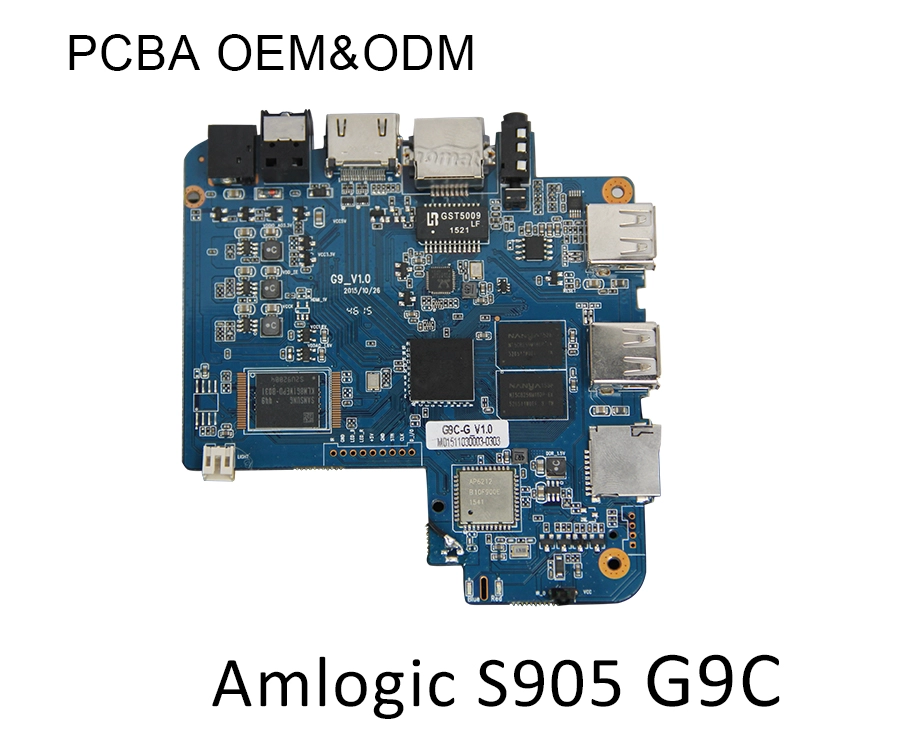
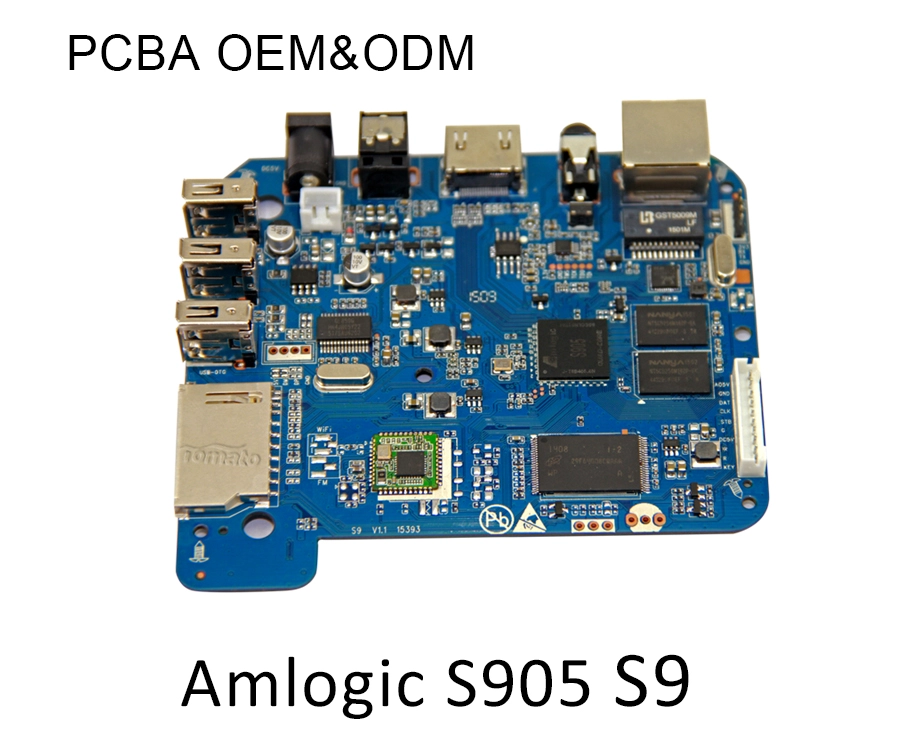
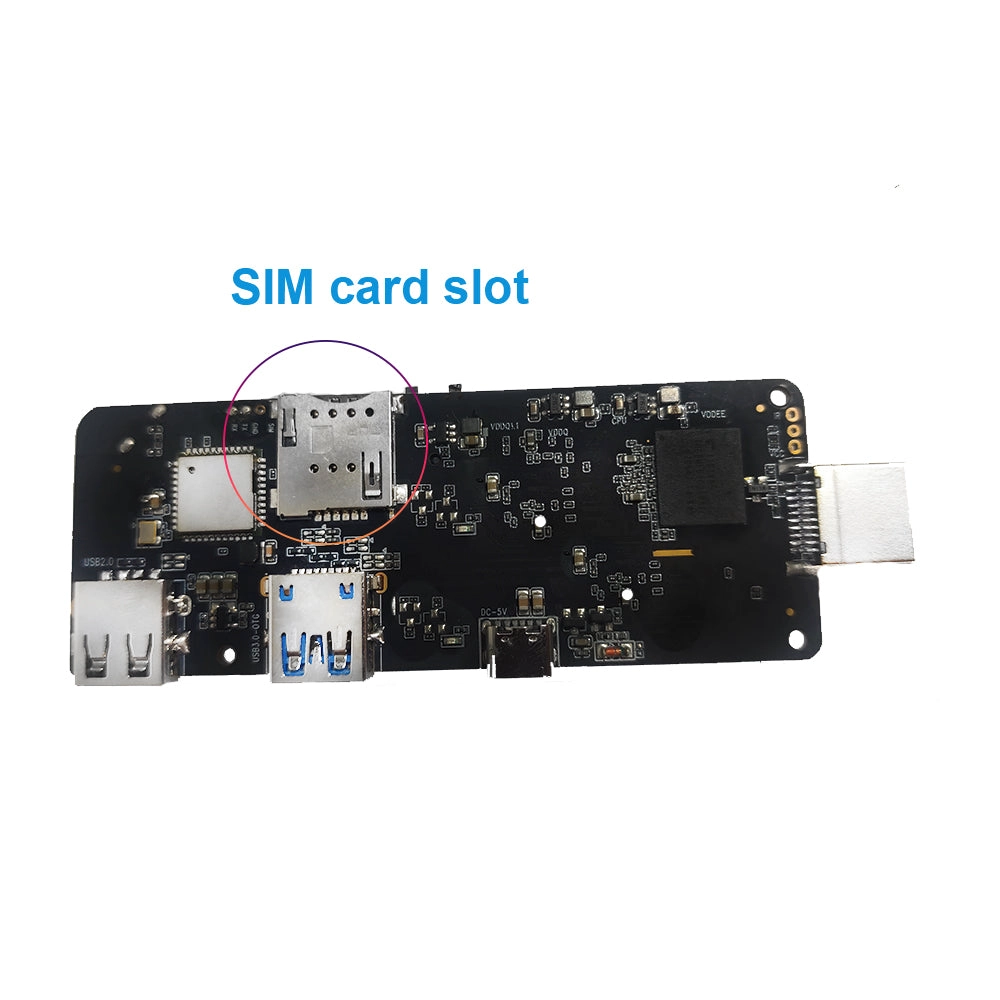
A supplier should be able to modify the PCBA rather than simply select an existing board from a product catalog. PCBA layout changes can support different connector configurations, additional peripherals, power requirements, storage options, network interfaces, and project-specific I/O.
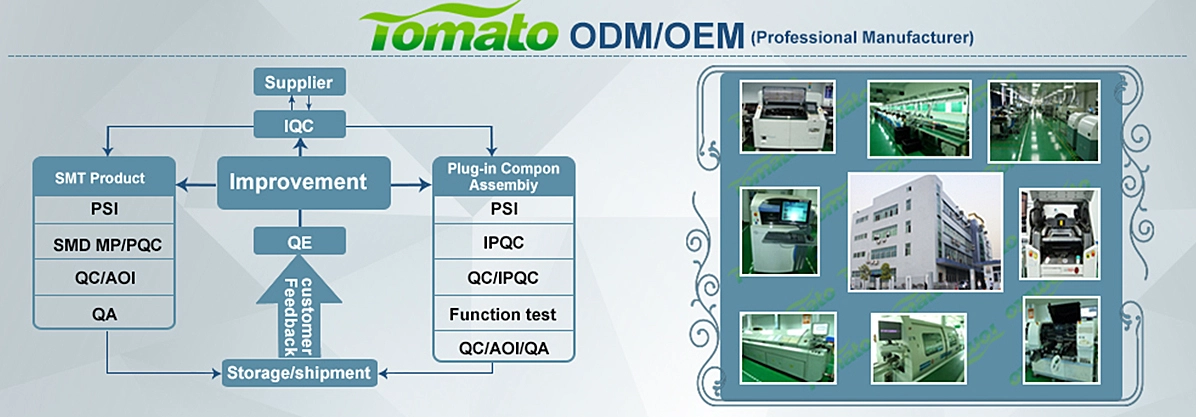
SZTomato supports customization from the hardware layer, including PCBA modification and platform adaptation, allowing the same SoC platform to be configured for different commercial applications.
2. Hardware Customization Is Only Half of the Android TV Box OEM Process
Many OEM projects fail after the prototype stage because the supplier treats firmware as a finished component.
For commercial deployments, firmware is part of the product architecture.
An Android TV Box may require:
-
Custom boot animation and branding
-
Proprietary launcher or UI/UX
-
Pre-installed applications
-
Remote-control mapping
-
Kiosk mode
-
Device management functions
-
Automatic application launch
-
Ethernet/Wi-Fi configuration
-
System-level security policies
-
OTA update mechanisms
-
Remote diagnostics
-
Customized APIs
-
SDK integration
-
Android framework modifications
These requirements cannot always be solved through ordinary application installation.
For example, a branded launcher may require system-level permissions. A fleet of thousands of deployed devices needs a reliable OTA update strategy rather than manual firmware flashing. A specialized IPTV or enterprise application may require SDK/API integration with the underlying hardware platform.
Kernel-level optimization can also become necessary when the project depends on non-standard peripherals or performance requirements.
For Linux-based Android TV Box applications, engineering may involve Linux kernel configuration, driver integration, bootloader adaptation, hardware abstraction, power management, and peripheral validation.
For Android deployments, the development scope can extend into the Android framework, system applications, permissions, device policies, graphics configuration, and OTA infrastructure.
SZTomato supports SDK/API integration and custom UI/UX firmware development so that the finished device can be adapted to the customer's software architecture instead of forcing the customer to redesign the application around a generic retail box.
3. Thermal Design Must Match the Actual Deployment Environment
A high-performance SoC creates a different engineering problem from a basic home streaming box.
Increasing CPU, GPU, NPU and video-processing workloads increases thermal density. If the enclosure, heatsink, thermal interface material and airflow are not designed around the actual workload, a device may pass a short laboratory test and still experience throttling during continuous operation.
This becomes particularly important for:
-
Digital signage
-
Commercial displays
-
Industrial monitoring
-
Hotel IPTV systems
-
Retail information systems
-
AI edge computing
-
24/7 media playback
-
High-resolution video processing
Thermal design should consider the complete mechanical and electrical system.
Important variables include heatsink dimensions, thermal conductivity, contact pressure, ventilation, enclosure material, ambient temperature, SoC power consumption and sustained workload.
For industrial Android TV Box OEM/ODM projects, SZTomato can provide specialized cooling solutions based on the target workload and enclosure design.
The objective is not simply to produce a low-temperature benchmark result. The objective is stable performance over the intended operating cycle.
4. Build Validation Around the Final Product, Not the Prototype
A functional sample does not automatically represent a production-ready Android TV Box.
Before mass production, an OEM/ODM project should validate four layers.
Hardware Validation
Verify the complete PCBA against the final specification:
-
SoC and memory stability
-
Storage reliability
-
HDMI output
-
HDCP behavior
-
Ethernet throughput
-
Wi-Fi and Bluetooth performance
-
USB compatibility
-
Power supply stability
-
Thermal performance
-
Peripheral interfaces
Changing a connector, memory configuration or wireless module late in the project can affect PCB layout, firmware, certification and production testing. Hardware changes should therefore be controlled through an engineering change process.
Firmware Validation
Firmware testing should cover more than booting the device.
A production firmware image should be tested for:
-
Cold boot and reboot behavior
-
Sleep and wake-up
-
Application stability
-
Video playback
-
Network recovery
-
Remote-control behavior
-
Factory reset
-
OTA upgrade and rollback
-
Storage behavior
-
System permissions
-
Long-duration operation
For fleet deployments, OTA reliability is especially important. A failed update mechanism can turn a minor firmware release into a field-service problem.
Application and API Integration
The Android TV Box should be tested together with the customer's actual application stack.
This is particularly important when the device is integrated with IPTV platforms, digital signage CMS systems, hotel management systems, education platforms, enterprise applications or AI software.
Testing only the hardware demonstration application can hide integration problems that appear later in deployment.
Production Validation
The final stage is not simply an assembly inspection.
The production line should have defined procedures for firmware flashing, MAC address management, serial-number tracking, functional testing, network testing, display output verification and final quality control.
For large B2B orders, manufacturing consistency is as important as the initial engineering sample.
5. How B2B Buyers Should Evaluate an Android TV Box OEM/ODM Supplier
Price per unit is only one part of the procurement equation.
A supplier should be evaluated against its ability to control the complete product lifecycle.
A practical evaluation framework includes:
| Area | Key Question |
|---|---|
| SoC Platform | Can the supplier recommend the appropriate platform for the workload? |
| PCBA | Can the PCB be modified for project-specific interfaces? |
| Firmware | Can the supplier modify system-level Android/Linux components? |
| SDK/API | Can the supplier integrate proprietary applications and APIs? |
| Thermal | Can cooling be engineered for sustained workloads? |
| OTA | Can firmware updates be deployed and controlled remotely? |
| Testing | Is there a documented hardware and firmware validation process? |
| Production | Can engineering specifications be transferred accurately into mass production? |
| Customization | Can the supplier support enclosure, logo, UI, firmware and hardware changes? |
| Long-Term Support | Can the platform be maintained after the initial shipment? |
The distinction between an OEM/ODM engineering partner and a generic box supplier becomes clear at this stage.
A catalog supplier generally optimizes an existing product for price and delivery. An engineering-oriented OEM/ODM supplier starts from the customer's application requirements and modifies the hardware and software architecture accordingly.
6. Where Android TV Box OEM/ODM Demand Is Heading
The next phase of the market is not limited to consumer streaming.
Commercial buyers are increasingly looking for platforms that combine video processing, connectivity, device management and application-specific computing.
This creates several expanding product directions:
Commercial Android TV Box:
Designed for hotels, IPTV operators, hospitality networks and managed entertainment systems.
Digital Signage Player:
Optimized for centralized content management, scheduled playback, multi-screen applications and continuous operation.
AI Edge Box:
Uses NPU acceleration for computer vision, analytics, object recognition and other edge workloads.
Android Mini PC:
Extends the Android platform into retail, education, enterprise and embedded computing applications.
Linux-Based Media and Edge Platform:
Provides greater flexibility for customers requiring customized Linux environments, industrial applications or specialized software stacks.
The common requirement is platform flexibility.
Buyers increasingly need hardware that can evolve with their software and deployment model instead of a fixed consumer device that becomes difficult to modify after production.
Conclusion: Select an Android TV Box OEM/ODM Partner Based on Engineering Capability
For a serious B2B Android TV Box project, the critical question is not simply whether a supplier has an existing 4K or 8K model.
The more important questions are whether the supplier can select the correct SoC, modify the PCBA, integrate SDK/API requirements, optimize Android or Linux at the system level, develop custom UI/UX firmware, engineer thermal performance, implement OTA updates, and maintain production consistency.
SZTomato supports customization across these layers, including PCBA hardware modification, SDK/API integration, custom firmware and UI/UX development, and specialized cooling solutions for commercial and industrial applications.
For procurement managers, system integrators, IPTV operators, distributors and brand owners, the most reliable approach is to define the application architecture first, then evaluate the OEM/ODM partner against the engineering requirements.
When the product needs to be more than a standard retail box, choose the manufacturing partner according to what it can engineer—not only what it can ship.