
Best CPU Platforms for TV Boxes in 2026
Best CPU Platforms for TV Boxes in 2026: System Architecture and B2B Silicon Selection
The core architectural constraint in multi-device commercial TV Box deployments is the optimization of silicon performance against localized thermal profiles and codec shift realities. System integrators frequently misallocate procurement budgets by over-specifying raw CPU clock speeds while under-specifying hardware-level video decoding blocks, or by deploying consumer-grade SoCs into environments that require 24/7 continuous edge computation.
As we progress through 2026, the global hardware ecosystem has split into distinct silicon tiers. Choosing the optimal platform requires an evaluation of the system-on-chip (SoC) layout, memory bus constraints, and peripheral connectivity options. This guide analyzes the definitive silicon engines powering modern enterprise platforms.
1. Silicon Market Segmentation: Amlogic vs. Rockchip vs. Allwinner
The enterprise TV Box ecosystem is anchored by three primary chip manufacturers, each designing their Board Support Packages (BSPs) and silicon layouts for distinct price-to-performance windows and operational profiles.
┌───────────────────────────────┐
│   B2B TV Box Deployment Profile│
└───────────────┬───────────────┘
│
┌────────────────────────┼────────────────────────┐
▼                        ▼                        ▼
[Amlogic S905X5/S928X]   [Rockchip RK3588/RK3576]   [Allwinner H728]
• High-Bitrate IPTV      • Edge AI Analytics       • Budget Menu Boards
• 8K AV1 / VVC Native    • Multi-Display Output    • 4K Looping Signage
• Low-Power 6nm Node     • 6 TOPS NPU / PCIe 3.0   • Low Unit Cost / CapEx
Amlogic: The Streaming and Codec Benchmark
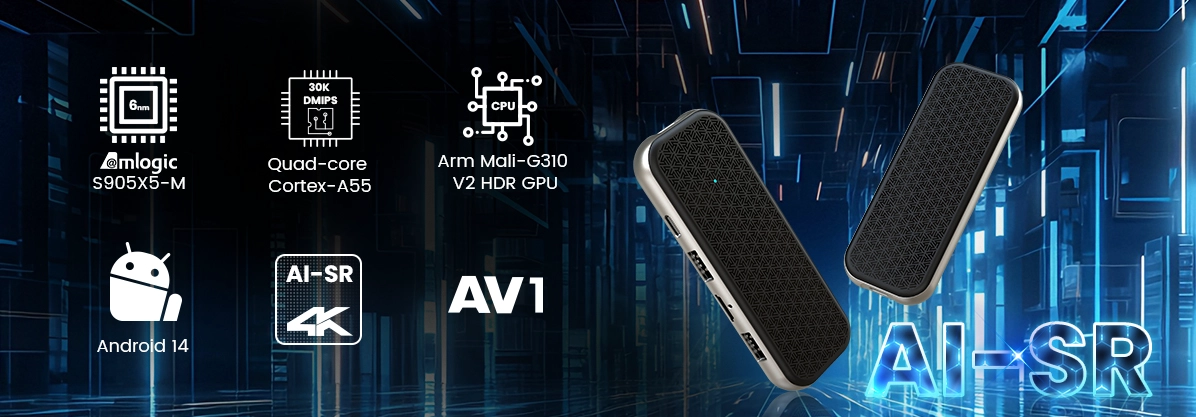
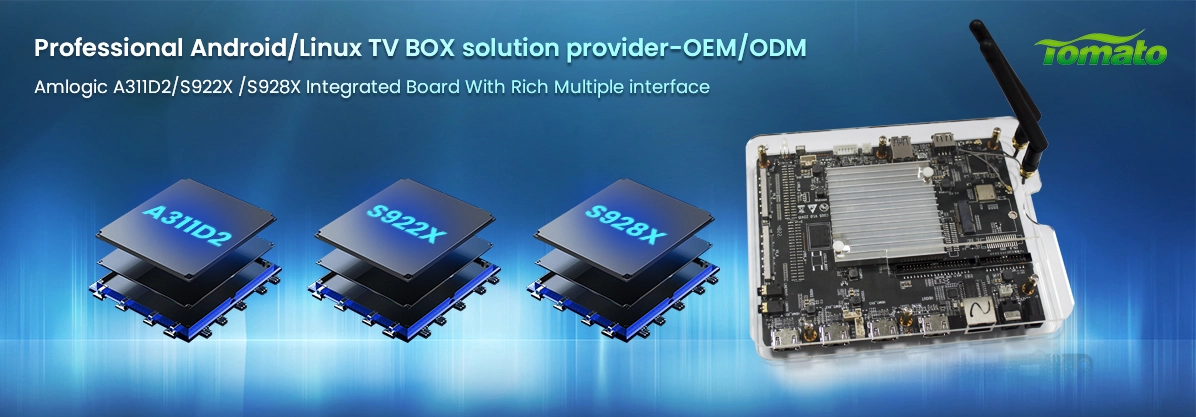
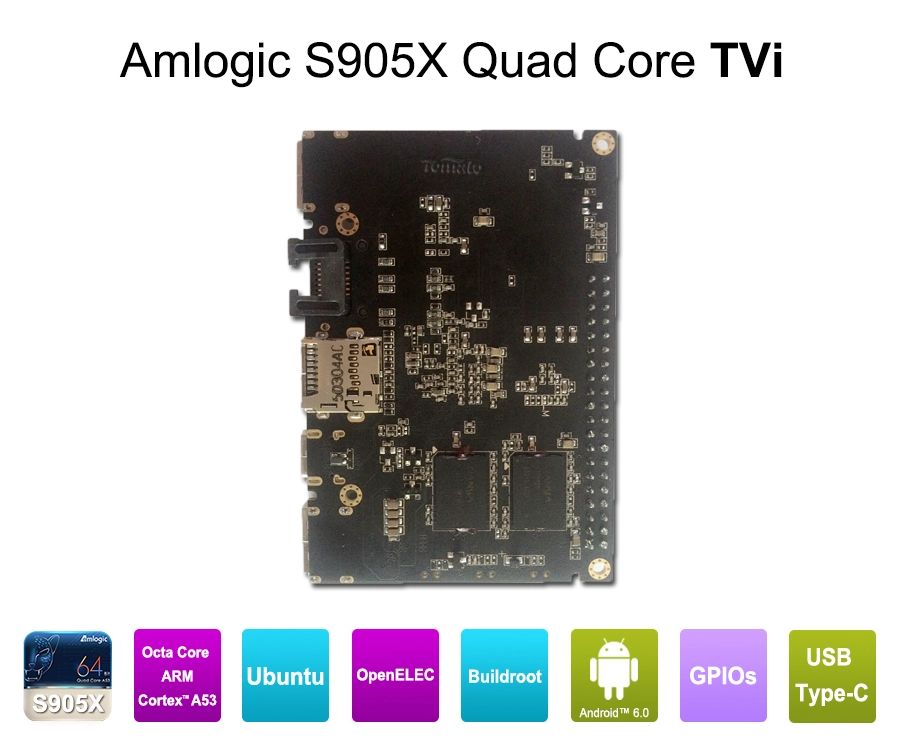
Amlogic dominates hardware nodes intended for media playback, content delivery network (CDN) scaling, and high-density IPTV networks. Platforms like the Amlogic S905X5 (engineered on a power-efficient 6nm process) and the premium Amlogic S928X prioritize specialized hardware video decoding pipelines rather than raw application processing. They feature dedicated hardware blocks for AV1 and emerging VVC (Versatile Video Coding) bitstreams, minimizing CPU utilization during ultra-high-definition execution.
Rockchip: The Edge-AI and Industrial Heavyweight
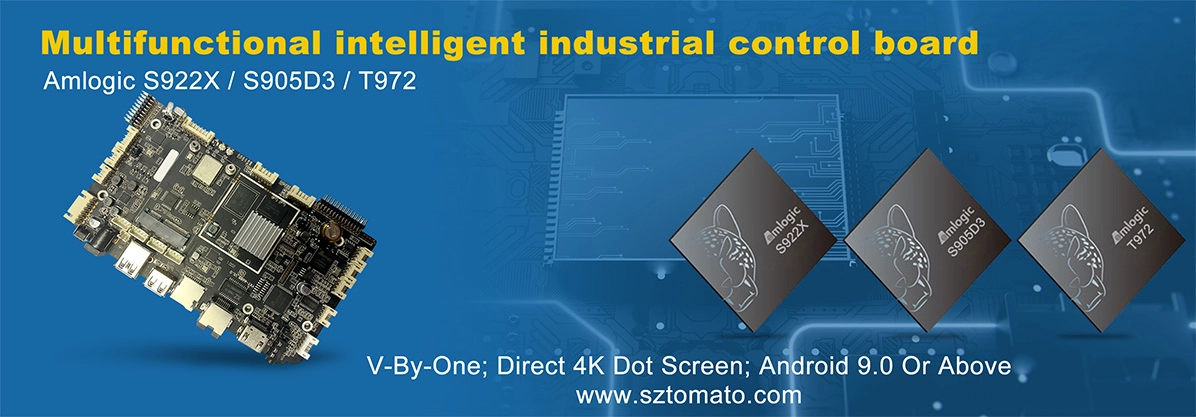
Rockchip optimizes its silicon for raw processing ceilings, high-speed peripheral expansion, and local artificial intelligence execution. The flagship Rockchip RK3588 utilizes an octa-core big.LITTLE architecture (4× Cortex-A76 and 4× Cortex-A55) paired with an on-chip Neural Processing Unit (NPU) delivering up to 6 TOPS of compute power. This architecture is designed for complex interactive retail displays, computer vision, smart camera integration, and multi-display video wall synchronization.
Allwinner: Cost-Optimized Static Media Engines
Allwinner occupies the budget-conscious tier. While lacking the advanced computational capabilities of Rockchip or the extensive tier-1 DRM certifications of Amlogic, SoCs like the Allwinner H728 provide stable, low-power operation. They are designed for localized looping advertising players, static digital menu boards, and entry-level IoT gateways where low initial capital expenditure (CapEx) drives the procurement strategy.
2. Hardware Decoding Engines and Bitrate Thresholds
When evaluating an enterprise TV Box SoC, the efficiency of the VPU (Video Processing Unit) is more critical than standard CPU clock speeds. Running high-bitrate 4K or 8K video streams via software decoding over-allocates core resources, triggering systemic memory latencies and OS crashes.
| Feature / Metric | Amlogic (S928X / S905X5) | Rockchip (RK3588) | Allwinner (H728) |
|---|---|---|---|
| Primary Deployment Profile | Ultra-HD Media / IPTV | Edge AI / Multi-Display | Budget / Basic Playback |
| Max Decoding Resolution | 8K @ 60fps (S928X) | 8K @ 60fps / 4K @ 120fps | 4K @ 60fps |
| AV1 / VVC Support | Full Hardware Decoding | Native AV1 (VVC via CPU) | Basic AV1 Only |
| PCIe Interface | Internal / Limited | PCIe 3.0 (Up to 4 Lanes) | PCIe 2.0 / Shared |
| Fabrication Node | 6nm FinFET / 12nm | 8nm LP | 22nm / 28nm |
Codec Validation: Future-Proofing Procurement
By 2026, AV1 has become the standard for major streaming infrastructures, reducing bandwidth overhead by up to 30% compared to H.265. Procurement specifications for streaming networks must mandate native, hardware-accelerated AV1 decoding.
Furthermore, premium models utilizing the Amlogic S928X integrate AI-based Super-Resolution (AI-SR), allowing operators to upscale standard 1080p feeds to near-4K output locally at the edge. This reduces backbone network bandwidth requirements across massive hospitality or residential networks.
3. Thermal Dynamics and Peripheral I/O Constraints
A TV Box is bound by its cooling mechanics. In commercial rollouts where nodes are mounted in unventilated enclosures directly behind commercial displays, high thermal density leads to rapid downclocking of the CPU/GPU.
Fabrication Nodes and Thermal Dissipation
The fabrication process node directly affects localized thermal behavior:
-
6nm/8nm Nodes (Amlogic S905X5 / Rockchip RK3588): These tighter configurations consume less power per cycle and generate a smaller thermal footprint under load. This allows the TV Box to function reliably within compact, passive, fanless aluminum enclosures.
-
Legacy Nodes (22nm/28nm): Found in lower-tier SoCs, these generate higher thermal loads during sustained 4K decoding, requiring oversized copper pours and dedicated thermal pads linking the component directly to a metal chassis to avoid thermal throttling.
[SoC Thermal Die] ──> [High-Conductivity Thermal Pad] ──> [Extruded Aluminum Chassis] ──> [Dissipation via Radiation]
Peripheral I/O Architecture
For interactive hardware integrations, the CPU platform must function as an expandable data hub.
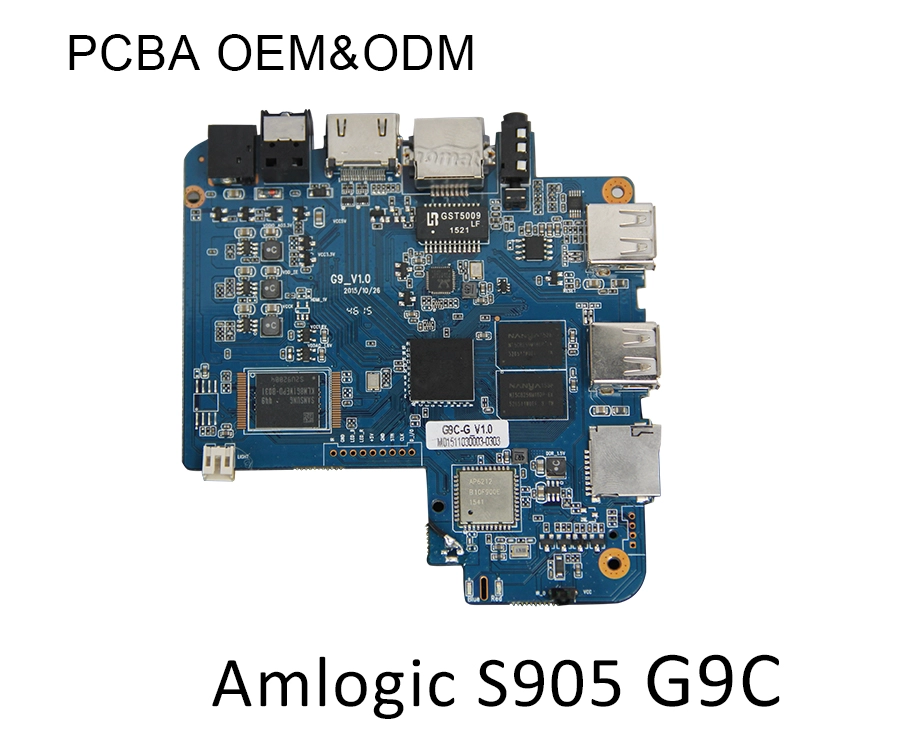
- Rockchip platforms provide high-speed connectivity options, including native PCIe 3.0 lanes, dual Gigabit Ethernet ports, and SATA 3.0 interfaces. This allows developers to integrate low-latency NVMe solid-state storage or custom dual-band WiFi modules directly onto the PCBA.
-
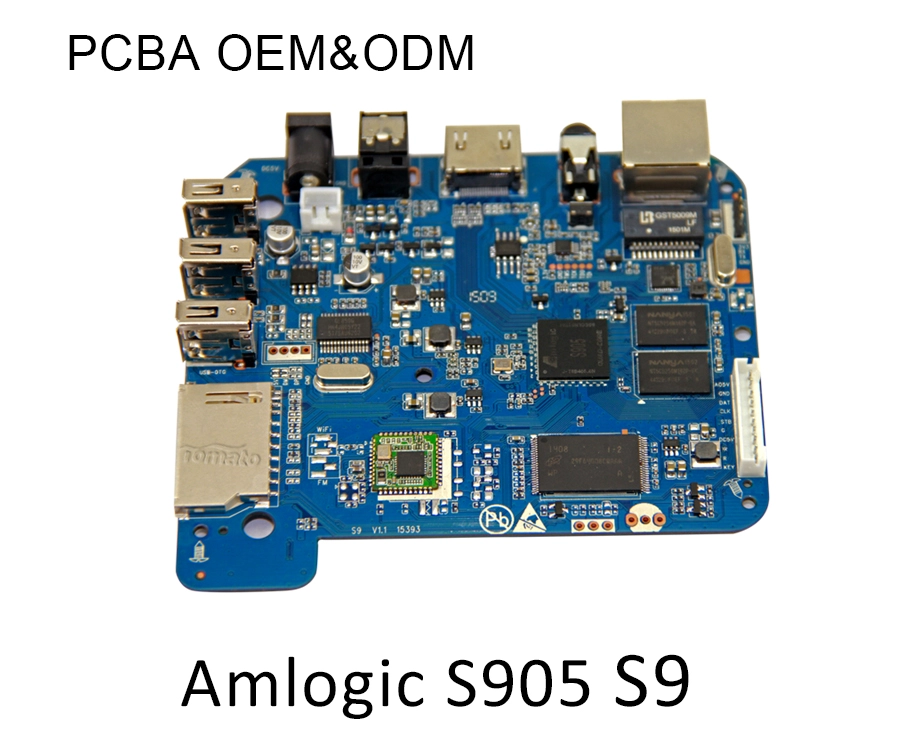
Amlogic and Allwinner architectures typically feature internal USB-bound interfaces. This structure is efficient for streaming applications, but restricts the integration of high-bandwidth external arrays or local data logging systems.
4. Solving Long-Term OS Longevity and SDK Support
A recurring risk in cross-border TV Box procurement is sourcing hardware backed by fragmented or abandoned software development kits (SDKs). Many consumer-grade processors are locked permanently to legacy operating system versions because the chipmaker has depreciated the base drivers.
For enterprise deployments in 2026, verify that the selected processor platform is backed by an active Linux Kernel Long-Term Support (LTS) roadmap or modern AOSP (Android Open Source Project) baselines.
Procurement Directive: Ensure your manufacturing partner provides clean Board Support Packages (BSPs) with documented SDK upgrade paths. This prevents security vulnerabilities and ensures compliance with enterprise Mobile Device Management (MDM) platforms.
Strategic Sourcing Alignment
To optimize project ROI, align hardware procurement directly with these distinct deployment criteria:
-
Specify Amlogic (S905X5/S928X): For high-density IPTV setups, premium residential streaming apps, or OTT platforms requiring certified AV1 hardware pipelines and low operational power draw.
-
Specify Rockchip (RK3588/RK3576): For intelligent retail displays, interactive kiosks with localized computer vision analytics, video walls requiring multi-channel physical HDMI breakouts, and fast NVMe storage access.
-
Specify Allwinner (H728): For high-volume, low-margin deployments running static, looping local advertising networks where cost-per-node is the primary driving metric.
For technical evaluation units, customized PCBA layout designs, and specialized firmware engineering support tailored to your project requirements, please contact our global engineering division.
