
Is Google TV better than Android TV?
In the evolving landscape of smart television operating systems, two names consistently surface: Google TV and Android TV. Both come from the same ecosystem and share core foundations, yet their user experiences diverge significantly. For companies and OEMs deploying streaming boxes or smart TV modules, choosing the right platform (or customizing it) can determine market success.
What Are Android TV and Google TV?
Android TV: The Foundation
Android TV is Google’s adaptation of Android for television and media devices. Released in 2014, it provides app support via the Play Store, Chromecast integration, Google Assistant, and a row-based home screen interface. Over time, manufacturers added custom layers, launchers, content feeds, and idle-screen features (such as Glance TV) to enhance the experience.
Its strengths include flexibility (e.g. third-party launchers, customizations), broad device compatibility, and maturity in app ecosystem support.
Google TV: The Content-First Interface
Google TV is not a completely new OS; rather, it is a refined interface layered on the Android TV foundation.It emphasizes a content-first design: aggregating shows, movies, and recommendations across apps into a unified “For You” / “Live” interface. Google TV also supports user profiles, watchlists, and better contextual search across services.
In short: Google TV gives a more modern, aggregated, “what to watch next” experience; Android TV offers more direct control, customization, and modular extensibility.
Key Differences: Comparison Across Dimensions
Below is a side-by-side breakdown of how Google TV and Android TV differ in key dimensions:
| Dimension | Google TV | Android TV |
|---|---|---|
| User Interface & Discovery | Content-focused homepage, aggregated recommendations, easier cross-app search | App-centric layout, users often browse per app to find content |
| User Profiles & Personalization | Multiple profiles, individualized recommendations, watchlist sync | Historically limited or guest modes; less emphasis on multi-user personalization |
| Customization / Flexibility | More constrained: custom launchers and heavy UI modifications are restricted | High flexibility: OEMs or power users can alter launchers, themes, add custom layers |
| Performance / Resource Demand | UI demands can be heavier, especially for low-end hardware | Lower overhead; may run more smoothly on constrained devices |
| Recommendations & Search | Deep aggregation across apps, meta search, “watchlist” | Basic search limited to installed apps or default indexing |
| Ecosystem & Updates | Google is driving its future vision around Google TV interface | Android TV receives updates too (e.g. Android TV 16) |
| Ideal User / Use Cases | For mainstream consumers wanting simple content discovery; families and non-tech users | For enthusiasts, customization fans, or devices with limited specs |
From this table, we see that Google TV might feel “better” to average users, but Android TV still offers compelling advantages in control and efficiency.
When Google TV Is Better — And When It’s Not
Scenarios Where Google TV Owns
-
Casual or mass-market viewers
The content aggregation and recommendation engine helps users avoid “what to watch” fatigue. -
Multi-user households
Profiles and personalized watchlists make it safer and cleaner across members. -
Brands prioritizing UX over heavy customization
If your goal is to deliver a polished, streamlined experience, Google TV reduces fragmentation. -
Smart home & integration
Google TV is more tightly integrated with Google services, smart home features, and future AI layers.
Scenarios Where Android TV Beats It
-
Low-cost devices or entry-tier boxes
The lighter UI is more suitable when hardware is constrained. -
Strong need for customization or regional differentiation
OEMs can more freely build custom launchers, language layers, or local feeds on Android TV. -
Existing devices and ecosystems
If you already have an Android TV base or codebase, staying consistent is often lower effort. -
Advanced users or power users
Users who prefer control, sideloading, or nonstandard UI tweaks may prefer Android TV.
In many cases, the answer is not pure Google TV or pure Android TV, but rather a hybrid or modular approach—use Google TV as the default interface, but retain flexibility to adjust parts via custom modules. That’s where OEM/ODM support becomes key.
The Role of SZTomato: Customization & Differentiation
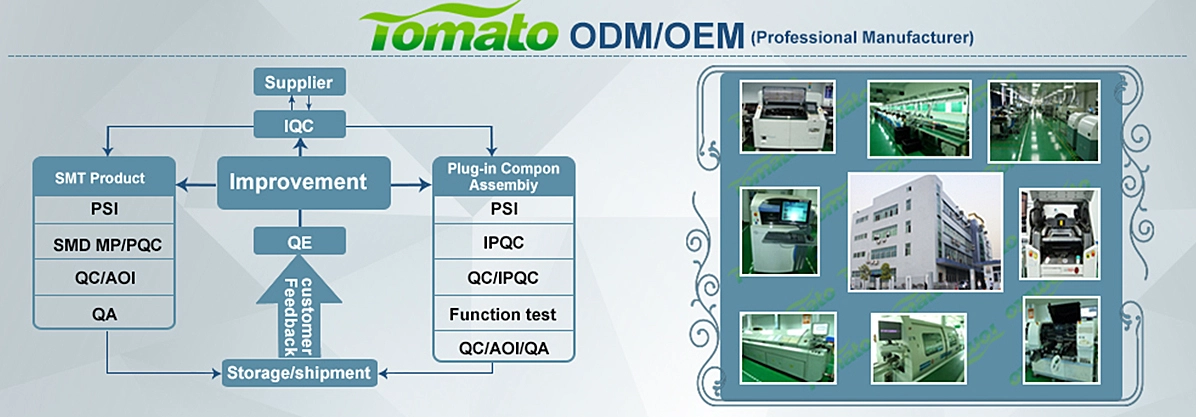
At SZTomato, we specialize in TV box and smart TV module development. Here’s how we help brands make the most of either Google TV or Android TV:
-
Customized UI branding & theming
We integrate custom skins, local language packages, logos, and theme options that align with your brand identity. -
Feature-extension modules
We develop optional modules: local content portal, advertisement integration, partner feeds, or proprietary middleware that can sit alongside or overlay on top of the base interface. -
Optimized performance configurations
For devices with limited resources, we tune memory, GPU, and background processes so that Google TV runs smoothly—even on cost-sensitive boxes. -
OTA / firmware manageability
We provide update mechanisms, rollback plans, and modular OTA pipelines so your device field lifecycle remains under control.
Thus, your device doesn’t have to be stuck in a rigid choice — SZTomato ensures you get the best of both worlds, tailored to your audience and hardware.
Is Google TV “Better”? Verdict & Recommendation
If asked directly: Yes, Google TV is “better” for most users because it offers a smoother, intelligent content discovery experience and lowers friction for less technical audiences. But “better” isn’t universal—it depends on constraints, expectations, and the role your device occupies in the market.
For a B2B brand or OEM deploying a streaming box, here is my recommendation:
-
Use Google TV as your primary interface to leverage its stronger appeal to mass consumers and Google’s ecosystem alignment.
-
Retain optional fallback / customization layers built on Android TV architecture to adapt regionally or optimize for performance.
-
Partner with a development team (such as SZTomato) that can flexibly support both, implement modular features, and future-proof updates.
In that way, you benefit from Google TV’s front-facing polish while preserving Android TV’s flexibility where needed.
Conclusion
Google TV brings a more modern, unified, and user-friendly experience for end users by pulling content from across apps, enabling recommendation engines, and simplifying navigation. Android TV, on the other hand, remains the more flexible and efficient foundation. Whether Google TV is “better” hinges on your device hardware, target users, customization requirements, and regional strategies.
From a B2B / OEM perspective, it is less about picking one and more about architecting an adaptable stack. With SZTomato’s support, you can deliver tailored solutions—whether fully Google TV, Android TV, or a hybrid — that match both consumer expectations and operational constraints.
