Is the Rockchip Processor Good for Android TV Box and AIoT Projects?
Is the Rockchip Processor Good for Android TV Box and AIoT Projects?
Rockchip is no longer limited to entry-level Android boxes. The RK3588 platform, for example, combines four Cortex-A76 cores, four Cortex-A55 cores, Mali-G610 graphics, a 6 TOPS NPU, high-resolution video processing and a broad set of interfaces including PCIe, SATA, Gigabit Ethernet, USB and multiple display interfaces. Rockchip specifies up to 8K-class video processing and support for Android and Linux on RK3588.
That makes the answer to “Is the Rockchip processor good?” straightforward but incomplete:
Rockchip can be an excellent processor platform for the right application, but the correct Rockchip SoC depends on the workload.
A Rockchip RK3566 used for a simple media terminal and an RK3588 used for AI edge computing are not comparable products simply because they carry the same brand.
For B2B buyers, the important question is therefore not whether Rockchip is “good” in general. It is whether the selected Rockchip SoC provides the required CPU performance, GPU acceleration, video engine, NPU capability, I/O, software support and long-term hardware architecture.
What Makes Rockchip Attractive for Commercial Hardware?
Rockchip's main strength is the breadth of functionality integrated into its SoCs.
For consumer electronics, a processor may primarily be evaluated on CPU performance and video decoding.
For commercial embedded products, the I/O architecture can be equally important.
The RK3588, for example, provides:
-
4 × Cortex-A76 + 4 × Cortex-A55 CPU architecture
-
Mali-G610 MC4 GPU
-
6 TOPS NPU
-
LPDDR4/LPDDR4X/LPDDR5 support
-
eMMC 5.1 and NVMe-related storage options
-
PCIe 3.0
-
SATA
-
Dual Gigabit Ethernet
-
USB 3.1
-
Multiple MIPI interfaces
-
HDMI and DisplayPort-related interfaces
-
Secure boot and TrustZone security
-
HDCP 2.x support
Rockchip also specifies support for Linux 5.10 and Android 12 on its RK3588 brief datasheet.
This combination makes the platform suitable for products that need more than basic media playback.
Potential applications include:
-
AI Box
-
Android TV Box
-
Digital Signage player
-
Edge computing terminal
-
Smart display
-
Industrial multimedia terminal
-
NVR
-
Robotics
-
Computer vision
-
AIoT gateway
-
Multi-display controller
Rockchip's own RK3588 application list includes smart displays, AI cameras, edge computing, ARM PCs, NVR and AR/VR applications.
The important point is that Rockchip is fundamentally an embedded computing platform, not simply a TV Box chipset supplier.
Rockchip CPU and GPU Performance: Where It Matters
The RK3588 architecture is particularly interesting for workloads that need simultaneous CPU, GPU and NPU processing.
The four Cortex-A76 performance cores handle heavier application workloads, while the four Cortex-A55 efficiency cores handle lower-load tasks. The heterogeneous architecture allows software to distribute workloads according to performance and power requirements.
The Mali-G610 GPU adds OpenGL ES, OpenCL and Vulkan capabilities, making RK3588 suitable for more demanding graphical interfaces than basic media players.
This matters when an Android device needs to run several workloads simultaneously:
4K/8K video + graphical UI + browser content + network services + AI inference + peripheral communication
A basic quad-core TV Box may handle video playback well but struggle when additional workloads are introduced.
An RK3588-based platform has considerably more headroom for these mixed workloads.
However, this does not mean every project should use RK3588.
For a simple Digital Signage player showing scheduled 1080p content, RK3588 may provide more computing resources than the application requires.
That creates unnecessary BOM cost, power consumption and thermal requirements.
The correct engineering principle is:
Select the lowest Rockchip platform that provides sufficient performance for the complete workload and the expected product lifecycle.
How Good Is Rockchip for Video Processing?
Video processing is one of Rockchip's strongest areas.
The RK3588 supports H.265, H.264, VP9 and AVS2 decoding up to 8K60-class workloads according to Rockchip's official brief datasheet. Its AV1 decoding specification reaches 4K60. The chip also provides H.264/H.265 encoding capabilities up to 8K30.
That creates a useful platform for applications such as:
-
8K media players
-
High-resolution Digital Signage
-
Video walls
-
AI video analysis
-
Multi-channel video systems
-
IPTV/OTT hardware
-
Industrial vision terminals
-
Edge computing devices
But buyers should not confuse SoC codec capability with guaranteed product performance.
The final product depends on the entire multimedia pipeline:
Video source → decoder → memory bandwidth → GPU composition → Android/Linux framework → application → display engine → HDMI/DP → display
Firmware configuration, thermal conditions, RAM specification and application design can all affect real-world performance.
For this reason, an OEM supplier should test the actual customer workload rather than provide only a codec specification sheet.
What About Rockchip AI Performance?
This is where higher-end Rockchip platforms become particularly relevant.
The RK3588 integrates a 6 TOPS NPU and supports INT4, INT8, INT16 and FP16-related operations. Rockchip also lists support for common AI frameworks including TensorFlow, Caffe, TFLite, PyTorch, ONNX and Android NN.
This makes RK3588 substantially different from a conventional streaming-only processor.
The NPU can be used for workloads such as:
-
Object detection
-
Person detection
-
Face-related analysis
-
Image classification
-
Video analytics
-
OCR
-
Industrial inspection
-
AI-assisted Digital Signage
-
Edge inference
-
Smart retail analytics
For an AI Box manufacturer, this allows the device to perform local inference instead of sending every video frame to a cloud server.
That can reduce network traffic and latency while keeping certain workloads closer to the data source.
But the NPU specification alone does not determine application performance.
A project should also evaluate:
-
Model conversion
-
Operator compatibility
-
INT8 quantization
-
Memory bandwidth
-
NPU SDK
-
Runtime compatibility
-
Thermal throttling
-
Concurrent CPU/GPU workloads
-
Application framework
A “6 TOPS” specification is therefore a starting point, not a complete AI performance measurement.
Rockchip RK3588 vs RK3576 vs RK3566
One of the most common procurement mistakes is treating “Rockchip” as if it were a single performance class.
It is not.
Different Rockchip SoCs target different application levels.
Rockchip RK3588
RK3588 is positioned at the high-performance end of the platforms discussed here.
Its architecture combines 4 × Cortex-A76 and 4 × Cortex-A55, Mali-G610 graphics and a 6 TOPS NPU. Rockchip specifies high-resolution video processing, extensive high-speed I/O, dual Gigabit Ethernet capability and multiple display interfaces.
It is appropriate when the product needs:
-
AI inference
-
8K multimedia
-
Multiple displays
-
High-speed storage
-
PCIe
-
SATA
-
Multiple network interfaces
-
Industrial I/O
-
Heavy Android/Linux applications
Rockchip RK3576
RK3576 provides another performance-oriented option.
Rockchip specifies four Cortex-A72 and four Cortex-A53 cores, a Mali-G52 MC3 GPU and a 6 TOPS INT8-class NPU. It supports AV1 up to 4K120 according to the official brief datasheet, along with multiple display outputs and interfaces such as PCIe/SATA combinations, Gigabit Ethernet and CAN FD.
This makes RK3576 interesting when the project needs significant AI and multimedia capability but does not require the full architecture of RK3588.
It can be considered for:
-
AIoT terminals
-
Smart displays
-
Commercial media players
-
Edge devices
-
Industrial controllers
-
AI-enabled signage
Rockchip RK3566
RK3566 sits at a lower performance level.
It uses four Cortex-A55 cores and integrates a Mali-G52-2EE GPU, 4K video decoding, 1080p encoding and extensive interfaces including Gigabit Ethernet, PCIe/SATA, USB 3.0, multiple UART/SPI/I2C interfaces and substantial GPIO capability.
This architecture can make sense for:
-
Basic Android/Linux terminals
-
Digital Signage
-
Industrial controllers
-
Smart displays
-
Commercial multimedia terminals
-
Cost-sensitive embedded products
The key difference is that RK3566 should not be selected simply because it belongs to the same Rockchip family as RK3588.
The workload determines the correct tier.
Rockchip Is Particularly Strong When You Need I/O Customization
This is one area where Rockchip can have a significant advantage for OEM/ODM projects.
Commercial hardware frequently needs interfaces that consumer TV Boxes do not provide.
For example:
-
RS232
-
RS485
-
CAN
-
GPIO
-
UART
-
SPI
-
I2C
-
PCIe
-
SATA
-
MIPI-CSI
-
MIPI-DSI
-
Dual Ethernet
-
USB host
-
Custom power input
RK3588's official specification lists multiple UART, SPI and I2C interfaces, GPIO, dual Gigabit Ethernet, PCIe, SATA-related interfaces and multiple USB connections.
That gives an OEM engineering team considerable flexibility when designing the PCBA.
Instead of adding external USB converters to compensate for missing interfaces, the product can be designed around the native SoC capabilities.
This can reduce external components and create a cleaner production architecture.
For system integrators, that matters because the interface architecture can become a major part of the project.
A Digital Signage player may need RS232 to communicate with a controller.
An AI Box may require MIPI-CSI cameras.
An industrial computer may require CAN.
A high-performance edge device may require PCIe or SATA storage.
The SoC should therefore be selected together with the PCBA architecture.
Rockchip Android and Linux Support
Rockchip platforms are used across both Android and Linux embedded products.
For RK3588, Rockchip's published SDK information lists Linux 5.10 and Android 12.
This provides flexibility for OEM products that are not limited to the traditional Android TV Box model.
Android can be useful for:
-
Consumer interfaces
-
Digital Signage applications
-
OTT applications
-
Touch interfaces
-
Kiosk applications
-
Commercial media players
Linux can be preferable for:
-
Industrial gateways
-
Edge computing
-
Dedicated appliances
-
AI inference systems
-
Network devices
-
Customized embedded applications
However, choosing the OS is only the beginning.
A commercial product may require:
Bootloader → BSP → kernel → drivers → hardware abstraction → system services → application → OTA
This is why firmware engineering capability should be evaluated together with the SoC.
A supplier that can only assemble an existing Rockchip reference design may not be able to solve kernel, driver, peripheral or OTA problems when the project moves into production.
Can Rockchip Be Used for Android TV Box Projects?
Yes, but the product architecture must match the application.
For a basic consumer Android TV Box, a lower-cost SoC may provide better commercial economics.
For a premium Android Box that also needs:
-
8K video
-
AI features
-
multiple USB devices
-
high-speed storage
-
Ethernet
-
custom applications
-
advanced UI
-
edge processing
a higher-performance Rockchip platform can be a strong option.
The same principle applies to OTT and IPTV.
A provider may require:
-
DRM
-
HDCP
-
secure boot
-
Ethernet
-
Wi-Fi
-
custom launcher
-
OTA
-
IPTV middleware
-
remote management
-
application auto-start
Rockchip RK3588 includes security functions such as TrustZone, secure boot, key ladder and HDCP 2.x support in the SoC specification.
The actual availability of DRM systems, certificates, keys and commercial streaming services still depends on the platform implementation and licensing requirements. SoC-level support should not be treated as automatic certification for every OTT service.
Where Rockchip Requires More Engineering Attention
Rockchip's flexibility is also one of the reasons it requires competent engineering.
A reference board may work correctly during development but still be unsuitable for mass production without further optimization.
PCBA Layout
High-speed interfaces such as PCIe, USB 3.x, HDMI and high-speed memory require appropriate PCB stack-up, impedance control, signal integrity and power delivery.
RK3588 development hardware can use multilayer PCBs; Rockchip's Toybrick documentation, for example, lists an 8-layer board for its RK3588X core board.
An OEM project should therefore review:
-
DDR routing
-
Power rail design
-
High-speed differential pairs
-
HDMI routing
-
USB routing
-
PCIe routing
-
EMI/EMC
-
Thermal vias
-
Ground plane design
Simply copying the external appearance of a reference board is not sufficient for a reliable production design.
Thermal Engineering
A high-performance SoC can generate considerably more heat than a basic TV Box platform.
An RK3588 product running AI inference, video decoding and GPU workloads simultaneously needs an appropriate thermal path.
The design may require:
-
Larger heatsink
-
Thermal pad optimization
-
Enclosure ventilation
-
Active fan
-
Heat spreader
-
Customized PCB placement
-
Temperature monitoring
-
CPU/GPU/NPU stress testing
SZTomato can customize the PCBA and cooling architecture according to the actual application rather than forcing every project into a standard TV Box enclosure.
Kernel and Driver Optimization
Custom interfaces frequently require driver-level work.
A project using:
-
MIPI cameras
-
RS232/RS485
-
GPIO
-
custom HDMI behavior
-
CAN
-
special storage
-
industrial sensors
may require kernel configuration, driver integration or BSP modification.
This is where SDK/API integration and Linux/Android kernel optimization become part of the product development process rather than optional services.
Is Rockchip Better Than Amlogic?
There is no universal winner.
The two platforms often target overlapping but different product requirements.
Amlogic is particularly strong in compact multimedia and Android TV-oriented applications.
Rockchip becomes increasingly attractive when the product needs a combination of:
AI + multimedia + high-speed I/O + multiple interfaces + Linux/Android flexibility.
For example, an RK3588 provides a 6 TOPS NPU, PCIe, SATA-related interfaces, multiple display paths, dual Gigabit Ethernet and extensive peripheral connectivity.
If the project only requires a compact 4K streaming player, that level of hardware may be unnecessary.
If the project requires an AI Box with camera input, local inference, multiple displays, high-speed storage and industrial interfaces, the additional capabilities become much more relevant.
The correct comparison is therefore:
Application requirements → SoC capabilities → engineering complexity → BOM → lifecycle cost
rather than:
Brand A vs Brand B
What Should a B2B Buyer Check Before Selecting Rockchip?
A professional Rockchip project should evaluate at least eight areas.
1. Application workload
Define exactly what the device must run.
Video playback and AI inference have different hardware requirements.
2. SoC selection
Do not specify “Rockchip” without specifying the actual SoC.
RK3566, RK3576 and RK3588 represent substantially different performance and interface profiles.
3. Memory
Specify RAM capacity and technology according to the workload.
AI and multi-application systems can require substantially more memory than a simple signage player.
4. Storage
Choose eMMC, UFS, NVMe or SATA architecture according to application requirements.
5. I/O
Define every required interface before freezing the PCBA.
Adding interfaces later can force PCB redesign.
6. Software
Specify Android, AOSP or Linux before development begins.
7. Firmware lifecycle
Define:
-
OTA
-
Secure boot
-
Recovery
-
Watchdog
-
Remote diagnostics
-
Application auto-start
-
System lockdown
8. Thermal and reliability requirements
Specify operating temperature, continuous duty cycle and stress-test requirements.
These requirements determine the mechanical design as much as the SoC.
Is the Rockchip Processor Good for Your Project?
Rockchip is a strong processor platform when the project needs more than basic media playback.
The strongest case is a product that combines several requirements:
High-performance CPU + GPU + NPU + advanced video + multiple displays + high-speed I/O + Android/Linux + hardware customization.
RK3588 demonstrates this capability clearly, with an 8-core CPU architecture, Mali-G610 GPU, 6 TOPS NPU, 8K-class video processing, extensive connectivity and security features.
But using the highest-performance Rockchip SoC for every product would be poor engineering.
A simple Digital Signage player may not need RK3588.
A basic Android TV Box may not benefit from PCIe, SATA or a 6 TOPS NPU.
An AI edge terminal, multi-display controller or industrial multimedia platform may benefit substantially from them.
The right conclusion is therefore:
Rockchip is good when its architecture matches the product requirements. The value comes from selecting the right SoC and implementing it correctly, not from the Rockchip name alone.
For B2B procurement managers and system integrators, the next step should be to define the required video workload, AI models, display outputs, I/O, operating system, thermal environment and deployment lifecycle before requesting quotations.
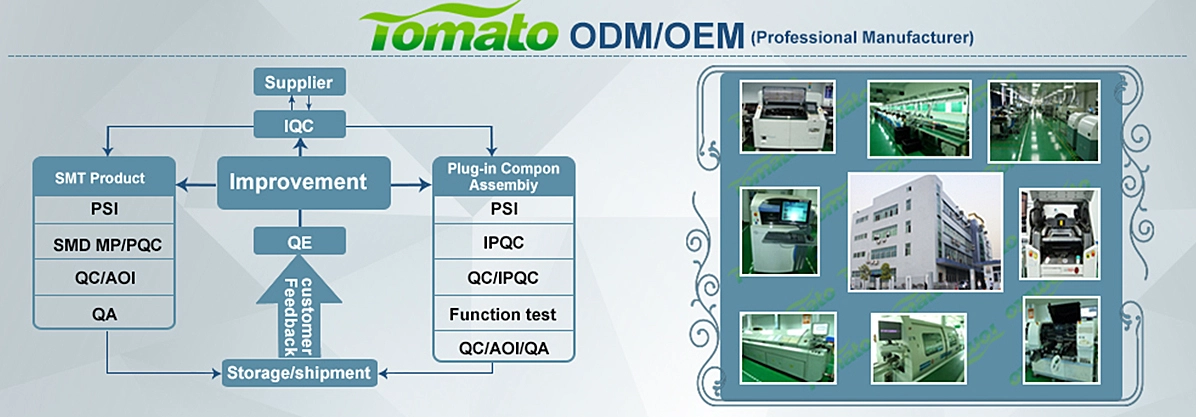
SZTomato supports Rockchip-based OEM/ODM development from SoC and PCBA architecture through customized firmware, SDK/API integration, UI/UX development, Linux/Android optimization and specialized cooling solutions. This approach allows the Rockchip platform to be engineered around the final product rather than forcing the application into a standard consumer box.
For a new Rockchip Android TV Box, AI Box, Digital Signage player or industrial multimedia terminal, the practical starting point is an engineering specification—not a generic product catalog.