
OTT TV Box OEM Customization Guide
OTT TV Box OEM Customization Guide: Engineering Telecom-Grade Hardware
Broadband service providers and premium OTT operators are abandoning generic streaming hardware. Relying on stock consumer-grade streaming players exposes an operator to a critical vulnerability: the lack of control over the system software layer and hardware lifecycle. When a consumer firmware update alters system properties or breaks application compatibility, operators face widespread customer support bottlenecks and premature hardware obsolescence.
Securing a high-margin subscriber base requires deploying a dedicated, custom-engineered OTT TV Box fleet. This technical guide outlines the precise hardware and firmware modifications required during the OEM/ODM manufacturing process to ensure system longevity, security compliance, and a seamless operator-branded user experience.
1. PCBA Architectural Modifications: Optimizing Commercial Silk
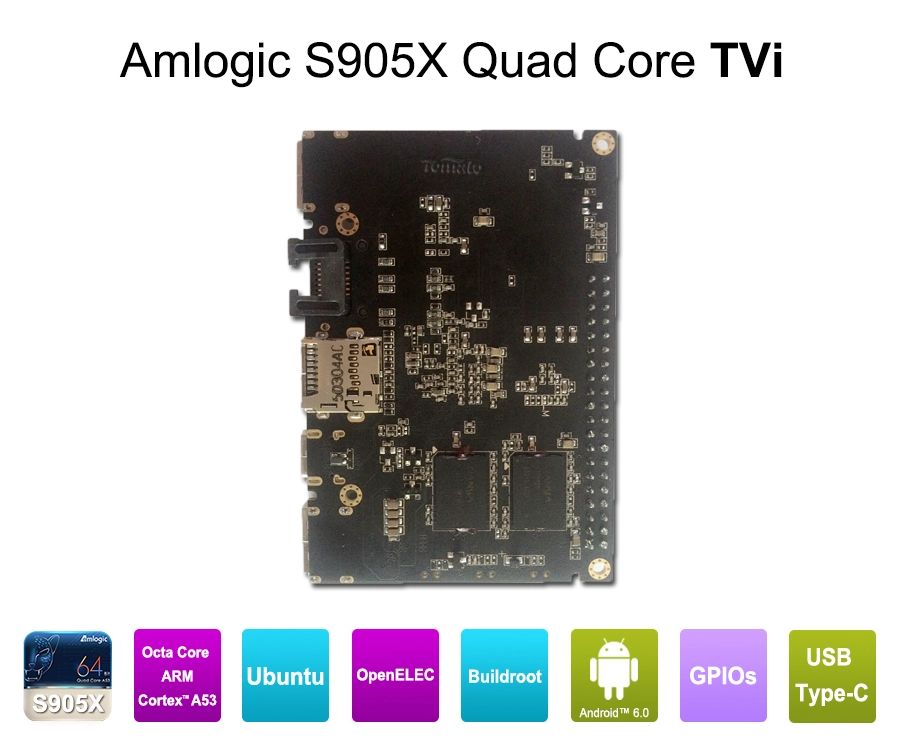
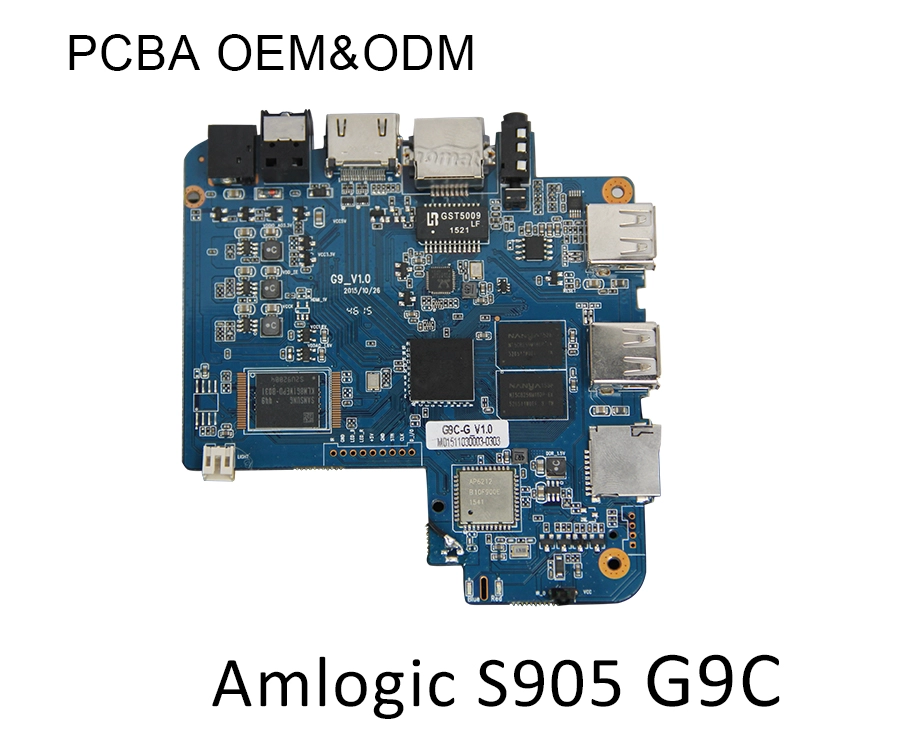
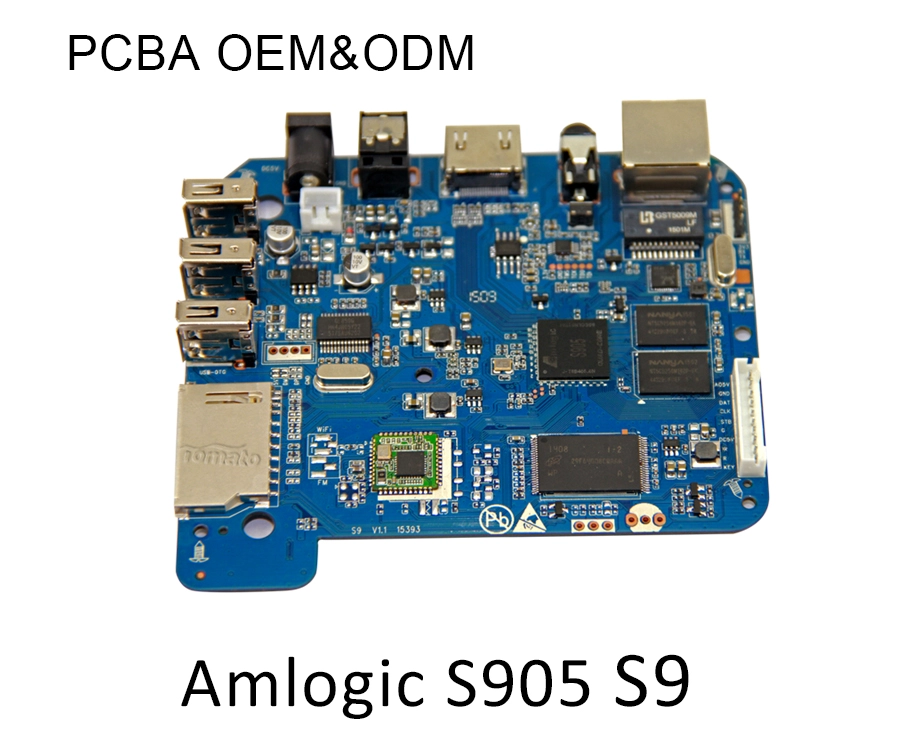
The foundation of an enterprise-grade OTT deployment relies on hardware tailored to the operator's infrastructure. Standard retail board layouts include unnecessary peripheral ports that increase unit costs, expand the device's thermal profile, and introduce security vulnerabilities.
Peripheral Stripping and Interface Hardening
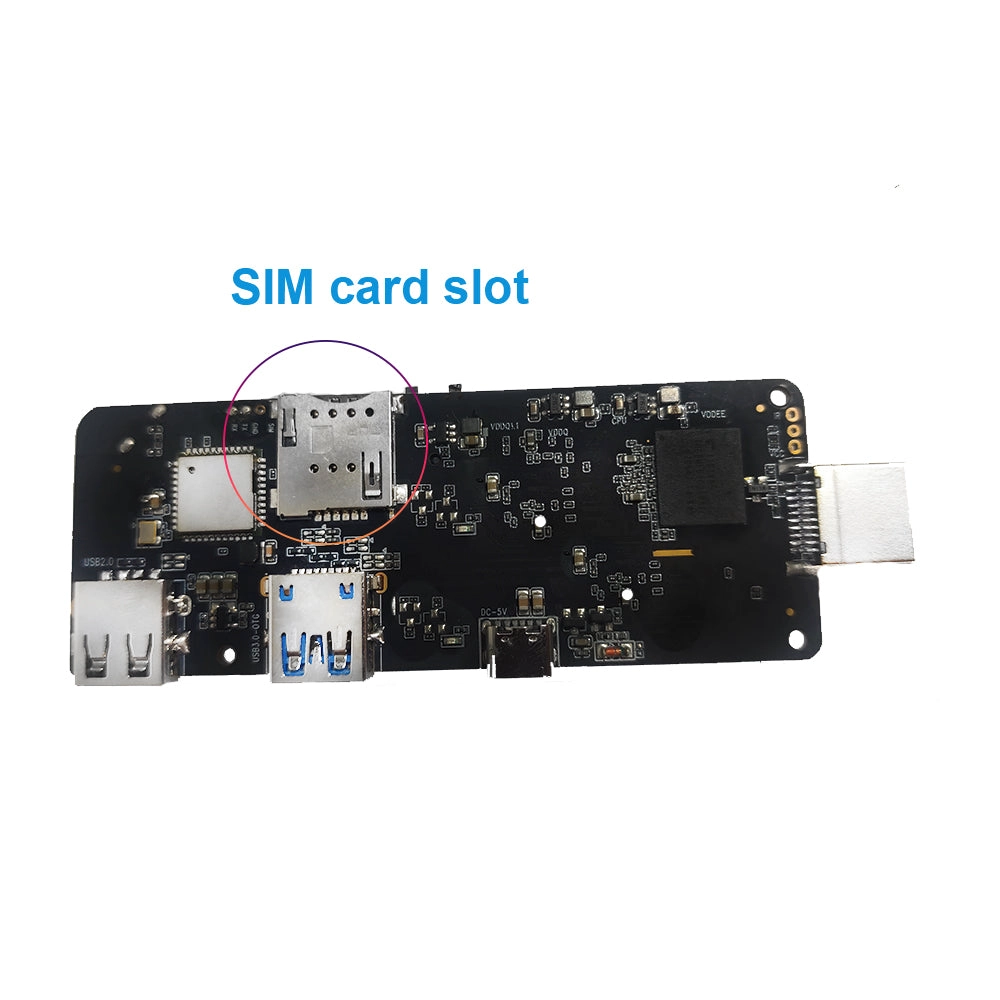
To optimize the bill of materials (BOM), operators should strip unnecessary interfaces from the printed circuit board assembly (PCBA). Removing external USB ports or micro-SD slots prevents subscribers from sideloading unverified third-party APKs or interacting with the system storage via malicious boot-loops. Conversely, for hospitality or telecom deployment, hardwiring a physical Gigabit Ethernet port (RJ45) directly to the PCIe bus is essential for stable, high-bitrate multi-cast streaming.
Power Management and Auto-Boot Circuitry
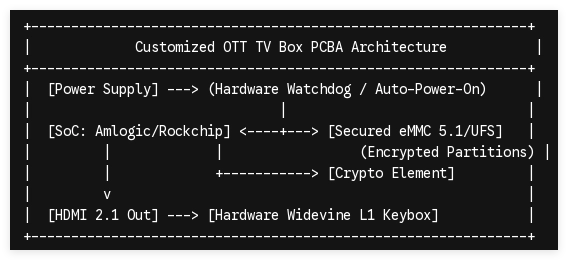
Consumer boxes rely on a soft-power state toggled by an infrared remote. For commercial or managed operator environments, the PCBA must be re-engineered at the circuit level to feature an automatic power-on mechanism. By modifying the power management integrated circuit (PMIC) and bypassing the physical power button path, the TV Box boots immediately into the operator interface as soon as electrical power is applied to the DC jack.
2. Firmware Engineering: Kernel-Level Lockdowns and Custom Launchers
A successful OTT TV Box rollout demands deep modification of the Android Open Source Project (AOSP) or Android TV operating system. This ensures the hardware remains single-purpose, secure, and entirely aligned with the operator’s visual brand.
System App Privileges and Custom Launcher Injection
To establish a captive subscriber experience, the operator's custom user interface (UI) must be compiled as a persistent system application. By injecting the launcher into the system image folder:
/system/priv-app/OperatorLauncher/
The operating system recognizes it as the default desktop handler. Custom firmware must strip out the standard Android setup wizard, replacing it with a proprietary provisioning script that binds the device directly to the user’s subscription account upon first boot.
Disabling Debugging Interfaces and Restricting ADB
To protect proprietary applications and user data, Android Debug Bridge (ADB) access must be hard-locked in the production firmware. Engineers should disable ro.debuggable and set ro.secure=1 inside the system properties file (system.build.prop). This prevents unauthorized users from pulling application packages or extracting secure system logs via USB debugging cables.
3. DRM Integration and Content Security Architecture
Premium content delivery requires strict compliance with international studio security standards. Without explicit hardware-level digital rights management (DRM) integration, the OTT TV Box will be restricted to low-resolution (SD) playback on Netflix, Disney+, Prime Video, and premium live IPTV networks.
Widevine L1 and PlayReady Provisioning
Achieving high-definition (HD) and 4K Ultra-HD playback requires a validated Widevine L1 hardware implementation. During the manufacturing process, the OEM vendor must securely flash unique cryptographic keyboxes into a dedicated, tamper-proof security zone of the SoC (such as the ARM TrustZone).
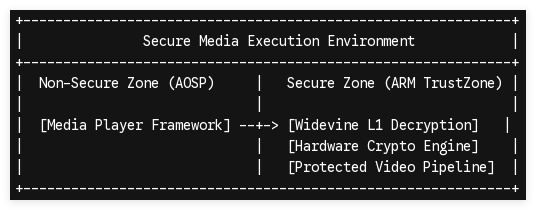
This ensures that the unencrypted video bitstream never enters the non-secure Android user space, completely neutralizing software-based stream ripping.
Bootloader Locking and Verified Boot (AVB 2.0)
To prevent custom ROM flashing and kernel tampering, the device must ship with a permanently locked bootloader. Incorporating Android Verified Boot (AVB 2.0) ensures a strict cryptographic chain of trust. The bootloader verifies the signature of the boot, system, and vendor partitions using public keys hard-coded into the silicon before allowing the operating system to execute.
4. Lifecycle Management: Proprietary OTA Update Infrastructure
Deploying thousands of devices across a broad subscriber base without a centralized update mechanism is a massive operational risk. Operators must secure a proprietary Over-The-Air (OTA) server architecture independent of the chip manufacturer.
Partition Layout and Seamless A/B Updates
When designing custom partition maps on the eMMC or UFS storage, implementing an A/B dual-system partition layout minimizes bricked devices in the field.
-
System A: Actively runs the current operator application and OS.
-
System B: Silent background target for the incoming OTA update package.
If an update fails due to a sudden power outage during installation, the hardware automatically reverts to the working system partition, reducing service truck rolls to zero.
Delta-Update Compilations
To save expensive cloud bandwidth and reduce network load, the deployment team should configure the OTA server to compile and push delta updates (incremental patches containing only changed files) rather than sending full multi-gigabyte system images for simple application fixes.
Secure Your Operator Infrastructure with Custom Hardware
Launching a successful OTT streaming service or telecom deployment requires hardware built to your precise performance, security, and branding specifications. Relying on uncertified, off-the-shelf components introduces unmanageable risks to your content security and customer experience.
Our engineering facility specializes in full-scale OEM/ODM development for high-performance OTT TV Boxes and operator-tier media players. From custom PCBA layouts and component-level hardening to kernel-level firmware optimization, Widevine L1 integration, and private OTA server setups, we build the precise hardware ecosystem your subscriber network demands.
Contact our enterprise procurement team today to consult with a senior hardware architect, submit your RFQ, or request fully customized engineering samples for your next deployment phase.
