
Set-Top Box (STB) OEM/ODM Full Guide
Enterprise Set-Top Box (STB) OEM/ODM Full Guide: Silicon Selection, PCBA Customization, and System Integration
The migration of global IPTV networks and digital signage systems toward bandwidth-efficient compression models has fundamentally altered the hardware requirements of the modern Set-Top Box (STB). With operators phasing out legacy H.264/H.265 video pipelines in favor of hardware-decoded AV1 and H.266 (VVC) bitstreams, off-the-shelf consumer devices can no longer fulfill commercial SLAs. Consumer streaming pucks suffer from memory bus saturation, thermal throttling in enclosed environments, and closed operating systems that block custom middleware.
For B2B procurement managers, telecom operators, and system integrators, deploying a long-term enterprise media infrastructure requires a purpose-built hardware platform. This guide breaks down the technical roadmap for engineering a commercial Set-Top Box via OEM/ODM manufacturing, covering core silicon selection, custom Printed Circuit Board Assembly (PCBA) design, firmware-level system locking, and thermal engineering.
1. Silicon Architecture & SoC Selection Matrix
The performance envelope of any Set-Top Box is dictated by its core System-on-Chip (SoC). The SoC integrates the main processing clusters, graphics engines, dedicated hardware video processing units (VPUs), security enclaves, and high-speed I/O interfaces onto a single silicon die.
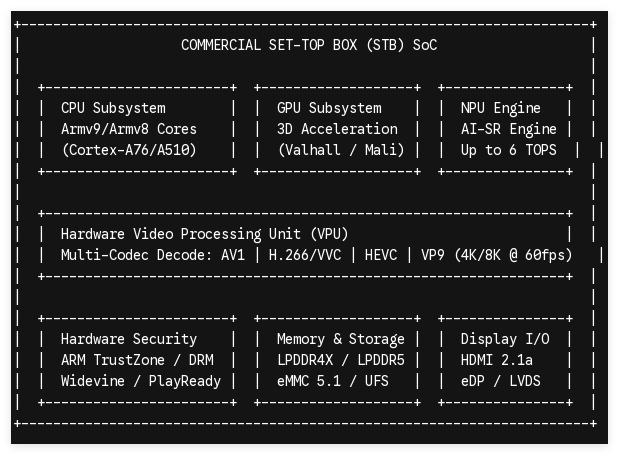
Commercial SoC Comparison
| Technical Parameter | Mass-Market OTT/IPTV | High-Performance Media Node | Industrial Edge / Signage |
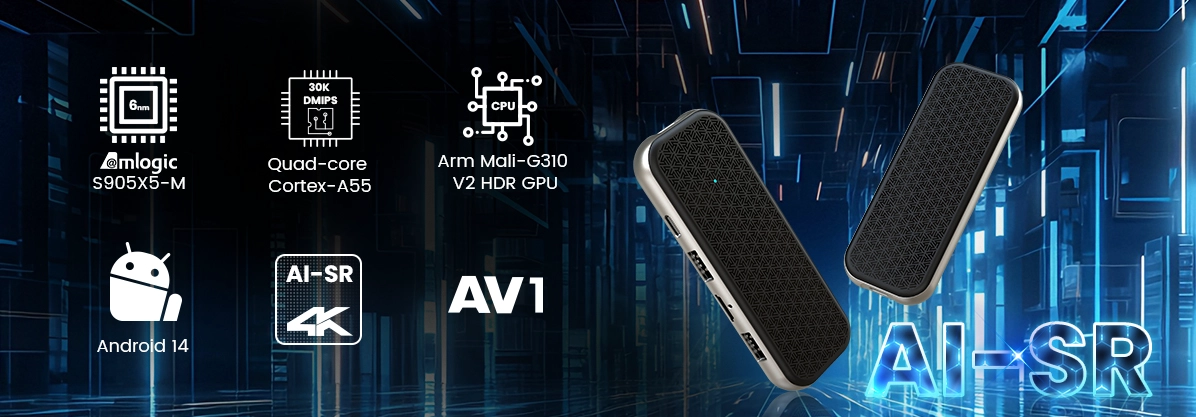
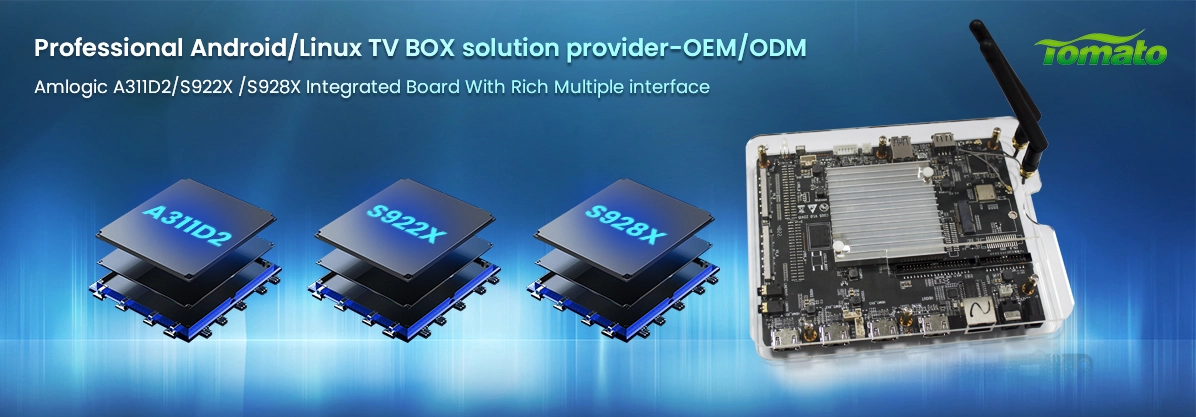
| Primary Chipset | Amlogic S905X5M | Amlogic S928X | Rockchip RK3588 |
| Process Node | 6nm | 12nm / 8nm Advanced | 8nm |
| CPU Architecture | Quad-Core Armv9 (2.5 GHz) | 1x Cortex-A76 + 4x Cortex-A55 | 4x Cortex-A76 + 4x Cortex-A55 |
| VPU Decode Capabilities | 4K@60fps AV1 / VP9 / H.265 | 8K@60fps AV1 / H.265 / VVC | 8K@60fps H.265 / VP9 / AV1 |
| NPU Capacity (AI-SR) | ~3.2 TOPS | Embedded (AI Super Resolution) | 6.0 TOPS (Computer Vision) |
| Memory Interface | LPDDR4X / LPDDR5 | LPDDR4X / LPDDR5X | 64-bit LPDDR4X / LPDDR5 |
| Target Deployment | Telecom IPTV / Hospitality OTT | 8K Ultra-HD Broadcasting | Interactive Kiosks / Multi-Display |
Hardware Security & DRM Enclaves
To comply with global streaming and content licensing specifications, the SoC must execute cryptographic validation within a hardware-isolated environment. OEM builds incorporate ARM TrustZone execution environments, hardware eFuses for secure boot key storage, and hardware accelerated decryption pipelines supporting Google Widevine L1, Microsoft PlayReady SL3000, and HDCP 2.2/2.3 over HDMI 2.1a output.
2. PCBA Hardware Customization and Component Selection
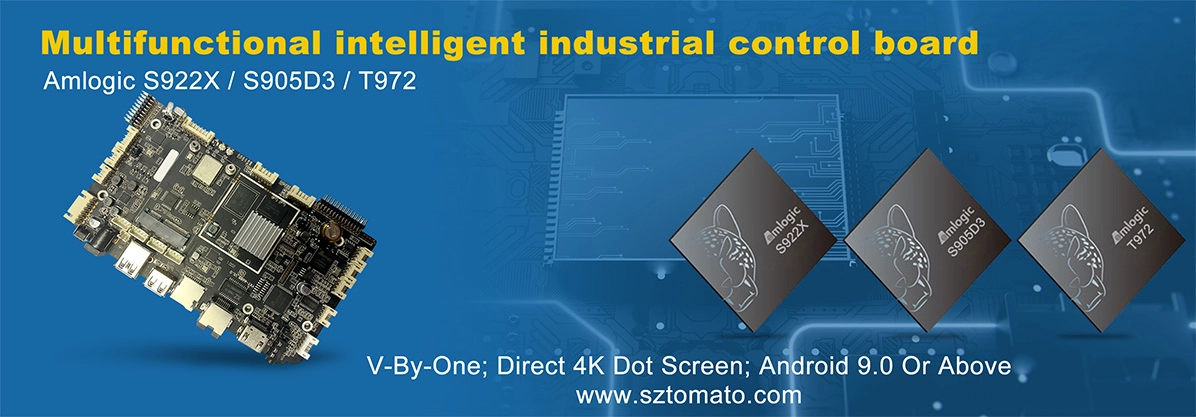
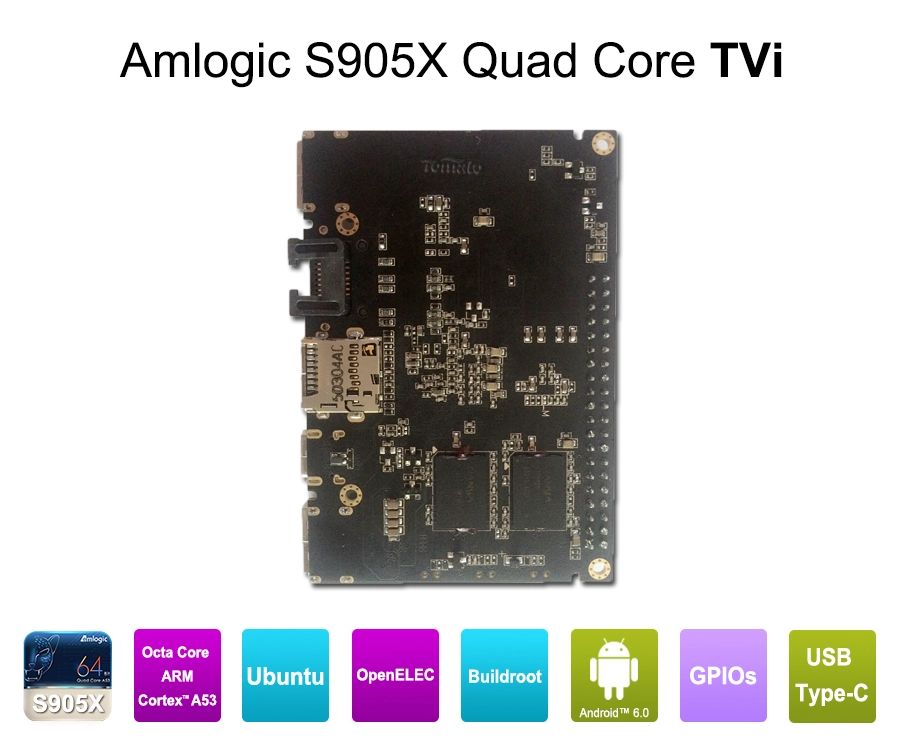
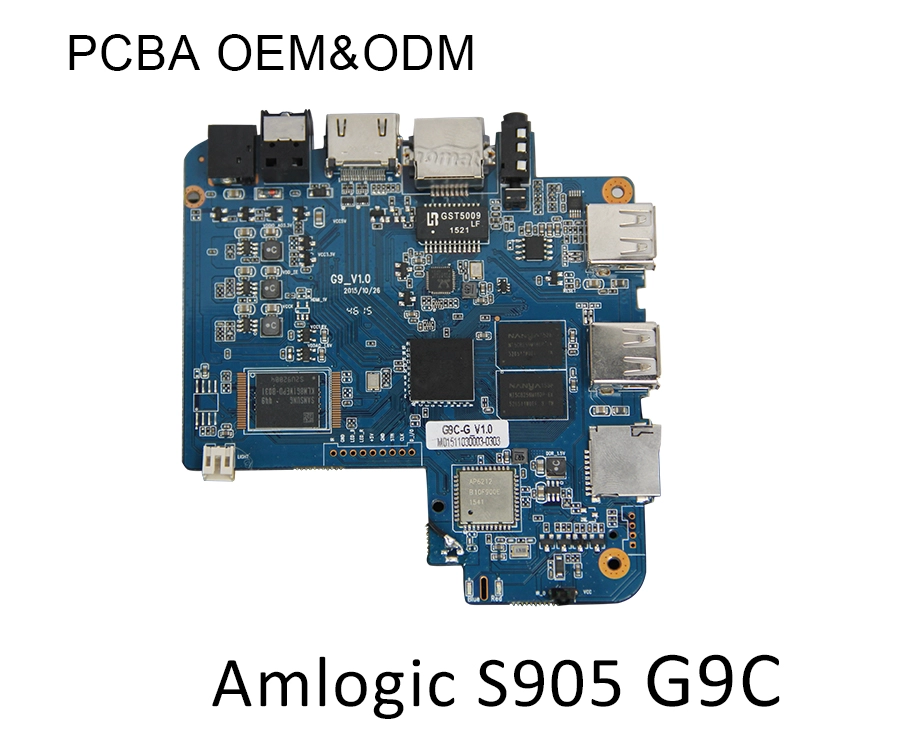
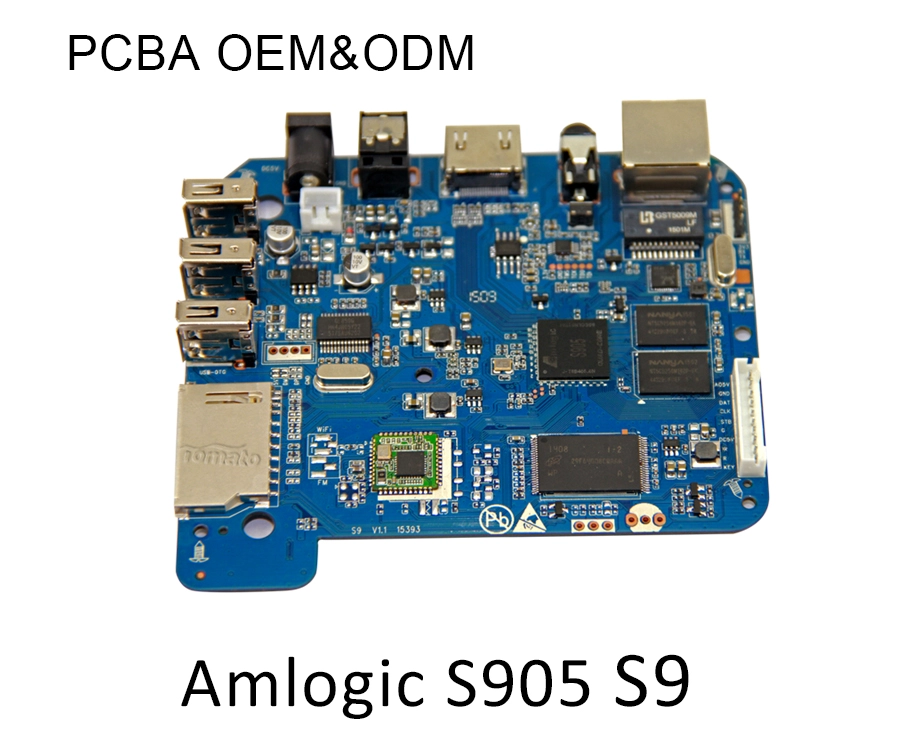
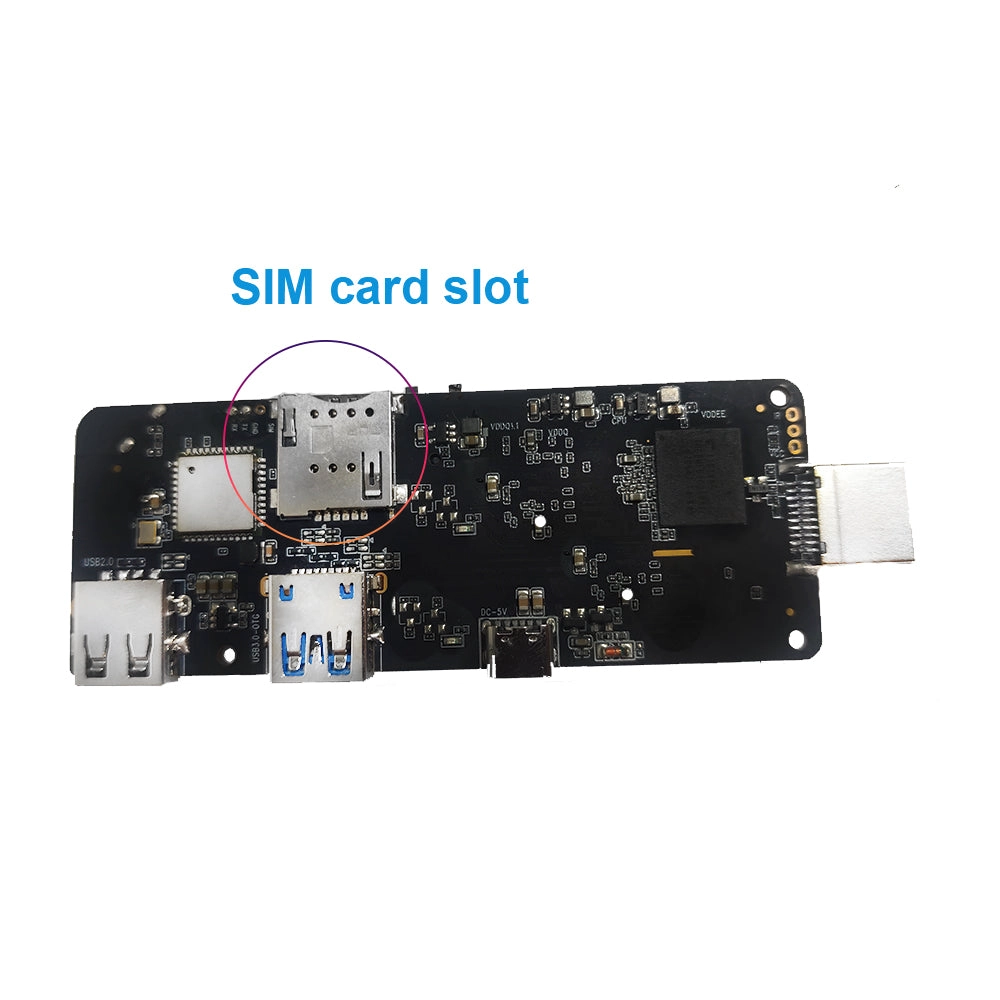
A commercial Set-Top Box PCBA is engineered to prevent the premature degradation common in consumer electronics. SZTomato’s B2B ODM manufacturing optimizes board geometry, power delivery, and connectivity controllers based on client integration requirements.
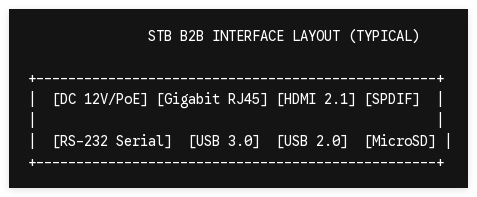
Critical PCBA Design Specs:
-
Multi-Layer PCB Layout: Utilizing 6-layer or 8-layer FR-4 circuit boards featuring dedicated internal copper power and ground planes. This minimizes electromagnetic interference (EMI) and stabilizes high-frequency signaling between the SoC and LPDDR memory.
-
Industrial Memory & Storage: Integrating high-endurance eMMC 5.1 or UFS flash storage with automated wear-leveling algorithms to withstand continuous read/write cycles from local caching and background logs.
-
Power over Ethernet (PoE): Customizing power delivery circuits to include IEEE 802.3at/bt PoE modules. This allows single-cable deployment for digital signage and wall-mounted setups, eliminating external AC transformers.
-
Expanded I/O Integration: Populating physical connectors such as RS-232 DB9 serial ports for commercial screen automation, GPIO pins for external sensor triggers, optical S/PDIF, and USB 3.0 channels for high-bandwidth local media drives.
3. Firmware Engineering: Kernel Optimization & System Lockdown
Hardware capabilities remain underutilized without customized system-level software. While consumer platforms rely on locked Google TV ecosystems, enterprise applications require tailored Android Open Source Project (AOSP) or Embedded Linux builds.
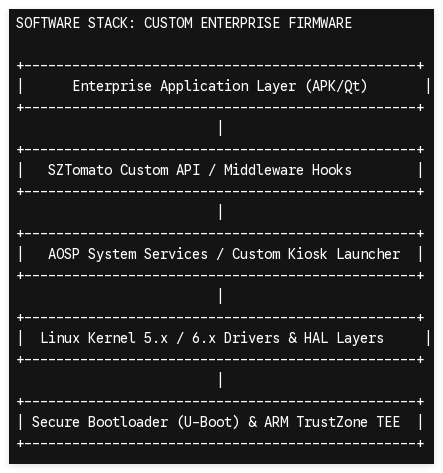
Firmware Engineering Modules
-
System Lockdown & Kiosk Mode: The boot sequence bypasses standard setup wizards, launching directly into the customer's native application within seconds. Standard navigation bars, notification panels, and settings access are completely stripped at the system level.
-
Custom Peripheral Drivers: Compiling custom Linux kernel modules to support specialized hardware, including industrial touch overlays, external RS-232 peripherals, USB webcams, and thermal printers.
-
Private OTA Update Infrastructure: Integrating secure, token-authenticated Over-The-Air (OTA) update agents. Operators can deploy signed delta updates to isolated hardware fleets without routing through consumer app stores.
-
Hardware Watchdog Timers (WDT): Configuring hardware-level watchdog daemons that continuously monitor application state. If an application crashes or freezes, the WDT automatically executes a hard power cycle to restore service without human intervention.
4. Industrial Thermal Management for 24/7 Operations
Thermal failure is the single greatest cause of hardware return merchandise authorizations (RMAs) in B2B deployments. Standard plastic enclosures trap heat generated by continuous 4K/8K video decoding, causing junction temperatures to exceed 85°C and triggering aggressive CPU downclocking.
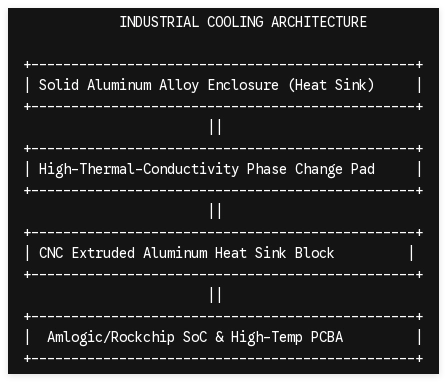
SZTomato Thermal Engineering Blueprint:
-
Passive Heat Dissipation Systems: Eliminating failure-prone mechanical cooling fans in favor of high-mass CNC-extruded aluminum heatsinks directly mounted to the SoC, RAM, and Power Management IC (PMIC).
-
Conductive Enclosure Design: Utilizing thermal phase-change interface pads to bridge the internal heatsink to a die-cast aluminum outer chassis. The entire exterior acts as a heat spreader, maintaining internal component junction temperatures well below critical thresholds even in fanless 50°C ambient environments.
Partner with SZTomato for Your Next OEM/ODM STB Deployment
Selecting a Set-Top Box platform requires balancing processor architectures, PCBA layouts, firmware control, and thermal durability. Partnering with a specialized manufacturer ensures your hardware deployment is engineered specifically to meet your operational SLAs.
With 16 years of specialized engineering leadership in Shenzhen’s electronics ecosystem, SZTomato (Shenzhen Tomato Technology Co., Ltd.) delivers complete OEM/ODM solutions tailored for global telecom operators, IPTV service providers, and digital signage system integrators.
Core OEM/ODM Services:
-
Full-Custom PCBA Engineering: Custom schematics, multi-layer board layouts, PoE integration, and specialized I/O design.
-
Low-Level Firmware Customization: Deep AOSP/Linux kernel modification, custom boot animations, dedicated launcher integration, and private OTA server configuration.
-
Industrial-Grade Enclosures: Tooling, thermal design, metal chassis fabrication, and customized branding options.
-
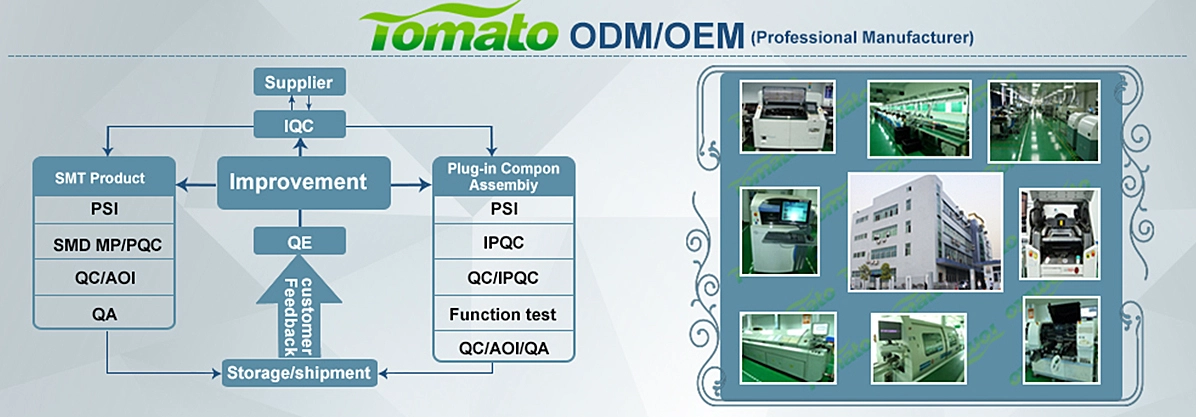
Strict Quality Assurance: Complete ISO9001 certification, high-temperature burn-in testing, and CE/FCC/RoHS compliance verification.
Ready to start your hardware project?
Visit www.sztomato.com to consult with our Senior Hardware Architect team, request sample development boards, or receive a technical quote tailored to your deployment specifications.
