
What are the system requirements for a Google TV Box?
Enterprise Architecture: Hardware and System Requirements for a Google TV Box
A critical shift is reshaping the B2B streaming and digital signage ecosystem: Google’s mandate requiring native 64-bit application support for Android TV and Google TV platforms. This platform-wide evolution accelerates application execution and stream initialization, but it simultaneously renders legacy, under-provisioned 32-bit silicon obsolete for enterprise deployments.
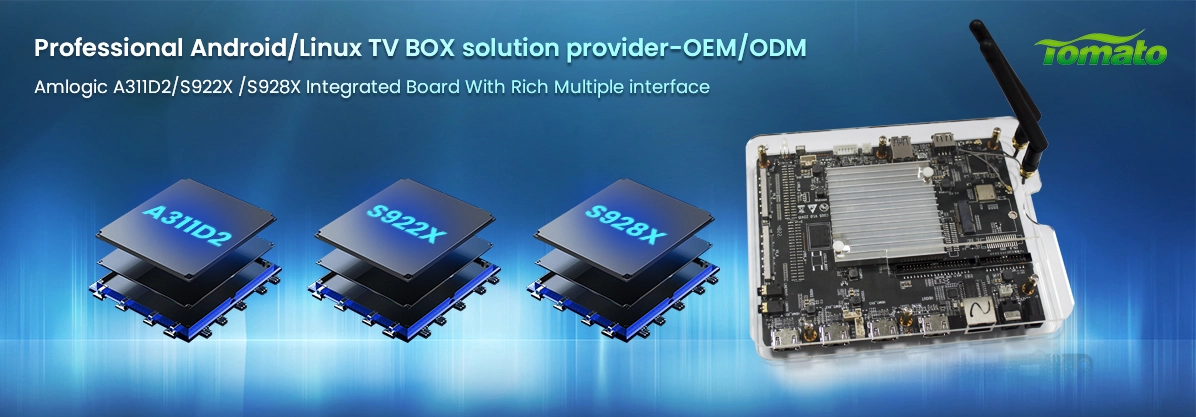
For B2B procurement managers and system integrators, selecting a Google TV Box is no longer a matter of comparing consumer-grade clock speeds. Deploying hardware for continuous, uninterrupted operations—such as hospitality interactive television networks, edge-AI digital signage, or operator-tier IPTV—requires a strict evaluation of silicon fabrication nodes, hardware-level decoding engines, and custom printed circuit board assembly (PCBA) routing.
1. Silicon Architecture & Processing Core Baselines
The underlying System-on-Chip (SoC) establishes both the processing ceiling and the operating system longevity of the device. Commercial installations running modern Android TV or Google TV kernels require explicit 64-bit architectures to handle high-bitrate media rendering alongside secure background services.
While consumer devices operate on minimal margins, enterprise-grade hardware relies on specialized silicon tiers optimized for distinct deployment profiles:
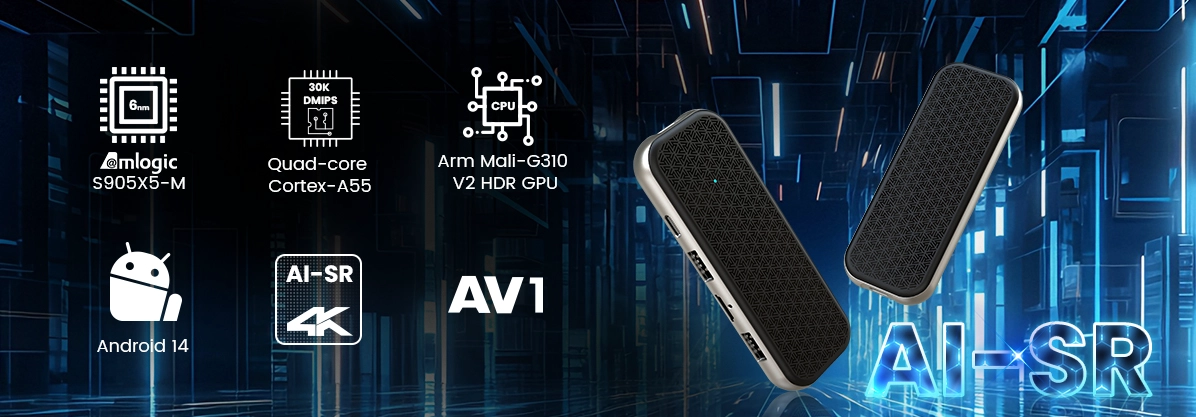
- Mainstream 4K Efficiency Node (Amlogic S905X5 / S905X5M): Fabricated on an advanced 6nm process node, this architecture represents the current efficiency standard for corporate and hospitality OTT deployment. The 6nm die shrink minimizes current draw and reduces thermal dissipation, preventing thermal throttling when the device is enclosed behind commercial displays.
-
Flagship Multi-Display & Edge AI Node (Rockchip RK3588): Utilizing an 8nm LP process, this hybrid big.LITTLE chip features ARM Cortex-A76 and Cortex-A55 cores paired with a dedicated Neural Processing Unit (NPU). It is engineered for heavy-compute B2B environments requiring multi-display output or localized edge analytics.
2. Memory, Storage, and Android Kernel Memory Management
Operating system upgrades significantly alter memory allocations. While Google's baseline specification allows lower limits for consumer streaming sticks, a stable commercial deployment demands a higher hardware ceiling.
| Technical Metric | Minimum Google Baseline (Consumer) | Enterprise Deployment Target (B2B) |
|---|---|---|
| RAM (1080p Output) | 1.0 GB | 2.0 GB LPDDR4 / LPDDR4X |
| RAM (4K UHD Output) | 1.5 GB | 3.0 GB – 4.0 GB LPDDR4X |
| Storage Capacity | 8 GB eMMC | 16 GB – 64 GB eMMC 5.1 / NVMe |
| Memory Bus Width | 16-bit | 32-bit (Dual-Channel) |
To prevent the Android low-memory killer (LMK) from prematurely terminating background signage or management applications, firmware-level engineering must optimize the Linux kernel. This involves configuring custom memory management properties (sys.lmk.autokill_animation_services and ro.LMK_LOG_STATS) directly within the Android system properties to ensure critical enterprise applications maintain persistent execution priority.
3. Hardware Media Decoding Engines and Content Protection
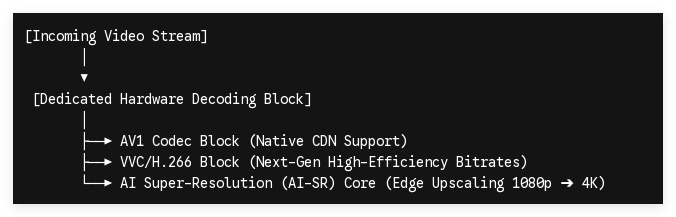
Relying on software emulation for video decoding introduces latency, drops frames, and causes premature hardware degradation due to sustained CPU load. Enterprise deployments must specify dedicated, hardwired silicon blocks for modern video codecs.
Codec Requirements
By 2026, the AV1 codec has become the baseline standard across major Content Delivery Networks (CDNs), offering up to a 30% reduction in required bandwidth compared to legacy H.264/H.265 streams. Furthermore, premium platforms like the Amlogic S905X5 introduce native VVC (H.266) hardware decoding alongside integrated AI Super-Resolution (AI-SR). This allows the system to upscale 1080p source video assets to near-4K output directly at the edge, drastically reducing backhaul data overhead across distributed hotel or retail networks.
Security and DRM Compliance
Commercial integration with premium Over-The-Top (OTT) or IPTV platforms requires strict hardware-enforced digital rights management (DRM). The PCBA and firmware must support:
-
High-bandwidth Digital Content Protection (HDCP): Minimum HDCP 1.3 for legacy infrastructure; HDCP 2.2 / 2.3 is mandatory for native 4K UHD pipelines.
-
Widevine Modular DRM: Integration of Widevine Level 1 (L1) keys compiled within a Secure Boot/Trusted Execution Environment (TEE).
4. Peripheral Bus Integration and Custom PCBA Layouts
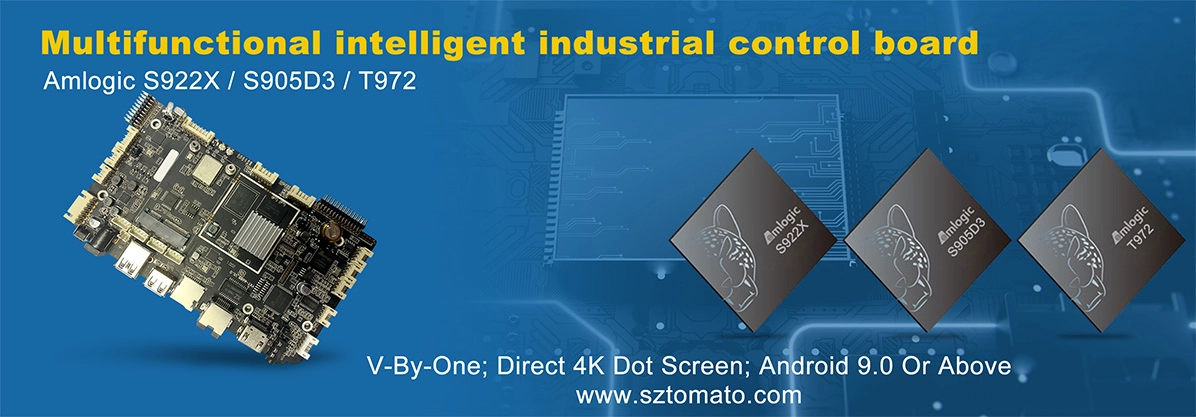
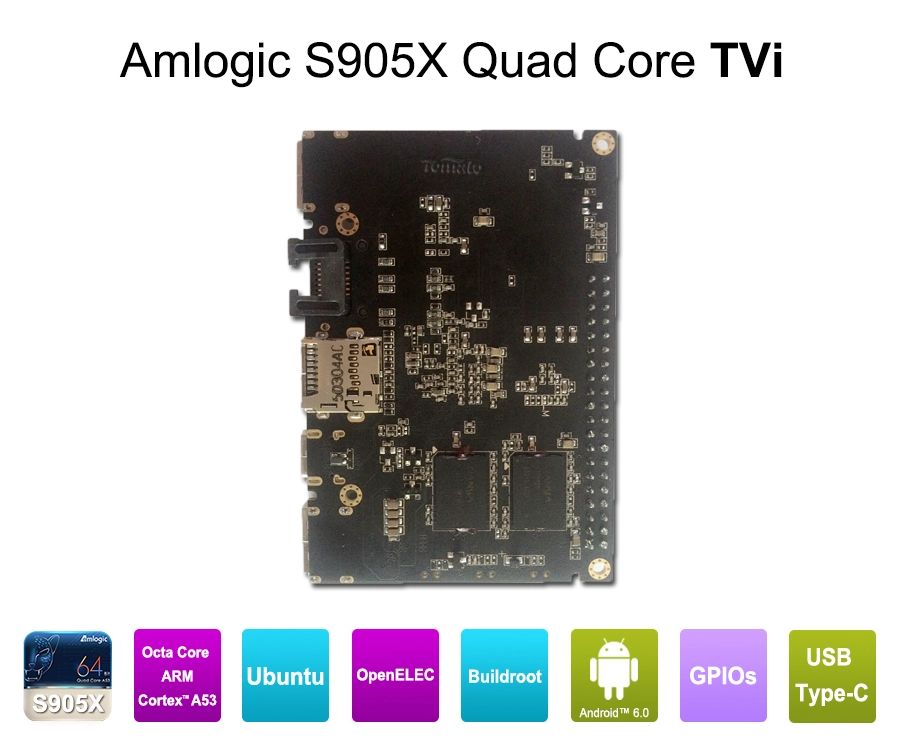
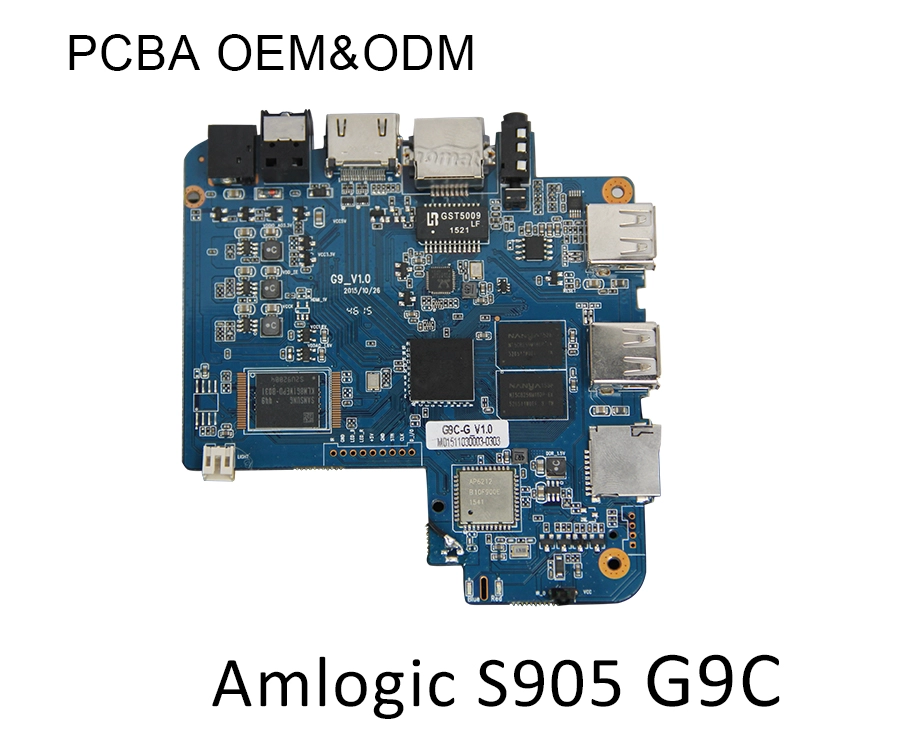
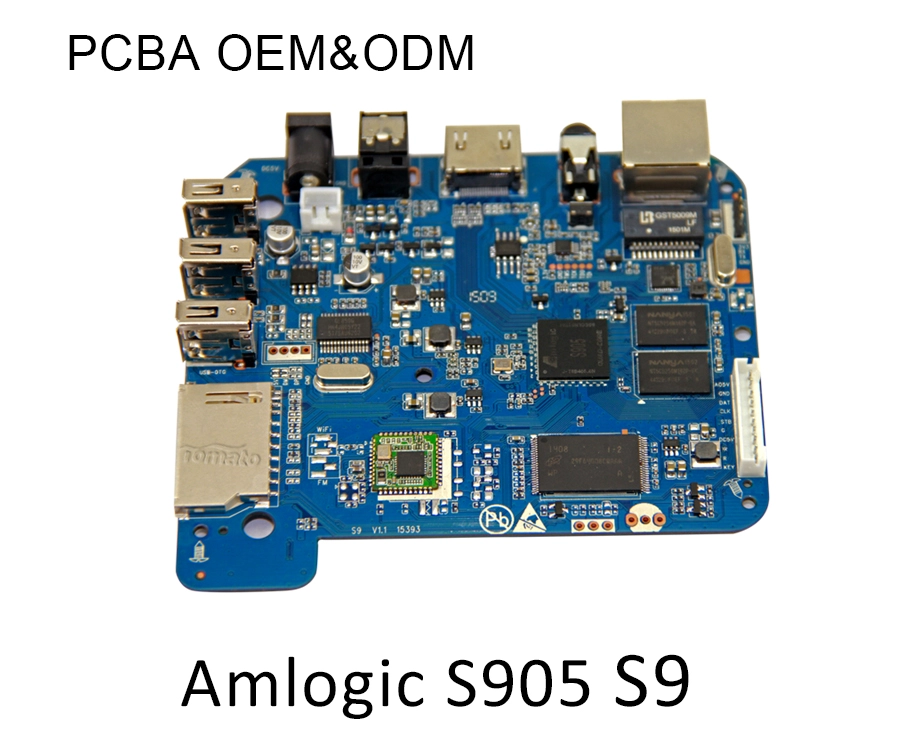
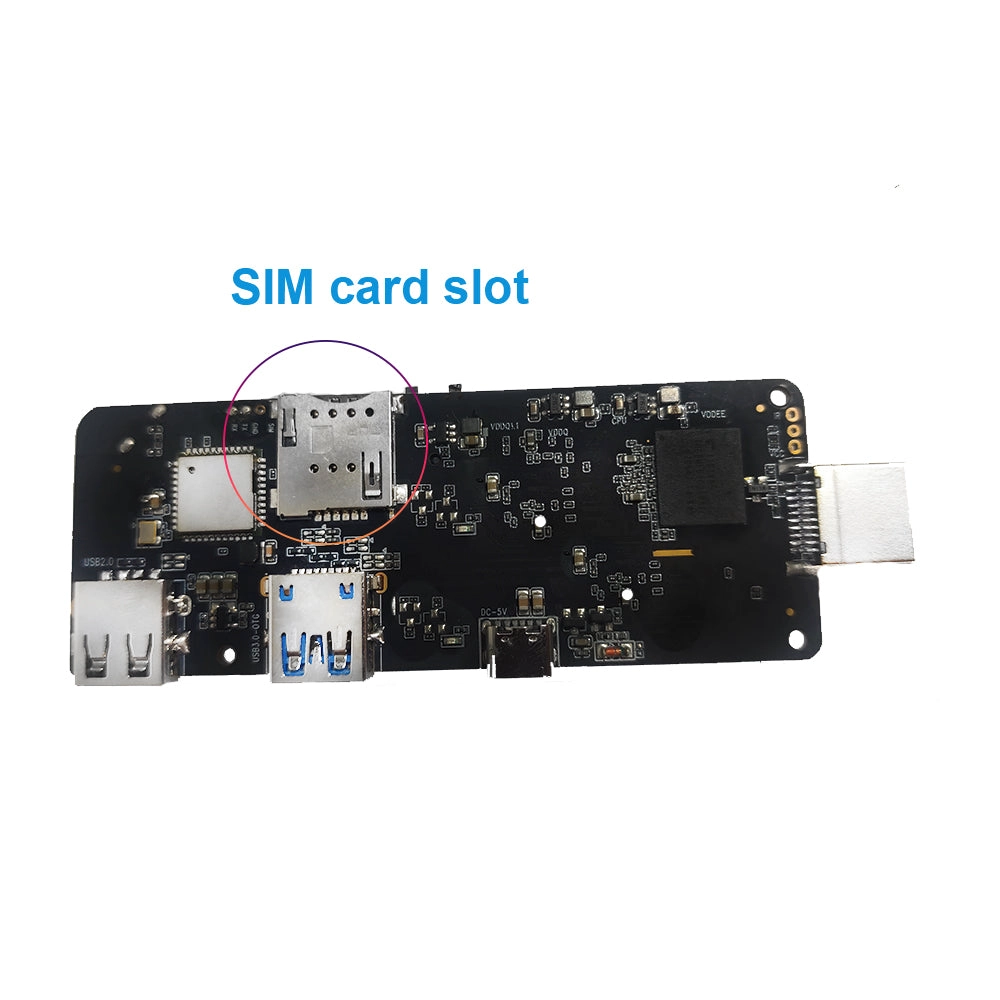
Consumer reference designs rarely provide the interface density required for industrial environments. For deployments like interactive self-service kiosks or smart automation networks, the PCBA layout must serve as an expandable data router.
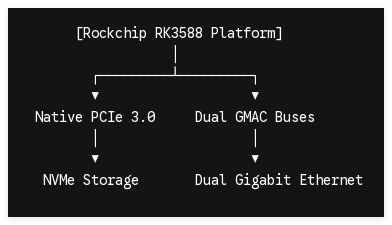
- High-Throughput Storage Buses: Utilizing Rockchip platforms allows hardware engineers to leverage native PCIe 3.0 lanes to route high-speed local NVMe storage directly onto the custom PCBA, bypassing eMMC speed limits.
- Network Redundancy & Smart Home Integration: Industrial solutions require dual GMAC buses to drive independent physical Gigabit Ethernet ports, or integrated Wi-Fi 6 modules. Furthermore, modern setups utilize native Thread 1.4 border router integration, enabling the Google TV Box to orchestrate commercial smart-building peripheral sensors over a unified wireless mesh.
-
Custom I/O Routing: Industrial applications often require modifying the PCBA to map dedicated RS232/RS485 serial interfaces for legacy display control, alongside integrated Power over Ethernet (PoE) modules to run power and data over a single Cat6 cable.
Technical OEM/ODM Customization Framework
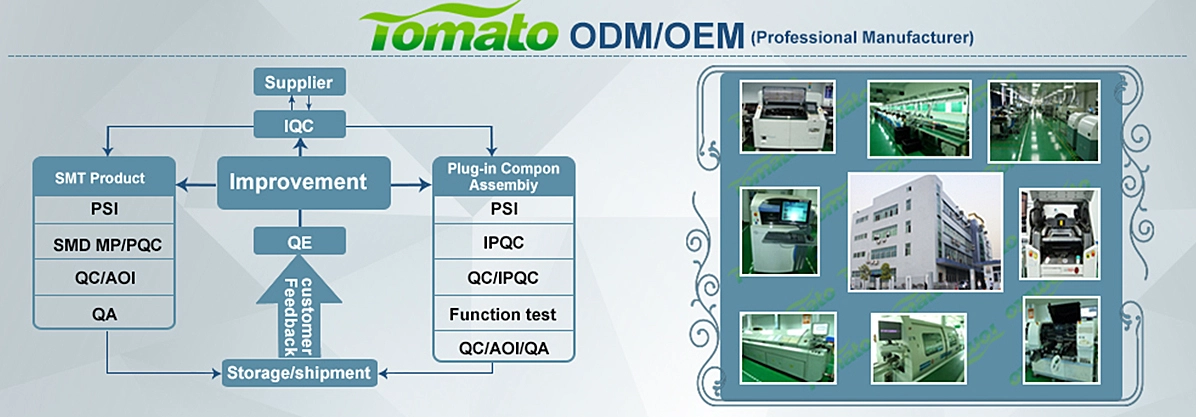
Securing reliable field performance requires a manufacturing partner capable of executing deep, hardware-level engineering. SZTomato eliminates the gap between standard consumer reference designs and industrial-grade reliability through comprehensive OEM/ODM Google TV Box customization:
-
PCBA Hardware Modification: We redesign standard board layouts to relocate peripheral ports, integrate specialized electrostatic discharge (ESD) protection lines, and adapt form factors for unique mounting enclosures.
-
Advanced Thermal Management: Industrial environments face strict airflow limits. We design custom die-cast aluminum enclosures and passivated, high-thermal-conductivity heatsinks to ensure prolonged continuous operation without structural degradation.
-
Firmware-Level Engineering & SDK Optimization: We provide tailored OS builds with custom bootloaders, completely stripped consumer bloatware, pre-integrated root privileges, and customized Hardware Abstraction Layers (HAL) to support specialized third-party external peripherals.
-
Custom UI/UX & OTA Upstream Control: We engineer custom launchers that lock the device into a dedicated single-application Kiosk Mode, completely bypassing the default consumer user interface. This includes a proprietary, secure Over-The-Air (OTA) update infrastructure, giving network administrators absolute control over when and how OS patches are deployed.
Work with SZTomato
Deploying a large-scale media ecosystem requires hardware engineered specifically for commercial demands. Choosing under-provisioned retail hardware risks early field failures, security integration hurdles, and costly physical maintenance turnarounds.
Contact our engineering and procurement team today to review your project's specific PCBA layout requirements, request customized SDK documentation, and evaluate our production-ready Amlogic and Rockchip reference designs.
Email: sales@sztomato.com
Web: www.sztomato.com
