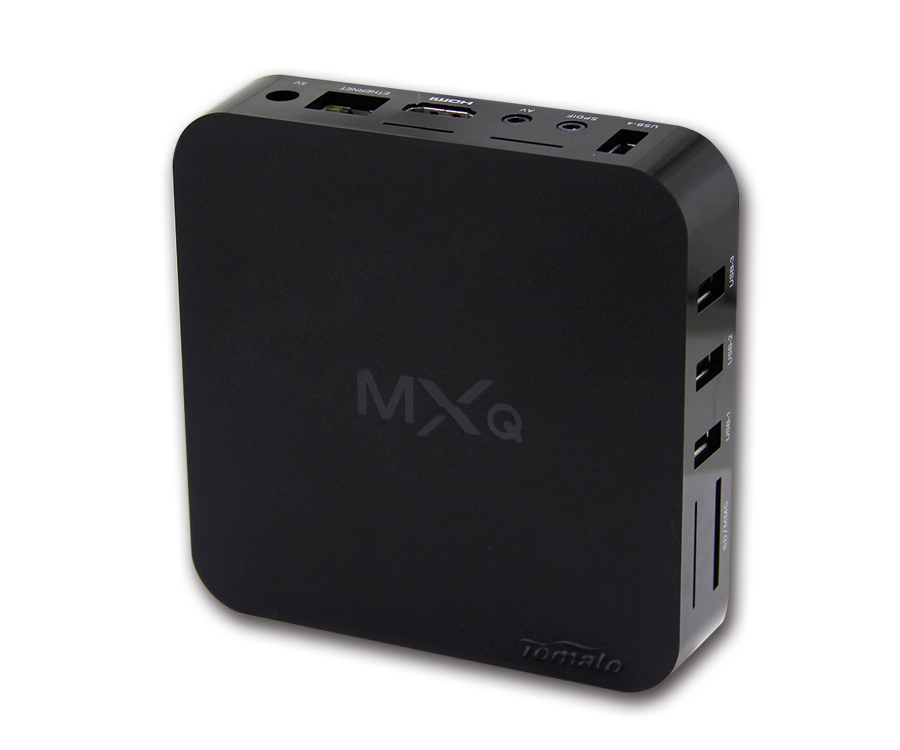
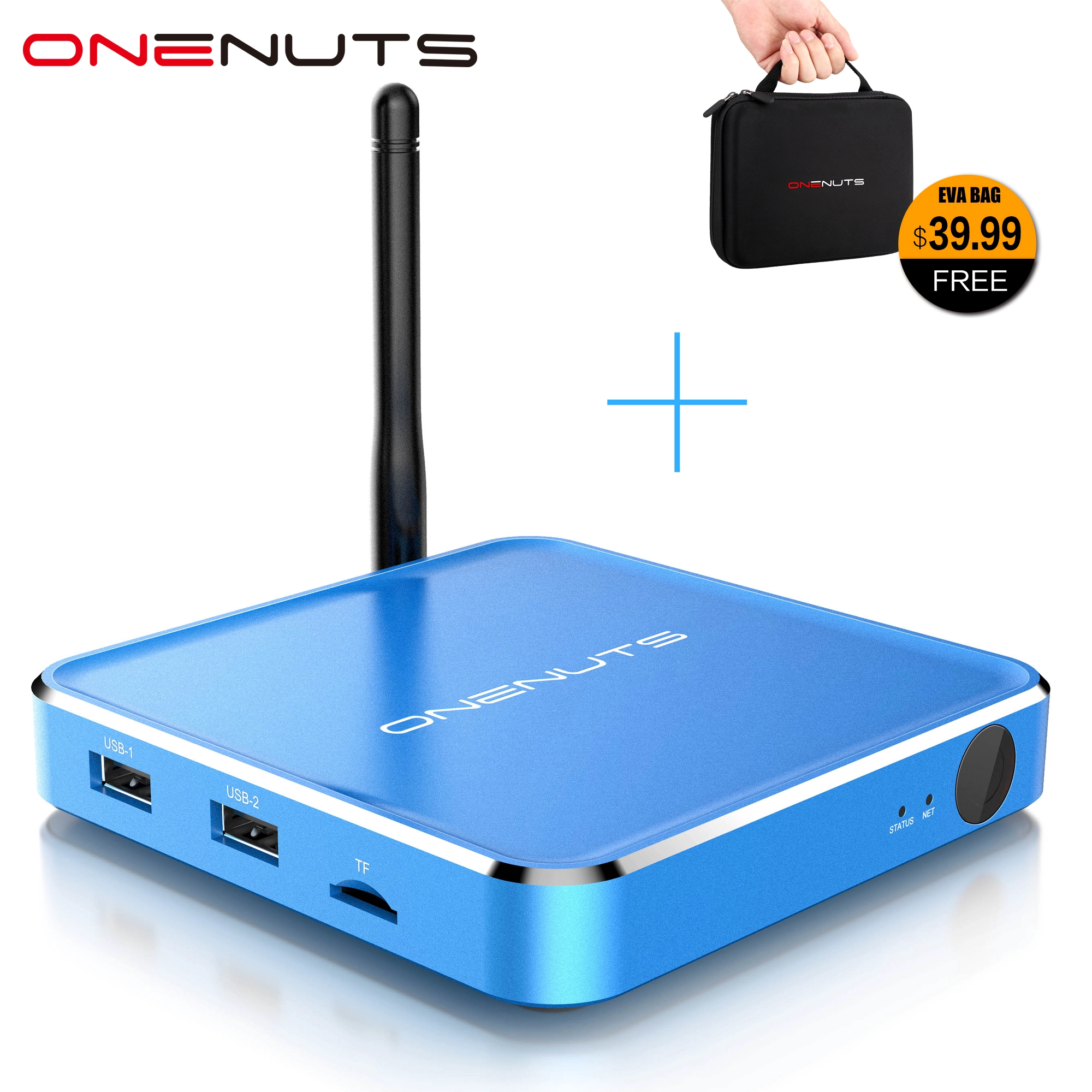
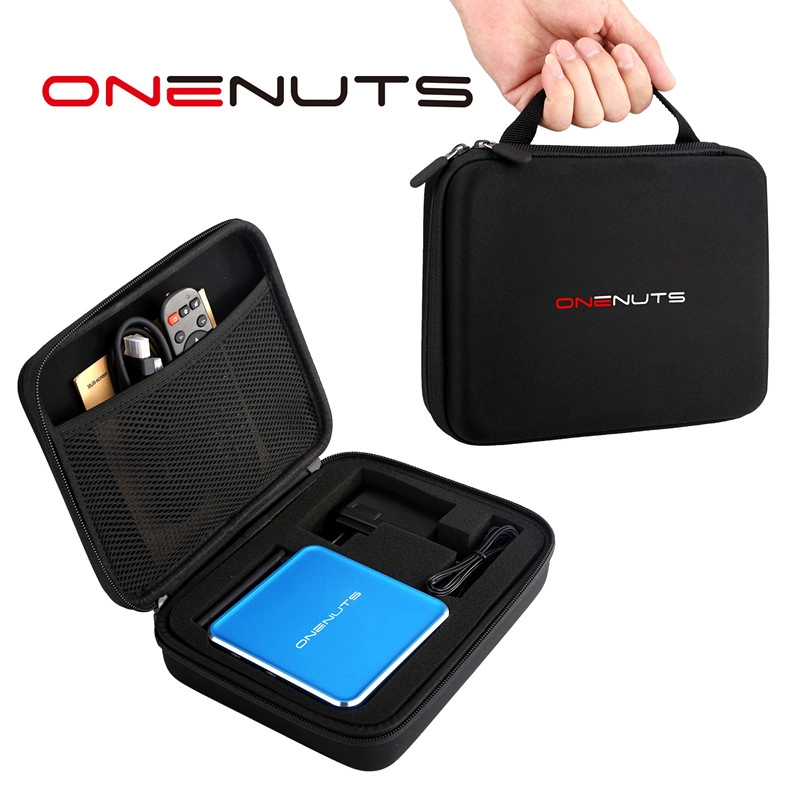
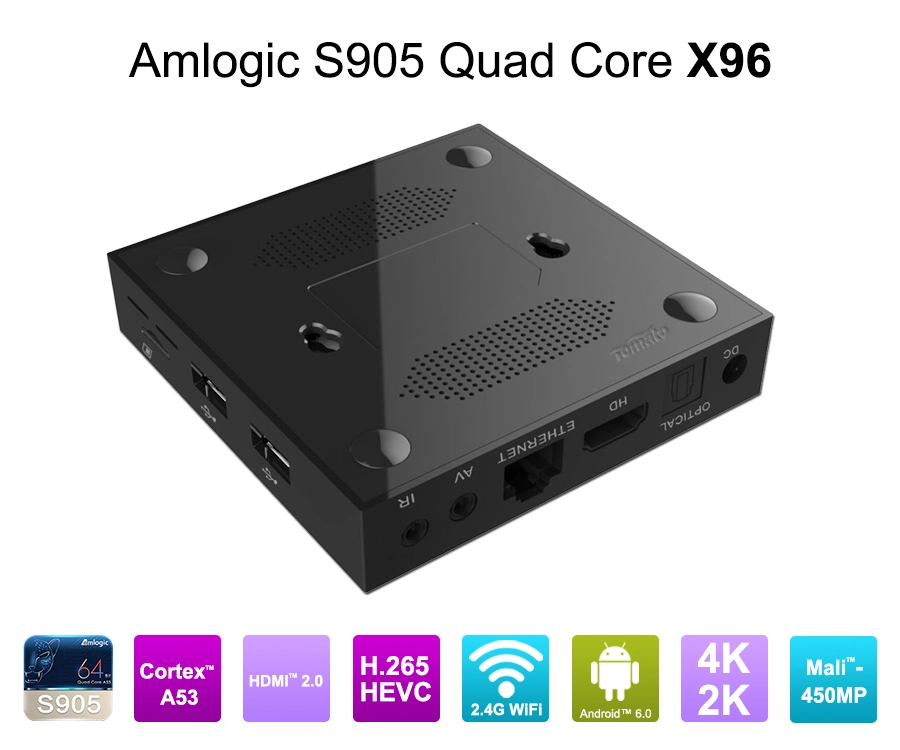
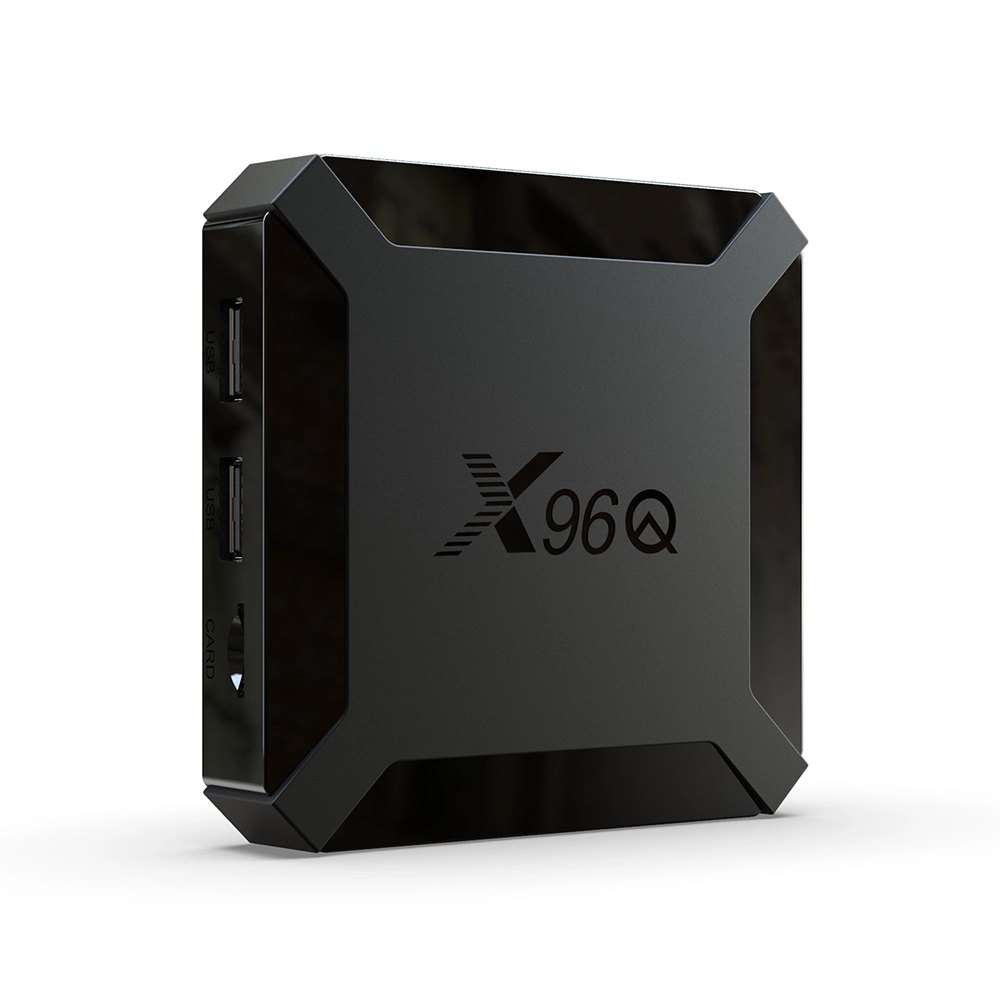
What device is used for Streaming Media Player?
Enterprise Streaming Media Player Architecture: Hardware Selection & Engineering Criteria
Commercial streaming infrastructure requires hardware designed for zero-downtime performance, predictable video decoding pipelines, and strict administrative control. While retail consumers rely on mass-market HDMI sticks, enterprise operators—spanning hospitality networks, digital out-of-home (DOOH) advertising, IPTV platforms, and healthcare facilities—require specialized embedded platforms.
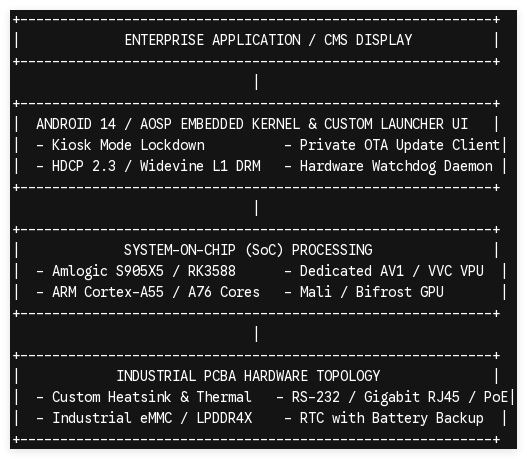
Determining what device is used for a streaming media player in a B2B context requires evaluating the underlying System-on-Chip (SoC) microarchitecture, board-level thermal engineering, Android kernel modifications, and remote lifecycle management.
1. System-on-Chip (SoC) Selection: Hardware-Accelerated Decoding & Thermal Envelopes
The performance threshold of any streaming media player is anchored to its silicon. Commercial deployment requires hardware-level video decoding rather than CPU-bound software rendering to maintain operational temperatures below 65°C under continuous load.
+--------------------------+------------------------+------------------------+------------------------+
| Technical Spec           | Amlogic S905X5M        | Rockchip RK3588        | Amlogic S922X          |
+--------------------------+------------------------+------------------------+------------------------+
| Target Deployment        | Mid-Tier OTT / IPTV    | Edge AI / 8K Signage   | High-End Interactive   |
| CPU Architecture         | Quad-Core Cortex-A55   | Quad A76 + Quad A55    | Quad A73 + Dual A53    |
| Primary Video Decoding   | 4K@60fps AV1, H.266    | 8K@60fps H.265 / AV1   | 4K@75fps VP9 / H.265   |
| Thermal Design Power     | ~3.5W (Ultra-Low)      | 6.0W – 12.0W           | 5.0W – 8.0W            |
| NPU Acceleration         | N/A                    | 6.0 TOPS               | N/A                    |
| System Memory Support    | LPDDR4 / LPDDR4X       | LPDDR4X / LPDDR5       | DDR4 / LPDDR4          |
+--------------------------+------------------------+------------------------+------------------------+
The Shift to AV1 and VVC Hardware Codecs
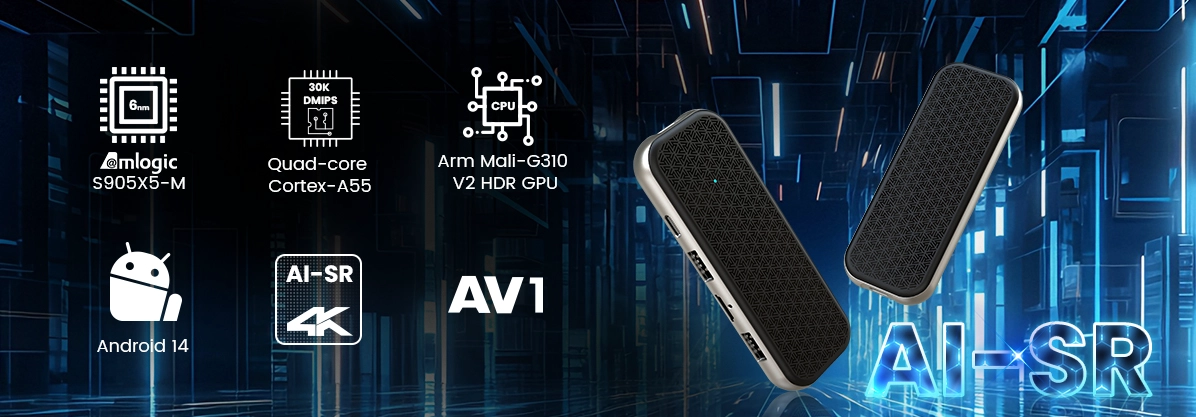
Video bandwidth represents the single highest operational cost for streaming operators. The transition from HEVC (H.265) and VP9 to AV1 delivers a 20% to 30% reduction in bitrate without degradation in Structural Similarity (SSIM) video quality metrics. Modern enterprise media players leverage silicon like the Amlogic S905X5 series, which integrates native 4K@60fps AV1 hardware decoding using 128×128 superblock partition structures. Offloading AV1 decoding directly to the Video Processing Unit (VPU) keeps CPU utilization below 15%, reducing system heat generation and extending component lifespan.
Thermal Throttling Mitigation in Industrial Enclosures
Consumer media players suffer from thermal throttling within 30–45 minutes of continuous high-bitrate playback, dropping frame rates from 60 fps down to under 24 fps as the OS scales back clock frequencies. Enterprise PCBA engineering resolves this by implementing:
-
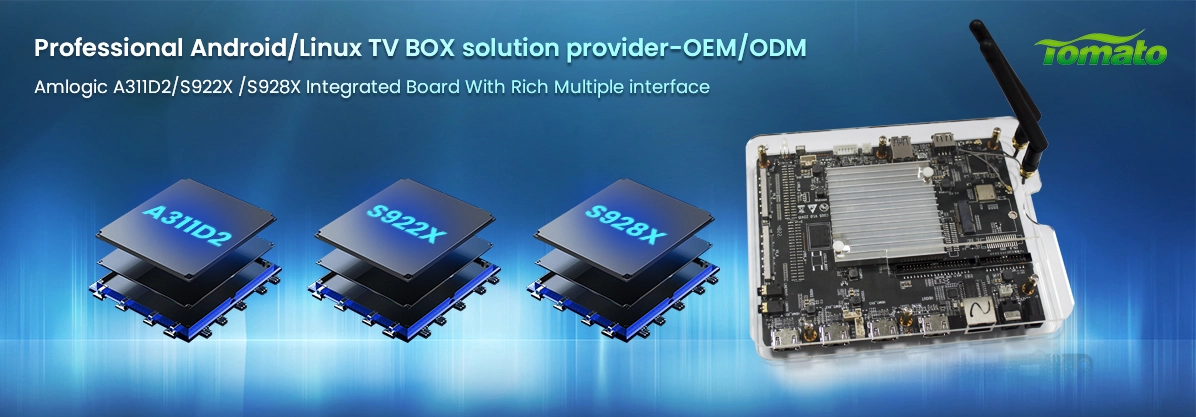
Direct-contact cast-aluminum heatsinks attached to the SoC via high-transmissivity thermal pads ($>3.5text{ W/m}cdottext{K}$).
-
Custom aluminum alloy chassis acting as passive heat sinks, eliminating failure-prone mechanical cooling fans.
-
Thermal guard parameters inside the Linux kernel thermal_zone driver to throttle background sync tasks before touching video pipeline clock speeds.
2. PCBA Architecture & Hardware Customization for B2B Operations
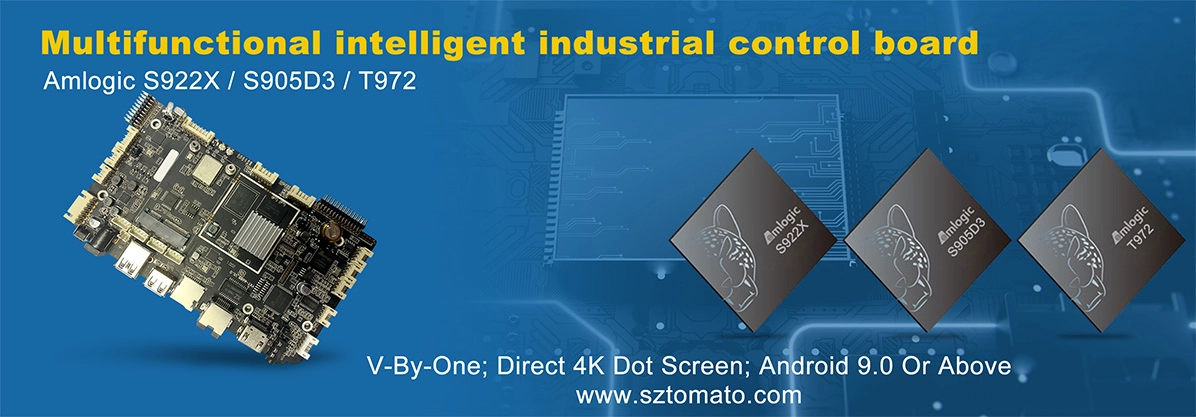
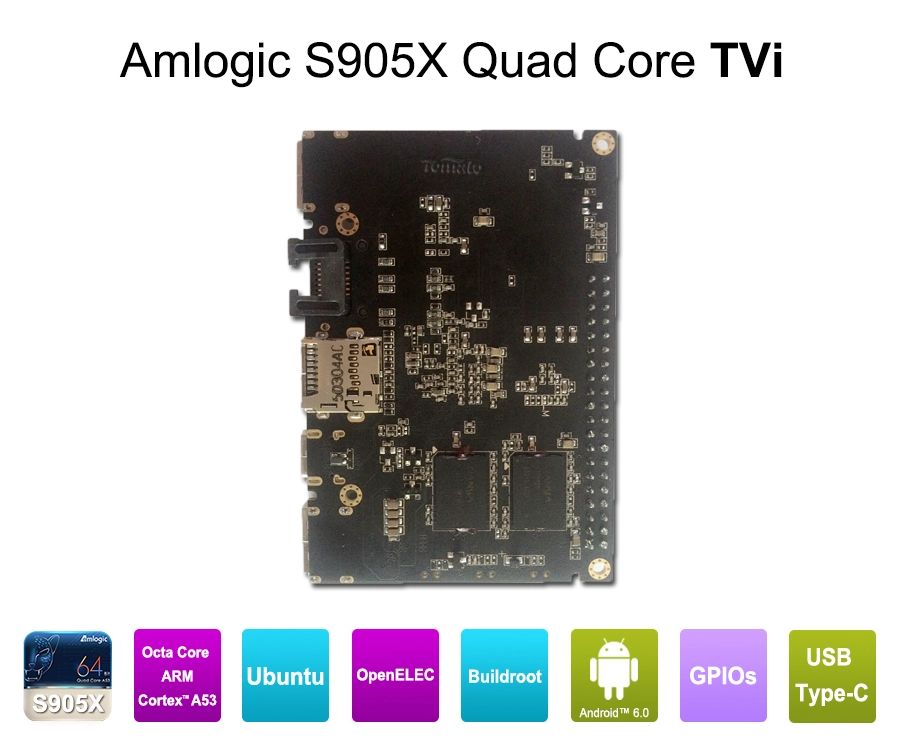
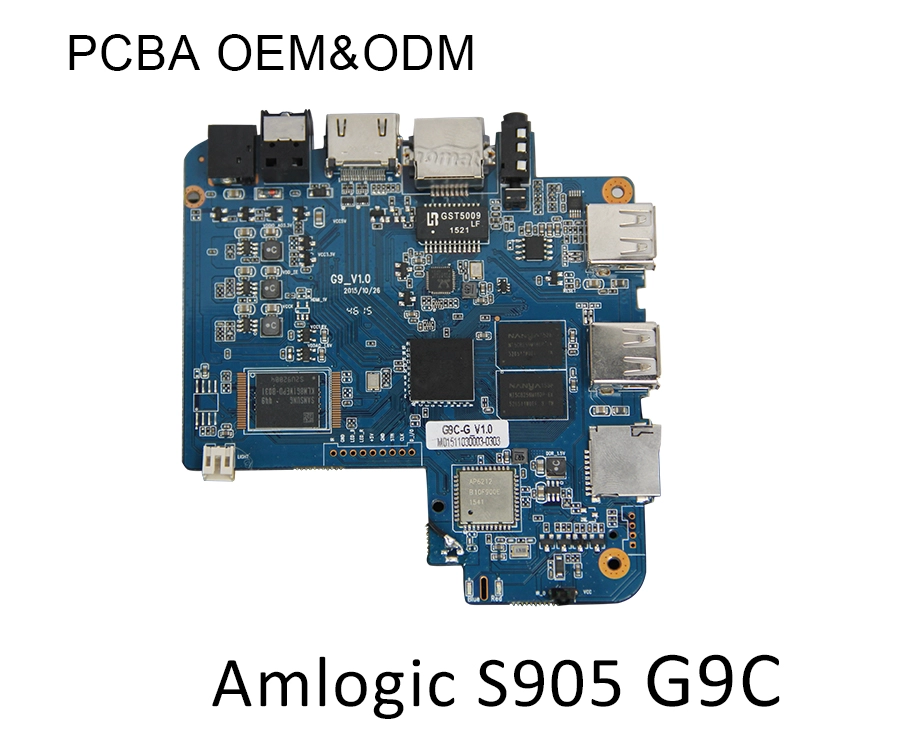
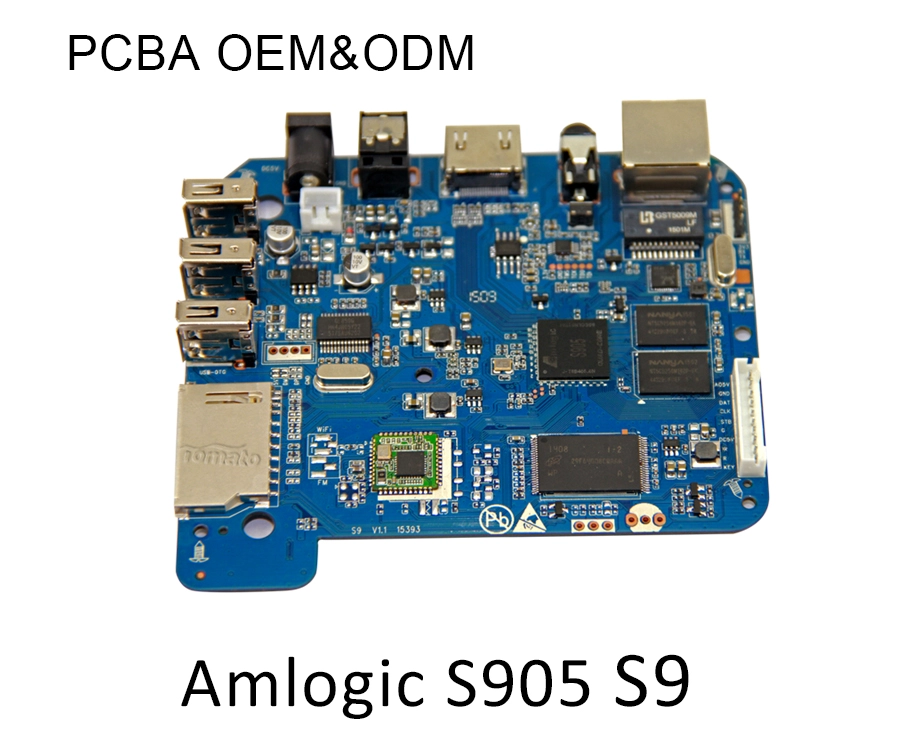
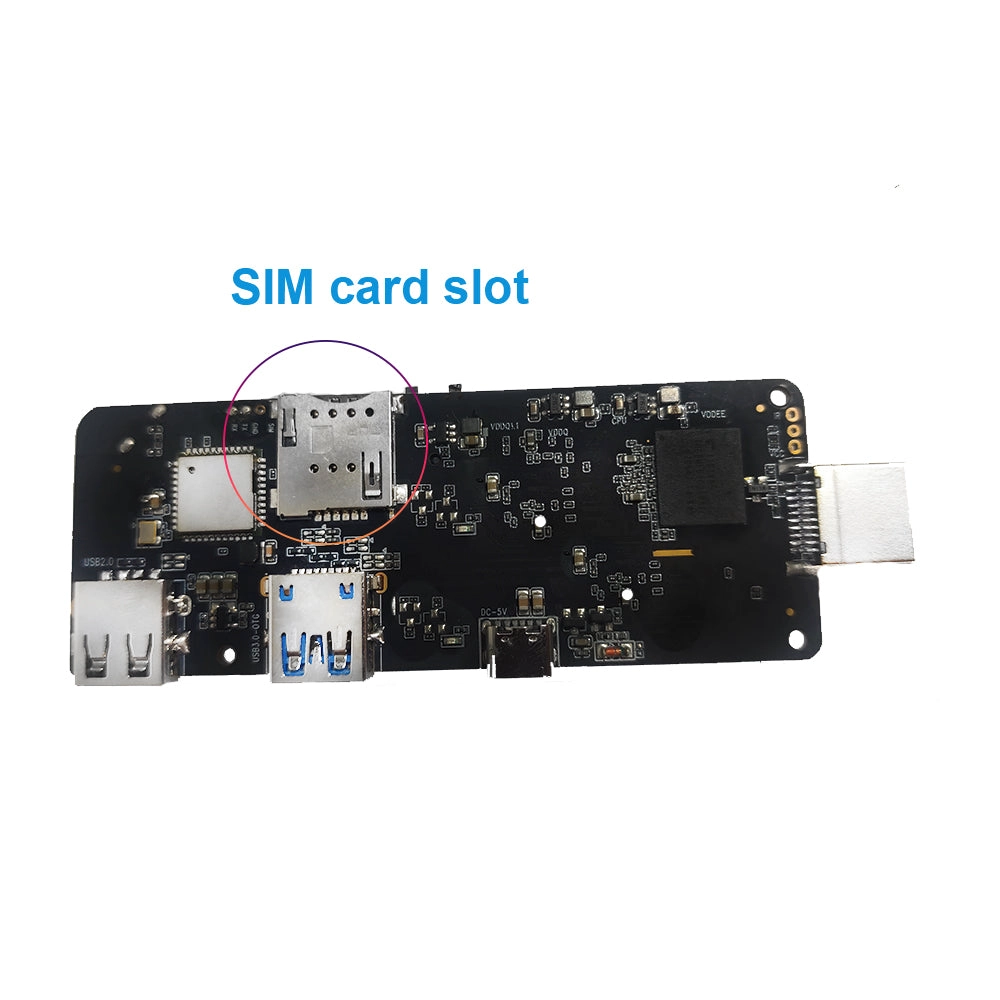
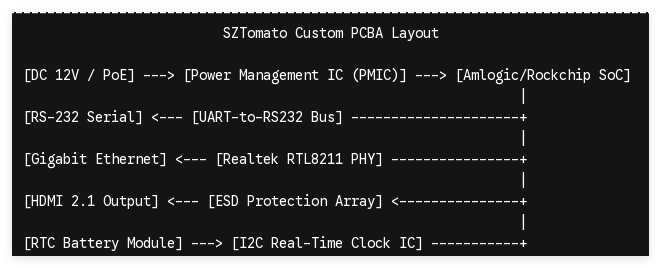
Retail streaming sticks feature minimalist Printed Circuit Board Assemblies (PCBAs) stripped of expansion interfaces, real-time clocks, and robust power delivery circuits. Enterprise deployments require modular hardware design tailored to specific deployment topologies.
Essential Hardware Additions for Commercial Deployment
-
Power over Ethernet (PoE / IEEE 802.3at): Eliminates the need for external AC power adapters behind wall-mounted displays or digital billboards, consolidating data and power delivery into a single CAT6 run up to 100 meters.
-
Hardware Watchdog Timers (WDOG): Integrated discrete ICs monitor OS heartbeat signals. If an application loop freezes or the kernel crashes, the hardware watchdog triggers an immediate cold reset within 5 seconds, ensuring automated operational recovery.
-
Real-Time Clocks (RTC) with Supercapacitor/Battery Backups: Guarantees that offline digital signage networks maintain accurate system timestamps for scheduled content playback, token authentication, and cryptographic logs following power outages.
-
Industrial I/O (RS-232 / GPIO / Dual LAN): Enables legacy display control via serial protocols (commands for panel power, backlight adjustment, and input switching) alongside isolated network bridges for corporate security compliance.
3. Firmware-Level Optimization: Kernel Tuning, Security, and Remote Management
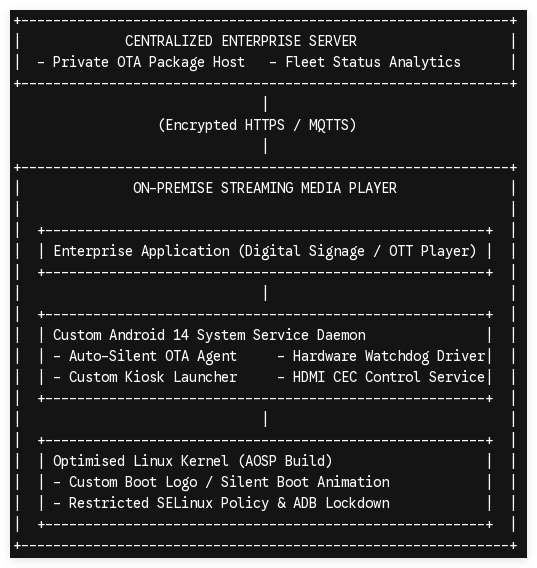
A media player’s hardware capabilities are ultimately defined by its software stack. Off-the-shelf consumer devices run locked bootloaders tied to vendor ad ecosystems. Enterprise deployments require bare-metal firmware tailoring at the Android Open Source Project (AOSP) level.
System Security & DRM Compliance
Commercial OTT and premium content delivery networks demand strict content protection. Hardware configuration must accommodate:
-
Widevine Level 1 & PlayReady Hardware DRM: Keyboxes provisioned during factory PCBA production inside the SoC Secure World (ARM TrustZone) to enable 4K HDR playback.
-
HDCP 2.2 / 2.3 Encryption Handling: Negotiated directly through dedicated hardware registers on the HDMI transmitter to prevent signal interception over commercial distribution splitters.
-
SELinux Enforcement & ADB Disablement: Locking down debug bridge interfaces and rooting access prevents local unauthorized access in public venues.
Custom Launcher, Kiosk Lockdown, and Private OTA Architecture
Unmanaged consumer updates can break display layouts or introduce unvetted UI elements. Industrial firmware customization replaces standard consumer interfaces with operational features:
-
Kiosk Mode Enforcement: Booting directly into a target APK within 15 seconds of power-on, disabling navigation bars, status notifications, and factory reset key combinations.
-
Branded Boot Splash & Silent Booting: Replacing generic system startup graphics with client logos and suppressing system messages during system initialization.
-
Private Enterprise OTA (Over-The-Air) Servers: Bypassing public update channels to host custom delta update packages on dedicated private servers, allowing network administrators to test and push firmware updates across remote device fleets.
Architectural Comparison: Enterprise vs. Consumer Streaming Hardware
+-----------------------------------+-----------------------------------+-----------------------------------+
| Architectural Metric              | Consumer Media Dongles            | Enterprise B2B Media Players      |
+-----------------------------------+-----------------------------------+-----------------------------------+
| Duty Cycle Capability             | 4 – 8 hours/day (Intermittent)    | 24/7/365 Continuous Operation     |
| Operating System Control          | Locked Consumer Launcher (Ad-Rich)| Unbranded AOSP / Kiosk Lockdown   |
| Hardware Thermal Strategy         | Minimal Plastic Passive Shielding | Aluminum Heatsink / Metal Chassis |
| Firmware Lifecycle & Updates      | Unannounced Public OTA Pushes     | Controlled Private OTA Deployment |
| Custom I/O & Port Selection       | Micro-USB / Single HDMI Out       | RS-232, RJ45 Gigabit, PoE, GPIO   |
| Hardware Engineering Support      | Standard Retail Warranty          | PCBA Layout & Firmware Engineering|
+-----------------------------------+-----------------------------------+-----------------------------------+
Engineer Your Dedicated Streaming Hardware Platform
Off-the-shelf consumer devices introduce significant operational risks for commercial deployments through unmanaged software changes, thermal failure points, and missing industrial interfaces. System integrators, digital signage operators, and OTT service providers require hardware engineered specifically for their application parameters.
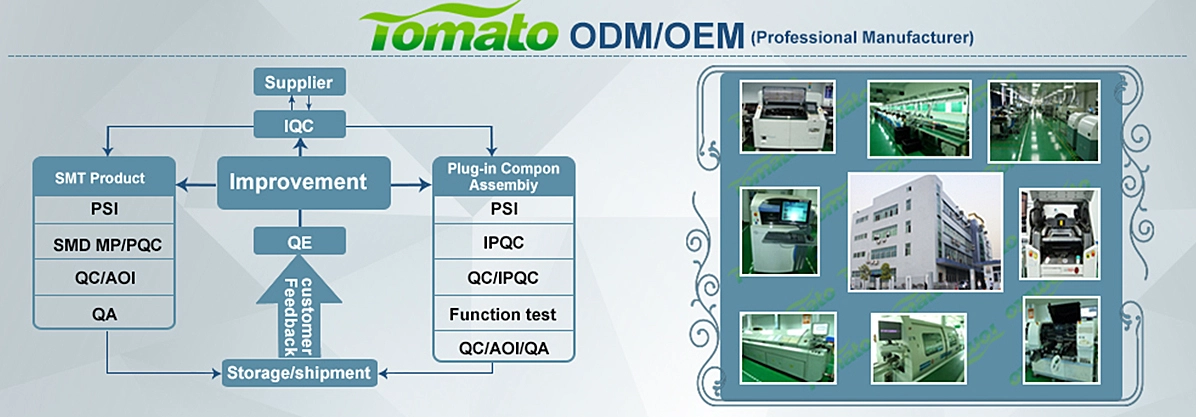
SZTomato (Shenzhen Tomato Technology Co., Ltd.) provides comprehensive, OEM/ODM engineering services backed by 15+ years of specialization in custom Android TV Box and Digital Signage platforms. From initial schematic capture, high-layer PCBA routing, and specialized thermal enclosures to deep Android kernel customization, Widevine L1 provisioning, and private OTA server deployment, SZTomato delivers production-ready streaming media hardware tailored to your technical requirements.
Ready to specify your hardware architecture?
Contact SZTomato's senior hardware engineering and technical procurement team at www.sztomato.com to initiate custom PCBA prototyping, request evaluation units, or request full-stack OEM/ODM design documentation.