What is the absolute Best Google TV Box?
What is the Absolute Best Google TV Box? An Enterprise Architecture & B2B Sourcing Guide
Content providers, telecommunications operators, and commercial AV integrators face severe operational friction when scaling digital display infrastructure. The transition to bandwidth-efficient AV1/H.266 video transport—coupled with continuous 24/7 playback demands—has exposed the physical limits of mass-market consumer streaming sticks.
When evaluating the "absolute best" Google TV Box from a B2B procurement standpoint, consumer streaming metrics (such as consumer remote layouts or bundled app subscriptions) are irrelevant. For enterprise infrastructure, the optimal device is defined by Hardware-Software Synergy: a stable System-on-Chip (SoC) architecture, passive thermal dissipation engineered for high ambient temperatures, low-level firmware access, and a customizable Printed Circuit Board Assembly (PCBA) built for zero-downtime operation.
Deploying consumer-grade Google TV hardware into commercial environments leads to elevated field failure rates—driven by aggressive thermal throttling, unmanaged mandatory OS updates, and a complete absence of hardware-level peripheral control.
1. Architectural Comparison: Consumer Google TV vs. Enterprise OEM Hardware
Deploying media endpoints at scale requires analyzing the operating system kernel, permission management, and underlying hardware architecture.
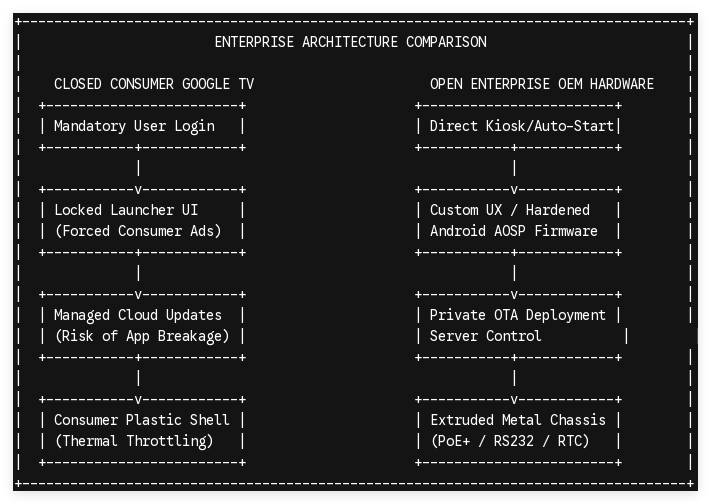
Consumer Google TV devices prioritize user monetization through recommended media feeds and rigid security frameworks that isolate the hardware layer. In contrast, an enterprise-grade OEM build based on Android Open Source Project (AOSP) or hardened Android TV OS gives system architects total control over device behavior.
| Operational Metric | Consumer Google TV Dongle | Enterprise OEM/ODM Google TV Box |
|---|---|---|
| Boot Sequence | Consumer setup wizard; user login required | Silent fast-boot (<15s), direct application launcher |
| System Permission Layer | Locked bootloader, restricted root privileges | Configurable root access, custom API integration |
| Firmware Deployment | Forced automatic updates via public cloud | Private Over-The-Air (OTA) server infrastructure |
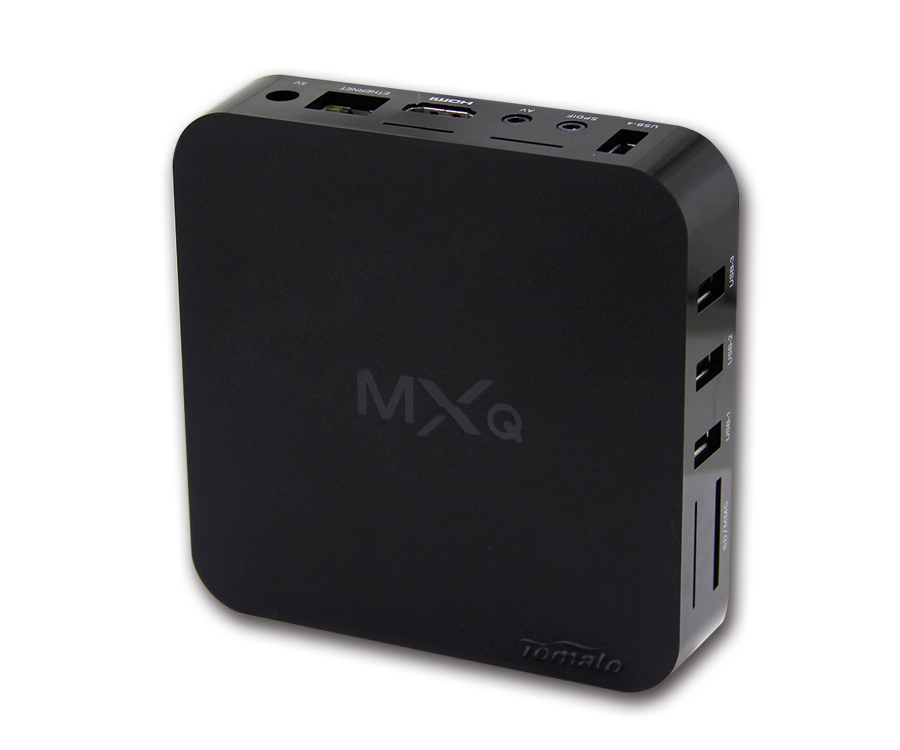
| Peripherals & I/O | Single USB-C (Power only or limited OTG) | Dual GbE, RS232, custom GPIO, USB 3.0 OTG |
| Display Control Engine | Consumer HDMI-CEC pass-through | Industrial RS232, HDMI-CEC, display orientation locking |
| Thermal Envelope | Sealed plastic housing (Throttles at high loads) | Aluminum heat-spreader chassis rated for 24/7/365 |
2. Silicon Performance Benchmarks: Evaluating the Core SoC Engine
The System-on-Chip (SoC) dictates video decoding throughput, multi-layered graphics rendering, and operational lifespan. Procurement teams must select silicon manufactured on advanced fabrication nodes (6nm to 12nm) with hardware-accelerated AV1 decoding to minimize bandwidth overhead.
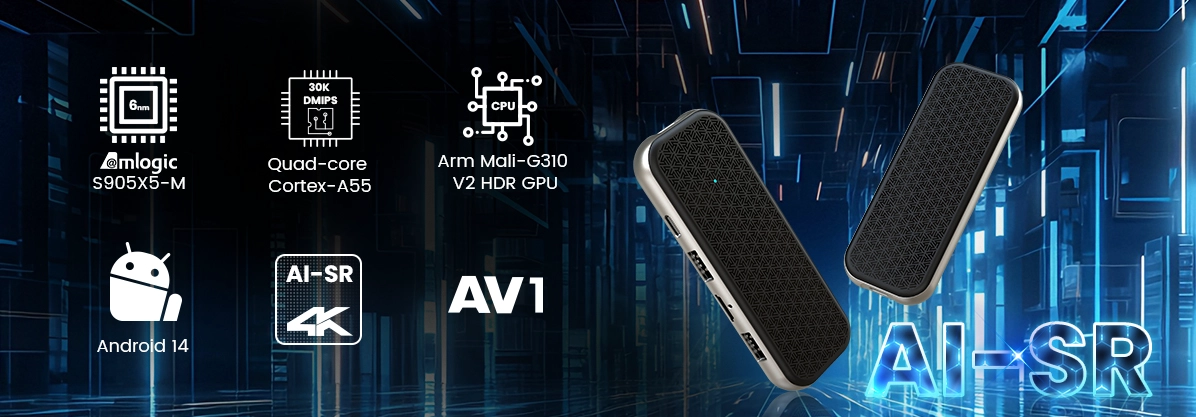
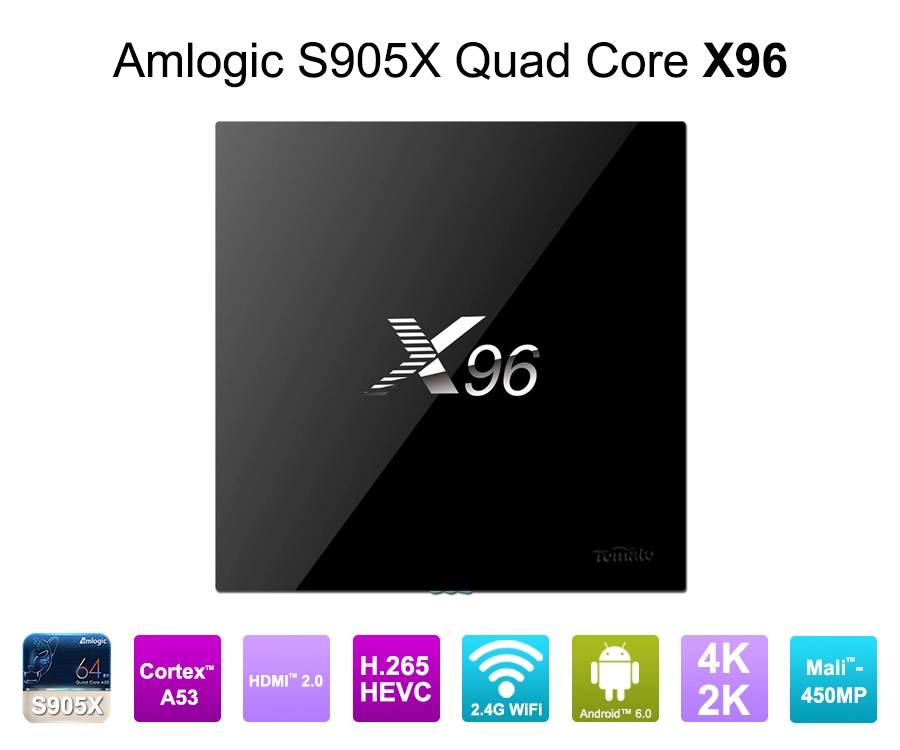
The Mid-Tier Standard: Amlogic S905X5 Platform
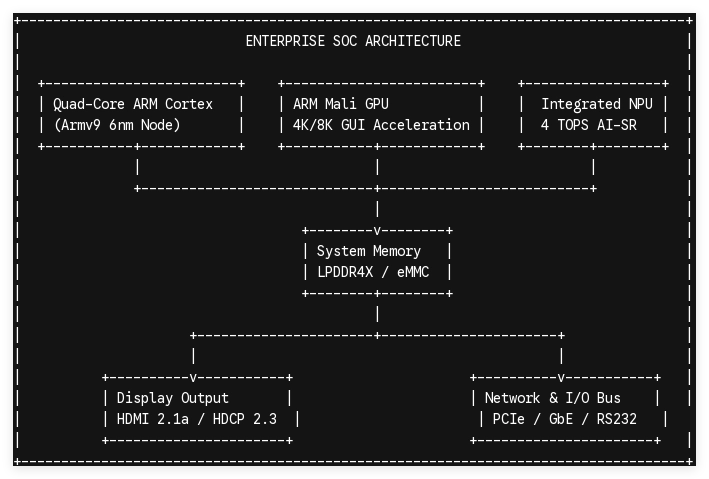
For standard 4K commercial media playback and digital signage networks, the Amlogic S905X5 serves as the primary benchmark:
-
Armv9 CPU Processing: Quad-core Cortex architecture built on a 6nm process, yielding over 40,000 DMIPS for application tasks.
-
Next-Gen VPU Engine: Native hardware decoding for AV1, H.266/VVC, and HEVC at 4Kp60 resolution. Hardware-level AV1 decoding reduces bandwidth consumption by up to 30% relative to HEVC, lowering Content Delivery Network (CDN) egress costs.
- Integrated Edge AI (AI-SR): A dedicated 4 TOPS Neural Processing Unit (NPU) provides real-time AI Super-Resolution (AI-SR), upscaling 1080p source video to 4K display output directly on the device.
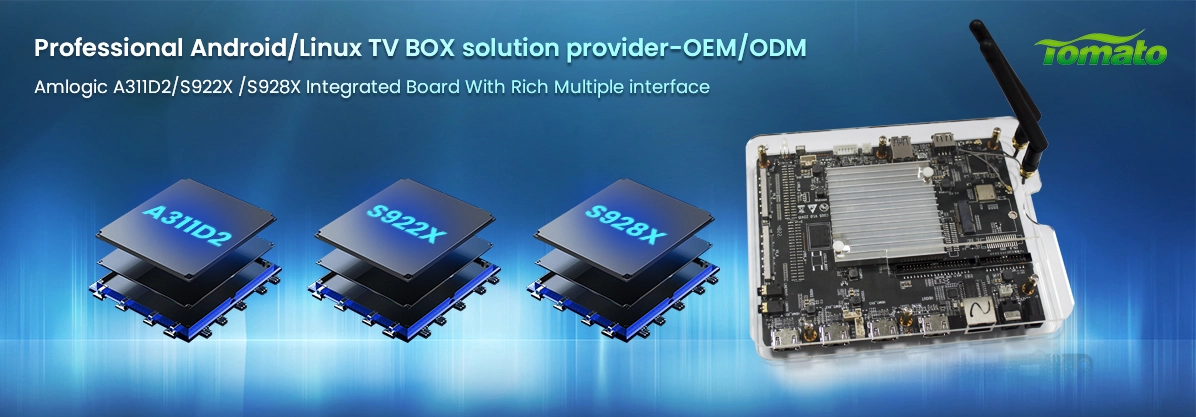
Ultra-High-Performance Compute: Amlogic S928X & Rockchip RK3588 Platforms
For multi-display video walls, interactive 8K touch displays, or localized media servers, higher-tier SoCs like the Amlogic S928X or Rockchip RK3588 deliver necessary compute density:
-
Hybrid Processing Architecture: Multi-core CPU configurations combined with high-throughput GPUs (such as ARM Mali-G57 or Mali-G610) capable of rendering complex HTML5 multi-zone layouts without frame degradation.
- Uncompressed 8K Video Pipeline: Native 8K@60fps video decoding via HDMI 2.1a output, featuring HDCP 2.3 hardware encryption for secure stream delivery.
3. Custom PCBA Layout & Industrial Thermal Engineering
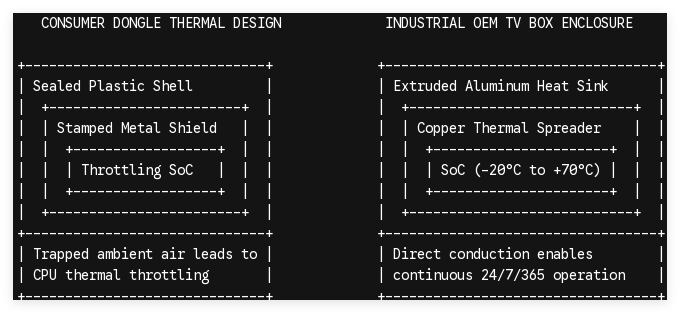
Continuous 24/7/365 video playback generates steady thermal load. Consumer dongles rely on thin stamped metal plates trapped within plastic housings, causing silicon downclocking, dropped frames, and hardware lockups within hours of sustained 4K playback.
Industrial Passive Thermal Design
To maintain system stability in harsh environments (such as sealed kiosk cabinets or high-ceiling AV mounts), industrial hardware designs incorporate:
-
Direct Thermal Coupling: Machined copper heat spreaders attached directly to the SoC using high-conductivity thermal interface materials (k>4.0 W/mK).
-
Conduction Chassis Shells: Heavy-duty extruded aluminum enclosures that serve as external heatsinks, maintaining internal die temperatures below 65∘C under maximum video decoding loads.
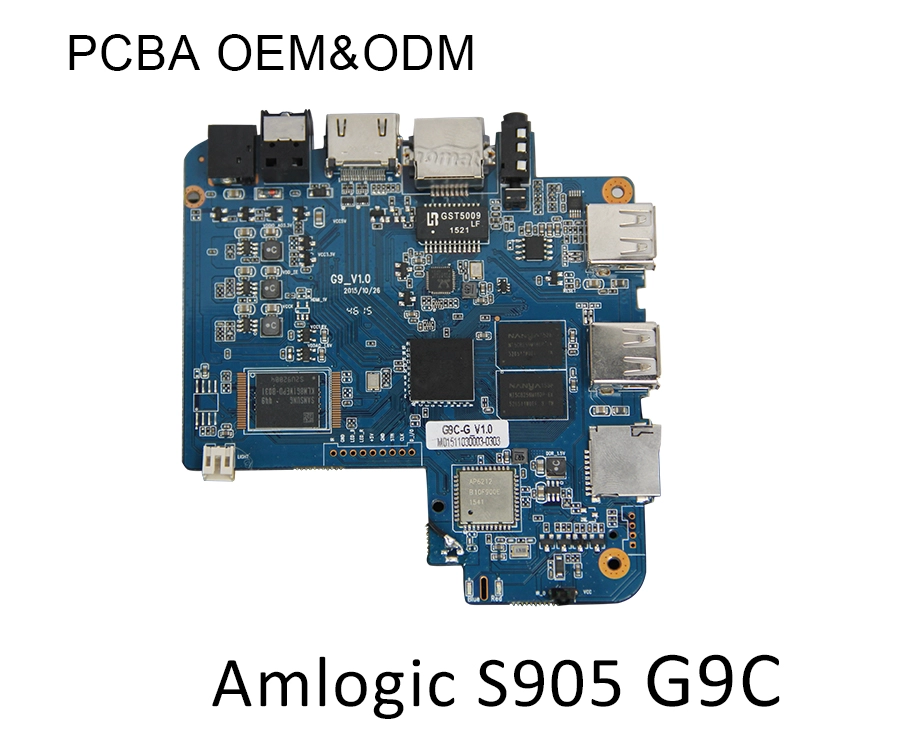
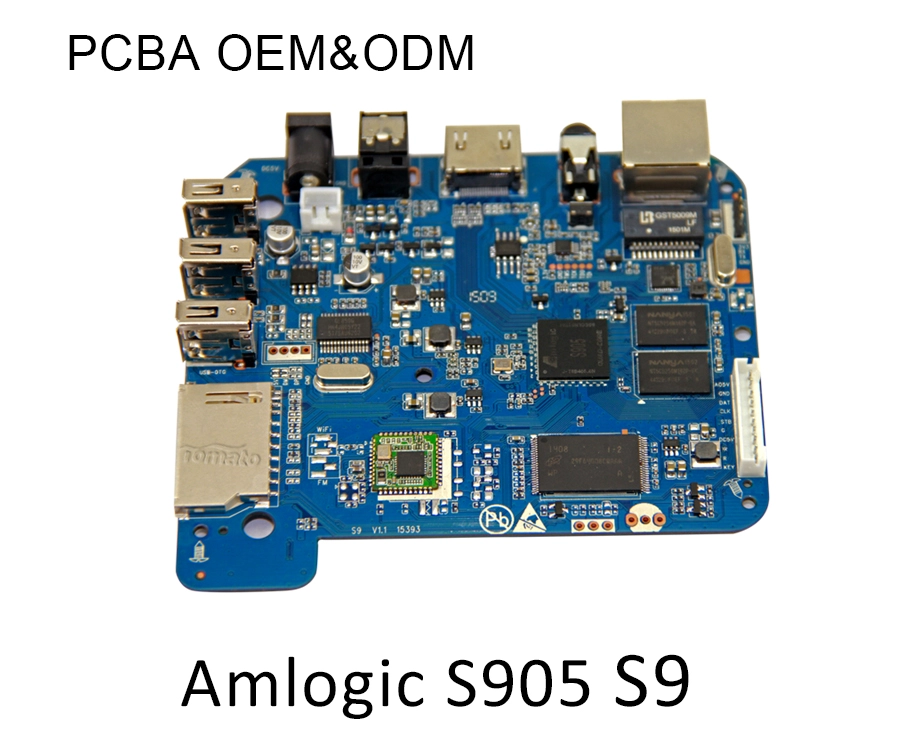
Board-Level (PCBA) Customization
Enterprise procurement requires tailored circuit board configurations to meet specific operational requirements:
-
Power over Ethernet (PoE+ Integration): Onboard IEEE 802.3at PoE+ modules delivering up to 30W of DC power and Gigabit network data via a single Cat6 cable, eliminating external power supplies.
-
Hardware Watchdog Timers: Microcontroller-level watchdogs that monitor OS status and automatically cycle main power if a kernel panic occurs.
-
Serial Control & Expansion Buses: Dedicated RS232/RS485 interfaces for direct display panel power management, along with custom GPIO terminals for sensor inputs.
-
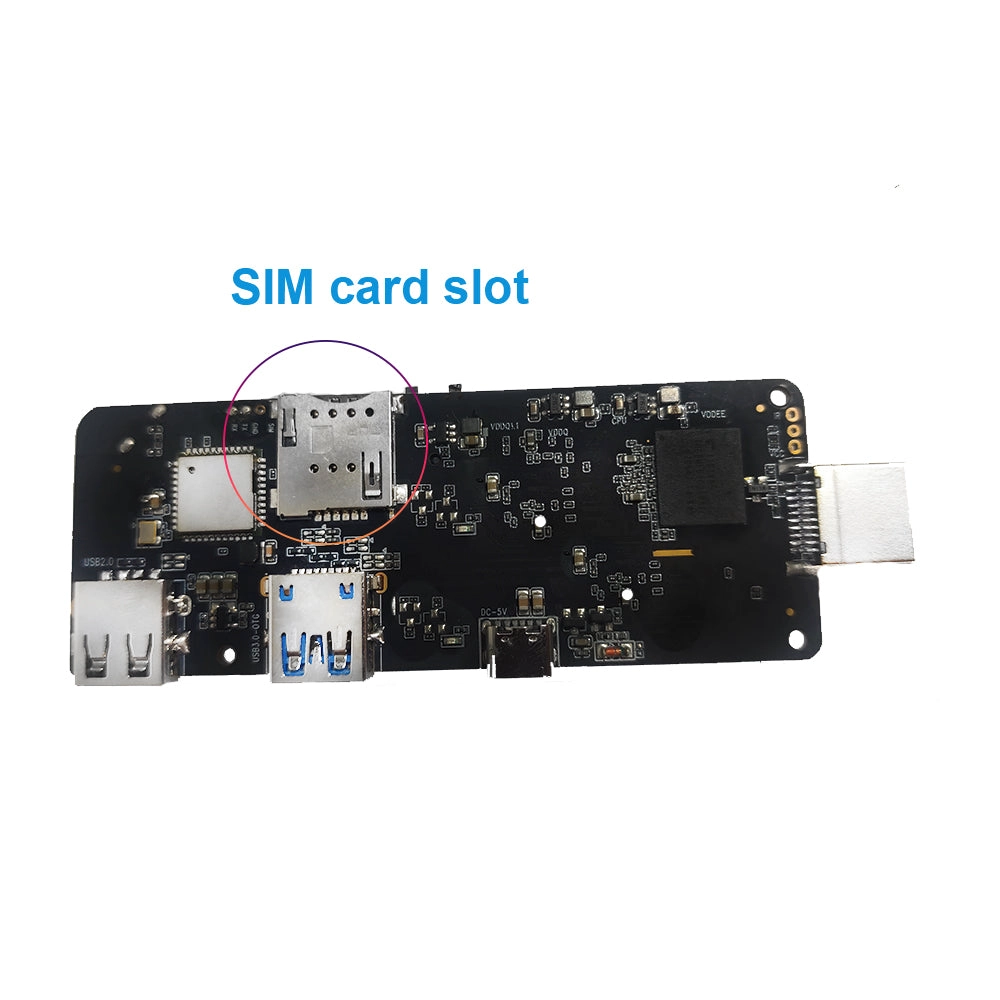
Cellular Network Failover: Onboard M.2 or Mini-PCIe slots supporting 4G/5G LTE modems with dual SIM failover for remote digital signage deployments.
Strategic OEM/ODM Hardware Sourcing with SZTomato
Sourcing the absolute best Google TV Box for commercial deployments requires moving beyond retail consumer devices and partnering with an industrial hardware manufacturer.
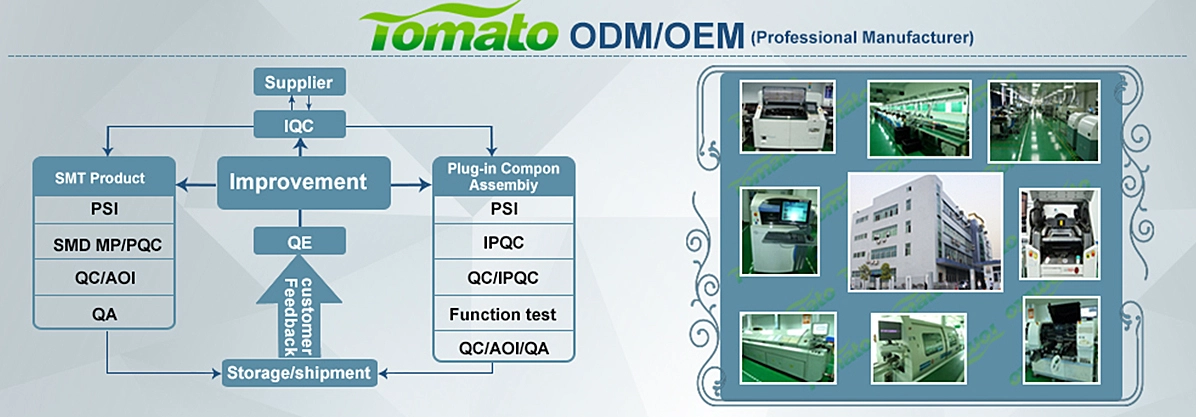
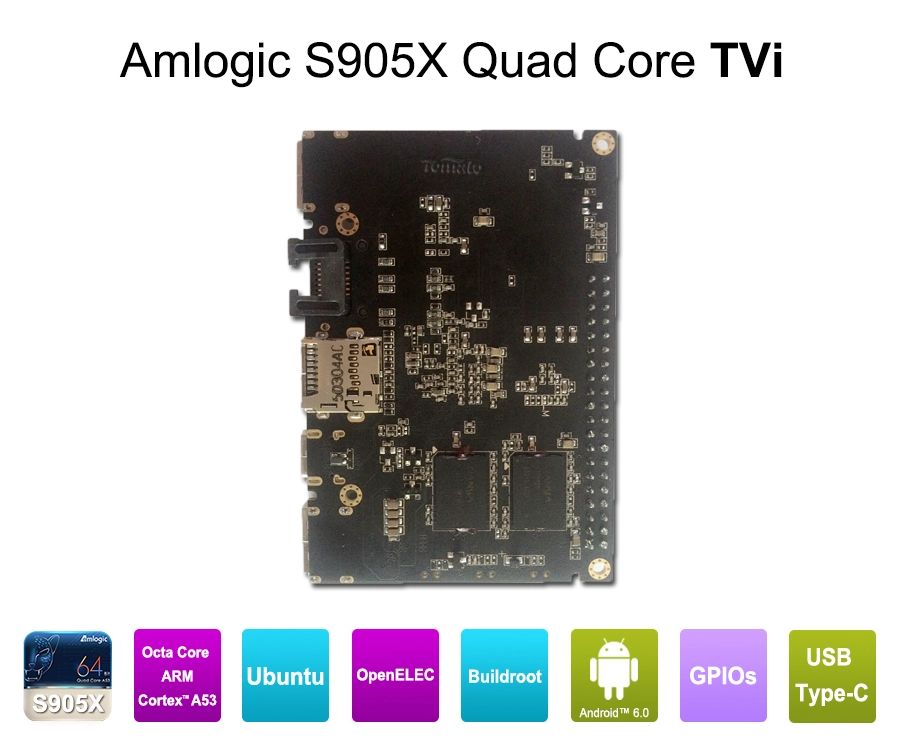
As a provider of B2B cross-border electronics engineering, SZTomato delivers custom hardware designs, low-level firmware engineering, and long-term lifecycle management for system integrators, telecom operators, and commercial AV solution providers.
The SZTomato Competitive Advantage:
-
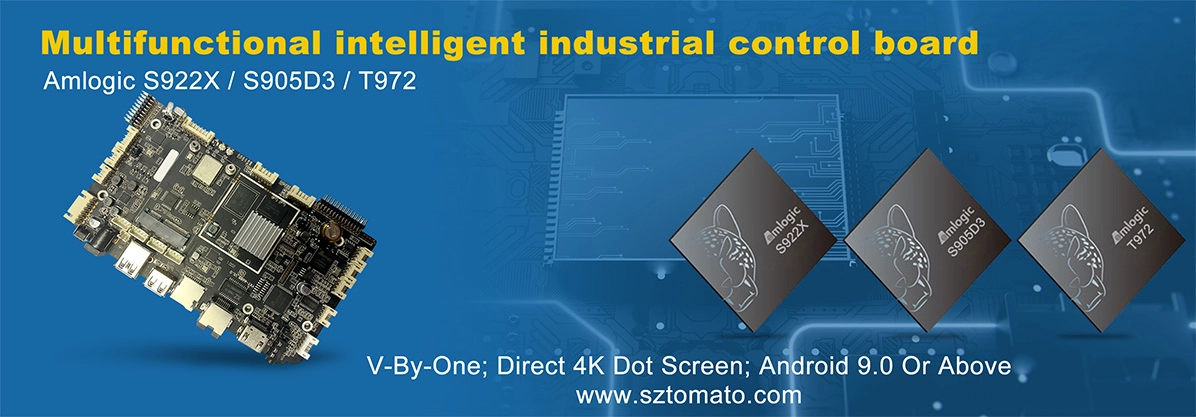
Custom PCBA Engineering: Specialized circuit board layouts, custom I/O options, integrated PoE/4G/5G modules, and industrial-grade thermal enclosures.
-
Firmware & OS Hardening: Deep Android (AOSP) kernel customization, launcher locking, silent application deployment, and custom SDK/API integration.
-
Private OTA Infrastructure: Dedicated, branded Over-The-Air (OTA) update servers that give operators full control over software updates across global device deployments.
-
Component Lifecycle Stability: Industrial-grade component selection ensures board layout and silicon consistency across multi-year procurement programs.
Request an Engineering Consultation
Are you planning an enterprise Google TV rollout or designing a custom digital signage hardware platform? Contact the engineering team at SZTomato to request hardware samples, board schematics, and customized firmware builds for your project specifications.