Smart TV Box Buying Guide
Commercial Smart TV Box Sourcing Guide: Engineering-First Hardware, Custom Firmware, and Fleet Operations
The rapid industry transition to the AV1 codec—promoted by major content networks to reduce bandwidth usage by up to 30%—has exposed a critical vulnerability in legacy enterprise deployments: hardware-level decoding bottlenecks. Procurement teams that deployed previous-generation quad-core SoCs without native AV1 hardware support are facing forced hardware refresh cycles as software-based decoding spikes CPU usage to 100%, causing thermal throttling, frame drops, and premature board failure.
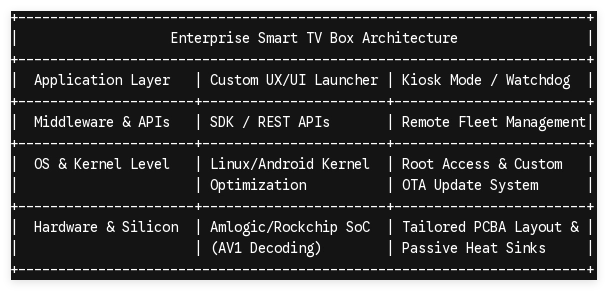
For system integrators, digital signage operators, and telecom vendors, selecting a commercial-grade Smart TV Box is an architectural decision, not a retail procurement task. Deploying standard consumer devices into unattended commercial environments invites severe operational risk. Enterprise success requires evaluating silicon architectures, board-level thermal layouts, low-level firmware flexibility, and remote maintenance infrastructure.
Technical Hardware Evaluation: Silicon Architecture, PCBA Layout, and Thermal Engineering
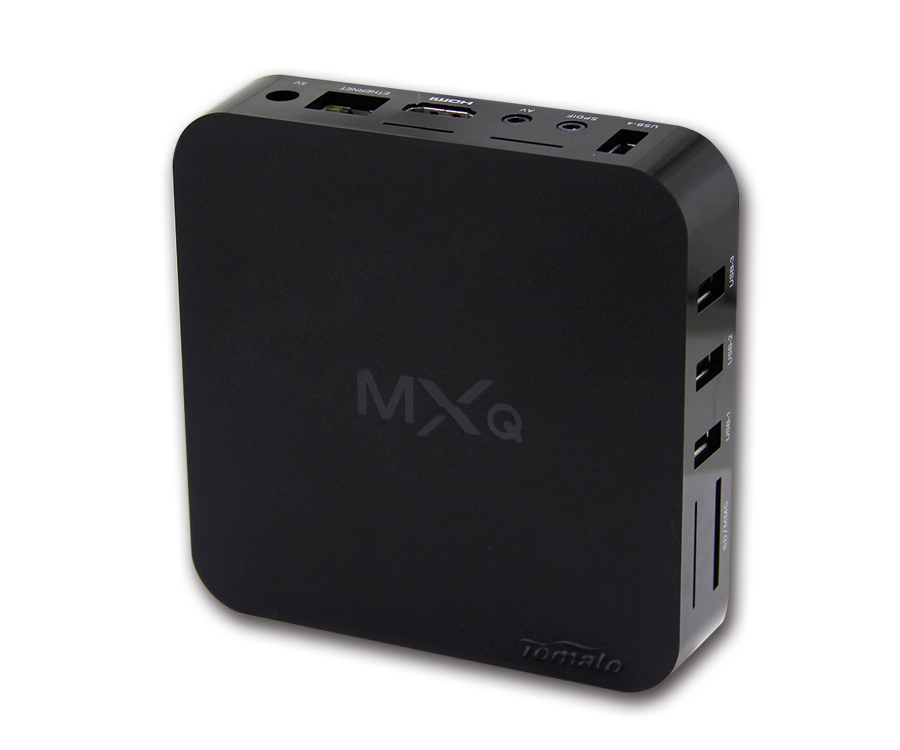
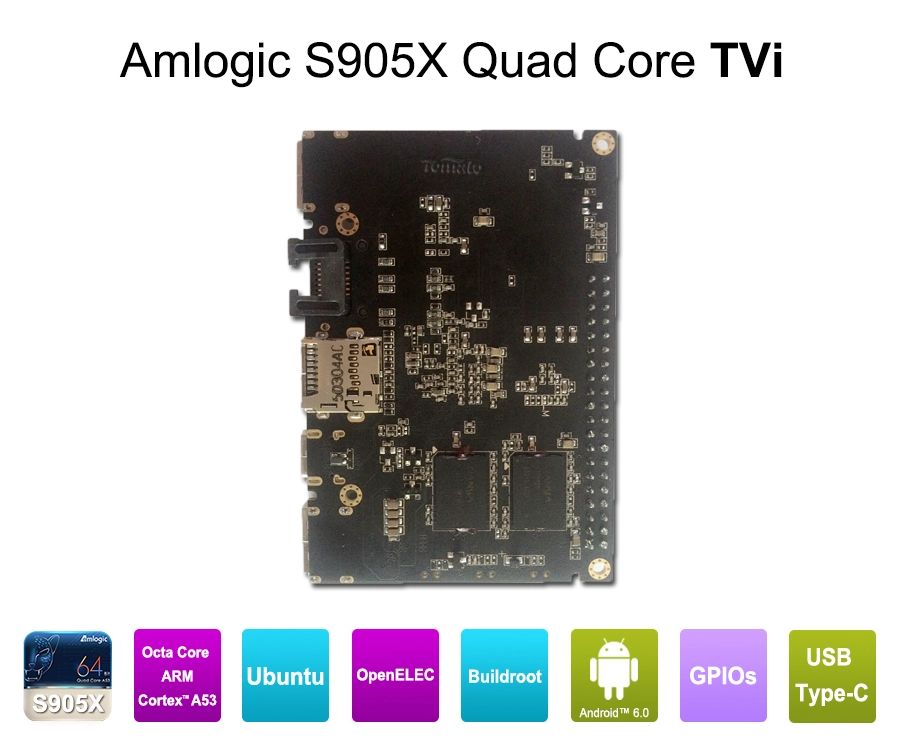
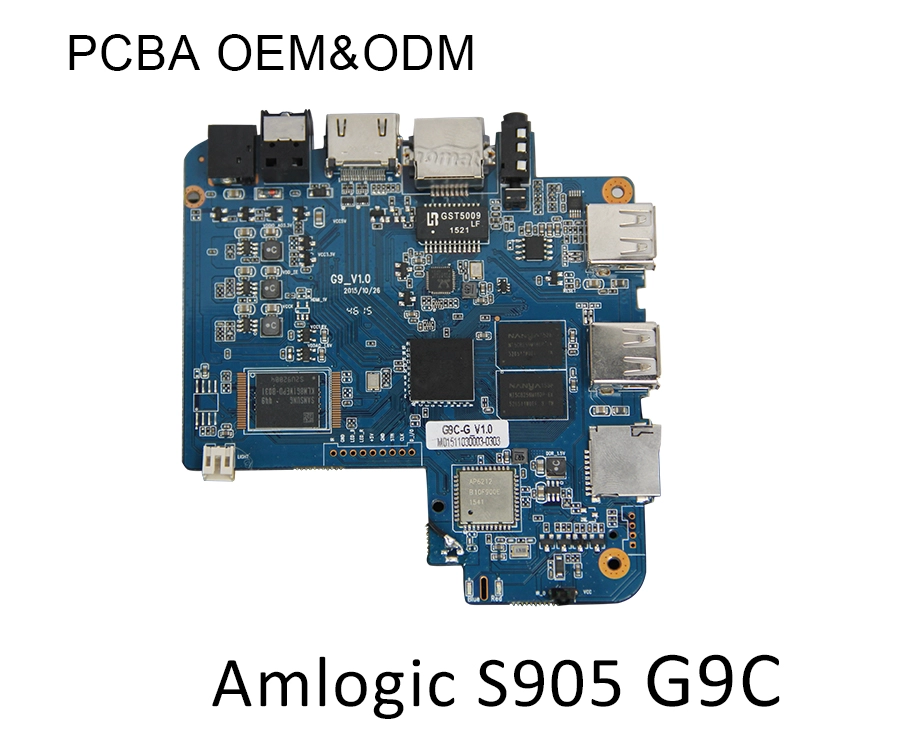
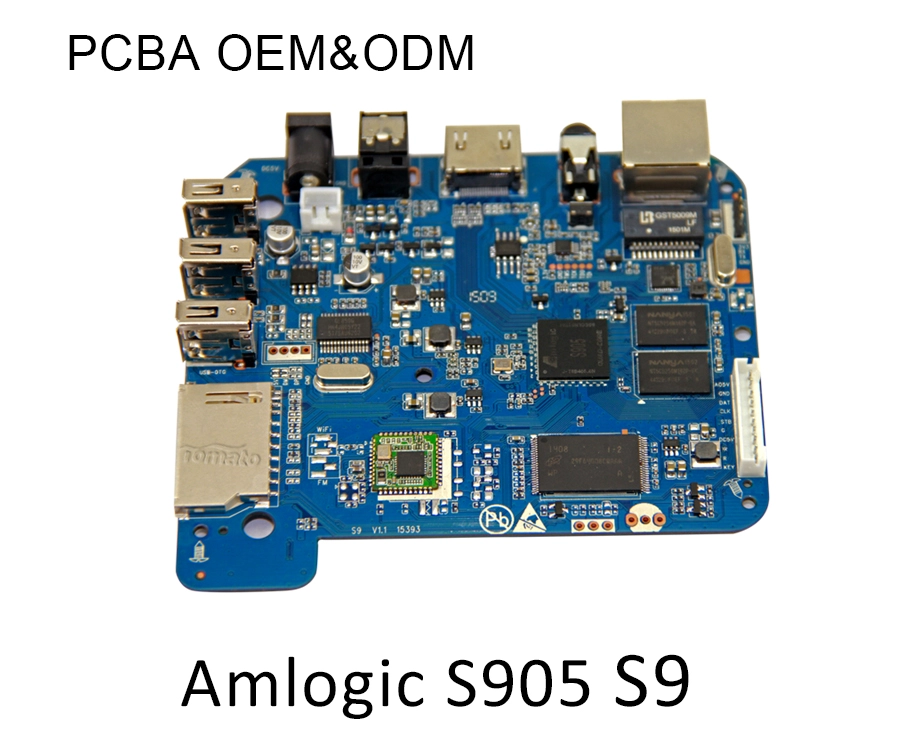
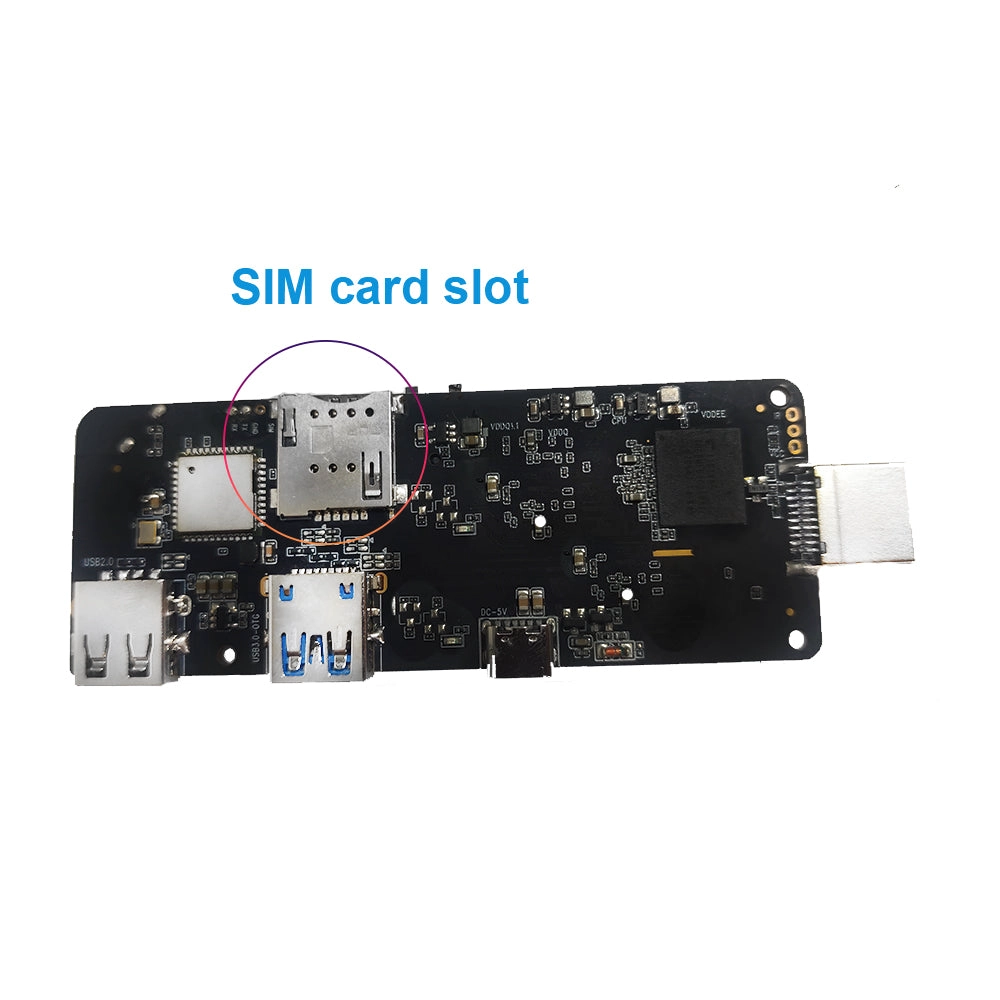
Commercial reliability begins at the printed circuit board assembly (PCBA) level. Consumer-grade set-top boxes rely on cheap plastic enclosures with minimal stamped-aluminum heat spreaders, designed for intermittent residential use. In contrast, 24/7 commercial deployments—such as menu boards, interactive kiosks, and IPTV networks—demand purpose-engineered thermal and hardware layouts.
Silicon Selection: Matching SoCs to Enterprise Workloads
-
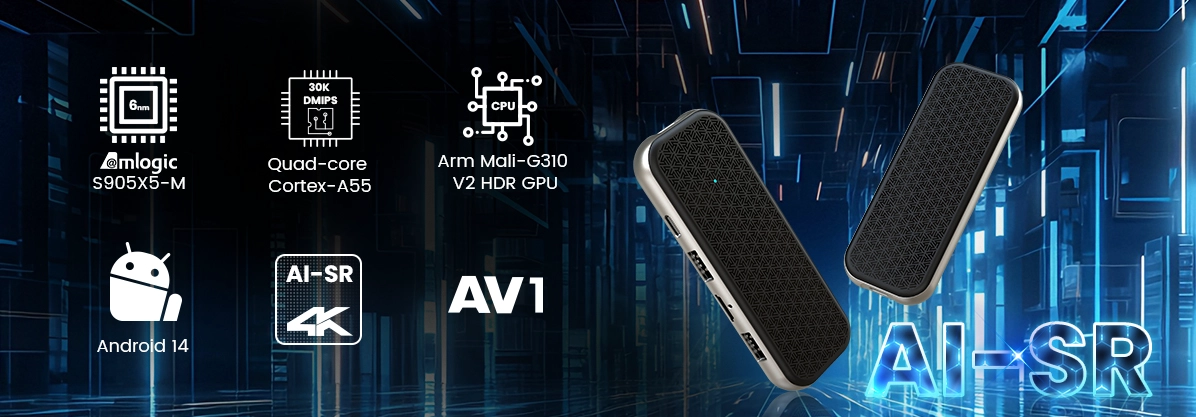
Amlogic S905X4 / S905X5 Series: The baseline choice for mainstream commercial media playback. Features quad-core ARM Cortex-A55 architecture combined with a dedicated hardware AV1 decoder supporting up to 4K @ 60fps, maintaining low silicon power draw under continuous load.
-
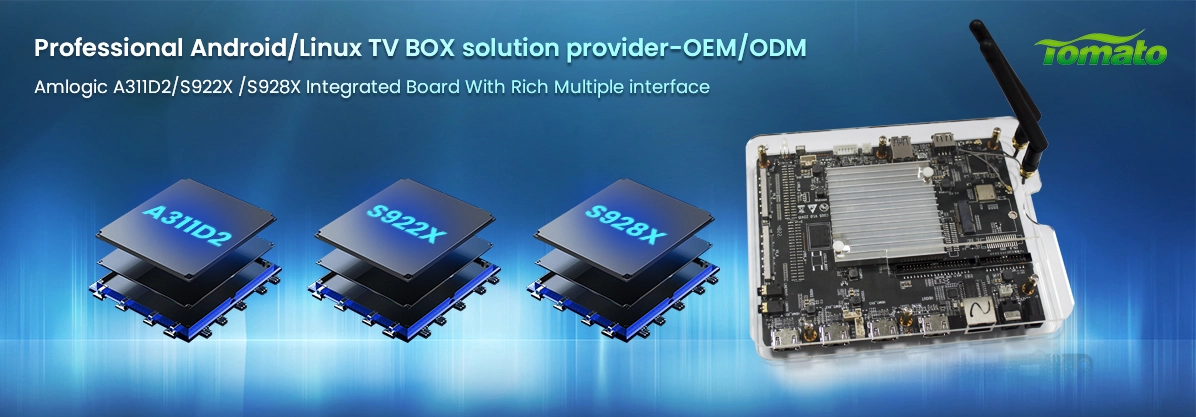
Amlogic A311D2 / Rockchip RK3588: Engineered for edge computing, dual-display output, and AI processing. These platforms deliver high-throughput NPU capabilities for audience analytics, dual-HDMI outputs for digital signage, and multi-channel video encoding/decoding.
Board-Level Reliability & Interface Customization
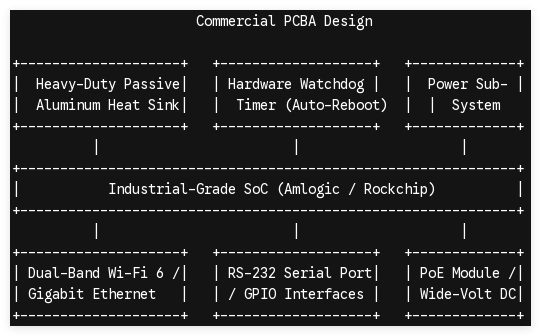
A robust PCBA layout must accommodate specialized peripheral integrations and harsh electrical environments:
-
Thermal Management: Commercial PCBA configurations utilize heavy-duty, direct-contact aluminum heat sinks paired with thermally conductive silicone pads to transfer thermal energy across aluminum chassis. This maintains junction temperatures well below critical thresholds, eliminating thermal-induced clock throttling during uninterrupted multi-day playback.
-
I/O Customization: Custom PCBA designs allow system integrators to specify interface layouts, including RS-232 serial ports for display control, general-purpose input/output (GPIO) headers for interactive buttons or sensors, Power over Ethernet (PoE) modules to eliminate external AC adapters, and wide-voltage DC inputs (9V–36V) for automotive or industrial power grids.
Firmware Engineering: Custom Kernels, Kiosk Locking, and API Control
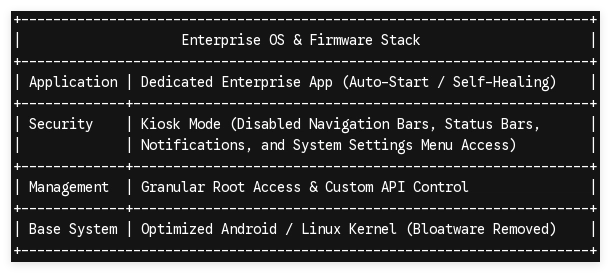
Hardware capability is ineffective without tailored, firmware-level control. Standard consumer Android firmwares contain resource-heavy background services, bloatware, aggressive memory management, and automatic update routines that break deployed enterprise applications. B2B deployments demand a stripped-down, optimized Linux or Android kernel built around system stability and application dominance.
Critical Firmware Capabilities for Enterprise Deployments
-
Kiosk Mode & System Lockdown: Deep OS modifications hide status bars, disable system notification panels, disable hardware button reset functions, and lock users into a single target application. Boot-loop prevention routines ensure that if the primary application crashes, the system automatically recovers and relaunches it within seconds.
-
Auto-Power On & Boot Behavior: Industrial environments experience sudden power interruptions. Firmware modified at the bootloader level (U-Boot) forces the device to automatically boot up and launch designated software upon sensing power, eliminating manual intervention or remote button presses.
-
Custom SDK and System API Access: System integrators require low-level APIs to query device diagnostics (SoC temperature, RAM utilization, network status), manage display parameters (resolution switching, display orientation, rotation via software), and execute remote reboots programmatically.
-
Root Privileges: Providing granular root access gives engineers full operational control over the filesystem to silently update background application binaries, modify configuration scripts, and interface directly with custom peripheral drivers.
Deployment Architecture: Centralized OTA Server Setup and Security Compliance
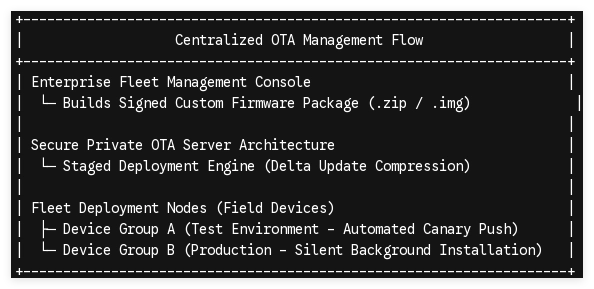
Deploying hundreds or thousands of Smart TV Boxes without an enterprise-grade Over-The-Air (OTA) update mechanism creates massive maintenance overhead. Pushing manual updates via USB drives on-site quickly drains operational margins and risks system downtime.
Enterprise Remote Management Architecture
-
Private Dedicated OTA Infrastructure: Rather than relying on public cloud servers, B2B hardware should connect to custom-configured, private OTA update servers. This architecture allows IT teams to schedule, stage, and push delta updates silently in the background without user intervention.
-
HDCP and DRM Management: Commercial streaming networks demand digital rights management compliance. Hardware and firmware configurations must be pre-licensed and verified for Widevine L1, PlayReady, and HDCP 2.2/2.3 encryption at the factory level to ensure secure transmission of premium 4K protected content.
-
Hardware Watchdog Timers: Software-based watchdog scripts can fail if the operating system experiences a complete kernel panic. A dedicated hardware watchdog timer integrated on the PCBA sends continuous heartbeat pulses to the board logic. If the kernel freezes, the hardware timer automatically cuts and restores power, ensuring uninterrupted uptime for remote installations.
Engineer Your Hardware Solution with SZTomato
Standard retail Smart TV Boxes cannot deliver the operational stability, longevity, or system control required for commercial enterprise deployments. Operational success requires purpose-built hardware coupled with low-level firmware customization.
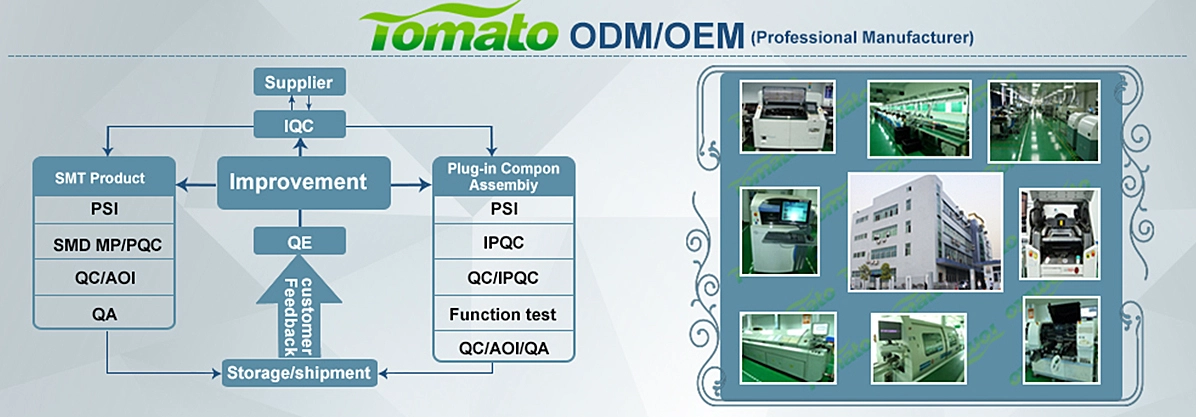
As a specialized B2B manufacturer with deep firmware-level engineering expertise, SZTomato provides comprehensive OEM/ODM engineering services to turn your software specifications into reliable hardware assets:
-
PCBA Hardware Redesign: Custom PCB layouts, industrial thermal configurations, PoE integration, wide-voltage inputs, and specialized peripheral interface engineering.
-
Firmware & Kernel Engineering: Customized Android/Linux OS, complete bloatware removal, custom boot logo/animation integration, system-level Kiosk Mode lockdown, and custom API/SDK development.
-
Private Fleet Infrastructure: Pre-configured device connection to private OTA servers for controlled, silent deployment of future OS updates.
-
Factory-Level Pre-Configuration: Custom packaging, hardware branding, pre-installed client APKs, and strict QA testing protocols.
Accelerate Your Commercial Hardware Deployment Contact the engineering team at SZTomato today to submit your product requirements, request custom sample hardware, or schedule an architecture consultation with our senior B2B hardware specialists.