
Set-Top Box (STB) WiFi 6 buyer’s Guide
Commercial Set-Top Box (STB) Wi-Fi 6 Sourcing Guide: Silicon, RF PCBA Engineering, and Fleet Control
The industry-wide shift toward high-bitrate 4K AV1 video streams—coupled with growing spectrum congestion in multi-dwelling units (MDUs), hotels, and corporate venues—has exposed the physical limits of legacy Wi-Fi 5 (802.11ac) hardware. When dozens of streaming devices compete on the same 5 GHz access point, Wi-Fi 5 relies on CSMA/CA (Carrier Sense Multiple Access with Collision Avoidance), forcing Set-Top Boxes (STBs) to wait for clear airtime. The resulting buffer bloat, latency jitter, and frame dropping degrade IPTV, OTT, and digital signage deployments.
Integrating Wi-Fi 6 (IEEE 802.11ax) into a commercial Set-Top Box (STB) resolves these bottlenecks by introducing Orthogonal Frequency-Division Multiple Access (OFDMA), Multi-User MIMO (MU-MIMO), Target Wake Time (TWT), and BSS Coloring. However, achieving true enterprise-grade performance requires looking beyond the Wi-Fi 6 marketing label on the retail box. For procurement teams and system integrators, success depends on evaluating board-level RF isolation, SoC decoding pipelines, low-level kernel optimizations, and remote maintenance infrastructure.
Silicon Architecture & RF PCBA Design: Beyond Standard 802.11ax Modules
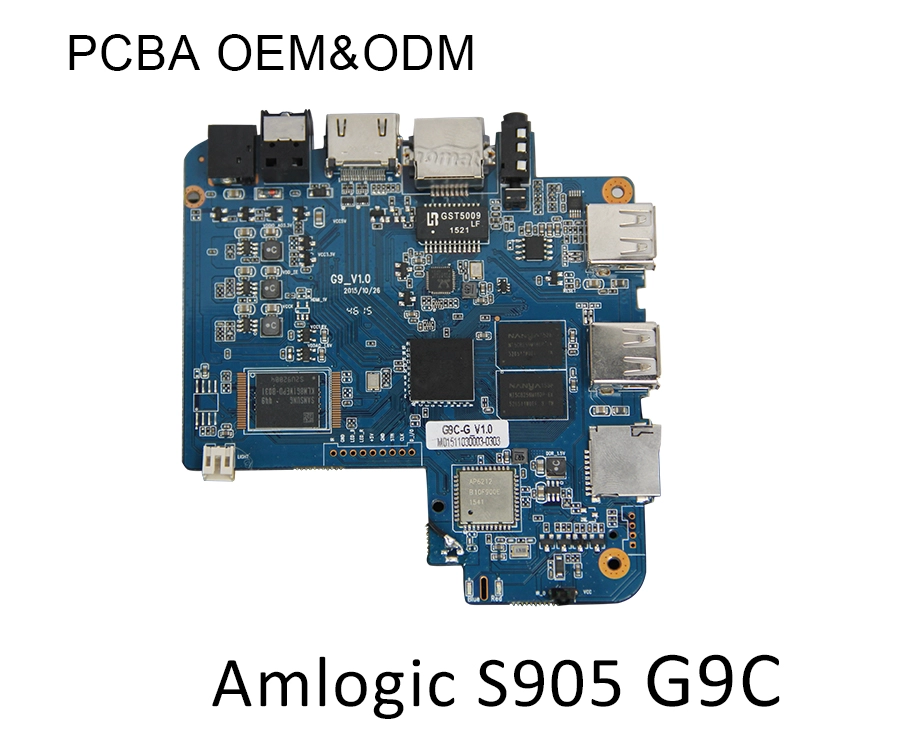
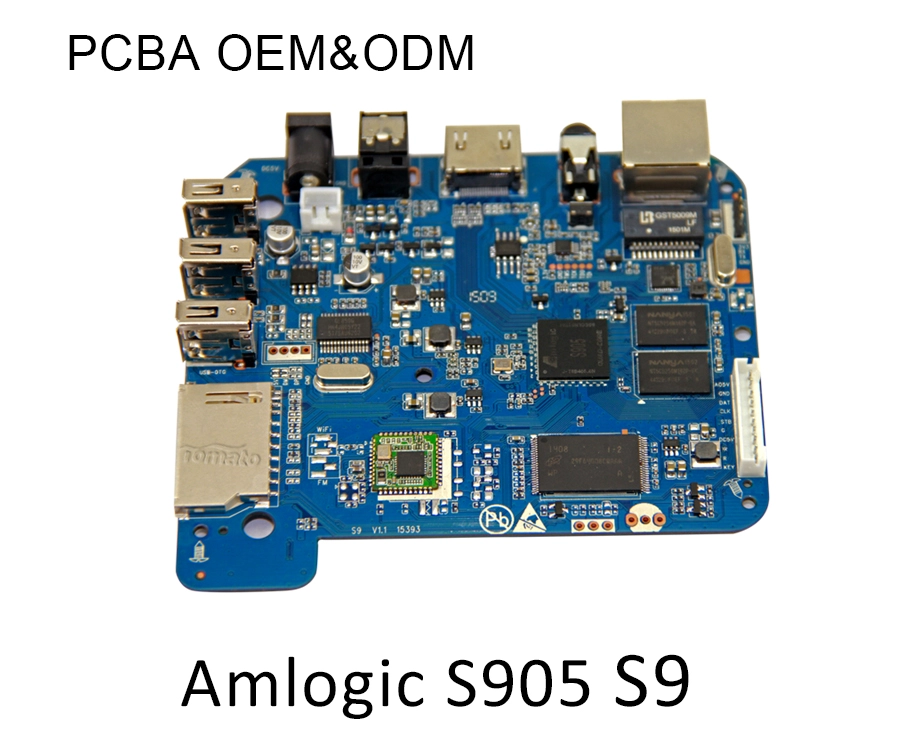
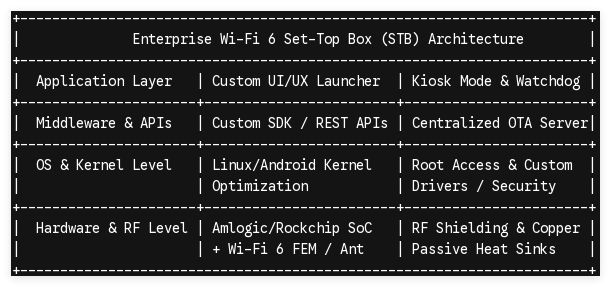
Integrating Wi-Fi 6 onto an enterprise PCBA requires strict co-existence engineering between the high-frequency wireless subsystem, memory buses, and processing cores. Budget consumer STBs share trace lines, lack proper RF shielding, and utilize cheap internal antennas, causing severe packet drops during sustained multi-stream playback.
1. Silicon Processing & Codec Offloading
Wi-Fi 6 provides the wireless pipe, but the main System-on-Chip (SoC) must decode incoming video streams without introducing frame jitter:
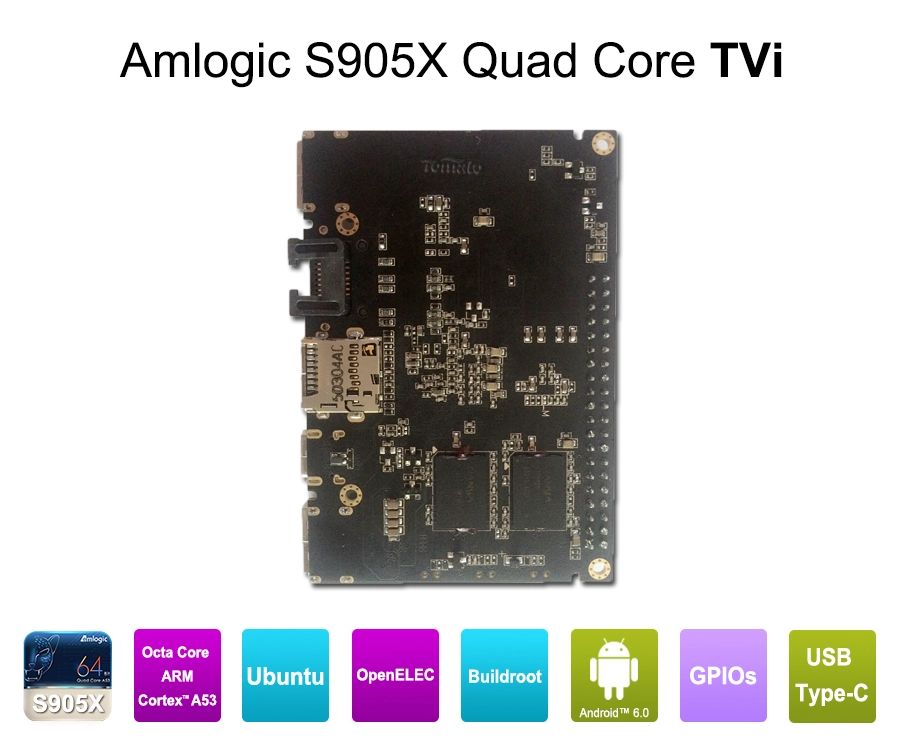
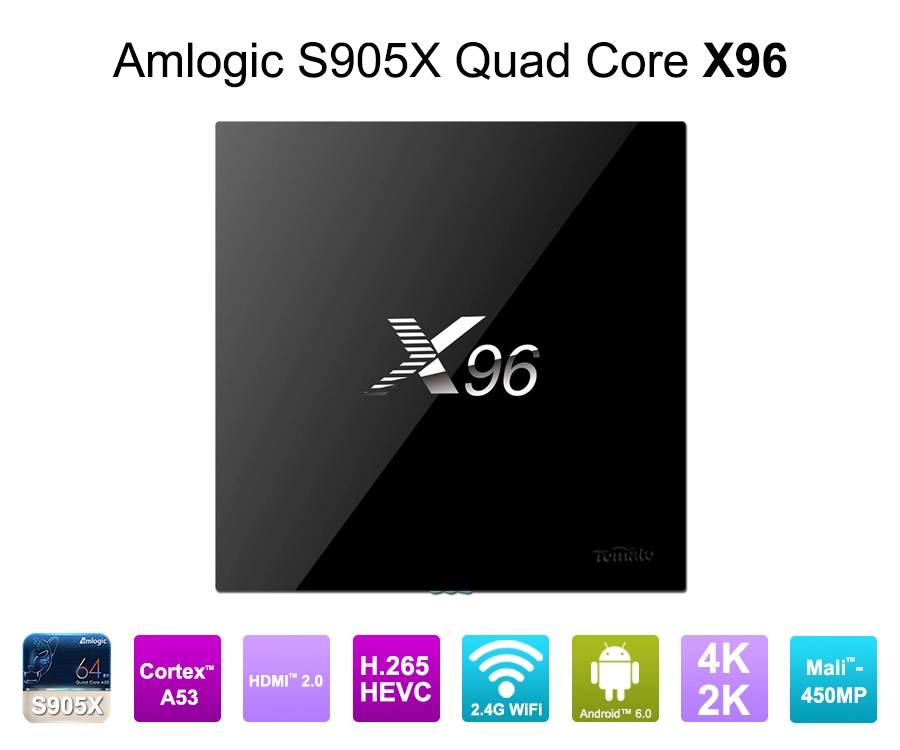
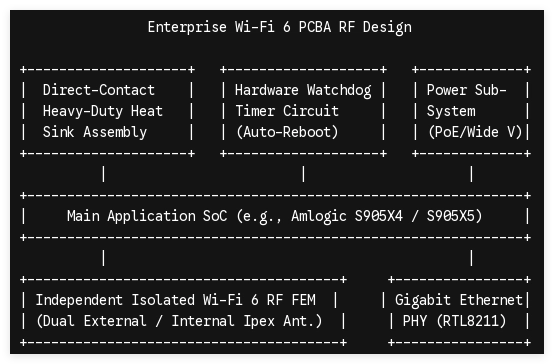
- Amlogic S905X4: Quad-core ARM Cortex-A55 delivering native 4K60 hardware AV1, VP9, and H.265 decoding. Combined with 2x2 MIMO Wi-Fi 6, it handles sustained high-bitrate multicast IPTV streams with minimal CPU utilization.
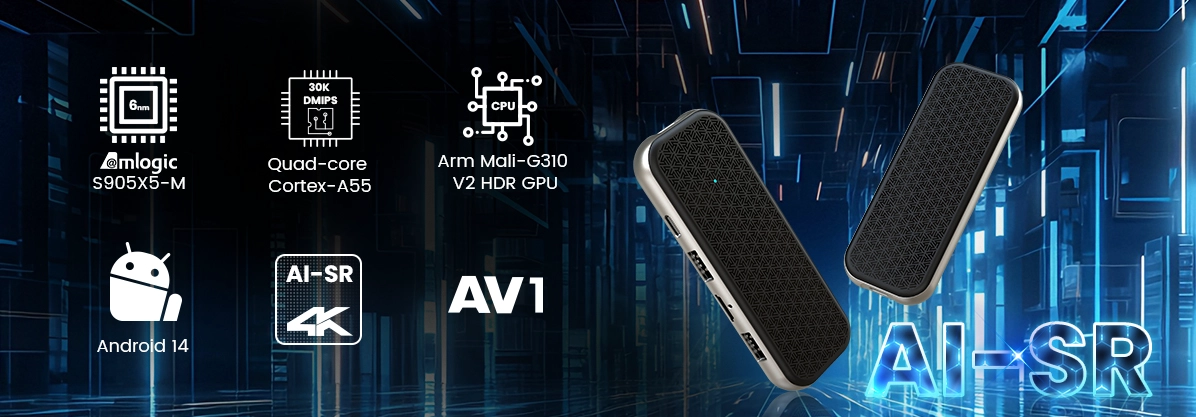
- Amlogic S905X5 / S905X5M Series: Fabricated on advanced nodes (6nm) with clock speeds up to 2.5 GHz. It adds hardware VVC (H.266) readiness and AI-based Super Resolution (AI-SR) video upscaling, making it the ideal engine for next-generation telecom deployments.
2. PCBA RF Layout, FEM, and Antenna Separation
-
RF Front-End Modules (FEM): Commercial-grade PCBA designs incorporate high-power external FEMs (LNA + Power Amplifier) rather than relying on weak internal SoC radios. This improves signal sensitivity by +3dBm to +5dBm through walls and metal enclosures.
- Trace Isolation & Shielding: High-speed RAM buses (LPDDR4/DDR4) generate electromagnetic interference (EMI) in the 2.4 GHz and 5 GHz bands. Enterprise PCBAs feature dedicated metal shielding cans over the Wi-Fi chipset and RAM, accompanied by separate 2.4GHz and 5GHz IPEX-connected antenna leads rather than trace-printed antennas.
| Architectural Feature | Consumer Wi-Fi 5 / Cheap Wi-Fi 6 STB | Enterprise B2B Wi-Fi 6 STB (SZTomato Standard) |
|---|---|---|
| Wi-Fi Multi-User Access | SU-MIMO / Partial MU-MIMO (Airtime collisions) | Full OFDMA + 2x2 MU-MIMO (Simultaneous multi-client RX/TX) |
| Co-channel Interference | Collides with neighboring AP signals | BSS Coloring (Spatial reuse tags ignore adjacent channel noise) |
| PCBA Thermal Design | Thin stamped metal or direct plastic contact | Custom aluminum heat sinks + high-conductivity thermal pads |
| Ethernet & RF Path | Integrated weak PHY, shared antenna traces | Dedicated Realtek Gigabit PHY + shielded RF FEM module |
Operating System & Kernel Tuning: Eliminating Consumer Bloatware
A Set-Top Box (STB) operating in an enterprise or commercial venue cannot tolerate standard Android TV background updates, pop-up overlays, or aggressive power-saving modes that kill background services. Commercial success requires a customized Android or Linux kernel tuned specifically for continuous application performance.
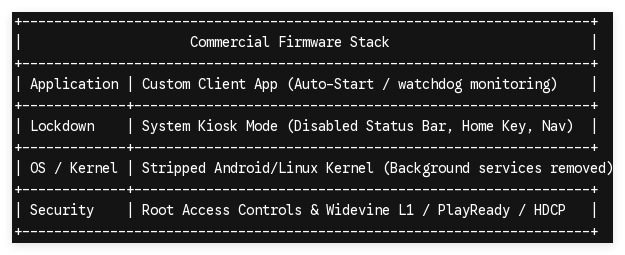
Essential Firmware Customization Protocols
-
Kiosk Mode & UX Locking: Disables navigation bars, settings menus, app installers, and notification shades. The device boots directly into the client’s custom IPTV UI or signage application in under 20 seconds.
-
Auto-Power Recovery (U-Boot Level): Modifies the bootloader so the device automatically powers on and resumes playback immediately after power restoration, eliminating manual remote control triggers.
-
Custom SDK / System API Exposure: Grants system integrators programatic control over display output (HDMI CEC, resolution lock, orientation rotation), Wi-Fi diagnostic metrics (RSSI, SNR, channel utilization), and hard hardware reboots.
-
Root Access & Security Provisioning: Provides root privileges for silent application updates while integrating hardware key storage for Widevine L1, PlayReady, and HDCP 2.2/2.3 DRM content protection.
Deployment & Fleet Management: Private OTA Infrastructure
Deploying thousands of Wi-Fi 6 Set-Top Boxes across multiple commercial branches without remote management creates immense maintenance risks. Manual USB updates on-site quickly consume operating margins.
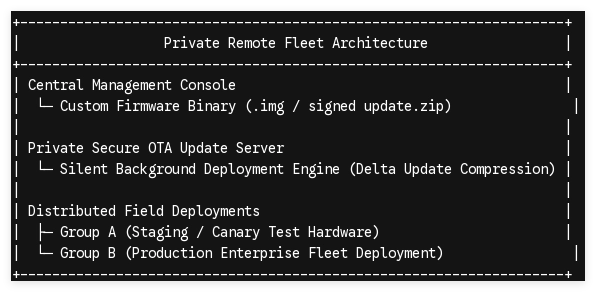
Fleet Operations Standards
-
Private Dedicated OTA Servers: B2B devices connect directly to private, client-owned or vendor-hosted OTA servers rather than public cloud endpoints. Updates are scheduled during off-peak hours and installed silently in the background.
-
Delta Patch Updates: Pushing full 1GB OS images over wireless connections wastes bandwidth. Enterprise OTA pipelines compile delta patches (10MB–50MB) containing only altered system binaries and application updates.
-
Hardware Watchdog Timers: In the event of a total OS deadlock, an onboard physical watchdog timer cuts and restores power, ensuring self-healing reliability without field technician dispatch.
Partner with SZTomato for Enterprise STB Engineering
Standard off-the-shelf retail Set-Top Boxes lack the RF isolation, cooling engineering, system control, and lifecycle stability needed for mission-critical deployments. Successful commercial projects require specialized hardware manufacturing backed by low-level firmware engineering.
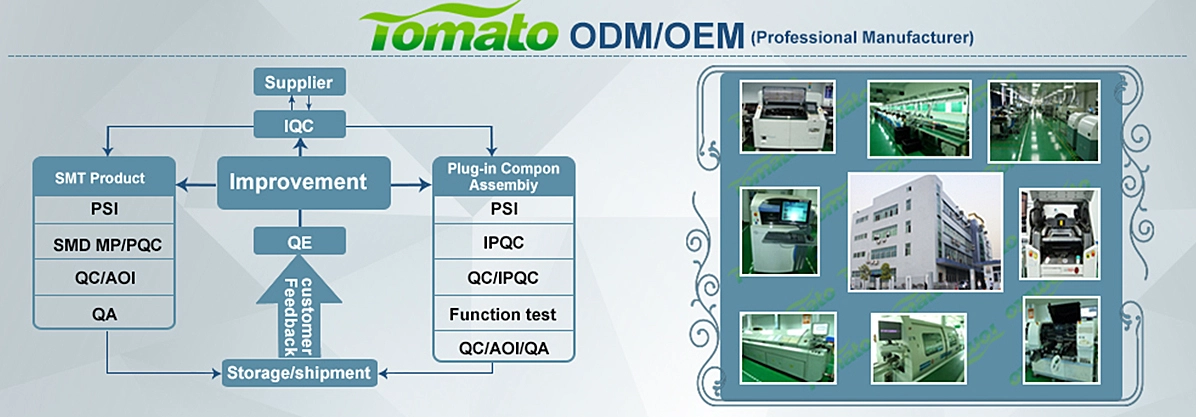
As a B2B manufacturer specializing in Android TV Boxes, OTT Players, and Digital Signage hardware, SZTomato provides end-to-end OEM/ODM engineering services:
-
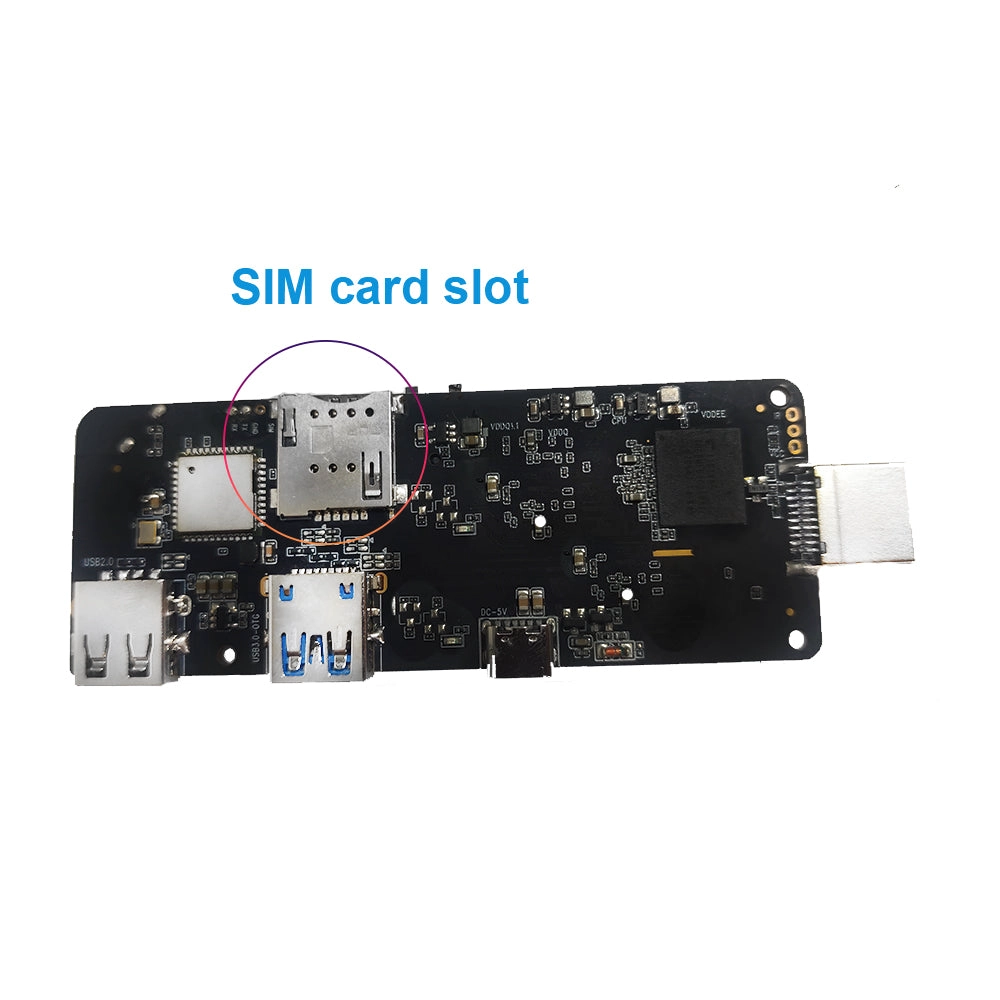
PCBA Modification & RF Customization: Tailored PCB layouts, high-power Wi-Fi 6 FEM integration, PoE (Power over Ethernet) modules, RS-232 serial interfaces, and wide-voltage power subsystems.
-
Firmware & Kernel Engineering: Custom Android/Linux OS builds, bloatware removal, custom boot animations, locked-down Kiosk launchers, and dedicated system API integrations.
-
Industrial Cooling Solutions: Specialized heavy-duty aluminum heat sinks designed for sustained 24/7 high-temperature operations.
-
Private Fleet Provisioning: Pre-configured device pointing to your private OTA update infrastructure, pre-installed client applications, and factory-level packaging branding.
Engineer Your Wi-Fi 6 Hardware Platform Contact the engineering team at SZTomato today to submit your technical specifications, order customized sample hardware, or consult directly with our senior B2B hardware architects.