Android Mini PC OEM/ODM: Driving Competitive Advantage with Custom Firmware Solutions
Commercial Android Mini PC OEM/ODM: Driving Competitive Advantage with Custom Firmware Solutions
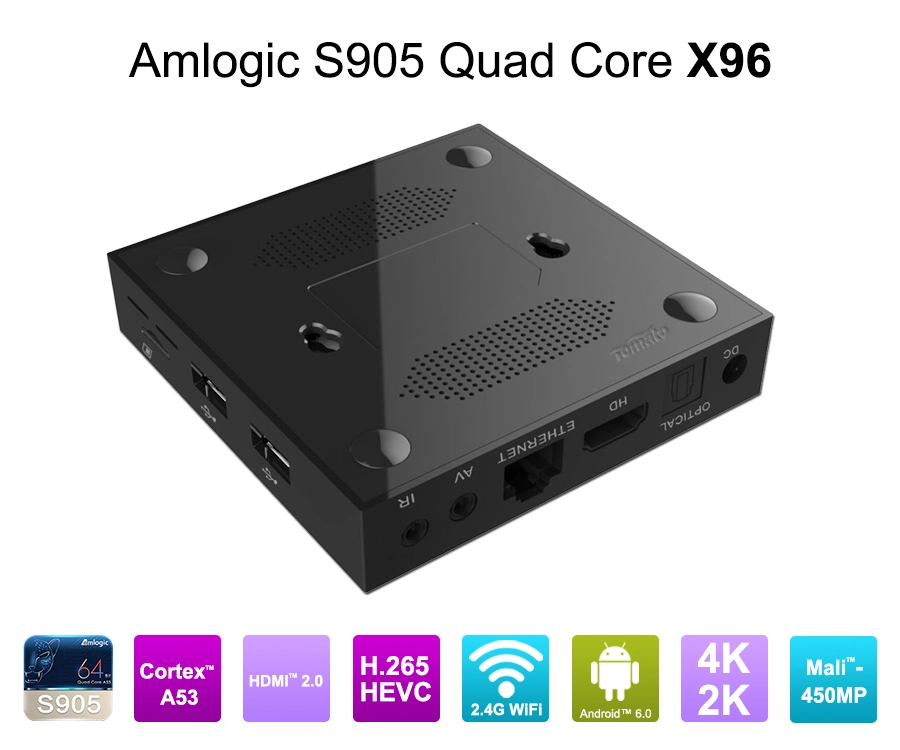
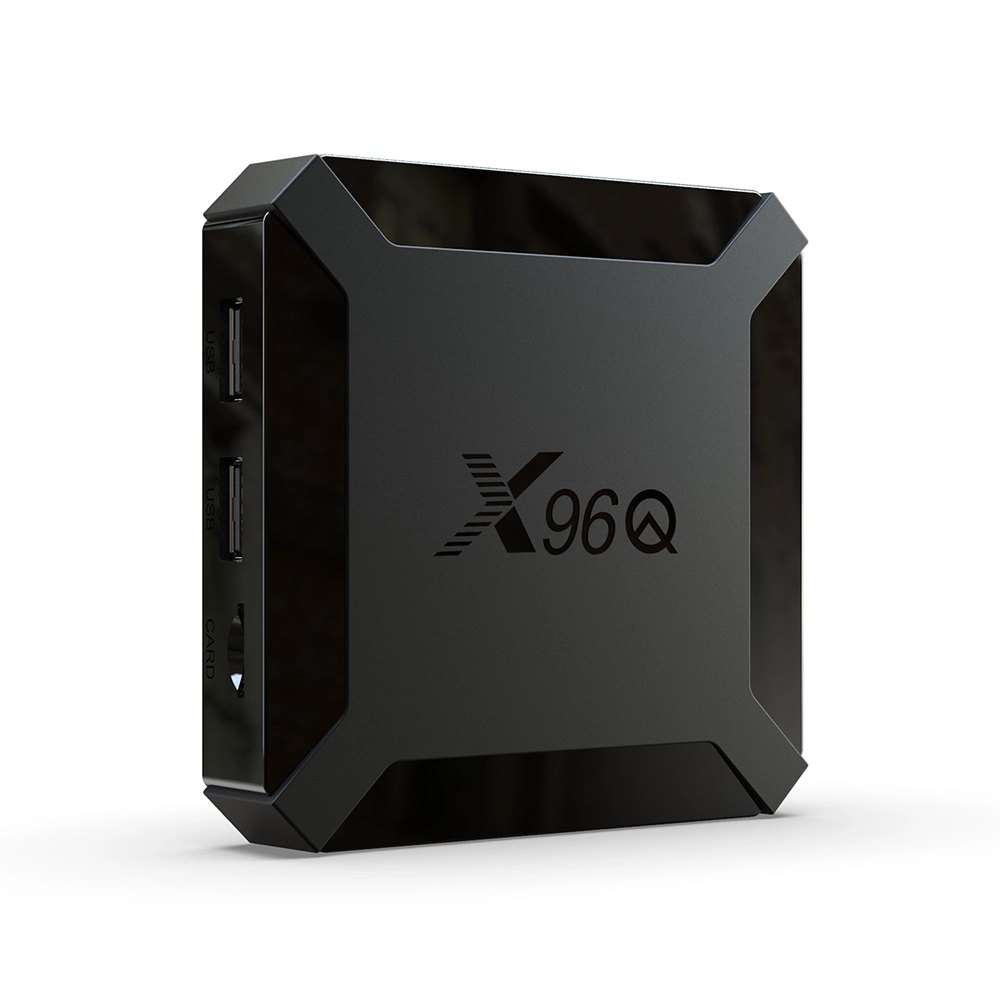
Edge computing deployments in interactive retail, multi-display digital signage, and AI-assisted automation have pushed ARM-based architectures past traditional x86 mini PCs. However, system integrators attempting to scale operations using consumer-grade Android Mini PCs routinely run into strict performance walls. Standard consumer devices rely on thin plastic housings, locked bootloaders, resource-heavy consumer bloatware, and thermal designs that throttle CPU clock speeds within minutes of continuous 4K playback.
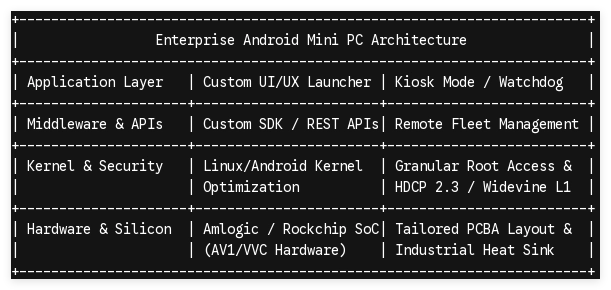
To deliver true commercial reliability, enterprise buyers must look beyond raw benchmark scores and focus on four pillars of engineering: silicon selection, PCBA layout customization, firmware-level kernel optimization, and private remote management infrastructure.
Silicon Selection & Industrial PCBA Layout Engineering
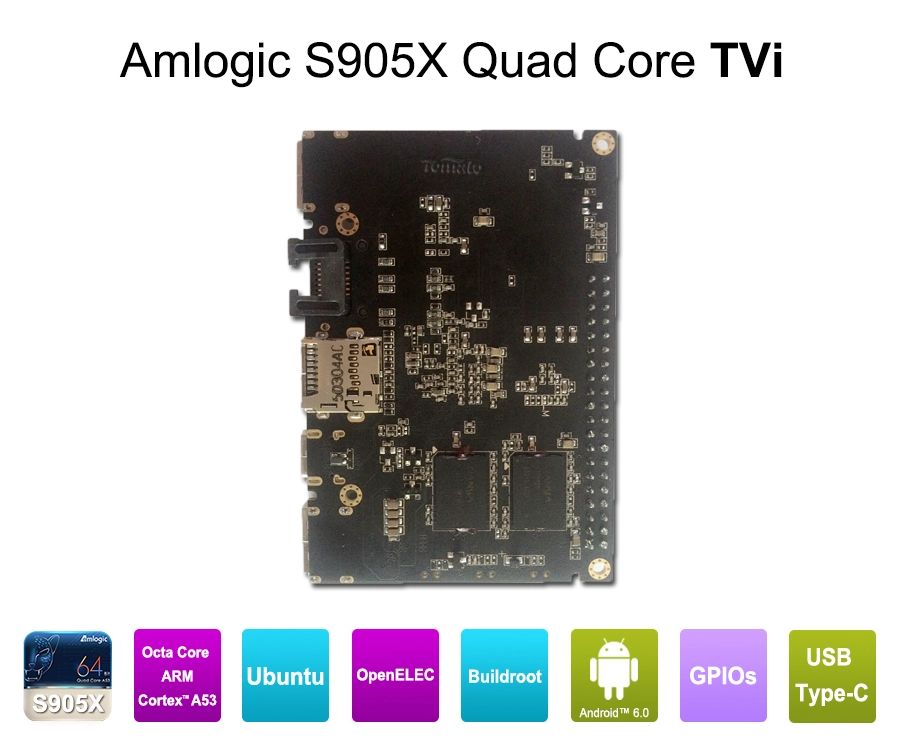
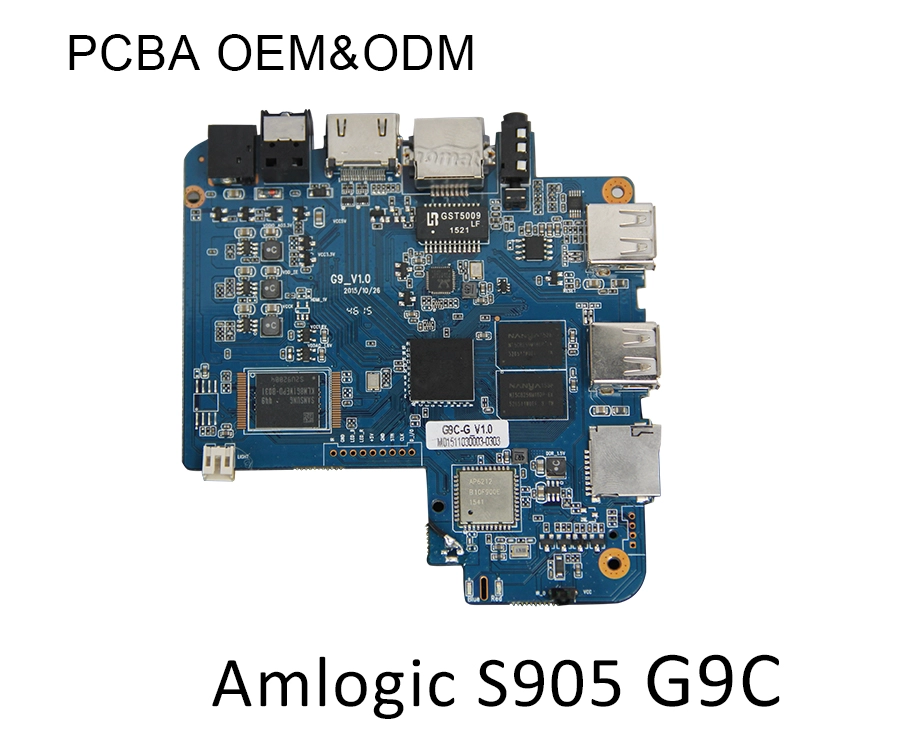
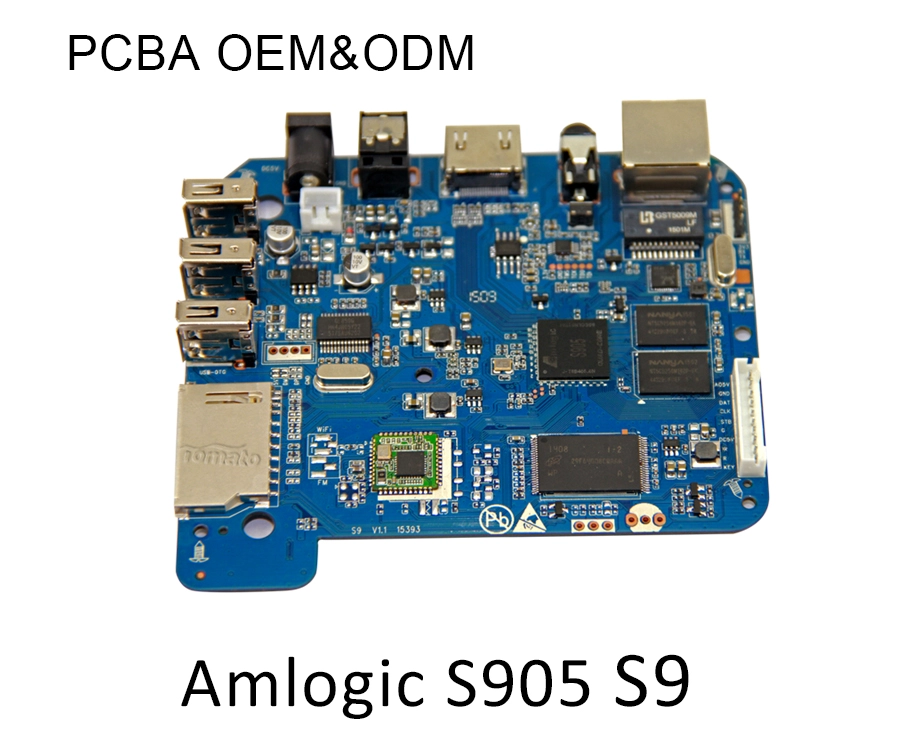
The foundation of a high-uptime Android Mini PC is matching the processing platform to workload density while engineering the printed circuit board assembly (PCBA) for harsh electrical and thermal environments.
1. Silicon Platform Benchmarks: Matching SoCs to Commercial Workloads
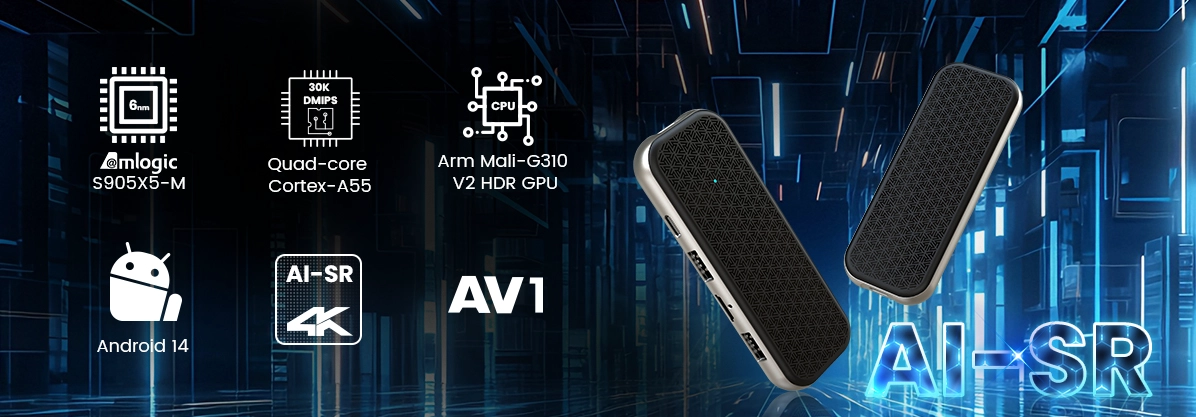
- Amlogic S905X5 / S905X5M: Built on a 6nm FinFET node, this quad-core ARM platform provides an energy-efficient baseline for single-display menu boards, streaming endpoints, and point-of-sale (POS) terminals. Featuring native hardware decoding for AV1, H.265, and H.266/VVC up to 4K@60fps alongside an integrated 4 TOPS NPU for AI Super Resolution (AI-SR), it operates under 5W without excessive heat buildup.
- Rockchip RK3588: The reference benchmark for multi-screen edge computing. Featuring an 8nm octa-core architecture (4x Cortex-A76 + 4x Cortex-A55) with an integrated 6 TOPS NPU, the RK3588 simultaneously drives up to four independent displays (HDMI 2.1 8K@60fps, DP 1.4) while running edge AI inferencing models locally.
2. Specialized Board-Level Modifications
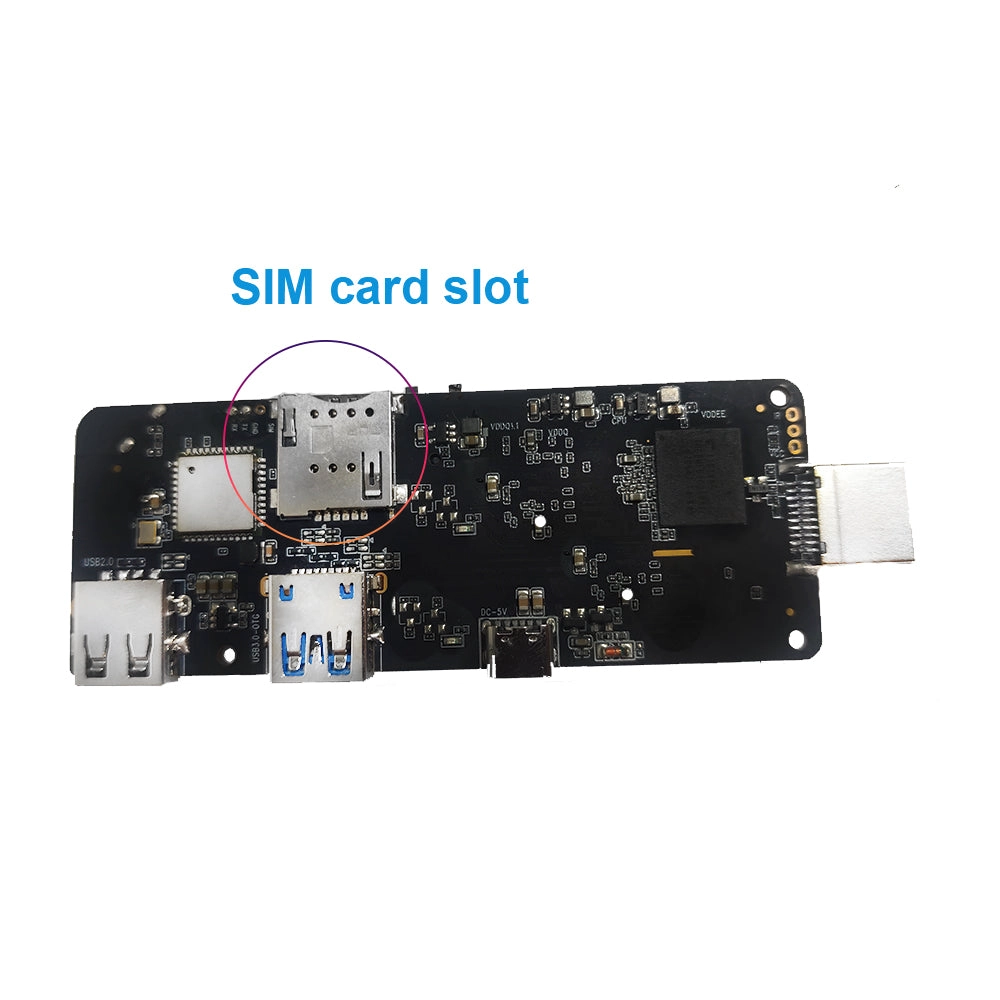
Standard retail PCBAs lack the interface flexibility required by commercial system integrators. Custom B2B hardware modifications include:
-
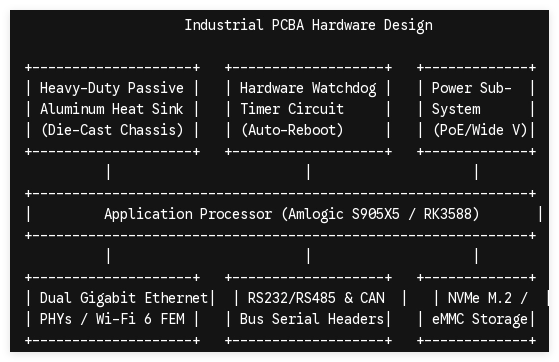
Industrial Thermal Design: Replacing active cooling fans (which accumulate dust and fail) with direct-contact aluminum heatsinks mapped to die-cast metal housings. This enables continuous 24/7 operation at ambient temperatures up to 60°C without clock throttling.
- Industrial Peripherals: Integrating RS232/RS485 serial headers for legacy display control, CAN Bus interfaces for automation, programmatic GPIO ports, and Power over Ethernet (PoE IEEE 802.3at/bt) to streamline single-cable installations.
- NVMe Storage Expansion: Integrating M.2 PCIe slots to replace standard eMMC flash storage, allowing high-write endurance operations for local video caching and edge databases.
| Specification / Capability | Retail Android Mini PC | Custom B2B Android Mini PC (SZTomato Standard) |
|---|---|---|
| System Thermal Limit | Passive plastic shell; throttles within 15 min | Heavy-duty aluminum heatsink; sustained 24/7 high-temp operation |
| I/O & Expansion | Basic USB 2.0 & single HDMI output | Dual GbE, RS232/485, GPIO, PoE module, M.2 NVMe slot |
| OS Environment | Consumer Android with non-removable apps | Striped Linux/Android kernel; zero bloatware; Kiosk locking |
| Boot Behavior | Requires manual button press post power-loss | U-Boot auto-power-on; auto-launching target APK in < 15 seconds |
| Remote Maintenance | Unmanaged public OTA or manual USB flashing | Private client-owned dedicated OTA update server |
Firmware Engineering: Kernel Optimization, Kiosk Mode, and API Access
Hardware represents only half of the OEM/ODM equation. Without low-level software customization, the operating system remains a vulnerability.
Key Software Engineering Capabilities
-
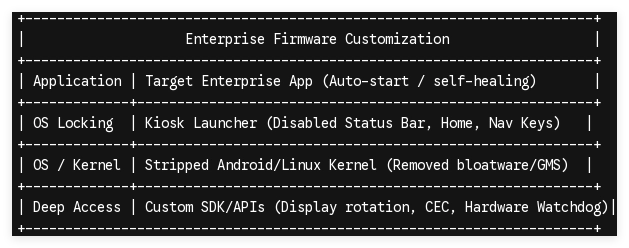
System Kernel Optimization & Bloatware Removal: Stripping out unnecessary consumer services, background sync engines, and unneeded telemetry protocols frees up to 40% of system RAM and lowers idle CPU consumption.
-
Kiosk Mode & UX Locking: Disabling system bars, gesture controls, notification drop-downs, and pop-up error dialogs ensures end users cannot exit the primary software application. Integrated watchdog scripts monitor software state, instantly restarting the target APK if an unhandled crash occurs.
-
U-Boot Customization: Bootloader modifications enable custom boot logos/animations, force immediate hardware boot upon sensing AC power, and allow silent boot sequences that bypass standard Android setup wizards.
-
SDK & API Integration: Exposing system-level APIs gives software engineers direct programmatic control over hardware parameters, including display rotation (90°/180°/270°), HDMI CEC power commands, RTC (Real-Time Clock) power scheduling, and hardware watchdog counters.
-
DRM & HDCP Provisioning: Pre-injecting hardware-level encryption keys—including Widevine L1, PlayReady, and HDCP 2.2/2.3—at the factory stage ensures seamless playback of protected, high-bitrate media streams.
Deployment Strategy: Dedicated Private OTA Infrastructure
Deploying hundreds or thousands of scattered Android Mini PCs without a centralized management mechanism creates immense operational risk. Manual on-site updates via USB drives deplete operational margins.
Fleet Operations Benchmarks
-
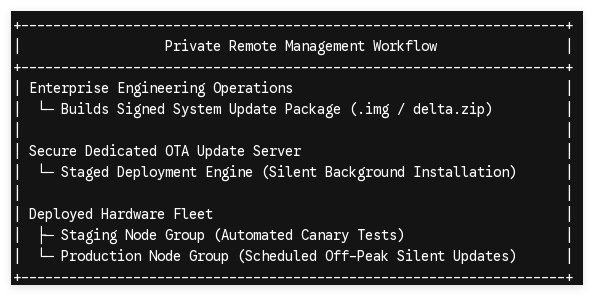
Private Dedicated OTA Servers: Custom firmware connects directly to private, client-hosted or vendor-isolated update servers. IT teams retain absolute control over update timelines, preventing unexpected OS upgrades.
-
Delta Firmware Compression: Instead of pushing entire 1GB system images over cellular or bandwidth-constrained networks, custom build pipelines compile delta patches (15MB–50MB) containing only updated binaries and application layers.
-
Hardware Watchdog Recovery: A dedicated physical watchdog timer on the PCBA continuously listens for software heartbeats. If a kernel panic or system lockup occurs, the watchdog cuts and restores power automatically, restoring device operation without requiring a field technician dispatch.
Drive Your Competitive Advantage with SZTomato
Generic consumer Android boxes cannot meet the uptime, thermal endurance, or software flexibility required for mission-critical commercial deployments. Securing long-term profitability and deployment stability demands specialized hardware design paired with low-level kernel customization.
As an established B2B manufacturer specializing in Android Mini PCs, Digital Signage hardware, and OTT players, SZTomato offers full OEM/ODM engineering services to bring your product vision to market:
-
PCBA Modification & Thermal Engineering: Tailored PCB layouts, custom passive cooling housings, RS232/485 serial integration, PoE modules, and wide-voltage power supplies.
-
Firmware & Kernel Customization: Custom Android/Linux builds, complete OS lockdown, custom boot animations, SDK/API exposure, and factory-level DRM key injection.
-
Private Fleet Provisioning: Direct pre-configuration to your private OTA server infrastructure and pre-installed software suites.
-
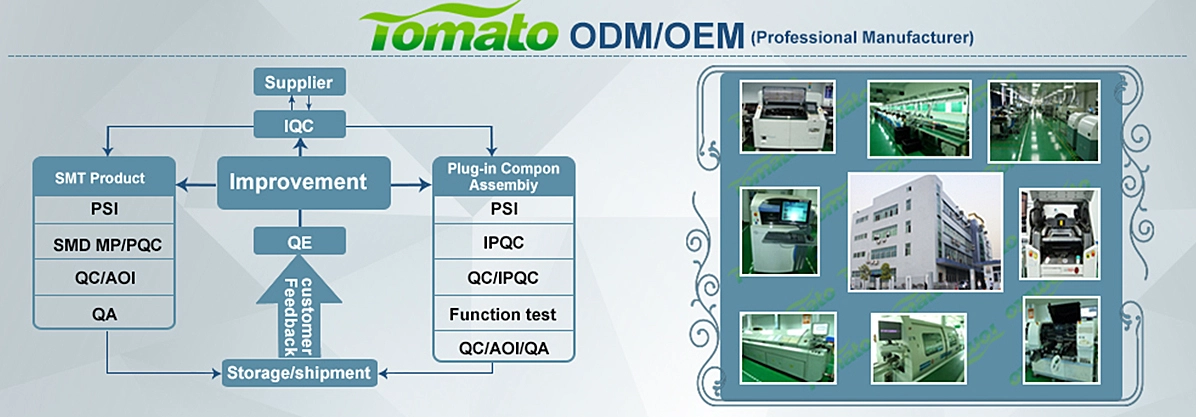
Strict Quality Assurance: Complete factory testing protocols, industrial-grade burn-in testing, and guaranteed long-term supply chain component availability.
Accelerate Your B2B Hardware Deployment
Contact the engineering team at SZTomato today to submit your technical requirements, request customized sample hardware, or schedule a technical architecture consultation with our senior B2B hardware specialists.