
What is the difference between a smart TV box and an Internet TV Box?
Smart TV Box vs Internet TV Box: What Is the Difference?
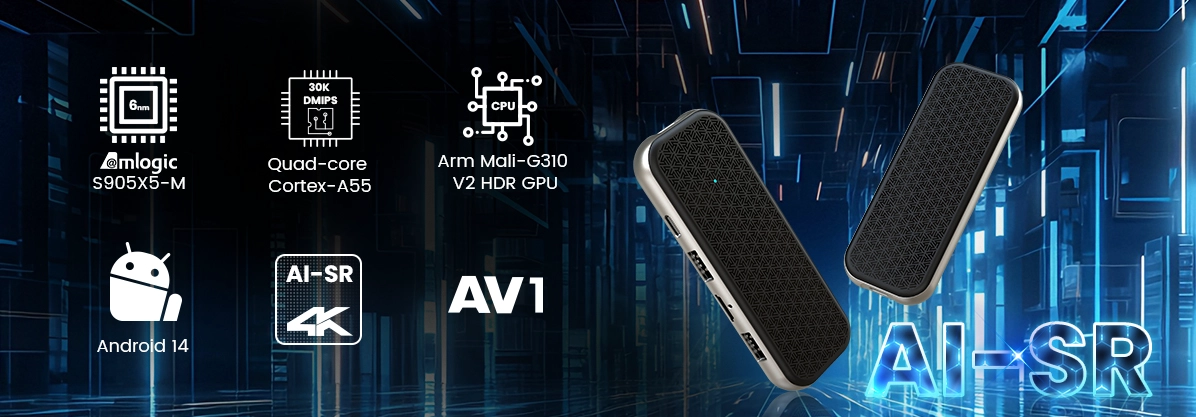
The distinction between a Smart TV box and an Internet TV box has become less obvious as modern SoCs combine 4K decoding, AV1 hardware acceleration, Wi-Fi 6, Android, Linux, and operator-grade security in a single platform. A current-generation chipset such as Amlogic S905X5 is positioned specifically for next-generation 4K UHD set-top boxes, while Amlogic’s broader platform supports Android and Linux development.
For consumers, the two terms are often interchangeable. For B2B buyers, however, the distinction matters because operating system, application architecture, content security, OTA management, hardware interfaces, and customization capability determine whether a device is suitable for OTT, IPTV, hotel TV, digital signage, or a private-label product.
Smart TV Box vs Internet TV Box: The Short Answer
A Smart TV box is generally a more flexible computing platform designed to turn a conventional display into an interactive smart-TV environment. It typically supports an operating system such as Android TV, Google TV, AOSP Android, or Linux and can run applications, streaming clients, browsers, games, cloud services, and customized software.
An Internet TV box is a broader and less technically precise term. It usually refers to a network-connected set-top box whose primary purpose is to receive and display Internet-delivered television or video content.
The key point for procurement teams is this:
“Internet TV box” describes the connectivity and content-delivery function. “Smart TV box” describes a broader device capability and software ecosystem.
There is substantial overlap. A single commercial product can legitimately be both.
| Category | Smart TV Box | Internet TV Box |
|---|---|---|
| Primary purpose | Smart entertainment and applications | Internet-based TV/video delivery |
| OS | Android TV, Google TV, AOSP, Linux | Android, Linux, proprietary OS |
| App ecosystem | Usually extensive | May be limited |
| OTT streaming | Yes | Yes |
| IPTV | Yes | Yes |
| Web browsing | Usually supported | Depends on platform |
| Local media playback | Common | Common |
| Custom UI | High potential | Depends on platform |
| OTA management | Common in professional products | Common in operator products |
| B2B customization | Hardware + firmware + software | Often operator-specific |
| Digital signage | Suitable with the right platform | Possible but not universal |
| Industrial deployment | Possible with thermal and firmware engineering | Possible |
The terminology therefore should not be used as the primary procurement criterion.
1. The Real Difference Is the Software Architecture
The most important difference is not the HDMI connector or the remote control. It is the software stack behind the hardware.
A modern Smart TV box can contain several layers:
SoC → bootloader → Linux/Android kernel → HAL → system framework → launcher/UI → applications → cloud/backend services
Android TV devices are designed around a 10-foot user interface and remote-control interaction rather than touchscreen operation. Google's Android TV documentation specifically highlights the different hardware assumptions of TV devices, including remote or game-controller interaction.
For a Smart TV box manufacturer, this means the product cannot be treated as a generic Android tablet connected to HDMI.
The firmware needs to handle:
-
HDMI display negotiation
-
HDCP authentication
-
CEC control
-
Wi-Fi and Ethernet connectivity
-
Bluetooth remote control
-
hardware video decoding
-
audio passthrough
-
application lifecycle
-
OTA firmware updates
-
recovery and factory reset
-
system security
-
remote device management
Android TV compatibility requirements also cover television-specific hardware and software behavior. For example, Android TV implementations have defined requirements around D-pad navigation, Home/Back functions, Bluetooth, storage, HDMI and media capabilities.
This is why a cheap Android TV box and a professionally engineered Smart TV box may use the same SoC but deliver very different commercial results.
Smart TV Box: Platform First
A B2B Smart TV box is often designed as a platform.
The customer may want:
-
a proprietary launcher
-
branded boot animation
-
customized settings
-
pre-installed applications
-
restricted application access
-
kiosk mode
-
remote configuration
-
automatic APK deployment
-
customized OTA servers
-
operator middleware
-
cloud device management
-
regional firmware variants
That requires firmware engineering rather than simply changing the logo on the enclosure.
Internet TV Box: Service First
An Internet TV box is often built around a particular service model.
For example, an IPTV operator may require:
Boot → operator launcher → authentication → IPTV middleware → EPG → live TV → VOD → catch-up TV
In this case, the hardware is important, but the middleware integration and operator backend compatibility may be more important than the consumer-facing Android ecosystem.
2. Hardware Capability Separates Professional Products From Commodity Boxes
The second major difference is how the hardware platform is selected and engineered.
A modern Smart TV box may require substantially more than a quad-core CPU and 2 GB RAM.
The SoC must be evaluated for:
-
CPU architecture
-
GPU capability
-
NPU availability
-
4K decoding
-
AV1 support
-
H.265/HEVC
-
VP9
-
HDR standards
-
HDMI generation
-
HDCP
-
memory bandwidth
-
storage interface
-
Wi-Fi generation
-
Ethernet speed
-
USB connectivity
-
Linux/Android BSP availability
-
long-term SDK support
Amlogic, for example, currently lists S905X5 as a 6 nm flagship SoC for next-generation 4K UHD set-top boxes. Its product portfolio also explicitly covers OTT/IPTV STB applications, while the company's technology platform supports Android and Linux development.
That matters because codec requirements are moving beyond traditional H.264/H.265 deployments. Android TV compatibility documentation already incorporates modern video requirements, while Amlogic identifies AV1, VP9, H.265 and AVS2 among supported mainstream high-definition formats across its multimedia platforms.
Why AV1 Matters to B2B Buyers
AV1 is not simply another specification to add to a datasheet.
For an OTT platform, hardware AV1 decoding can reduce dependence on software decoding and improve efficiency when delivering compatible content. The practical benefit depends on:
-
streaming service codec selection
-
SoC hardware decoder
-
Android media framework
-
DRM implementation
-
application compatibility
-
thermal design
-
memory bandwidth
A box that lists “AV1 supported” but lacks a properly integrated hardware/software media pipeline is not equivalent to a production-ready AV1 platform.
3. Why Firmware Engineering Matters More Than the Product Name
This is where Smart TV box projects often succeed or fail.
Two products may both be advertised as “4K Smart TV Box,” yet one may be suitable for a five-year commercial deployment while the other becomes difficult to maintain after the first firmware revision.
The difference is usually the engineering layer.
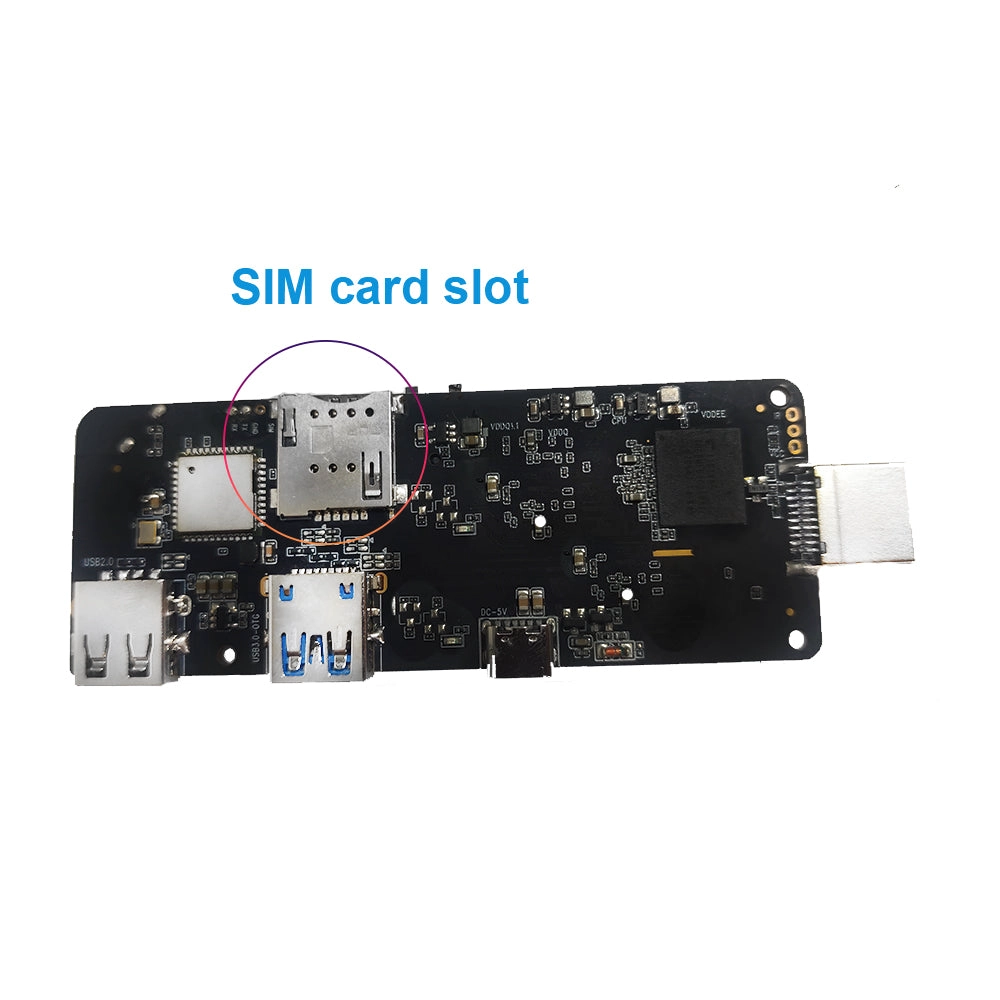
PCBA Modification
B2B customers may require changes to the standard reference design, including:
-
DRAM configuration
-
eMMC/NAND capacity
-
Wi-Fi module
-
Ethernet PHY
-
USB configuration
-
HDMI circuitry
-
IR receiver
-
GPIO allocation
-
power-management components
-
connector placement
-
antenna layout
A PCBA cannot simply be modified at the schematic level. High-speed interfaces require attention to signal integrity, impedance, power integrity, thermal distribution, EMI and mechanical constraints.
For volume OEM/ODM projects, this is often more valuable than selecting a slightly faster processor.
Android/Linux Kernel Optimization
A production Smart TV box may require kernel-level work for:
-
Wi-Fi drivers
-
Ethernet drivers
-
display output
-
HDMI/CEC
-
USB peripherals
-
GPIO
-
power management
-
thermal control
-
storage
-
watchdog
-
peripheral compatibility
For Linux-based Internet TV boxes, the same principle applies to Debian, Ubuntu, Armbian or customized embedded Linux distributions.
The operating system choice should follow the application—not the other way around.
Custom UI/UX Firmware
A professional Smart TV box can be engineered around a customer's workflow rather than a generic launcher.
For example:
Hotel TV
Boot → hotel branding → room information → live TV → VOD → casting → room service
Digital Signage
Boot → signage player → scheduled content → remote monitoring → automatic recovery
IPTV Operator
Boot → operator logo → subscriber authentication → EPG → live TV → VOD
Industrial Android Terminal
Boot → locked application → device monitoring → remote maintenance → OTA update
These are fundamentally different products even if the underlying SoC is identical.
4. Smart TV Box vs Internet TV Box: Which Should B2B Buyers Choose?
The answer depends on the business model.
Choose a Smart TV Box Platform When You Need:
-
multiple Android applications
-
customized launcher
-
Google/Android TV ecosystem
-
OTT applications
-
local media playback
-
browser functionality
-
customized user interface
-
kiosk applications
-
digital signage
-
smart-home integration
-
AI or edge-computing functions
-
long-term firmware customization
This is usually the stronger choice for brand owners, distributors and system integrators building a differentiated product.
Choose an Internet TV Box When You Need:
-
IPTV middleware
-
operator-controlled content
-
subscriber authentication
-
EPG
-
live TV
-
VOD
-
catch-up TV
-
CAS/DRM integration
-
controlled application environment
-
centralized operator management
Here, the critical question is not “Is it a Smart TV box?”
The better question is:
Can the hardware and firmware integrate reliably with our IPTV/OTT infrastructure?
5. The B2B Procurement Checklist
When sourcing a Smart TV box or Internet TV box, avoid evaluating products only through CPU, RAM and storage specifications.
A professional RFQ should cover at least six layers.
Hardware
Check:
-
SoC generation
-
CPU/GPU
-
NPU if AI functions are required
-
RAM type and capacity
-
eMMC/NAND
-
Wi-Fi 5/6/6E
-
Gigabit Ethernet
-
USB
-
HDMI
-
optional AV interfaces
-
thermal solution
Video
Confirm:
-
4K@60fps capability
-
H.264
-
H.265/HEVC
-
VP9
-
AV1
-
HDR
-
HDMI output
-
HDCP version
-
hardware decoding versus software decoding
For HDMI-connected Android TV implementations, HDCP support is not an optional marketing feature; Android's compatibility requirements specify HDCP support for external UHD displays.
Software
Ask for:
-
Android version
-
Android TV or AOSP
-
Linux distribution
-
kernel version
-
BSP availability
-
SDK availability
-
API documentation
-
source-code customization scope
-
OTA mechanism
-
recovery mechanism
Security
Evaluate:
-
secure boot
-
DRM
-
HDCP
-
key provisioning
-
application signing
-
firmware signing
-
partition protection
-
OTA authentication
Management
For commercial deployments:
-
remote firmware upgrade
-
remote reboot
-
device monitoring
-
configuration management
-
application installation
-
log collection
-
device grouping
-
fleet management
Engineering Support
This is often the most overlooked item.
Ask whether the supplier can provide:
-
PCBA modification
-
SDK/API integration
-
custom firmware
-
launcher development
-
kernel optimization
-
OTA server integration
-
thermal redesign
-
driver development
-
production debugging
-
long-term firmware maintenance
A supplier that only provides finished hardware is not equivalent to an OEM/ODM engineering partner.
6. Where SZTomato Fits Into the Smart TV Box Supply Chain
For B2B buyers, the value of an Android TV box manufacturer is increasingly determined by its engineering depth.
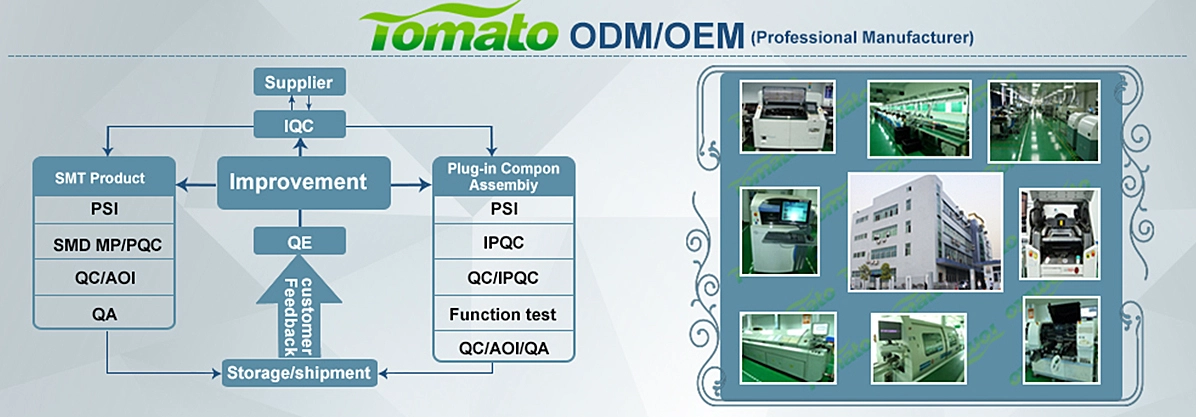
SZTomato approaches Smart TV box development as an OEM/ODM platform engineering project, rather than a simple enclosure-and-logo exercise.
The development scope can include:
-
PCBA hardware modification
-
SoC platform selection
-
RAM/eMMC configuration
-
Wi-Fi and Ethernet customization
-
custom cooling solutions
-
Android/AOSP firmware
-
Linux firmware
-
SDK/API integration
-
custom launcher and UI/UX
-
OTA update systems
-
application pre-installation
-
device-management integration
-
kernel and driver optimization
For industrial or continuous-operation deployments, thermal design deserves particular attention. A higher-performance SoC inside a compact enclosure can create sustained thermal-load problems if the heatsink, airflow path, PCB layout and enclosure design are treated independently.
Specialized cooling solutions can therefore become part of the ODM specification rather than an afterthought.
The same engineering approach also allows a single hardware platform to support different commercial configurations—for example, a consumer OTT version, an IPTV operator version, and a digital-signage version using different firmware images.
That is where OEM/ODM capability creates a measurable business advantage: one hardware investment can support multiple market-specific software products.
Smart TV Box vs Internet TV Box: The Bottom Line
The terms Smart TV box and Internet TV box overlap, but they should not be treated as identical concepts in a B2B procurement process.
An Internet TV box primarily emphasizes Internet-based television and video delivery.
A Smart TV box is broader, combining network connectivity, an operating system, application execution, multimedia processing and an interactive TV interface.
For commercial buyers, however, the more important distinction is not the label printed on the product page.
It is the engineering architecture underneath it.
A good Smart TV box should provide the right SoC, reliable 4K/AV1 media processing, appropriate DRM and HDCP implementation, stable Android/Linux firmware, OTA capability, thermal management and a customization path that can accommodate your application.
For procurement managers, IPTV operators, system integrators and brand owners, the best question is therefore not “Which box has the highest specification?”
It is:
“Which OEM/ODM partner can turn this hardware platform into a stable, maintainable product for our deployment?”
That is the level at which Smart TV box projects should be evaluated.
