
What is the spec of TV Box?
TV Box Specifications Explained: A Practical Guide for B2B Buyers
A modern TV Box is no longer specified by “4K + 4GB RAM + 32GB storage.” That specification is too shallow for professional procurement. The real performance of a TV Box depends on the SoC architecture, hardware video decoder, memory subsystem, connectivity, DRM/HDCP implementation, operating system, firmware, thermal design, and the manufacturer's ability to control the complete software stack.
For IPTV operators, OTT platforms, hotels, digital signage companies, distributors, and system integrators, these specifications determine whether a device can deliver stable 24/7 operation or become a support problem after deployment.
What Are the Main Specifications of a TV Box?
The specification of a TV Box can be divided into eight technical layers:
-
SoC and processor
-
GPU and video engine
-
RAM and storage
-
Network connectivity
-
Display and multimedia interfaces
-
Operating system and firmware
-
Security and content protection
-
Power and thermal design
The correct configuration depends on the application.
A basic OTT streaming device does not require the same hardware as an AI-enabled digital signage player or an IPTV operator-grade set-top box.
1. SoC: The Most Important TV Box Specification
The System-on-Chip (SoC) determines much of the TV Box's actual capability.
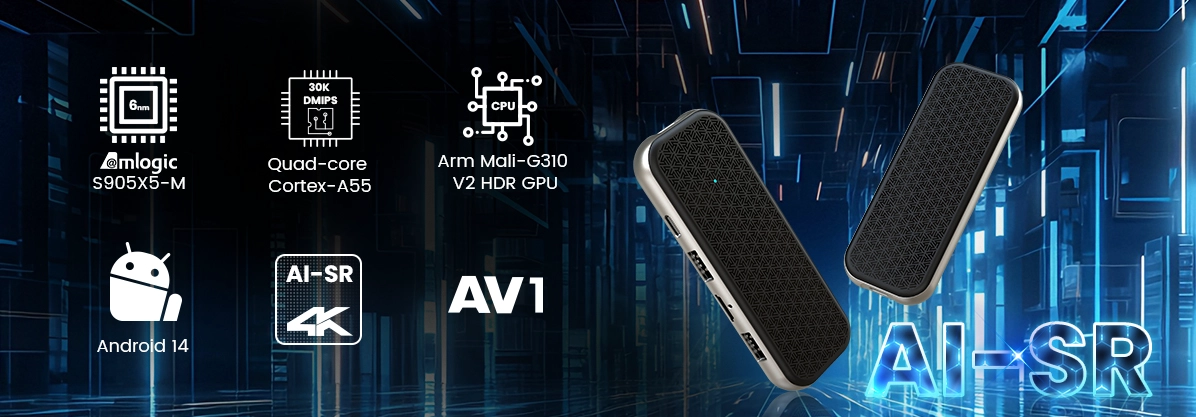
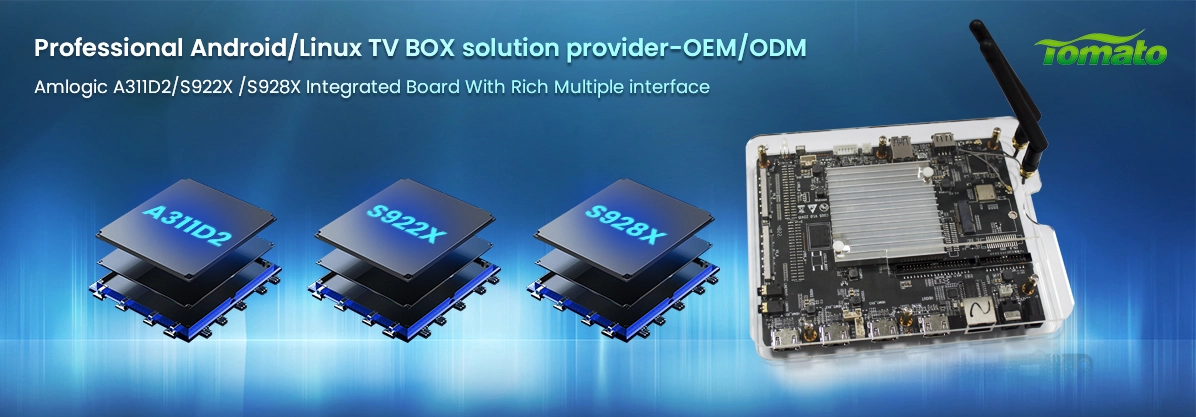
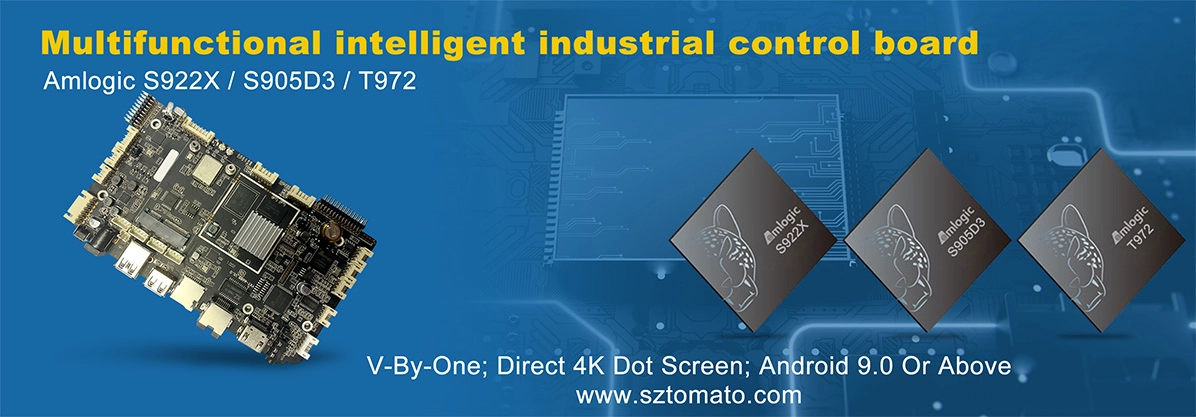
Common SoC families used in modern TV Box designs include platforms from Amlogic, Rockchip, Allwinner and other ARM semiconductor vendors.
A complete SoC evaluation should include:
-
CPU architecture and core count
-
CPU clock frequency
-
GPU architecture
-
Hardware video decoder
-
Hardware video encoder
-
NPU/AI accelerator
-
Memory controller
-
Display controller
-
I/O interfaces
-
Supported operating systems
-
BSP and SDK availability
For example, an octa-core ARM processor can provide significantly more processing headroom than an entry-level quad-core platform, but CPU core count alone does not determine streaming quality.
A TV Box with a strong hardware video engine can decode 4K content efficiently without placing excessive load on the CPU.
For higher-end applications, an integrated NPU also allows the platform to handle edge AI workloads such as object detection, people counting, image classification, and video analytics.
How Do RAM and Storage Affect TV Box Performance?
RAM and storage are often the first specifications buyers compare, but they should be considered in context.
RAM
Typical commercial TV Box configurations can include:
-
2GB RAM
-
4GB RAM
-
8GB RAM
-
Higher capacities for specialized AI or industrial platforms
For standard IPTV and OTT applications, 2GB or 4GB can be sufficient when the firmware is properly optimized.
A larger RAM configuration becomes more useful when the system needs:
-
Multiple applications
-
Large browser workloads
-
Digital signage software
-
Local AI inference
-
Complex UI frameworks
-
Multi-screen applications
-
Background device-management services
More RAM cannot compensate for inefficient firmware or an unsuitable SoC.
Storage
TV Box storage commonly uses eMMC or other embedded flash technologies.
Typical configurations include:
-
8GB
-
16GB
-
32GB
-
64GB
-
128GB or more for specialized applications
Storage capacity should be selected according to the software image and content requirements.
For an IPTV box, 16GB may be sufficient. A digital signage player storing large local media libraries may require considerably more storage.
For long-term commercial deployment, buyers should also consider flash endurance, write frequency, filesystem behavior, logging strategy, and OTA update design.
Which Video Specifications Matter in a TV Box?
For a TV Box, video architecture is more important than raw CPU performance.
A commercial specification sheet should identify:
-
Maximum decoding resolution
-
Maximum frame rate
-
H.264 support
-
H.265/HEVC support
-
VP9 support
-
AV1 support
-
HDR capability
-
8-bit/10-bit processing
-
HDMI output specification
-
Multiple display capability where applicable
AV1 Is Now an Important Specification
AV1 hardware decoding has become increasingly relevant to new streaming hardware.
A TV Box intended for long-term OTT deployment should not simply state “AV1 supported.” Buyers should verify the actual implementation, including resolution, frame rate, bit depth, HDR behavior, and hardware acceleration.
This distinction matters because software decoding of high-resolution video can generate excessive CPU utilization, thermal load, and power consumption.
Hardware video decoding moves the workload into the dedicated video processing engine, producing a more predictable system under continuous playback.
HDMI and HDCP
HDMI output determines how the TV Box communicates with the display.
For protected commercial content, HDCP encryption and DRM support are critical.
A device may successfully output an unprotected 4K video but fail when an OTT platform applies DRM and HDCP requirements.
For this reason, B2B validation should test the complete chain:
Content Provider → DRM → TV Box → HDMI → HDCP → Display
This is more useful than relying on a single resolution number printed on a product specification sheet.
What Connectivity Specifications Should a TV Box Have?
Network performance directly affects IPTV and OTT reliability.
Important interfaces include:
Ethernet
For commercial IPTV deployments, Ethernet is often preferable to wireless connectivity.
Relevant specifications include:
-
10/100 Mbps Ethernet
-
Gigabit Ethernet
-
Ethernet controller
-
PHY implementation
-
Network driver stability
Gigabit Ethernet provides additional bandwidth headroom for high-bitrate content, local network services, software updates, and enterprise applications.
Wi-Fi
Depending on the platform, TV Boxes may support:
-
2.4 GHz Wi-Fi
-
Dual-band Wi-Fi
-
Wi-Fi 5
-
Wi-Fi 6
-
Newer wireless standards on selected platforms
However, the wireless chipset is only one part of the equation.
Antenna placement, RF layout, shielding, PCB design, enclosure material, firmware drivers, and interference conditions can materially affect actual throughput.
This is where PCBA layout becomes important.
A theoretical Wi-Fi specification does not guarantee equivalent performance in the finished enclosure.
Bluetooth
Bluetooth is useful for:
-
Remote controls
-
Keyboards
-
Air mice
-
Speakers
-
Headphones
-
IoT peripherals
The correct Bluetooth version and module should be selected according to the project's peripheral requirements.
How Should B2B Buyers Evaluate TV Box Hardware?
For commercial projects, the most effective approach is to evaluate the complete platform instead of comparing isolated numbers.
Hardware Architecture
A professional TV Box project should review:
SoC → RAM → Storage → Power Management → PCBA → Connectivity → HDMI → Thermal System
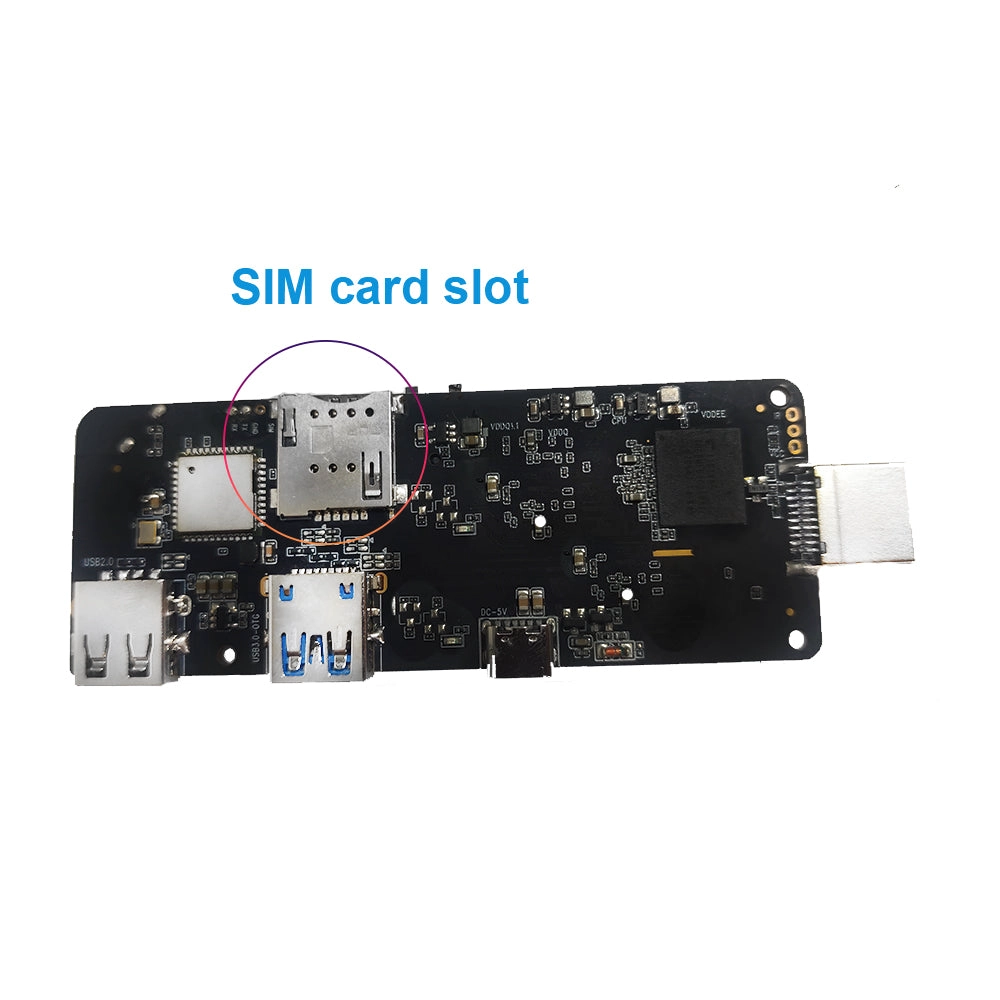
The PCBA determines how these components work together.
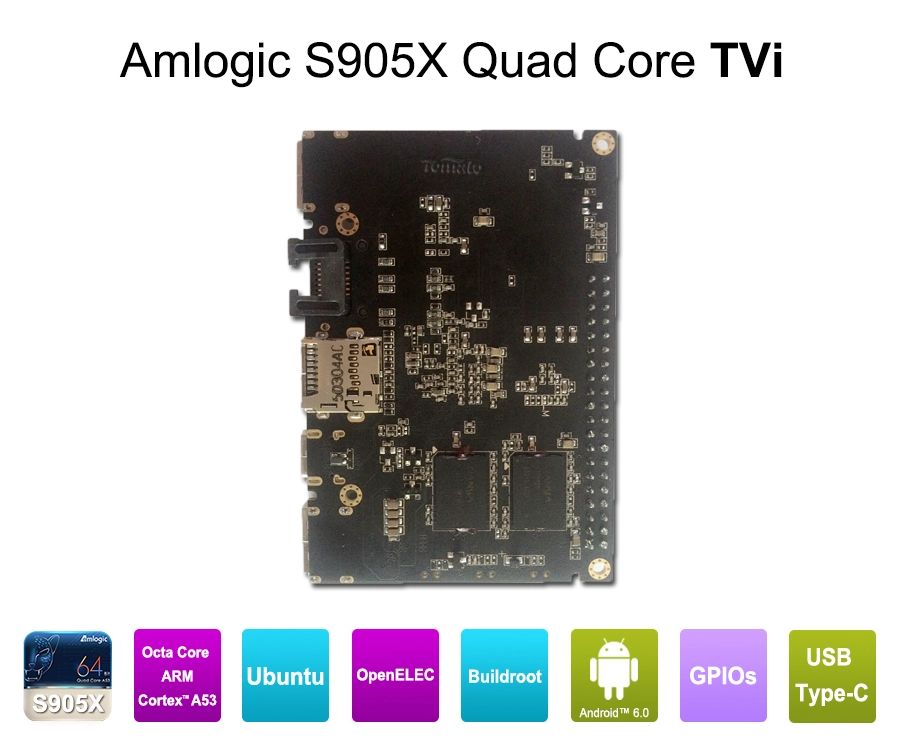
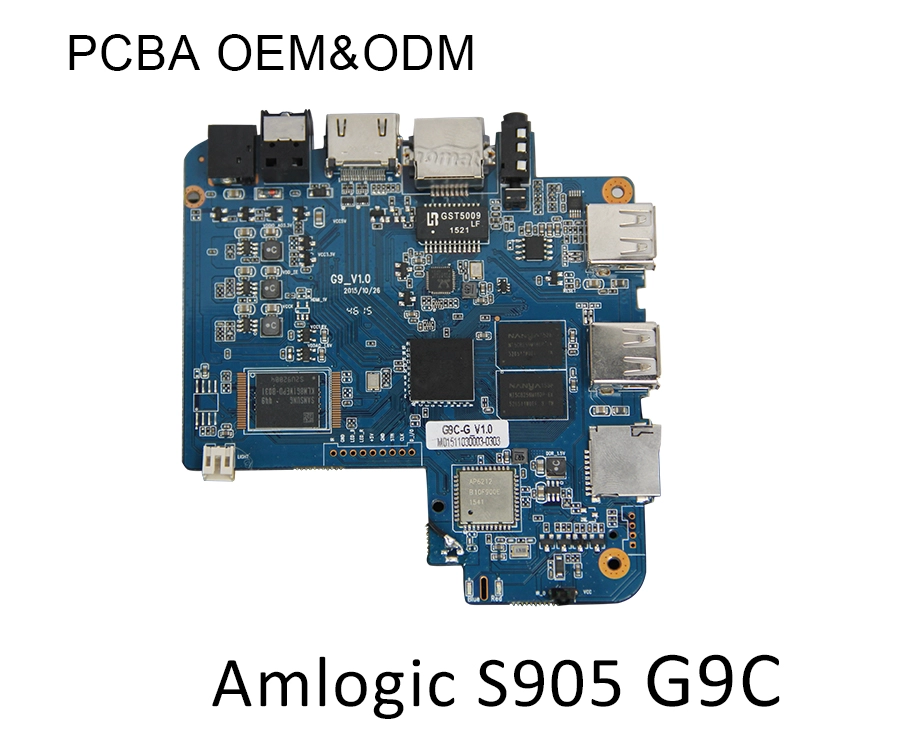
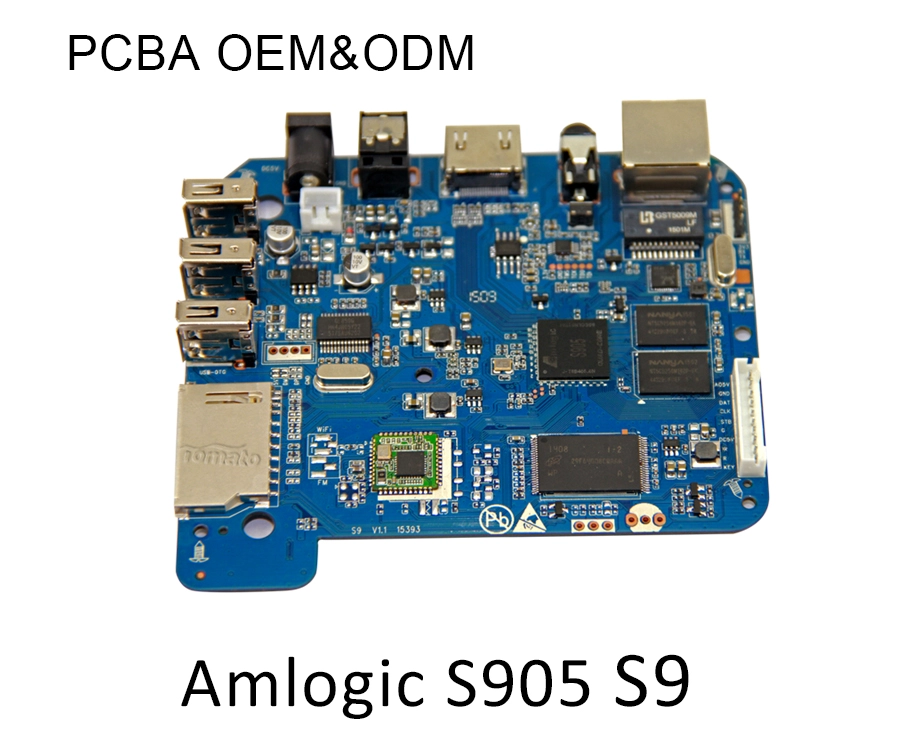
OEM/ODM manufacturers can modify the PCBA according to project requirements, including memory, storage, wireless modules, Ethernet configuration, I/O ports, connectors, power input, GPIO, UART, RS-232, and mechanical dimensions.
This is particularly useful when the TV Box must fit inside an existing commercial enclosure or integrate with another hardware system.
Firmware Architecture
The second layer is:
Bootloader → Linux/Android Kernel → BSP → HAL → Framework → System Applications → Launcher → Middleware → OTA
This architecture determines how controllable the device is after production.
For example, an IPTV operator may need a proprietary middleware platform. A hotel deployment may require a branded launcher with restricted application access. A digital signage integrator may need automatic recovery, remote configuration, and scheduled content updates.
These requirements cannot always be solved with standard APK installation.
Custom UI/UX Firmware
Custom firmware can modify:
-
Boot animation
-
Launcher
-
Home screen
-
Navigation
-
System applications
-
Remote-control behavior
-
Application permissions
-
Device provisioning
-
System settings
-
Branding
This creates a controlled user experience suitable for commercial deployments.
SDK/API Integration
A TV Box can also be integrated with external systems through SDKs and APIs.
Potential integrations include:
-
IPTV middleware
-
Hotel management systems
-
Digital signage CMS
-
Device management platforms
-
Enterprise APIs
-
IoT platforms
-
Cloud services
-
Remote monitoring systems
The advantage of OEM/ODM engineering is that the integration can be implemented at the firmware or system-service level instead of relying entirely on third-party applications.
Thermal Design Is a TV Box Specification
Thermal design is frequently ignored during procurement and becomes a major issue after deployment.
A TV Box running 4K video, AI inference, digital signage applications, or multiple background services generates sustained heat.
Important design elements include:
-
SoC thermal characteristics
-
Heatsink size
-
Thermal interface material
-
PCB copper distribution
-
Airflow
-
Enclosure ventilation
-
Ambient operating temperature
-
CPU/NPU workload
-
Continuous-use profile
For industrial and commercial applications, specialized cooling solutions can be engineered around the enclosure and actual workload.
A TV Box that performs well for 30 minutes is not necessarily a suitable platform for a 24/7 digital signage installation.
Android or Linux: Which TV Box Specification Is Better?
The operating system should follow the application.
Android is generally suitable when the project requires:
-
Rich multimedia applications
-
Custom graphical interfaces
-
Android application compatibility
-
OTT applications
-
Touchscreen interfaces
-
Broad peripheral support
Linux is often preferable for:
-
Embedded applications
-
Industrial systems
-
Lightweight deployments
-
Custom software stacks
-
Specialized edge-computing applications
-
Greater control over the underlying system
The critical issue is not simply Android versus Linux.
For a professional project, buyers should investigate whether the manufacturer can perform Linux/Android kernel optimization, BSP adaptation, driver modification, system-level customization, and OTA maintenance.
Recommended TV Box Specifications by Application
| Application | Recommended Priority |
|---|---|
| Basic OTT | 4K decoding, H.265/AV1, dual-band Wi-Fi |
| IPTV | 4K decoding, Gigabit Ethernet, DRM/HDCP, stable firmware |
| Hotel TV | Custom launcher, middleware, OTA, remote management |
| Digital Signage | 4K output, storage, thermal design, watchdog, CMS integration |
| AI Edge Box | NPU, RAM, camera I/O, GPU, thermal performance |
| Industrial | Linux/Android support, I/O customization, cooling, long lifecycle |
| Enterprise | Security, OTA, API integration, remote management |
There is no single “best” TV Box specification.
The best configuration is the one that meets the workload without adding unnecessary hardware cost.
SZTomato TV Box OEM/ODM: From Specification to Production
For B2B customers, a TV Box should be treated as an engineering platform.
SZTomato supports customization across both hardware and software layers, including PCBA hardware modification, component configuration, SDK/API integration, custom UI/UX firmware, Linux/Android kernel optimization, OTA update systems, and specialized thermal solutions.
This approach allows a project to start with a technical requirement rather than an off-the-shelf product.
For example:
A system integrator requiring a compact IPTV device can define the required SoC, memory, Ethernet, Wi-Fi, HDMI, DRM, middleware, launcher, and OTA architecture before the PCBA is finalized.
A digital signage customer can instead prioritize sustained thermal performance, storage endurance, remote management, watchdog recovery, and customized playback software.
The hardware is then engineered around the actual deployment.
That is the difference between buying a TV Box and developing a TV Box platform.
Conclusion: Specify the TV Box Around the Deployment
The correct TV Box specification is not a single number.
SoC, video engine, AV1 support, RAM, storage, Ethernet, Wi-Fi, HDMI, HDCP, DRM, firmware, OTA, thermal design, and software integration must be evaluated as one system.
For B2B procurement managers and system integrators, the most important question is not “How much RAM does this TV Box have?”
It is:
Can this platform deliver the required workload reliably, securely, and maintainably for the entire deployment lifecycle?
If the project requires customized PCBA, proprietary middleware, SDK/API integration, branded UI/UX, OTA infrastructure, Android or Linux kernel optimization, or industrial-grade thermal engineering, work with an OEM/ODM manufacturer before finalizing the hardware specification. This reduces redesign risk and creates a TV Box platform that is built for the application rather than adapted to it.
