
What's the most powerful TV Box?
What is the Most Powerful TV Box? Architectural Benchmarks for 2026
The industry's technical requirements have moved beyond simple 4K playback. As we enter 2026, the primary challenge for enterprise-grade deployments—ranging from global IPTV networks to high-fidelity digital signage—is the efficient handling of 8K AV1 bitstreams and real-time AI Super Resolution (AI-SR). "Power" is now a measure of a device's ability to execute these high-computational tasks without thermal throttling or memory bus saturation.
To identify the most powerful TV box, we must look past retail branding and evaluate the silicon apex: the System-on-Chip (SoC) architecture and its supporting PCBA environment.
The Silicon Apex: Amlogic S928X vs. Rockchip RK3588
The current market for high-performance ARM-based media nodes is dominated by two primary architectures. Choosing between them depends on the specific intensity of your deployment’s edge-computing requirements.
-
The Amlogic S928X (Multimedia Specialist):
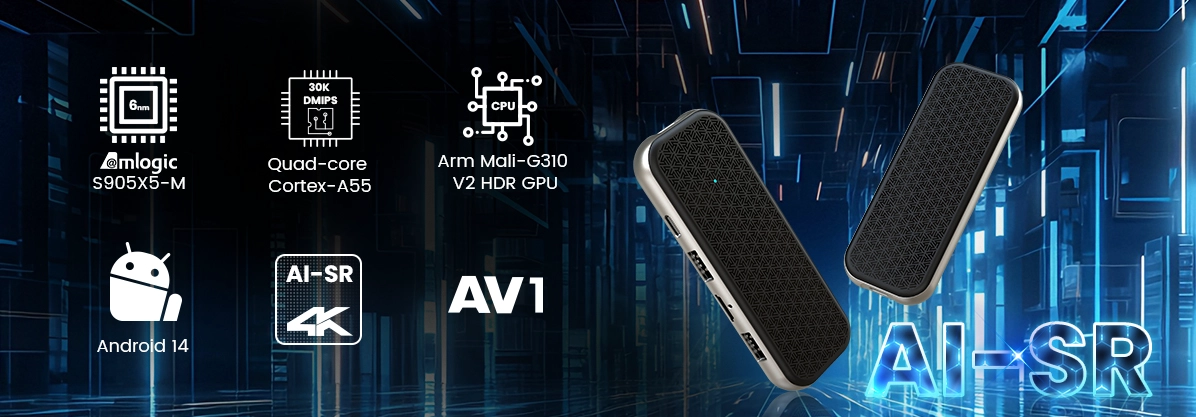
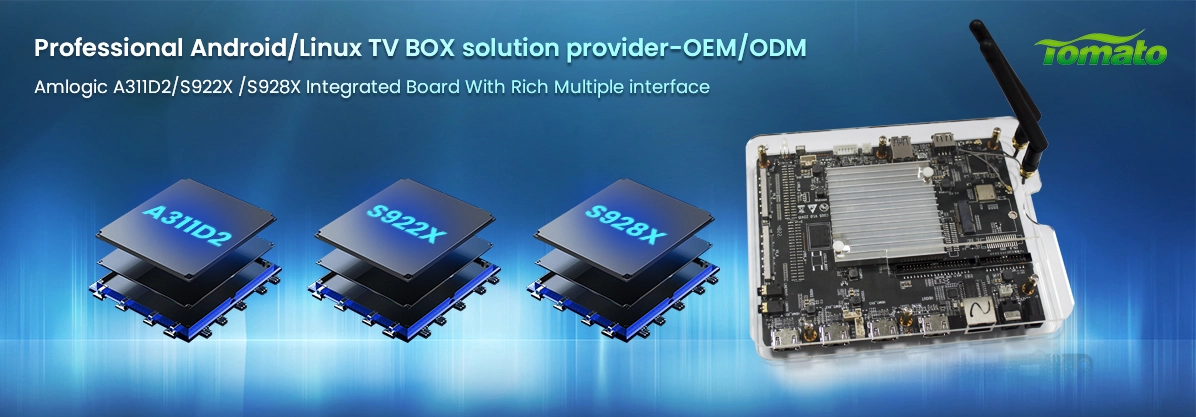
The S928X has emerged as the definitive choice for 8K video delivery. It utilizes a penta-core configuration (1× Cortex-A76 and 4× Cortex-A55) specifically optimized for high-throughput video pipelines. Its primary strength lies in its native 8K @ 60fps AV1 decoding and a dedicated Neural Processing Unit (NPU) designed for AI-driven upscaling. For operators looking to deliver near-4K quality over low-bandwidth 1080p streams, the S928X’s AI-SR capability provides the highest ROI in bandwidth saving.
-
The Rockchip RK3588 (Industrial Generalist):
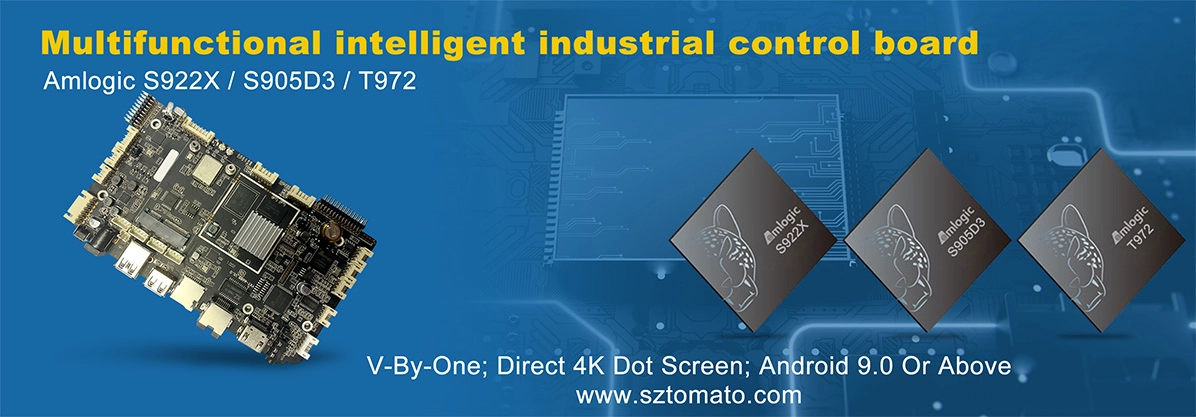
If the application requires multi-tasking or edge-AI (such as signage with integrated computer vision/audience analytics), the RK3588 remains the raw performance leader. With an octa-core (4× A76, 4× A55) layout and a 6 TOPS NPU, it handles concurrent processes—such as 4K video rendering plus local database synchronization—with significantly higher headroom than its competitors.
Thermal Engineering: The "Invisible" Power Metric
A TV box is only as powerful as its cooling solution. In B2B environments where hardware is often mounted in unventilated cavities behind displays, standard consumer-grade plastic enclosures lead to immediate downclocking.
The most powerful devices in 2026 utilize industrial-grade thermal dissipation strategies:
-
Active vs. Passive: While consumer boxes favor silence, powerful B2B nodes often incorporate PWM-controlled ultra-quiet fans or, more commonly, oversized extruded aluminum heatsinks.
-
PCBA Layout: Superior engineering places the SoC and the PMIC (Power Management IC) on opposite sides of the board or separates them via significant copper pour areas to prevent localized "hot spots."
-
Chassis Integration: High-performance units use thermal pads to bridge the SoC directly to a metal chassis, turning the entire exterior into a heat spreader.
Connectivity Infrastructure: Eliminating Data Bottlenecks
Raw processing power is negated if the I/O cannot feed the SoC. The most powerful TV box in 2026 must adhere to the latest connectivity standards to handle the high bitrates associated with 8K and high-dynamic-range (HDR) content.
-
WiFi 7 (802.11be): Essential for high-density environments (hotels, stadiums) to maintain 8K stream stability in the 6GHz band.
-
2.5G Ethernet: Moving beyond the standard Gigabit bottleneck is now a requirement for local media servers and high-bitrate signage playback.
-
LPDDR5X RAM: Memory bandwidth is the silent killer of performance. Transitioning to LPDDR5X allows the SoC to access frame buffers faster, reducing UI latency and stutter during complex transitions.
Procurement Directive: For mid-to-large scale deployments, do not base your hardware selection on AnTuTu scores alone. Request a 48-hour "burn-in" test report from your OEM to ensure the hardware maintains 95%+ of its peak clock speed under sustained 8K decoding. If your project involves complex interactivity or audience analytics, prioritize the Rockchip RK3588; for pure, high-efficiency video delivery and bandwidth optimization, specify the Amlogic S928X. Evaluate your PCBA-level thermal specs before signing off on mass production.
