
Amlogic S905Y5 vs Allwinner H626: Which 4K TV Box Platform Fits Your Project?
Amlogic S905Y5 vs Allwinner H626: Which 4K TV Box Platform Fits Your Project?
Choosing a 4K TV box platform for commercial IPTV, OTT streaming, or digital signage requires more than comparing processor names. Network connectivity, peripheral support, firmware compatibility, thermal management, and long-term operating stability all influence the final deployment cost.
For IPTV operators, telecom providers, distributors, and system integrators, the real question is not simply which chipset has better specifications. It is which hardware platform can run the required applications reliably, support the intended installation environment, and meet the project's cost and customization targets.
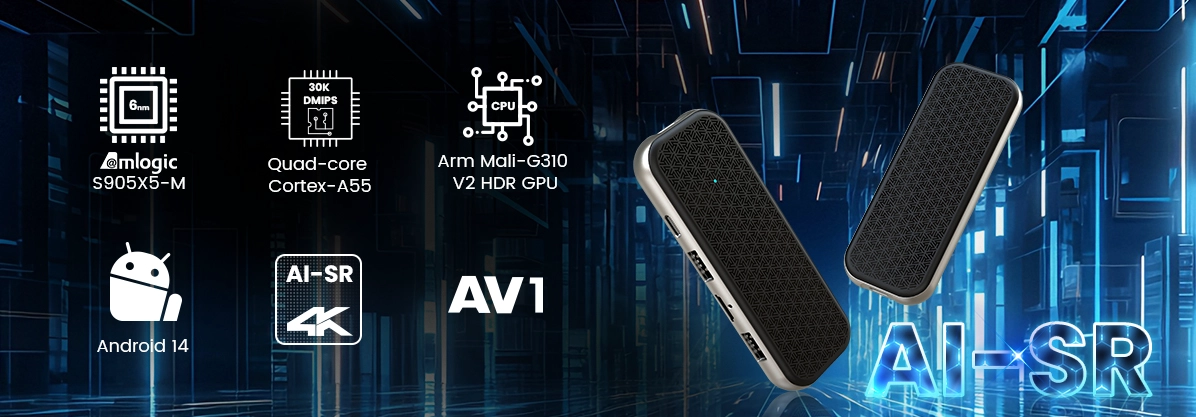
The Amlogic S905Y5 and Allwinner H626 are two platforms worth evaluating for Android-based 4K streaming devices. Both can support mainstream video playback requirements, while the final product configuration determines important differences in wired networking, USB connectivity, memory capacity, and peripheral integration.
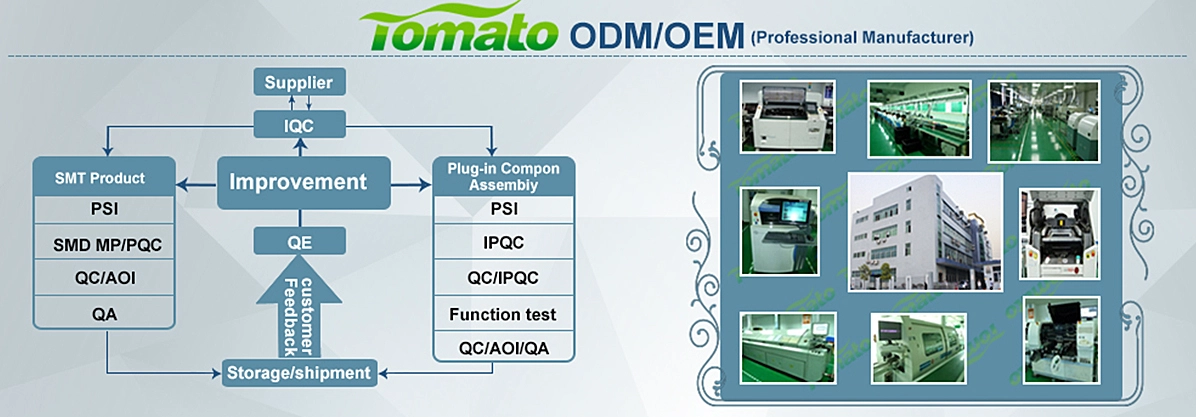
As an experienced TV box manufacturer, SZTomato supports OEM/ODM customization for commercial streaming and digital media projects, helping B2B buyers evaluate hardware configurations against their actual deployment requirements.
Amlogic S905Y5 vs Allwinner H626: Key Specifications
The following comparison summarizes the configurations described in this article. Actual specifications depend on the selected motherboard, memory components, wireless module, firmware, and product design.
| Specification | Amlogic S905Y5 | Allwinner H626 |
|---|---|---|
| CPU architecture | Quad-core Arm Cortex-A55 | Quad-core Arm Cortex-A55 |
| GPU | Arm Mali-G31 MP2 | Confirm the exact GPU in the selected H626 reference design |
| Operating system | Android 14 configuration available | Android 14 configuration available |
| AV1 decoding | Up to 4K at 60 fps, subject to implementation | Up to 4K at 60 fps, subject to implementation |
| H.265 / HEVC | Up to 4K at 60 fps | Up to 4K at 60 fps |
| VP9 | Up to 4K at 60 fps | Up to 4K at 60 fps |
| H.264 | Up to 4K at 30 fps | Up to 4K at 30 fps |
| RAM options | Commonly 2 GB or 4 GB; other options require confirmation | 2 GB, 4 GB, 8 GB, or higher-capacity options subject to board design |
| eMMC storage | Commonly 16 GB or 32 GB; other options require confirmation | 16 GB, 32 GB, 64 GB, or other supported options |
| Wired Ethernet | 100 Mbps on the reference configuration described here | Gigabit Ethernet on compatible board configurations |
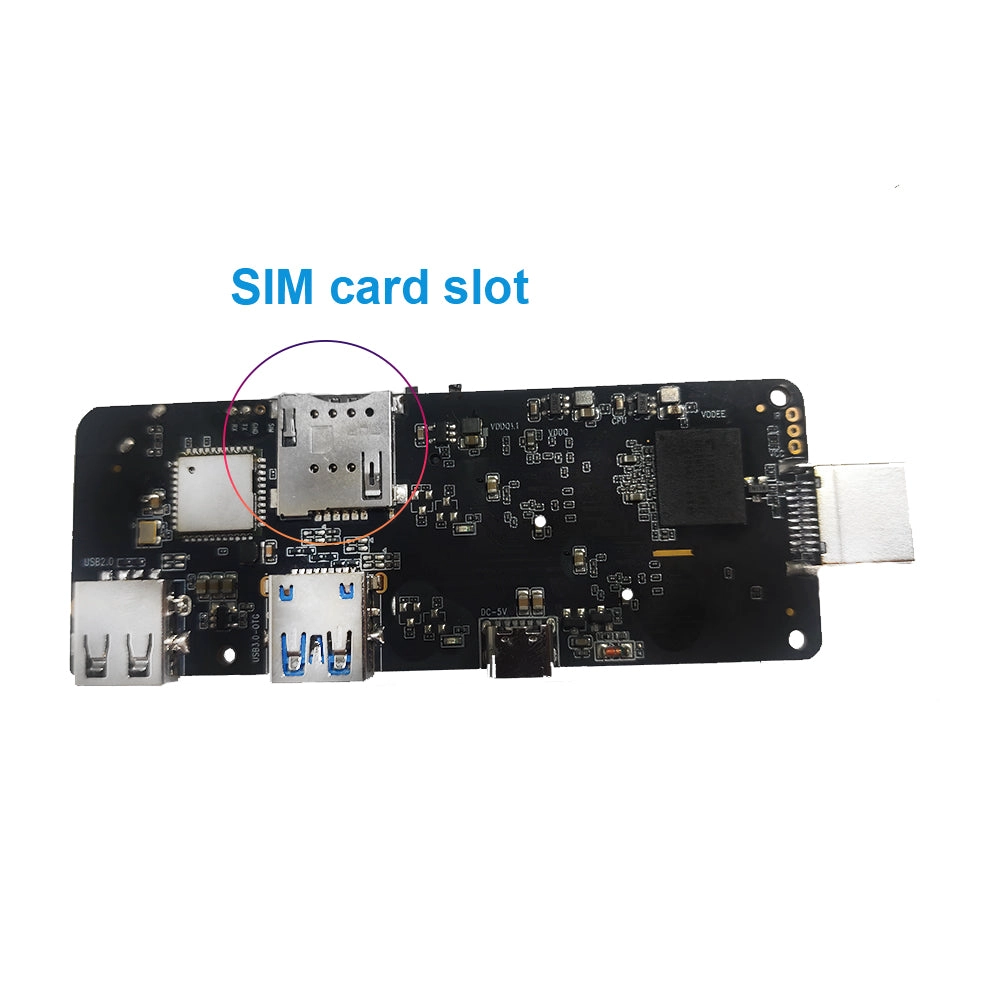
| USB connectivity | USB 2.0 on the described configuration | USB 3.0 and USB 2.0, subject to board implementation |
| Wireless connectivity | Wi-Fi 6 and Bluetooth options | Wi-Fi 6 and Bluetooth options |
| Video output | HDMI, up to 4K at 60 Hz | HDMI, up to 4K at 60 Hz |
| CEC | Supported on compatible implementations | Supported on compatible implementations |
Important: Chip capabilities and finished-product specifications are not interchangeable. Ethernet speed, USB port count, wireless standards, memory capacity, and HDMI features must be verified against the actual schematic, bill of materials, firmware, and production sample. In particular, buyers should confirm the H626 GPU model and the availability of USB 3.0 and Gigabit Ethernet before treating them as guaranteed features.
What Both 4K TV Box Platforms Have in Common
1. Hardware-Accelerated 4K Video Decoding
AV1, H.265, and VP9 are important video codecs for modern streaming applications. Hardware decoding can reduce the processing burden on the CPU and support efficient 4K playback when the video profile, decoder implementation, and software stack are compatible.
For IPTV and OTT projects, codec compatibility should be tested using the actual content delivered by the service provider. A device that supports a codec in principle may still encounter playback issues with particular profiles, bit depths, audio tracks, container formats, or DRM requirements.
SZTomato can help customers evaluate the intended video formats and playback applications when developing a customized Android TV box.
2. Quad-Core Cortex-A55 Processing
Both platforms use a quad-core Arm Cortex-A55 CPU architecture. This makes them relevant candidates for mainstream streaming applications, Android interfaces, media playback, and selected commercial display workloads.
However, the same CPU architecture does not guarantee identical application performance. Clock frequency, memory bandwidth, GPU implementation, thermal behavior, system services, and firmware optimization can all affect the user experience.
For commercial deployments, buyers should test application startup, channel switching, menu responsiveness, background processes, and recovery after network interruptions instead of relying exclusively on CPU specifications.
3. Android-Based Application Compatibility
An Android-based 4K TV box can provide a familiar software environment for IPTV clients, OTT applications, digital signage players, and custom business applications.
The important consideration is whether the selected Android build supports the required application framework, hardware acceleration, device permissions, peripheral drivers, and update process.
SZTomato supports firmware customization and project-specific configuration. Depending on the platform and software requirements, customization may include startup behavior, application preinstallation, boot logos, launcher interfaces, system settings, and OTA update workflows.
Application compatibility, Google certification, DRM authorization, and access to specific streaming services must be evaluated separately. Android availability alone does not guarantee certification or unrestricted access to every commercial application.
Where the Platforms May Differ in Commercial Projects
Wired Networking: Bandwidth and Deployment Requirements
For a standard IPTV installation, a 100 Mbps Ethernet connection may provide sufficient bandwidth for many streaming workloads. Its suitability depends on the video bitrate, the number of concurrent streams handled by the device, network overhead, and other application traffic.
Gigabit Ethernet becomes more valuable when a project requires high-bitrate local media playback, rapid transfer of large content files, communication with local servers, or additional network-intensive applications.
This is one area where the described H626 configuration may offer a practical advantage over an S905Y5 device limited to 100 Mbps Ethernet.
However, buyers should compare the actual network interface on the finished motherboard rather than assume that every device based on a particular chipset has the same Ethernet capability.
For distributed digital signage, the network design also matters. A remote display player downloading content periodically may have different bandwidth requirements from a device continuously streaming multiple high-bitrate media sources.
USB Connectivity: External Storage and Peripheral Integration
USB connectivity can influence the flexibility of a commercial TV box.
A USB 3.0 interface can be useful when a device needs to transfer large media files, connect high-speed external storage, or support compatible peripherals with higher bandwidth requirements. USB 2.0 remains suitable for many common accessories, including keyboards, mice, remote-control receivers, and selected storage devices.
If a digital signage project relies on external storage, cameras, touch controllers, serial adapters, or other peripherals, buyers should verify both the interface specification and the required driver support.
A platform with more USB ports is not automatically the better solution. The more important question is whether the final product provides the correct interfaces, sufficient power delivery, stable drivers, and the physical layout required by the installation.
SZTomato supports OEM/ODM hardware customization for projects that require a different port layout or a more specialized connectivity configuration, subject to platform feasibility and engineering validation.
Memory and Storage: Match the Hardware to the Software
Memory and eMMC capacity directly affect the suitability of a TV box for different applications.
A basic streaming device with a lightweight launcher and a limited application set may operate adequately with a modest memory configuration. A commercial device running a more complex interface, multiple background services, or a customized business application may require additional RAM and storage.
Digital signage deployments also need sufficient local storage for downloaded playlists, images, videos, and offline playback. The appropriate capacity depends on content size, update frequency, application requirements, and the desired offline operating period.
For OEM projects, SZTomato can evaluate available RAM and storage combinations against the intended firmware and application workload. Buyers should confirm the supported memory configuration before finalizing the product specification and purchase order.
Which Platform Is Better for IPTV and Digital Signage?
There is no universal winner between the Amlogic S905Y5 and Allwinner H626. The best choice depends on the product configuration, software requirements, network environment, and total project cost.
Choose an S905Y5-Based TV Box When
-
The project focuses on mainstream IPTV or OTT streaming.
-
AV1, H.265, and VP9 hardware decoding meet the required video formats.
-
A 100 Mbps Ethernet interface is sufficient for the intended workload.
-
USB 2.0 connectivity meets the peripheral requirements.
-
The selected Android firmware and application stack have been validated.
-
The overall hardware cost and power requirements fit the target product.
The S905Y5 is worth evaluating for cost-conscious 4K streaming products where a compact configuration, mainstream decoding capabilities, and a suitable Android software environment are the main priorities.
Choose an H626-Based TV Box When
-
The selected board provides Gigabit Ethernet and the project can benefit from the additional bandwidth.
-
USB 3.0 is required for compatible external storage or high-speed peripherals.
-
The available memory and storage options better match the application workload.
-
The complete motherboard configuration meets the required connectivity and integration needs.
-
Firmware compatibility and long-term operating stability have been demonstrated through testing.
An H626-based device can be a strong candidate when the chosen board configuration offers the interfaces needed for commercial deployment. Nevertheless, Gigabit Ethernet, USB 3.0, and expanded memory options must be confirmed for the specific product rather than assumed from the processor name.
OEM/ODM Customization: Build Around the Project Requirements
For B2B buyers, selecting the chipset is only the beginning of product development. A successful deployment requires the processor, motherboard, memory, connectivity, enclosure, firmware, and application environment to work together.
SZTomato provides OEM/ODM customization for Android TV boxes and commercial multimedia devices, helping brand owners, distributors, IPTV operators, and system integrators align hardware and software configurations with their business requirements.
Depending on the selected platform and project scope, customization may include:
-
Hardware configuration: RAM, eMMC storage, wireless modules, Ethernet interfaces, USB ports, and other supported connectivity options.
-
Firmware customization: Startup settings, boot logos, launcher interfaces, preinstalled applications, system configuration, and OTA update workflows.
-
Application integration: Evaluation and integration of compatible IPTV clients, digital signage software, and customer-specific applications.
-
Mechanical design: Enclosure adjustments, port placement, mounting requirements, and thermal design within engineering constraints.
-
Production preparation: Sample evaluation, specification confirmation, quality-control planning, and mass-production configuration management.
Not every feature can be changed through customization alone. Some requirements depend on the SoC's native capabilities, PCB routing, component availability, Android BSP support, licensing, and engineering cost. Early technical review helps determine which requirements are feasible before a project moves into production.
Pre-Production Validation: What Buyers Should Test
A successful sample test should reproduce the intended operating environment as closely as possible. Testing only a few minutes of video playback is not sufficient for a commercial IPTV or digital signage project.
Before approving mass production, evaluate the following areas.
Video and Application Compatibility
Test representative AV1, H.265, VP9, and H.264 content at the required resolutions and frame rates. Verify audio synchronization, subtitle rendering, application stability, HDMI output behavior, and recovery from interrupted streams.
Network Stability
Test wired and wireless connectivity under realistic network conditions. Measure playback continuity, reconnection behavior, and performance when the device operates for extended periods.
Thermal Performance
Run the device under sustained playback and the expected ambient temperature. Check enclosure temperature, performance consistency, and stability under the intended installation conditions.
OTA Updates and Recovery
Verify firmware upgrade procedures, interrupted-update recovery, version control, and the ability to restore the device to a known working state. Commercial projects should establish a clear update policy before deployment.
Long-Term Playback
Run continuous playback tests with representative playlists and applications. Monitor unexpected reboots, memory consumption, application crashes, network disconnections, and other failures that may not appear during short demonstrations.
Production Consistency
Confirm that the approved sample, production bill of materials, firmware version, accessories, and quality-control criteria are aligned. Any material hardware or software change should be reviewed before mass production.
These checks help reduce the risk of field failures, service interruptions, and expensive after-sales work after deployment.
Final Recommendation: Select the Complete Platform, Not Just the Chip
The Amlogic S905Y5 and Allwinner H626 can both be considered for Android-based 4K streaming projects, provided the chosen implementation meets the required decoding, connectivity, software, and reliability criteria.
The S905Y5 deserves consideration for mainstream streaming products where the validated configuration meets the network and peripheral requirements. An H626-based solution may be preferable when the selected motherboard provides Gigabit Ethernet, USB 3.0, or other interfaces that deliver a measurable benefit to the deployment.
For IPTV operators, digital signage integrators, and wholesale buyers, the final decision should be based on tested product performance, complete hardware specifications, firmware readiness, and total cost of ownership—not the chipset name alone.
Planning a customized 4K TV box project? Contact SZTomato at www.sztomato.com to discuss your target applications, connectivity requirements, memory configuration, firmware needs, sample evaluation, and OEM/ODM production options. A project-specific technical assessment can help identify the most suitable platform before you commit to mass production.
