
How to choose the Best Custom Google TV Box Manufacturer in China?
Introduction: Why Choosing a Google TV Box Manufacturer Is an Engineering Decision
Google TV product development has become increasingly demanding as streaming platforms adopt more advanced video codecs, stronger content protection, and stricter software compatibility requirements.
The adoption of AV1 decoding, 4K HDR streaming, Wi-Fi 6 connectivity, and more capable Amlogic system-on-chips (SoCs) has raised the technical expectations for modern streaming hardware. However, selecting a capable processor is only one part of the development process.
A Google TV Box can have a powerful CPU and sufficient memory yet still fail to deliver a commercially viable product because of firmware instability, DRM incompatibility, thermal limitations, or inadequate software maintenance.
For B2B buyers, the manufacturer must therefore demonstrate competence across several engineering layers:
-
Hardware engineering: SoC selection, PCB layout, memory configuration, power management, and thermal design.
-
Software engineering: Android-based system integration, Google TV software requirements, kernel optimization, and firmware customization.
-
Content security: Widevine DRM, HDCP protection, and secure media playback.
-
Production engineering: PCBA assembly, component sourcing, functional testing, and mass-production quality control.
-
Long-term support: OTA update infrastructure, firmware maintenance, and platform compatibility.
The distinction between an ordinary TV Box assembler and a capable OEM/ODM manufacturer becomes clear when these requirements must work together in a commercial deployment.
1. Verify Google TV Certification and Software Compliance Before Choosing a Factory
The first question to ask a potential Google TV Box manufacturer is whether it can supply a genuinely certified Google TV platform or simply an Android-based TV Box with a customized launcher.
These products are not equivalent.
Google TV is a software experience built on the Android TV platform. A device running AOSP or a generic Android operating system does not automatically qualify as a Google TV device.
According to Google's Android Compatibility Program, Android compatibility involves compliance with the applicable Compatibility Definition Document (CDD) and passing the Compatibility Test Suite (CTS). Access to Google Play and Google Mobile Services requires separate licensing approval.
1.1 Distinguish Certified Google TV from Generic Android TV Boxes
When evaluating a supplier, request documentation that establishes the actual software platform and certification status.
|
Evaluation Item |
What B2B Buyers Should Verify |
|---|---|
|
Google TV platform |
Evidence of authorized Google TV implementation |
|
Google Play |
Licensed access and application availability |
|
Android compatibility |
Applicable CDD and CTS compliance |
|
DRM protection |
Widevine integration and authorized provisioning |
|
HDMI protection |
Appropriate HDCP implementation |
|
Firmware |
Supported system version and update policy |
|
Google services |
Availability of required licensed Google services |
A manufacturer should be able to explain which certifications are already available, which are platform-dependent, and which require a new device qualification process.
One important procurement warning: A factory showing a Google-style home screen or preinstalled Google applications does not prove that its product is Google TV certified.
Buyers should also avoid assuming that Widevine L1 alone guarantees Netflix, Prime Video, Disney+, or other premium streaming service approval. Each service may have its own device approval and commercial requirements.
1.2 Evaluate Widevine DRM and HDCP Protection
Content security is a critical requirement for commercial streaming devices.
Widevine DRM
Google's content protection technology for premium media distribution.
Widevine supports secure content delivery across Android TV and other platforms. Its implementation involves device provisioning, security architecture, and integration with the content provider's licensing infrastructure.
For a commercial Google TV Box, procurement teams should investigate:
-
Widevine security level and provisioning status.
-
Secure video decoding capabilities.
-
Trusted Execution Environment (TEE) support.
-
Hardware-backed key protection.
-
Compatibility with the required streaming applications.
HDCP (High-bandwidth Digital Content Protection) is another important consideration. It protects digital content transmitted through interfaces such as HDMI.
A technically capable manufacturer should understand the relationship between HDMI hardware, HDCP authentication, DRM requirements, and secure video output.
These capabilities must be evaluated together rather than treated as independent specification checkboxes.
2. Evaluate SoC Selection, PCBA Engineering, and Thermal Design
The processor determines the basic performance envelope of a Google TV Box, but the actual user experience depends on the complete hardware architecture.
A manufacturer that only assembles standard reference boards may struggle when a project requires different memory configurations, additional interfaces, customized power delivery, or industrial operating conditions.
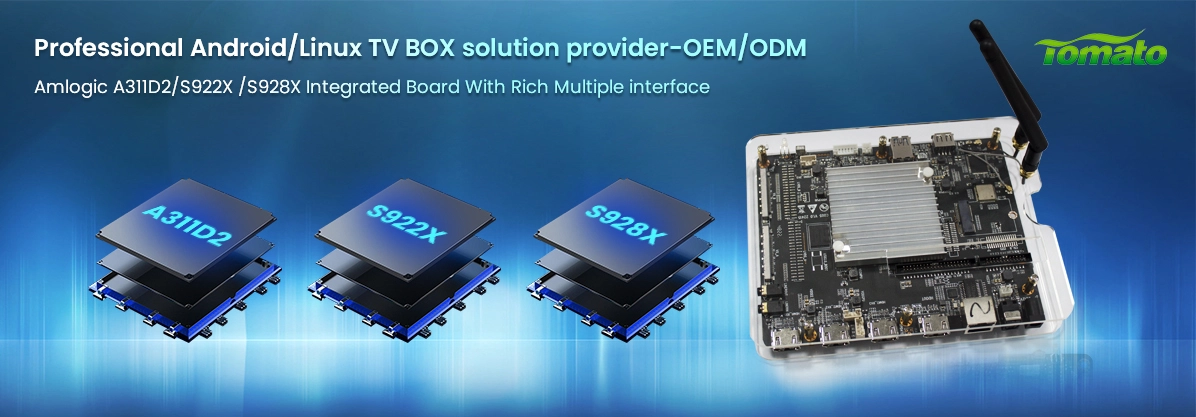
2.1 Select the Right Amlogic or Rockchip SoC
The SoC should be selected according to the intended application, video requirements, software compatibility, and product lifecycle.
The following platforms illustrate different development directions.
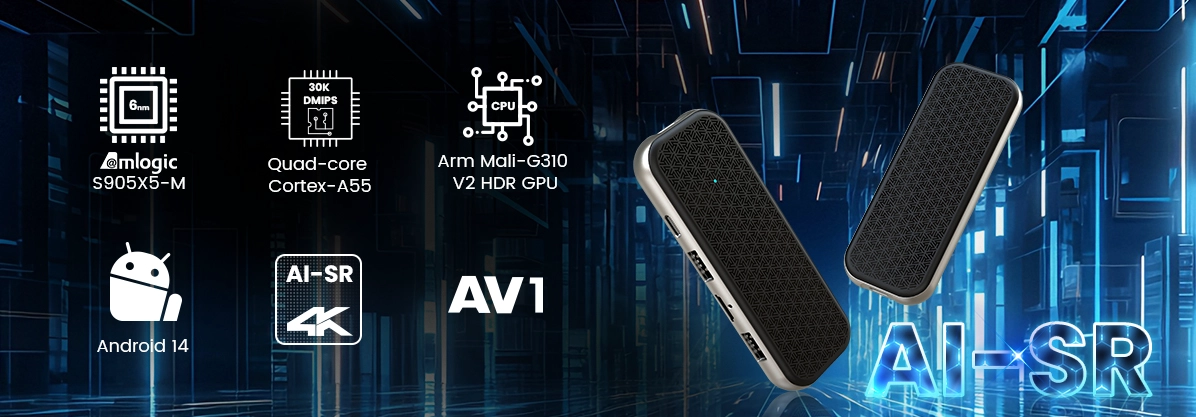
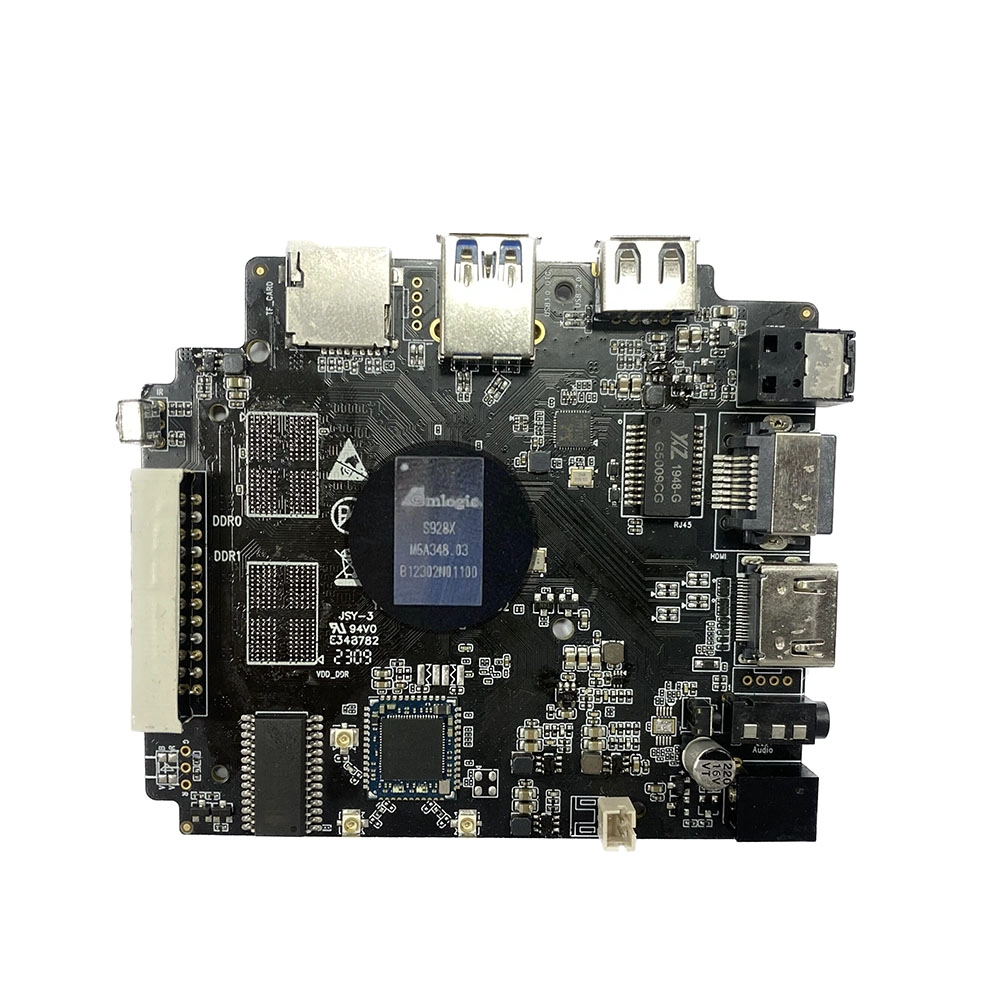
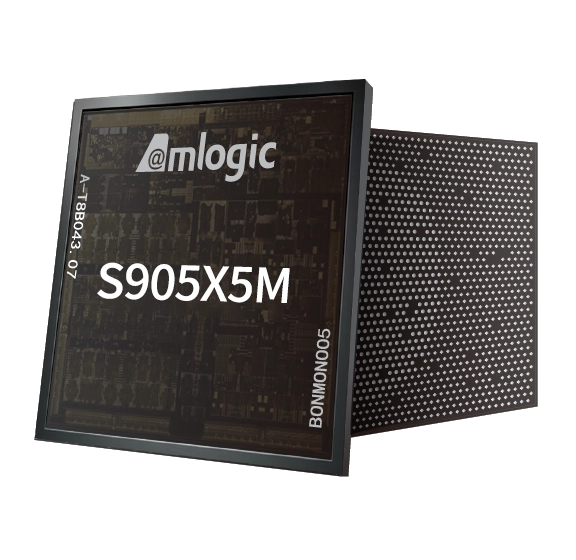 Amlogic S905X5M
Suitable for evaluating mainstream 4K streaming products, subject to the specific board configuration, BSP availability, and certification requirements.
Application: Mainstream Google TV hardware development
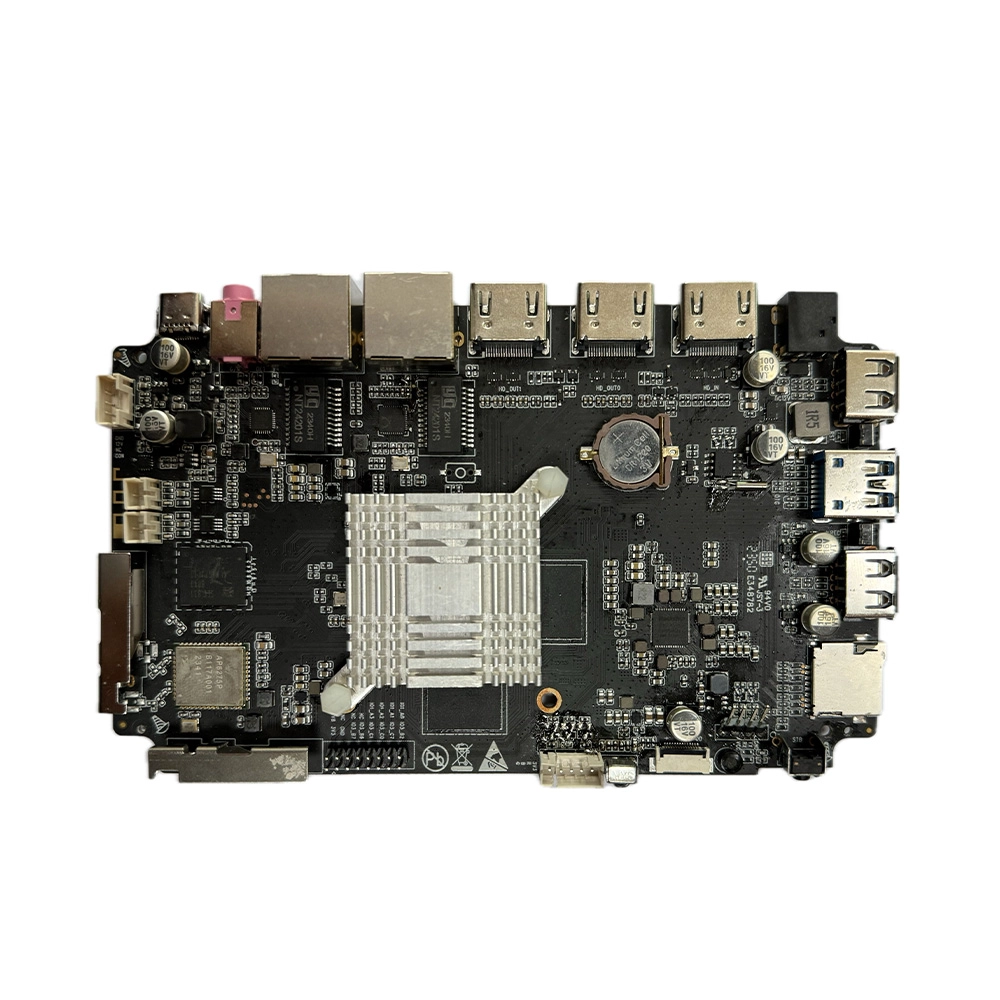
Amlogic S928X-J
A higher-performance platform for advanced multimedia applications and demanding video processing requirements.
Application: Premium multimedia hardware platforms
Rockchip RK3588
An octa-core platform with an integrated NPU, suited to advanced multimedia, AI, and edge-computing applications.
Application: Commercial multimedia and AI integration
The selection process should consider:
-
CPU architecture and processing performance.
-
GPU capabilities and graphics acceleration.
-
Hardware video decoding and encoding.
-
AV1, H.265, VP9, and other required codec support.
-
4K HDR output and display compatibility.
-
DDR memory bandwidth and eMMC performance.
-
Wi-Fi, Bluetooth, Ethernet, and HDMI interfaces.
-
Android TV BSP availability and maintenance.
AV1 support deserves particular attention. It can improve streaming efficiency by reducing bandwidth requirements at comparable video quality, provided that the target streaming service, software stack, and hardware decoder support the required profile.
A manufacturer should provide actual chipset documentation and engineering samples rather than relying on marketing descriptions.
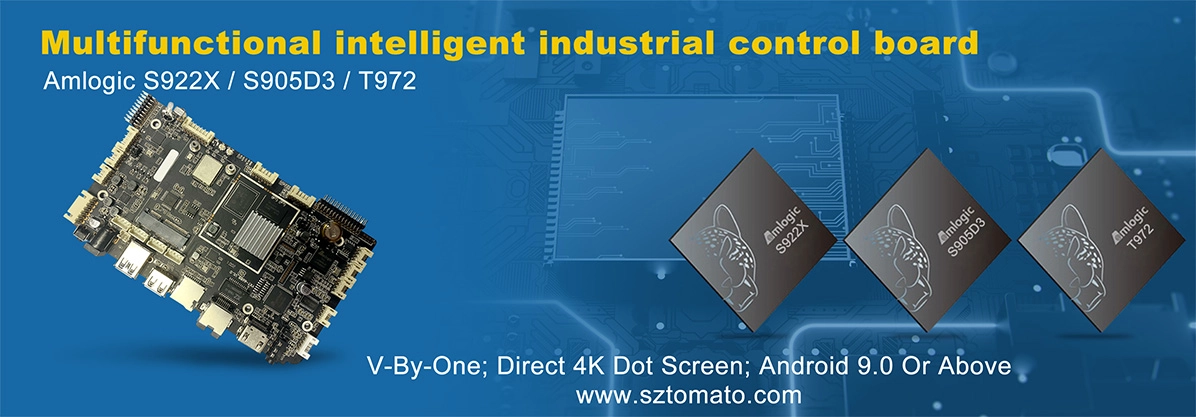
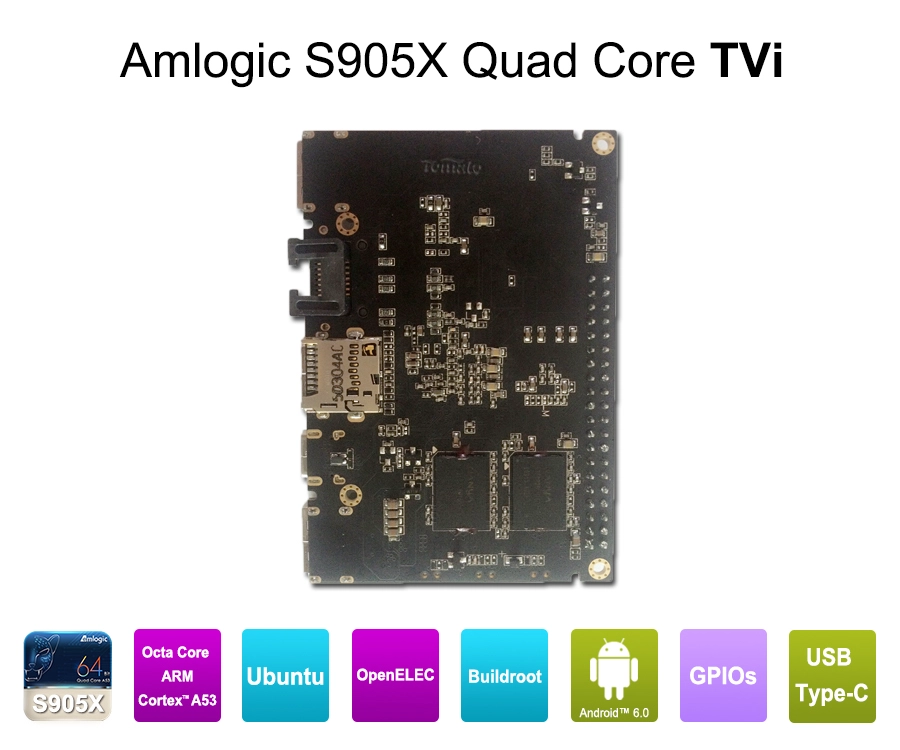
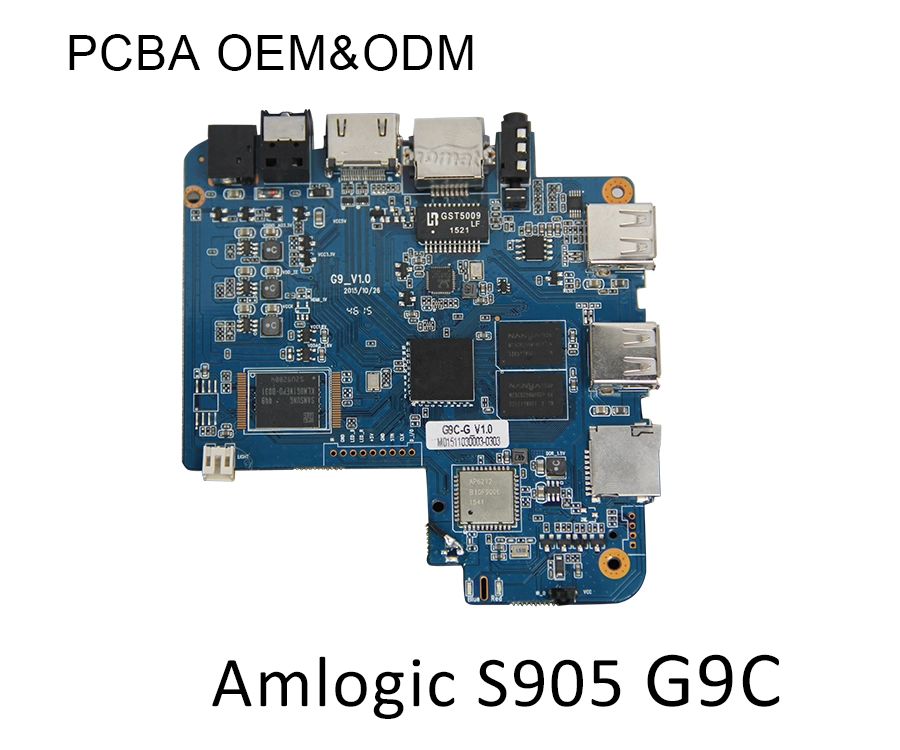
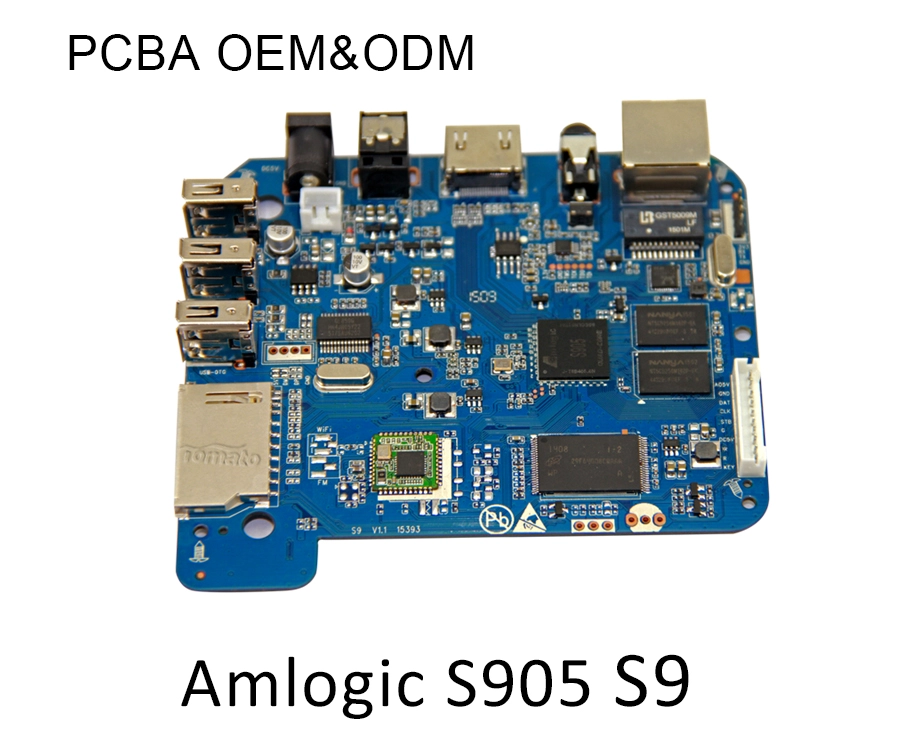
2.2 Examine PCBA Layout and Hardware Customization Capabilities
A standard reference design is useful for reducing development time, but it may not satisfy every commercial deployment.
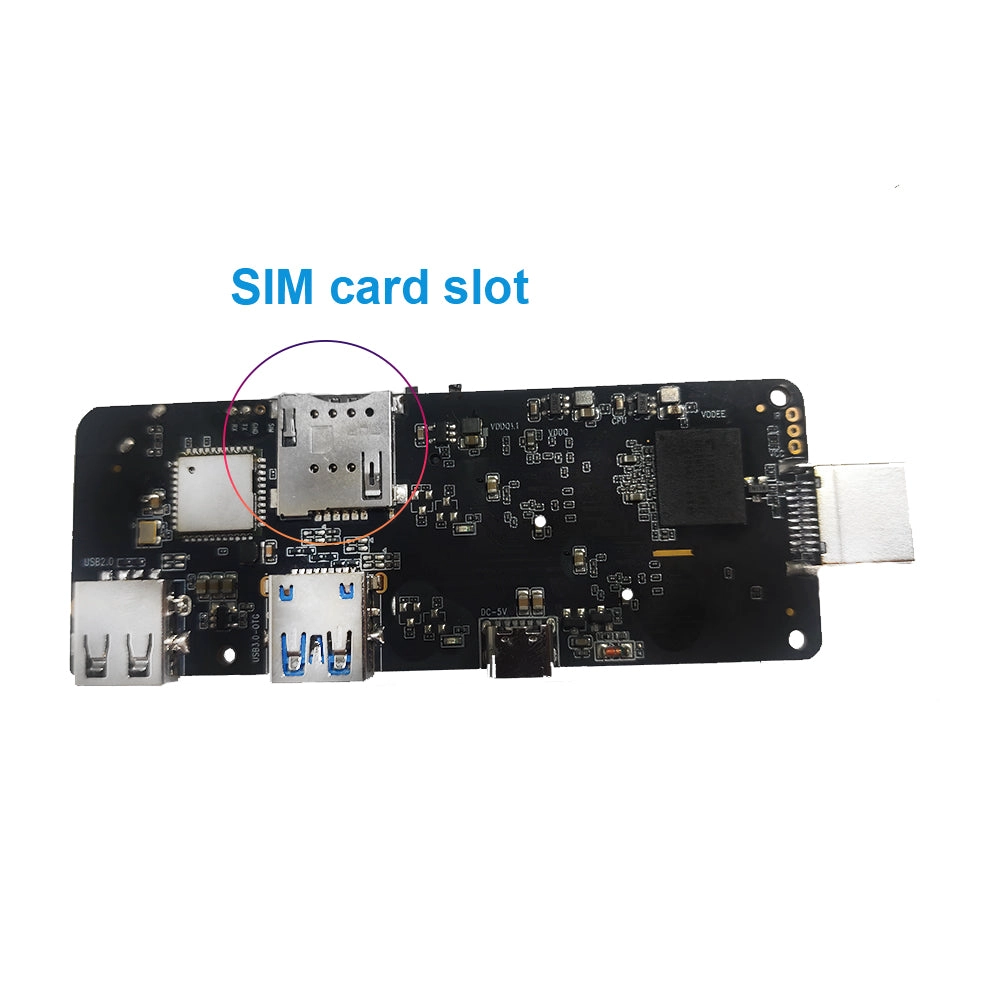
For example, an IPTV operator might require dual Ethernet connectivity, additional USB ports, a customized Wi-Fi module, or a different memory configuration.
These changes can affect PCB routing, power consumption, signal integrity, antenna placement, and thermal behavior.
An experienced Google TV Box OEM/ODM manufacturer should be capable of evaluating:
|
Hardware Area |
Possible Customization |
|---|---|
|
PCBA layout |
PCB routing and component placement |
|
RAM |
DDR capacity and configuration |
|
Storage |
eMMC capacity and partition planning |
|
Wireless |
Wi-Fi and Bluetooth module selection |
|
Network |
Ethernet configuration |
|
HDMI |
Output design and HDCP-related compatibility |
|
USB |
Interface quantity and peripheral support |
|
Power |
Voltage regulation and power management |
|
Enclosure |
Custom tooling and mechanical design |
|
Cooling |
Heat sinks, thermal pads, and chassis optimization |
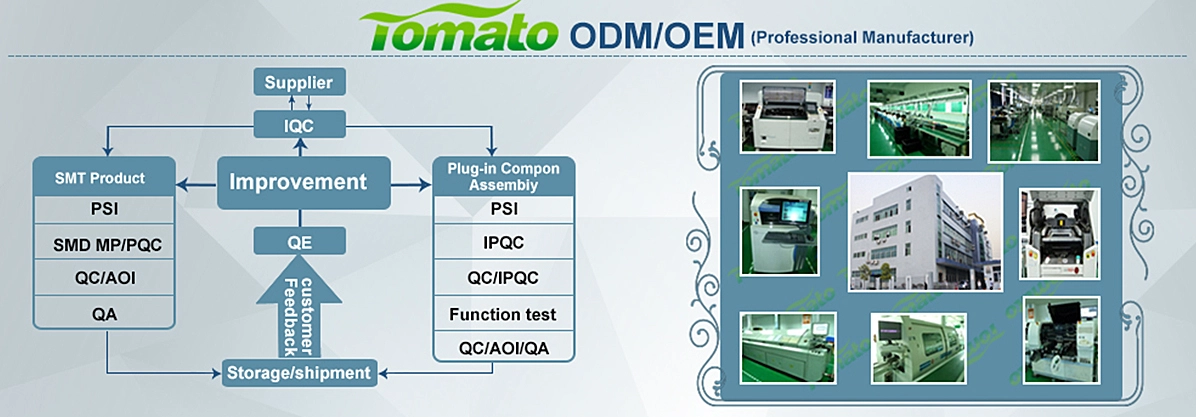
SZTomato supports PCBA hardware modification, memory and storage configuration, peripheral expansion, customized enclosure development, and thermal engineering for multimedia hardware projects.
These capabilities are particularly relevant when a customer needs a product architecture that differs from an existing reference design.
2.3 Evaluate Thermal Performance for Continuous Operation
Thermal design is frequently overlooked during supplier evaluation.
A Google TV Box that performs well during a short demonstration may experience performance degradation during prolonged 4K playback, high ambient temperatures, or continuous commercial operation.
Poor heat dissipation can lead to:
-
CPU and GPU thermal throttling.
-
Unstable video playback.
-
Unexpected system restarts.
-
Reduced component reliability.
-
Premature hardware degradation.
A qualified engineering partner should evaluate thermal resistance, heat transfer paths, component temperatures, and enclosure airflow.
For commercial applications, specialized cooling solutions can include aluminum heat sinks, thermal pads, improved PCB component placement, and customized metal enclosures.
SZTomato can evaluate these engineering modifications according to the target operating environment and expected workload.
The objective is not simply to install a larger heat sink. It is to establish a thermal design that maintains stable operation without compromising product dimensions, power consumption, or manufacturing cost.
3. Assess Firmware Customization, SDK/API Integration, and OTA Infrastructure
Hardware determines what a Google TV Box can do. Firmware determines how effectively the hardware operates within a customer's service ecosystem.
This is where the difference between a standard assembly factory and an engineering-oriented OEM/ODM manufacturer becomes particularly important.
3.1 Understand the Difference Between Basic OEM and Deep ODM
Basic OEM customization generally covers branding and limited configuration changes.
Deep ODM development involves hardware and software engineering that can affect the complete product architecture.
|
Development Area |
Basic OEM |
Advanced ODM |
|---|---|---|
|
Logo and packaging |
Yes |
Yes |
|
Boot animation |
Yes |
Yes |
|
Application configuration |
Basic |
Advanced integration |
|
Custom launcher |
Limited |
Project-dependent |
|
PCBA modification |
Limited |
Engineering-level |
|
SDK/API integration |
Limited |
Custom integration |
|
Kernel and driver optimization |
Usually limited |
Project-dependent |
|
OTA architecture |
Standard |
Customized infrastructure |
|
Thermal engineering |
Standard enclosure |
Customized solutions |
There is an important distinction for Google TV projects: certified Google TV software operates under platform requirements and partner policies. A manufacturer cannot freely replace every system component or modify protected Google components simply because the customer requests a customized interface.
Custom UI/UX work must therefore be planned within the permitted customization scope.
3.2 Evaluate Firmware Engineering Capabilities
A professional manufacturer should be able to explain its firmware development workflow, including the relationship between the bootloader, Android framework, kernel, hardware abstraction layer (HAL), drivers, and applications.
Key engineering capabilities include:
Linux/Android Kernel Optimization
Kernel and driver optimization helps maintain hardware compatibility and system stability.
Typical development areas include:
-
Device-tree configuration.
-
Wi-Fi and Bluetooth driver integration.
-
HDMI and display output configuration.
-
USB peripheral compatibility.
-
Power management.
-
Memory allocation and system performance.
Custom UI/UX Firmware
For projects requiring a differentiated user experience, customization may include:
-
Branded launcher design.
-
Customized navigation and application organization.
-
Preinstalled customer applications.
-
Application startup behavior.
-
Remote-control mapping.
-
System settings configuration.
SDK/API Integration
For IPTV operators and service providers, integration with existing software systems is often more important than the appearance of the home screen.
A capable OEM/ODM partner should support technical evaluation of:
-
IPTV middleware.
-
Content management platforms.
-
Third-party application SDKs.
-
Device management systems.
-
Remote configuration APIs.
-
Authentication and account management interfaces.
SZTomato provides custom firmware, UI/UX development, SDK/API integration, and hardware-software coordination for B2B multimedia projects.
The actual implementation scope depends on the selected SoC, available BSP, platform permissions, and third-party SDK documentation.
3.3 Check the OTA Update and Firmware Maintenance Strategy
OTA (Over-The-Air) updates are essential for managing deployed devices.
Without a structured update system, correcting firmware bugs or addressing security vulnerabilities across thousands of devices can become expensive and operationally difficult.
A reliable OTA architecture should address:
-
Firmware version management.
-
Device identification and deployment groups.
-
Secure firmware distribution.
-
Update integrity verification.
-
Interrupted-update recovery.
-
Rollback or recovery mechanisms.
-
Update logs and deployment monitoring.
For large-scale B2B deployments, a private OTA infrastructure can offer greater control over firmware release schedules and device maintenance.
SZTomato supports private OTA solutions that can use its cloud infrastructure or customer-managed server environments, depending on project requirements.
For procurement managers, one additional question is particularly important:
Who controls the firmware source code, signing keys, update server, and long-term maintenance process?
These responsibilities should be defined before mass production.
A supplier that cannot clearly explain firmware ownership and update responsibilities may create long-term operational risks for the buyer.
4. Evaluate Manufacturing Quality, OEM/ODM Experience, and Long-Term Support
Technical capability is only one part of supplier selection. A manufacturer must also demonstrate that it can convert an approved engineering sample into consistent mass production.
A product that passes initial testing but experiences high failure rates after shipment can damage a brand's reputation and increase warranty costs.
4.1 Examine the Manufacturer's Production and Quality Control Process
When auditing a Google TV Box factory in China, procurement managers should investigate the following production stages.
|
Production Stage |
Quality Control Focus |
|---|---|
|
Component sourcing |
Supplier qualification and component traceability |
|
SMT assembly |
Soldering quality and component placement |
|
PCBA inspection |
AOI and electrical inspection |
|
Firmware flashing |
Correct firmware version and configuration |
|
Functional testing |
Wi-Fi, Bluetooth, HDMI, USB, Ethernet |
|
Video testing |
Resolution, HDR, codec, and playback stability |
|
Burn-in testing |
Long-duration operational stability |
|
Final inspection |
Appearance, accessories, packaging, and labeling |
A supplier should also be able to explain its approach to failure analysis, corrective actions, and production traceability.
For devices intended for commercial deployment, testing should include realistic operating conditions rather than only basic power-on checks.
4.2 Compare OEM/ODM Development Lead Times and Production Flexibility
Different customization levels require different development schedules and production resources.
The following is a practical reference for evaluating project planning. Actual lead times depend on engineering complexity, component availability, certification status, and customer approval.
|
Project Stage |
Typical Planning Consideration |
|---|---|
|
Standard sample evaluation |
Existing hardware platform |
|
Customized firmware sample |
UI, applications, and system configuration |
|
PCBA modification |
Hardware design and validation |
|
Full ODM development |
Schematic, PCB, tooling, and prototype |
|
Pilot production |
Process validation and quality assessment |
|
Mass production |
Approved specifications and component readiness |
Do not select a factory solely because it promises the shortest delivery time.
A more reliable supplier should provide a defined development schedule, engineering milestones, sample approval procedures, and production acceptance criteria.
4.3 Why Consider SZTomato for Google TV Box OEM/ODM Projects?
Shenzhen Tomato Technology Co., Ltd. (SZTomato)
Established in 2011, SZTomato specializes in Android TV Boxes, Smart TV Boxes, IPTV Set-Top Boxes, streaming media players, digital signage hardware, and Android Mini PCs.
Its business focuses on B2B OEM/ODM manufacturing and customized multimedia hardware development.
Rather than limiting customization to branding and packaging, SZTomato supports several engineering layers:
-
PCBA hardware modification: PCB layout adjustments, memory and storage configuration, and peripheral integration.
-
Firmware engineering: Android/Linux firmware customization and system configuration.
-
Custom UI/UX: Branded application interfaces and customized launcher development within platform requirements.
-
SDK/API integration: Connection with customer applications, IPTV middleware, and management systems.
-
Thermal engineering: Specialized cooling solutions and enclosure optimization for demanding environments.
-
OTA infrastructure: Private firmware update systems and deployment management options.
Its chipset development experience includes platforms from Amlogic, Rockchip, and Allwinner.
For customers developing a custom Google TV Box, the important consideration is whether the selected hardware and software platform can meet the required Google certification, content protection, application compatibility, and deployment requirements.
SZTomato can evaluate the hardware architecture and OEM/ODM customization scope. Google TV certification and third-party content service approvals must be verified separately for each project; they should never be assumed from the manufacturer's general Android TV capabilities.
4.4 Questions to Ask Before Signing an OEM/ODM Agreement
Before placing a production order, procurement managers should obtain clear answers to these questions:
-
Can you provide verifiable documentation of the Google TV certification status of the proposed device?
-
Which SoC platforms and Android TV software versions are supported?
-
Can you modify the PCBA to meet our interface and hardware requirements?
-
What Widevine DRM and HDCP capabilities are available?
-
Can you integrate our proprietary applications and SDK/API?
-
What firmware customization is permitted under the selected Google TV platform?
-
Can you provide a private OTA update solution?
-
Who owns the customized firmware and controls signing keys?
-
What hardware and software testing is performed before shipment?
-
What technical support is available after mass production?
A supplier that answers these questions with technical documentation, test evidence, and a clear development plan is a stronger candidate than one that only provides a competitive quotation.
Conclusion: Choose a Google TV Box Manufacturer That Can Support the Entire Product Lifecycle
Choosing the best custom Google TV Box manufacturer in China requires a structured assessment of platform compliance, chipset capabilities, PCBA engineering, firmware development, content security, production quality, and long-term technical support.
The lowest-priced supplier is not necessarily the most economical choice. In commercial projects, firmware instability, certification problems, hardware limitations, and inadequate after-sales support can create costs that exceed the original purchasing savings.
For brand owners, distributors, IPTV operators, telecom companies, and system integrators, the right manufacturing partner should be capable of translating business requirements into a practical hardware and software architecture.
SZTomato supports B2B customers with customized multimedia hardware development, PCBA modification, firmware engineering, SDK/API integration, custom UI/UX, and specialized thermal solutions.
Whether you are developing a branded streaming device, an IPTV platform, or a customized multimedia product, the development process should begin with clearly defined technical requirements.
Start Your Custom Google TV Box OEM/ODM Project with SZTomato
Visit www.sztomato.com to discuss your project.
To accelerate the initial engineering assessment, provide:
-
Target Google TV platform and certification requirements.
-
Preferred SoC or expected performance level.
-
RAM and eMMC configuration.
-
4K HDR and video codec requirements.
-
Wi-Fi, Bluetooth, Ethernet, and HDMI specifications.
-
Required applications and SDK/API documentation.
-
Firmware customization and OTA requirements.
-
Estimated order quantity and target market.
SZTomato can evaluate your proposed hardware configuration, customization requirements, and manufacturing feasibility to help establish a suitable OEM/ODM development plan.
Build a Google TV Box around your product strategy, not around the limitations of a standard reference design.
