
How to choose the Best Custom TV Box Manufacturer in China?
1. Evaluate the Manufacturer's Engineering Capabilities Before Comparing Prices
The introduction of newer SoC platforms and hardware decoding technologies, including AV1, has increased the technical requirements for custom TV Box development.
A manufacturer may offer dozens of standard TV Box models, but that does not necessarily mean it can develop a product around your specifications.
For B2B procurement managers, the first question should be:
Can the manufacturer modify the hardware and software architecture to meet the requirements of your project?
A genuine OEM/ODM manufacturer should demonstrate engineering capabilities across several areas.
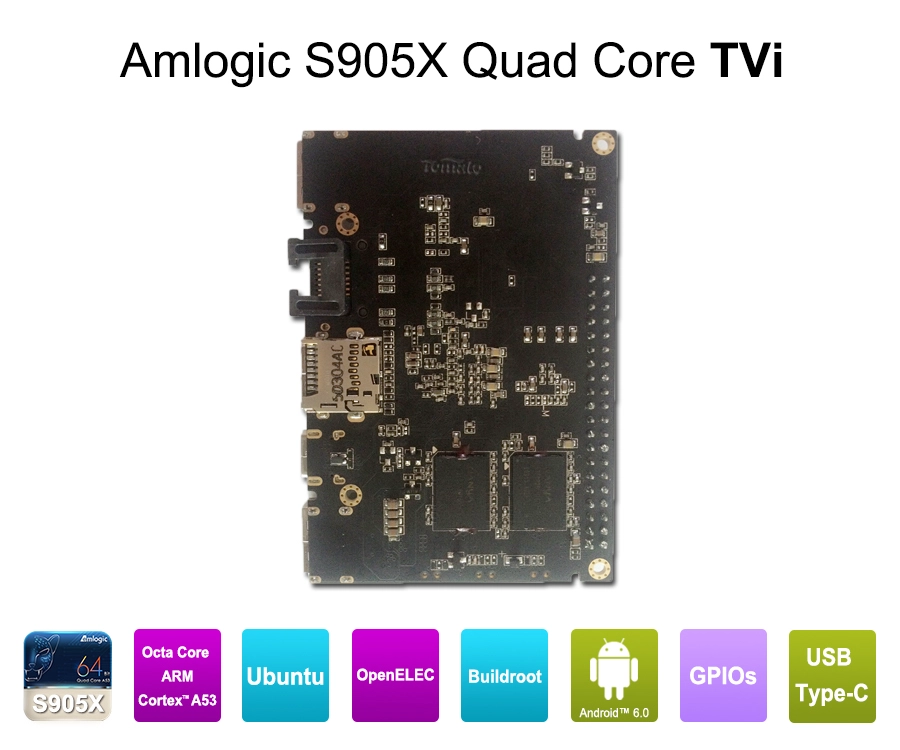
SoC Selection and Platform Compatibility
The System-on-Chip (SoC) determines CPU performance, GPU capabilities, video decoding, memory support, peripheral interfaces, and software compatibility.
Different projects require different processor platforms.
|
Chipset platform |
Typical application direction |
Key evaluation factors |
|---|---|---|
|
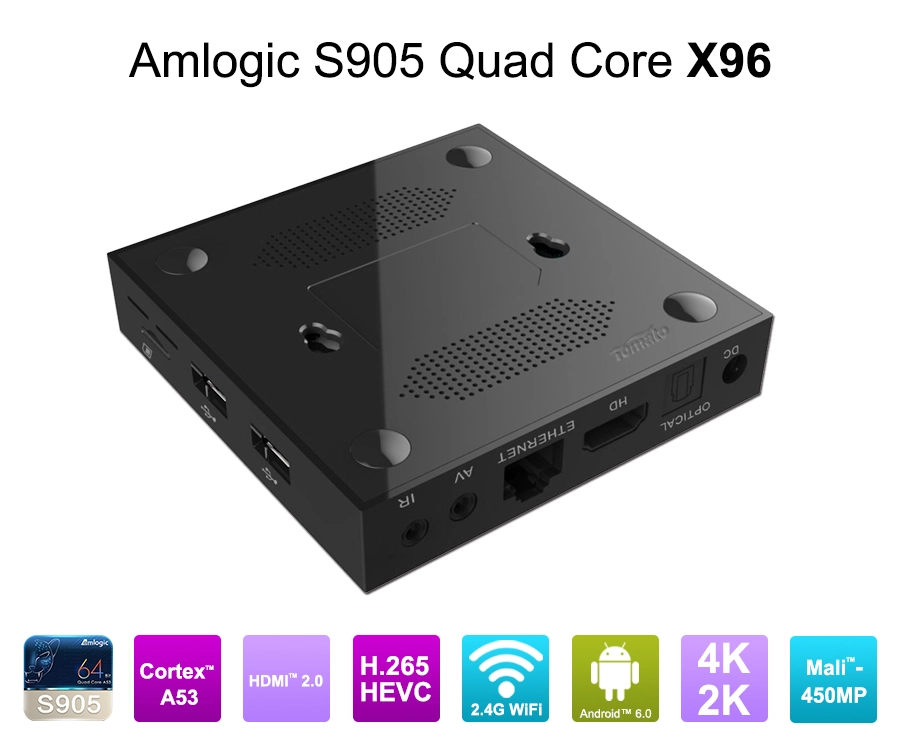
Amlogic S905 series |
Mainstream OTT and IPTV |
4K decoding, Android BSP, DRM compatibility |
|
Amlogic higher-performance platforms |
Advanced streaming applications |
CPU/GPU performance, multimedia support |
|
Rockchip RK3566 |
Embedded multimedia and commercial applications |
Interface flexibility, Linux/Android support |
|
Rockchip RK3588 |
High-performance multimedia and AI |
8K processing, NPU, memory bandwidth |
|
Allwinner H626 |
Cost-sensitive Android TV Box |
4K decoding, memory configuration, connectivity |
A professional manufacturer should explain the trade-offs between these platforms rather than simply recommending the most expensive chipset.
For example, an IPTV operator deploying thousands of devices may prioritize system stability, Ethernet connectivity, remote management, and long-term firmware maintenance over maximum CPU performance.
By contrast, a commercial multimedia project may require additional interfaces, higher memory capacity, or AI processing capabilities.
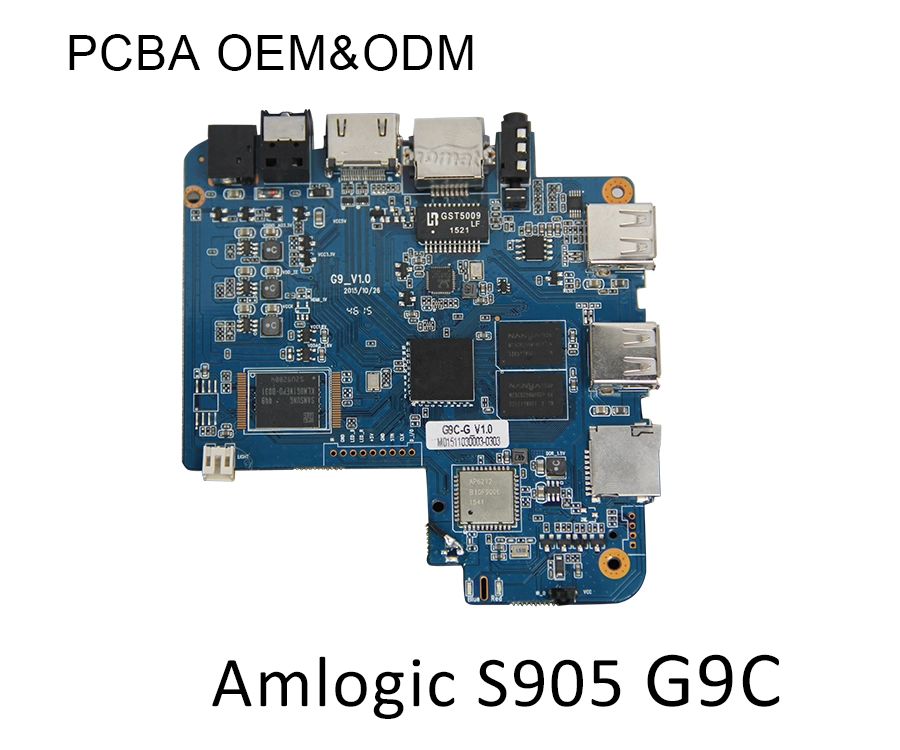
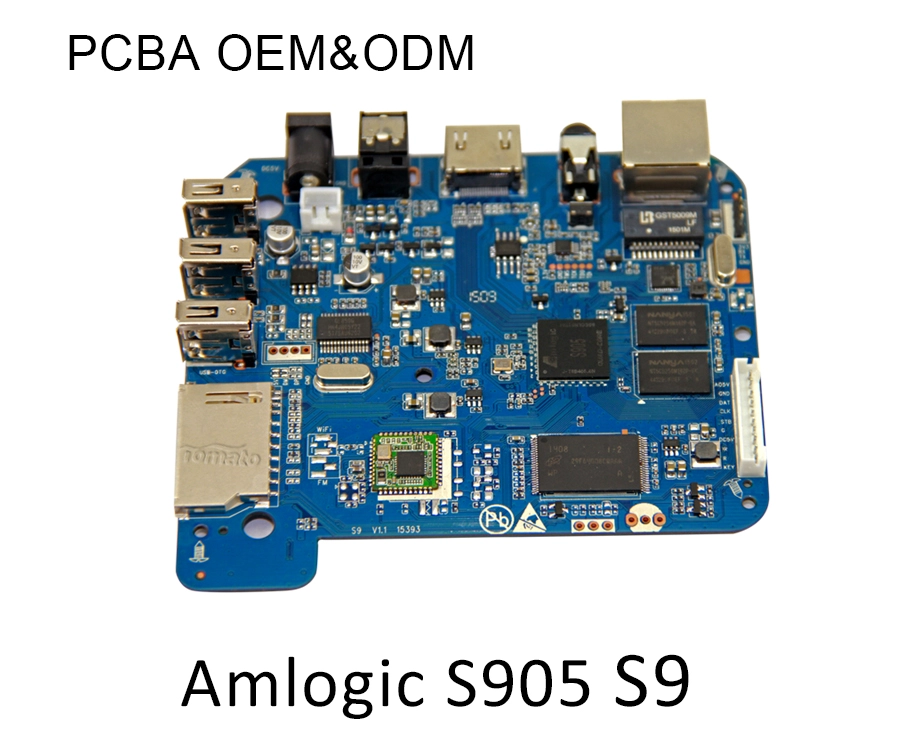
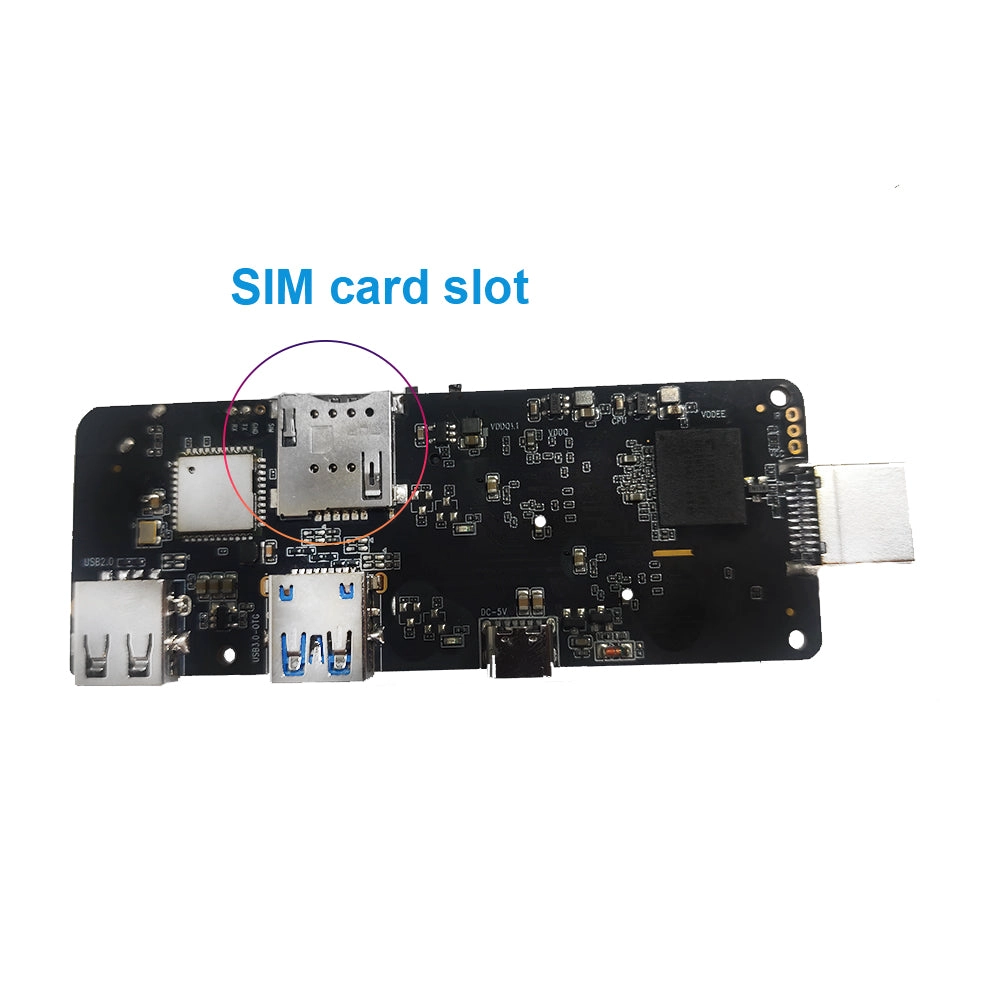
PCBA Design and Hardware Modification
Standard reference designs are useful for reducing development time. However, they can limit product differentiation when the project requires customized hardware.
A capable TV Box manufacturer should understand:
-
PCBA layout and multilayer PCB design.
-
Power management and voltage regulation.
-
DDR memory routing and signal integrity.
-
HDMI circuit design and HDCP compatibility.
-
USB, Ethernet, and wireless module integration.
-
Antenna placement and RF performance.
-
GPIO and additional industrial interfaces.
These capabilities become particularly important when developing products for telecom operators, IPTV service providers, and commercial system integrators.
SZTomato supports PCBA hardware modification and customized component configurations, helping customers move beyond standard reference-board solutions.
The objective is to develop hardware that matches the actual application instead of forcing the project into an unsuitable standard product.
2. Examine OEM/ODM Firmware Development and Software Integration
Hardware determines the processing foundation of a TV Box. Firmware determines how effectively that hardware performs in the target environment.
This is one of the most important differences between a basic assembly supplier and an engineering-oriented TV Box manufacturer.
Android and Linux System Development
A custom TV Box project may require Android, Linux, or a specialized embedded operating system.
A manufacturer's technical team should be familiar with:
-
Android BSP adaptation.
-
Linux kernel optimization.
-
Device driver integration.
-
Hardware abstraction layer (HAL) configuration.
-
GPU and video decoder compatibility.
-
Memory and CPU resource management.
-
Bootloader configuration.
-
System security and recovery mechanisms.
For example, an IPTV operator may need a customized Android environment with a dedicated launcher, preinstalled applications, restricted system settings, and remote-control configuration.
A commercial deployment may require a Linux-based platform with specific peripheral drivers and application interfaces.
The manufacturer should be able to explain which modifications are supported at the firmware level and which require additional development.
Custom UI/UX and SDK/API Integration
For branded TV Box products, the user interface is part of the product identity.
A standard Android launcher may be sufficient for general-purpose retail hardware, but it may not meet the requirements of telecom operators, IPTV providers, or enterprise customers.
Custom firmware development can include:
-
Branded boot animations and startup screens.
-
Customized launcher interfaces.
-
Application preinstallation and configuration.
-
Remote-control key mapping.
-
System settings customization.
-
Application permissions and device restrictions.
-
SDK/API integration with third-party platforms.
-
Backend communication and device management interfaces.
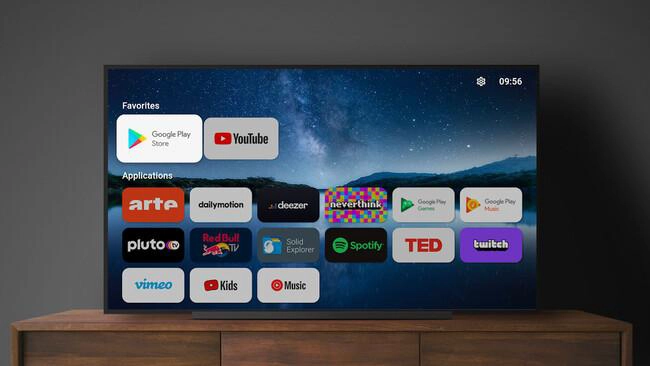
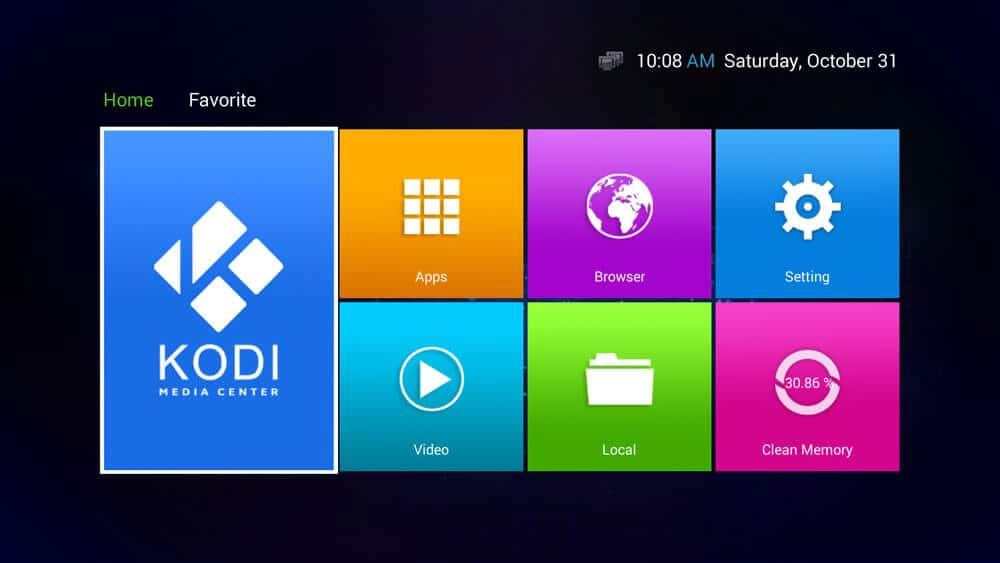
SZTomato supports customized UI/UX firmware and SDK/API integration for projects that require a branded software environment or connection with external application ecosystems.
This is particularly useful for customers who already operate an IPTV middleware platform, video-on-demand service, or proprietary content management system.
OTA Updates and Long-Term Firmware Maintenance
A TV Box deployed across multiple markets requires a sustainable firmware maintenance strategy.
Over-the-air (OTA) updates allow manufacturers or service operators to distribute firmware improvements without physically accessing every device.
Before selecting a supplier, ask whether its engineering team can support:
-
OTA package development and deployment.
-
Firmware version management.
-
Update verification and recovery.
-
Rollback mechanisms where supported.
-
Device configuration management.
-
Security patch integration.
-
Long-term compatibility maintenance.
OTA architecture should also account for update authentication, package integrity, network interruptions, and storage partition design.
For large-scale deployments, firmware maintenance is not an optional after-sales service. It is part of the product's engineering lifecycle.
3. Verify Manufacturing Quality, Thermal Design, and Production Control
A TV Box that passes a short functional test may still fail under continuous operation.
This is a common procurement risk when buyers focus exclusively on specifications and unit prices.
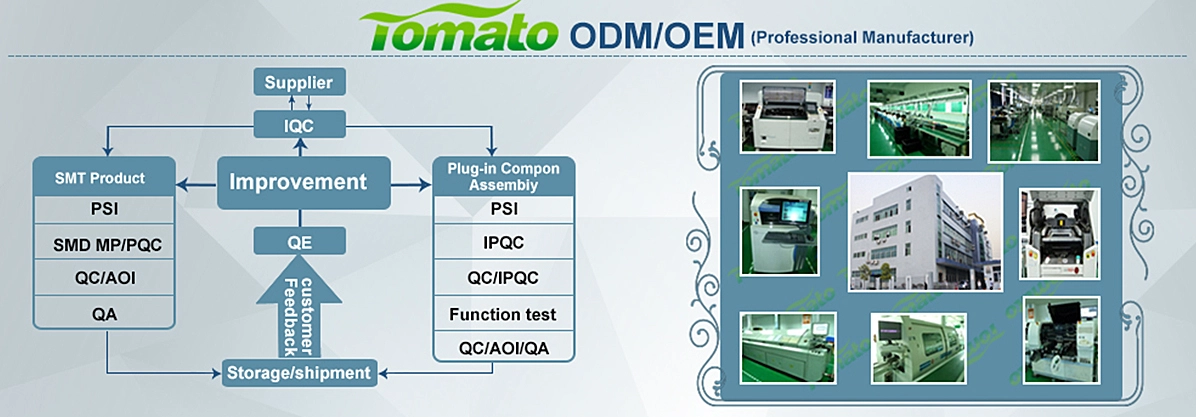
A qualified Chinese TV Box manufacturer should have a documented quality management process covering incoming components, PCBA assembly, firmware loading, functional testing, and final inspection.
Production Quality Control
Evaluate the manufacturer's quality control procedures at each production stage.
|
Production stage |
Important inspection points |
|---|---|
|
Incoming materials |
Chipset, memory, eMMC, connectors, and component verification |
|
PCBA assembly |
Soldering quality, component placement, and electrical inspection |
|
Firmware loading |
Correct firmware version and system configuration |
|
Functional testing |
HDMI, USB, Ethernet, Wi-Fi, Bluetooth, and audio |
|
Performance testing |
CPU load, video decoding, memory, and system stability |
|
Aging testing |
Continuous operation and thermal behavior |
|
Final inspection |
Appearance, accessories, packaging, and labeling |
A manufacturer should also maintain traceability for critical components and production batches.
For OEM customers, consistency between pilot samples and mass-production units is particularly important.
Changes to memory suppliers, wireless modules, PCB components, or firmware versions should be controlled through an engineering change process.
Thermal Management for Industrial and Commercial Applications
Thermal performance is a critical consideration for devices operating continuously or installed in enclosed environments.
A TV Box with insufficient heat dissipation may experience:
-
CPU thermal throttling.
-
Reduced multimedia performance.
-
Random system restarts.
-
Wireless instability under high temperatures.
-
Premature component degradation.
A professional manufacturer should evaluate the SoC's thermal characteristics, enclosure design, PCB heat distribution, and actual operating environment.
SZTomato supports specialized cooling solutions for industrial applications, including customized heatsink configurations, thermal structure optimization, and hardware adjustments.
For applications such as digital signage, commercial displays, and continuous IPTV operation, thermal validation should be conducted under realistic operating conditions rather than relying only on short laboratory tests.
Certifications and Content Protection
For international B2B projects, compliance requirements must be established before mass production.
Depending on the destination market and product configuration, relevant requirements may include:
-
CE and FCC.
-
RoHS.
-
Applicable electrical safety requirements.
-
Wireless radio compliance.
-
HDMI compatibility.
-
HDCP content protection.
-
Widevine DRM or other platform-specific DRM requirements.
An important distinction: a manufacturer supplying Android-based hardware does not automatically provide Google-certified Android TV products or licensed streaming services.
Buyers should verify certification scope, licensing responsibilities, and supported software features independently.
4. Compare Chinese TV Box Manufacturers Using a Practical OEM/ODM Framework
China has a large ecosystem of electronics manufacturers, trading companies, PCBA suppliers, and specialized TV Box factories.
The challenge is distinguishing manufacturers with genuine development capabilities from suppliers that primarily resell standard products.
A low quotation does not necessarily represent a lower total project cost.
If a supplier cannot modify firmware, resolve hardware compatibility problems, or maintain production consistency, the buyer may incur additional engineering expenses after the order.
Manufacturer vs. Trading Company: What Is the Difference?
|
Evaluation factor |
Trading company |
Engineering-oriented manufacturer |
|---|---|---|
|
Product sourcing |
Usually external factories |
Direct manufacturing coordination |
|
PCBA customization |
Often limited |
Can support hardware engineering |
|
Firmware development |
Frequently outsourced |
May have dedicated engineering resources |
|
SDK/API integration |
Depends on partners |
Can provide direct technical support |
|
Thermal engineering |
Usually limited |
Can support customized cooling |
|
Production control |
Depends on supplier |
More direct process oversight |
|
Technical communication |
Commercial-focused |
Commercial and engineering collaboration |
Not every trading company is unsuitable, and not every factory has strong R&D capabilities.
The important issue is whether the supplier can demonstrate responsibility and technical competence throughout the product development process.
Questions to Ask Before Placing an OEM Order
Before selecting a manufacturer, procurement managers should request clear answers to the following questions:
Hardware
-
Can you modify the original PCBA design?
-
Can you support alternative SoCs and memory configurations?
-
Can you add customized interfaces?
-
Can you optimize the enclosure and thermal structure?
Software
-
Can you customize Android or Linux firmware?
-
Can you develop a branded launcher?
-
Can you integrate our SDK and APIs?
-
Can you support OTA firmware updates?
Manufacturing
-
What quality control procedures are used?
-
Can you provide pilot samples before mass production?
-
How do you manage component substitutions?
-
Can you maintain consistent firmware and hardware configurations?
Technical support
-
Is engineering support available after delivery?
-
Can you investigate hardware and firmware failures?
-
How are software updates and product revisions managed?
-
Can you support long-term OEM/ODM cooperation?
A supplier that answers these questions with specific engineering processes and verifiable project experience is generally a stronger candidate than one that only provides a product catalog.
Why Choose SZTomato as Your Custom TV Box Manufacturer in China?
Established in 2011, SZTomato (Shenzhen Tomato Technology Co., Ltd.) specializes in the development and manufacturing of Android TV Box, Smart TV Box, IPTV Set-Top Box, Streaming Media Player, Digital Signage, and AI multimedia hardware.
The company's business model focuses on OEM/ODM customization and engineering integration rather than generic retail distribution.
Its technical capabilities cover several key areas:
-
PCBA Hardware Modification: Customized circuit configurations, component selection, interface adjustments, and hardware adaptation.
-
Firmware Engineering: Android/Linux system adaptation, kernel optimization, firmware configuration, and system-level customization.
-
Custom UI/UX Development: Branded launcher interfaces, boot animations, application configurations, and customized user experiences.
-
SDK/API Integration: Integration with IPTV middleware, third-party applications, enterprise platforms, and customer-specific software systems.
-
Specialized Thermal Solutions: Customized cooling structures and thermal optimization for industrial and continuous-operation applications.
-
OEM/ODM Manufacturing: Product configuration, enclosure customization, branding, production coordination, and quality management.
For customers developing products for telecom operators, IPTV platforms, distributors, wholesalers, and system integration projects, this integrated approach provides a more practical development pathway.
The objective is to deliver a TV Box platform that matches the customer's hardware specifications, software architecture, deployment environment, and commercial requirements.
Conclusion: Choose a TV Box Manufacturer That Can Engineer Your Product
The best custom TV Box manufacturer in China is not necessarily the supplier with the largest catalog or the lowest quotation.
It is the manufacturer that can translate your technical requirements into a reliable, production-ready product.
For B2B buyers, five capabilities deserve priority:
-
Appropriate SoC selection and hardware engineering.
-
PCBA modification and interface customization.
-
Android/Linux firmware development and SDK/API integration.
-
Reliable thermal design and manufacturing quality control.
-
Long-term firmware maintenance and technical support.
These capabilities determine whether an OEM/ODM project can move successfully from prototype development to stable mass production.
Develop Your Custom TV Box with SZTomato
SZTomato provides integrated OEM/ODM solutions for international brands, IPTV operators, distributors, wholesalers, and system integrators.
Whether your project requires a customized Android TV Box, Linux-based TV Box, IPTV Set-Top Box, or specialized streaming hardware, SZTomato can support the development process from chipset selection and PCBA modification to firmware customization and production.
Contact SZTomato at www.sztomato.com to discuss your project requirements and develop a custom TV Box solution for your target market.
