
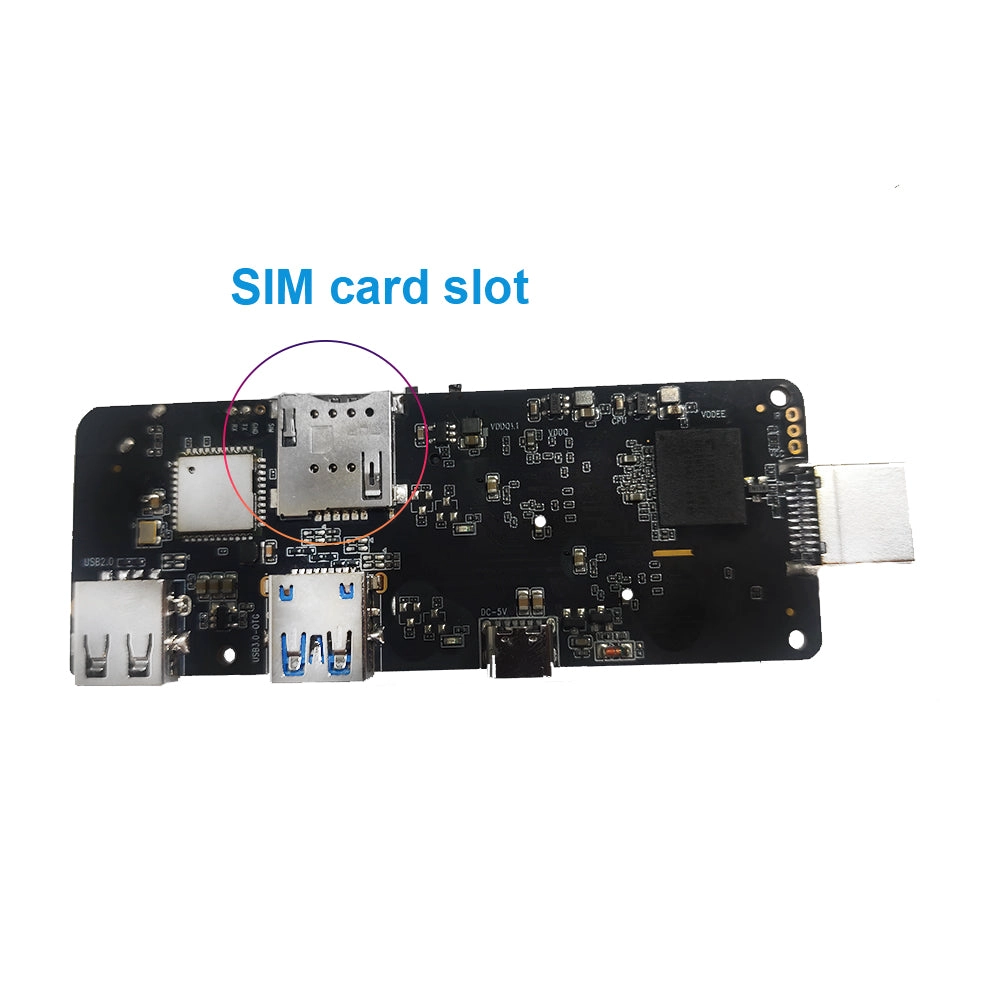
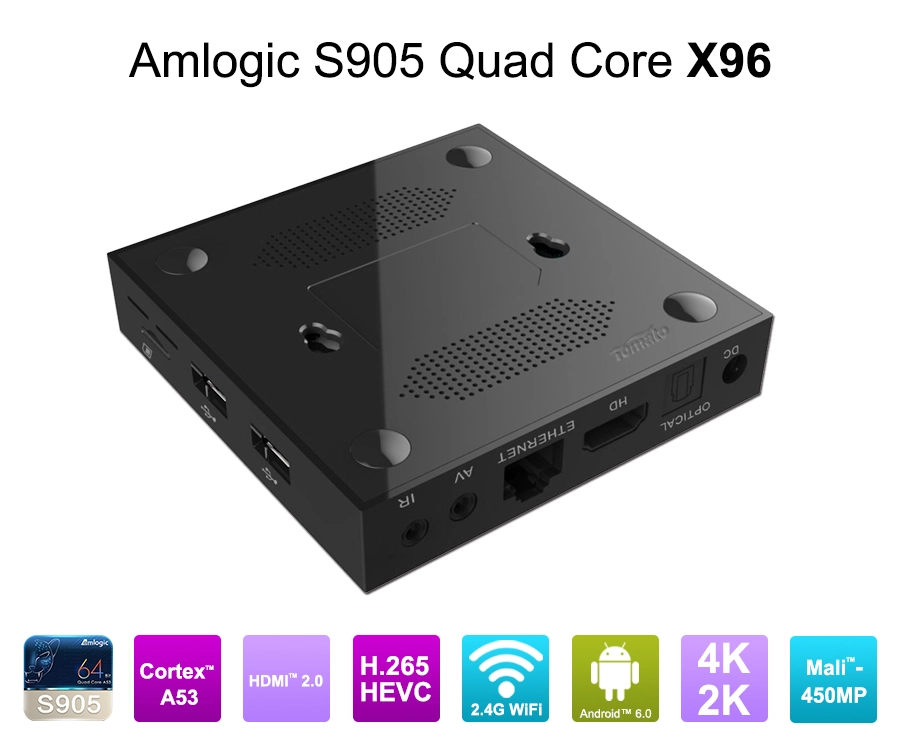
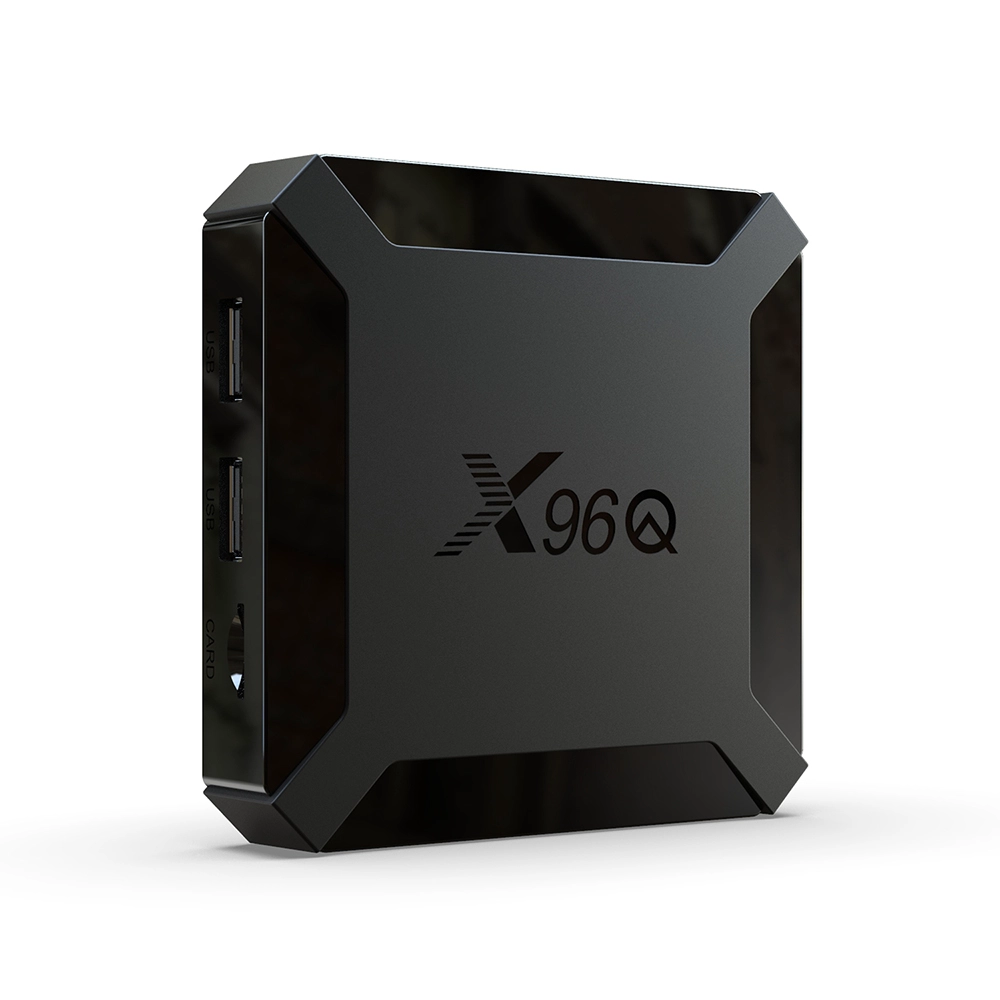
Linux & Android Dual-OS Smart TV Box Development Board technical specifications
1. Why Dual-OS Architecture Matters in Smart TV Box Development
The traditional Smart TV Box architecture is built around a single operating system, usually Android or Linux. This approach works for many consumer streaming applications, but it can become restrictive when manufacturers develop products for IPTV operators, telecommunications providers, digital signage integrators, and industrial multimedia applications.
A dual-OS development board provides an alternative by supporting both Android and Linux on a shared hardware platform.
The two systems serve different application requirements:
| Application requirement | Android environment | Linux environment |
|---|---|---|
| Multimedia streaming | Strong application ecosystem | Lightweight media applications |
| IPTV applications | Android-based IPTV apps | Customized IPTV middleware |
| Digital signage | Android signage applications | Embedded signage platforms |
| Remote device management | Android management frameworks | Linux-based management services |
| Hardware-level control | Android HAL and system services | Direct driver and system-level access |
| Custom application development | Java, Kotlin, NDK | C, C++, Python and other supported languages |
| Industrial integration | Android application interfaces | Embedded Linux and custom services |
For example, a telecommunications operator may require Android for its customer-facing IPTV interface while using Linux for a specialized network management or hardware control environment.
A commercial display manufacturer may prefer Android for application compatibility but require Linux for a lightweight embedded control application.
The key advantage is hardware platform flexibility. Instead of developing two completely separate products, an OEM manufacturer can potentially reuse the same processor platform, memory architecture, connectivity interfaces, and PCBA design.
However, dual-OS support does not automatically mean that Android and Linux operate simultaneously. The actual implementation depends on the boot architecture.
Dual Boot vs. Simultaneous Operating System Operation
There are two fundamentally different approaches.
Dual-boot architecture
The development board stores both operating systems in separate firmware partitions. A bootloader selects the operating system during startup.
Typical components include:
-
Boot ROM and secondary bootloader
-
U-Boot or a SoC-specific bootloader
-
Android boot and system partitions
-
Linux kernel and root filesystem
-
Device tree configurations
-
Recovery and firmware update partitions
This architecture is generally more straightforward for Smart TV Box products that require different operating environments for different deployment scenarios.
Simultaneous or virtualized architecture
Both operating environments operate concurrently through virtualization, containerization, or a specialized hypervisor architecture.
This approach introduces additional requirements:
-
Memory isolation and resource allocation
-
CPU scheduling
-
Hardware virtualization support
-
GPU and multimedia resource sharing
-
Peripheral access management
-
Inter-process communication
Not every TV Box SoC supports the required virtualization capabilities. GPU acceleration, video decoding, and hardware access may also require substantial additional engineering.
For most commercial Smart TV Box OEM projects, dual boot is the more practical starting point unless the application explicitly requires simultaneous operation.
2. Smart TV Box Development Board: Hardware Technical Specifications
A reliable Linux and Android dual-OS platform starts with the hardware architecture. The processor, memory, storage, connectivity, and power design must support both software environments.
The following specification framework represents the major engineering parameters that buyers should evaluate when selecting a dual-OS Smart TV Box development board. Actual specifications depend on the selected SoC and PCBA configuration.
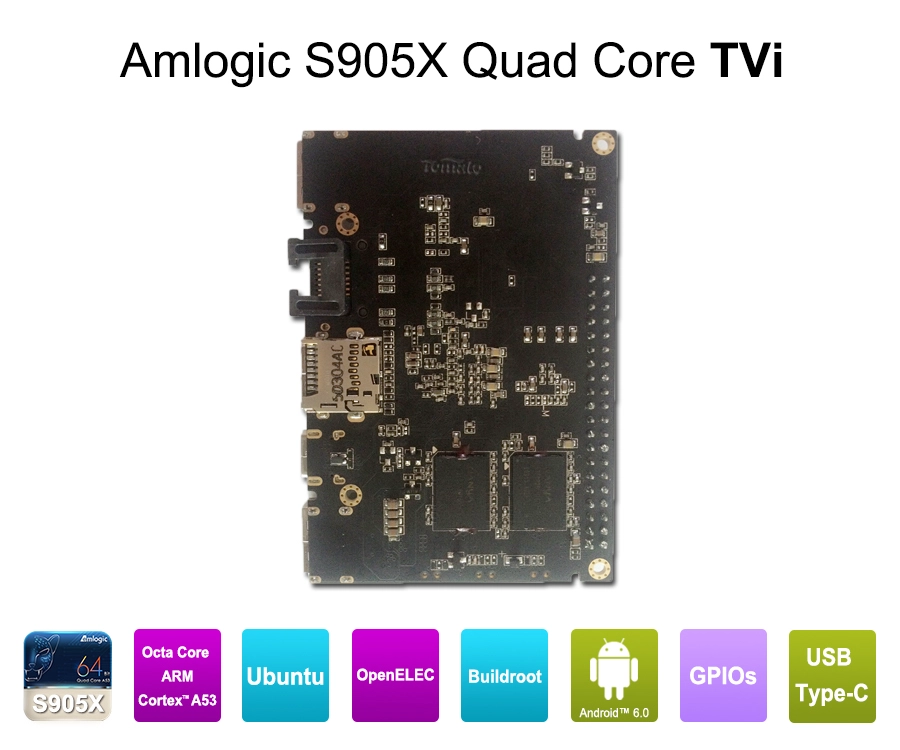
2.1 Processor and SoC Architecture
The SoC determines overall system performance, multimedia capabilities, peripheral compatibility, and software support.
For Smart TV Box applications, the processor should be evaluated against several parameters:
-
CPU architecture and core configuration
-
GPU performance and graphics API support
-
Hardware video decoding and encoding
-
Memory bandwidth
-
NPU availability for AI applications
-
Linux and Android BSP availability
-
Long-term kernel and driver maintenance
A quad-core or octa-core ARM processor may be sufficient for conventional IPTV applications. More demanding applications, including 4K multimedia processing, advanced UI rendering, AI-assisted digital signage, and edge computing, require a more capable processor.
The following SoC families represent potential hardware platforms for different development requirements:
| SoC platform | Architecture | Potential application |
|---|---|---|
| Amlogic S905X series | ARM Cortex-A55-based platforms, depending on generation | 4K Smart TV Box and IPTV |
| Allwinner H616/H618/H626 | ARM Cortex-A53/A55, depending on model | Entry-level multimedia terminals |
| Rockchip RK3566 | Quad-core Cortex-A55 | Embedded multimedia and industrial applications |
| Rockchip RK3588 | 4×Cortex-A76 + 4×Cortex-A55 | Advanced multimedia and AI edge computing |
These platforms should not be treated as interchangeable. Their Linux BSP maturity, Android version support, multimedia drivers, and peripheral compatibility must be checked individually.
For example, a project requiring 4K@60Hz playback should verify the SoC's actual hardware decoding capabilities, supported video formats, HDMI output configuration, and software decoder integration.
SZTomato can support OEM/ODM hardware evaluation and PCBA customization to align processor selection with the intended application, rather than simply choosing a chipset based on its CPU specifications.
2.2 Memory and Storage Configuration
Memory allocation is particularly important in a dual-OS Smart TV Box because Android and Linux have different resource requirements.
Android typically requires more memory for its application framework, background services, system UI, and multimedia applications.
Linux can operate with a smaller footprint when configured as a dedicated embedded system, although memory requirements increase with graphical interfaces, middleware, and multimedia services.
Typical development configurations include:
| Hardware component | Configuration options | Engineering consideration |
|---|---|---|
| RAM | 2GB / 4GB / 8GB | Depends on Android applications and Linux workload |
| eMMC | 8GB / 16GB / 32GB / 64GB | Must accommodate both firmware environments |
| SPI NOR Flash | Optional | Bootloader and recovery storage |
| TF / MicroSD | Optional | Development, testing and recovery |
| NAND Flash | Platform-dependent | Requires compatible controller and software support |
For a commercial dual-OS Smart TV Box, 4GB RAM and 32GB eMMC can be a reasonable starting point for evaluation, but they are not universal minimum requirements.
Storage partitioning needs particular attention.
A typical dual-OS storage layout may include:
-
Bootloader partition
-
Boot configuration partition
-
Android boot partition
-
Android system and vendor partitions
-
Linux kernel partition
-
Linux root filesystem
-
Shared data partition
-
Recovery and OTA update partitions
The final partition design must account for the SoC bootloader, filesystem requirements, firmware size, and future update strategy.
A poorly designed partition layout can create problems during firmware upgrades, especially when an OTA package attempts to replace system images while preserving user data.
2.3 Connectivity and Multimedia Interfaces
A Smart TV Box development board intended for commercial deployment should provide the interfaces required by its target application.
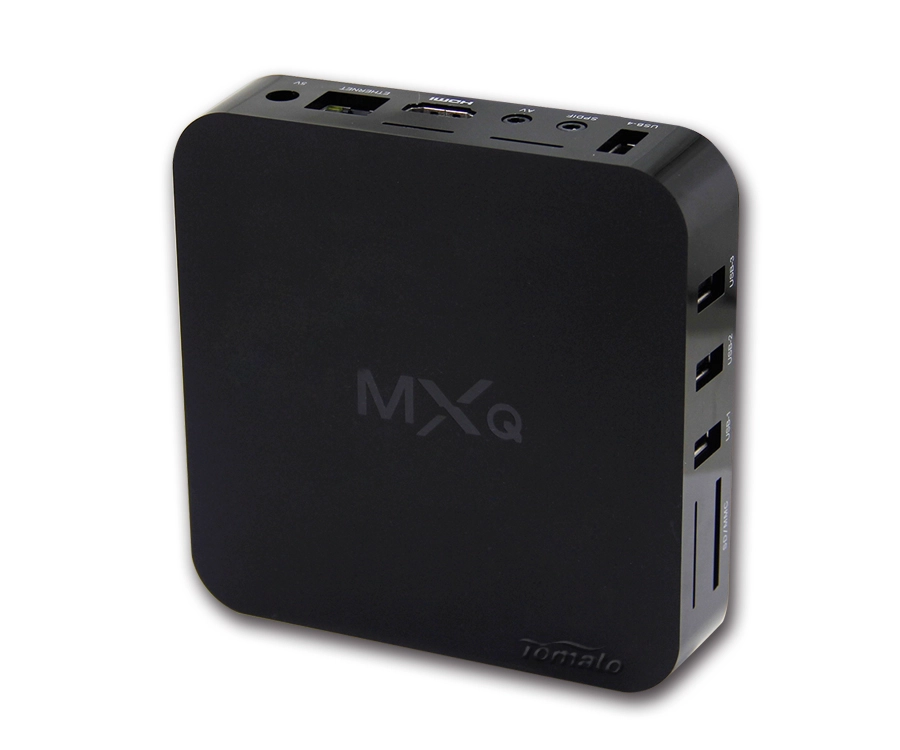
Common hardware interfaces include:
| Interface | Function |
|---|---|
| HDMI 2.0 / 2.1 | Digital video and audio output, depending on SoC support |
| USB 2.0 / USB 3.0 | Peripheral connectivity and external storage |
| Gigabit Ethernet | Stable wired network connectivity |
| Wi-Fi 5 / Wi-Fi 6 | Wireless network access |
| Bluetooth | Remote control and peripheral communication |
| MIPI DSI | Embedded display integration |
| MIPI CSI | Camera and image sensor connection |
| UART | Debugging and serial communication |
| I2C / SPI | Peripheral and sensor communication |
| GPIO | Hardware control and industrial integration |
| IR | Infrared remote control |
Not every development board supports every interface. Availability depends on SoC pin multiplexing, PCB routing, component selection, and firmware drivers.
For multimedia products, HDMI implementation deserves special attention.
The engineering team should verify:
-
HDMI output resolution and refresh rate
-
EDID handling
-
HDCP version and licensing requirements
-
Audio passthrough compatibility
-
CEC functionality where required
-
Hot-plug detection
-
Display compatibility across different television models
HDCP is especially important for commercial streaming applications. Supporting an HDMI connector does not automatically establish compliance with protected-content playback requirements. The required HDCP implementation, licensing, and certification must be addressed separately.
3. Linux and Android Software Architecture: Kernel, Bootloader and Firmware
Hardware compatibility is only one part of dual-OS Smart TV Box development. The more difficult engineering work often occurs in the software integration layer.
Android and Linux may share the same processor and peripheral hardware, but they do not necessarily share the same kernel configuration, device drivers, system services, or multimedia frameworks.
3.1 Bootloader and Kernel Configuration
The bootloader determines how the development board initializes its hardware and loads the selected operating system.
A typical boot sequence is:
-
SoC Boot ROM initializes the initial boot process.
-
Secondary bootloader loads and configures platform components.
-
Bootloader identifies the selected operating system.
-
The corresponding kernel image is loaded.
-
Device tree information is passed to the kernel.
-
The operating system initializes drivers and system services.
U-Boot is commonly used in embedded Linux and various ARM development environments. Android boot flows may additionally involve SoC-specific boot components and Android boot image formats.
The exact implementation depends on the chipset vendor.
One important consideration is device tree compatibility.
The device tree describes the hardware configuration to the Linux kernel, including:
-
CPU and memory regions
-
GPIO assignments
-
Ethernet controllers
-
Wi-Fi and Bluetooth interfaces
-
USB controllers
-
HDMI and display interfaces
-
Audio codecs
-
Power management ICs
-
I2C and SPI peripherals
A hardware modification without corresponding device tree and driver updates can cause unexpected failures.
For example, changing the Wi-Fi module may require modifications to the device tree, kernel configuration, firmware loading process, and wireless driver integration.
SZTomato's PCBA hardware modification capabilities can be combined with firmware engineering to maintain consistency between the physical board design and its software configuration.
3.2 Linux Kernel and Android System Optimization
Although Android is built on the Linux kernel, an Android firmware image and a conventional embedded Linux distribution are not equivalent software environments.
Android includes additional system components such as:
-
Android Runtime (ART)
-
Android Framework
-
Hardware Abstraction Layer (HAL)
-
Android system services
-
Application management
-
Permission and security mechanisms
Embedded Linux distributions generally provide a more configurable software stack.
Depending on the application, developers may use Buildroot, Yocto Project, Debian, Ubuntu, or another compatible Linux distribution.
For dual-OS Smart TV Box development, engineering teams should address the following areas:
Kernel compatibility
The selected kernel version must be compatible with the SoC BSP, GPU driver, multimedia codec driver, and peripheral devices.
GPU acceleration
Android graphics generally use the platform's supported graphics stack, while Linux graphical environments may require EGL, OpenGL ES, DRM/KMS, or other compatible interfaces.
The availability of hardware acceleration must be verified for both operating systems.
Multimedia framework integration
Android commonly uses MediaCodec and platform multimedia services.
Linux applications may use GStreamer, FFmpeg, V4L2, or vendor-specific multimedia frameworks.
Hardware video decoding should be tested independently under each operating system.
Power management
CPU frequency scaling, suspend/resume, thermal protection, and power consumption require coordinated configuration.
A device that performs well during laboratory testing may become unstable during continuous commercial operation if thermal and power management are not properly optimized.
3.3 Firmware Customization and OTA Update Management
Firmware maintenance is a major consideration for Smart TV Box manufacturers serving IPTV operators, telecom providers, and enterprise customers.
A dual-OS platform requires an update strategy that protects both operating environments.
A practical OTA architecture should consider:
-
Independent Android and Linux firmware packages
-
Firmware version identification
-
Package integrity verification
-
Digital signature validation
-
Recovery procedures
-
Update failure handling
-
Rollback mechanisms
-
Remote deployment and monitoring
For Android-based products, the update mechanism may use A/B system updates where supported by the platform.
For Linux, the manufacturer may implement an image-based update mechanism with an inactive system partition, bootloader-controlled rollback, or another suitable recovery design.
The important point is that an OTA solution must be designed around the actual bootloader and partition architecture. Simply adding an update application does not create a reliable firmware maintenance system.
SZTomato supports customized firmware development, including system configuration, custom UI/UX firmware, startup behavior, application integration, and firmware-level adaptation.
For projects involving third-party IPTV platforms or enterprise management systems, SDK/API integration can connect the Smart TV Box to existing application and device management infrastructures.
4. OEM/ODM Customization: From Development Board to Commercial Smart TV Box
A development board is a starting point, not a finished commercial product.
Before mass production, manufacturers must convert the reference design into a stable hardware and software platform that satisfies the customer's application, environmental, and deployment requirements.
This is where OEM/ODM engineering becomes important.
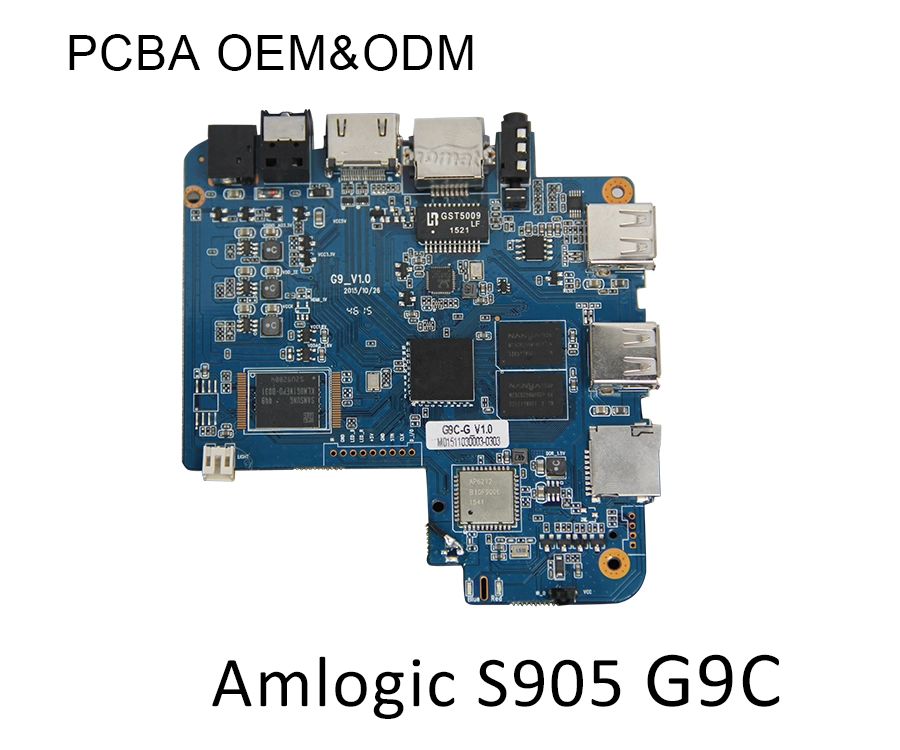
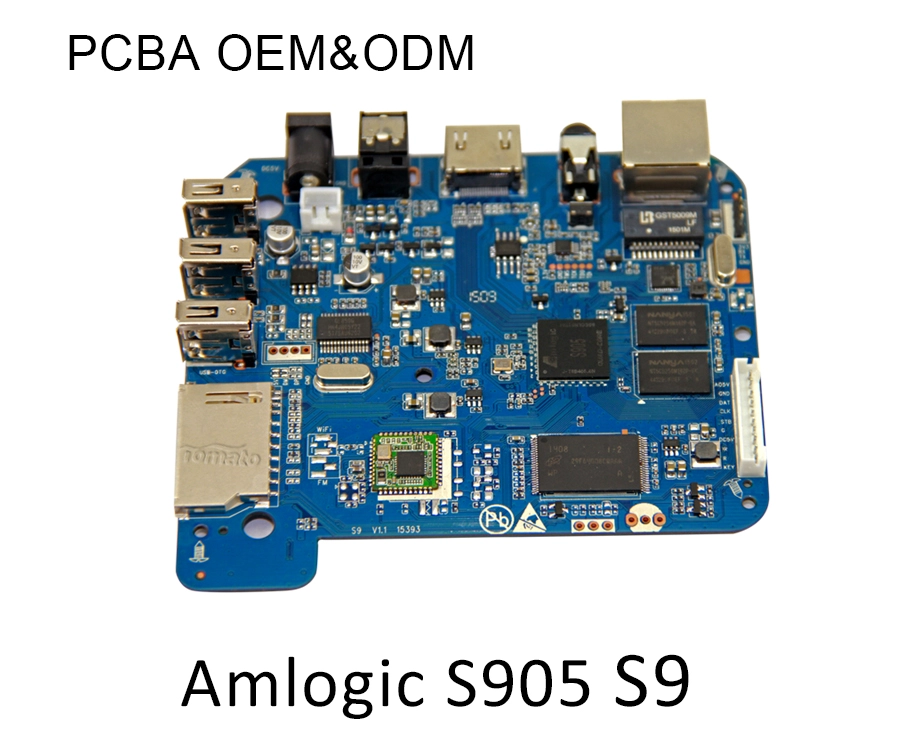
4.1 PCBA Customization and Hardware Adaptation
A standard reference board may not satisfy the requirements of a specific IPTV operator or industrial multimedia project.
Common customization requirements include:
-
Changing RAM or eMMC configurations
-
Adding or removing USB interfaces
-
Modifying Ethernet specifications
-
Integrating a customized Wi-Fi or Bluetooth module
-
Adding UART, GPIO, I2C, or SPI interfaces
-
Customizing HDMI output circuitry
-
Adding industrial communication interfaces
-
Modifying PCB dimensions and connector positions
-
Optimizing power supply and protection circuits
PCBA modifications must be evaluated together with the SoC pin assignments, power consumption, signal integrity, thermal characteristics, and firmware support.
For example, adding an additional USB interface is not simply a matter of installing a connector. The design must verify controller availability, PCB routing, power delivery, ESD protection, and operating system driver support.
SZTomato provides PCBA-level hardware modification and OEM/ODM engineering to support these project-specific requirements.
4.2 Thermal Design for Continuous Commercial Operation
A Smart TV Box used in an industrial or commercial environment may operate for extended periods without interruption.
Continuous video decoding, network communication, application processing, and AI workloads can increase SoC temperature.
Thermal design should consider:
-
SoC power consumption
-
PCB copper distribution
-
Heat spreader configuration
-
Thermal pad conductivity
-
Enclosure material
-
Internal airflow
-
Ambient operating temperature
-
Sustained CPU and GPU workloads
A cooling solution designed for occasional home entertainment use may not be sufficient for an enclosed digital signage player or an industrial multimedia terminal.
SZTomato supports specialized cooling solutions for industrial use, including customized thermal structures and enclosure-level adaptations.
Thermal validation should include sustained workload testing rather than relying exclusively on short benchmark runs.
4.3 UI/UX, SDK and Application Integration
Different customers often require different software experiences, even when the underlying hardware platform is identical.
An IPTV operator may need a branded launcher, customized remote-control functions, and integration with its subscriber management platform.
A digital signage integrator may require scheduled playback, remote content deployment, screen monitoring, and device health reporting.
An industrial customer may need a lightweight interface with direct access to selected hardware functions.
These requirements can be addressed through:
Custom UI/UX firmware
-
Branded boot animation and startup screen
-
Customized launcher
-
Application preinstallation
-
Restricted user access
-
Custom remote-control mapping
-
Language and regional configuration
SDK/API integration
-
IPTV middleware integration
-
Cloud device management
-
Remote configuration
-
Application communication interfaces
-
Hardware control APIs
-
Third-party service integration
Linux application customization
-
Embedded service development
-
Custom background processes
-
Network management
-
Peripheral communication
-
Automated startup and recovery
The purpose of OEM/ODM customization is not simply to change the product's appearance. It is to create a hardware and software platform that fits the customer's actual deployment environment.
4.4 Development and Production Validation
Before mass production, a dual-OS Smart TV Box should pass a structured validation process.
| Testing category | Recommended validation |
|---|---|
| Boot testing | Android and Linux startup reliability |
| OS switching | Boot selection and restart behavior |
| Multimedia | 4K decoding, audio output and HDMI compatibility |
| Network | Ethernet, Wi-Fi and Bluetooth stability |
| Peripheral | USB, UART, GPIO and other required interfaces |
| Thermal | Continuous workload and temperature testing |
| OTA | Firmware update, recovery and rollback |
| Security | Secure boot, firmware integrity and access control |
| Reliability | Long-duration operation and repeated reboot testing |
For commercial products, testing should use the actual firmware build, final PCBA revision, production enclosure, and intended peripheral configuration.
A successful development-board demonstration does not guarantee production readiness. Hardware revisions, component substitutions, firmware changes, and manufacturing tolerances can all affect final performance.
Conclusion: Develop a Dual-OS Smart TV Box Around Your Actual Application Requirements
Linux and Android dual-OS architecture offers Smart TV Box manufacturers a flexible foundation for IPTV systems, commercial multimedia devices, digital signage players, and specialized embedded applications.
However, successful implementation requires coordinated engineering across SoC selection, PCBA design, bootloader configuration, kernel optimization, memory allocation, multimedia drivers, and firmware maintenance.
For B2B buyers, the most important evaluation is not whether a supplier can provide a board that boots both operating systems. It is whether the supplier can deliver a complete and maintainable hardware-software solution for the intended deployment.
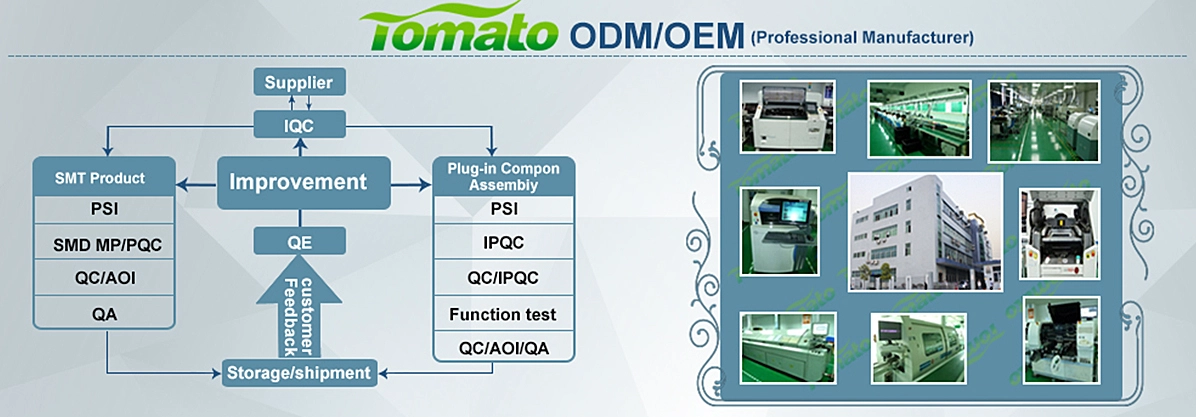
SZTomato, established in 2011, focuses on Smart TV Box and embedded multimedia hardware manufacturing, with OEM/ODM capabilities covering:
-
PCBA hardware modification and platform adaptation
-
Linux and Android firmware customization
-
SDK/API integration
-
Custom UI/UX development
-
Specialized industrial cooling solutions
-
Hardware and software compatibility testing
-
Production engineering and long-term technical support
Whether you are developing an IPTV terminal, a commercial streaming device, or a customized industrial multimedia platform, SZTomato can help evaluate the hardware architecture and develop a solution aligned with your project requirements.
Contact SZTomato to discuss your Linux & Android dual-OS Smart TV Box development project. Share your preferred SoC, memory configuration, operating system requirements, peripheral interfaces, and application specifications with our engineering team to start evaluating an OEM/ODM solution.
