
OEM/ODM Smart TV Box Manufacturing: From Hardware Engineering to Production
1. Smart TV Box OEM/ODM Manufacturing Starts with Hardware Architecture
The adoption of AV1 decoding, higher-resolution video output, and increasingly complex Android applications has changed the requirements for Smart TV Box manufacturing.
A reference motherboard that works for a basic 4K streaming device may not be suitable for a telecom operator's IPTV terminal, a hospitality entertainment system, or a commercial multimedia player running continuously throughout the day.
The difference begins with hardware architecture.
For an OEM project, the manufacturer must understand the intended application before selecting the SoC, memory, interfaces, and PCB configuration.
1.1 SoC selection: Match processing capability to the application
The System-on-Chip is the foundation of a Smart TV Box. It determines the available CPU architecture, GPU performance, video decoding engine, peripheral interfaces, and software platform compatibility.
Different OEM applications require different chipset priorities.
|
SoC platform |
Main characteristics |
Suitable OEM applications |
|---|---|---|
|
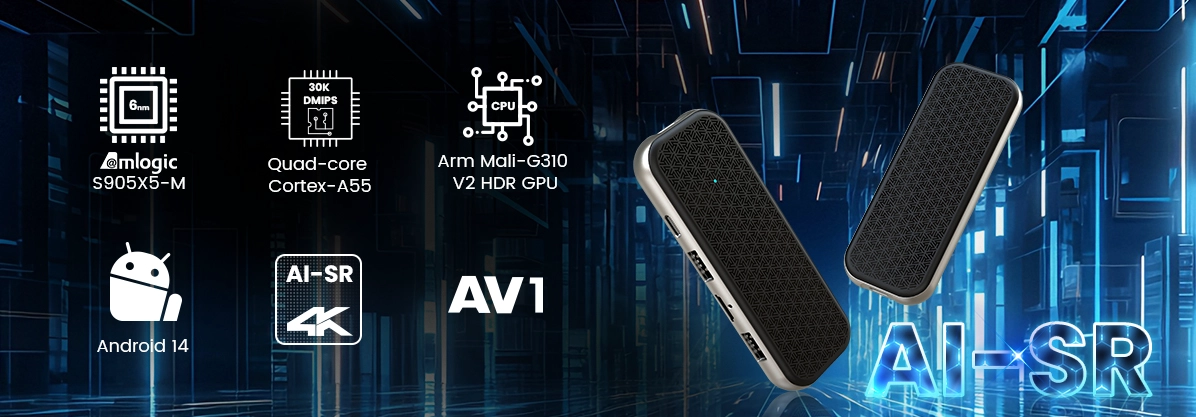
Amlogic S905X5M |
Cortex-A55, 4K multimedia, AV1 decoding |
Mainstream IPTV and OTT |
|
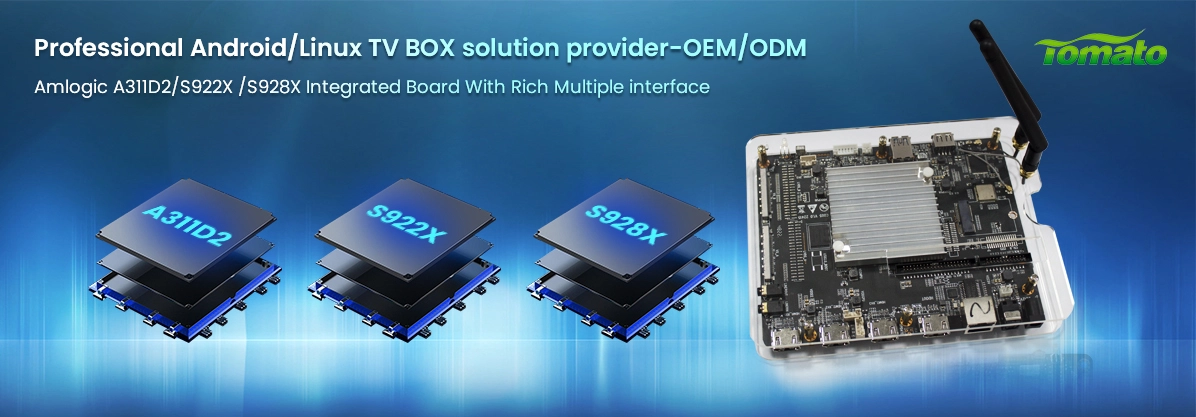
Amlogic S928X |
A76/A55 architecture, advanced 8K decoding |
Premium 8K streaming |
|
Rockchip RK3588 |
Octa-core CPU, Mali-G610, 6 TOPS NPU |
AI multimedia and edge computing |
|
Allwinner H618 |
Quad-core Cortex-A53, cost-oriented design |
Entry-level OTT and IPTV |
The selection process should evaluate more than advertised CPU speed.
Key considerations include:
-
Hardware decoding for H.264, H.265, VP9, and AV1.
-
Supported resolution and frame-rate combinations.
-
GPU architecture and graphics APIs.
-
RAM bandwidth and eMMC performance.
-
HDMI output and HDR support.
-
Ethernet, Wi-Fi, Bluetooth, and USB connectivity.
-
Android/Linux BSP maturity.
-
Long-term chip availability and software maintenance.
For example, a 4K IPTV project may prioritize stable hardware decoding, Gigabit Ethernet, middleware compatibility, and reliable OTA updates. An AI-enabled commercial device may need a more powerful CPU, GPU, NPU, and additional high-speed interfaces.
The objective is to avoid paying for processing resources that the application will never use while maintaining sufficient headroom for future software requirements.
1.2 PCBA design and hardware engineering
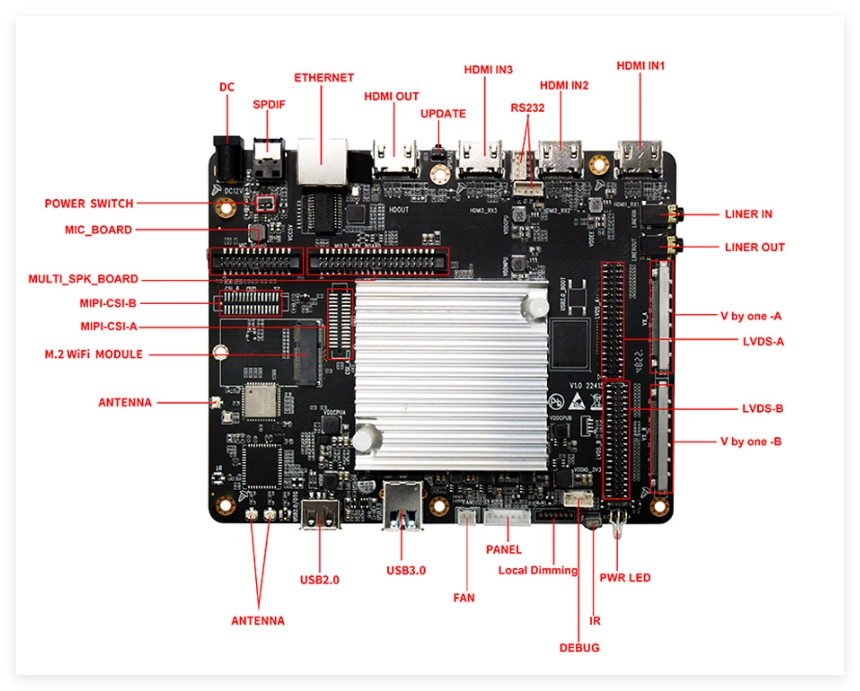
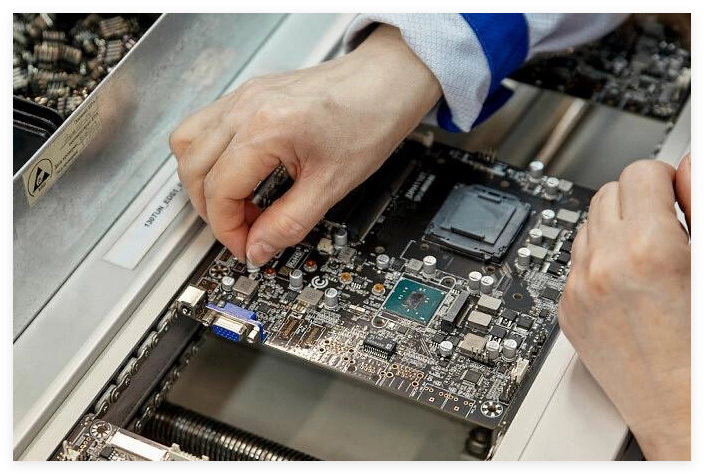
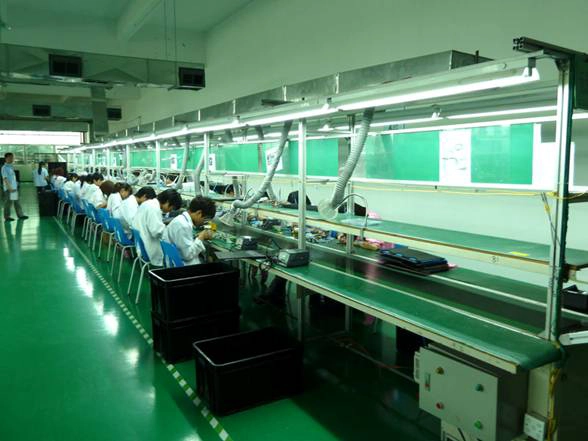
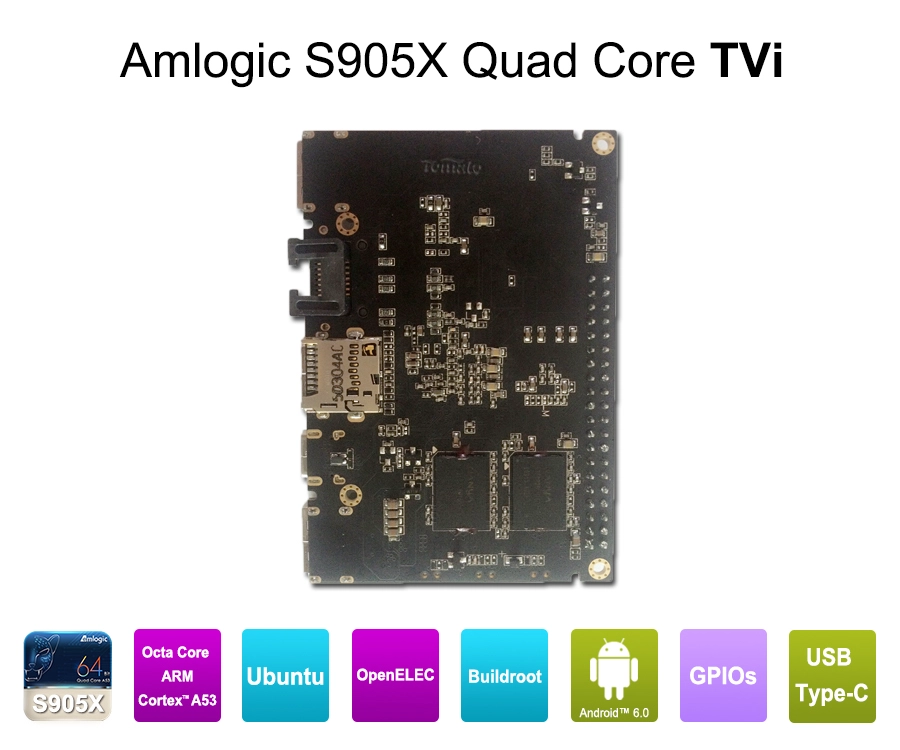
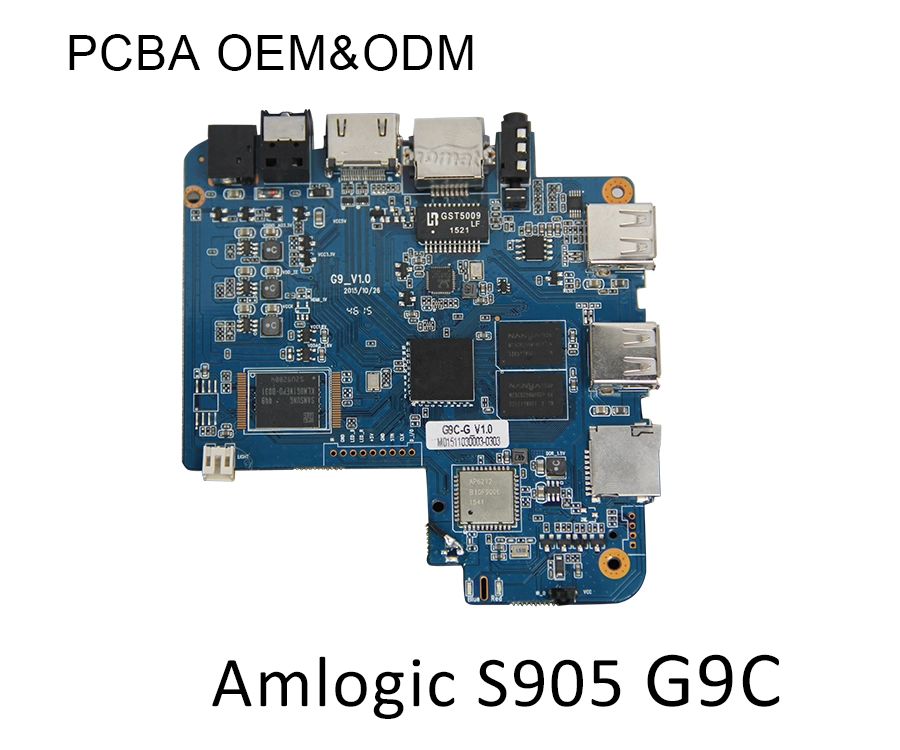
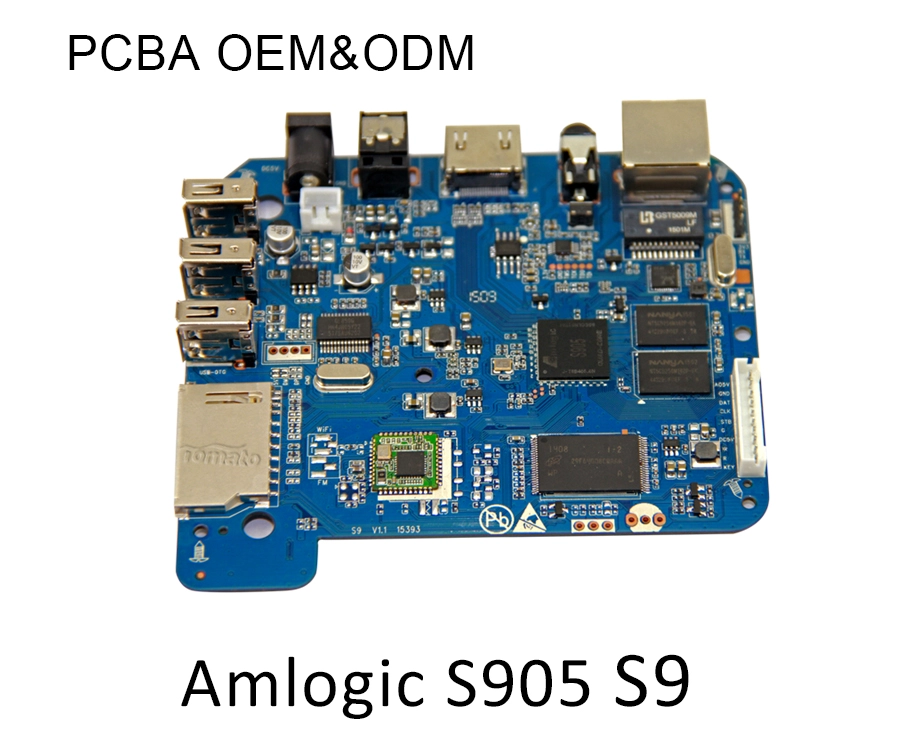
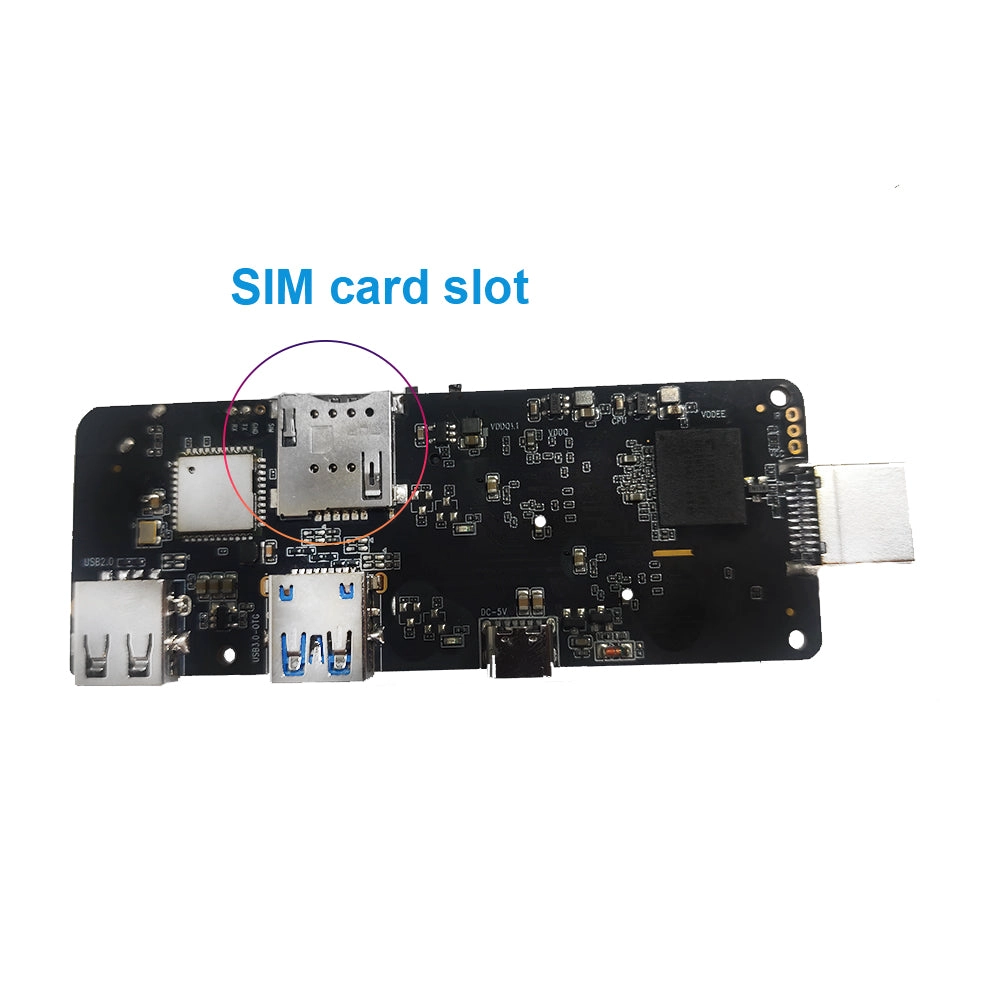
A reference design provides the initial electrical architecture, but OEM projects often require modifications to match the customer's enclosure, interfaces, peripherals, and operating environment.
PCBA engineering can involve:
PCB layout modification
-
Component placement optimization.
-
High-speed signal routing.
-
Power distribution design.
-
Grounding and EMI considerations.
-
PCB layer configuration.
-
Signal integrity verification.
Memory and storage configuration
RAM and eMMC should be selected according to the operating system, application workload, multimedia processing requirements, and expected product lifecycle.
Insufficient memory can affect application responsiveness, background services, and system stability. Excessive memory increases the BOM without necessarily delivering commercial value.
Interface customization
Depending on the SoC and board architecture, the PCBA may support customized configurations involving:
-
HDMI output.
-
USB 2.0 and USB 3.0.
-
Ethernet.
-
UART and GPIO.
-
Wi-Fi and Bluetooth modules.
-
Infrared receivers.
-
Audio interfaces.
-
MIPI or other expansion interfaces.
For example, a telecom operator may require a customized infrared receiver position, additional USB connectivity, and a specific Ethernet configuration.
These requirements affect PCB routing, component placement, enclosure dimensions, and firmware drivers.
SZTomato supports PCBA hardware modification and product-level engineering to align Smart TV Box configurations with specific OEM requirements.
1.3 Power architecture and thermal engineering
Power and thermal design are closely connected to long-term product reliability.
A Smart TV Box using a high-performance SoC may experience thermal throttling when running video decoding, background applications, wireless communication, and AI workloads simultaneously.
A proper engineering process should evaluate:
-
Voltage regulation and power stability.
-
Power consumption under different workloads.
-
SoC and memory thermal characteristics.
-
Heat transfer between components and enclosure.
-
Airflow or passive heat dissipation.
-
Standby power and thermal behavior.
-
Sustained-load performance.
For industrial and commercial applications, SZTomato supports specialized cooling solutions, including customized heatsink structures, aluminum enclosures, and thermal interface optimization.
The objective is to maintain stable performance under the actual operating conditions rather than simply achieve a low temperature during short laboratory tests.
2. Firmware, Software Integration, and Customization: Turning Hardware into a Commercial Product
A Smart TV Box is not defined by its PCBA alone. Firmware determines how the hardware initializes, how applications access system resources, how video and audio are processed, and how the device communicates with external platforms.
For B2B OEM customers, firmware customization is often the difference between a generic Android TV Box and a product designed for a specific commercial ecosystem.
2.1 Android and Linux firmware development
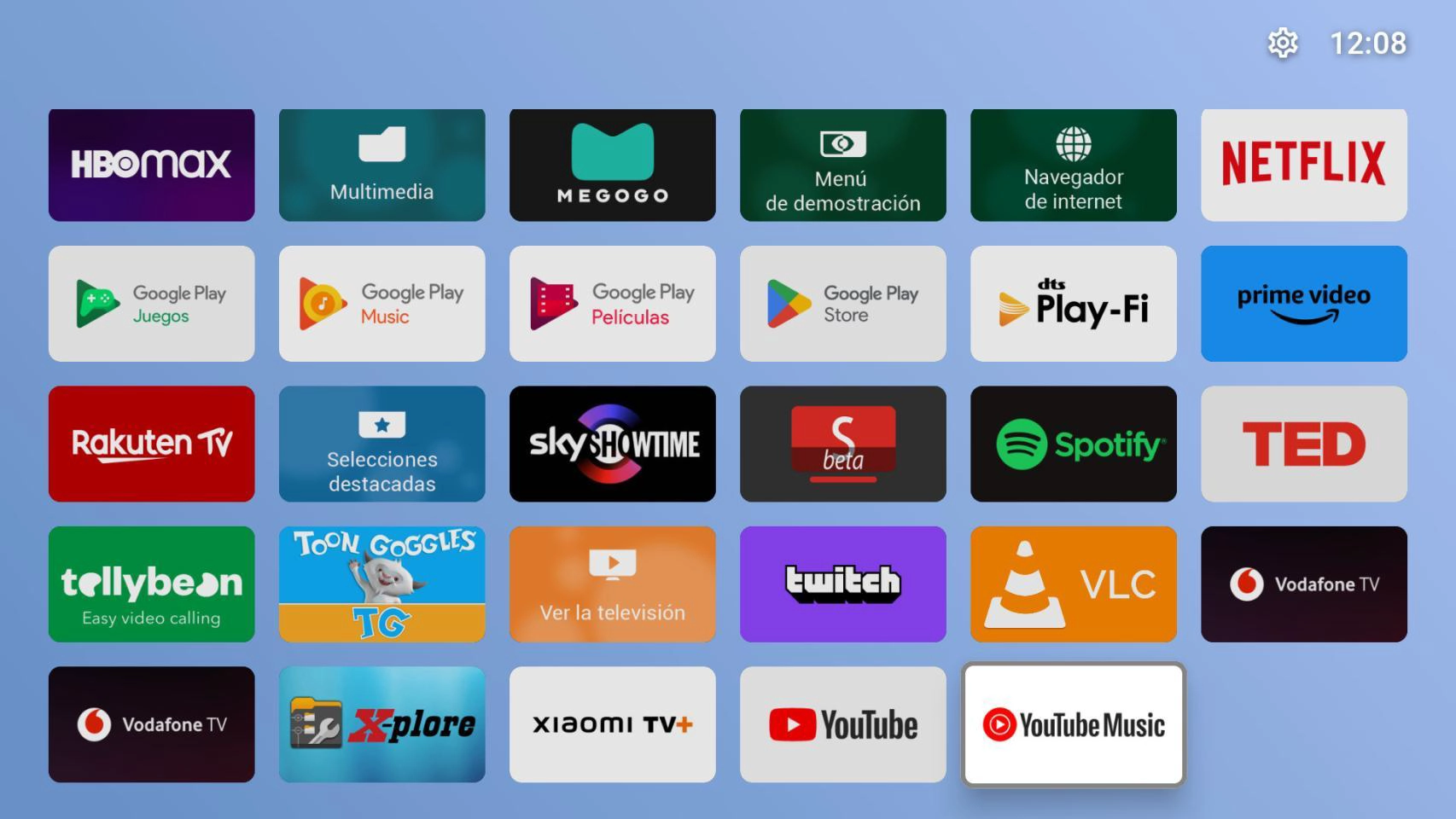
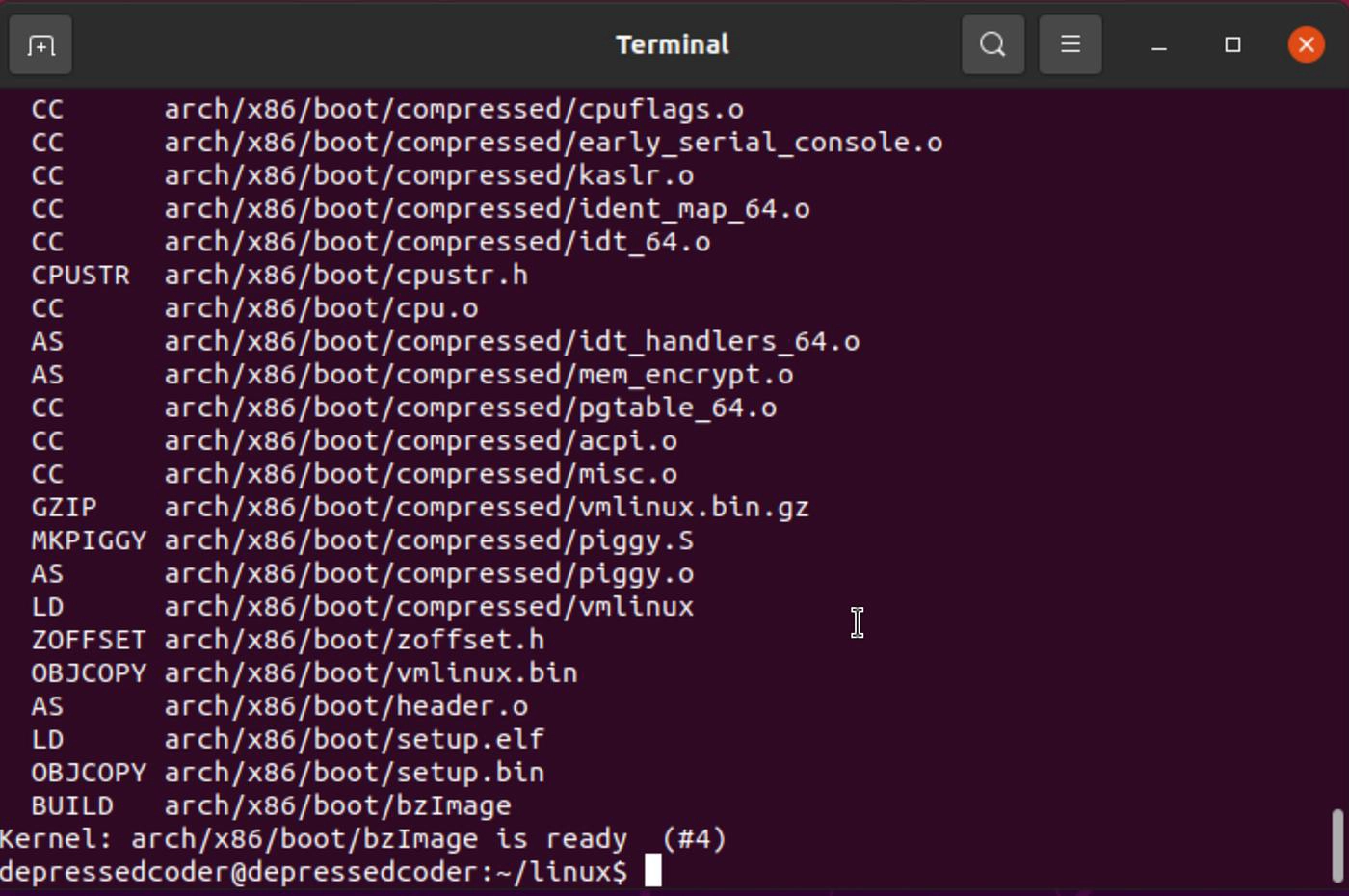
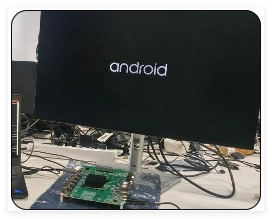
Firmware development starts with the Board Support Package (BSP), which connects the operating system to the underlying hardware.
Depending on the selected SoC and operating system, customization may involve:
-
Bootloader configuration and startup optimization.
-
Linux kernel configuration.
-
Device tree modifications.
-
Hardware driver integration.
-
Android Hardware Abstraction Layer (HAL).
-
Audio and video framework configuration.
-
Power management.
-
System application integration.
-
Memory and resource optimization.
For example, adding a new USB peripheral is not always a matter of connecting the device to a USB port. The corresponding controller, driver, power supply, and Android/Linux system configuration must all work together.
The same applies to HDMI output, wireless connectivity, infrared receivers, and external audio devices.
Firmware engineering should follow the actual PCBA configuration. Using an incompatible firmware image across different hardware revisions can cause driver conflicts, peripheral failures, or system instability.
2.2 Custom UI/UX and application integration
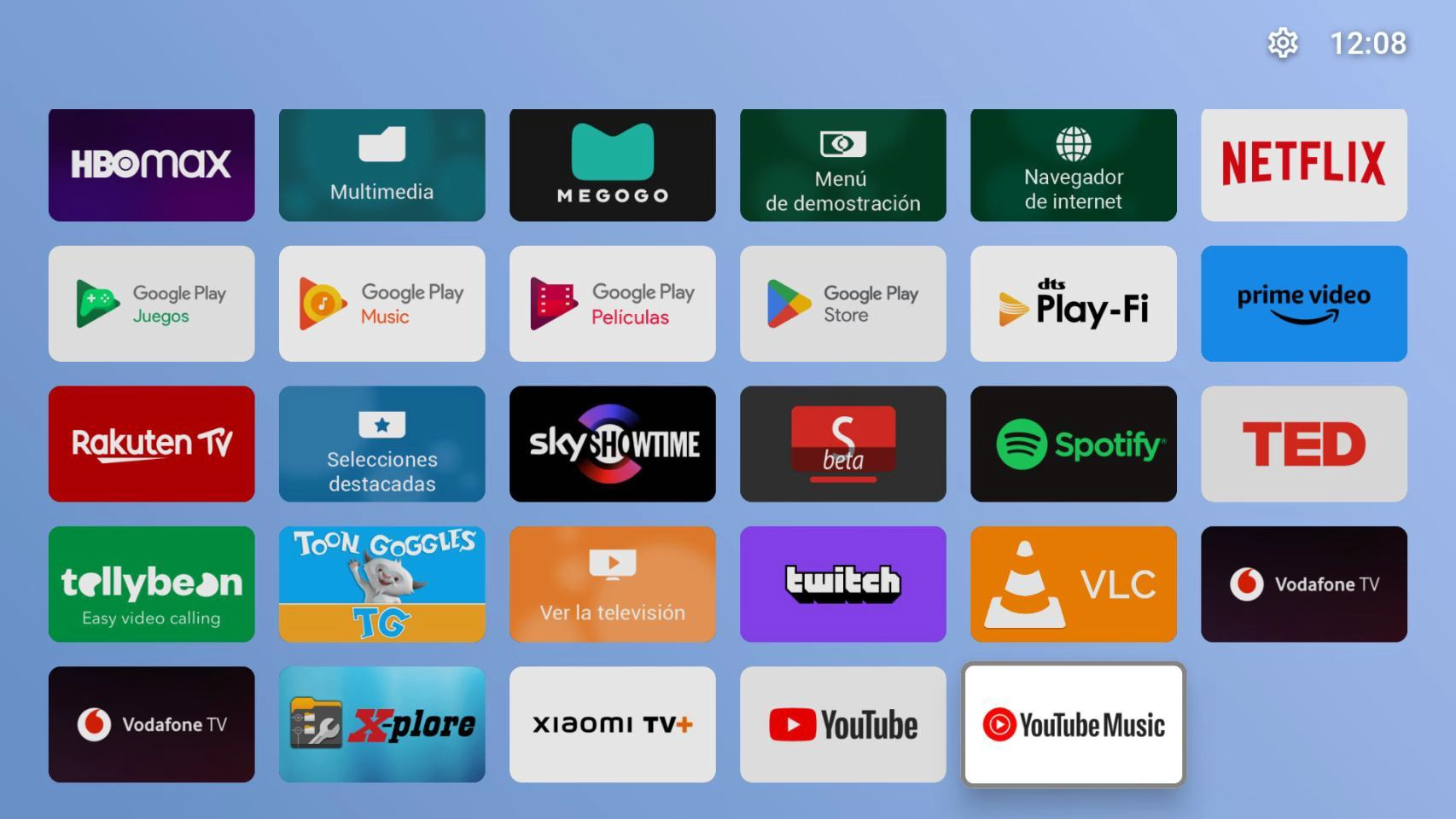
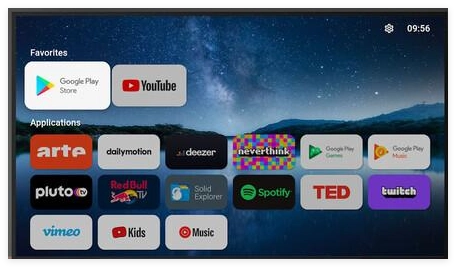
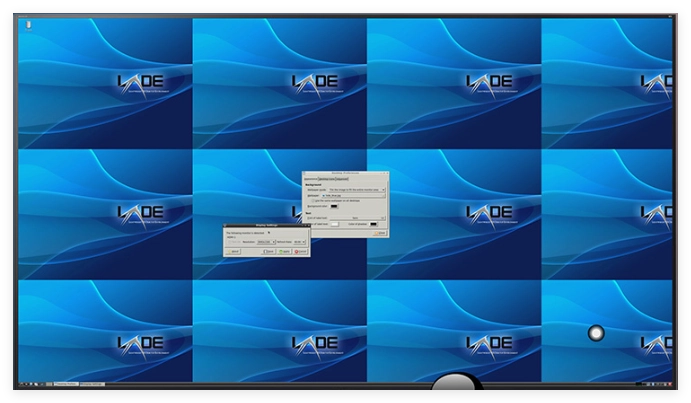
For telecom operators, IPTV providers, hospitality companies, and branded hardware manufacturers, the user interface is part of the service experience.
A customized Smart TV Box may require:
-
Company logos and boot animations.
-
Branded home-screen layouts.
-
Customized application icons.
-
Automatic application startup.
-
Navigation and remote-control optimization.
-
Multilingual interfaces.
-
Preinstalled applications.
-
System setting restrictions.
-
Custom standby and power-on behavior.
A hotel IPTV project, for example, may require a welcome screen, room information, local service applications, and integration with a property management system.
A telecom operator may need its IPTV application to launch automatically and remain the primary interface.
These requirements can involve changes to the Android launcher, system permissions, application configuration, and background services.
SZTomato supports custom UI/UX firmware development to help OEM customers establish a consistent product identity and user experience.
2.3 SDK/API integration and IPTV middleware compatibility
An OEM Smart TV Box frequently operates as one component within a larger software ecosystem.
It may need to communicate with:
-
IPTV middleware platforms.
-
OTT content management systems.
-
Cloud-based device management.
-
Authentication servers.
-
Content delivery networks.
-
Third-party application services.
-
Remote monitoring platforms.
SDK/API integration establishes the communication between the device and these external systems.
Typical development tasks include:
|
Integration area |
Typical implementation |
|---|---|
|
IPTV middleware |
Account authentication, channel lists, EPG |
|
Cloud API |
Device registration and remote configuration |
|
Application SDK |
Hardware functions and system-level access |
|
Device management |
Remote monitoring and status reporting |
|
OTA services |
Firmware distribution and version management |
|
Remote control |
Key mapping and customized functions |
Integration requirements should be defined early because they can influence the SoC selection, Android version, firmware architecture, and security configuration.
For instance, an application that requires privileged system access may need a system-level integration strategy rather than ordinary APK installation.
2.4 OTA update systems and long-term firmware maintenance
An OEM Smart TV Box deployed across several countries needs a controlled software maintenance strategy.
Manually updating individual devices becomes expensive when an operator manages thousands of units.
A properly designed OTA architecture should address:
-
Device identification and firmware version tracking.
-
Secure firmware package distribution.
-
Update integrity verification.
-
Staged deployment and device grouping.
-
Installation failure detection.
-
Recovery or rollback where supported.
-
Update logs and remote diagnostics.
The OTA system should also distinguish between hardware revisions. A firmware package intended for one PCBA revision should not be distributed indiscriminately to incompatible devices.
For long-term B2B projects, firmware version control and recovery mechanisms are essential parts of the manufacturing agreement, not optional after-sales features.
2.5 HDCP, DRM, and platform certification
Content protection is another important part of Smart TV Box software development.
For commercial streaming applications, the product may need to support HDCP encryption on HDMI output and DRM technologies such as Widevine.
However, several technical requirements must be evaluated separately:
-
HDCP version and implementation.
-
DRM security level and provisioning.
-
Content-provider authorization.
-
Secure boot and trusted execution capabilities.
-
Google certification, where applicable.
-
Application-specific compatibility.
A SoC supporting a security function does not automatically make the finished device certified for a particular streaming service.
OEM buyers should confirm licensing, certification, provisioning, and software requirements before finalizing the product specification.
3. Smart TV Box OEM/ODM Manufacturing Process: From Prototype to Mass Production
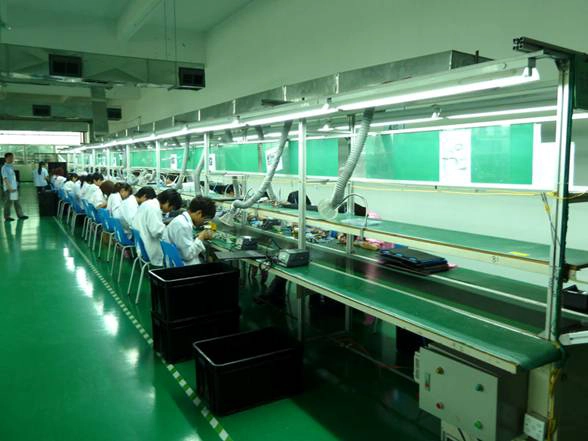
The transition from an engineering sample to a commercially stable Smart TV Box requires a controlled manufacturing process.
A prototype that successfully boots Android and plays a 4K video is not necessarily ready for mass production.
The PCBA, firmware, enclosure, thermal performance, and production testing must all be validated against the approved specifications.
3.1 Requirement analysis and product definition
The first stage is to translate the customer's business requirements into an engineering specification.
A professional OEM manufacturer should clarify:
-
Target market and application scenario.
-
Required video resolution and codecs.
-
Preferred SoC platform.
-
Android or Linux operating system.
-
RAM and eMMC configuration.
-
Connectivity and peripheral requirements.
-
Custom firmware and application requirements.
-
Enclosure and branding specifications.
-
Certification requirements.
-
Target production quantity and cost.
This stage establishes the product's technical boundaries.
It also prevents a common procurement mistake: selecting a chipset based on a low initial quotation before confirming whether the hardware and firmware can support the intended application.
3.2 Engineering design and prototype development
Once the specification is approved, the engineering team moves into hardware and software development.
The process generally includes:
-
SoC and component selection.
-
Schematic design or reference-board adaptation.
-
PCB layout and PCBA development.
-
Enclosure and mechanical design.
-
Firmware adaptation.
-
Peripheral integration.
-
Initial functional testing.
For customized products, engineering samples should be evaluated against the actual application requirements rather than a generic factory demonstration.
For example, a commercial IPTV device should be tested with the customer's middleware, remote control, network environment, and target display configuration.
3.3 EVT, DVT, and PVT validation
For more complex OEM projects, a staged validation process helps control engineering risks.
|
Stage |
Main objective |
Typical verification |
|---|---|---|
|
EVT |
Engineering validation |
PCBA functionality, SoC, interfaces, basic firmware |
|
DVT |
Design validation |
Thermal performance, reliability, enclosure, software |
|
PVT |
Production validation |
Assembly process, production testing, consistency |
Engineering Validation Test (EVT) confirms whether the initial design works as intended.
Design Validation Test (DVT) verifies that the product meets its functional, mechanical, thermal, and reliability requirements.
Production Validation Test (PVT) checks whether the approved design can be manufactured consistently using the planned production process.
The exact stages and sample quantities should be agreed upon according to project complexity and manufacturing arrangements.
3.4 Quality control and reliability testing
A robust Smart TV Box manufacturing process should combine component-level inspection, PCBA testing, firmware verification, and finished-product quality control.
Important test items include:
|
Testing category |
Verification items |
|---|---|
|
PCBA inspection |
Soldering quality, component placement, electrical defects |
|
Functional testing |
Booting, HDMI, USB, Ethernet, audio |
|
Network testing |
Wi-Fi, Bluetooth, Ethernet stability |
|
Multimedia testing |
Codec playback, resolution, frame rate |
|
Firmware testing |
Application compatibility, OTA, recovery |
|
Thermal testing |
Temperature, sustained load, throttling |
|
Aging testing |
Long-duration operation and stability |
|
Final inspection |
Appearance, accessories, packaging, labeling |
The test plan should reflect the actual application and operating environment.
For example, a commercial device designed for continuous operation needs more sustained-load testing than a product intended for occasional residential use.
3.5 Mass production and manufacturing consistency
After design validation, the product enters mass production.
At this stage, the manufacturer must maintain control over:
-
Approved BOM and component substitutions.
-
PCBA revision management.
-
Firmware version control.
-
Production test procedures.
-
Enclosure and assembly consistency.
-
Packaging specifications.
-
Batch traceability.
-
Final inspection standards.
A component substitution may appear minor from a purchasing perspective but can affect power consumption, wireless performance, thermal characteristics, or firmware compatibility.
For this reason, engineering change control should be part of the OEM manufacturing process.
A reliable supplier should communicate component changes and obtain appropriate approval before implementing changes that affect the approved product specification.
4. How to Evaluate a Smart TV Box OEM/ODM Manufacturer
Choosing an OEM/ODM manufacturer is a strategic purchasing decision. The supplier must be capable of delivering the approved hardware configuration, maintaining firmware consistency, and supporting the product after mass production.
A low unit price does not necessarily mean a lower total project cost.
For B2B procurement managers, the following evaluation criteria are more meaningful.
4.1 Hardware engineering capability
Ask whether the manufacturer can modify the PCBA or only assemble an existing reference design.
A capable engineering partner should understand:
-
SoC platform selection.
-
Schematic and PCB layout modification.
-
Memory and storage configuration.
-
Power circuit optimization.
-
Peripheral integration.
-
Thermal and EMI considerations.
The ability to modify hardware is particularly important when the project requires proprietary interfaces, specific enclosure dimensions, or additional peripherals.
4.2 Firmware development capability
Firmware is one of the most important factors separating an OEM engineering manufacturer from a conventional hardware assembler.
Evaluate whether the supplier can provide:
-
Android/Linux BSP adaptation.
-
Kernel and driver customization.
-
Custom launcher development.
-
System application integration.
-
SDK/API integration.
-
OTA update architecture.
-
Firmware maintenance and troubleshooting.
A supplier that only installs applications and changes boot logos may not have the engineering resources required for a complex operator or commercial deployment.
4.3 Manufacturing and quality management
Request information about the manufacturer's:
-
Component sourcing procedures.
-
PCBA inspection and functional testing.
-
Product aging procedures.
-
Firmware loading and verification.
-
Batch traceability.
-
Production capacity.
-
Quality-control documentation.
Also clarify how engineering changes are managed and how defects are handled after delivery.
4.4 Lifecycle support and project continuity
A Smart TV Box OEM project does not end when the first production batch leaves the factory.
Long-term support may involve:
-
Android/Linux firmware updates.
-
Security maintenance.
-
OTA infrastructure.
-
Hardware revision management.
-
Component availability.
-
Application compatibility.
-
Technical troubleshooting.
For telecom operators and system integrators, product continuity is especially important because replacing thousands of deployed devices can create substantial operational costs.
4.5 OEM versus ODM: Which manufacturing model should you choose?
|
Comparison |
OEM |
ODM |
|---|---|---|
|
Product design |
Customer-defined |
Manufacturer-developed or adapted |
|
Hardware |
Customized to customer specifications |
Existing platform or modified design |
|
Firmware |
Customer requirements |
Manufacturer-supported customization |
|
Development investment |
Depends on customization scope |
Often lower for adapted platforms |
|
Time to market |
Depends on engineering complexity |
Often faster |
|
Best suited for |
Established brands and operators |
New brands and project developers |
My recommendation: Choose OEM when you have a defined product architecture, proprietary software requirements, or specific hardware specifications. Choose ODM when you need a faster route to market using an existing hardware platform with controlled modifications.
Many commercial projects benefit from a hybrid OEM/ODM approach: start with a proven PCBA platform, modify the hardware where necessary, and develop customized firmware for the target application.
This approach can reduce development risk without sacrificing product differentiation.
Why Choose SZTomato for Smart TV Box OEM/ODM Manufacturing?
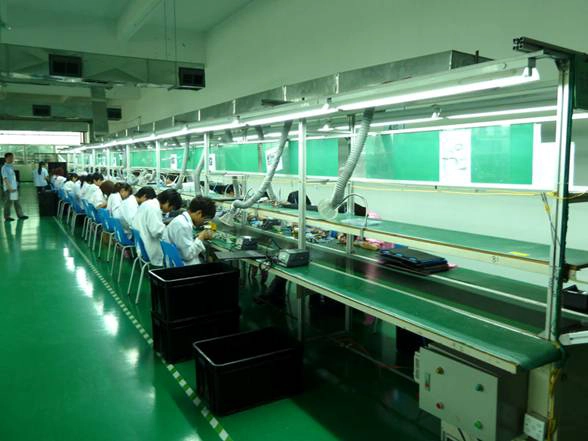
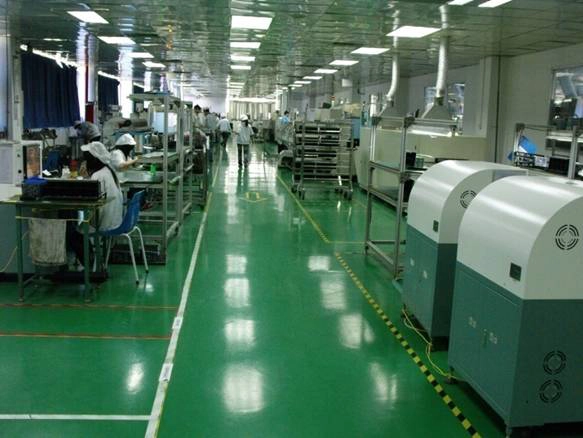
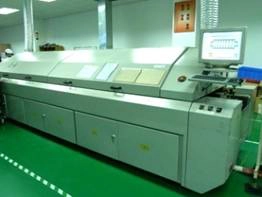
SZTomato has been developing smart multimedia hardware solutions since 2011.
Its business focuses on OEM/ODM manufacturing for international brands, distributors, IPTV operators, telecom companies, and system integrators.
Rather than limiting customization to logos, packaging, and standard product configurations, SZTomato supports engineering work across the hardware and software layers.
1. PCBA hardware engineering
-
Customized PCB and PCBA configurations.
-
SoC and component selection.
-
Memory and storage adjustments.
-
Interface and peripheral customization.
-
Power architecture optimization.
2. Android/Linux firmware development
-
Customized system firmware.
-
BSP and kernel-level engineering.
-
Hardware driver integration.
-
Custom boot animations and system applications.
-
OTA update solutions.
3. SDK/API and UI/UX integration
-
IPTV middleware integration.
-
Third-party application compatibility.
-
Custom Android launcher development.
-
Branded user interfaces.
-
Cloud platform and device-management integration.
4. Industrial hardware solutions
-
Customized enclosure configurations.
-
Specialized cooling solutions.
-
Thermal optimization.
-
Hardware validation for commercial applications.
5. OEM/ODM manufacturing and technical support
-
Product specification evaluation.
-
Engineering sample development.
-
Prototype validation.
-
Production quality control.
-
Firmware and hardware lifecycle support.
By combining hardware engineering, firmware customization, and manufacturing capabilities, SZTomato helps B2B customers develop Smart TV Box products that meet specific market and deployment requirements.
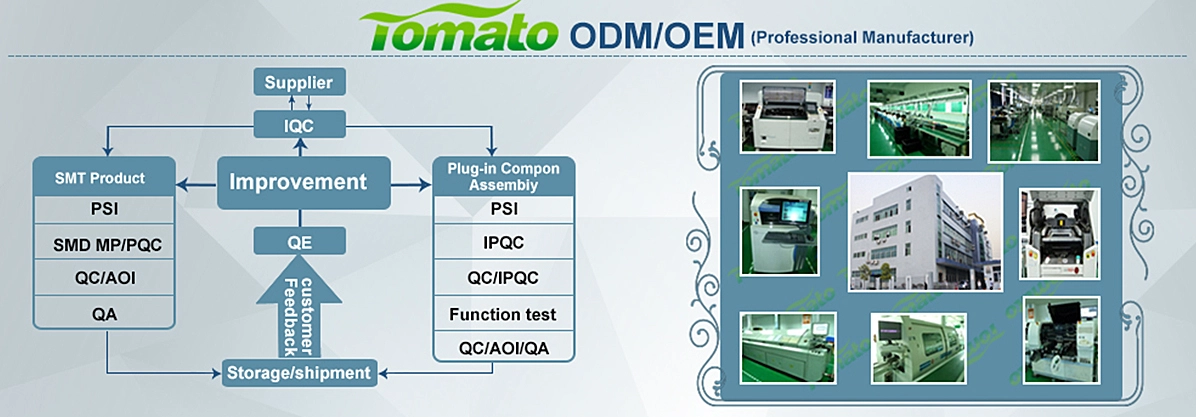
Start Your Smart TV Box OEM/ODM Project with the Right Engineering Partner
Successful Smart TV Box manufacturing requires coordination between SoC selection, PCBA architecture, firmware development, software integration, thermal management, and production quality control.
The most suitable manufacturing partner is not necessarily the supplier offering the lowest quotation. It is the partner that understands your application, can translate technical requirements into a manufacturable design, and can maintain the product throughout its commercial lifecycle.
Whether you are developing a 4K IPTV terminal, an 8K streaming device, a customized Android TV Box, or an industrial multimedia platform, SZTomato can help evaluate your requirements and develop an appropriate OEM/ODM solution.
Contact SZTomato with your project specifications:
-
Target application and market.
-
Preferred SoC platform.
-
Android or Linux operating system.
-
RAM and storage requirements.
-
Required interfaces and connectivity.
-
Firmware and SDK/API customization requirements.
-
Estimated order quantity.
Visit SZTomato – Smart TV Box OEM/ODM Manufacturer to discuss your next hardware development project.
