
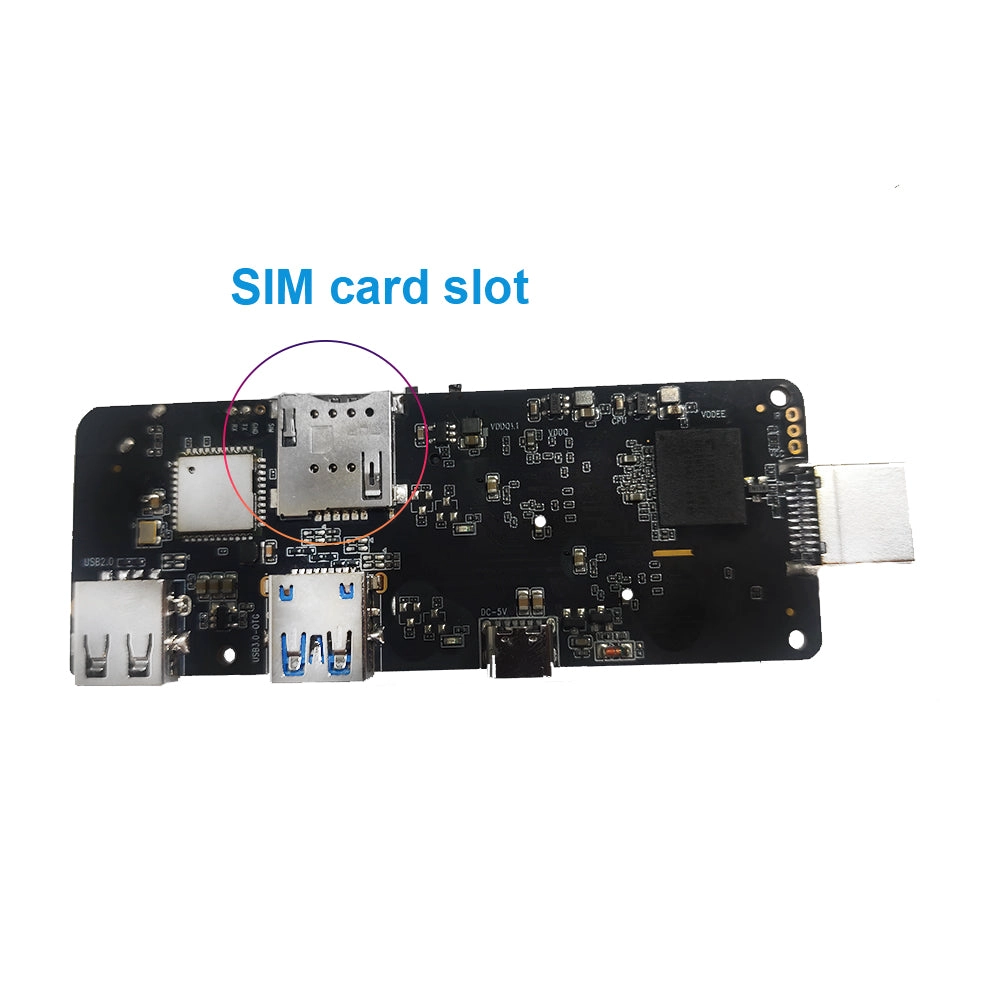
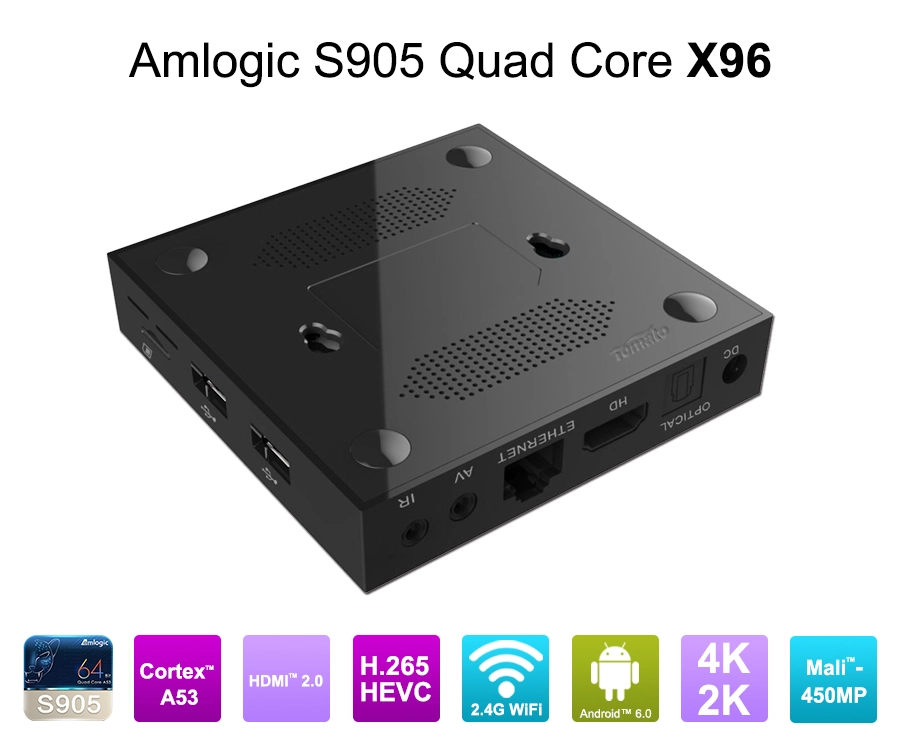
Set-Top Box (STB) SoC Comparison: Best Chips for 4K, 8K and OEM Projects
1. Why STB SoC Selection Matters More Than Ever in 4K and 8K Projects
The transition from conventional H.264 streaming to HEVC and AV1, combined with increasing demand for 4K HDR content, is changing the hardware requirements of modern Set-Top Boxes.
For STB manufacturers, IPTV operators, and telecom service providers, the challenge is no longer simply delivering a picture to an HDMI display. The hardware must decode modern video formats, maintain responsive interfaces, support content-protection systems, and operate reliably within the software environment specified by the service provider.
The SoC sits at the center of this architecture.
It determines the available CPU resources, GPU acceleration, video decoding capabilities, memory architecture, peripheral interfaces, and many of the platform-level constraints affecting firmware development.
However, an important distinction is often overlooked: 8K video decoding, 8K display output, and 8K encoding are three different capabilities.
A chip supporting 8K decoding does not automatically guarantee 8K HDMI output, while an 8K display engine does not necessarily support every 8K codec at the same frame rate.
OEM buyers should evaluate the complete multimedia pipeline rather than rely on a single resolution figure.
Five technical factors that should determine your STB chipset
-
Video decoding: Hardware support for H.264, H.265, VP9, AV1, and other required codecs.
-
Graphics performance: GPU capability for Android TV interfaces, animations, application rendering, and interactive services.
-
Memory architecture: RAM type, bandwidth, capacity, and storage performance.
-
Connectivity: HDMI, USB, Ethernet, Wi-Fi, Bluetooth, PCIe, and peripheral interfaces.
-
Software ecosystem: Android/Linux BSP availability, kernel support, SDK compatibility, DRM integration, and OTA maintenance.
For an IPTV operator, a stable 4K platform with mature middleware support may deliver better commercial results than an expensive 8K chipset with unnecessary processing capacity.
For a premium multimedia terminal or AI-enabled commercial device, the opposite may be true.
The correct choice depends on the deployment requirements.
2. STB SoC Comparison: Amlogic vs. Rockchip vs. Allwinner
The following four platforms represent different engineering approaches to the 4K and 8K STB market.
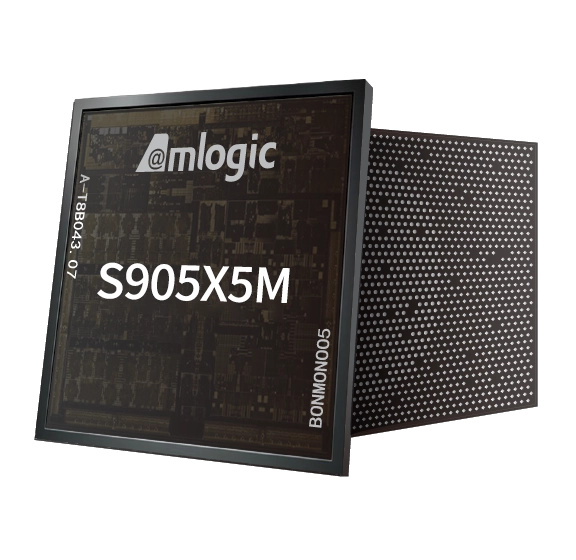
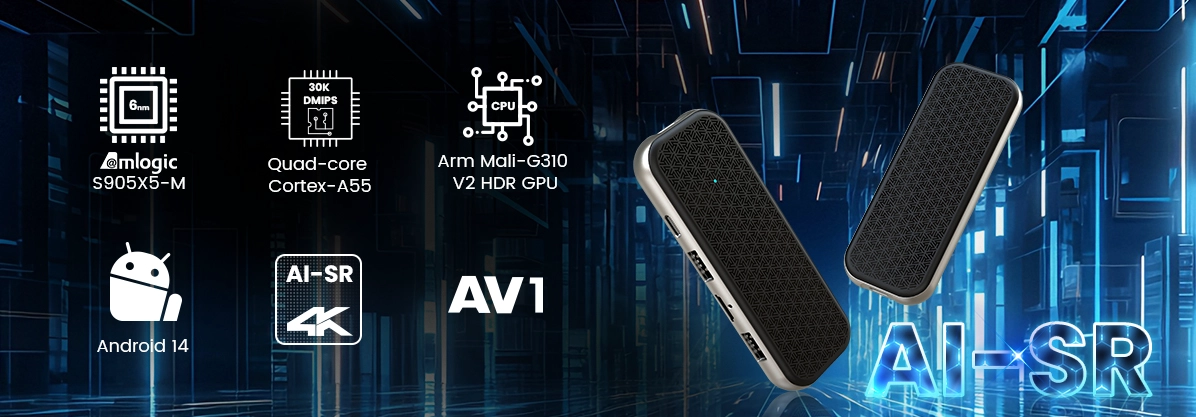
Amlogic S905X5M
4K mainstream choice
A modern 4K multimedia platform targeting OTT, IPTV, and cost-conscious Android STB projects.
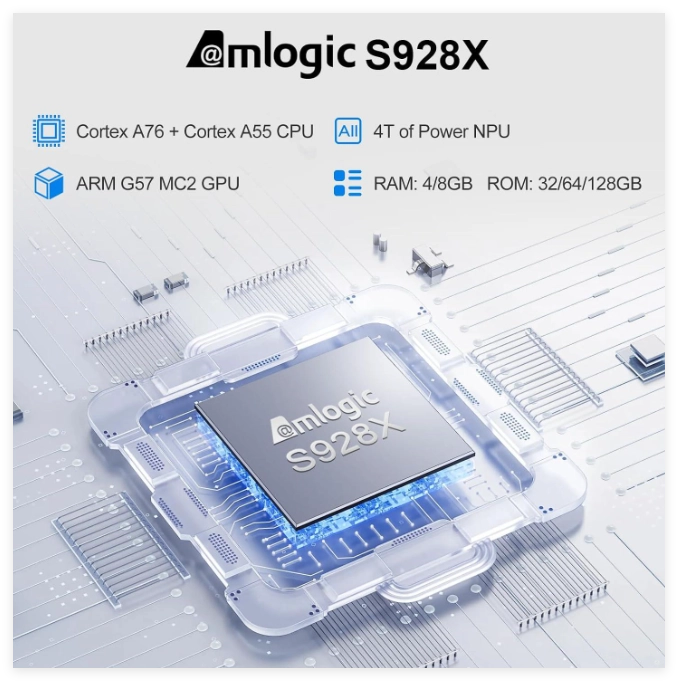
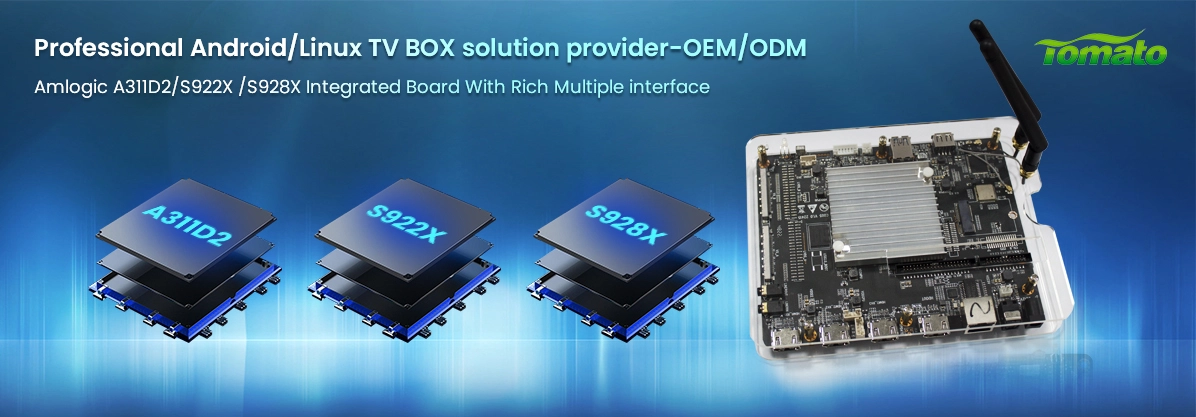
Amlogic S928X
8K multimedia choice
Designed for premium UHD STBs, with 8K60 decoding across major formats including AV1.
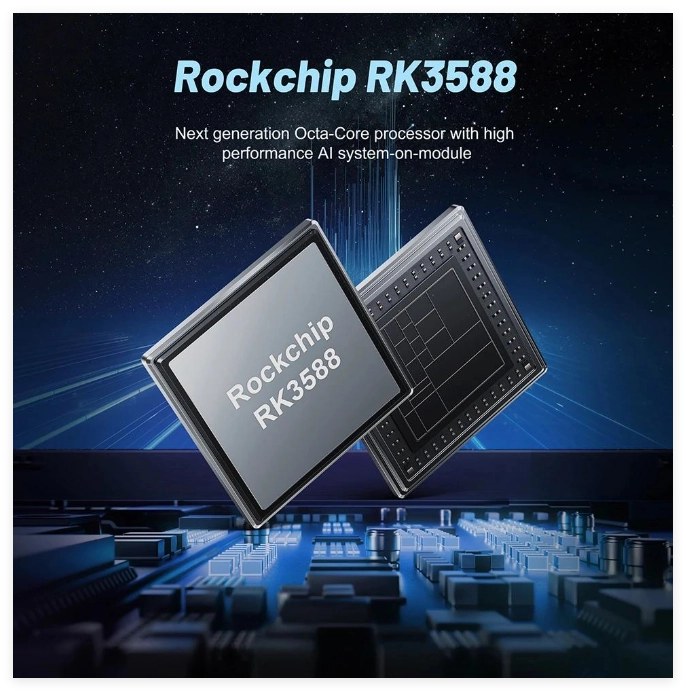
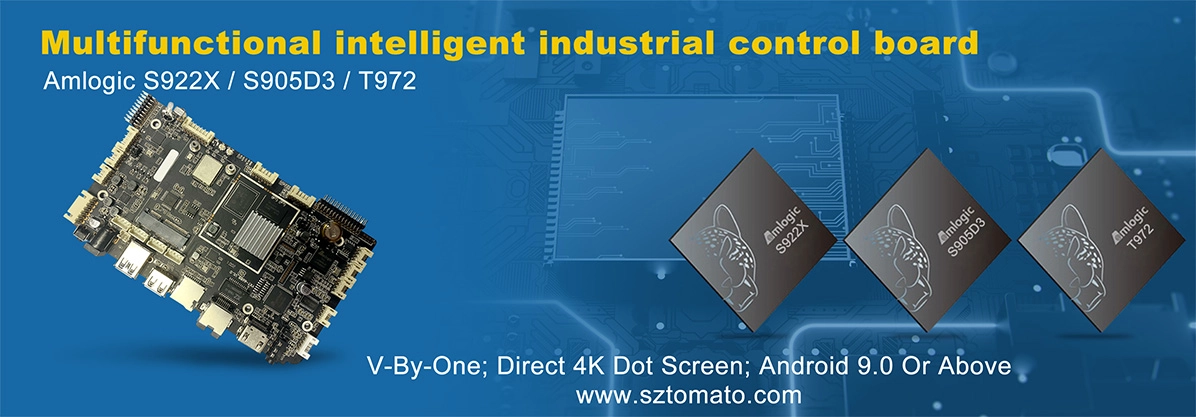
Rockchip RK3588
AI and advanced integration
An octa-core platform with a 6 TOPS NPU, extensive interfaces, and strong Linux/Android application potential.
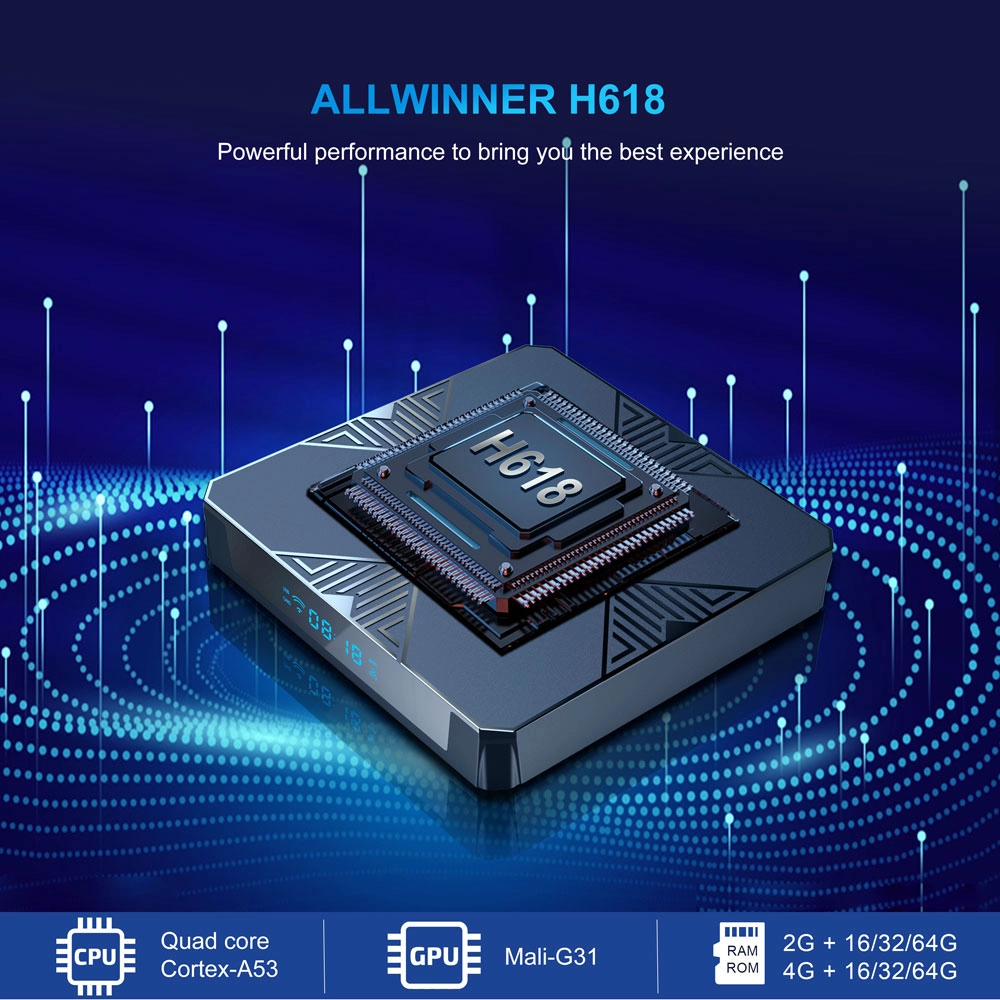
Allwinner H618
Cost-efficient choice
A quad-core Cortex-A53 platform suited to economical OTT terminals and selected commercial display applications.
2.1 Technical comparison table
|
Specification |
S905X5M |
S928X |
RK3588 |
H618 |
|---|---|---|---|---|
|
CPU |
Quad A55 |
A76 + A55 |
4×A76 + 4×A55 |
4×A53 |
|
GPU |
Mali-G310 V2 |
Mali-G57 MC2 |
Mali-G610 MC4 |
Mali-G31 |
|
NPU |
Platform-dependent AI features |
Approx. 3.2 TOPS |
6 TOPS |
No comparable integrated NPU |
|
AV1 decode |
4K60 |
8K60 |
4K60 |
Not specified |
|
H.265 decode |
4K60 |
8K60 |
8K60 |
8K24 |
|
VP9 decode |
4K60 |
8K60 |
8K60 |
4K30 |
|
Display class |
4K |
8K |
Up to 8K |
4K60 HDMI |
|
Typical positioning |
Mainstream OTT/IPTV |
Premium 8K STB |
AI/multimedia/edge |
Budget OTT |
Specifications are representative platform capabilities, not guarantees for every finished STB. Exact memory configurations, interfaces, firmware support, codec profiles, and output modes depend on the chip revision and board implementation. NPU performance is not directly comparable across different architectures.
2.2 Amlogic S905X5M: A practical platform for mainstream 4K STB projects
The S905X5M is a strong candidate for OEM projects targeting 4K OTT and IPTV terminals.
Its Cortex-A55 architecture provides a suitable foundation for mainstream Android multimedia applications, while its AV1, H.265, and VP9 hardware decoding capabilities address current streaming requirements.
Key engineering considerations include:
-
4K@60Hz video output.
-
AV1 and HEVC hardware decoding.
-
Mali-G310 V2 graphics.
-
Memory and eMMC configuration.
-
Wi-Fi and Bluetooth integration.
-
Android BSP and multimedia framework compatibility.
The commercial advantage is not simply 4K playback. It is the ability to build a cost-controlled terminal with sufficient resources for IPTV applications, branded launchers, remote-control integration, and OTA maintenance.
For telecom operators and IPTV service providers, the S905X5M is worth evaluating when the project requires modern 4K functionality without the additional hardware cost of an 8K platform.
One important distinction: the S905X5M should not be confused with the S905X5. Different variants can have different platform capabilities and feature configurations. Buyers should request the exact chipset datasheet and reference configuration before approving a design.
2.3 Amlogic S928X: A dedicated candidate for premium 8K STB development
The S928X targets a different market segment.
Amlogic identifies it as an 8K UHD smart STB SoC, combining Cortex-A76 and Cortex-A55 processing with an integrated neural network processor.
Its major attraction is support for 8Kp60 decoding across AV1, H.265, VP9, AVS3, and AVS2.
This makes it relevant to premium OTT/IPTV hardware, high-resolution multimedia terminals, and projects requiring advanced image processing.
OEM engineering should focus on:
-
8K decoding and HDMI output compatibility.
-
Memory bandwidth and thermal characteristics.
-
4K user-interface responsiveness.
-
AI-based image processing requirements.
-
HDMI/HDCP implementation.
-
DRM and streaming-service integration.
-
Long-term firmware and BSP availability.
The S928X is particularly attractive when 8K decoding is a defined product requirement rather than a marketing specification.
However, an 8K-capable SoC does not automatically create a certified 8K streaming product. Content-provider authorization, DRM provisioning, firmware implementation, HDMI compliance, and display compatibility remain separate engineering requirements.
2.4 Rockchip RK3588: When an STB project needs more than video playback
The RK3588 occupies a broader application category.
It integrates four Cortex-A76 cores and four Cortex-A55 cores, a Mali-G610 MC4 GPU, and a 6 TOPS NPU.
Its connectivity options and processing resources make it suitable for advanced multimedia terminals, AI-enabled signage players, industrial control devices, and edge computing systems.
Its multimedia capabilities include:
-
H.265 and VP9 decoding up to 8K60.
-
H.264 decoding up to 8K30.
-
AV1 decoding up to 4K60.
-
H.264/H.265 encoding up to 8K30.
-
Multiple high-speed interfaces.
-
HDMI 2.1 display connectivity.
-
PCIe, USB 3.1, and dual Gigabit Ethernet capabilities.
One detail matters for 8K product planning: RK3588's 8K decoding capability does not mean AV1 decoding at 8K60. Its documented AV1 decoding limit is 4K60, while the higher 8K decoding modes apply to other supported codecs.
For OEM projects, the RK3588 makes sense when the product combines streaming with additional workloads, such as AI inference, multi-display output, computer vision, or industrial applications.
It may be excessive for a conventional IPTV terminal, but highly competitive when the device is expected to perform several computing functions simultaneously.
2.5 Allwinner H618: A cost-oriented option for entry-level STBs
The H618 addresses a different purchasing priority: controlling the hardware budget while retaining useful multimedia functionality.
Its quad-core Cortex-A53 CPU and Mali-G31 GPU provide a platform for entry-level Android OTT boxes and selected commercial multimedia products.
Its documented multimedia capabilities include:
-
H.265 decoding up to 8K24.
-
VP9 decoding up to 4K30.
-
AVS2 decoding up to 4K60.
-
H.264 decoding up to 4K30.
-
HDMI output up to 4K60.
-
Support for DDR3, DDR4, LPDDR3, and LPDDR4 configurations.
The difference between decoding and display output is particularly important here. Although the H618 supports H.265 8K24 decoding, its HDMI output specification is up to 4K60.
Therefore, it should not be positioned as an equivalent alternative to an 8K60 HDMI-output platform.
For budget-sensitive IPTV deployments, basic OTT applications, and cost-controlled commercial terminals, the H618 remains worth evaluating.
Its suitability depends on application complexity, Android version requirements, memory configuration, and the availability of a maintained software platform.
The practical conclusion: S905X5M is a compelling mainstream 4K candidate, S928X is the more direct premium 8K STB choice, RK3588 is the stronger multifunctional computing platform, and H618 is a budget-oriented option.
3. How to Choose the Best STB SoC for Different OEM Applications
There is no universally best STB processor. The most suitable chipset is the one that meets the product's performance requirements without introducing unnecessary hardware costs, software complexity, or long-term maintenance risks.
The following selection framework is useful for procurement managers and product development teams.
3.1 IPTV and telecom operator projects
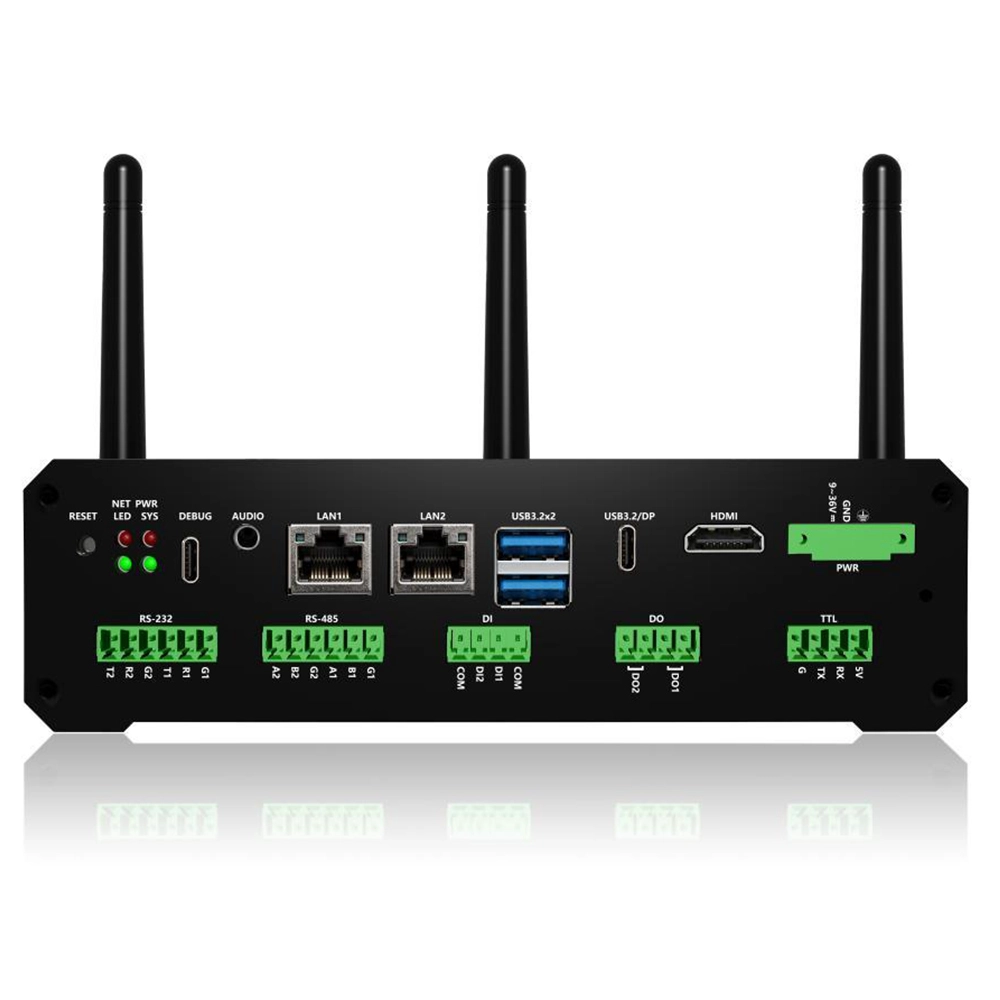
Recommended platform: Amlogic S905X5M
IPTV projects typically prioritize stable video playback, network connectivity, middleware compatibility, and remote device management.
The chipset evaluation should focus on:
-
Hardware decoding of required streaming codecs.
-
Ethernet stability and Wi-Fi performance.
-
HDMI output and HDCP content protection.
-
Middleware and conditional access integration.
-
Android system compatibility.
-
Secure OTA update architecture.
For operators deploying thousands of STBs, software consistency and lifecycle management can have a greater commercial impact than additional CPU performance.
An OEM manufacturer should also verify whether the target middleware requires specific system privileges, hardware identifiers, secure storage, or conditional access interfaces.
3.2 Premium 8K OTT and multimedia projects
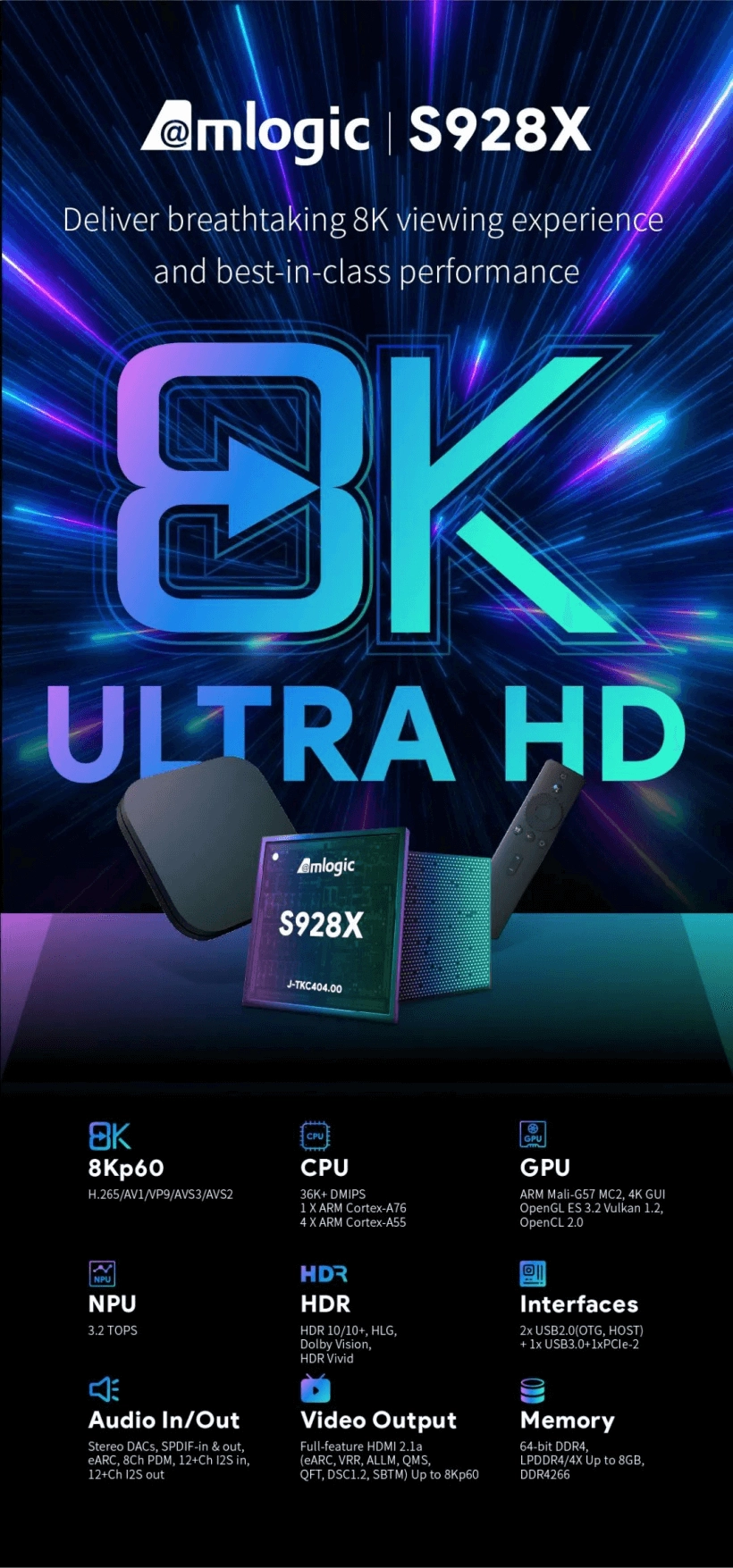
Recommended platform: Amlogic S928X
Premium 8K products need a complete high-resolution multimedia architecture.
The engineering team should verify:
-
8K codec profiles and frame-rate limitations.
-
HDMI output resolution and refresh-rate combinations.
-
HDR processing and display compatibility.
-
HDCP implementation.
-
Memory bandwidth.
-
Thermal performance under sustained decoding.
-
Streaming application and DRM compatibility.
For these projects, the SoC should be selected only after confirming the actual video source, output display, and content-protection requirements.
3.3 AI-enabled STB and commercial multimedia terminals
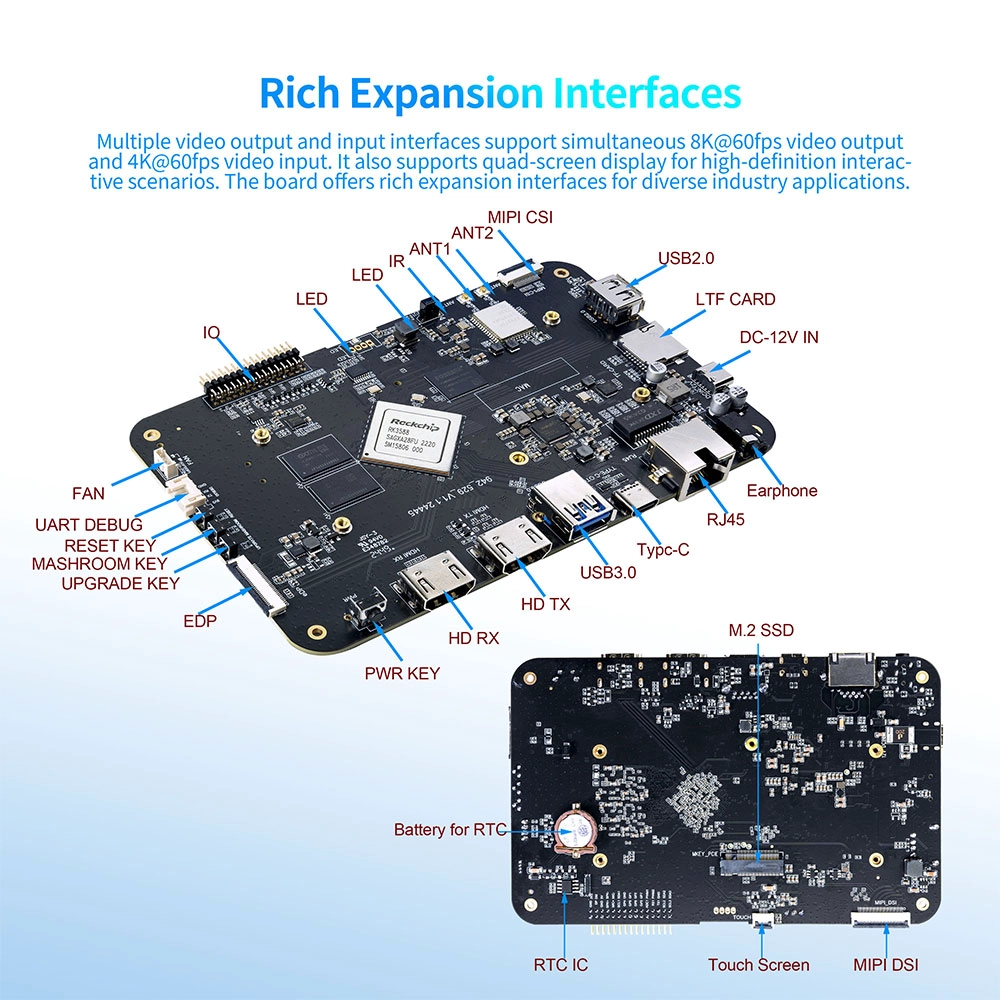
Recommended platform: Rockchip RK3588
The RK3588 is more appropriate when the device must handle multimedia playback alongside local computing tasks.
Potential applications include:
-
AI-assisted content recognition.
-
Smart digital signage.
-
Multi-screen information displays.
-
Interactive advertising terminals.
-
Local image processing.
-
Edge AI inference.
-
Industrial multimedia control.
The NPU can accelerate supported inference workloads, but OEM buyers must assess model compatibility, runtime support, memory requirements, and actual application latency.
A 6 TOPS specification alone is not enough to establish real-world AI performance.
3.4 Budget-sensitive OTT and commercial display projects
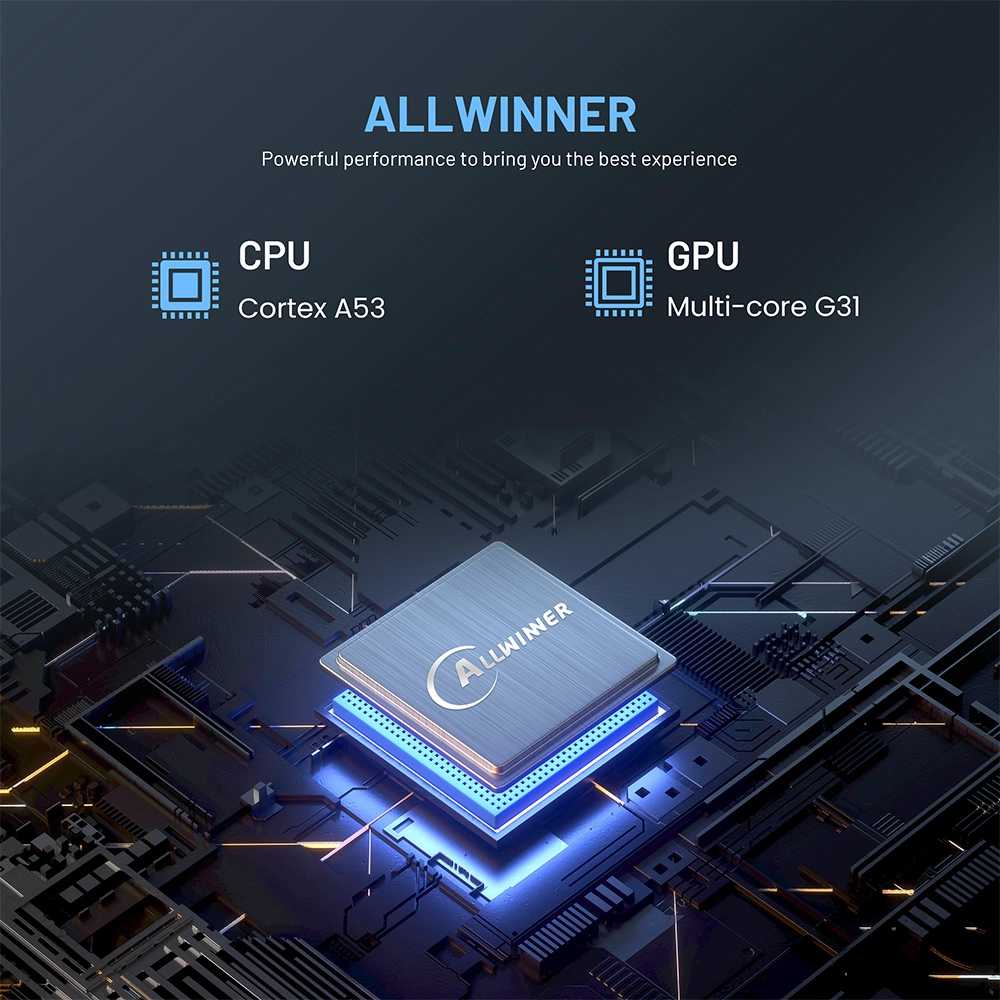
Recommended platform: Allwinner H618
H618 is suitable when the primary requirements are basic multimedia playback, controlled manufacturing costs, and a relatively simple application environment.
Typical applications include:
-
Entry-level OTT terminals.
-
Basic IPTV receivers.
-
Commercial information displays.
-
Lightweight Android multimedia devices.
-
Cost-sensitive regional distribution projects.
For these products, memory configuration, software responsiveness, network stability, and component availability should receive particular attention.
3.5 OEM chipset selection matrix
|
OEM application |
First platform to evaluate |
Main decision factor |
|---|---|---|
|
Mainstream 4K IPTV |
S905X5M |
Cost and 4K performance |
|
Telecom operator STB |
S905X5M |
Middleware and firmware |
|
Premium 8K OTT |
S928X |
8K codec capabilities |
|
AI multimedia terminal |
RK3588 |
CPU, GPU and NPU |
|
Smart digital signage |
RK3588 |
Interfaces and computing |
|
Entry-level OTT |
H618 |
BOM cost |
|
Basic commercial display |
H618 |
Application complexity |
This is a starting-point recommendation, not a substitute for platform validation. The final selection must account for availability, pricing, software support, certification requirements, and the actual product specification.
4. Beyond the SoC: What Determines a Successful STB OEM Project?
Selecting a capable processor is only the first stage of product development.
Two STBs using the same SoC can have substantially different performance and reliability because of differences in PCBA layout, memory configuration, firmware, thermal design, and software integration.
For OEM buyers, these factors deserve the same attention as the chipset itself.
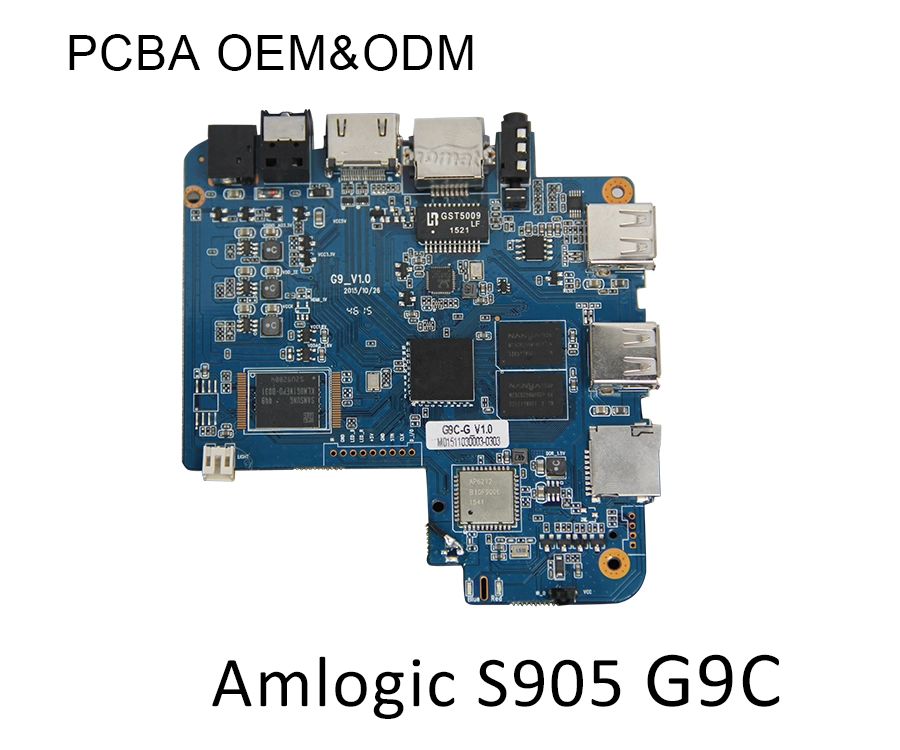
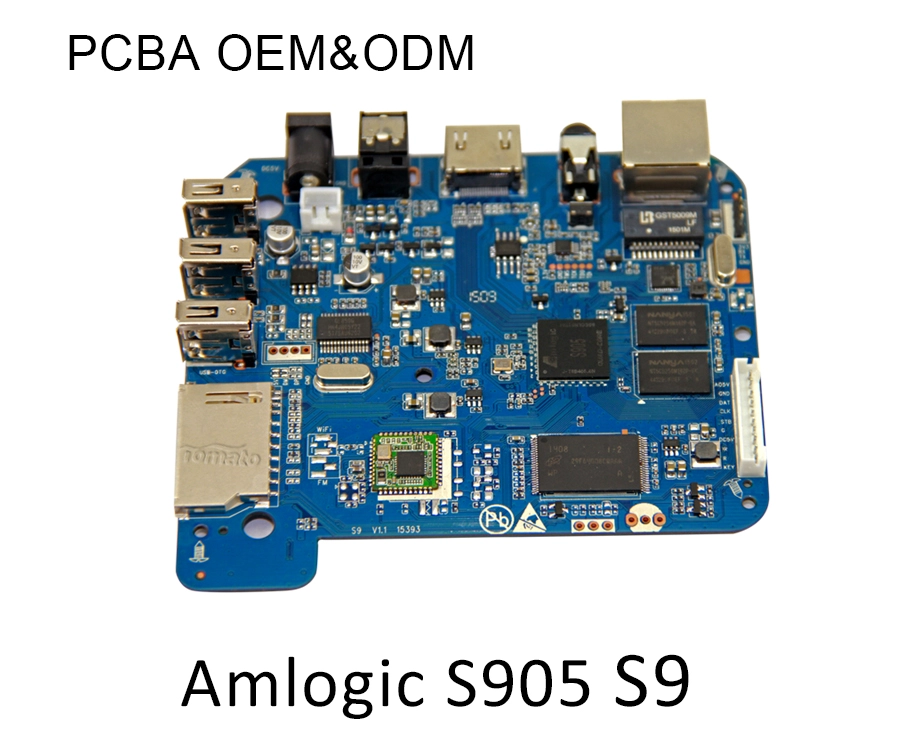
4.1 PCBA design and hardware customization
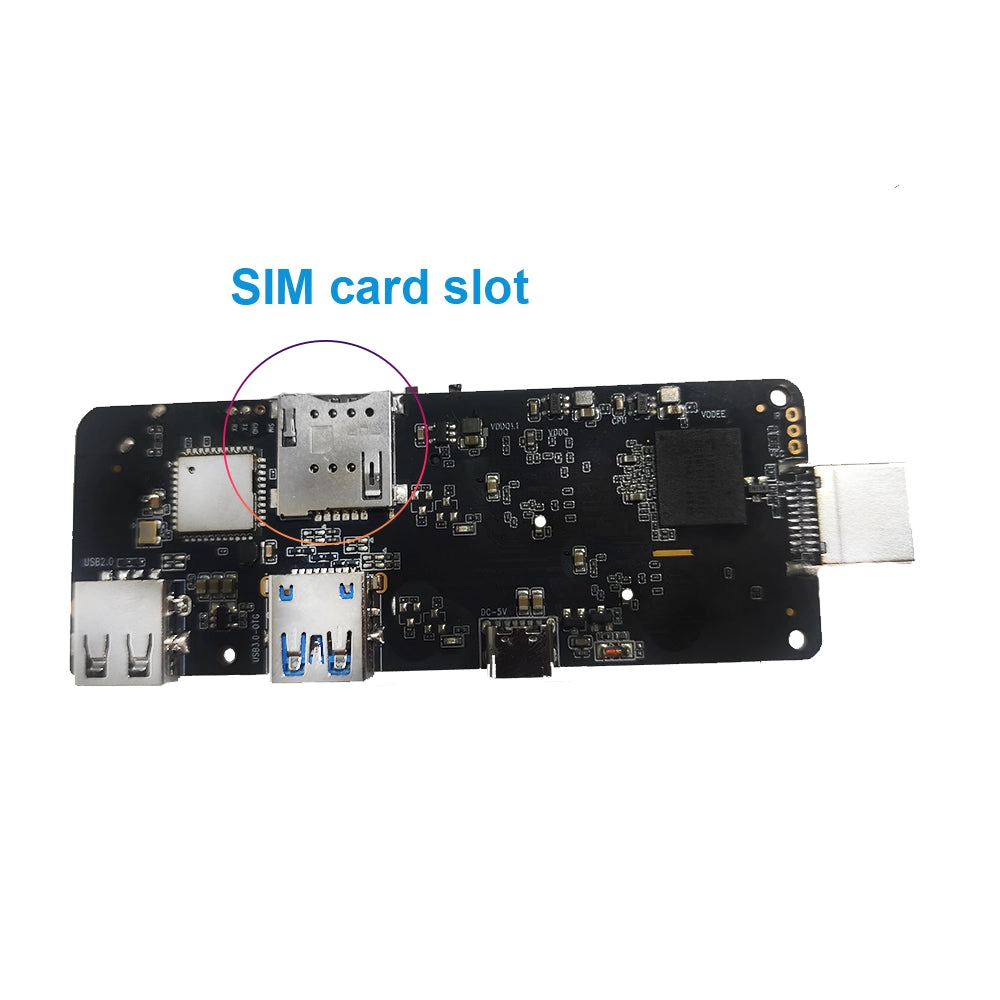
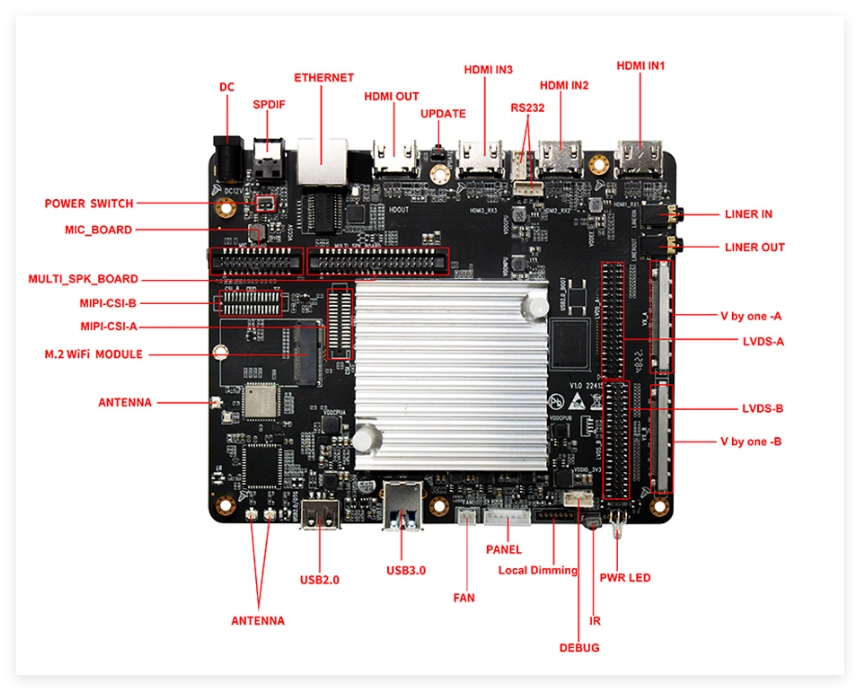
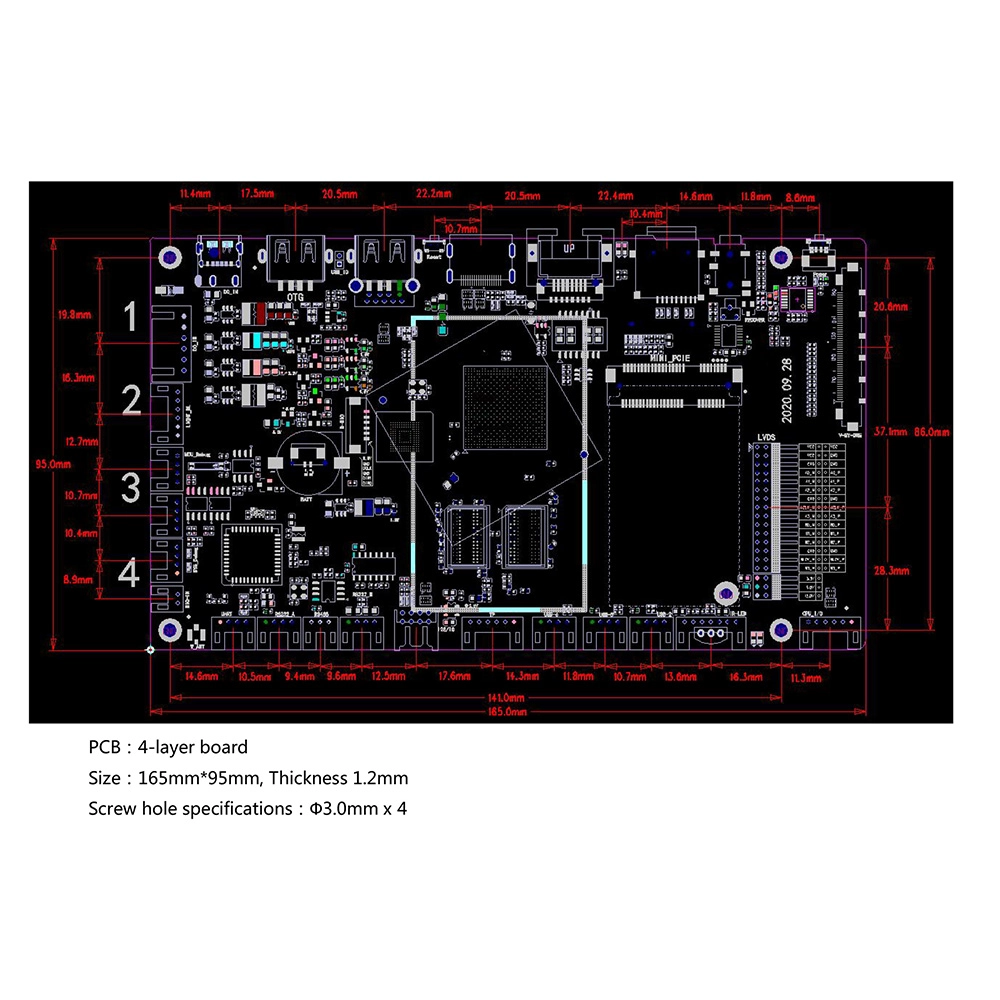
A SoC reference design provides a starting point, not necessarily a finished commercial product.
OEM customization may require:
-
PCB layout modification.
-
RAM and eMMC configuration.
-
HDMI and USB interface adjustments.
-
Ethernet PHY selection.
-
Wi-Fi and Bluetooth module integration.
-
Power supply optimization.
-
UART, GPIO, and peripheral expansion.
-
EMI and signal-integrity evaluation.
For example, an IPTV operator may require Gigabit Ethernet, an additional USB port, a customized infrared receiver, and a specific enclosure dimension.
These changes affect the PCBA architecture and must be evaluated against the SoC's available interfaces and BSP support.
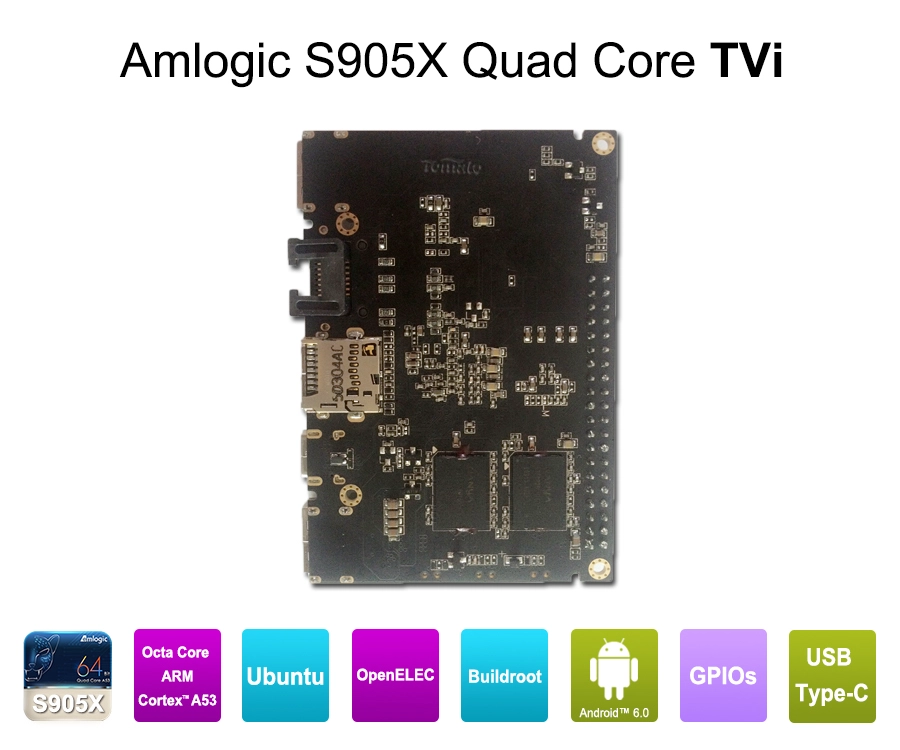
SZTomato supports PCBA-level hardware modification to align the board configuration with the customer's product requirements.
4.2 Android/Linux firmware and kernel optimization
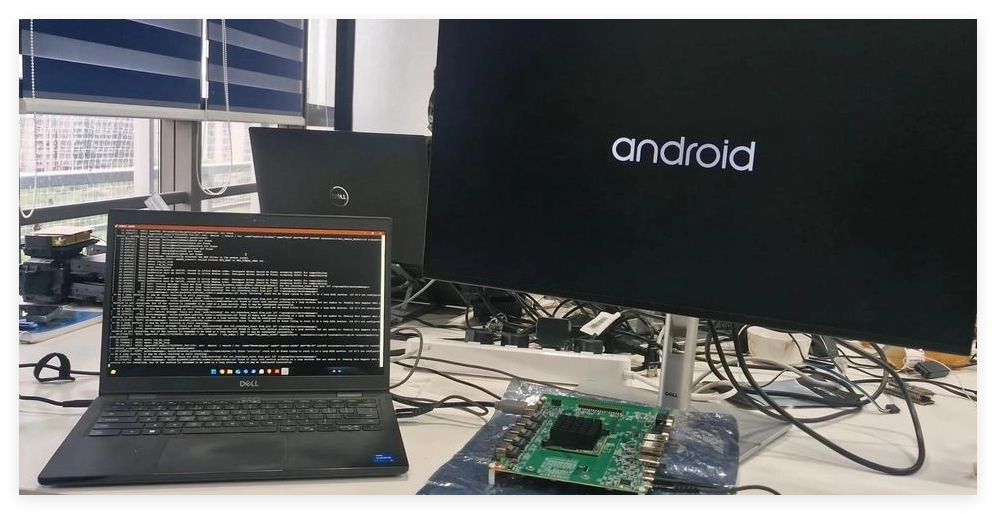
Firmware determines how effectively the selected SoC performs in the finished device.
Important development areas include:
Android BSP integration
-
Board Support Package configuration.
-
Device tree customization.
-
Hardware abstraction layer integration.
-
Driver adaptation.
-
System service optimization.
Linux kernel optimization
-
Peripheral driver integration.
-
Memory management.
-
Power management.
-
Network driver configuration.
-
Bootloader and kernel compatibility.
Multimedia framework optimization
-
Hardware video decoding.
-
HDMI audio/video output.
-
Display resolution management.
-
Audio codec integration.
-
HDR pipeline configuration.
For STB projects, firmware validation must cover real application workloads rather than relying exclusively on synthetic benchmark results.
4.3 SDK/API integration and customized user interfaces
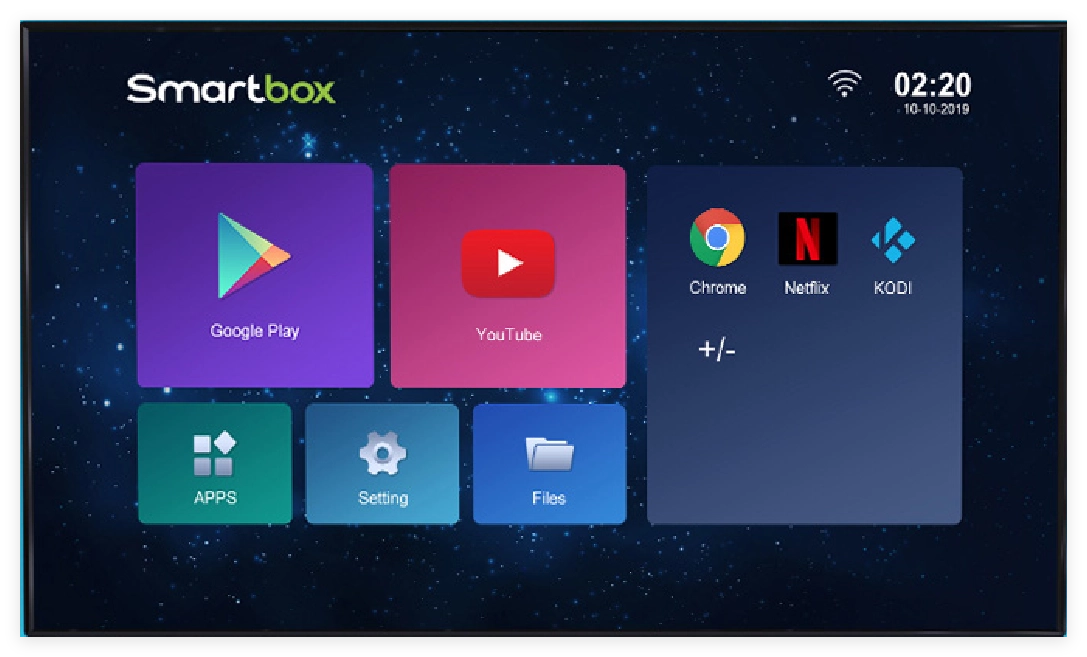
A telecom operator or service provider often has its own software ecosystem.
The STB must communicate with middleware, cloud management systems, authentication services, content platforms, and third-party applications.
SZTomato supports SDK/API integration and custom UI/UX firmware development for project-specific applications.
Typical customization includes:
-
Branded boot animations.
-
Customized Android launchers.
-
Preinstalled system applications.
-
IPTV middleware integration.
-
Remote-control key mapping.
-
Automatic application startup.
-
Cloud device-management integration.
-
Customized language and regional settings.
The objective is to deliver a product that fits the customer's service architecture rather than forcing the customer to redesign its software around a generic retail device.
4.4 Thermal engineering and industrial cooling
Thermal design becomes increasingly important when using higher-performance SoCs.
An RK3588-based device running AI inference, video decoding, and multiple applications simultaneously generates a different thermal load from a basic IPTV receiver.
The enclosure, heatsink, thermal interface materials, and internal component arrangement must be designed around the intended workload.
SZTomato supports specialized cooling solutions for industrial applications, including customized thermal structures and enclosure optimization.
For commercial deployments, validation should include sustained-load testing, thermal throttling analysis, and long-duration operation.
4.5 HDCP, DRM, OTA, and product certification
These are separate but interconnected parts of a commercial STB platform.
|
Technical area |
OEM development consideration |
|---|---|
|
HDCP |
Protected HDMI content transmission |
|
Widevine DRM |
Content-provider DRM requirements |
|
Secure boot |
Firmware integrity and platform security |
|
OTA |
Remote firmware distribution and recovery |
|
Google certification |
Required certification and platform authorization |
|
Regulatory compliance |
CE, FCC, RoHS and applicable regional requirements |
A chipset may provide hardware security functions, but that does not automatically mean the finished product has the necessary DRM provisioning, HDCP licensing, or streaming-service certification.
OEM buyers should confirm these requirements before finalizing the SoC and firmware architecture.
The same applies to OTA systems. A reliable deployment strategy needs version management, update integrity checks, recovery procedures, and controlled firmware releases.
4.6 A practical STB OEM development workflow
-
Requirement definition
Confirm resolution, codec, operating system, interfaces, target applications, and deployment environment.
-
SoC and hardware selection
Evaluate chipset suitability, memory configuration, PCBA design, and BOM cost.
-
Engineering samples
Develop prototype hardware, verify interfaces, and validate thermal performance.
-
Firmware and SDK integration
Customize BSP, kernel, applications, launcher, middleware, and OTA architecture.
-
Testing and certification
Validate multimedia performance, network stability, security, regulatory requirements, and reliability.
-
Mass production
Establish production specifications, QC procedures, firmware version control, and lifecycle support.
The most effective OEM development process validates hardware and software together. This reduces the risk of discovering fundamental compatibility problems after the PCBA design has already entered mass production.
5. Why Choose SZTomato for Set-Top Box OEM/ODM Manufacturing?
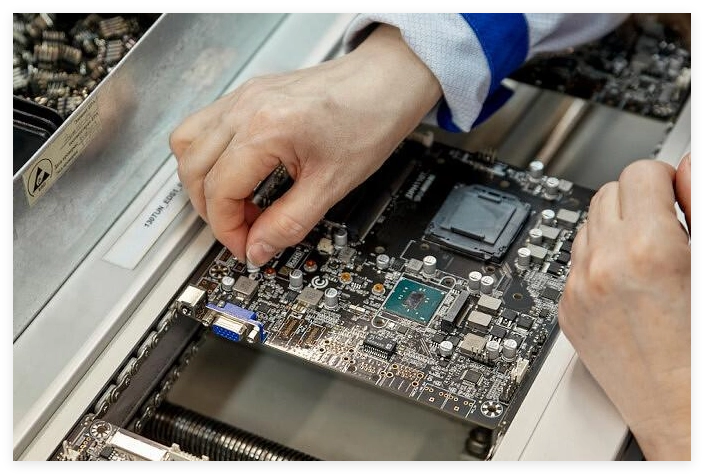
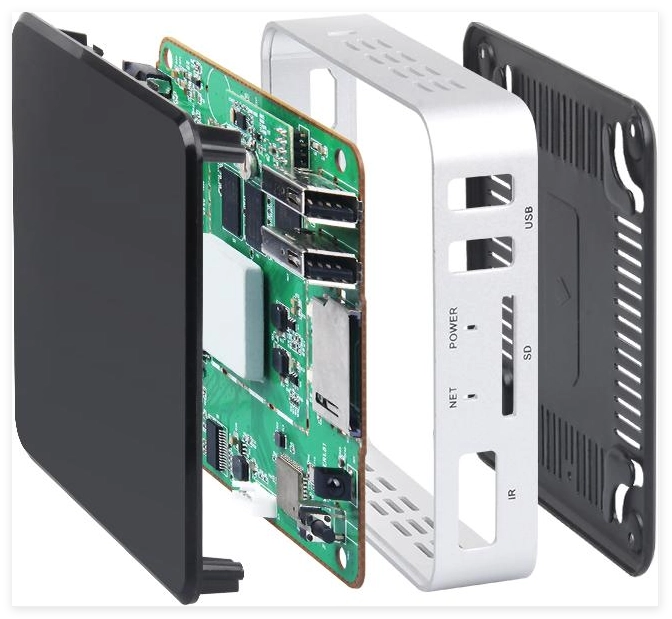
For B2B buyers, choosing an STB manufacturer should involve more than comparing chipset quotations and standard product specifications.
The manufacturer's engineering capabilities determine whether a reference design can be transformed into a reliable, commercially viable product.
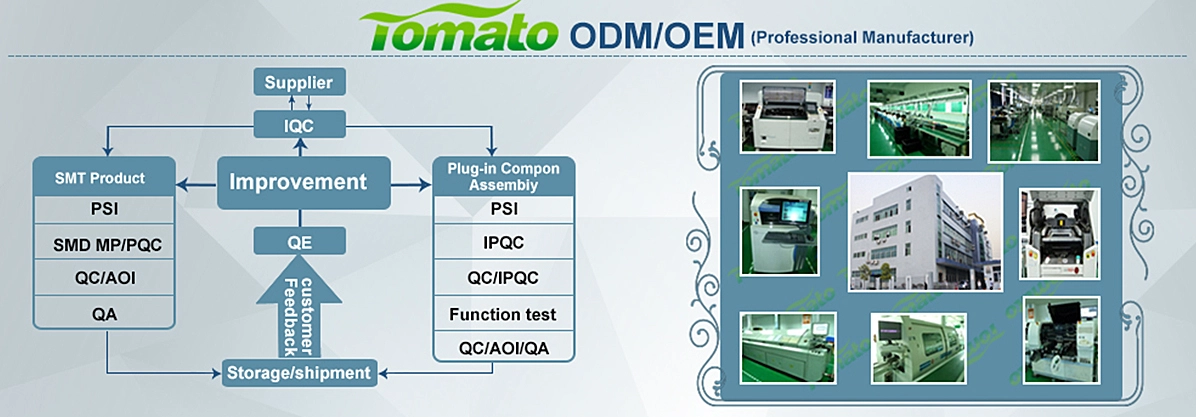
SZTomato has been developing smart multimedia hardware solutions since 2011, focusing on OEM/ODM manufacturing, hardware engineering, and firmware customization.
Its capabilities cover several important areas of STB development.
Hardware and PCBA engineering
-
Customized PCBA architecture and component selection.
-
Hardware interface modification.
-
Memory and storage configuration.
-
Power management and circuit optimization.
Firmware and software engineering
-
Android and Linux firmware customization.
-
BSP and kernel-level optimization.
-
Custom boot animation and UI/UX.
-
SDK/API and IPTV middleware integration.
-
OTA firmware update solutions.
Industrial product development
-
Customized enclosure design.
-
Specialized cooling solutions.
-
Thermal optimization for continuous operation.
-
Hardware and software compatibility testing.
OEM/ODM manufacturing
-
Engineering sample development.
-
Customized product configurations.
-
Multi-stage quality control.
-
Production preparation and technical support.
For customers developing IPTV terminals, OTT streaming devices, telecom operator STBs, or commercial multimedia hardware, SZTomato provides an engineering-oriented approach that connects SoC selection with the complete product development process.
Final Recommendation: Select the SoC According to the Business Model
The best STB chipset is not necessarily the most powerful or the most expensive.
-
Choose Amlogic S905X5M for mainstream 4K OTT and IPTV projects.
-
Choose Amlogic S928X when genuine 8K60 decoding is a core product requirement.
-
Choose Rockchip RK3588 for AI-enabled multimedia, advanced interfaces, and multifunctional edge computing.
-
Choose Allwinner H618 for cost-sensitive, relatively lightweight multimedia applications.
The final decision should consider the total BOM, firmware development costs, software lifecycle, certification requirements, and expected deployment scale.
Develop Your Next Set-Top Box OEM Project with SZTomato
Are you a telecom operator, IPTV service provider, electronics brand owner, distributor, or system integrator looking for a customized STB platform?
SZTomato can help evaluate your SoC requirements, PCBA configuration, firmware architecture, SDK/API integration, and industrial design.
Share your target resolution, preferred chipset, operating system, interface requirements, and estimated order quantity with our engineering team.
Visit www.sztomato.com to discuss your Set-Top Box OEM/ODM development requirements.
