

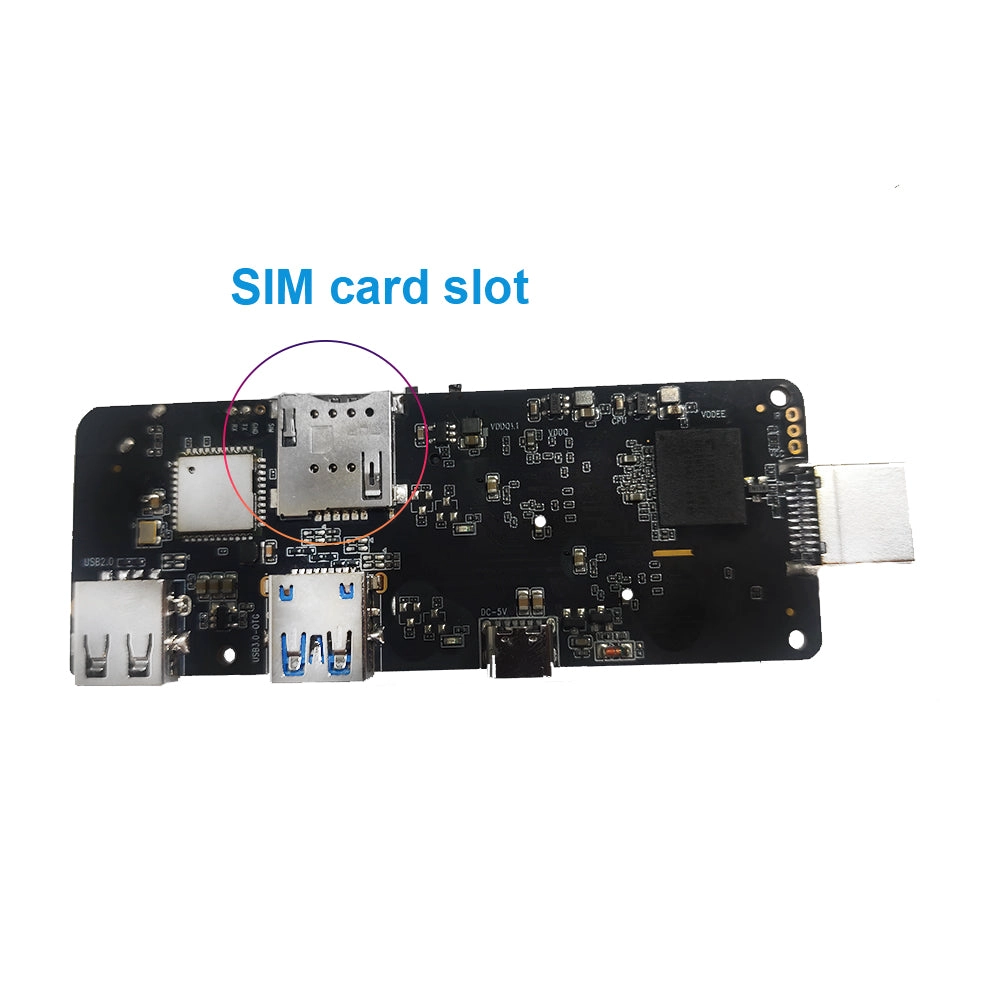
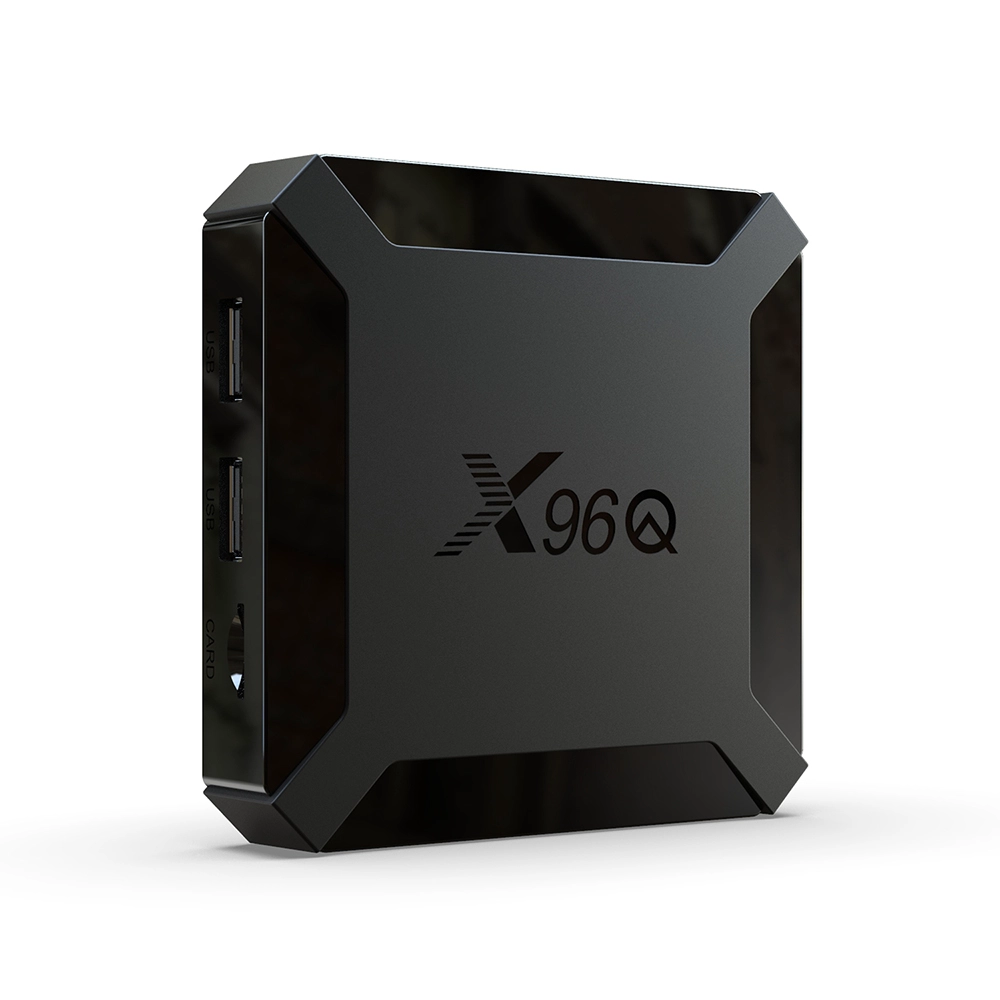
Smart TV Box with Gigabit Ethernet and Wi-Fi 6
4K and 8K video delivery place increasing demands on network throughput, latency, and connection stability. For IPTV operators and streaming service providers, insufficient network performance can cause buffering, unstable playback, delayed channel switching, and inconsistent user experiences.
The problem is not always the internet connection itself. Ethernet controller limitations, wireless interference, antenna placement, PCB routing, and firmware-level network management can all affect the performance of a Smart TV Box.
A Smart TV Box equipped with Gigabit Ethernet and Wi-Fi 6 addresses two different connectivity requirements. Gigabit Ethernet provides a stable wired connection for fixed installations, while Wi-Fi 6 improves wireless efficiency in environments containing multiple connected devices.
For manufacturers and B2B buyers, however, selecting these interfaces is only the starting point. The SoC, network chipset, PCBA architecture, firmware, and thermal design must work together to deliver consistent performance.
1. Why Gigabit Ethernet and Wi-Fi 6 Matter for Smart TV Box Performance
Network connectivity directly affects the performance of a streaming device. Even a powerful processor cannot compensate for an unstable network connection.
For commercial IPTV deployments, hospitality entertainment systems, and high-resolution media applications, network architecture should be considered during the initial hardware selection process.
1.1 Gigabit Ethernet: Stable Wired Connectivity for Streaming Applications
Gigabit Ethernet supports theoretical link speeds of up to 1,000 Mbps over compatible Ethernet connections.
Compared with traditional 100 Mbps Ethernet, a Gigabit interface provides substantially more available bandwidth for high-bitrate video streams, local media transfers, and network-intensive applications.
Its main advantages include:
-
Consistent throughput: Suitable for high-bitrate 4K and selected 8K streaming workflows.
-
Lower interference exposure: Wired connections avoid the radio-frequency interference affecting wireless networks.
-
Predictable latency: Useful for IPTV applications, local media servers, and network-controlled devices.
-
Stable connectivity: Appropriate for installations where the Smart TV Box operates continuously.
-
Improved local network access: Supports faster communication with NAS devices, media servers, and compatible network infrastructure.
However, a Gigabit Ethernet port does not guarantee 1 Gbps of actual application throughput.
The Ethernet PHY, controller, SoC interface, driver, cable category, router, and network configuration all influence real-world performance.
For OEM/ODM projects, engineers should verify the complete Ethernet data path rather than relying solely on the port specification.
1.2 Wi-Fi 6: Better Wireless Efficiency in Multi-Device Environments
Wi-Fi 6, based on IEEE 802.11ax, introduces several technologies designed to improve wireless network efficiency.
Important features include:
-
OFDMA: Divides wireless channel resources into smaller resource units, allowing more efficient communication with multiple devices.
-
MU-MIMO: Supports simultaneous communication with multiple compatible devices under supported configurations.
-
1024-QAM: Increases data throughput under suitable signal conditions.
-
BSS Coloring: Helps reduce interference between overlapping wireless networks.
-
Target Wake Time (TWT): Supports scheduled communication and power-saving mechanisms for compatible devices.
These capabilities are particularly useful in modern residential and commercial environments.
A Smart TV Box may operate alongside smartphones, laptops, smart cameras, gaming devices, and IoT equipment. Wi-Fi 6 can improve overall wireless resource utilization when the access point and connected devices support the relevant features.
For high-resolution streaming, the practical benefit depends on channel width, signal strength, antenna configuration, interference, router capability, and the wireless chipset.
Wi-Fi 6 should therefore be evaluated as part of the complete network environment rather than as an isolated product specification.
1.3 Gigabit Ethernet vs. Wi-Fi 6: Which Connectivity Should B2B Buyers Choose?
The two interfaces serve different installation requirements.
| Evaluation Factor | Gigabit Ethernet | Wi-Fi 6 |
|---|---|---|
| Connection type | Wired | Wireless |
| Theoretical link rate | 1 Gbps | Up to 9.6 Gbps across the standard's supported configurations |
| Interference | Not affected by Wi-Fi radio interference | Subject to wireless interference |
| Installation | Requires Ethernet cabling | Flexible placement |
| Latency consistency | Generally more predictable | Depends on wireless conditions |
| Best application | Fixed IPTV and commercial installations | Residential and flexible deployments |
| Network infrastructure | Gigabit router or switch | Wi-Fi 6 compatible access point |
The 9.6 Gbps Wi-Fi 6 figure represents the theoretical aggregate maximum of the standard, not the expected throughput of an individual Smart TV Box.
For professional IPTV deployments, Gigabit Ethernet is generally the preferred primary connection when cabling is available. Wi-Fi 6 provides a valuable alternative where cable installation is impractical.
For this reason, many B2B buyers should consider a dual-connectivity configuration rather than choosing one interface exclusively.
2. Hardware Architecture: Designing a High-Performance Smart TV Box
Supporting Gigabit Ethernet and Wi-Fi 6 requires more than adding a LAN port and a wireless module.
The hardware architecture must maintain sufficient processing capacity, memory bandwidth, signal integrity, and thermal stability.
2.1 SoC Selection and Network Interface Compatibility
The System-on-Chip determines the processing resources available for multimedia playback, application execution, and network-related workloads.
When selecting an SoC for a Smart TV Box, engineers should evaluate:
-
CPU architecture and processing performance.
-
Integrated GPU capabilities.
-
Hardware video decoding and encoding.
-
DDR memory bandwidth.
-
Ethernet MAC and external controller support.
-
PCIe, USB, or other available expansion interfaces.
-
Android/Linux BSP availability.
-
Long-term driver and firmware support.
For 4K and 8K streaming applications, hardware decoding for codecs such as H.265/HEVC, VP9, and AV1 should also be evaluated.
AV1 adoption is particularly relevant for bandwidth-conscious streaming services because its compression efficiency can reduce the bitrate required for comparable video quality.
However, codec support must be verified at the SoC level, including supported resolutions, frame rates, bit depths, and HDR formats.
The network interface and video decoding pipeline must be designed together to avoid unnecessary performance bottlenecks.
2.2 Wi-Fi Module Selection and Antenna Design
Wireless performance depends heavily on the module and RF design.
A Wi-Fi 6 module may support 2.4 GHz and 5 GHz operation, but the actual configuration depends on the chipset and product implementation.
Engineers should consider:
-
Wireless chipset compatibility with the selected SoC.
-
Driver and firmware availability.
-
Antenna type and placement.
-
RF transmission and reception performance.
-
PCB ground-plane design.
-
Antenna isolation from HDMI and high-frequency digital circuits.
-
Enclosure material and internal component positioning.
-
Regulatory requirements for the target market.
A poorly positioned antenna can significantly reduce wireless performance even when the device uses a capable Wi-Fi 6 chipset.
For compact TV Box enclosures, RF layout requires careful attention because antennas may be positioned close to the SoC, memory, power circuitry, and HDMI interface.
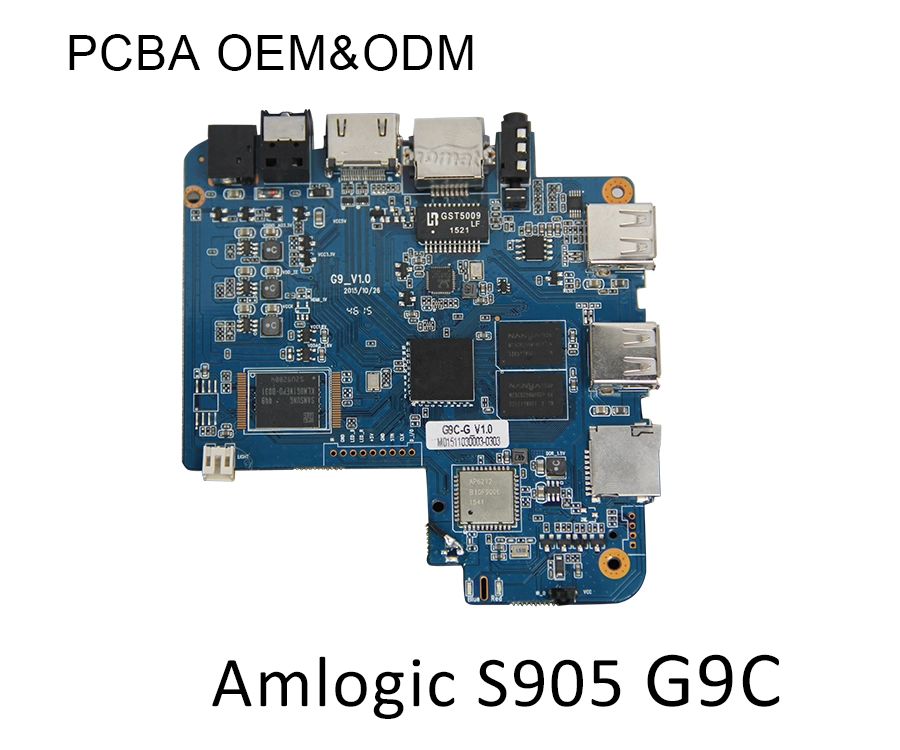
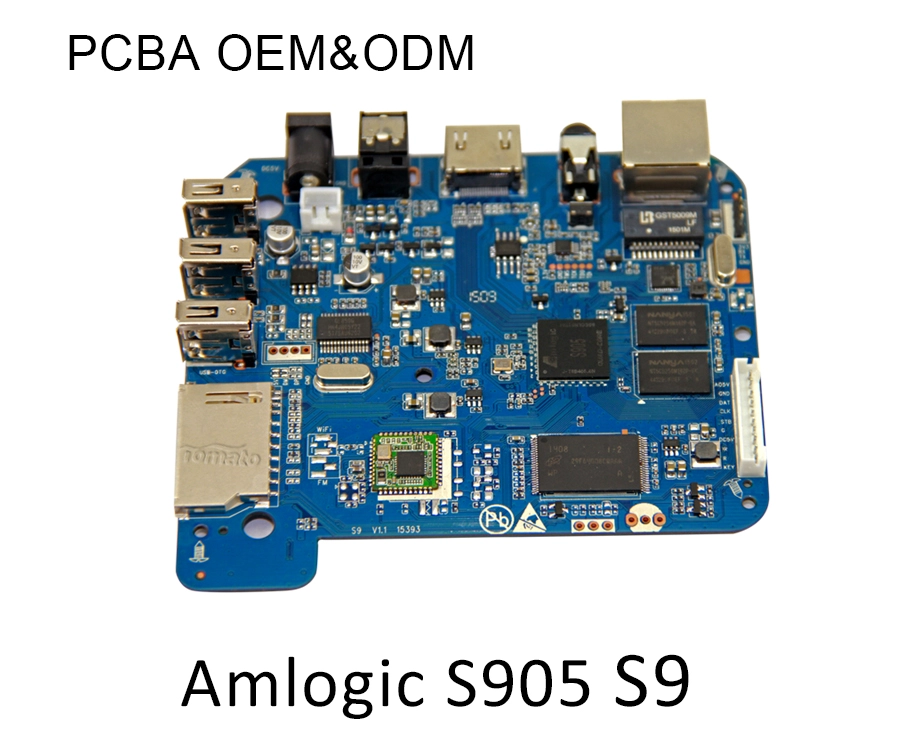
SZTomato supports PCBA hardware modification and wireless configuration customization to address different product and installation requirements.
2.3 Gigabit Ethernet PCBA Design and Signal Integrity
The Ethernet subsystem typically includes an Ethernet MAC, PHY, magnetics, RJ45 connector, and supporting PCB routing.
Depending on the SoC architecture, the PHY may be integrated or implemented as an external component.
Key engineering considerations include:
-
RGMII or other supported MAC-to-PHY interfaces.
-
Signal timing and routing length.
-
PCB impedance control.
-
Differential pair routing where applicable.
-
Power supply noise.
-
ESD protection.
-
EMI/EMC performance.
-
Connector and magnetics selection.
These details directly influence link stability and electromagnetic compatibility.
For example, poor RGMII timing configuration can cause packet errors or unstable connections even when the Ethernet hardware appears to operate normally.
A production-ready Smart TV Box should undergo link negotiation testing, sustained throughput testing, packet error monitoring, and thermal testing.
SZTomato can modify PCBA layouts and component configurations to support specific Gigabit Ethernet requirements rather than relying exclusively on standard reference designs.
3. Firmware Optimization and Network Performance Management
Hardware specifications define the theoretical capabilities of a Smart TV Box. Firmware determines how effectively those capabilities are used.
A device with Gigabit Ethernet and Wi-Fi 6 can still experience poor network performance if its kernel drivers, network services, application framework, or power-management settings are not properly optimized.
3.1 Android and Linux Kernel Network Optimization
Android-based Smart TV Box products typically rely on a Linux kernel underneath the Android framework.
Network performance therefore depends on several software layers:
-
Ethernet PHY and MAC drivers.
-
Wi-Fi chipset drivers.
-
Firmware compatibility.
-
TCP/IP stack configuration.
-
DHCP and DNS services.
-
Network interface management.
-
Power management.
-
Application-level buffering.
For customized projects, engineers may need to optimize kernel configurations and device drivers to ensure stable operation with the selected Ethernet and Wi-Fi modules.
Linux-based systems can provide additional flexibility for specialized network applications, embedded services, and custom streaming environments.
For IPTV operators, firmware development should also consider multicast traffic, IGMP snooping compatibility within the network infrastructure, and IGMP proxy requirements where applicable.
These functions should be validated against the operator's actual network architecture.
3.2 Streaming Stability, Buffer Management, and Network Testing
High-speed connectivity does not automatically guarantee uninterrupted video playback.
Streaming stability depends on several variables:
-
Available network bandwidth.
-
Actual video bitrate.
-
Packet loss and retransmission.
-
Network jitter.
-
Application buffer configuration.
-
Video decoder performance.
-
Server and CDN response time.
A practical Smart TV Box validation process should include:
| Test Item | Engineering Objective |
|---|---|
| Ethernet throughput | Verify sustained wired data transfer |
| Wi-Fi throughput | Measure performance at different distances |
| Latency and jitter | Evaluate connection consistency |
| Packet loss | Identify network transmission problems |
| Long-duration playback | Detect buffering and application instability |
| Concurrent workloads | Test multimedia and background services together |
| Thermal testing | Identify performance degradation under sustained loads |
| Reconnection testing | Verify recovery after network interruptions |
For professional applications, testing should include both controlled laboratory environments and representative customer deployment conditions.
3.3 HDCP, HDMI Output, and Protected Streaming
Network performance is only one part of the multimedia delivery chain.
Commercial streaming applications may require protected video output through HDCP-compatible HDMI interfaces.
The Smart TV Box must maintain compatibility across the SoC, operating system, DRM implementation, HDMI transmitter, and connected display.
Important considerations include:
-
HDMI version and supported output resolution.
-
HDCP 1.4 or 2.2 requirements, depending on the application.
-
Widevine DRM requirements where applicable.
-
HDR format compatibility.
-
Display EDID negotiation.
-
Resolution and refresh-rate switching.
For brands developing certified streaming products, HDCP and DRM requirements should be addressed early in the development process.
Adding Gigabit Ethernet or Wi-Fi 6 does not automatically provide access to protected streaming services. Certification, licensing, and platform authorization remain separate requirements.
3.4 OTA Updates and Remote Firmware Management
For large-scale deployments, network hardware must be supported by a reliable software maintenance strategy.
An OTA update system allows operators and device brands to distribute firmware updates without physically accessing each Smart TV Box.
A customized OTA architecture can support:
-
Firmware version management.
-
Device identification.
-
Secure update package verification.
-
Staged rollout.
-
Update recovery.
-
Regional firmware configurations.
-
Remote diagnostic reporting.
SZTomato supports customized Android/Linux firmware and software integration to help B2B customers maintain their product platforms throughout their operational lifecycle.
For telecom operators and hospitality service providers, this capability is particularly important when managing thousands of installed devices.
4. OEM/ODM Smart TV Box Solutions for IPTV, Hospitality, and Commercial Applications
The combination of Gigabit Ethernet and Wi-Fi 6 creates opportunities across several B2B markets.
However, different deployment environments require different hardware configurations and firmware features.
4.1 IPTV Operators and Telecom Service Providers
IPTV deployments require stable network communication, predictable multimedia performance, and compatibility with operator infrastructure.
A customized Smart TV Box can integrate:
-
Gigabit Ethernet connectivity.
-
Wi-Fi 6 wireless networking.
-
IPTV applications and middleware.
-
Multicast streaming support.
-
Customized launchers and user interfaces.
-
Remote device management.
-
OTA firmware updates.
-
Operator-specific SDK/API integration.
For telecom operators, the goal is to create a consistent customer experience across broadband, IPTV, and connected home services.
4.2 Hospitality and Commercial Entertainment Systems
Hotels, serviced apartments, hospitals, and other commercial environments often require centralized content delivery and remote device administration.
A Smart TV Box with Gigabit Ethernet and Wi-Fi 6 can support:
-
Guest entertainment systems.
-
Centralized media playback.
-
Digital content distribution.
-
Hotel information interfaces.
-
Customized application portals.
-
Network-based device management.
For these applications, stable long-duration operation is more important than headline processor specifications.
Thermal design, firmware reliability, and remote maintenance should be included in the initial procurement requirements.
4.3 Smart TV Box OEM/ODM Customization with SZTomato
Standard Smart TV Box products may not meet the hardware and software requirements of every project.
A telecom operator may require a customized IPTV launcher and multicast support. A hospitality brand may need a branded interface and remote management system. A distributor may require different memory, storage, wireless, and enclosure configurations for different markets.
SZTomato provides OEM/ODM development covering the complete product customization process.
| Customization Area | SZTomato Engineering Support |
|---|---|
| SoC configuration | Processor selection according to application requirements |
| PCBA modification | Ethernet, Wi-Fi, power circuits, and interface customization |
| Wireless engineering | Wi-Fi 6 module selection and antenna configuration |
| Firmware | Android/Linux kernel and system optimization |
| UI/UX | Customized launcher, boot logo, and branded interface |
| SDK/API | Integration with IPTV platforms and third-party applications |
| Thermal engineering | Heat dissipation and specialized industrial cooling |
| OTA management | Customized firmware update and maintenance solutions |
| Manufacturing | Prototype development, quality control, and mass production support |
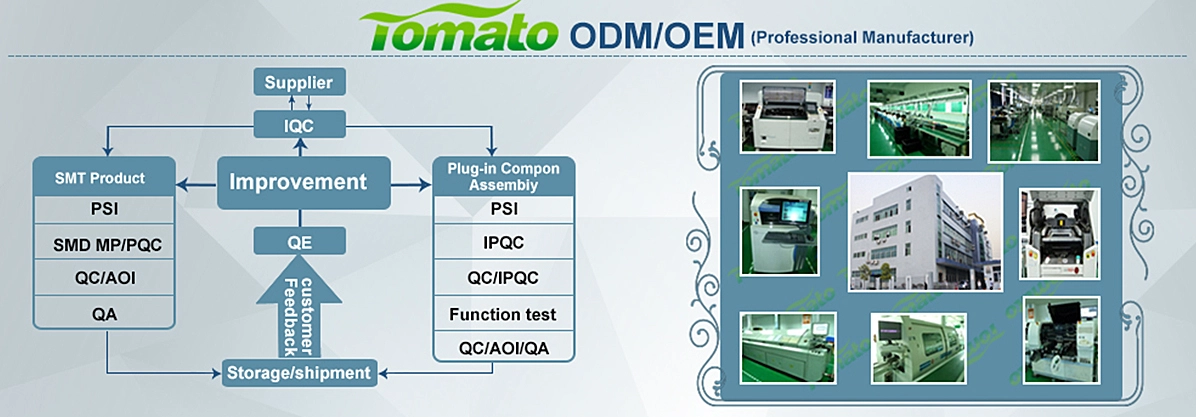
Established in 2011, SZTomato focuses on OEM/ODM manufacturing and engineering for Android TV Box, Smart TV Box, IPTV, digital signage, and multimedia hardware applications.
Its development approach combines hardware engineering with firmware and application integration.
This is important for B2B buyers who need more than a standard device with a Gigabit LAN port and a Wi-Fi 6 specification.
A successful project requires hardware and software teams to work from the same technical requirements.
Conclusion: Select a Smart TV Box Designed for Real Network Requirements
Gigabit Ethernet and Wi-Fi 6 provide complementary connectivity options for modern Smart TV Box applications.
Gigabit Ethernet offers predictable wired performance for IPTV, hospitality, and fixed commercial installations. Wi-Fi 6 improves wireless efficiency in multi-device environments and provides greater installation flexibility.
However, network interfaces alone do not determine product quality.
SoC compatibility, PCBA layout, RF engineering, kernel optimization, video decoding, HDCP integration, thermal management, and OTA maintenance all contribute to the final performance of the device.
For procurement managers, telecom operators, brand owners, and system integrators, choosing an experienced OEM/ODM manufacturer can reduce hardware integration risks and improve product differentiation.
SZTomato provides customized Smart TV Box solutions with Gigabit Ethernet, Wi-Fi 6, PCBA hardware modification, firmware customization, SDK/API integration, and specialized thermal engineering.
Contact SZTomato to discuss your next Smart TV Box project. Provide your target SoC, network requirements, operating system, memory configuration, application scenario, and estimated order quantity. Our engineering team can help evaluate the appropriate hardware architecture and OEM/ODM development plan.
