
TV Box SoC Comparison: Best Chips for 4K, 8K and OEM Projects
TV Box SoC Comparison: Which Chip Should You Choose?
A TV Box project can fail its performance targets even when the selected SoC looks correct on paper. The usual causes are not limited to insufficient CPU performance. They include unsupported codec profiles, inadequate memory bandwidth, unstable Wi-Fi throughput, thermal throttling, incomplete vendor BSP support, and firmware that cannot reliably recover from OTA updates.
For B2B buyers, the best TV Box chipset is the one that meets the deployment requirements with an acceptable total cost of ownership. A low-cost 4K IPTV terminal, an 8K multimedia player, and an AI-enabled digital signage controller have different hardware and software priorities.
This comparison focuses on three practical platform groups:
-
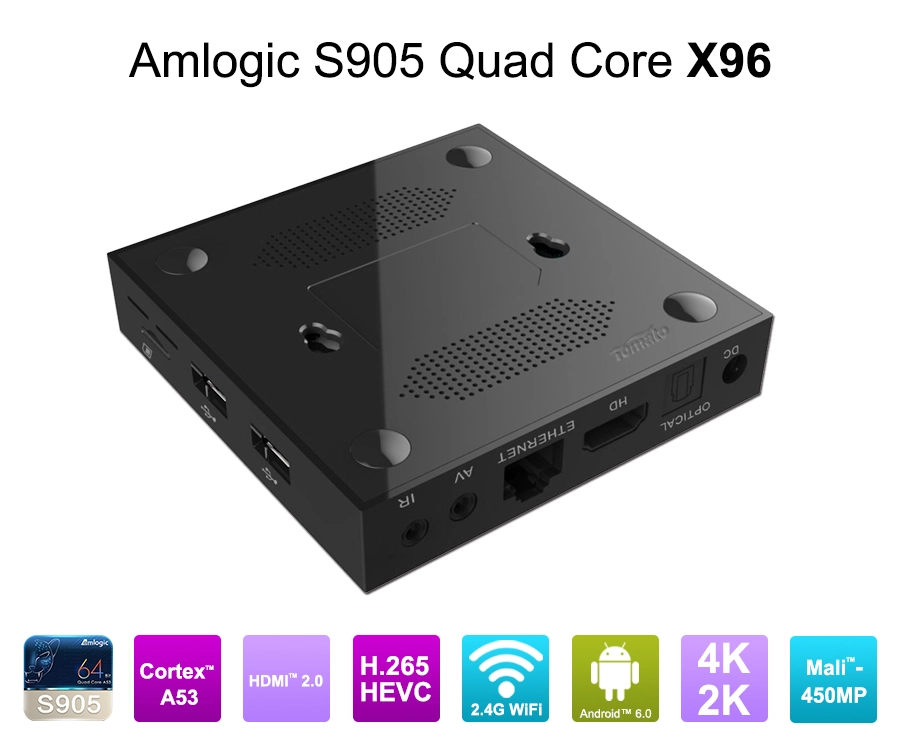
Amlogic: a strong starting point for mainstream Android TV Box, OTT, and IPTV product development.
-
Rockchip: a compelling option for high-performance multimedia, multi-display, industrial interfaces, and edge computing.
-
Allwinner: worth evaluating for cost-sensitive Android TV Box and set-top box projects where the required multimedia and connectivity features are available on the selected platform.
These are project-oriented recommendations, not universal rankings. Actual capabilities depend on the exact SoC revision, board design, software BSP, and product configuration.
1. How to Compare TV Box SoCs for 4K, 8K, and Commercial Applications
The first step is to translate the product brief into measurable engineering requirements. Comparing CPU clock speeds alone is insufficient because video decoding, graphics rendering, AI inference, and system responsiveness depend on different hardware blocks.
Video decoding: Start with codecs, profiles, and frame rates
For a mainstream 4K TV Box, verify hardware decoding for H.265/HEVC, VP9, and AV1 where required. AV1 support deserves particular attention in streaming projects because the decoder must support the required profile, bit depth, resolution, and frame rate—not merely list AV1 as a supported format.
For an 8K product, examine the entire multimedia pipeline:
-
Maximum hardware decoding resolution and supported frame rates.
-
Supported codec profiles and 8-bit or 10-bit video.
-
HDMI output resolution, refresh rate, and HDR capabilities.
-
Memory bandwidth for high-resolution video and graphics composition.
-
Concurrent decoding, picture-in-picture, and multi-display requirements.
-
HDCP and content-protection requirements for licensed streaming services.
A SoC advertised with 8K decoding does not necessarily support every 8K codec at 60 frames per second. Nor does an 8K decoder guarantee 8K output through every interface configuration.
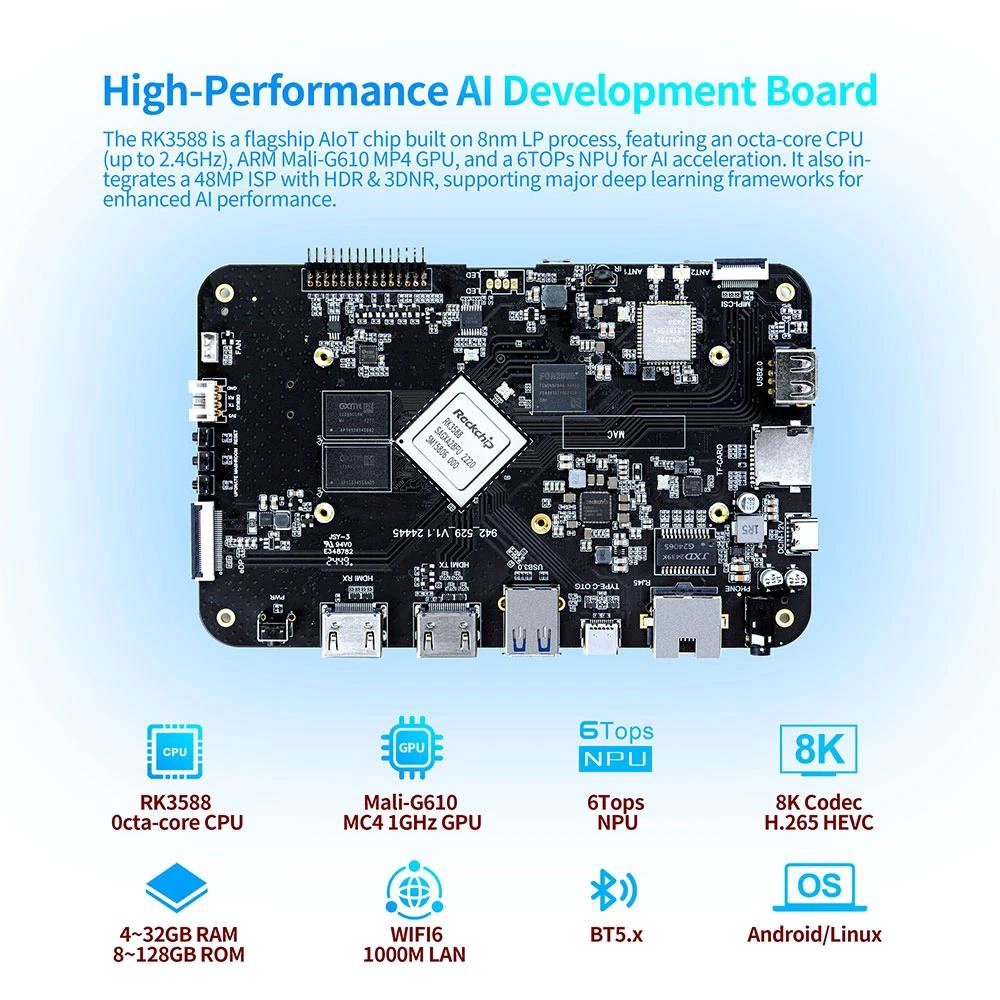
The Rockchip RK3588 illustrates this distinction. Its published specifications list an octa-core CPU comprising four Cortex-A76 and four Cortex-A55 cores, a Mali-G610 MC4 GPU, a 6 TOPS NPU, and hardware decoding capabilities that include up to 8K at 60 fps for specified formats. Its AV1 decoding specification is up to 4K at 60 fps, so buyers should not interpret its 8K headline as universal 8K AV1 support.
CPU, GPU, and NPU: Match the workload
The CPU handles operating-system tasks, application logic, middleware, background services, and user-interface responsiveness. The GPU accelerates graphics and compositing. An NPU can accelerate supported AI workloads, but it is useful only when the model, runtime, operators, and software stack can take advantage of it.
For example:
-
A single-screen IPTV terminal may prioritize stable video playback, application startup, and network performance over peak CPU throughput.
-
A digital signage player may need multi-display output, hardware video composition, scheduled playback, and remote fleet management.
-
An AI media box may require local inference, camera input, model acceleration, and high-bandwidth storage in addition to video playback.
Do not pay for an NPU simply because it appears in the specification sheet. Confirm that the target inference framework supports the accelerator and that the required models can be deployed without excessive CPU fallback.
Memory, storage, and connectivity are part of the platform
A suitable SoC can still produce a poor commercial product if the board uses insufficient RAM, slow storage, or an unsuitable network interface.
For project evaluation, document:
|
Component |
What to verify |
|---|---|
|
RAM |
Capacity, memory type, bandwidth, and concurrent application requirements |
|
Storage |
eMMC capacity, sustained read/write performance, and OTA rollback space |
|
Ethernet |
100 Mbps or Gigabit requirements, MAC/PHY implementation, and sustained throughput |
|
Wi-Fi |
Band support, antenna design, interference resistance, and real deployment performance |
|
USB |
Number of ports, USB 2.0/3.x capability, and peripheral compatibility |
|
Display |
HDMI version, output modes, HDR, HDCP, and multi-display capability |
|
Software |
Android/Linux BSP, kernel support, drivers, security updates, and SDK availability |
Interface availability at SoC level does not mean every interface can be exposed on the finished PCBA. Pin multiplexing, board routing, power budgets, and shared high-speed interfaces can restrict the final configuration.
2. Amlogic vs. Rockchip vs. Allwinner: Which TV Box Chip Is Best?
The following comparison is intended to guide platform shortlisting. Exact specifications must be checked against the manufacturer's documentation for the specific chip and its supported production configuration.
 Amlogic — Mainstream Android TV Box and IPTV
Best starting point for projects centered on 4K streaming, OTT applications, IPTV middleware, and cost-controlled Android products.
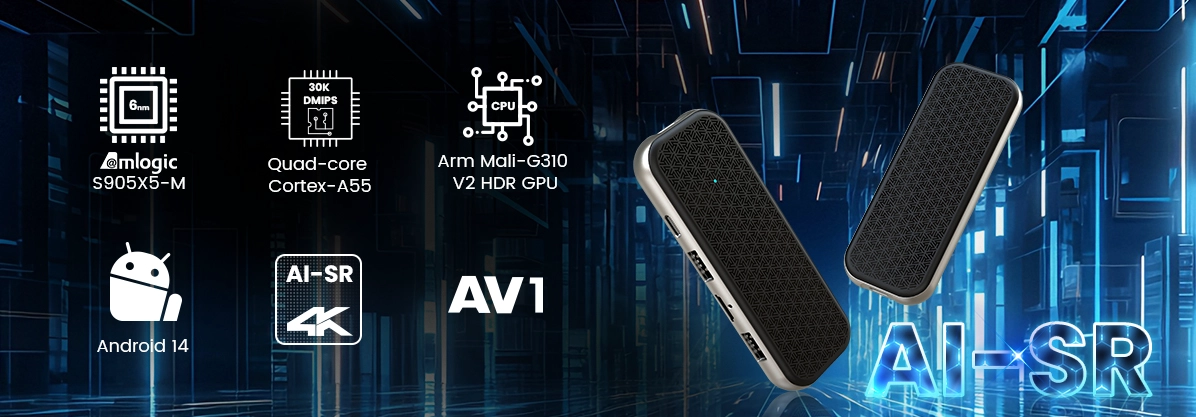
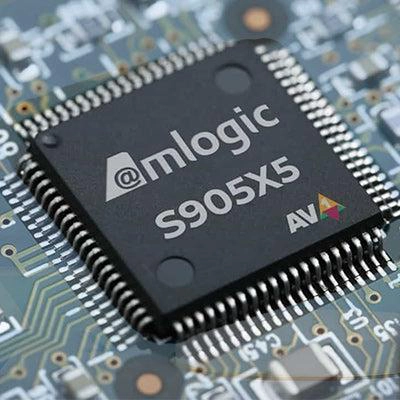
The S905X5 family is relevant to newer 4K designs. SZTomato's published S905X5 product specification lists a Cortex-A510 CPU, Mali-G310 V5 GPU, an approximately 3.2–4 TOPS NPU configuration, Android 14, and AV1 and H.266/VVC decoding capabilities. Confirm the precise limits against the selected SKU and final firmware.
Primary decision: Is the platform's media pipeline, Android BSP, and DRM implementation suitable for the target service?
 Rockchip — High-Performance Multimedia and AI
Best suited to projects that need substantial CPU/GPU resources, advanced interfaces, multi-display designs, local AI inference, or Linux-based industrial applications.
The RK3588 combines four Cortex-A76 cores, four Cortex-A55 cores, a Mali-G610 MC4 GPU, and a 6 TOPS NPU. Its extensive interface set makes it a candidate for more complex multimedia and edge-computing systems.
Primary decision: Can the project justify the additional board complexity, thermal design, software integration, and platform cost?
 Allwinner — Cost-Sensitive TV Box and Set-Top Box
A candidate for price-sensitive products where the required decoding formats, network interfaces, memory configuration, and Android software support are sufficient.
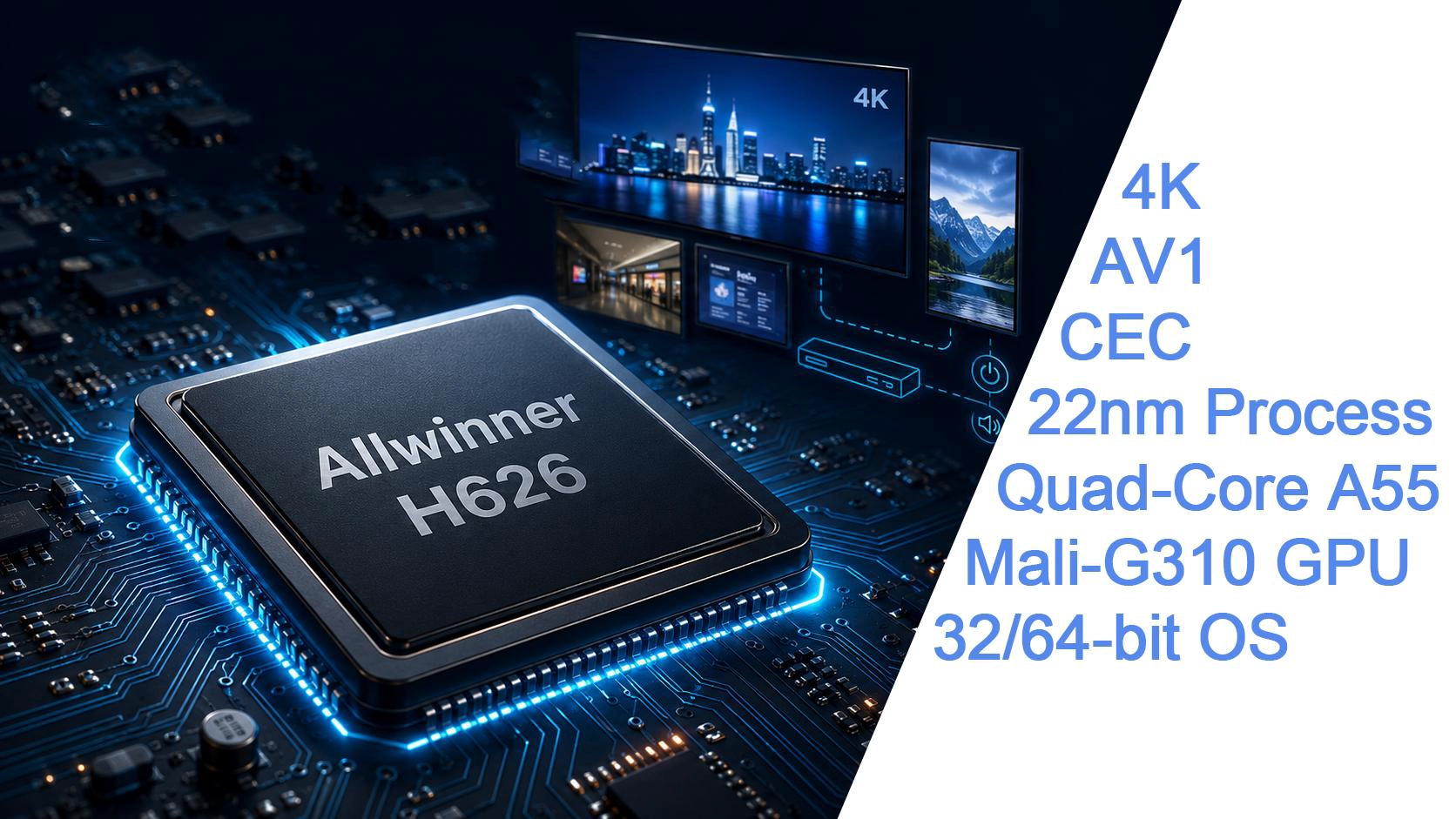
The H626 is worth evaluating for mainstream 4K-class designs, but its suitability depends on the precise codec requirements, USB and Ethernet implementation, and the vendor software package. Do not assume that every H626 board supports the same interfaces or firmware features.
Primary decision: Can the platform meet the product's playback and reliability targets without expensive workarounds or prolonged BSP development?
Practical SoC selection matrix
|
Project requirement |
First platform to evaluate |
Key validation |
|---|---|---|
|
Mainstream 4K OTT TV Box |
Amlogic S905X5 family |
Codec support, DRM, Wi-Fi, Android BSP |
|
IPTV terminal for operators |
Amlogic platform matched to operator requirements |
Middleware, conditional access, OTA, fleet management |
|
Cost-sensitive 4K device |
Allwinner H626-class platform |
Actual decode limits, network and interface configuration |
|
8K multimedia player |
Rockchip RK3588 |
Codec-specific 8K limits, HDMI output, sustained thermal performance |
|
AI-enabled digital signage |
Rockchip RK3588 or another validated AI SoC |
NPU compatibility, camera input, multi-display, inference latency |
|
Custom Linux multimedia device |
Rockchip platform with a suitable BSP |
Kernel drivers, hardware acceleration, update and maintenance strategy |
The best chip is not necessarily the most powerful one. For an IPTV operator shipping tens of thousands of devices, predictable firmware behavior, secure provisioning, long-term supply, and remote recovery can matter more than unused CPU or NPU capacity.
3. What Matters After Chip Selection: PCBA, Firmware, and Thermal Engineering
Choosing the SoC is only the beginning. In an OEM TV Box project, the PCBA layout, software BSP, power delivery, and thermal design determine whether the final device can sustain its advertised performance in production.
PCBA design: Turn the reference platform into a production-ready product
A reference design is a useful starting point, but it rarely satisfies every commercial requirement without modification.
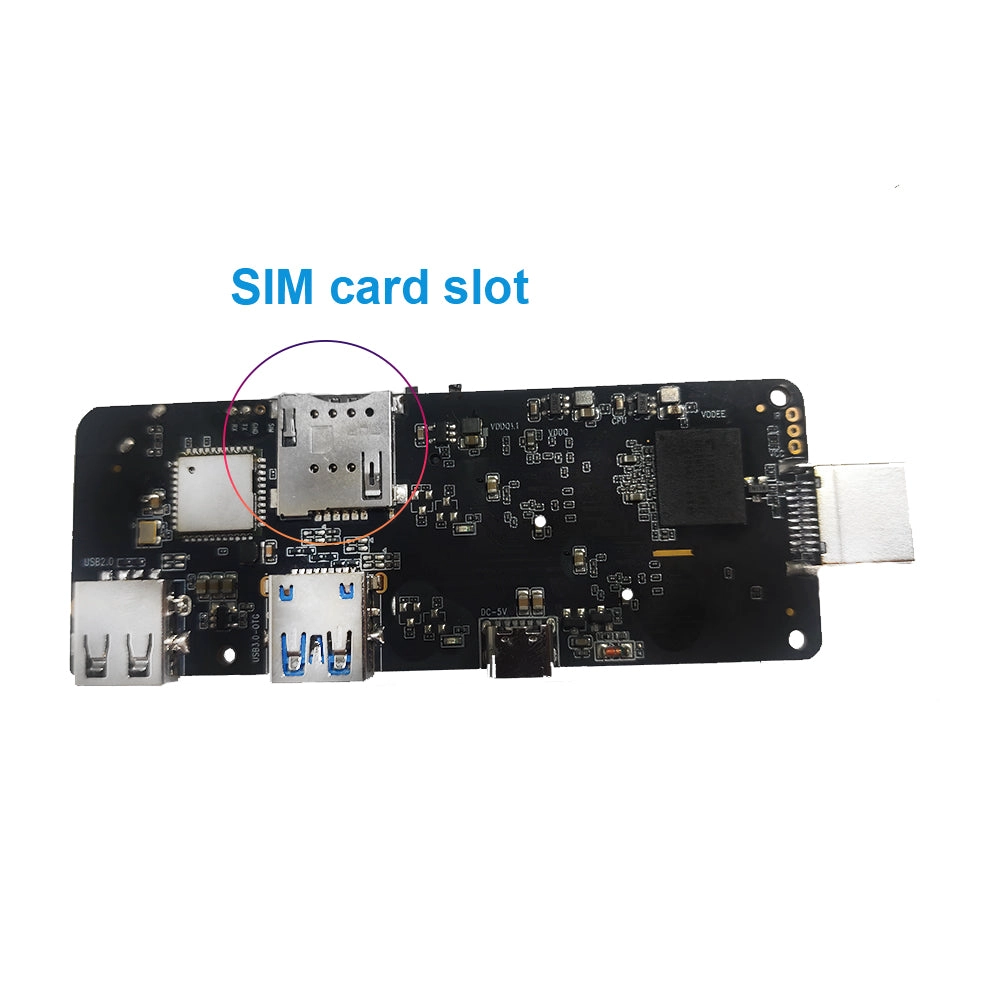
A customized TV Box may require additional USB ports, a different Ethernet PHY, custom IR or serial interfaces, dedicated audio circuitry, external storage, or a modified enclosure. These changes affect PCB routing, power distribution, signal integrity, and electromagnetic compatibility.
For high-speed interfaces such as HDMI, USB 3.x, and PCIe, engineers must validate impedance control, differential-pair routing, return paths, and the impact of nearby power circuits. Memory routing and power integrity also matter when a board uses higher-bandwidth DRAM.
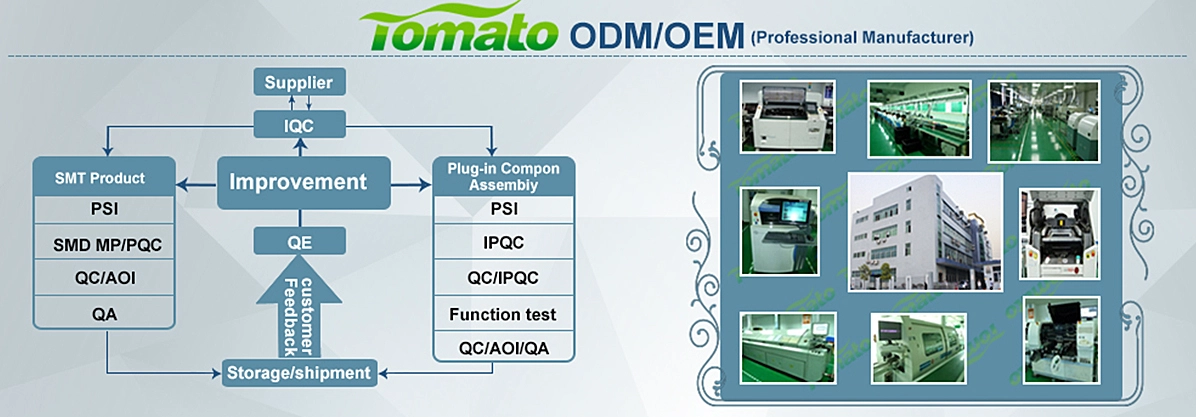
SZTomato supports PCBA hardware modification for OEM/ODM projects, allowing the hardware configuration to be aligned with the actual deployment rather than forcing the product to follow a standard reference board.
Firmware engineering: The difference between a demo unit and a deployable product
A TV Box can pass basic playback tests yet fail during long-term operation because of application memory leaks, unreliable Wi-Fi reconnection, HDMI handshake issues, or incomplete OTA recovery logic.
A commercial firmware plan should cover:
-
Android/Linux BSP: Kernel configuration, device drivers, hardware acceleration, and peripheral integration.
-
Custom UI/UX firmware: Branded boot animation, launcher, navigation, language configuration, and application provisioning.
-
SDK/API integration: IPTV middleware, device management, authentication, telemetry, and third-party application interfaces.
-
OTA update systems: Signed packages, staged rollouts, integrity checks, recovery partitions where supported, and rollback strategies.
-
Security: Secure boot where supported, protected credentials, appropriate content-protection integration, and a defined vulnerability-patching process.
HDCP and commercial streaming DRM require particular care. A chipset's hardware capability does not automatically grant access to a licensed streaming service. Certification, approved firmware, key provisioning, and contractual requirements may all apply.
SZTomato's firmware-level customization and SDK/API integration capabilities are relevant when an operator needs a branded product, controlled application environment, remote device management, or integration with an existing service platform.
Thermal management: Protect sustained performance
A higher-performance SoC can produce more heat under sustained workloads, especially when video processing, graphics, AI inference, and network activity run concurrently.
An enclosure that performs adequately during a short demonstration may throttle after several hours in a commercial cabinet or behind a display.
A practical validation plan should include:
-
Continuous 4K or 8K playback using the intended codecs.
-
Simultaneous CPU, GPU, and NPU workloads where applicable.
-
Testing at the expected ambient temperature and installation orientation.
-
Monitoring SoC temperature, clock frequency, power consumption, and playback errors.
-
Long-duration operation with repeated network interruptions and recovery tests.
SZTomato can incorporate specialized cooling solutions for industrial use into the product design. The appropriate solution depends on power dissipation, enclosure geometry, airflow, ambient temperature, and the permitted operating limits of the selected components.
The objective is not simply to prevent overheating. It is to maintain stable performance throughout the product's intended operating life.
4. TV Box Market Trends: How to Future-Proof an OEM Project
AV1 adoption and next-generation video processing
AV1 hardware decoding is increasingly relevant to streaming product planning. However, buyers should not select a chipset based on a codec checklist alone.
The engineering team should verify supported AV1 profiles, bit depth, frame rate, HDR processing, and compatibility with the intended media framework. If the product must support multiple streaming services, test representative content from each service under the final firmware build.
Newer platforms may also introduce additional video standards and AI-assisted image processing. A feature is commercially useful only when the hardware, SDK, media framework, and application stack support the required workflow.
For example, Amlogic's official product portfolio identifies the S905X5 as a 6 nm SoC for next-generation 4K UHD set-top boxes and the S928X as an 8K-oriented platform supporting decoding of specified mainstream formats. These provide different starting points for 4K and high-end multimedia designs.
From streaming terminals to intelligent edge devices
The boundaries between a TV Box, a digital signage player, and an AI edge device are becoming less distinct.
Commercial projects may require a single device to handle video playback, local data processing, remote administration, multiple displays, and selected AI functions. This changes the selection criteria: memory capacity, high-speed I/O, camera interfaces, software support, and sustained thermal performance become increasingly important.
The RK3588 is one example of a platform designed for these broader workloads. Its combination of CPU, GPU, NPU, multimedia processing, and high-speed interfaces makes it suitable for evaluation in demanding multimedia and edge-computing applications.
Nevertheless, an edge-AI deployment needs more than an NPU rating. Model conversion, quantization, runtime compatibility, memory requirements, inference latency, and software maintenance must all be validated against the actual application.
Lifecycle management is part of the hardware decision
B2B buyers should evaluate how long the manufacturer can support the chosen platform, including firmware maintenance, security updates, replacement components, and production consistency.
Before committing to a chipset, establish:
-
The expected product lifecycle and component availability.
-
The Android or Linux software baseline and update roadmap.
-
The process for resolving BSP and driver defects.
-
The OTA strategy for deployed devices.
-
The validation requirements for revised PCBA layouts or replacement components.
These questions are particularly important for telecom operators, IPTV service providers, hospitality deployments, and digital signage networks, where replacing devices across an installed fleet can cost more than the original hardware.
A practical OEM/ODM evaluation process
Step 1 — Define the product requirements
Specify resolution, codec profiles, output interfaces, network performance, operating system, application workload, operating temperature, and target unit cost.
Step 2 — Shortlist two or three SoCs
Compare the hardware capabilities, available BSPs, memory configurations, peripheral interfaces, security requirements, and supply-chain considerations.
Step 3 — Validate an engineering sample
Test representative content, network conditions, peripherals, thermal behavior, firmware stability, and OTA recovery before approving the design.
Step 4 — Qualify the production design
Complete PCBA verification, manufacturing tests, reliability checks, firmware release controls, and the quality plan for mass production.
Conclusion: Choose a TV Box Platform That Fits the Whole Project
The most suitable TV Box SoC depends on the product's actual workload and the engineering resources available to support it.
For mainstream 4K OTT and IPTV devices, start by evaluating a suitable Amlogic platform. For high-performance multimedia, multi-display systems, and AI-enabled edge applications, the Rockchip RK3588 is a strong candidate. For cost-sensitive products, evaluate Allwinner platforms against the exact decoding, connectivity, and software requirements rather than assuming that a lower component cost guarantees a lower finished-product cost.
For OEM buyers, the decisive question is not which chip has the highest headline specification. It is which platform can be developed, validated, manufactured, updated, and supported reliably at the required scale.
SZTomato works with B2B customers on Android TV Box, IPTV set-top box, streaming media player, and digital signage projects. Its OEM/ODM capabilities cover PCBA hardware modification, custom UI/UX firmware, SDK/API integration, and specialized cooling solutions for industrial use.
For procurement managers, telecom operators, brand owners, and system integrators, the next step is to define the product requirements before locking the SoC. Share your target resolution, codec requirements, operating system, interfaces, estimated production volume, and customization needs with SZTomato to evaluate a suitable hardware and firmware configuration for your project.
