

TV Box with Gigabit Ethernet and Wi-Fi 6
A 4K video stream can expose weaknesses in a TV Box network design long before the processor reaches its performance limits. Network congestion, unstable wireless signals, poorly implemented Ethernet interfaces, and inefficient firmware can produce buffering, dropped connections, and inconsistent playback.
This is becoming more relevant as IPTV operators, OTT service providers, hospitality businesses, and digital entertainment integrators deploy streaming devices across larger networks.
A modern TV Box should not rely on a single connectivity solution. Gigabit Ethernet provides a stable wired connection for installations where predictable network performance matters. Wi-Fi 6 introduces improved wireless efficiency, particularly in environments with multiple connected devices.
For manufacturers and procurement managers, the real challenge is integrating both technologies into a balanced hardware and software architecture.
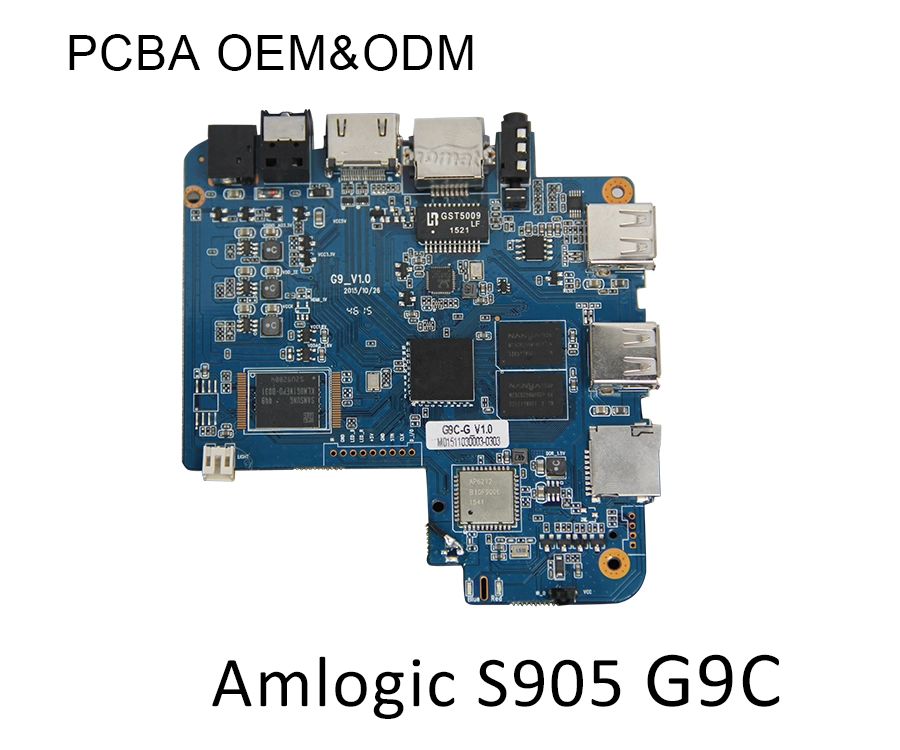
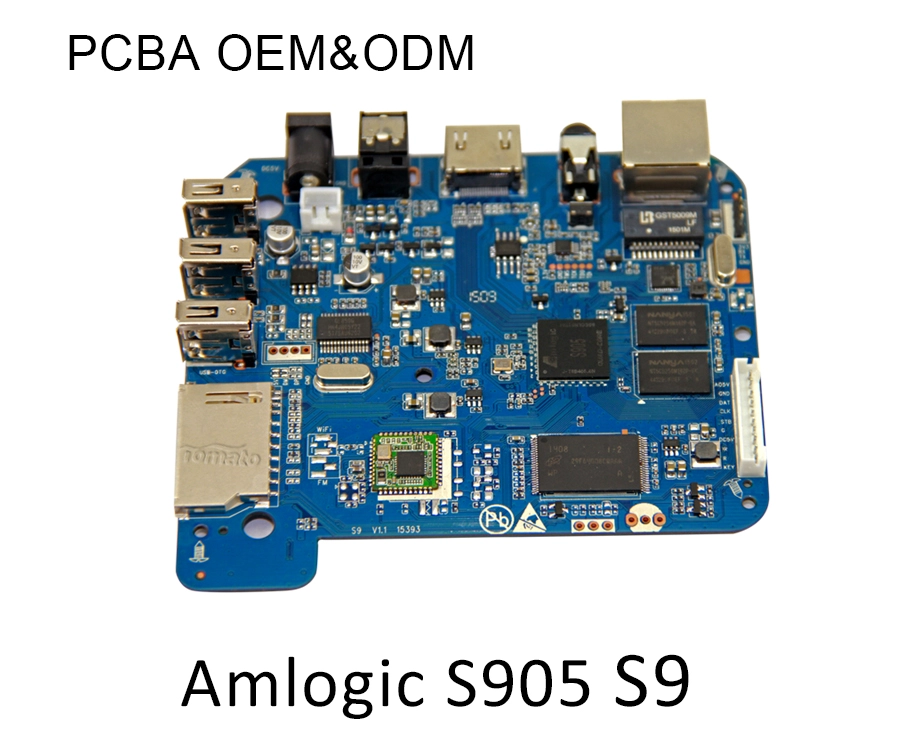
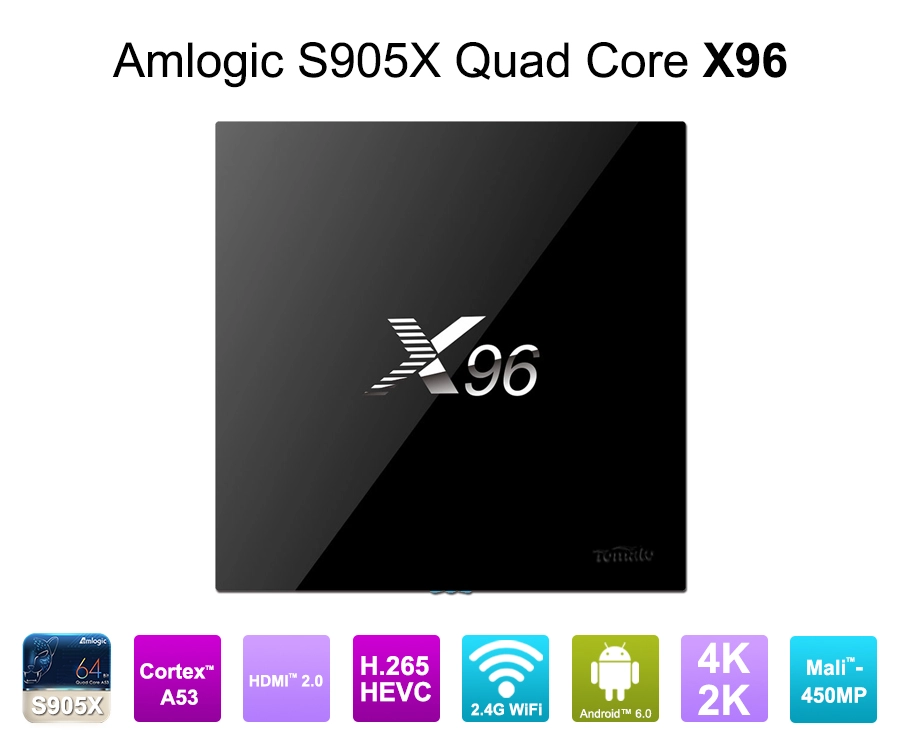
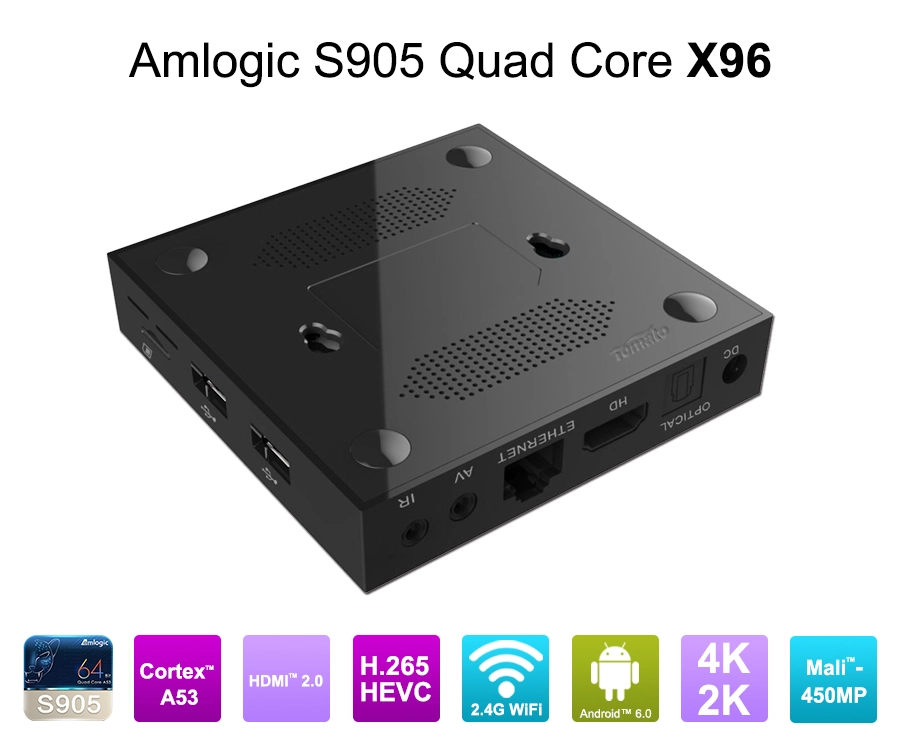
SZTomato approaches TV Box development from this engineering perspective, combining PCBA customization, connectivity integration, Android firmware optimization, and OEM/ODM manufacturing support.
1. Why Gigabit Ethernet and Wi-Fi 6 Matter in Modern TV Box Applications
Network connectivity is not simply a specification to include in a product datasheet. It determines how reliably a TV Box performs under actual operating conditions.
Gigabit Ethernet: Consistent Wired Network Performance
Gigabit Ethernet, commonly implemented through a 1000BASE-T interface, supports a nominal link speed of 1,000 Mbps over compatible Ethernet cabling.
Compared with traditional 100Mbps Ethernet, Gigabit connectivity provides substantially more bandwidth headroom for demanding applications.
For example, consider a TV Box deployed in an IPTV environment where multiple high-resolution streams, application downloads, and background updates operate simultaneously.
A 100Mbps interface can become a bottleneck when network traffic increases. A Gigabit interface provides additional capacity and reduces the likelihood that the Ethernet connection itself will restrict performance.
Key advantages include:
-
Stable IPTV playback: A wired connection reduces exposure to wireless interference and signal fluctuations.
-
High-bandwidth media delivery: More available network capacity supports demanding 4K streaming workloads.
-
Reliable commercial deployment: Ethernet is particularly suitable for hotels, hospitals, conference rooms, and managed entertainment networks.
-
Predictable network behavior: Network administrators can manage wired infrastructure more consistently.
-
Improved operational flexibility: Gigabit connectivity supports software downloads, firmware updates, and remote device management.
However, a Gigabit Ethernet port does not guarantee 1,000 Mbps of application-level throughput. Actual performance depends on the Ethernet PHY, controller, internal bus, router, cabling, network configuration, and software implementation.
For OEM projects, these components should be evaluated together rather than selected independently.
Wi-Fi 6: Better Wireless Efficiency in Connected Environments
Wi-Fi 6, based on IEEE 802.11ax, addresses an important problem in modern wireless networks: increasing device density.
A TV Box installed in a hotel room, apartment, office, or entertainment venue may share its wireless network with smartphones, laptops, tablets, cameras, and other connected devices.
Traditional wireless connections can experience congestion as the number of active devices increases.
Wi-Fi 6 introduces several technologies designed to improve wireless efficiency:
-
OFDMA: Divides wireless channels into smaller resource units, allowing multiple devices to communicate more efficiently.
-
MU-MIMO: Supports simultaneous communication with multiple devices under compatible operating conditions.
-
1024-QAM: Increases data transmission efficiency when signal conditions are sufficiently strong.
-
BSS Coloring: Helps reduce unnecessary interference between overlapping wireless networks.
-
Target Wake Time (TWT): Helps compatible devices coordinate transmission and sleep schedules to improve power efficiency.
For a Wi-Fi 6 TV Box, these technologies can improve network responsiveness and performance in crowded wireless environments.
Actual results depend on the wireless chipset, antenna configuration, channel bandwidth, access point capabilities, RF environment, and regulatory restrictions.
A Wi-Fi 6 label alone does not establish the quality of the wireless implementation.
Why Combining Both Interfaces Is a Better Design Strategy
Gigabit Ethernet and Wi-Fi 6 solve different connectivity problems.
Gigabit Ethernet is generally preferable when the installation supports a wired connection and consistent network behavior is the priority.
Wi-Fi 6 is more practical when Ethernet cabling is unavailable, expensive to install, or inconvenient for the deployment environment.
A dual-connectivity TV Box gives system integrators greater installation flexibility without forcing them to compromise on network architecture.
For commercial projects, this flexibility can simplify product standardization across different installation environments.
2. How to Design a TV Box with Gigabit Ethernet and Wi-Fi 6
Integrating Gigabit Ethernet and Wi-Fi 6 requires more than adding an Ethernet port and a wireless module to an existing PCB.
The underlying PCBA architecture, component selection, antenna placement, power design, and firmware must work together.
Selecting the Right SoC and Ethernet Architecture
The processor is the foundation of the TV Box platform.
When selecting an SoC for a Gigabit Ethernet TV Box, engineering teams should evaluate:
-
Integrated Ethernet MAC capabilities.
-
Available RGMII or other supported host interfaces.
-
Compatibility with external Gigabit Ethernet PHY solutions.
-
Internal bus bandwidth and DMA performance.
-
Linux or Android driver availability.
-
Hardware video decoding capabilities.
-
Memory bandwidth and storage configuration.
An important distinction is that an Ethernet MAC and an Ethernet PHY perform different functions.
The MAC handles Ethernet data framing and related control operations, while the PHY handles the physical-layer transmission and reception of network signals.
Some SoCs integrate an Ethernet MAC but require an external PHY. Others use different networking architectures.
The selected architecture must be verified against the actual SoC reference design and board-level requirements.
For 4K streaming applications, the processor should also provide sufficient video decoding performance.
Depending on the target application, buyers should evaluate:
-
H.264 and H.265 hardware decoding.
-
VP9 and AV1 decoding requirements.
-
4K@60fps video support.
-
HDR format compatibility.
-
HDMI output capabilities.
-
HDCP compliance where protected content is required.
A high-bandwidth network interface cannot compensate for insufficient video decoding performance or an incompatible HDMI implementation.
Wi-Fi 6 Module Integration and RF Optimization
Wireless performance depends heavily on PCB design and antenna implementation.
A Wi-Fi 6 module may support impressive theoretical data rates, but poor RF engineering can significantly reduce actual performance.
Several factors deserve attention during PCBA development.
1. Antenna placement
The antenna should be positioned away from major sources of electromagnetic interference, including switching power supplies, high-speed signal traces, and poorly shielded components.
The enclosure material also matters. Metal housings can significantly affect wireless signal propagation.
2. RF transmission paths
The RF transmission path should follow the module manufacturer's reference layout recommendations.
Impedance control, grounding, matching networks, and transmission-line design are important considerations.
3. MIMO configuration
A 2×2 MIMO implementation may provide better wireless capacity than a single-stream design, depending on the module, antenna arrangement, and access point.
However, the antenna configuration must be supported by the actual wireless chipset and firmware.
4. Frequency-band support
A dual-band Wi-Fi 6 implementation typically supports 2.4GHz and 5GHz operation.
The appropriate configuration depends on regional regulatory requirements and the target installation environment.
For OEM/ODM projects, SZTomato can support Wi-Fi module selection, antenna configuration, PCBA layout modifications, and enclosure-level integration.
The objective is to achieve consistent wireless performance in the finished product rather than simply meet a chipset specification.
Power Management and Thermal Design
Network performance and thermal stability are closely related.
A TV Box operating continuously in a commercial environment may experience sustained processor, memory, wireless, and storage activity.
Poor thermal design can lead to elevated component temperatures, reduced operating stability, and performance degradation.
Engineering teams should evaluate:
-
SoC thermal dissipation.
-
Wi-Fi module operating temperature.
-
DC power supply stability.
-
PCB copper distribution.
-
Heat transfer between major components and the enclosure.
-
Ventilation and passive cooling requirements.
For industrial or 24/7 applications, specialized cooling solutions may be necessary.
SZTomato supports customized thermal structures, PCBA modifications, and enclosure optimization to accommodate different deployment conditions.
This is particularly important for IPTV operators and system integrators deploying TV Boxes in environments where maintenance access is limited.
3. TV Box Connectivity Trends: 4K Streaming, IPTV, and Commercial Deployment
The demand for better connectivity is being driven by changes in streaming applications and deployment models.
The market is moving beyond standalone home entertainment devices toward managed streaming platforms, commercial IPTV systems, and customized multimedia terminals.
4K Streaming Requires a Balanced Hardware Platform
4K video places demands on several subsystems simultaneously.
The SoC must decode the selected codec efficiently. Memory bandwidth must support video processing. HDMI must provide the required output capabilities, and the network interface must deliver sufficient data without persistent interruptions.
AV1 adoption adds another consideration.
AV1 can offer improved compression efficiency compared with older codecs under suitable encoding conditions. However, AV1 support must be implemented in the hardware decoder and corresponding software stack.
A TV Box that supports AV1 decoding can be useful for OTT platforms seeking to optimize bandwidth consumption.
For procurement teams, the correct evaluation should include the following:
| Component | Technical Requirement | Business Benefit |
|---|---|---|
| SoC | Hardware H.265/AV1 decoding as required | Efficient video processing |
| Ethernet | 1000Mbps Gigabit interface | Stable wired connectivity |
| Wireless | IEEE 802.11ax Wi-Fi 6 | Better wireless efficiency |
| RAM | Application-dependent capacity | Multitasking stability |
| Storage | Sufficient eMMC capacity | Application and firmware management |
| HDMI | Required resolution and HDCP support | Display and content compatibility |
| Firmware | Optimized Android/Linux platform | Long-term product reliability |
The actual configuration should reflect the streaming service, application workload, target market, and expected product lifecycle.
IPTV and Hospitality: Why Dual Connectivity Matters
Commercial IPTV deployments have different requirements from consumer streaming devices.
A hospitality operator may need to install hundreds or thousands of TV Boxes across multiple buildings.
In these environments, connectivity reliability affects both customer experience and operational costs.
Gigabit Ethernet is often the preferred option for fixed installations because network infrastructure can be centrally managed.
Wi-Fi 6 provides an alternative where cabling is impractical or where the installation requires greater flexibility.
Other important commercial requirements include:
-
Centralized device management.
-
Customized boot logos and startup animations.
-
Remote configuration and diagnostics.
-
Application whitelisting.
-
Customized user interfaces.
-
Scheduled firmware updates.
-
Device authentication and network security.
-
Support for third-party IPTV middleware.
The hardware platform must also support the required software integration.
For example, an IPTV operator may need a customized launcher, integrated EPG, middleware compatibility, remote-control key mapping, and a controlled application environment.
These requirements should be defined during the initial engineering stage.
Retrofitting them after mass production can increase development costs and delay deployment.
From Standard TV Box to Customized Streaming Hardware
Standard TV Boxes are suitable for many general-purpose applications, but commercial projects often require more control over hardware and software.
A distributor may require a different memory configuration, additional interfaces, or a customized enclosure.
An IPTV operator may prioritize middleware compatibility, OTA management, and remote-control integration.
A system integrator may require specific SDK/API interfaces to connect the TV Box to an existing management platform.
This is where OEM/ODM engineering becomes commercially valuable.
SZTomato supports customized TV Box development covering:
-
PCBA hardware modification and component selection.
-
Gigabit Ethernet and Wi-Fi 6 module integration.
-
Customized Android firmware and Linux system development.
-
SDK/API integration for third-party applications.
-
Custom UI/UX and branded launcher development.
-
OTA update systems and firmware maintenance.
-
Specialized cooling solutions for continuous operation.
-
Customized multimedia audio and video configurations.
The goal is to develop a platform that matches the actual deployment requirements rather than force an existing standard product into an unsuitable application.
4. How to Choose the Right Gigabit Ethernet and Wi-Fi 6 TV Box Manufacturer
For B2B buyers, selecting a TV Box manufacturer involves more than comparing processor models, memory configurations, and unit prices.
The manufacturer's engineering capability determines whether the product can meet the technical requirements of a commercial project.
The following evaluation points are particularly important.
Verify the Complete Network Implementation
Ask the manufacturer to identify the Ethernet controller, PHY, wireless chipset, antenna configuration, and supported network standards.
Request actual throughput test results rather than relying exclusively on theoretical specifications.
A useful evaluation should include:
-
Gigabit Ethernet link negotiation.
-
TCP and UDP throughput testing.
-
Wireless throughput at different distances.
-
2.4GHz and 5GHz performance.
-
Packet loss and latency under load.
-
Concurrent network and video playback testing.
-
Thermal performance during extended operation.
For meaningful comparisons, test conditions should be documented, including the router or access point, channel width, test distance, client configuration, and software version.
Evaluate Firmware Engineering Capabilities
Hardware specifications do not guarantee software compatibility.
The Android or Linux firmware must correctly support the Ethernet controller, Wi-Fi module, Bluetooth functionality, HDMI output, and peripheral interfaces.
Important considerations include:
Kernel and driver optimization: The operating system should contain stable drivers for the selected networking hardware.
Network management: Ethernet and Wi-Fi interfaces should behave predictably when connected, disconnected, or reconnected.
OTA update systems: Firmware updates should support secure delivery, version management, and recovery mechanisms where required.
Application compatibility: IPTV middleware, streaming applications, and third-party SDKs should be validated against the target firmware.
Security: Secure boot, signed firmware packages, encrypted communication, and appropriate access controls should be considered according to the deployment requirements.
For protected streaming applications, HDCP implementation and licensing requirements must also be verified independently.
A manufacturer capable of modifying firmware at the system level offers more flexibility than a supplier that only installs applications on an unchanged reference image.
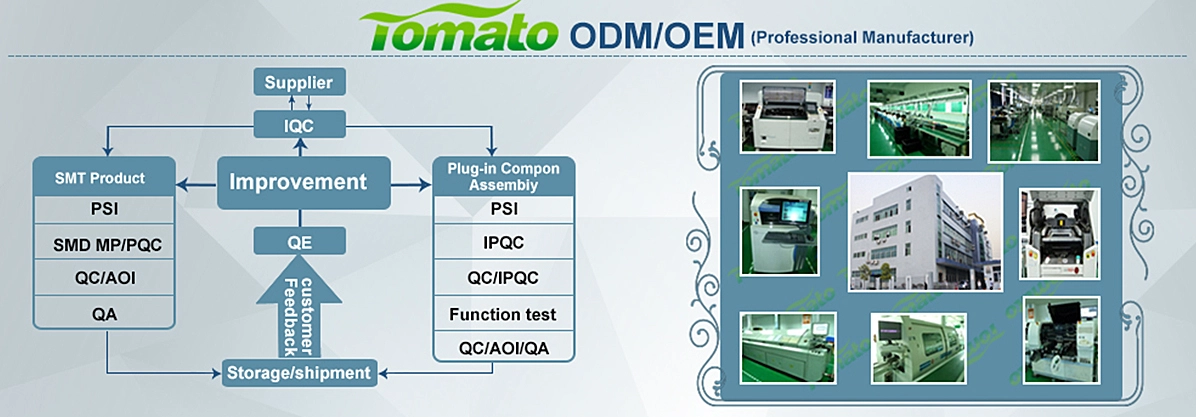
Assess OEM/ODM Manufacturing and Quality Control
A reliable manufacturing partner should provide a structured development process.
This typically includes:
-
Requirement analysis and hardware platform selection.
-
PCBA design review and engineering modifications.
-
Prototype production and functional testing.
-
Firmware integration and application validation.
-
Network, thermal, and compatibility testing.
-
Pilot production and quality verification.
-
Mass production and ongoing technical support.
For large-scale deployments, the manufacturer should also maintain consistent component specifications, production traceability, and firmware version control.
These capabilities help reduce the risk of unexpected hardware revisions and inconsistent product behavior during long-term supply.
SZTomato provides OEM/ODM manufacturing and engineering support for international brands, IPTV operators, distributors, and system integrators seeking customized streaming hardware.
Conclusion: Build a TV Box Platform Around Real Network Requirements
Gigabit Ethernet and Wi-Fi 6 are complementary technologies, not competing specifications.
Gigabit Ethernet provides predictable wired connectivity for fixed installations, while Wi-Fi 6 offers improved wireless efficiency and deployment flexibility.
However, the overall performance of a TV Box depends on the interaction between the SoC, Ethernet architecture, wireless module, antenna design, PCBA layout, power management, thermal engineering, and operating system.
For commercial applications, the best solution is not necessarily the TV Box with the highest advertised network speed. It is the platform that delivers stable connectivity, reliable video processing, firmware compatibility, and consistent operation under real deployment conditions.
SZTomato specializes in TV Box OEM/ODM development, combining hardware engineering, PCBA modification, Android/Linux firmware customization, SDK/API integration, and production support.
For procurement managers, IPTV operators, distributors, and system integrators, SZTomato provides customized TV Box solutions designed around your network architecture, application requirements, and target market.
Contact SZTomato at https://www.sztomato.com to discuss your Gigabit Ethernet and Wi-Fi 6 TV Box project, request technical specifications, or develop a customized OEM/ODM solution.
