
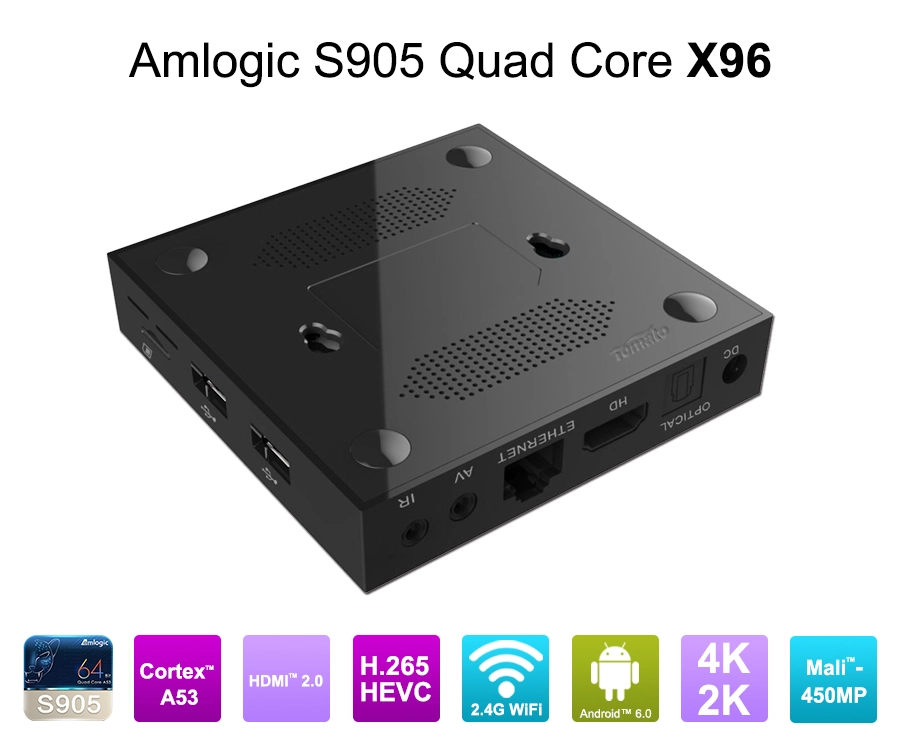
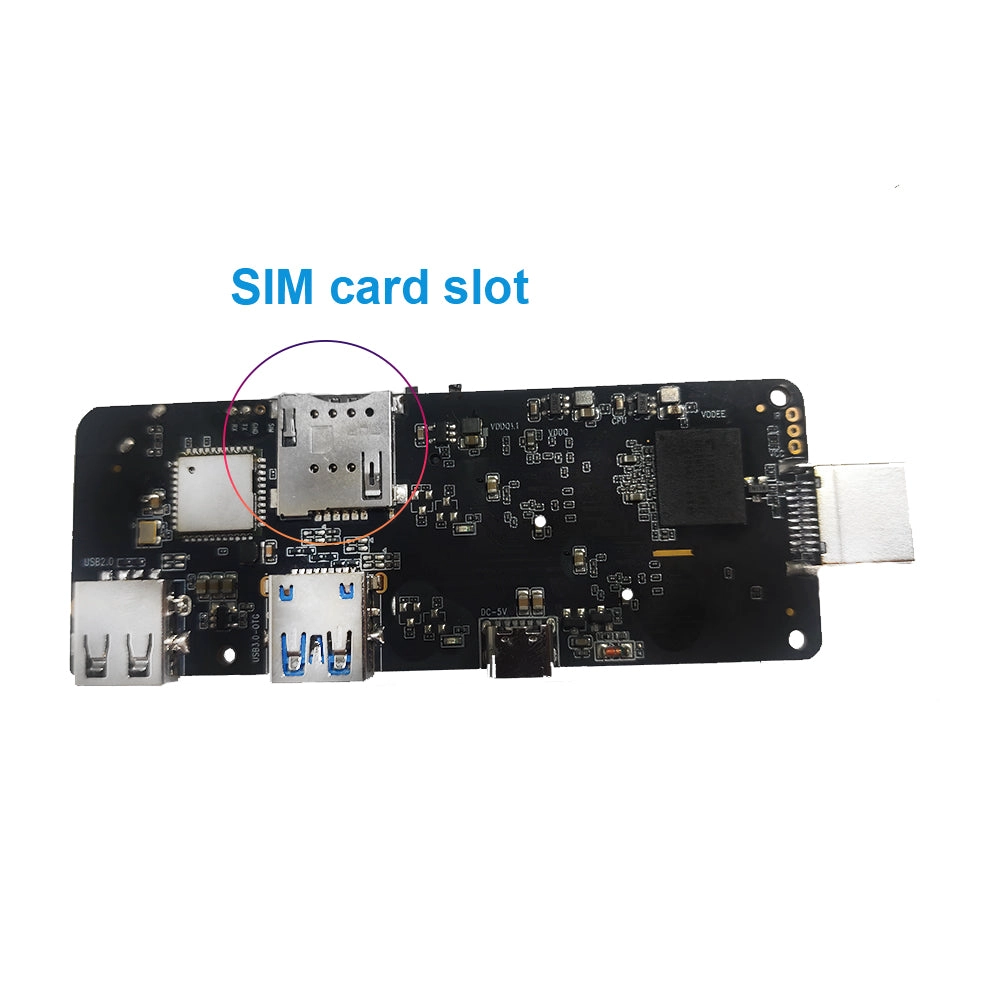
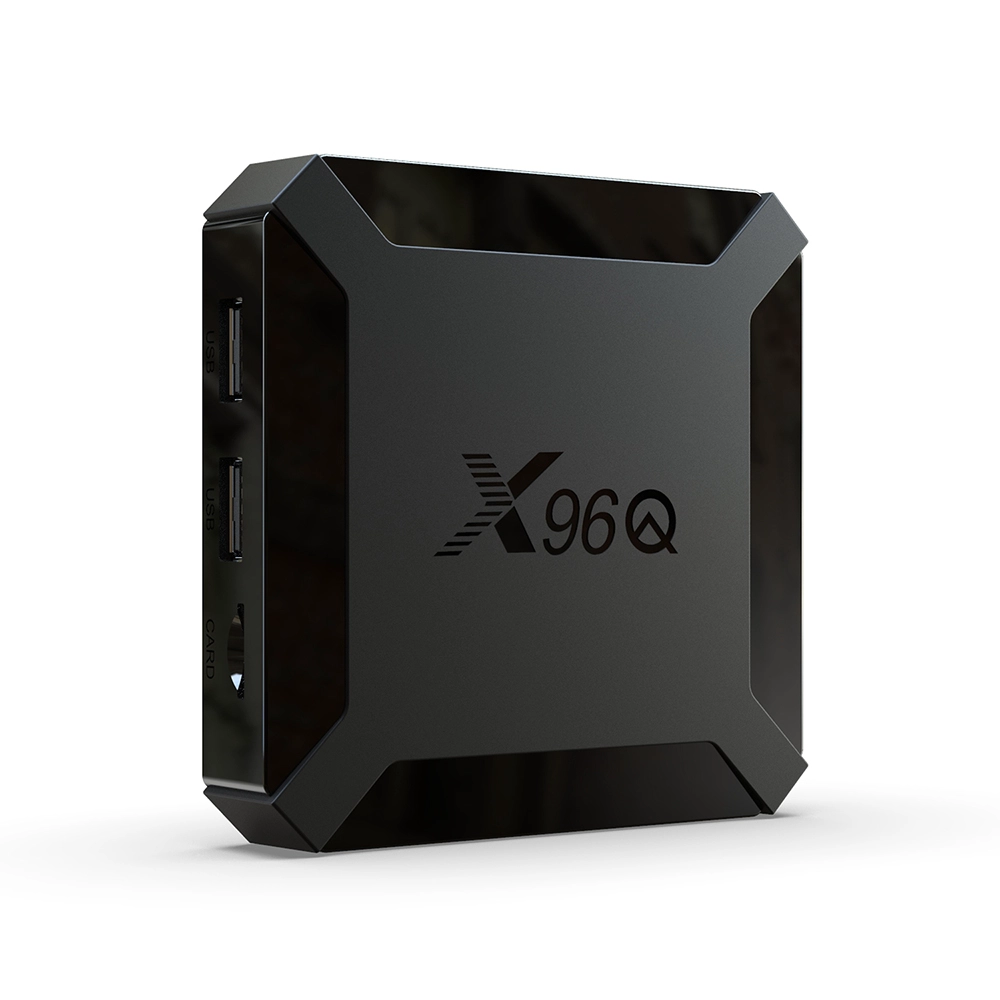
What Is the Latest OTT TV Box?
The transition from conventional H.265 streaming to AV1-based 4K delivery is changing the hardware requirements of OTT TV Boxes. At the same time, operators are demanding stronger content protection, faster user interfaces, reliable wireless connectivity, and longer firmware support cycles.
The latest generation of OTT TV Box is no longer defined simply by its ability to play 4K video. Its value comes from the combination of SoC architecture, hardware decoding, memory bandwidth, operating system optimization, DRM integration, and network performance.
For equipment manufacturers, telecom operators, IPTV service providers, and distributors, selecting the right platform requires evaluating the complete hardware and software architecture rather than focusing on processor specifications alone.
1. What Defines the Latest OTT TV Box Technology?
An OTT TV Box (Over-the-Top TV Box) is a network-connected multimedia device that delivers video, television channels, and other digital content through internet-based streaming services. Unlike traditional satellite or cable set-top boxes, an OTT device primarily uses IP networks to access content platforms.
The latest OTT TV Boxes combine several technologies to improve streaming quality, system responsiveness, security, and service compatibility.
1.1 Advanced SoC Architecture: Amlogic S905X5 and S905X5M
The System-on-Chip (SoC) is the foundation of an OTT TV Box. It integrates the CPU, GPU, video processing engine, memory controller, and other functional blocks into one semiconductor platform.
Amlogic's S905X5 family represents an important direction in the current 4K OTT hardware market.
Two relevant configurations are:
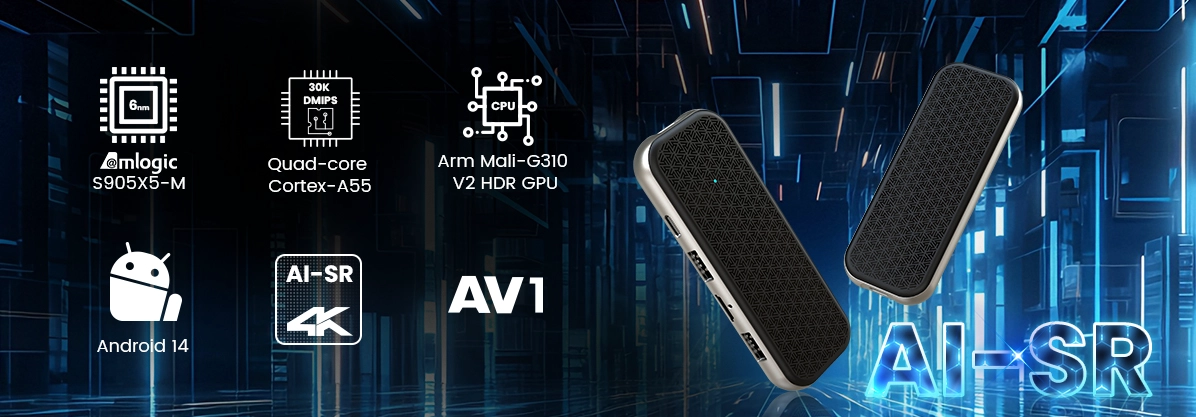
Amlogic S905X5M
-
Manufacturing process: 6nm
-
CPU: Quad-core ARM Cortex-A55
-
GPU: ARM Mali-G310 V2
-
Video decoding: AV1, H.265/HEVC, VP9, and other supported formats
-
Display application: Mainstream 4K UHD OTT/IPTV devices
-
AI processing: Dedicated AI processing capabilities for supported image-enhancement functions
Amlogic S905X5
-
Manufacturing process: 6nm
-
CPU: Quad-core ARM Cortex-A510
-
GPU: ARM Mali-G310 V5
-
NPU: Up to 4 TOPS, according to the published platform specification
-
Video processing: Supports advanced 4K video processing, with a published 4Kp120 decoding capability
-
Application: Higher-performance OTT/IPTV devices and multimedia platforms
These processors serve different product segments. The S905X5M is suitable for mainstream 4K streaming applications, while the S905X5 provides additional processing resources for more demanding multimedia and AI-assisted applications.
Actual performance depends on the complete device design, memory configuration, thermal conditions, firmware, and software workload. A higher SoC specification does not automatically guarantee a better streaming experience.
1.2 AV1 Decoding and Efficient 4K Streaming
AV1 is one of the most important video technologies in modern OTT hardware.
Compared with older video compression standards, AV1 can deliver improved compression efficiency under suitable encoding conditions. This helps streaming platforms reduce bandwidth requirements while maintaining image quality.
For OTT service providers, AV1 hardware decoding offers several practical benefits:
-
More efficient delivery of high-resolution video.
-
Reduced network bandwidth requirements at comparable visual quality.
-
Better support for modern streaming content.
-
Lower processing overhead compared with software-only decoding.
-
Improved compatibility with AV1-based streaming workflows.
A modern OTT TV Box should ideally support hardware decoding for AV1, H.265/HEVC, VP9, and H.264.
However, codec support must be evaluated at the profile, level, resolution, frame-rate, and bit-depth level. A chipset advertising AV1 support does not necessarily support every AV1 streaming configuration.
For commercial projects, the video decoding engine must also work correctly with the selected media player, Android framework, DRM implementation, and content delivery platform.
1.3 4K HDR and HDMI Connectivity
4K resolution is now an established requirement for many OTT products. The next step is improving color reproduction, dynamic range, and playback consistency.
Depending on the chipset and software configuration, advanced OTT TV Boxes can support:
-
4K UHD output at up to 60fps or higher.
-
HDR10 and HDR10+.
-
HLG.
-
Dolby Vision on appropriately licensed and supported platforms.
-
HDMI 2.1 interface features.
-
HDCP 2.2 or higher, depending on the device requirements.
One important engineering consideration is that HDMI version numbers alone do not guarantee support for every advertised feature.
For example, HDMI 2.1 branding does not automatically mean that a device supports 4K at 120Hz, VRR, or every advanced HDMI function. Buyers should verify the actual transmitter capabilities, firmware implementation, display compatibility, and HDCP version.
For premium content services, HDCP authentication and DRM integration must be validated throughout the complete playback chain, including the SoC, HDMI interface, firmware, and connected display.
2. Five Key Technologies to Evaluate When Choosing a Modern OTT TV Box
Selecting a current-generation OTT TV Box requires more than comparing processor frequency and RAM capacity. For B2B deployments, five technical areas deserve particular attention.
2.1 RAM and eMMC Storage Configuration
Memory directly affects application responsiveness, multitasking, system stability, and software upgrade capacity.
Typical configurations include:
| Configuration | Recommended Application |
|---|---|
| 2GB RAM + 16GB eMMC | Entry-level OTT streaming |
| 2GB RAM + 32GB eMMC | Mainstream streaming applications |
| 4GB RAM + 32GB eMMC | Premium OTT and operator platforms |
| 4GB RAM + 64GB eMMC | Applications requiring additional storage |
| 4GB–8GB RAM + 64GB–128GB eMMC | Advanced multimedia and customized applications |
These are practical configuration options rather than universal minimum requirements. The correct combination depends on the operating system, preinstalled applications, user interface, caching requirements, and OTA update strategy.
For operator deployments, additional storage can provide more room for customized applications, system partitions, recovery images, and firmware maintenance.
2.2 Wi-Fi 6 and Gigabit Ethernet
Network performance directly influences streaming stability.
Modern OTT TV Boxes increasingly use Wi-Fi 6 to improve wireless efficiency, particularly in environments where multiple devices share the same access point.
Recommended connectivity options include:
-
Dual-band 2.4GHz and 5GHz Wi-Fi.
-
Wi-Fi 5 or Wi-Fi 6, depending on project requirements.
-
Gigabit Ethernet for demanding commercial installations.
-
Bluetooth 5.0 or newer for remote controls and accessories.
-
USB interfaces for external storage and peripherals.
For telecom operators and system integrators, Ethernet should not be overlooked. A wired connection provides a predictable network path and can simplify troubleshooting in hotels, commercial buildings, and managed IPTV installations.
Wi-Fi performance also depends on antenna placement, RF layout, PCB grounding, enclosure materials, and interference conditions. Selecting a Wi-Fi 6 chipset without optimizing the antenna and PCBA design will not deliver the expected results.
2.3 DRM, HDCP, and Premium Streaming Compatibility
Content security is one of the most important differences between a basic Android TV Box and a commercially deployable OTT platform.
Streaming services may require specific DRM systems, device certification, secure video paths, and protected HDMI output.
Important technologies include:
-
Google Widevine DRM.
-
Microsoft PlayReady, where required by the service platform.
-
HDCP content protection.
-
Secure Boot.
-
Trusted execution environments (TEE).
-
Hardware-backed key storage.
Widevine DRM is particularly relevant to Android-based streaming devices. However, the presence of Widevine support does not automatically qualify a product for premium streaming services or guarantee a particular security level.
The required DRM level, device provisioning, application certification, and content-provider approval must be confirmed for each target service.
For example, a device intended for general Android applications may have different requirements from a Google-certified Android TV product designed to support licensed premium streaming applications.
This distinction should be resolved before finalizing the chipset, firmware architecture, and product development budget.
2.4 Android TV, Google TV, and Linux Operating Systems
The operating system determines how the OTT TV Box interacts with streaming applications, users, network services, and remote management systems.
Three common development directions are:
Android TV / Google TV
Suitable for products targeting established television ecosystems, certified applications, Google services, and operator deployments.
Android AOSP
Provides greater flexibility for customized applications, proprietary user interfaces, and dedicated commercial software platforms. However, AOSP is not equivalent to Google-certified Android TV.
Linux
Suitable for specialized IPTV platforms, embedded multimedia applications, and projects requiring tighter control over the software environment.
For B2B customers, operating system selection should consider:
-
Application compatibility.
-
Kernel and driver support.
-
OTA update architecture.
-
Boot time and system responsiveness.
-
Security patch management.
-
Long-term software maintenance.
-
SDK/API integration requirements.
The best platform is the one that matches the customer's application ecosystem and commercial deployment requirements, not necessarily the one with the newest Android version.
2.5 Thermal Design and Long-Term Reliability
Thermal management is often underestimated during OTT TV Box development.
A device may pass initial playback tests but experience instability during continuous operation, particularly when running demanding applications, high-resolution video, or customized background services.
The main engineering considerations include:
-
SoC thermal characteristics.
-
PCB copper distribution.
-
Component placement.
-
Heat dissipation paths.
-
Enclosure ventilation.
-
Heat sink selection.
-
Power management and voltage regulation.
For industrial and commercial installations, specialized cooling solutions can improve operating stability and reduce thermal stress on electronic components.
A properly engineered PCBA layout and thermal structure are more valuable than simply installing a larger heat sink after the hardware design is complete.
3. Latest OTT TV Box Market Trends: What Is Changing in 2026?
The OTT hardware market is moving toward IP-based streaming, platform differentiation, and operator-controlled software ecosystems.
According to Grand View Research, the global set-top box market was valued at approximately USD 26.3 billion in 2025, with the OTT segment expected to grow at around 6% annually between 2026 and 2033. Market research also identifies Android TV and Google TV as important platform categories within the sector.
These developments point to several trends that will influence OTT TV Box procurement and product development.
3.1 From Basic 4K Streaming to Advanced Multimedia Processing
4K decoding alone is no longer a sufficient differentiator for many new product projects.
Manufacturers are increasingly evaluating:
-
AV1 hardware decoding.
-
Advanced HDR processing.
-
AI-assisted image enhancement.
-
Higher-performance GPU architectures.
-
Improved memory bandwidth.
-
More efficient semiconductor manufacturing processes.
AI-assisted super-resolution is particularly relevant to platforms with dedicated image-processing acceleration.
It can improve the perceived quality of lower-resolution content when properly implemented, although results depend on the model, source material, and processing pipeline.
For mainstream OTT products, however, a balanced 4K platform with stable firmware and efficient power consumption may provide better commercial value than an unnecessarily expensive high-performance processor.
3.2 Operator-Centric Android TV and Google TV Platforms
Telecom operators and IPTV providers increasingly require devices that integrate directly into their service ecosystems.
This creates demand for operator-oriented features such as:
-
Customized home screens.
-
Branded boot animations.
-
Preinstalled operator applications.
-
Remote device configuration.
-
Centralized OTA firmware updates.
-
Application deployment and management.
-
Integration with middleware and subscriber management systems.
Google-certified Android TV and Google TV products are particularly relevant when customers require access to the corresponding licensed Google ecosystem.
For projects that do not require Google certification, customized Android AOSP can offer a different balance of development flexibility, integration control, and software ownership.
The distinction matters commercially: certification requirements can influence project schedules, software architecture, testing procedures, and development costs.
3.3 Custom Firmware Is Becoming a Procurement Priority
The same hardware platform can deliver very different commercial results depending on its firmware.
A generic Android interface may be sufficient for consumer applications, but operators and commercial customers often require a dedicated software environment.
Examples include:
-
IPTV portals with customized navigation.
-
Branded launcher interfaces.
-
Automatic application startup.
-
Restricted user access.
-
Custom remote-control key mapping.
-
Device identification and provisioning.
-
Remote diagnostics.
-
Scheduled OTA updates.
-
SDK/API integration with third-party systems.
This is why firmware engineering should be considered part of the initial product specification rather than a final-stage customization task.
3.4 Industrial and Commercial Deployment Requirements
OTT TV Boxes are increasingly used beyond residential entertainment.
Potential applications include:
-
Hotel IPTV systems.
-
Hospitality entertainment platforms.
-
Broadband operator services.
-
Commercial video streaming.
-
Educational multimedia systems.
-
Digital signage networks.
-
Corporate information displays.
These applications may require different hardware configurations from standard home streaming devices.
For example, a hotel IPTV project may prioritize centralized device management and customized application access, while a digital signage installation may require automatic boot recovery, continuous playback, industrial thermal design, and scheduled content delivery.
The hardware should therefore be selected according to the deployment environment rather than a generic consumer specification.
4. How to Select and Develop a Custom OTT TV Box for Your Business
For B2B buyers, the best OTT TV Box is not necessarily the newest or most expensive device. It is the platform that meets the required performance, software, security, and lifecycle targets at an acceptable total cost.
A structured evaluation process can reduce development risks and avoid expensive hardware changes after mass production begins.
4.1 Define the Application Before Selecting the SoC
Start with the actual application requirements.
| Project Requirement | Recommended Technical Direction |
|---|---|
| Standard 4K OTT streaming | Mainstream Amlogic S905X5M-class platform |
| Premium 4K streaming | Higher-performance 4K SoC with advanced GPU and video processing |
| Customized IPTV operator box | Android TV or Android AOSP with operator middleware |
| Branded streaming device | Customized Android firmware and UI/UX |
| Industrial multimedia deployment | Custom PCBA, thermal design, and long-term reliability testing |
| Advanced AI multimedia functions | SoC with dedicated NPU and appropriate software support |
The final chipset decision should also account for component availability, SDK maturity, Android/Linux BSP support, lifecycle planning, and the manufacturer's engineering capabilities.
4.2 Optimize the PCBA for the Actual Application
Reference designs provide a useful starting point, but they do not always satisfy specialized commercial requirements.
A customized PCBA can address:
-
Additional USB or Ethernet interfaces.
-
Different Wi-Fi and Bluetooth modules.
-
Modified HDMI configurations.
-
Expanded memory and storage.
-
Custom power management.
-
Additional UART, GPIO, or other industrial interfaces.
-
Optimized RF and antenna layouts.
-
Improved thermal performance.
PCBA modification should be evaluated together with power integrity, signal integrity, electromagnetic compatibility, and thermal performance.
For large-scale procurement, these details directly influence manufacturing consistency and field reliability.
4.3 Develop Firmware Around the Customer's Service Platform
Firmware customization should begin during the hardware development phase.
A professional development workflow may include:
-
SoC and hardware platform evaluation.
-
Linux or Android BSP integration.
-
Kernel and device-driver optimization.
-
Bootloader configuration.
-
Custom launcher and UI/UX development.
-
SDK/API integration.
-
DRM and content protection validation.
-
OTA update architecture.
-
Functional and compatibility testing.
-
Pilot production and mass-production validation.
For operators, an OTA update system should include version control, firmware integrity verification, recovery mechanisms, and staged deployment.
A poorly designed update mechanism can create substantial operational costs when thousands of devices are deployed across multiple locations.
4.4 Validate the Complete Product Before Mass Production
A successful prototype does not automatically guarantee a reliable mass-produced product.
Before production approval, the following areas should be tested:
-
4K video playback stability.
-
AV1 and HEVC decoding compatibility.
-
HDMI and HDCP authentication.
-
Wi-Fi throughput and signal stability.
-
Ethernet performance.
-
Bluetooth connectivity.
-
Long-duration playback.
-
Thermal behavior under sustained workloads.
-
OTA update and recovery.
-
Application compatibility.
-
Power consumption and standby behavior.
For operator-grade devices, testing should also include real network environments, actual content services, and the intended deployment software.
This approach reduces the risk of discovering compatibility or reliability problems after commercial delivery.
5. Why OEM/ODM Engineering Matters for the Next Generation of OTT TV Boxes
For brand owners, telecom operators, and distributors, choosing an experienced OEM/ODM manufacturer is as important as selecting the right chipset.
A manufacturing partner should provide more than standard hardware assembly. The ability to modify the PCBA, optimize firmware, integrate third-party software, and support long-term product maintenance determines whether a device can meet specific commercial requirements.
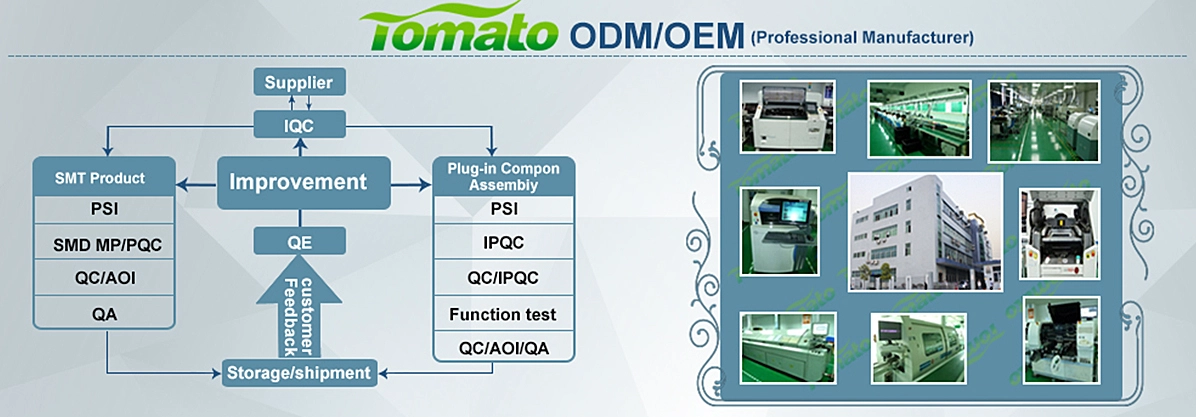
SZTomato provides OTT TV Box OEM/ODM development services covering:
-
Hardware customization: PCBA modification, SoC platform selection, memory configuration, interface expansion, and power management.
-
Firmware engineering: Android and Linux firmware customization, kernel optimization, bootloader configuration, and system performance tuning.
-
UI/UX customization: Branded launchers, customized home screens, application integration, and operator-specific user experiences.
-
SDK/API integration: Integration with IPTV middleware, content management platforms, cloud services, and third-party applications.
-
Thermal engineering: Specialized cooling solutions and thermal optimization for continuous industrial and commercial operation.
-
Manufacturing support: Prototype development, engineering validation, quality control, and scalable mass production.
Established in 2011, SZTomato combines multimedia hardware development with firmware-level engineering to support different OTT TV Box applications.
Rather than relying exclusively on standard reference designs, SZTomato can evaluate hardware and software requirements together to develop products around specific customer applications.
Conclusion: Choosing the Right OTT TV Box for Long-Term Business Growth
The latest OTT TV Box is defined by more than 4K resolution or processor performance. Modern solutions combine efficient SoC architectures, AV1 decoding, advanced HDR processing, reliable connectivity, content protection, and customizable software platforms.
For B2B procurement managers, the most important decision is selecting a hardware and software platform that can support the intended streaming services, deployment environment, and future product requirements.
Whether the project involves a customized Android OTT TV Box, an IPTV operator device, or an industrial multimedia streaming platform, engineering flexibility and long-term firmware support should be part of the initial procurement strategy.
SZTomato supports OEM/ODM partners with customized OTT TV Box hardware, PCBA engineering, firmware development, SDK/API integration, and production services.
Contact SZTomato at www.sztomato.com to discuss your OTT TV Box project, technical specifications, and customization requirements.
