
15+ Years of TV Box Manufacturing Experience: Faster Sampling and Reliable Mass Production
Shorter Product Development Cycles Start with Manufacturing Experience
A new system-on-chip (SoC) platform may support advanced video decoding, higher memory bandwidth, or improved AI processing, but those specifications do not automatically translate into a production-ready device. A revised PCBA layout can affect signal integrity, power delivery, thermal performance, and electromagnetic compatibility. Firmware changes may introduce additional dependencies involving device drivers, HDCP-protected video output, OTA update mechanisms, and third-party middleware.
For B2B buyers, the critical question is not simply how quickly a factory can assemble a sample. It is how quickly the manufacturer can deliver a sample that accurately represents the intended production design.
An experienced manufacturing partner should coordinate engineering, component sourcing, firmware development, testing, and production preparation from the beginning. This reduces avoidable redesigns and makes the transition from prototype approval to volume production more predictable.
Since 2011, SZTomato has supported OEM/ODM projects involving Android TV Boxes, IPTV Set-Top Boxes, Streaming Media Players, Digital Signage systems, and Android Mini PCs. Its manufacturing approach combines hardware engineering, firmware customization, and production coordination to help customers develop products for specific markets and deployment environments.
1. How Manufacturing Experience Shortens Sample Lead Time
A short sample lead time depends on engineering readiness rather than assembly speed alone. The manufacturer must understand the application, identify technical risks, and establish a workable configuration before committing to a sample schedule.
Define the hardware and software requirements before prototyping
The first step is to translate the product concept into an engineering specification. This should cover the target SoC, memory configuration, storage, wireless connectivity, display interfaces, peripheral ports, operating system, and application requirements.
For an Android TV Box, the specification may include 4K or 8K video decoding, HDMI output, Wi-Fi 6, Gigabit Ethernet, Bluetooth, and support for selected streaming applications. An IPTV deployment may require conditional-access integration, middleware compatibility, secure boot, or remote device management. A commercial Digital Signage device may need scheduled playback, centralized content management, unattended operation, and extended thermal stability.
These requirements influence component selection, PCBA design, firmware configuration, and validation procedures.
A clear specification helps the engineering team identify which elements can use an existing platform and which require customization. Reusing a validated reference design where appropriate can accelerate development, while targeted modifications address the customer's actual requirements.
Reduce unnecessary hardware redesign
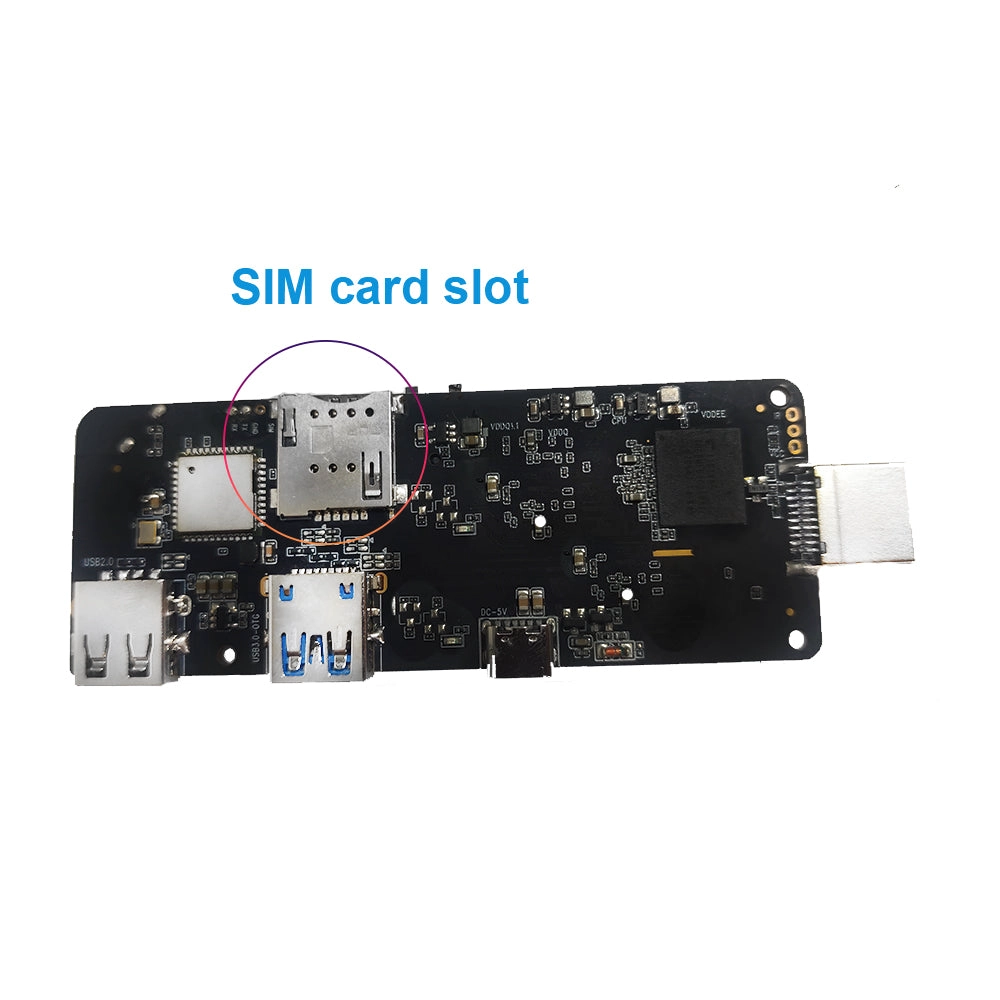
PCBA hardware modification may involve power-management circuits, memory configuration, Ethernet interfaces, USB connectivity, display outputs, antenna placement, or additional industrial interfaces.
Each change must be assessed for electrical compatibility, PCB routing constraints, component availability, and manufacturability. Changes to high-speed interfaces also require appropriate signal-integrity analysis and validation.
SZTomato supports hardware customization for projects that cannot rely entirely on a standard off-the-shelf configuration. The objective is to identify the minimum set of engineering changes needed to achieve the required functionality without introducing avoidable development complexity.
Prepare firmware in parallel with hardware
Hardware and firmware development should proceed in coordination whenever the platform allows it. Waiting for a completely finalized PCBA before beginning all software work can unnecessarily extend the development schedule.
Firmware engineering may include custom UI/UX design, preinstalled applications, boot animation, system configuration, device provisioning, SDK/API integration, and OTA update functionality. Depending on the platform, Linux or Android kernel optimization may also be necessary to support specific peripherals, power-management behavior, or application requirements.
Early software integration helps uncover compatibility problems before they become production blockers.
The result is a more efficient sample-development process, with a clearer distinction between the time needed to build a prototype and the time needed to validate a production-ready design.
2. From Engineering Sample to Stable Mass Production
A working prototype proves that a concept can function under a particular set of conditions. It does not establish that the same design can be manufactured repeatedly, pass required quality checks, and perform consistently across a large deployment.
The transition to mass production therefore requires a controlled validation and release process.
Establish clear sample approval criteria
Before building the first engineering sample, the project team should define acceptance criteria. These should reflect the intended application rather than rely exclusively on basic power-on testing.
For a Streaming Media Player or Android TV Box, relevant checks may include:
-
Hardware functionality: Verify memory, storage, networking, USB ports, HDMI output, wireless connectivity, and power stability.
-
Video performance: Test supported codecs, resolution, frame rates, HDR behavior where applicable, and playback stability with representative content.
-
Firmware stability: Evaluate boot behavior, application compatibility, resource utilization, system logs, and recovery from software failures.
-
Thermal performance: Measure temperatures under sustained CPU/GPU workloads, continuous video playback, and the expected ambient operating conditions.
-
Security and connectivity: Validate applicable HDCP requirements, secure boot configuration, OTA update procedures, and network communication.
-
Application integration: Confirm that required SDKs, APIs, middleware, and third-party services operate correctly on the target hardware and software configuration.
Streaming-service certification and DRM compatibility must be verified separately where required. A device's ability to decode a particular video format does not, by itself, establish authorization to access a protected streaming service.
Freeze the design before production release
Once the sample has been approved, the manufacturer should establish a controlled production baseline. This includes the approved PCBA revision, bill of materials, firmware build, component substitutions policy, test procedures, and packaging configuration.
Uncontrolled changes after approval can create substantial risk. A substitute memory component, altered wireless module, or revised firmware image may affect performance, compatibility, certification status, or field reliability.
Engineering change control helps ensure that modifications are reviewed, tested, documented, and approved before entering production.
For products requiring customized Android firmware, the production baseline should also identify the software version, enabled system services, security settings, recovery procedure, and OTA update policy. These controls make it easier to reproduce approved behavior across manufacturing batches and subsequent software releases.
Build quality checks into the production process
Reliable mass production depends on repeatable procedures rather than final inspection alone.
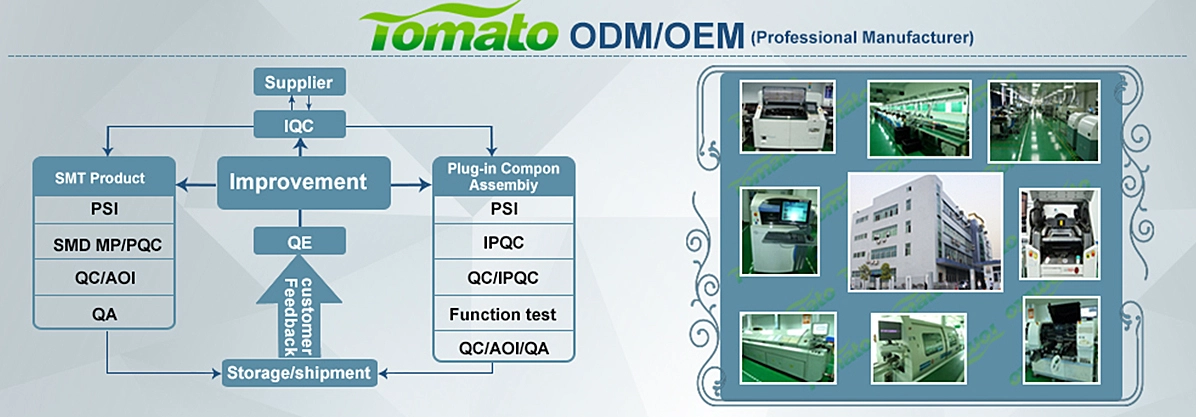
Depending on the product and manufacturing arrangement, quality controls may include incoming component inspection, PCBA verification, firmware flashing checks, functional testing, burn-in testing, packaging inspection, and batch traceability.
Test coverage should be proportionate to the product's intended use. A consumer-oriented streaming device and an industrial Digital Signage player may require different validation profiles, particularly where operating hours, ambient temperature, network conditions, and maintenance access differ.
For large B2B orders, the manufacturer and customer should agree on the inspection standard, sampling plan, acceptance criteria, defect classification, and corrective-action process before shipment.
This approach gives procurement teams a more reliable basis for assessing production readiness than a quoted unit price or an initial sample alone.
3. How OEM/ODM Customization Affects Lead Time and Product Reliability
Customization can create a competitive advantage, but poorly controlled customization can extend development schedules. The key is to distinguish configuration work from engineering work and identify dependencies early.
Match the level of customization to the application
Not every project requires a new motherboard or a complete operating-system modification. A practical OEM/ODM project can be divided into several levels.
Level 1: Product configuration and branding
This may include logo placement, packaging, language settings, preinstalled applications, boot animation, and basic UI customization. Where the existing hardware and software already meet the requirements, this is generally less complex than a hardware redesign.
Level 2: Firmware and platform integration
Projects may require custom UI/UX firmware, system-level configuration, SDK/API integration, device management functions, or compatibility with a particular IPTV middleware platform. The engineering workload depends on source-code access, vendor support, platform restrictions, and the complexity of the integration.
Level 3: Hardware and system engineering
More demanding projects may require PCBA layout changes, additional interfaces, revised power circuits, memory or storage changes, antenna optimization, specialized cooling, or coordinated hardware and kernel development.
These projects require more validation because hardware and software changes can interact. A new peripheral, for example, may require driver support, kernel configuration, power-management changes, and additional reliability testing.
Classifying the project early helps both parties develop a realistic schedule, identify engineering costs, and avoid treating complex development as a simple branding exercise.
Design cooling and reliability into industrial products
Thermal design deserves particular attention when a device must operate continuously in a commercial or industrial environment.
Compact TV Box enclosures can restrict airflow and create localized hot spots around the SoC, memory, voltage regulators, and wireless components. Sustained workloads may increase junction temperatures, trigger thermal throttling, or reduce the stability margin of the overall system.
Depending on the application, engineering measures may include improved PCB component placement, optimized heat spreading, thermal interface materials, enclosure modifications, heatsinks, and carefully designed ventilation. Specialized cooling solutions should be evaluated against the actual enclosure, workload, ambient temperature, and installation orientation.
Firmware also contributes to thermal behavior. CPU/GPU frequency policies, background processes, peripheral power management, and application workloads can affect heat generation.
A proper validation plan should measure sustained performance under representative operating conditions rather than rely on a short benchmark or a brief power-on test. For Digital Signage deployments, the test plan should reflect the intended playback schedule and the environment in which the player will be installed.
Coordinate component sourcing with production planning
A technically sound design can still miss its production target if key components are unavailable.
SoC allocation, memory and storage lead times, wireless modules, connectors, power supplies, and specialized components can affect both sample builds and volume production. Custom PCBA revisions may also require additional procurement time before a complete sample can be assembled.
Manufacturers should identify long-lead components early, confirm approved alternatives, and establish a component-change approval process. Where practical, engineering validation and procurement planning should proceed in parallel.
A useful production schedule distinguishes several milestones:
-
Requirements confirmation and technical review.
-
Prototype preparation and component availability.
-
Engineering sample assembly and firmware integration.
-
Functional, thermal, and application validation.
-
Sample approval and production design freeze.
-
Pilot production and process verification.
-
Mass production, final inspection, and shipment.
This milestone-based approach provides better visibility into the actual critical path. It also helps procurement teams understand whether a delay comes from engineering changes, component sourcing, software integration, certification, or production capacity.
4. Selecting a Manufacturing Partner for Predictable Delivery
For international B2B buyers, manufacturing experience should be evaluated through engineering capability, process control, and communication quality—not simply the number of years a factory has operated.
A capable OEM/ODM partner should be able to explain how it handles product requirements, sample revisions, firmware releases, component substitutions, validation failures, and production changes. It should also identify technical limitations before they become expensive problems.
When evaluating a TV Box or Streaming Media Player supplier, procurement managers and system integrators should consider the following questions:
-
Can the engineering team modify the PCBA when the standard reference design does not meet the application requirements?
-
Can the manufacturer support custom Android firmware, Linux or Android kernel changes, and SDK/API integration?
-
Does the sample-validation plan cover thermal behavior, sustained playback, networking, and the required application ecosystem?
-
Are firmware versions, hardware revisions, and component substitutions controlled during mass production?
-
Can the supplier explain its quality-control process and provide relevant inspection or test records?
-
Are sample lead time, production lead time, MOQ, component availability, and certification responsibilities defined in the quotation?
-
Is there a process for managing firmware updates, engineering changes, and long-term technical support?
These questions expose the difference between a supplier that assembles standard products and a manufacturing partner capable of supporting a product throughout its development and commercial lifecycle.
Why work with SZTomato?
Since 2011, SZTomato has supported OEM/ODM manufacturing projects for international customers seeking customized Android TV Boxes, IPTV Set-Top Boxes, Streaming Media Players, Digital Signage devices, and Android Mini PCs.
Its project capabilities include PCBA hardware modification, custom UI/UX firmware, SDK/API integration, and specialized cooling solutions for industrial applications. By coordinating product engineering with manufacturing requirements, SZTomato helps customers address the technical dependencies that influence sample development, product validation, and production readiness.
Actual lead times depend on the selected platform, component availability, customization scope, firmware complexity, certification requirements, and sample approval process. For this reason, a project-specific schedule is more useful than a universal promise of delivery within a fixed number of days.
For procurement managers, brand owners, distributors, telecom operators, and system integrators, the objective is to establish a repeatable path from specification to approved sample and from approved sample to controlled mass production.
Start your next OEM/ODM project with SZTomato. Share your target specifications, estimated order volume, operating environment, software requirements, and desired launch date. The engineering and manufacturing teams can then assess the proposed configuration, identify customization requirements, and establish a practical sample and mass-production plan.
