
2026 TV Box Chip Selection Guide: RK3539, RK3572, H626, S905X5 and A311Y3
2026 TV Box Chip Selection Guide: RK3539, RK3572, H626, S905X5 and A311Y3
Choosing the right TV box chip in 2026 requires more than comparing CPU cores, video resolutions, or AI performance figures. For international brands, IPTV operators, wholesalers, digital signage integrators, and industrial device developers, the processor must match the intended application, software environment, connectivity requirements, target price, and product lifecycle.
The five platforms covered in this guide—Rockchip RK3539, Rockchip RK3572, Allwinner H626, Amlogic S905X5, and Amlogic A311Y3—serve different market segments. Some are designed for cost-conscious 4K streaming devices, while others offer stronger AI acceleration, advanced display capabilities, or greater processing headroom for commercial applications.
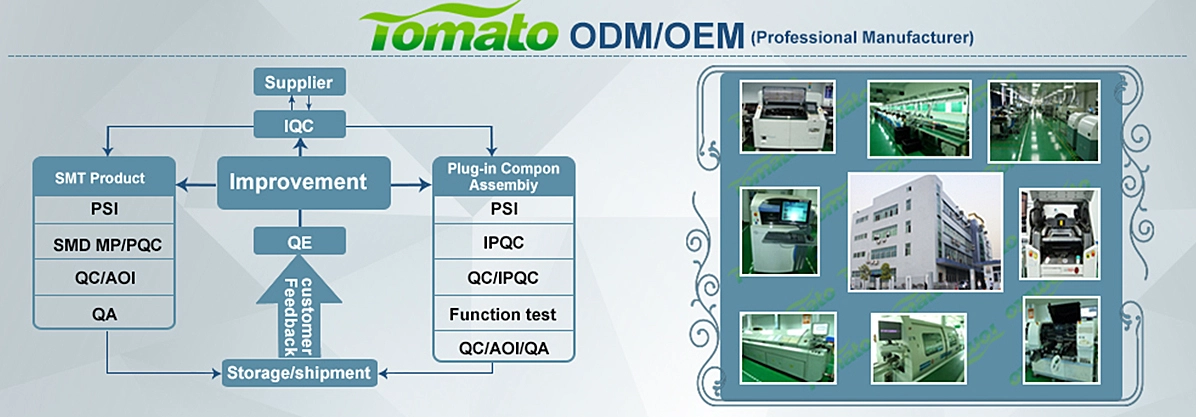
As a Shenzhen-based OEM/ODM manufacturer, SZTomato supports customized Android TV boxes, IPTV set-top boxes, streaming media players, digital signage devices, and AI edge computing products. This guide explains how to select a suitable TV box chip based on real product requirements rather than headline specifications alone.
1. Five TV Box Chips Compared: Specifications and Positioning
The following table provides a practical starting point for product planning. Specifications refer to publicly available documentation and product configurations; the final capabilities of a finished device depend on the board design, firmware, drivers, memory configuration, and supported software stack.
| Specification | Rockchip RK3539 | Rockchip RK3572 | Allwinner H626 | Amlogic S905X5 | Amlogic A311Y3 |
|---|---|---|---|---|---|
| Market positioning | Entry-level 4K multimedia | Mid-range AIoT and multimedia | Cost-effective 4K streaming | Mainstream 4K multimedia with AI-assisted processing | High-performance edge AI and commercial multimedia |
| CPU architecture | Quad-core Cortex-A55 | 2× Cortex-A73 + 6× Cortex-A53 | Quad-core Cortex-A55 | Quad-core Armv9, Cortex-A510 platform configuration | 2× Cortex-A78 + 6× Cortex-A55 |
| Manufacturing process | Verify the applicable device revision | 8 nm | Not confirmed in the referenced product specification | 6 nm | 6 nm |
| GPU | Mali-G310 | Mali-G310 | Mali-G310 | Mali-G310 V5 | Mali-G625 MC1 |
| AI acceleration | No dedicated NPU specified in the reviewed datasheet | 4 TOPS NPU | No dedicated NPU specified in the referenced product configuration | AI-SR acceleration; confirm NPU specifications for the exact SKU | 8 TOPS NPU |
| Video decoding | Up to 4K@60fps, including AV1, H.265, and VP9 | Up to 8K decoding; verify supported codecs and profiles | Up to 4K@60fps for supported formats | Supports advanced 4K codec processing; verify the target mode and output limits | Up to 4K@120fps for supported codecs |
| Display applications | Standard 4K multimedia | Advanced multimedia and dual-display projects | Mainstream Android TV boxes and IPTV | 4K streaming and image enhancement | Advanced displays, AI terminals, and premium multimedia |
| Best-fit products | Budget TV boxes and IPTV players | Smart displays, education devices, AIoT terminals | Cost-sensitive streaming and commercial playback | Mainstream streaming and customized OTT products | AI edge boxes, interactive displays, and premium set-top boxes |
A key distinction is that video decoding capability is not the same as HDMI output capability. A processor may decode a high-frame-rate video stream without the finished device being able to output that resolution and frame rate through its display interface. Codec profiles, memory bandwidth, firmware, and display timing must all be checked before a specification is finalized.
2. Rockchip RK3539: A Practical Choice for Cost-Conscious 4K Products
The Rockchip RK3539 is designed for smart IPTV/OTT devices and mainstream 4K multimedia applications. Its quad-core Cortex-A55 CPU, Mali-G310 GPU, and hardware video decoder provide a practical foundation for entry-level streaming products.
The platform supports hardware decoding of AV1, H.265, H.264, and VP9 at supported resolutions, including 4K@60fps. Its capabilities make it suitable for products that need modern video playback without the processing overhead of a higher-end AI platform.
Why consider RK3539?
For high-volume B2B orders, the complete hardware cost matters more than the processor price alone. Memory, storage, wireless modules, PCB complexity, power requirements, and manufacturing yield can have a substantial effect on the final BOM.
RK3539 is worth evaluating when the main requirements are smooth 4K playback, standard Android applications, IPTV middleware, and a competitive selling price. It can be a suitable starting point for distributors and brands targeting price-sensitive international markets.
Recommended applications
-
Entry-level Android TV boxes and IPTV set-top boxes
-
Mainstream OTT streaming devices
-
Basic commercial multimedia players
-
Cost-sensitive 4K playback products
For an OEM TV box project, SZTomato can help configure memory and storage, integrate network interfaces, customize the launcher and firmware, and adapt the hardware to the target application.
However, if the product needs local AI inference, multiple independent displays, or extensive industrial connectivity, a platform with more dedicated processing resources may be a better long-term choice.
3. Rockchip RK3572: A Balanced Platform for Multimedia and Edge AI
The RK3572 occupies a different position in the TV box chip market. Its eight-core CPU combines two Cortex-A73 performance cores with six Cortex-A53 efficiency cores. It also integrates a 4 TOPS INT8 NPU and supports more advanced peripheral configurations than a basic streaming platform.
Rockchip's published product information identifies 8 nm manufacturing technology, hardware AI acceleration, advanced multimedia processing, and dual-display capability as major features of the RK3572 platform.
4 TOPS NPU for practical edge AI applications
The integrated NPU allows developers to evaluate workloads such as image classification, object detection, selected face-analysis tasks, and intelligent image processing without relying entirely on cloud inference.
For example, a digital signage player could combine video playback with a compatible local analytics model. An interactive education terminal could use AI-assisted functions alongside its normal display and application workload.
Real-world AI performance still depends on the model architecture, quantization, supported operators, memory bandwidth, runtime version, and software optimization. A 4 TOPS rating should not be interpreted as a guarantee of any particular inference speed.
SZTomato supports project-based evaluation of AI workloads, firmware configuration, peripheral integration, and hardware adaptation for commercial products.
Advanced display and connectivity options
Rockchip identifies support for 4K@60fps plus 2K@60fps dual-display operation, 4K video encoding, and decoding up to 8K for supported formats. The platform also offers expansion options that can be valuable for commercial devices and edge systems.
Before selecting RK3572 for a dual-screen project, buyers should confirm the exact display combinations, independent content playback requirements, interface allocation, and software support on the proposed board.
Recommended applications
-
Digital signage players and advertising boxes
-
Education terminals and interactive multimedia devices
-
Dual-display commercial terminals
-
Smart home control systems requiring local processing
-
AI-enabled commercial display products
-
Mid-range edge computing devices
For buyers who want more processing and interface flexibility than a basic 4K streaming platform can provide, RK3572 is a strong candidate to evaluate.
4. Allwinner H626: An Economical Platform for Everyday Streaming
The Allwinner H626 is a quad-core Cortex-A55 multimedia platform paired with a Mali-G310 GPU in SZTomato's published H626 TV box configuration. It supports modern video formats, including AV1, H.265, VP9, and AVS2, with supported 4K playback capabilities.
Its main attraction is a straightforward hardware configuration for applications that do not require a dedicated high-performance NPU.
Why consider H626?
Not every TV box needs advanced AI processing, multiple display outputs, or industrial expansion interfaces. For everyday streaming, IPTV applications, and basic commercial content playback, a suitably configured H626 device may offer a more appropriate balance between functionality and cost.
The overall experience depends on the amount of RAM, storage performance, wireless implementation, thermal design, and firmware quality. A well-integrated mainstream platform can be more commercially attractive than a more powerful processor that adds cost without improving the functions customers actually use.
Recommended applications
-
Entry-level and mainstream Android TV boxes
-
IPTV devices for residential and hospitality environments
-
Basic hotel entertainment systems
-
Commercial information playback
-
Budget-conscious multimedia projects
SZTomato supports customization of the H626-based product configuration, including memory and storage options, firmware localization, application integration, enclosure branding, and packaging, subject to project feasibility.
One important qualification: a stable multimedia platform does not automatically carry streaming-service certifications. Buyers targeting premium subscription services must separately confirm DRM requirements and application compatibility.
5. Amlogic S905X5: A 4K Streaming Platform with AI-Assisted Image Processing
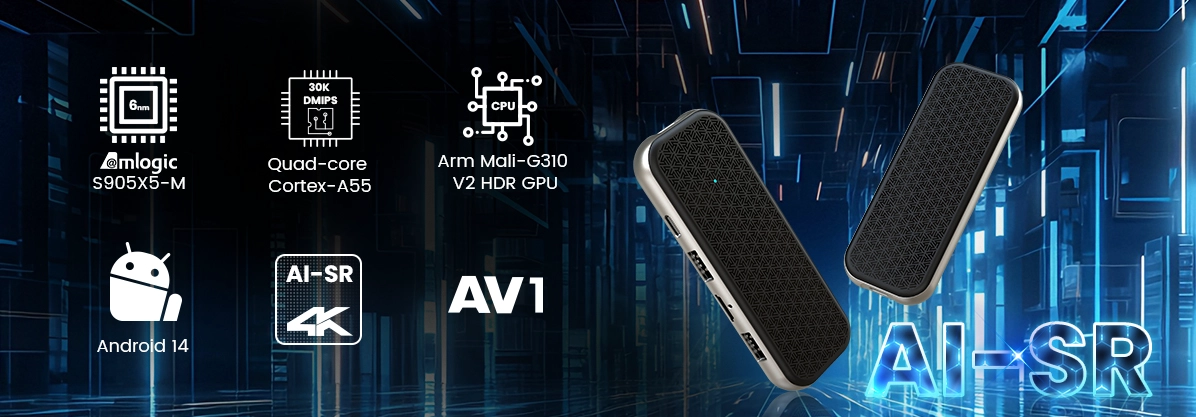
Amlogic positions the S905X5 as a 6 nm platform for next-generation 4K UHD set-top boxes. Its Armv9 CPU configuration, Mali-G310 V5 graphics, and video-processing capabilities make it relevant to mainstream streaming and multimedia products.
SZTomato's published S905X5 product configuration lists AI Super Resolution (AI-SR), advanced video codec support, Android software, and configurable memory and storage.
Image enhancement and video format support
AI-assisted image enhancement can help improve the appearance of certain lower-resolution content when the processing pipeline and source material are suitable. The actual improvement depends on the enhancement algorithm, input resolution, compression artifacts, content type, and output configuration.
The S905X5 platform is worth evaluating when a product needs modern 4K media playback and an enhanced viewing experience without the broader edge-computing requirements of a more specialized AI platform.
As with other SoCs, buyers should distinguish the chip's decoding capabilities from the output modes actually supported by the finished TV box. For example, a codec's maximum decoding frame rate does not prove that the HDMI output supports the same frame rate at the same resolution.
Streaming certification is a separate requirement
A processor specification alone does not guarantee Google TV certification, Android TV certification, Widevine L1 provisioning, Netflix 4K playback, or approval for other subscription services.
These requirements depend on the finished device, system implementation, licensing, security provisioning, certification processes, and the specific service's requirements. For a branded product targeting North America, Europe, or Southeast Asia, these checks should be included in the project plan before mass production.
Recommended applications
-
Mainstream 4K OTT and Android TV box projects
-
Customized streaming media players
-
Brand-oriented multimedia products
-
Hospitality entertainment devices
-
Products requiring AI-assisted image enhancement
For B2B customers, SZTomato can support firmware customization, hardware configuration, UI localization, application integration, and OEM/ODM branding. Certification-dependent projects require separate technical and commercial verification.
6. Amlogic A311Y3: For Demanding Edge AI and Premium Commercial Products
The Amlogic A311Y3 is the most AI-focused platform in this five-chip comparison. Amlogic announced the 6 nm SoC in June 2026, highlighting an eight-core CPU configuration, Mali-G625 graphics, an 8 TOPS NPU, and support for advanced local AI computing.
Its higher processing capability makes it worth considering for products that must combine multimedia, local inference, multiple peripherals, and more complex applications.
8 TOPS NPU for local AI workloads
The integrated NPU gives developers greater theoretical AI computing capacity than the 4 TOPS RK3572 platform. Potential workloads include computer vision, local AI assistants, selected language-model inference, image analysis, and other neural-network applications that fit the supported software environment.
However, peak TOPS does not determine whether a particular large language model will run efficiently. Model size, quantization format, memory capacity, supported operators, runtime compatibility, and CPU/GPU workload also matter.
For commercial development, it is advisable to benchmark the actual model and application rather than selecting a processor based on a peak-performance figure alone.
More display and interface flexibility
A311Y3 supports advanced multimedia processing, including up to 4K@120fps decoding for supported codecs, as well as multiple display configurations. Its published platform capabilities include high-speed expansion and camera interfaces that can support more complex edge devices.
These features make A311Y3 relevant to interactive flat panels, smart commercial displays, AI edge computing systems, robotics-related devices, and premium set-top boxes.
The exact number of usable ports, display combinations, and camera inputs depends on the board design and interface allocation. Engineering validation should precede any promise about simultaneous operation.
Recommended applications
-
AI edge computing boxes and intelligent terminals
-
Premium IPTV and multimedia platforms
-
Interactive education and commercial displays
-
Local AI applications requiring stronger inference capacity
-
Multi-interface smart devices
-
Specialized OEM/ODM products with differentiated features
For projects in which AI functions and product differentiation are central to the business model, A311Y3 may justify its higher platform requirements. For ordinary media playback, it may offer more capability than the application needs.
7. Which TV Box Chip Should You Choose? A Scenario-Based Guide
| Project requirement | Recommended starting point | Main reason |
|---|---|---|
| Lowest-cost 4K streaming device | RK3539 or H626 | Mainstream video playback and cost-conscious hardware |
| High-volume IPTV set-top box | RK3539, H626, or S905X5 | Evaluate BOM, firmware, DRM, and target market requirements |
| AI-enabled digital signage | RK3572 | Integrated NPU and commercial display flexibility |
| Education terminal with dual displays | RK3572 or A311Y3 | Match display requirements with AI and performance needs |
| Standard 4K OTT product with image enhancement | S905X5 | Streaming-oriented multimedia processing and AI-SR features |
| Local AI edge device | RK3572 or A311Y3 | Select according to model complexity and required throughput |
| High-performance interactive display | A311Y3 | Greater AI processing and display-interface flexibility |
| Cost-sensitive commercial playback | H626 or RK3539 | Avoid paying for unused AI and expansion resources |
This comparison is a starting point rather than a universal ranking. In particular, the S905X5 should not be selected solely because a product brief mentions streaming-service compatibility, and A311Y3 should not be selected solely because its NPU has the highest quoted TOPS figure.
The best TV box chip is the one that satisfies the required application, software environment, and deployment conditions at a commercially sustainable cost.
8. What Buyers Should Evaluate Before Finalizing a TV Box Chip
A reliable selection process should address six questions before the hardware design is frozen.
1. What must the device actually do?
List the required codecs, output resolution, display count, AI functions, connected peripherals, and expected application load. These requirements determine whether a mainstream multimedia platform is sufficient or a more capable AIoT SoC is necessary.
2. Does the software stack support the target product?
Check Android or Linux versions, kernel and BSP availability, device drivers, OTA update mechanisms, application dependencies, security requirements, and the expected maintenance period.
3. Are streaming licenses and certifications required?
Identify requirements for Google TV, Android TV, DRM, Netflix, or other services at the start. These are not guaranteed by the processor alone and may affect development time, certification cost, and the choice of platform.
4. Can the hardware deliver the required interfaces simultaneously?
Review the available HDMI, USB, Ethernet, Wi-Fi, Bluetooth, storage, display, and camera connections. Check pin multiplexing, interface bandwidth, simultaneous output modes, and power budgets.
5. Will the final enclosure remain thermally stable?
Sustained video processing, AI workloads, and networking can increase heat generation. Validate the complete device under its intended operating conditions, especially for fanless digital signage players and continuously operating commercial devices.
6. Does the complete BOM fit the business model?
Compare the processor, memory, storage, connectivity modules, PCB, enclosure, power supply, certification, software work, tooling, and expected production yield. A more expensive chip may be justified for a premium product, but not when its extra features do not improve the use case.
9. SZTomato OEM/ODM Customization for TV Boxes and Commercial Multimedia Devices
Choosing the right TV box chip is only the first step. Successful commercialization also requires hardware engineering, firmware adaptation, manufacturing coordination, and product-specific validation.
SZTomato has served international B2B customers since 2011, providing customized Android TV boxes, IPTV set-top boxes, streaming media players, digital signage devices, and related multimedia products.
Our OEM/ODM support can include:
-
Hardware and PCBA customization: Processor selection, memory and storage configuration, peripheral integration, and board-level adjustments.
-
Android and Linux firmware engineering: Launcher and UI customization, application integration, localization, startup configuration, and device-specific software changes.
-
AI and multimedia integration: Evaluation of codec requirements, NPU runtime compatibility, display pipelines, and target application performance.
-
Thermal and reliability engineering: Power-budget analysis, cooling solutions, and project-specific stability validation.
-
OEM branding and production: Enclosure options, logo placement, packaging, manufacturing coordination, and quality inspection according to agreed requirements.
Rather than treating every inquiry as a standard TV box order, SZTomato evaluates the intended market, hardware specification, software stack, operating environment, target cost, and expected order volume.
Whether you are developing a cost-effective 4K streaming product around RK3539 or H626, a commercial AI device around RK3572, an enhanced multimedia player using S905X5, or a high-performance edge AI product based on A311Y3, the platform must be validated against the product requirements.
Contact SZTomato to discuss your project, compare suitable hardware options, and develop a customized OEM/ODM solution for your target market.
Conclusion
The five platforms cover different segments of the 2026 TV box chip market. RK3539 and H626 are candidates for cost-conscious mainstream multimedia devices. RK3572 adds dedicated AI acceleration and broader commercial application potential. S905X5 is relevant to modern 4K streaming and AI-assisted image processing, while A311Y3 targets more demanding AI and multimedia systems.
There is no single processor that is best for every product. The right choice balances application performance, video compatibility, software support, thermal behavior, interface requirements, certification, and total product cost.
For international brands and B2B buyers, a clear specification and a capable OEM/ODM engineering partner can be just as important as the processor itself. SZTomato supports customized hardware and firmware development to help turn a suitable chip platform into a product ready for commercial deployment.
