
RK3572 vs RK3588: Which Rockchip Processor Is Better for Your Next Product?
RK3572 vs RK3588: Which Rockchip Processor Is Better for Your Next Product?
Choosing between the RK3572 and RK3588 is not simply a comparison of CPU cores or AI computing power. For TV box manufacturers, digital signage brands, system integrators, and industrial equipment developers, the right processor must balance performance, power consumption, thermal design, software compatibility, and total bill of materials (BOM) cost.
The RK3572 targets power-conscious edge computing and multimedia applications with an octa-core CPU and a 4 TOPS INT8 NPU. The RK3588 remains a stronger choice for demanding AI workloads, advanced graphics, high-resolution video processing, and complex multi-interface systems. Both processors support capable multimedia and AI applications, but they address different product requirements.
For businesses developing customized Android TV boxes, streaming media players, digital signage devices, or AI edge computing boxes, understanding these differences before committing to a hardware platform can reduce development costs and improve product competitiveness.
RK3572 vs RK3588: Key Specifications Compared
The following comparison highlights the main architectural differences. Confirm the exact processor revision, board configuration, and software support with your hardware supplier before finalizing a product specification.
| Specification | RK3572 | RK3588 |
|---|---|---|
| CPU architecture | 2× Cortex-A73 + 6× Cortex-A53 | 4× Cortex-A76 + 4× Cortex-A55 |
| Manufacturing process | 8 nm-class platform; verify the applicable device documentation | 8 nm |
| GPU | ARM Mali-G310 V2 MC1 | ARM Mali-G610 MC4 |
| NPU performance | 4 TOPS INT8 | 6 TOPS INT8 |
| Maximum video decoding | Up to 8K@30fps or 4K@120fps for supported codecs | Up to 8K@60fps for supported codecs |
| Video encoding | Up to 4K@40fps H.264/H.265 | Up to 8K@30fps H.264/H.265 |
| Memory | LPDDR4/LPDDR4X/LPDDR5/LPDDR5X; up to 16 GB addressing space | LPDDR4/LPDDR4X/LPDDR5 |
| Display and camera | Multi-display capabilities depend on the board design; supports MIPI-CSI camera inputs | Rich multi-display interfaces and multiple camera inputs |
| Connectivity | Flexible peripheral interfaces; dual Ethernet depends on implementation | PCIe, USB 3.x, SATA-related expansion, and dual Gigabit Ethernet MACs |
| Operating systems | Android and Linux support depends on the available BSP and SDK | Android and Linux support, with platform-specific BSPs |
| Best-fit applications | Cost-sensitive multimedia, smart displays, and compact edge devices | High-performance AI boxes, machine vision, and complex multimedia systems |
The official RK3572 datasheet lists its 4 TOPS INT8 NPU, supported memory types, and video codec limits. Rockchip's RK3588 documentation confirms the Cortex-A76/A55 CPU combination, Mali-G610 MC4 GPU, 6 TOPS NPU, and advanced multimedia capabilities. Actual system performance depends on the complete hardware and software implementation.
RK3572: A Practical Choice for Power-Conscious AIoT Products
The RK3572 is worth considering when a product needs modern multimedia capabilities and on-device AI without requiring the full processing resources of a flagship platform.
1. Lower system cost for mainstream applications
For commercial displays, educational devices, smart terminals, and customized TV boxes, the processor is only one part of the hardware budget. Memory, storage, power delivery, cooling, PCB complexity, and production yield all influence the final BOM.
The RK3572 can provide a more appropriate starting point when the application does not require the RK3588's stronger CPU and GPU resources. However, the final cost advantage must be confirmed through a complete board-level quotation rather than inferred from the chip specification alone.
2. On-device AI for focused workloads
With a rated 4 TOPS INT8 NPU, the RK3572 supports neural network acceleration and multiple mixed-precision operations. Its potential applications include image classification, face detection, visual interaction, and selected edge inference workloads.
For an AI-enabled digital signage player, for example, the processor may handle display playback while running a suitably optimized model for audience analytics. The practical result depends on model size, input resolution, memory bandwidth, runtime compatibility, and whether the CPU, GPU, or NPU becomes the bottleneck.
Compatibility with a framework such as PyTorch or ONNX does not automatically mean that every model can run directly on the device. Models often require conversion, quantization, operator compatibility checks, and performance testing with the target runtime.
3. High-resolution decoding for digital signage
The RK3572 supports H.265, VP9, AV1, and AVS2 decoding, reaching up to 8K@30fps or 4K@120fps for supported codec profiles. This makes it relevant to high-resolution playback and selected multi-display applications.
However, decoding capability and display output are different specifications. A project requiring two independent displays must also verify the display controller, available output interfaces, simultaneous resolution limits, operating-system support, and the behavior of the actual playback software.
For digital signage buyers, these checks are particularly important when building a dual-screen advertising player, interactive kiosk, or commercial information display.
4. Design for continuous operation
Low power consumption is a system-level result, not a number that can be determined from the processor model alone. A device operating 24 hours a day must account for CPU and NPU utilization, display output, memory, networking, storage, ambient temperature, and enclosure airflow.
SZTomato supports customized hardware and firmware development for commercial multimedia products. Depending on project requirements, the design process can include power-budget analysis, thermal optimization, PCB adjustments, and long-duration stability testing.
RK3588: When Performance and Expansion Matter More
The RK3588 remains a strong option for projects where processing headroom, graphics capability, camera connectivity, and interface flexibility matter more than minimizing the initial hardware cost.
1. More CPU and GPU resources
Its four Cortex-A76 performance cores and four Cortex-A55 efficiency cores provide a more capable CPU architecture than the Cortex-A73/A53 combination in the RK3572. The Mali-G610 MC4 GPU also offers substantially more graphics capability than the RK3572's Mali-G310 V2 MC1.
This difference matters in applications involving complex user interfaces, graphics-heavy software, multiple simultaneous services, computer vision pipelines, and intensive multimedia workloads.
For a product expected to support additional features over several years, that extra processing headroom can help reduce the need for an early hardware redesign.
2. Greater AI processing capacity
The RK3588 provides up to 6 TOPS INT8 NPU performance, compared with 4 TOPS on the RK3572. The difference is meaningful when an application benefits from additional neural processing capacity, but TOPS alone does not predict real-world inference speed.
A model's architecture, precision, memory transfers, operator support, and software optimization all influence throughput and latency. SZTomato recommends benchmarking the intended AI model on the target platform before selecting the processor for production.
3. Advanced video and camera processing
The RK3588 supports decoding of selected H.265, VP9, and AVS2 streams up to 8K@60fps, H.264 up to 8K@30fps, and AV1 up to 4K@60fps. Its video encoding capabilities extend to 8K@30fps for supported H.264/H.265 configurations.
It also offers multiple camera input options and a richer selection of high-speed interfaces. These features make it suitable for AI edge boxes, machine vision systems, multi-camera applications, high-end digital signage, and industrial multimedia platforms.
Nevertheless, a requirement to decode four or more 1080p streams should be validated against the codecs, frame rates, concurrent decoding limits, recording or inference workload, and memory bandwidth. A headline resolution does not guarantee a specific number of simultaneous streams.
4. More room for interface customization
The RK3588 platform provides access to interfaces including PCIe, USB 3.x, display outputs, MIPI camera inputs, and dual Gigabit Ethernet MACs. This flexibility is valuable when a product needs storage expansion, several external devices, multiple displays, or specialized industrial peripherals.
The number of interfaces available on a finished device depends on pin multiplexing, board routing, power design, and the selected carrier-board configuration. A customized design must therefore start with an interface map, not just a processor datasheet.
RK3572 vs RK3588: Which Processor Fits Your Product?
The best choice depends on the product's actual workload and commercial target.
| Product or application | Recommended starting point | Main consideration |
|---|---|---|
| Standard Android TV box | RK3572 or a lower-cost platform | Playback requirements, DRM, software compatibility, and BOM |
| Commercial digital signage player | RK3572 | Continuous playback, display interfaces, thermal performance |
| Dual-screen commercial terminal | Evaluate RK3572 first | Confirm independent display timing and simultaneous output support |
| Education and interactive multimedia device | RK3572 for mainstream workloads | Application complexity and graphics requirements |
| AI edge computing box | RK3588 for demanding workloads | Model throughput, memory, interfaces, and expansion |
| Multi-camera machine vision system | RK3588 | Camera bandwidth, ISP pipeline, and concurrent inference |
| High-end multi-display system | RK3588 | Display combinations, resolution limits, and software support |
| Cost-sensitive high-volume OEM project | Benchmark both platforms | Total BOM, tooling, production yield, and lifecycle availability |
For straightforward video playback, commercial information displays, and focused edge AI tasks, the RK3572 may offer the more balanced platform. For complex AI inference, graphics-intensive software, multiple camera inputs, or extensive connectivity, the RK3588 is generally the stronger starting point.
Neither processor is universally better. A product with modest computational requirements may gain little from the RK3588, while a demanding vision system may quickly exceed the practical limits of the RK3572.
Why Power Consumption and Thermal Design Need Separate Testing
Processor selection is often reduced to CPU architecture and NPU performance. In production, thermal behavior can be equally important.
A compact fanless enclosure has limited space for heat dissipation. Continuous video decoding, AI inference, high-speed networking, and external storage can increase the total thermal load. If the cooling solution is inadequate, the device may throttle, lose performance, or experience reduced long-term reliability.
Before production, the engineering team should measure power consumption under idle, playback, networking, and sustained AI workloads. Thermal testing should also cover the intended ambient temperature range and the final enclosure.
SZTomato can support customized thermal solutions, PCB and hardware adjustments, and firmware optimization according to project requirements. The objective is to achieve stable performance in the actual deployment environment, rather than relying on a theoretical power figure.
SZTomato: Customized RK3572 and RK3588 Hardware Solutions
Choosing the right processor is only the first step. Successful OEM/ODM projects also require hardware integration, firmware engineering, manufacturing quality control, and a realistic plan for long-term maintenance.
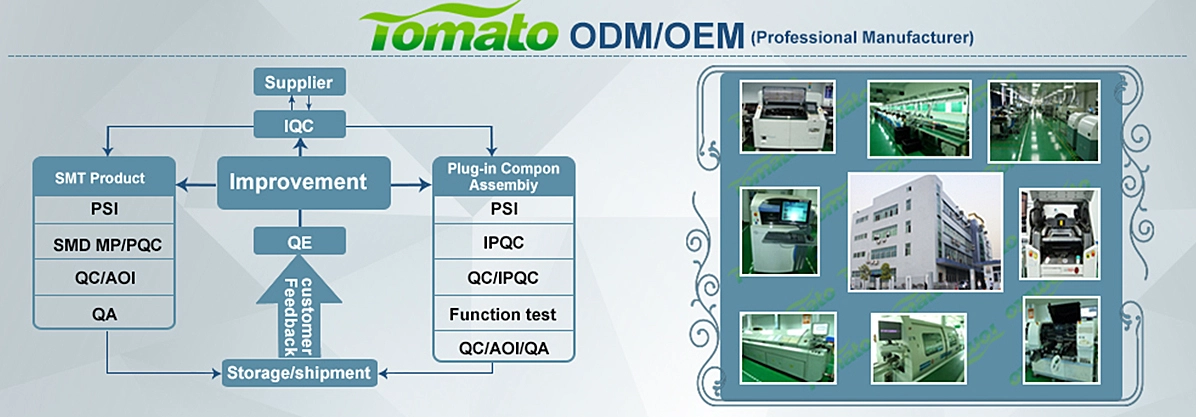
SZTomato, a Shenzhen-based manufacturer serving international B2B customers since 2011, supports customized Android TV boxes, streaming media players, digital signage players, and AI edge computing devices.
Depending on the project, our OEM/ODM development services can include:
-
Hardware and PCBA customization: Board-level design adjustments, memory and storage configuration, interface integration, and peripheral selection.
-
Android and Linux firmware customization: System configuration, startup behavior, UI/UX adjustments, device management, and application integration.
-
AI and multimedia integration: Evaluation of codec support, NPU runtime compatibility, camera interfaces, and application performance.
-
Thermal and reliability engineering: Cooling design, power optimization, environmental testing, and continuous-operation validation.
-
OEM branding and production: Product appearance, logo placement, packaging, manufacturing coordination, and quality inspection according to agreed specifications.
We do not treat every project as a standard board with a different logo. The appropriate solution depends on your target market, operating environment, software requirements, expected order volume, and cost target.
If you are evaluating the RK3572 vs RK3588 for a new product, SZTomato can help assess the technical requirements and determine whether an existing platform or a customized hardware design is the better fit.
Frequently Asked Questions
Is the RK3588 always faster than the RK3572?
The RK3588 has a stronger CPU architecture, a more capable GPU, and a higher-rated NPU. It is generally better suited to demanding workloads. Actual performance differences vary by application, software optimization, memory configuration, and thermal conditions.
Is the RK3572 suitable for digital signage?
Yes. Its video decoding and AI acceleration capabilities make it a candidate for commercial playback, smart displays, and selected edge analytics applications. Confirm display outputs, continuous-load performance, and software support for the intended configuration.
Does a 6 TOPS NPU guarantee better AI performance than a 4 TOPS NPU?
No. TOPS indicates theoretical computing throughput under specified conditions. Model compatibility, quantization, memory bandwidth, operator support, and runtime optimization can materially affect real inference performance.
Can SZTomato customize an RK3572 or RK3588 device?
SZTomato supports OEM/ODM projects involving hardware configuration, PCBA customization, Android/Linux firmware, interface integration, and thermal optimization, subject to technical feasibility and project requirements.
What should buyers provide when requesting an OEM/ODM quotation?
Provide the intended application, required video resolution and codecs, display count, AI workload, operating system, interfaces, memory and storage requirements, operating temperature, target unit cost, and estimated order quantity. These details help establish a realistic hardware proposal and development schedule.
Final Recommendation
For B2B buyers comparing the RK3572 vs RK3588, start with the workload rather than the processor's position in the product lineup.
Choose the RK3572 when mainstream multimedia, focused AI tasks, compact hardware, and cost control are the priorities. Choose the RK3588 when the product needs stronger CPU/GPU performance, more demanding AI processing, advanced video capabilities, or extensive interface expansion.
For a commercial product, the most cost-effective processor is the one that meets the specification with sufficient performance headroom, manageable thermal requirements, and a maintainable software platform.
Contact SZTomato to discuss your application, customization requirements, and OEM/ODM development options for your next multimedia or AI edge computing product.
