
Android TV Box SoC Comparison: Best Chips for 4K, 8K and OEM Projects
Android TV Box SoC Comparison: Best Chips for 4K, 8K and OEM Projects
Choosing an Android TV Box is no longer simply a matter of comparing RAM, storage capacity and advertised video resolution. For distributors, brand owners, IPTV operators and system integrators, the System-on-Chip (SoC) determines much of the device's processing capability, video decoding performance, graphics acceleration, connectivity options and potential for product customization.
A chipset advertised as supporting 8K video is not automatically the best choice for every project. Some applications require advanced AI processing and multiple display outputs, while others prioritize reliable 4K streaming, low power consumption, competitive manufacturing costs and long-term firmware support.
This Android TV Box SoC comparison examines 15 commonly discussed chipsets across flagship, high-performance, mainstream and entry-level categories. It provides a practical starting point for selecting hardware for consumer streaming devices, IPTV set-top boxes, commercial multimedia players and customized OEM/ODM products.
For B2B buyers, the best chipset is the one that meets the actual application requirements—not necessarily the one with the highest specifications.
Android TV Box SoC Comparison at a Glance
The following classification is an engineering-oriented purchasing guide rather than a laboratory benchmark ranking. Actual performance depends on the specific SoC revision, memory configuration, firmware, thermal design and product implementation.
| Tier | Chipset | Main strengths | Best-fit applications |
|---|---|---|---|
| T0: Flagship | Rockchip RK3588 | High-performance CPU/GPU, AI acceleration, advanced I/O | AI edge boxes, multi-display systems, professional multimedia |
| T0: Flagship | Amlogic S928X-J | High-resolution video processing, advanced multimedia capabilities | Premium media players and selected commercial projects |
| T1: High Performance | Amlogic S905X5M | Modern 4K platform, AV1 decoding, AI-assisted image enhancement | Premium home streaming devices |
| T1: High Performance | Amlogic S922X | Powerful legacy CPU/GPU architecture | Existing platforms and selected gaming or multimedia projects |
| T1: High Performance | Amlogic S905X5 | New-generation 4K processing platform | Selected operator and customized set-top box projects |
| T2: Mainstream | Amlogic S905Y5 | Compact, low-power 4K streaming | TV dongles and compact streaming devices |
| T2: Mainstream | Allwinner H728 | Octa-core processing and multimedia integration | Cost-conscious multimedia products |
| T2: Mainstream | Amlogic S905X4 | Established 4K platform and broad product adoption | Mainstream Android TV Box and IPTV projects |
| T2: Mainstream | Rockchip RK3566 | Flexible interfaces and embedded-system applications | Industrial multimedia and light edge-computing devices |
| T2: Mainstream | Allwinner H626 | Cost-effective 4K multimedia processing | Entry-to-mainstream streaming devices |
| T3: Entry Level | Amlogic S905Y4 | Low-power compact design | Basic streaming dongles |
| T3: Entry Level | Allwinner H618 | Affordable quad-core platform | Basic Android TV Box products |
| T3: Entry Level | Rockchip RK3528A | Budget-oriented multimedia processing | Entry-level streaming devices |
| T3: Entry Level | Rockchip RK3518 | Cost-focused basic processing | Selected entry-level products |
| T3: Entry Level | Amlogic S905W2 / Allwinner H313 | Low-cost multimedia functionality | Basic online video playback |
The tier labels above are practical purchasing categories, not an official ranking published by the chipset manufacturers. Exact decoding formats, maximum frame rates, operating-system support and interface capabilities must be verified against the datasheet for the specific chip and board design.
T0 Flagship Chipsets: RK3588 vs. S928X-J
Flagship processors are appropriate when a project requires more than conventional television streaming. AI inference, multiple displays, high-resolution video processing and specialized peripheral interfaces can justify their higher hardware and engineering costs.
1. Rockchip RK3588
The Rockchip RK3588 is a powerful choice for Android TV Box projects that overlap with AI edge computing, professional multimedia processing and industrial applications.
Its major hardware features include:
-
CPU: Four Arm Cortex-A76 cores and four Cortex-A55 cores.
-
GPU: Arm Mali-G610 MP4.
-
AI acceleration: Up to 6 TOPS NPU performance, depending on the supported operation and implementation.
-
Video: Advanced 8K decoding and encoding capabilities, with codec-specific resolution and frame-rate limits.
-
Interfaces: HDMI output, HDMI input, PCIe, USB 3.x and other high-speed interfaces, subject to board implementation.
The RK3588 is particularly useful when a product must combine multimedia playback with AI inference, camera processing, multi-screen presentation or customized input/output functions. It can also provide a strong foundation for specialized Android or Linux devices.
However, the RK3588 is not automatically the most economical solution for a standard streaming box. Its higher platform cost, power requirements, thermal management and software integration workload may be unnecessary for products designed primarily for online 4K video.
Best fit: AI multimedia boxes, industrial edge devices, professional multi-display solutions and demanding OEM/ODM projects.
2. Amlogic S928X-J
The Amlogic S928X family targets advanced multimedia applications and high-resolution video processing. Its combination of Cortex-A76 and Cortex-A55 CPU cores and Mali-G57 MC2 graphics provides a different performance profile from the RK3588.
Depending on the precise model and implementation, the platform supports advanced 8K video decoding, including codecs such as AV1 and AVS3. Buyers should confirm the exact codec profile, bit depth, frame rate, output interface and supported operating system for the selected variant.
For premium streaming products, video quality, memory bandwidth, HDMI implementation and firmware stability matter just as much as headline resolution.
The S928X-J can be a suitable choice for premium multimedia equipment, but it should not be assumed to outperform the RK3588 in every workload. The RK3588 generally has a stronger proposition for AI acceleration and extensive industrial I/O, while the S928X platform may be more appropriate for projects centered on advanced media playback.
Best fit: Premium media players, specialized 8K applications and selected commercial multimedia systems.
T1 High-Performance Chipsets: Modern 4K and Specialized Applications
For many buyers, this category offers a better balance between hardware capability and total product cost. A well-designed 4K Android TV Box can deliver an excellent user experience without the additional expense of an 8K flagship processor.
3. Amlogic S905X5M
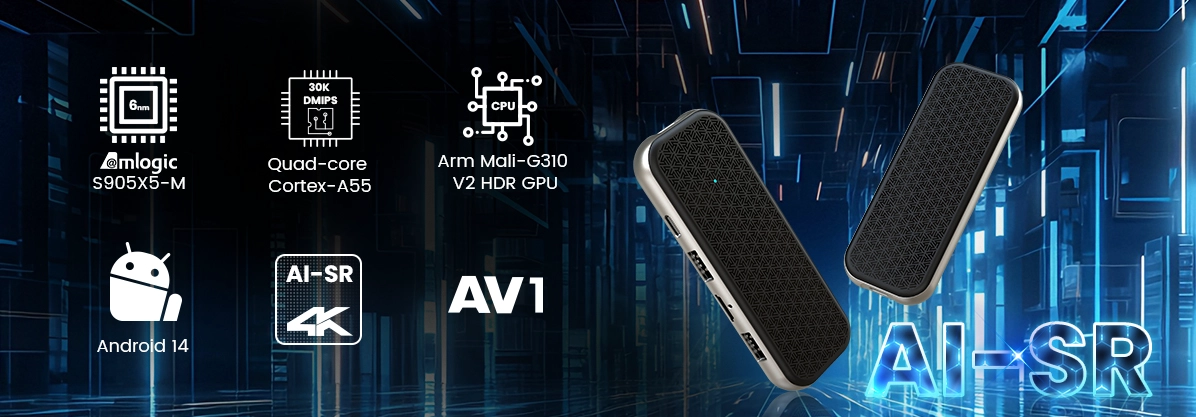
The Amlogic S905X5M is a modern platform designed for next-generation 4K UHD set-top boxes. It is an attractive candidate for products requiring contemporary video processing, efficient operation and a competitive bill of materials.
Key evaluation points include:
-
Quad-core Cortex-A55 processing.
-
Mali-G310 V2 graphics.
-
Hardware AV1 decoding, subject to supported profiles.
-
4K multimedia output and HDR capabilities, subject to the complete product design.
-
AI-assisted image-enhancement features where supported by the SoC, software stack and product implementation.
For streaming services that use AV1, hardware decoding can reduce the processing burden compared with software decoding. Image enhancement may also improve the appearance of certain lower-resolution sources, although the result depends on the algorithm and input content.
The S905X5M is therefore worth considering for premium home streaming devices and cost-sensitive 4K products. Buyers should verify actual clock frequencies, output modes, memory configurations and firmware features rather than assuming every implementation offers identical performance.
Best fit: Modern 4K Android TV Boxes, streaming products and customized consumer multimedia devices.
4. Amlogic S922X
The S922X remains relevant when evaluating established multimedia platforms, especially where a project already has compatible hardware, applications or firmware.
Its six-core CPU configuration combines four Cortex-A73 cores with two Cortex-A53 cores, alongside Mali-G52 MP6 graphics. This architecture can provide capable CPU and GPU performance for its generation.
Nevertheless, the age of the platform matters. Existing products may use older Android versions, outdated security components or firmware branches with limited maintenance. An advertised feature or legacy decoding capability should not be confused with current software compatibility.
For new product development, buyers should assess the expected service life, security-update requirements, application compatibility and long-term availability of engineering support before choosing this chipset.
Best fit: Existing platforms, selected legacy multimedia applications and projects with a clear software-maintenance plan.
5. Amlogic S905X5
The S905X5 is positioned as a newer 4K UHD platform. It deserves separate evaluation from the S905X5M because the two models should not be treated as interchangeable simply because their names are similar.
For commercial buyers, the decision should be based on verified CPU and GPU architecture, supported video codecs, memory options, image-processing functions, peripheral interfaces and software availability.
The S905X5 may be suitable for operator-oriented set-top boxes and customized multimedia projects where the platform's specific capabilities align with the application. Claims concerning H.266/VVC, AVS3, AI acceleration and encoding must be confirmed against the exact model's documentation before they become purchasing specifications.
Best fit: Selected next-generation set-top boxes, operator platforms and customized multimedia products.
T2 Mainstream Chipsets: The Practical Choice for Most 4K Projects
For standard IPTV, OTT streaming and household multimedia, mainstream chipsets often deliver the strongest cost-to-capability balance. Buyers should prioritize stable playback, reliable networking, application compatibility and thermal performance over specifications that their customers may never use.
6. Amlogic S905Y5
The S905Y5 is worth considering for compact, power-conscious streaming products. Its Cortex-A55 CPU architecture and entry-to-mainstream graphics configuration are suitable for applications that prioritize efficient media playback over demanding gaming.
When evaluating a device based on this chipset, check AV1 support, HDR implementation, Wi-Fi performance, memory capacity and the responsiveness of the customized launcher.
Best fit: Compact streaming devices, TV dongles and mainstream multimedia products.
7. Allwinner H728
The H728 is an octa-core Cortex-A55 platform designed for multimedia applications that can benefit from multiple CPU cores and contemporary system software.
However, eight CPU cores do not automatically translate into superior graphics performance or smoother video playback. GPU capability, memory bandwidth, hardware decoding, thermal limits and firmware optimization remain important.
Before choosing an H728-based product, verify the supported decoding profiles and maximum frame rates for the exact board. Do not assume that every advertised 8K format is supported at 60 frames per second.
Best fit: Cost-conscious multimedia devices and projects that benefit from additional CPU resources.
8. Amlogic S905X4
The S905X4 is an established option for 4K streaming and Android-based multimedia products. Its mature market presence can be valuable to buyers seeking an existing hardware platform rather than an entirely new development program.
The Cortex-A55 CPU and Mali-G31 MP2 GPU provide a practical foundation for mainstream streaming. Hardware AV1 decoding is a notable advantage for compatible content.
Its principal limitation is generational: newer platforms may offer improved processing efficiency, graphics capability or image-enhancement features. Buyers should compare the total platform cost and available firmware support rather than selecting it solely because of familiarity.
Best fit: Established Android TV Box designs, mainstream IPTV products and cost-sensitive OEM projects.
9. Rockchip RK3566
The RK3566 is often more interesting for embedded and industrial applications than for simple consumer streaming alone.
Its quad-core Cortex-A55 CPU, Mali-G52 graphics and flexible peripheral options make it suitable for selected digital signage players, embedded multimedia devices and lightweight edge-computing projects.
Some configurations include an NPU rated at approximately 0.8 TOPS, but AI performance and software compatibility must be checked for the exact platform. The RK3566 is not generally selected for native hardware AV1 decoding, so codec requirements should be confirmed before procurement.
Best fit: Embedded multimedia, digital signage and projects requiring flexible hardware interfaces.
10. Allwinner H626
The H626 is a cost-conscious multimedia platform for applications that do not require flagship-level processing.
Potential advantages include mainstream 4K playback capability and support for contemporary video formats in compatible implementations. Android version, video-enhancement features and codec support should be verified against the actual product specification.
For buyers targeting entry-to-mainstream devices, the H626 may provide a practical foundation when the software requirements are well defined and the memory configuration is appropriate.
Best fit: Value-oriented Android TV Boxes and mainstream multimedia devices.
T3 Entry-Level Chipsets: When Lower Cost Is the Priority
Entry-level chipsets are suitable for straightforward streaming products, but they require careful configuration. A low-cost processor paired with insufficient RAM, slow storage or an unstable wireless connection can produce a poor user experience even when the device advertises 4K output.
11. Amlogic S905Y4
The S905Y4 is designed for compact, energy-conscious multimedia applications. It is a candidate for TV dongles and basic streaming devices where physical size, power consumption and manufacturing cost matter.
Its lower processing headroom makes memory allocation, background services and launcher optimization particularly important.
12. Allwinner H618
The H618 is a budget-oriented quad-core Cortex-A53 platform used in selected Android TV Box products.
It can be suitable for basic media playback, but buyers should evaluate the full configuration rather than relying on the chipset name alone. Some products marketed as H618 variants or related configurations may offer different interfaces; HDMI input or video-capture functionality must be confirmed from the actual board design.
13. Rockchip RK3528A
The RK3528A targets entry-level multimedia applications. It may be appropriate for basic video playback when the required codecs, resolution and operating system are supported.
For overseas streaming products, verify AV1 hardware decoding, DRM requirements and compatibility with the target applications before selecting this platform.
14. Rockchip RK3518
The RK3518 is another budget-oriented option for basic multimedia products. Its suitability depends on the actual hardware configuration, GPU capability, memory and available software support.
For new projects, buyers should consider whether the platform offers enough headroom for future application updates and the intended product life cycle.
15. Amlogic S905W2 and Allwinner H313
These chipsets are best assessed in the context of entry-level product requirements and target pricing.
The S905W2 uses a low-power Cortex-A35-based architecture, while the H313 is a cost-oriented Cortex-A53 platform. Their suitability depends on the required codecs, video output modes, memory configuration and application workload.
Neither should be selected solely because a supplier advertises 4K playback. Confirm the supported formats, frame rates, streaming requirements and actual performance of the finished device.
Entry-level purchasing recommendation: For simple online video playback, an appropriately configured entry-level chipset can be sufficient. For high-bitrate local media, demanding applications, extended multitasking or long-term commercial deployment, consider a more capable platform.
How to Choose the Right Android TV Box SoC
A useful Android TV Box SoC comparison should evaluate the entire product platform rather than just the processor.
1. Match Video Decoding to Real Content Requirements
AV1 support is valuable for products targeting compatible streaming services because it enables dedicated hardware decoding of supported AV1 content.
However, codec support must be evaluated at the profile, bit-depth, resolution and frame-rate levels. Hardware decoding of one format does not guarantee support for every variant of that format.
Similarly, distinguish between:
-
8K decoding: The SoC can process a supported 8K video stream.
-
8K output: The complete display pipeline can deliver the required resolution and frame rate.
-
8K encoding: The platform can encode video at a specified resolution and frame rate.
-
Multi-display operation: The SoC, board routing, interfaces and firmware support the required simultaneous outputs.
These capabilities are related but not interchangeable.
2. Evaluate RAM, Storage and Network Performance
A powerful SoC cannot compensate for every system bottleneck. Insufficient RAM may lead to application reloads, while slow storage can affect startup time and system responsiveness.
Network performance is equally important. Wi-Fi 6 support on a specification sheet does not guarantee a reliable wireless connection; antenna design, RF tuning, interference and firmware also matter.
For commercial deployment, assess Ethernet requirements, Wi-Fi stability, memory capacity, flash-storage endurance and the expected number of concurrent applications.
3. Check Firmware, DRM and Application Compatibility
A processor may support the necessary video codec but still fail to meet a streaming project's commercial requirements.
Protected streaming services may require approved DRM implementations, application certification or platform-specific integration. Google TV certification and Android TV certification are not interchangeable with simply running Android.
For IPTV operators and brand owners, verify middleware compatibility, secure boot or firmware protection requirements, update mechanisms and the long-term maintenance plan before approving a chipset.
4. Consider Thermal Design and Product Reliability
Sustained performance depends on heat dissipation, power delivery and enclosure design. A compact device operating continuously in a warm environment may behave differently from a short-duration benchmark test.
Industrial and commercial products may require customized cooling solutions, optimized PCBA layouts and extended validation under the expected operating conditions.
A reliable purchasing decision should therefore include thermal testing, stress testing, long-duration playback and quality-control procedures.
OEM/ODM Customization: Turning a Chipset into a Market-Ready Product
For B2B buyers, chipset selection is only the beginning. A successful product also requires the right PCB design, memory and storage configuration, firmware, connectivity and mechanical structure.
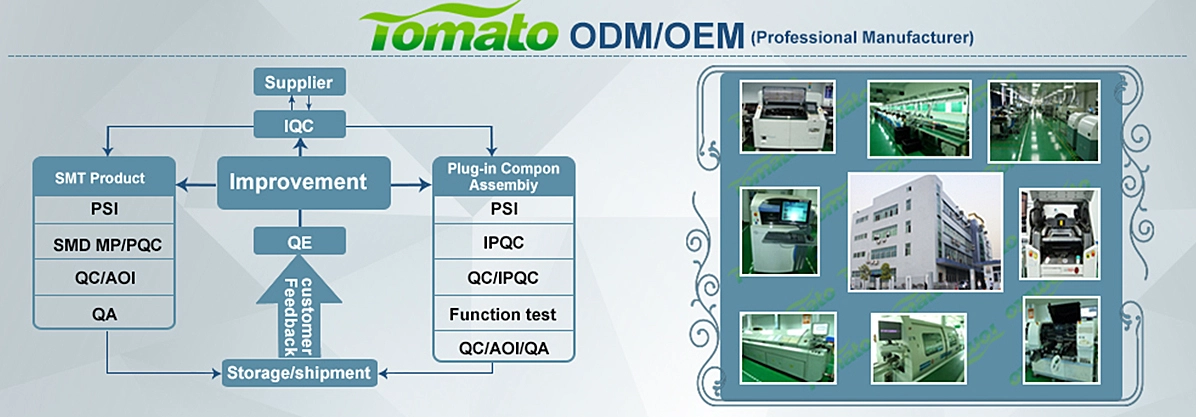
SZTomato supports OEM/ODM customization for Android TV Boxes, IPTV set-top boxes, streaming media players and related multimedia hardware. Depending on the selected platform and project requirements, customization may include:
-
Hardware and PCBA engineering: Interface selection, component configuration and board-level adjustments.
-
Firmware customization: System configuration, launcher and UI/UX adaptation, boot animation and application integration.
-
Middleware and API integration: Compatibility work for approved IPTV platforms, commercial applications and customer systems.
-
Thermal engineering: Cooling and enclosure optimization for continuous or demanding operation.
-
Multimedia integration: Customized audio solutions and project-specific video or signal-processing requirements.
-
Quality assurance: Functional testing and validation against agreed product specifications.
The feasibility of each feature depends on the selected SoC, available SDK and BSP, licensing conditions, component supply and project scope. Features such as HDMI input, multi-display output, AI processing and protected streaming should be confirmed during technical review rather than assumed to be available on every model.
For distributors, brand owners, telecom operators and system integrators, this approach helps align hardware capabilities with the actual commercial application instead of forcing the project into a generic reference design.
Final Recommendations for B2B Buyers
The most appropriate chipset depends on what the finished product must achieve.
| Project requirement | Recommended starting point |
|---|---|
| AI edge computing and advanced multi-display applications | RK3588 |
| Premium high-resolution multimedia | S928X-J, subject to verified requirements |
| Modern 4K streaming | S905X5M |
| New-generation customized 4K platform | S905X5, subject to specification verification |
| Established mainstream 4K products | S905X4 |
| Embedded multimedia and flexible interfaces | RK3566 |
| Compact, low-power streaming | S905Y5 or S905Y4 |
| Cost-sensitive basic streaming | H626, H618, H313 or other validated entry-level platforms |
These recommendations are starting points, not universal performance rankings. A suitable shortlist should be validated against the final bill of materials, application requirements, firmware availability and product life-cycle expectations.
Before placing a bulk order, request the exact SoC specification, memory and storage configuration, supported codecs, output modes, wireless implementation, operating-system version and available engineering documentation.
Looking for a customized Android TV Box or IPTV set-top box for your brand or project? SZTomato can help evaluate the appropriate hardware platform and customization scope for your application. Share your target market, required video formats, interfaces, operating system, estimated order volume and branding requirements to begin a technical discussion.
The best Android TV Box is not necessarily the one with the most powerful chipset. It is the one engineered to deliver the required performance, compatibility, reliability and cost throughout the product's intended service life.
