
Android TV Box Function
Maximizing Android TV Box Function for Commercial Deployments: A Technical Architecture Blueprint
The baseline criteria for deploying an Android TV Box in a B2B environment have fundamentally evolved. As global telecom operators migrate toward Android Open Source Project (AOSP) and Android TV ecosystems, and digital signage networks demand real-time edge processing, basic video playback is no longer the benchmark.
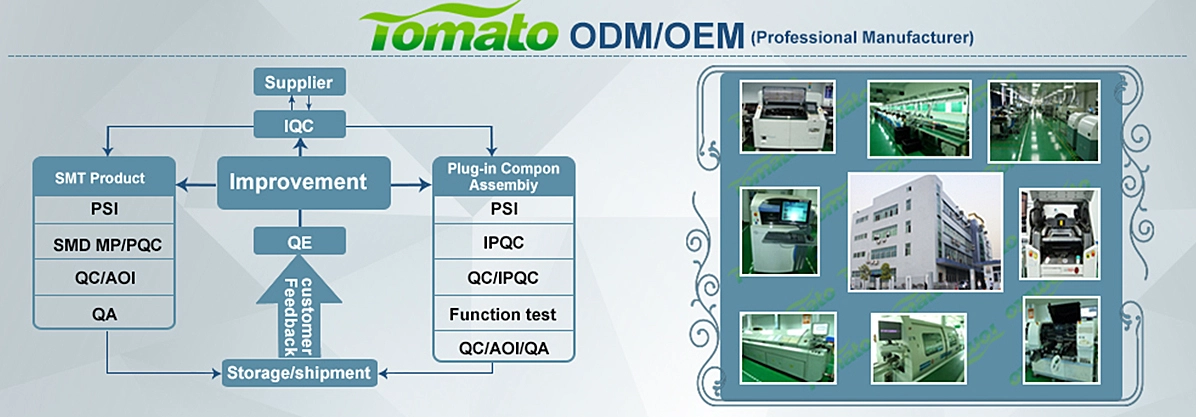
The core challenge facing B2B procurement managers is not whether a device can stream media, but whether its architectural framework can handle 24/7 duty cycles, secure payload delivery, and total remote management. Maximizing device utility requires shifting from rigid retail hardware to a flexible OEM/ODM engineering framework capable of deep hardware and firmware customization.
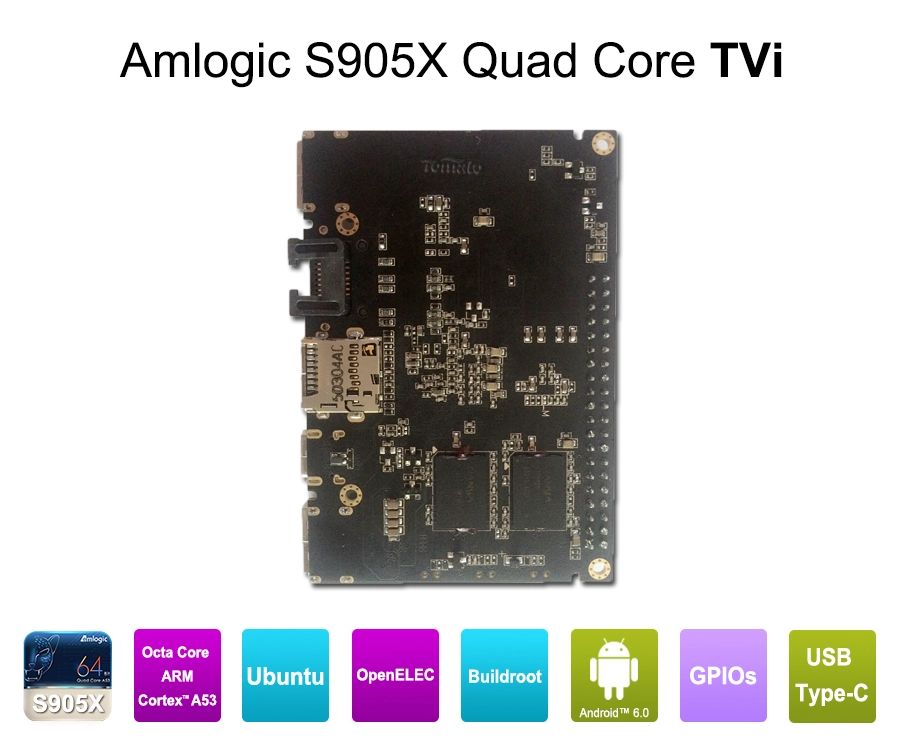
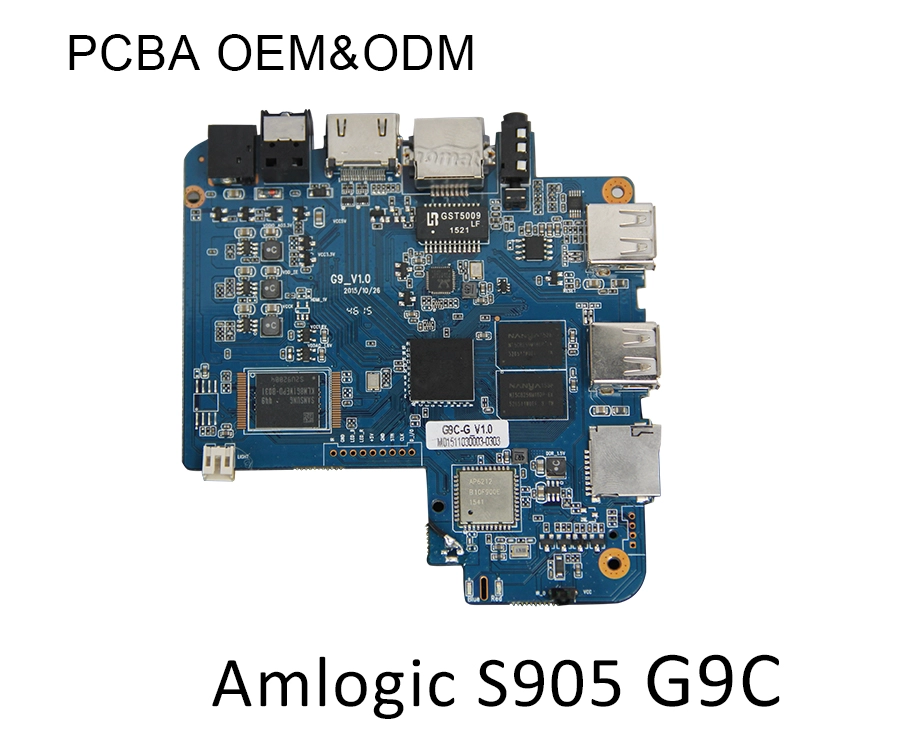
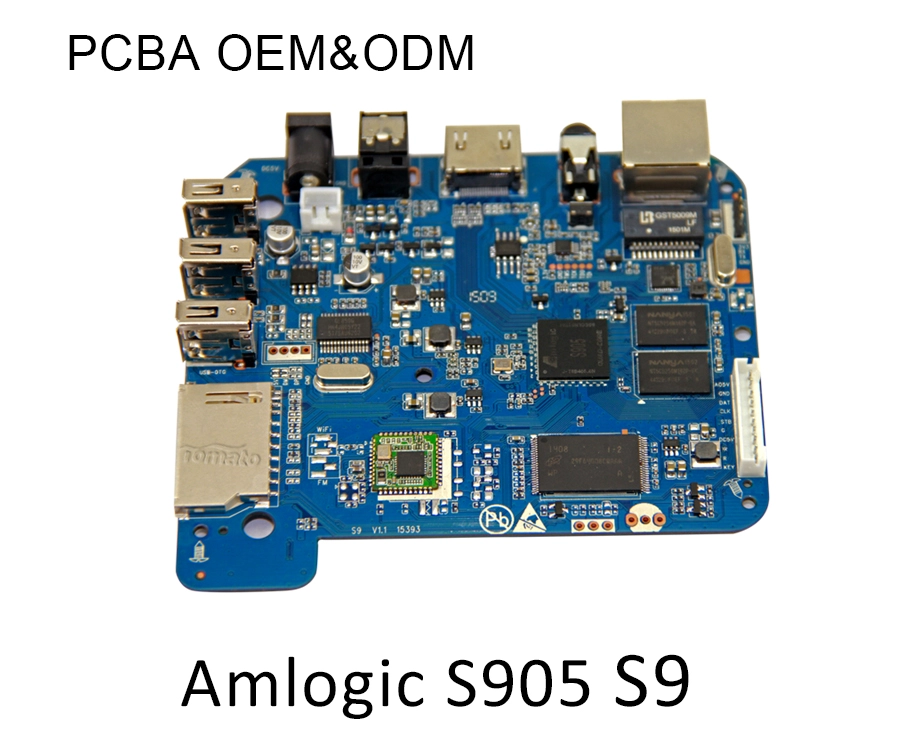
1. Hardware-Level Functionality: Re-Engineering the PCBA Layout
In commercial environments—such as hotel IPTV distribution, medical monitors, or outdoor digital signage networks—hardware failures translate directly into operational losses. Standard consumer motherboards are not built to survive these environments.
Thermal Mitigation & Duty Cycles
Continuous processing under high-load video decoding generates severe thermal stress. When an application causes the CPU/GPU to spike, retail boxes suffer from thermal throttling, leading to dropped frames, stuttering, or complete system crashes.
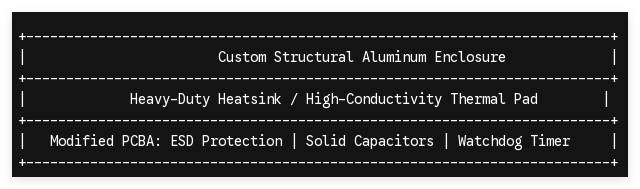
Industrial-grade implementation requires specialized cooling solutions, including thick aluminum heatsinks, high-conductivity thermal pads, and structural enclosures engineered to optimize passive heat dissipation without relying on failure-prone mechanical fans.
Custom Component Integration
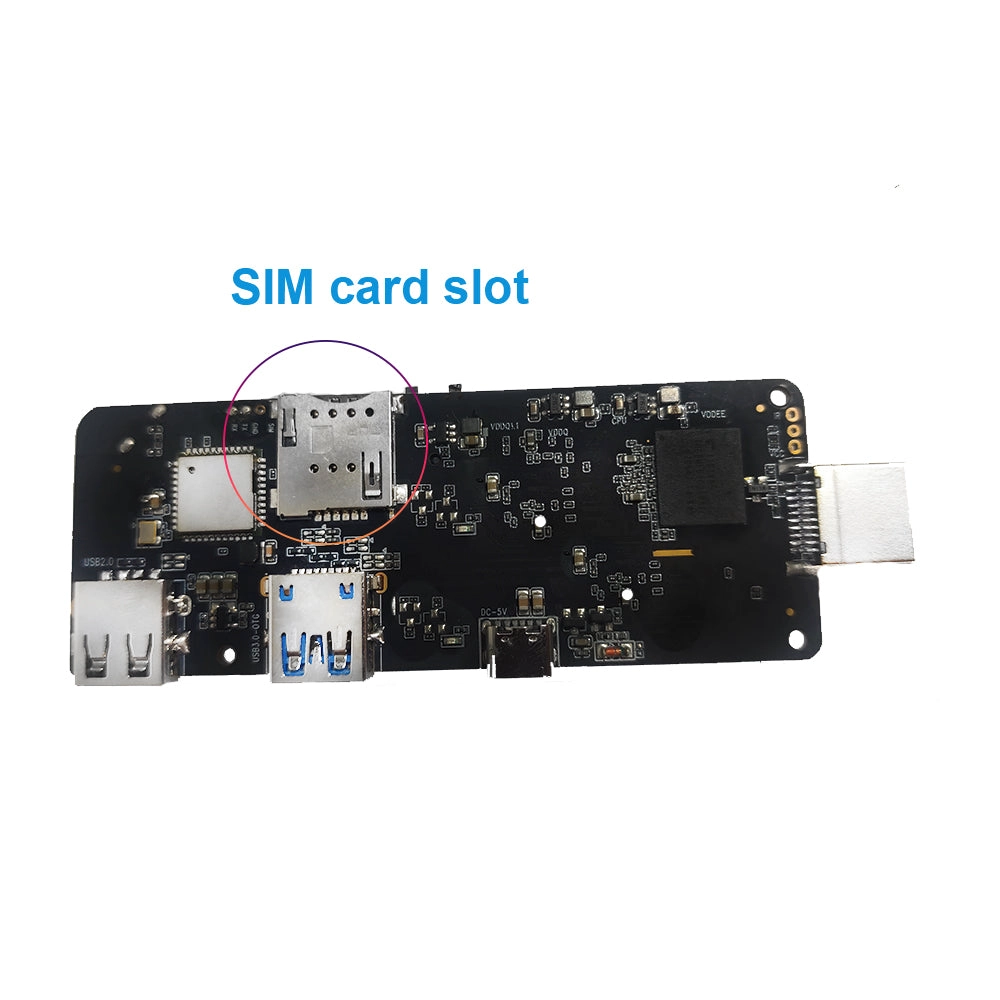
Commercial operations frequently require peripheral configurations absent on standard hardware. Enterprise functionality demands a tailored PCBA layout that can integrate:
-
Hardware Watchdog Timers: Dedicated microcontrollers that monitor system runtime and force a hardware reboot if the operating system freezes.
-
Power over Ethernet (PoE): Eliminating external power supplies by routing electricity directly through the RJ45 LAN architecture.
-
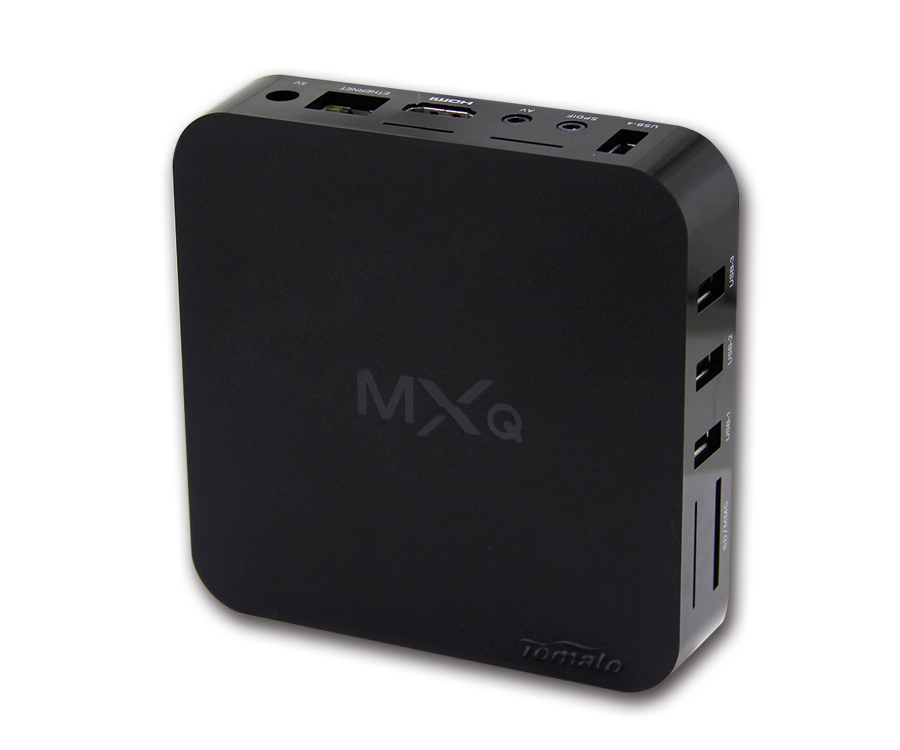
Expanded Port Matrixes: Adding dual HDMI outputs, RS232 serial interfaces for legacy display controls, or specialized GPIO pins.
2. Firmware and Kernel Optimization: Beyond Stock Operating Systems
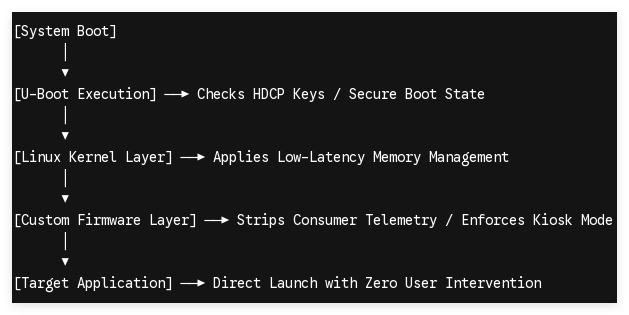
The functional capability of an enterprise media player depends entirely on how the operating system interacts with the underlying silicon. Standard Android distributions contain excessive background services, consumer telemetry, and unoptimized resource management structures that compromise system security and performance.
Linux and Android Kernel Tuning
Achieving maximum operational efficiency requires a stripped-down, optimized kernel. By conducting Linux/Android kernel optimization, engineering teams can eliminate heavy background frameworks, modify low-memory killer (LMK) parameters, and dedicate processing cores entirely to the primary display application. This ensures consistent, ultra-low-latency decoding pipelines for high-bitrate video arrays.
Security and DRM Integration
Commercial deployments must safeguard high-value streaming data and secure intellectual property against piracy or interception. Deep firmware-level engineering installs cryptographic keys directly into the secure bootloader, enabling HDCP encryption and Widevine L1/PlayReady digital rights management (DRM) handling at a native, hardware-isolated level.
3. Custom UI/UX Firmware and System Integration
A retail UI presents significant operational vulnerabilities in commercial environments. If an end-user, hotel guest, or store employee can access system settings, exit the app, or change wireless parameters, the network's stability is broken.
Launcher Customization and Kiosk Mode
Securing an industrial endpoint requires a custom, hardcoded launcher environment. B2B firmware engineering replaces the standard consumer interface with a custom UI/UX firmware layer. This layer locks the system down into a permanent Kiosk Mode—disabling access to system configurations, hidden navigation menus, and USB debugging options—ensuring the box performs only its designated commercial role.
Enterprise Control via SDK/API
Integrating a fleet of media boxes into an existing architecture (such as a Property Management System or central Digital Signage CMS) requires robust software interfaces. Providing open SDK/API integration gives system integrators the tools to:
-
Remotely configure local system resources via terminal environments.
-
Monitor real-time system metrics, including SoC temperatures, memory allocation, and packet delivery.
-
Inject localized notifications or emergency broadcast streams over current video layouts instantly.
Automated Lifecycle Maintenance via OTA
Deploying thousands of endpoints across multiple regions makes manual maintenance cost-prohibitive. A commercial network relies on a dedicated, secure OTA update system. This framework allows management teams to distribute silent, incremental firmware updates, security patches, and application overhauls remotely without interrupting active operations or requiring user interaction.
Core Operational Vectors: Consumer vs. Commercial Hardware
| Feature Set | Off-the-Shelf Consumer Boxes | SZTomato Commercial Solutions |
|---|---|---|
| System Stability | Prone to thermal throttling under continuous loads | 24/7 continuous operation via specialized cooling solutions |
| Hardware Configuration | Fixed layout; lacks industrial peripheral ports | Modified PCBA layout with custom interfaces (PoE, RS232, GPIO) |
| Boot Configuration | Boots to standard consumer Android app grid | Direct-to-app execution with custom UI/UX firmware |
| Device Control | Requires manual, individual user intervention | Centrally managed via dedicated enterprise OTA update systems |
| OS Footprint | Bloated with consumer telemetry and tracking | Highly secure, lightweight Android kernel optimization |
| System Resilience | Soft freezes require manual power cycling | Self-healing via integrated hardware watchdog timers |
4. Engineering Sourcing for Enterprise Scale
Scaling an enterprise deployment requires hardware that conforms to your operational constraints, rather than trying to force consumer equipment into a role it wasn't built to handle. For global distributors, system integrators, and telecom providers, the stability of the deployment depends entirely on the engineering foundation of the hardware platform.
Partnering with an engineering-first ODM Android TV Box allows you to build a reliable solution from the ground up. From specialized hardware board modifications and custom kernel optimization to robust enclosure cooling designs, your deployment can be engineered for maximum efficiency and long term lifecycle support.
B2B Procurement Strategy
Looking to deploy a rock-solid hardware fleet? Contact our technical engineering team at SZTomato today to submit your technical requirements—from specific PCBA layout adjustments to custom, locked-down firmware deployments.
