
Do I need a Android TV Box with a Smart TV?
Why Commercial Networks Demand a Dedicated Android TV Box Alongside a Smart TV
Commercial display environments face a critical architectural bottleneck: the decoupling of display panels from computing hardware. While a premium commercial-grade Smart TV panel features a physical operational lifespan exceeding 50,000 hours, its integrated System-on-Chip (SoC) and stock software layer typically face functional obsolescence within 24 to 36 months.
When smart TV manufacturers terminate firmware updates or deprecate application support, the underlying screen is rendered a liability.
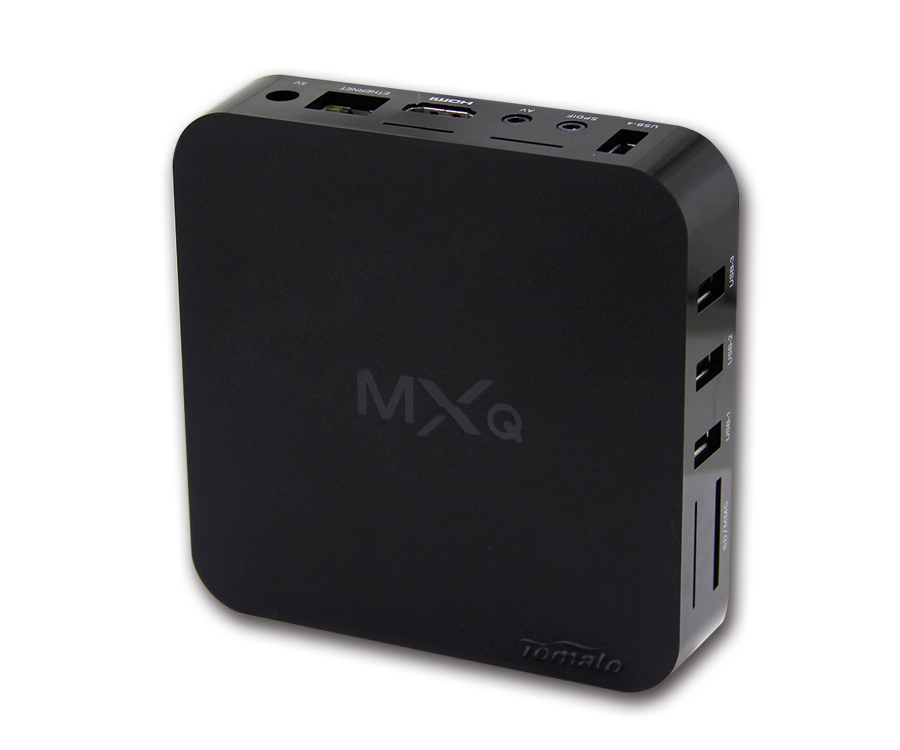
For B2B procurement managers and system integrators, the question is not whether a Smart TV can run basic apps out of the box. The core challenge is lifecycle decoupling and operational control. Deploying a dedicated Android TV Box separates the compute engine from the display glass, transforming a rigid consumer television into an agile, highly secure, and centrally managed enterprise node.
1. Resolving Smart TV Lifecycle Obsolescence and Hardware Constraints
Consumer Smart TVs are engineered around a fixed hardware layout designed for brief, non-continuous consumer use cases. This architecture presents major failure modes when forced into commercial deployment.
Thermal Stress and 24/7 Duty Cycles
Integrating the processing SoC directly inside the thin chassis of a Smart TV creates extreme thermal traps, particularly behind high-brightness LED backlights. Under continuous 24/7 commercial loads, this design triggers severe thermal throttling, causing frame drops and hardware degradation.
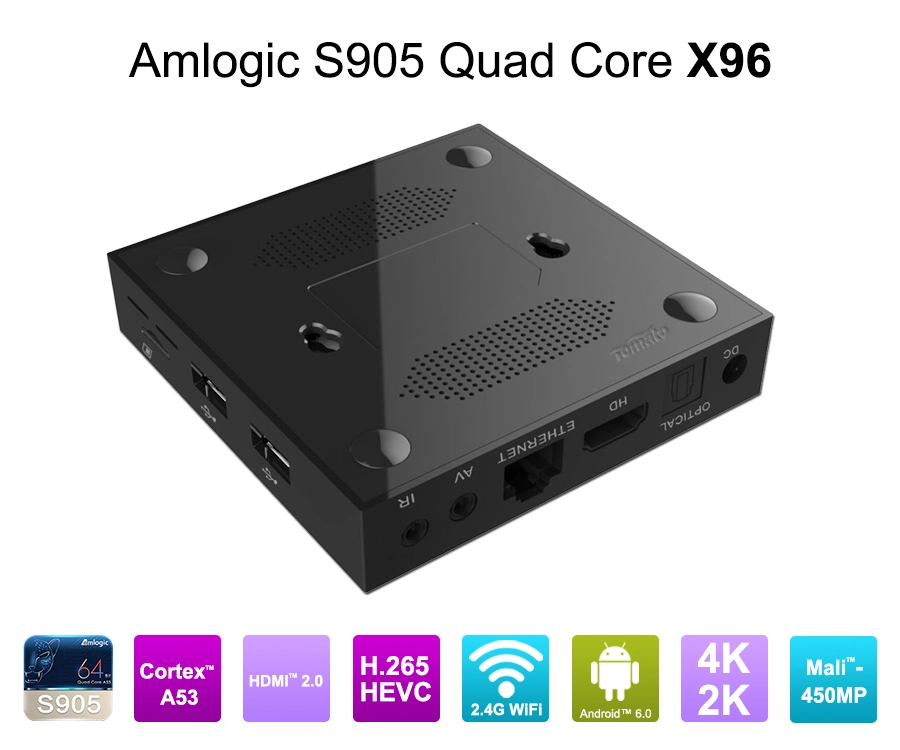
By contrast, an industrial Android TV Box utilizes standalone, specialized cooling solutions—such as massive internal aluminum heatsinks and optimized passive airflow channels—insulating the compute core from display-generated heat and maintaining steady processing performance.
Custom Silicon and Component Flexibility
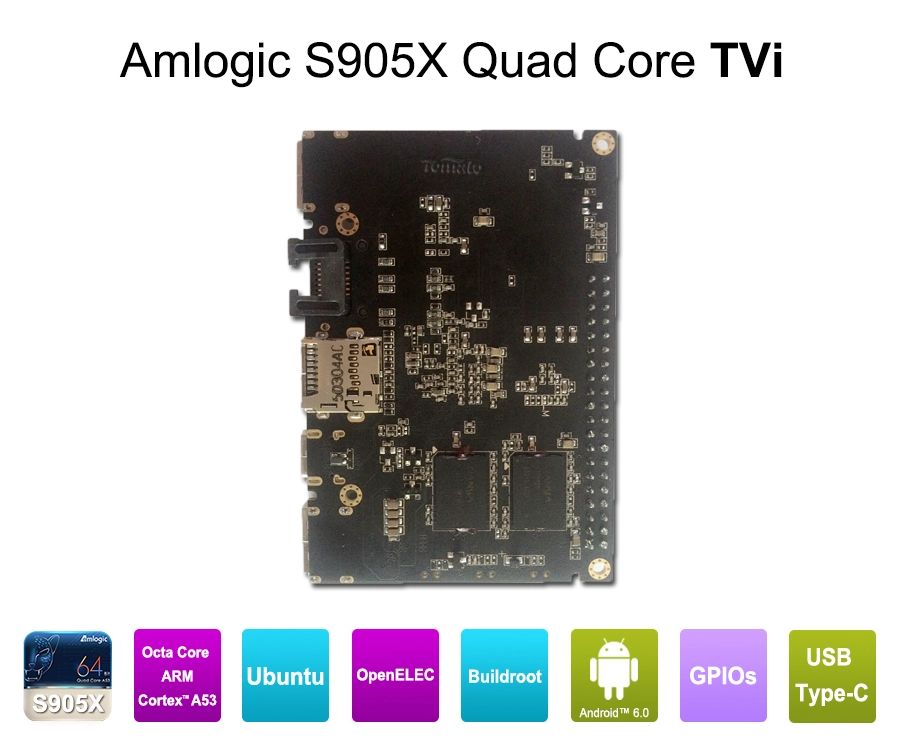
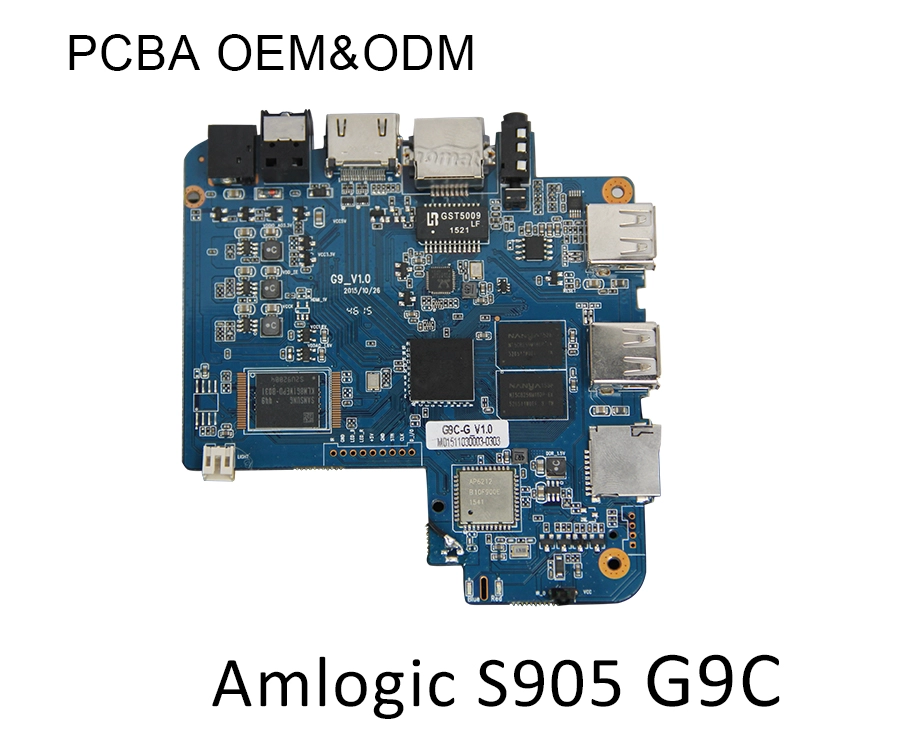
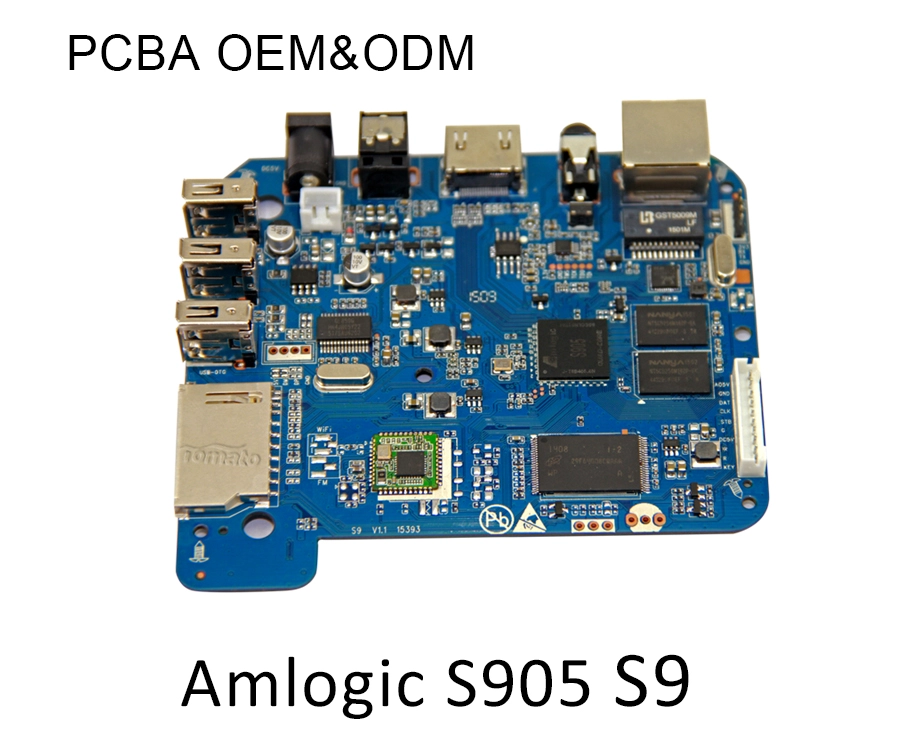
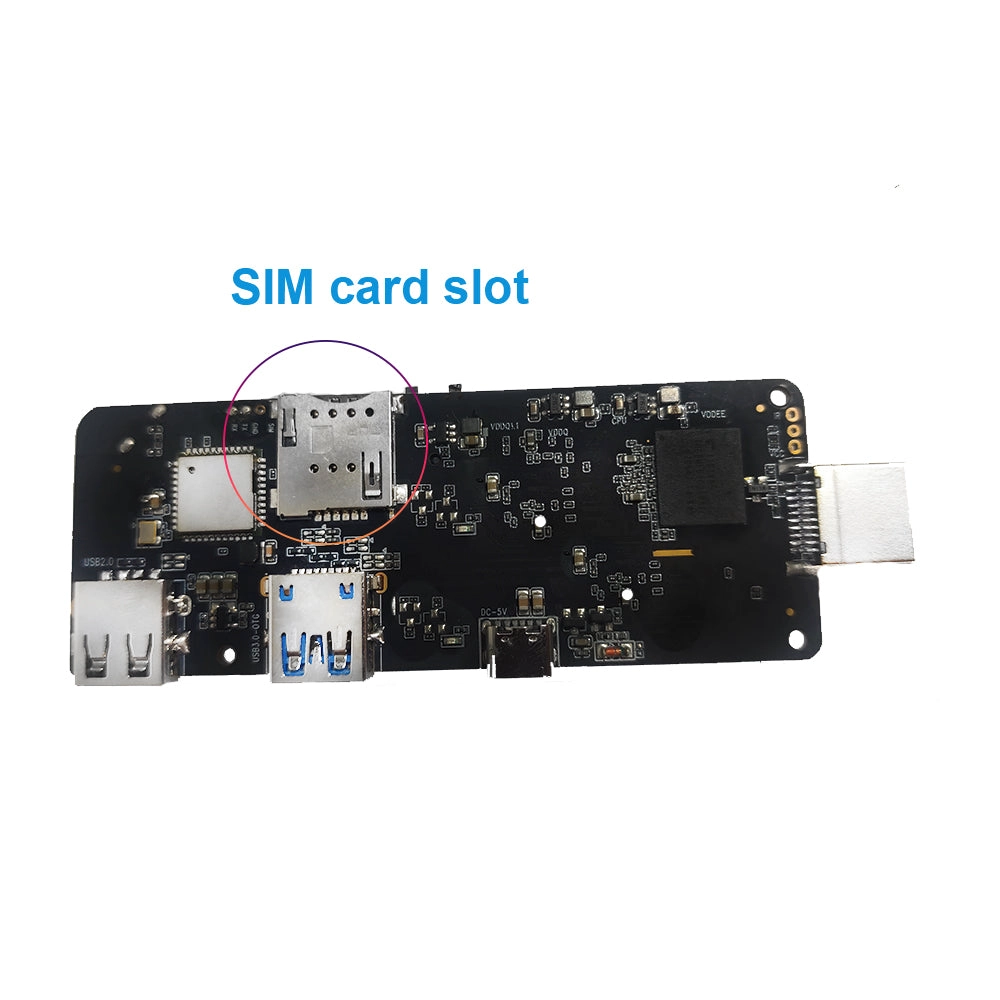
Smart TV mainboards cannot be altered to support specialized commercial interfaces. Utilizing a dedicated media player allows for deep PCBA layout modifications tailored to specific project parameters. B2B deployments can integrate vital hardware features missing from commercial TVs:
-
Hardware Watchdog Timers: Hardware-level monitoring microcontrollers that automatically execute a hard system reset if the main OS encounters a soft freeze.
-
Dual-Interface Configurations: Custom configurations such as Power over Ethernet (PoE) modules or dual HDMI-In paths for real-time video overlay mixing.
2. Firmware-Level Control vs. Closed Smart TV Ecosystems
Proprietary Smart TV operating systems (e.g., Tizen, webOS) or stock consumer Android TV skins prioritize user telemetry, consumer advertising layouts, and strictly locked bootloaders. They do not permit the system-level modifications required for enterprise deployments.
[Stock Smart TV UI]  ──► Consumer Ads | Bloatware | Settings Access (Security Risk)
                                   vs.
[B2B Android TV Box] ──► Custom UI/UX Firmware Layer ──► Forced Kiosk Mode (Locked Content)
Linux Kernel Optimization and Kiosk Mode
A secure commercial endpoint must prevent end-users or guests from changing network configurations, accessing standard OS settings, or exiting the target application.
Through deep Linux/Android kernel optimization, developers can strip out consumer bloatware, telemetry processes, and default application stores. The system is paired with a custom UI/UX firmware layer that forces the device to boot directly into a locked Kiosk Mode, completely bypassing the stock Android interface and securing the user environment.
Secure Streaming Frameworks
Commercial media distribution requires absolute compliance with data protection policies and content protection guidelines. Specialized Android hardware architecture allows for direct injection of custom security configurations and HDCP encryption keys at the bootloader level. This provides stable compatibility with enterprise Widevine L1 digital rights management (DRM) pipelines across the entire device network.
3. Centralized Fleet Management and Unified System Integration
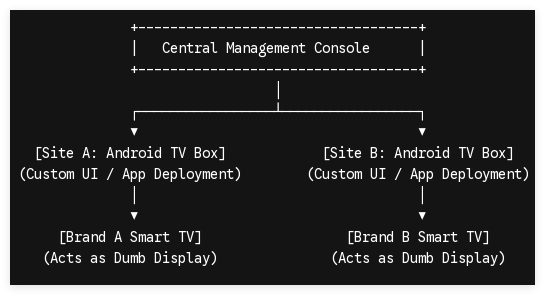
Deploying heterogeneous display networks across multiple facilities or hotel rooms makes individual device maintenance impossible. Smart TV architectures do not offer unified, cross-model management interfaces.
Enterprise Control via Open SDK/API Integration
An enterprise Android player provides complete SDK/API integration capabilities, enabling system integrators to bind the device's operational behavior to centralized management platforms (e.g., hospitality PMS platforms or corporate CMS networks). Integrators can programmatically pull hardware metrics—such as internal SoC temperatures, memory utilization, and real-time network latency profiles—or remotely force video input switching.
Automated Maintenance via OTA Deployment
When an application link or security certificate needs to be updated across 500 locations, a consumer Smart TV framework requires manual intervention or unpredictable manufacturer-dependent updates. Utilizing an autonomous media player network leverages a dedicated, secure OTA update system. System administrators can silently push incremental firmware builds, partition updates, and configuration files overnight, ensuring seamless, uniform network behavior with zero on-site labor costs.
Architectural Comparison: Integrated Smart TV OS vs. Dedicated B2B Android TV Box
| Architecture Vector | Integrated Consumer Smart TV OS | Dedicated B2B Android TV Box Solution |
|---|---|---|
| Compute Lifecycle | Bound directly to display lifespan (2-3 year software relevance) | Independent, modular replacement cycle (5+ year support) |
| Operating System | Locked, consumer-ad heavy, non-extensible | Stripped, optimized Linux/Android kernel with root access |
| UI/UX Deployment | Fixed manufacturer branding and layout | Fully customizable custom UI/UX firmware layer |
| Thermal Protection | Trapped within display panel enclosure | Independent chassis with specialized cooling solutions |
| Device Security | Open settings access, prone to local user tampering | Absolute lockdown via custom Kiosk Mode and API controls |
| Maintenance Path | Fragmented, manufacturer-dependent TV updates | Unified deployment via centralized OTA update systems |
4. Strategic Engineering and Sourcing for B2B Scale
Relying on built-in Smart TV operating systems introduces architectural fragility, high operational overhead, and a rigid development path. To build a robust, scalable digital signage network or hospitality streaming matrix, hardware infrastructure must be decoupled from the display panels.
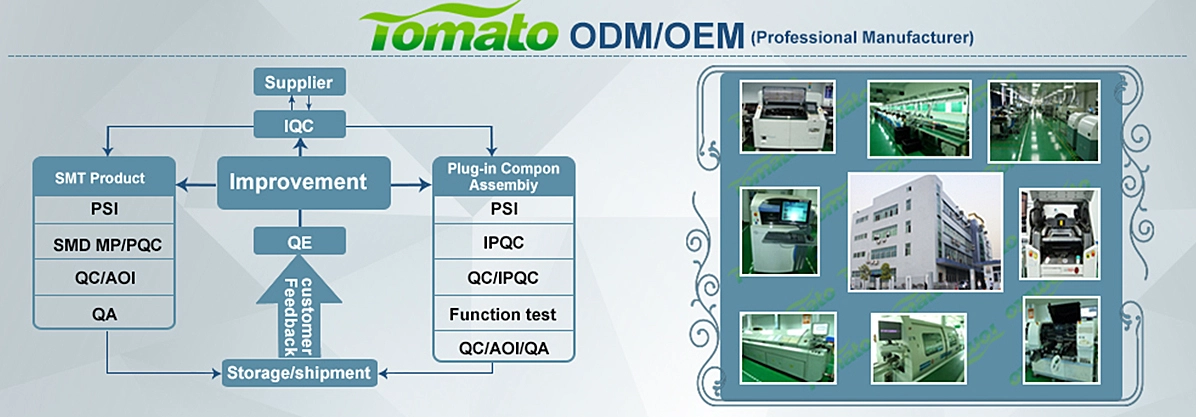
Partnering with an engineering-focused ODM Android TV Box allows you to deploy custom-tailored hardware that fits your specific deployment parameters. From custom board design and port optimization to specialized kernel development and locked-down launcher interfaces, you can build a stable, long-lifecycle delivery network.
B2B Procurement Strategy
Ready to transition your commercial network to a high-stability, customizable hardware framework? Contact our technical architectural team at SZTomato today to submit your RFQ and hardware specifications—from tailored PCBA modifications to scalable enterprise firmware configurations.
