
Are Android Mini PC worth it?
Are Android Mini PC Worth It? A Practical Guide to Performance, Cost, and Deployment Value
The latest generation of ARM SoCs is changing what an Android Mini PC can replace. With 4K/60fps video decoding, hardware AV1 support, multi-core CPU architectures, integrated GPUs, Wi-Fi 6, fast storage interfaces, and increasingly capable NPUs, a compact Android computer can now handle workloads that previously required a larger x86 system.
But “worth it” is not a specification question.
For a consumer, an Android Mini PC may be judged by price and benchmark performance. For a B2B buyer, the calculation is different: total deployment cost, power consumption, thermal stability, software control, lifecycle support, connectivity, customization, and fleet management determine whether the platform creates commercial value.
For many digital signage, kiosk, edge computing, media playback, smart retail, hospitality, education, and embedded applications, the answer is yes—but only when the workload matches the architecture.
What Makes an Android Mini PC Worth the Investment?
The strongest argument for an Android Mini PC is not that it is cheaper than a conventional computer.
It is that the architecture can be better matched to specific workloads.
A modern Android Mini PC can combine:
-
ARM multi-core CPU
-
Integrated GPU
-
Hardware video decoder and encoder
-
NPU for edge AI workloads
-
LPDDR4/LPDDR4X/LPDDR5 memory
-
eMMC or UFS storage
-
Wi-Fi and Bluetooth
-
Gigabit Ethernet
-
HDMI output
-
USB interfaces
-
GPIO or serial interfaces on customized platforms
-
Android, AOSP, Linux, Debian or Ubuntu support depending on the SoC
This creates a compact computing platform that can operate as a media player, kiosk controller, signage terminal, thin client, edge AI device, IoT gateway, or embedded control system.
Android Mini PC vs. Conventional x86 Mini PC
The correct comparison is workload-specific.
| Requirement | Android Mini PC | x86 Mini PC |
|---|---|---|
| 4K multimedia | Excellent on optimized SoCs | Excellent |
| Android applications | Native | Requires Android-based solution or emulator |
| Power consumption | Generally lower | Generally higher |
| Compact embedded deployment | Excellent | Good |
| Digital signage | Excellent | Excellent |
| Edge AI | Strong on NPU-equipped SoCs | Strong depending on CPU/GPU/accelerator |
| Windows software | Not native | Excellent |
| Linux | Available on selected platforms | Excellent |
| Hardware customization | Strong with OEM/ODM | Strong but often higher cost |
| Long-term industrial deployment | Depends on firmware/vendor | Generally mature |
| High-end desktop workloads | Limited | Better |
The mistake is choosing based on CPU frequency alone.
An ARM SoC with hardware video acceleration can outperform a much more powerful general-purpose processor for a specific 4K media playback workload because the video pipeline is handled by dedicated hardware.
That difference matters in digital signage and commercial media applications.
When an Android Mini PC Is the Better Choice
1. Digital Signage and Commercial Media Playback
Digital signage is one of the clearest applications for Android Mini PC hardware.
A signage player does not need to behave like a desktop computer. Its primary requirements are reliable media decoding, network connectivity, remote management, automatic startup, stable 24/7 operation, and predictable software behavior.
A suitable platform can handle:
-
4K video playback
-
HTML5 content
-
Images and animations
-
Web-based signage applications
-
Multi-zone layouts
-
Remote content updates
-
Scheduled playback
-
Screen orientation control
-
HDMI displays
-
Touch displays
For these workloads, an ARM Android Mini PC can provide a better performance-per-watt profile than a general-purpose PC.
2. Kiosks and Interactive Terminals
Kiosk applications benefit from Android's application ecosystem and device-management capabilities.
A customized Android Mini PC can be configured with:
-
Dedicated launcher
-
Kiosk mode
-
Device Owner configuration
-
Lock Task Mode
-
Automatic application startup
-
Restricted system settings
-
Touchscreen support
-
Barcode scanner integration
-
NFC peripherals
-
Serial communication
-
USB peripherals
For commercial deployment, the firmware should be designed around the kiosk workflow instead of simply installing an application onto a consumer device.
3. Edge AI and Computer Vision
The addition of NPUs changes the economics of certain Android Mini PC deployments.
Modern SoCs may integrate dedicated AI accelerators capable of handling neural-network inference without placing the entire workload on the CPU.
Potential applications include:
-
People counting
-
Face detection
-
Object detection
-
Retail analytics
-
Occupancy analysis
-
Visual inspection
-
Smart cameras
-
Heatmap generation
-
Edge video analytics
For these applications, the correct metric is not simply “TOPS.”
The engineering team must examine:
NPU architecture → supported AI frameworks → model compatibility → memory bandwidth → camera input → preprocessing → inference latency → thermal performance.
An 8 TOPS NPU that cannot efficiently run the customer's model may be less useful than a lower-TOPS platform with better software support.
Where Android Mini PC Can Be a Poor Choice
Android Mini PC is not automatically the cheapest or best computer.
There are several situations where an x86 platform remains the better option.
Desktop-Class Software
If the application requires:
-
Microsoft Windows
-
x86-only applications
-
Full desktop Adobe applications
-
Specialized engineering software
-
Legacy enterprise software
-
High-end CPU workloads
an ARM Android Mini PC is generally the wrong architecture.
Attempting to force an unsuitable ARM platform into a desktop workload creates software compatibility problems that hardware performance cannot solve.
Heavy Local Computing
Applications involving substantial CPU rendering, compilation, large-scale data processing, virtualization, or desktop-class GPU workloads may require x86 or a higher-performance ARM platform.
The purchasing team should define the workload before defining the hardware.
The Real Cost of an Android Mini PC
Unit price is only one part of the calculation.
For a B2B deployment, total cost of ownership should include:
Hardware + power + cooling + software development + deployment + maintenance + OTA management + replacement cost + engineering support.
This changes the economics considerably.
An Android Mini PC consuming less power can generate meaningful savings when thousands of devices operate 12–24 hours per day.
Likewise, a slightly more expensive industrial-grade platform may be cheaper over five years if it reduces thermal failures and field replacements.
Power Efficiency
Consider a fleet of 5,000 devices.
If the average power difference between two platforms is 10 W, the theoretical continuous difference is:
5,000 × 10 W = 50 kW
At 24/7 operation, that becomes:
438,000 kWh per year
The actual savings depend on utilization, electricity pricing, power-management configuration, and workload, but the example illustrates why power consumption matters at fleet scale.
For digital signage, hospitality, education, retail, and embedded deployments, performance-per-watt can be more commercially important than peak benchmark scores.
Why Firmware Determines Whether the Project Succeeds
A commercially deployed Android Mini PC is not simply a motherboard inside a plastic enclosure.
Firmware affects:
-
Boot time
-
System stability
-
Application compatibility
-
Peripheral behavior
-
Network reliability
-
Power management
-
Video output
-
OTA updates
-
Security
-
Device provisioning
-
Remote management
This is where OEM/ODM engineering becomes important.
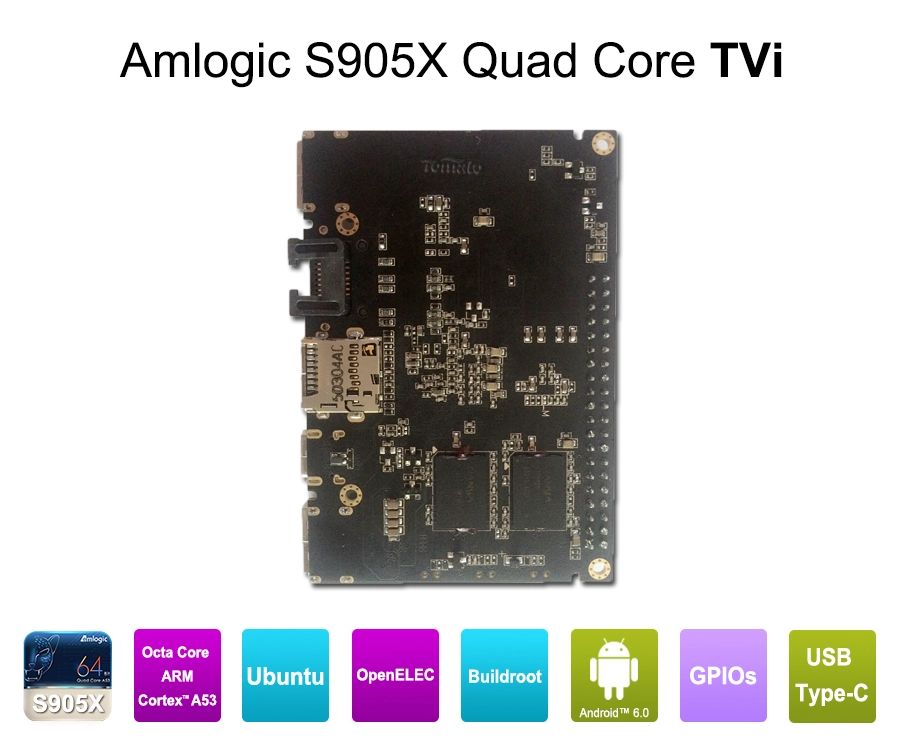
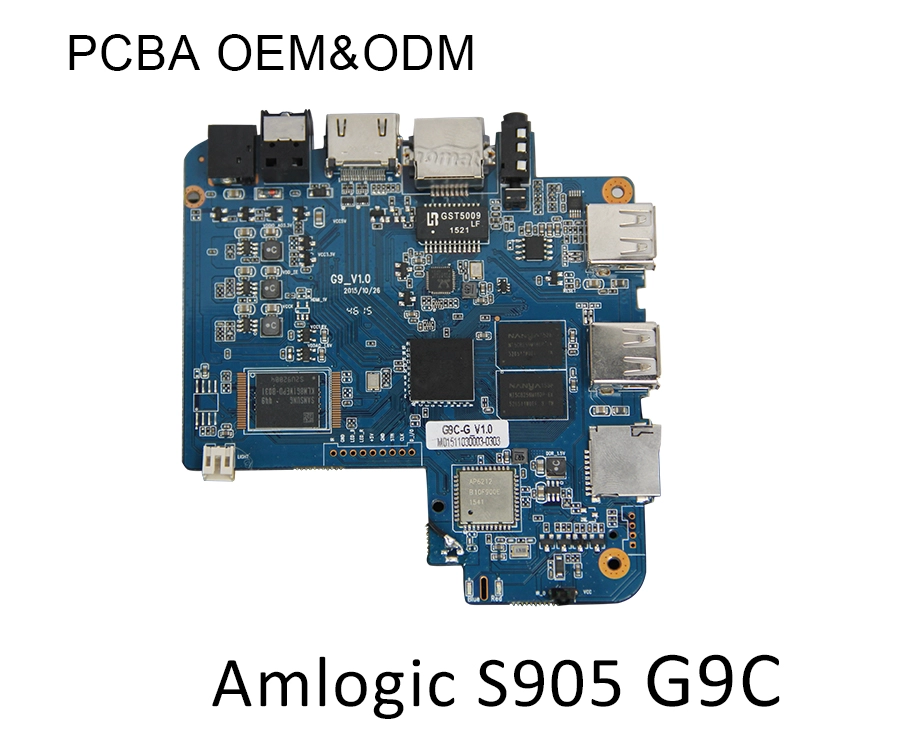
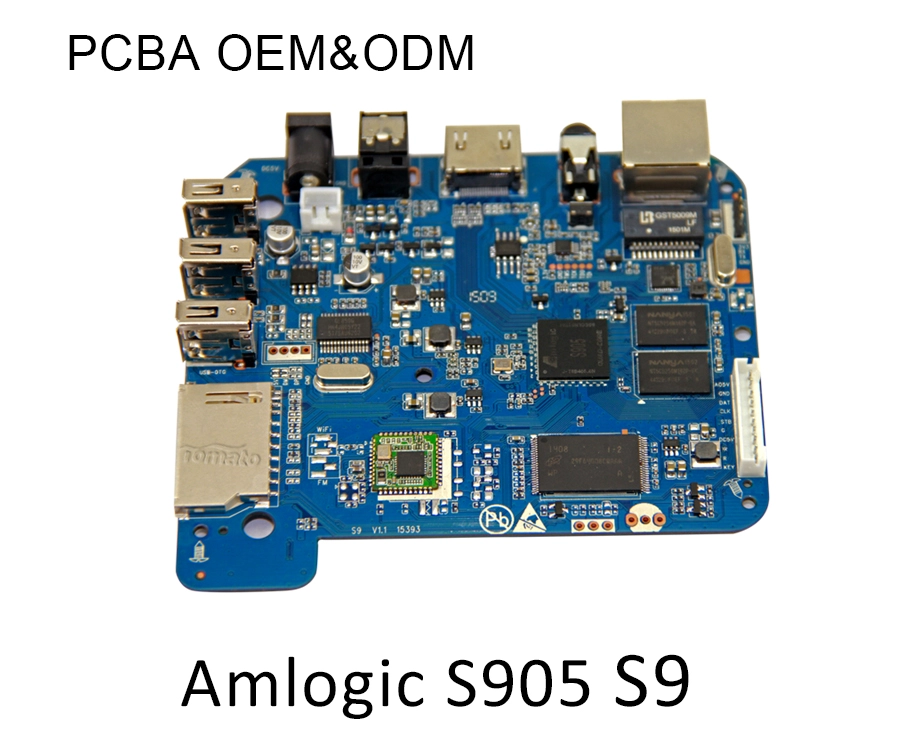
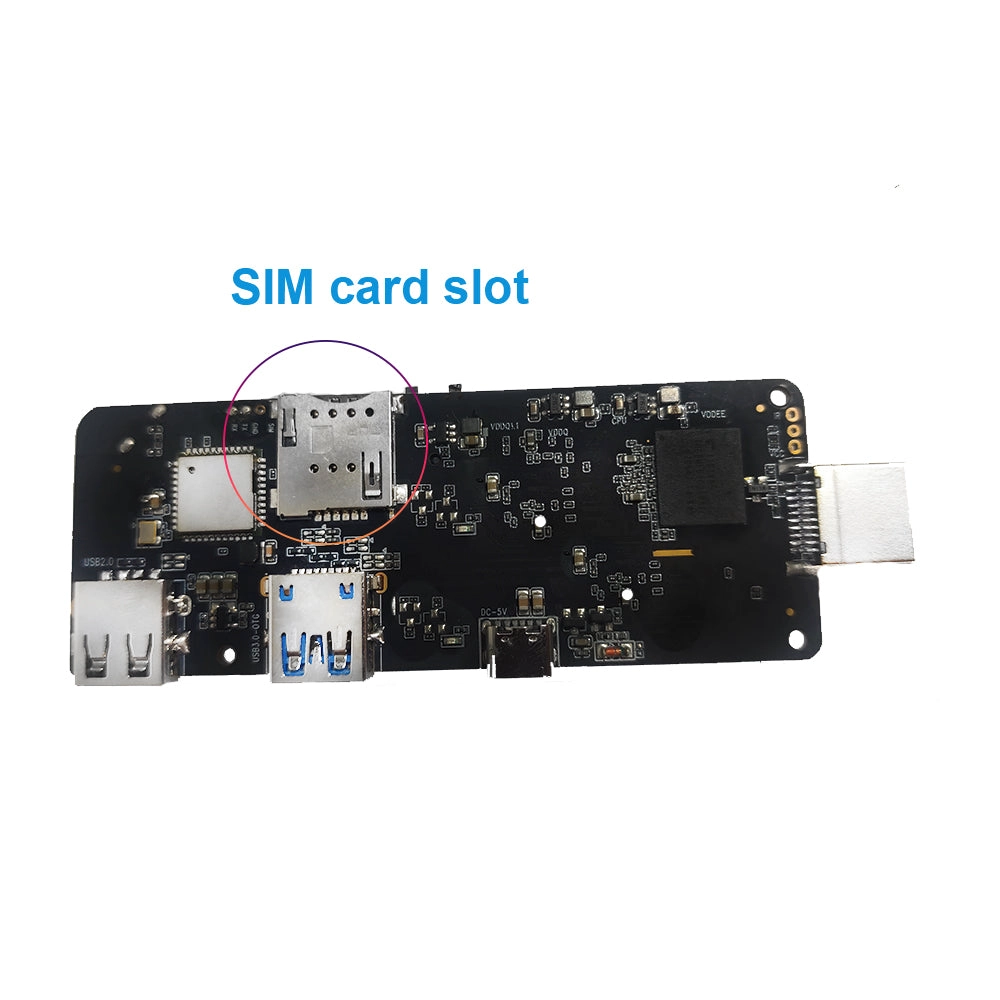
PCBA Hardware Modification
Standard development boards are useful for evaluation but rarely represent the final production design.
A commercial Android Mini PC may require modifications to:
-
PCBA dimensions
-
RAM configuration
-
Storage capacity
-
Ethernet
-
USB interfaces
-
HDMI
-
MIPI/DSI interfaces
-
GPIO
-
UART
-
Wi-Fi module
-
Antenna placement
-
Power circuitry
-
Connector locations
These changes require coordination between the schematic, PCB layout, BSP, device tree, kernel drivers, thermal structure, and mechanical enclosure.
Android/Linux Kernel Optimization
Different projects require different operating systems.
Depending on the selected SoC and application, the platform may support Android/AOSP or Linux distributions such as Debian or Ubuntu.
Kernel-level engineering can address:
-
Driver integration
-
Display timing
-
USB behavior
-
Ethernet configuration
-
Wi-Fi modules
-
GPIO
-
UART
-
Power management
-
Suspend/resume
-
Thermal management
-
Hardware acceleration
For embedded applications, this level of control is often more valuable than adding another CPU core.
OTA and Fleet Management Are Not Optional for Large Deployments
Deploying 100 devices is one problem.
Deploying 10,000 devices is a systems-engineering problem.
An Android Mini PC used in a commercial fleet should have a defined OTA strategy.
A production OTA system should consider:
-
Firmware version control
-
Device grouping
-
Staged deployment
-
Remote update
-
Failure detection
-
Rollback
-
Configuration management
-
Security verification
-
Update logs
-
Recovery procedures
Without an effective OTA architecture, every firmware bug becomes a field-service problem.
For system integrators and brand owners, firmware lifecycle management should therefore be included in the initial procurement specification.
Thermal Design Can Determine the Actual ROI
An Android Mini PC that performs well for 30 minutes but throttles after several hours is not a successful commercial product.
Continuous workloads create different thermal requirements from consumer usage.
A production design may require:
-
Larger heatsink
-
Thermal pads
-
Improved heat conduction
-
Optimized enclosure ventilation
-
Internal airflow
-
SoC thermal monitoring
-
CPU/GPU frequency management
-
Custom mechanical structure
SZTomato can develop specialized cooling solutions for industrial and commercial deployments where the Android Mini PC must operate continuously.
The goal is not maximum benchmark performance.
The goal is stable performance within the thermal envelope for the entire operating lifecycle.
Is an Android Mini PC Worth It for B2B Buyers?
For the right workload, an Android Mini PC can offer a compelling combination of:
-
Low power consumption
-
Compact dimensions
-
4K multimedia capability
-
Android application compatibility
-
Integrated GPU
-
Optional NPU acceleration
-
Flexible connectivity
-
OEM/ODM customization
-
Lower deployment complexity
It is particularly attractive for:
Digital signage, IPTV, commercial media players, kiosks, hotel systems, retail terminals, smart home gateways, education devices, edge AI, and embedded Android applications.
It is less suitable for applications dependent on Windows, x86-only software, or high-end desktop computing.
The critical question is therefore not:
“Is an Android Mini PC worth it?”
The better question is:
“Does an ARM Android platform deliver the lowest total cost and sufficient technical capability for this specific workload?”
That is the decision B2B procurement teams should make.
Conclusion: Buy the Architecture, Not the Specification Sheet
An Android Mini PC is worth the investment when its architecture aligns with the workload.
For media playback, digital signage, kiosks, embedded Android applications, and selected edge AI applications, ARM-based platforms can deliver an attractive combination of performance, power efficiency, size, and integration flexibility.
But the hardware specification is only the starting point.
The production result depends on SoC selection, PCBA layout, memory and storage configuration, firmware engineering, Android/Linux kernel optimization, API integration, OTA infrastructure, security architecture, and thermal design.
For procurement managers and system integrators planning a commercial deployment, the most reliable approach is to define the workload first and then engineer the Android Mini PC around it.
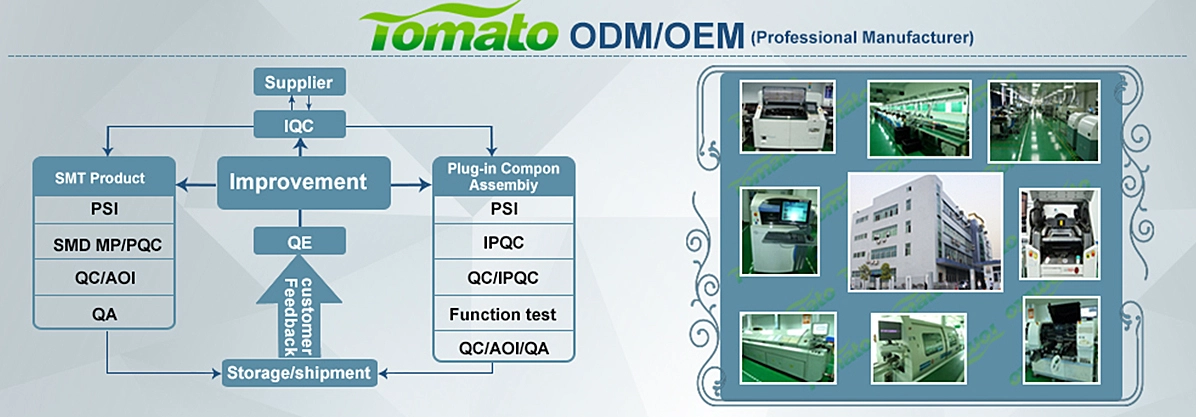
SZTomato provides OEM/ODM development covering PCBA hardware modification, custom firmware, SDK/API integration, UI/UX customization, Android/Linux kernel optimization, OTA systems, and specialized cooling solutions.
If your requirement is more than a standard retail computer—whether it is a 4K digital signage player, kiosk terminal, industrial Android computer, edge AI platform, or customized embedded system—work with an OEM/ODM manufacturer that can control both the hardware and firmware layers.
