Best CPU Platforms for Google TV Box in 2026
Best CPU Platforms for Google TV Box in 2026: Enterprise Silicon Selection Matrix
Commercial B2B deployments of media streaming hardware frequently suffer from a critical systemic vulnerability: the misapplication of consumer-grade processor architectures to industrial, uninterrupted operating environments. System integrators and telecom operators scaling large hardware fleets routinely face field failures due to thermal throttling, unoptimized video decoding pipelines that spike CPU utilization to 100%, and rigid input/output (I/O) limitations that prevent the integration of secondary hardware peripherals.
In 2026, the global System-on-Chip (SoC) market is highly fragmented. Navigating this architecture requires moving past arbitrary clock-speed metrics to perform deep technical evaluations of dedicated hardware decoding blocks, manufacturing process nodes, and peripheral bus allocations.
1. The Silicon Tier Breakdown: Amlogic, Rockchip, and Allwinner
The underlying processor architecture establishes the maximum ceiling for media rendering capability, memory bandwidth, and operating system longevity.
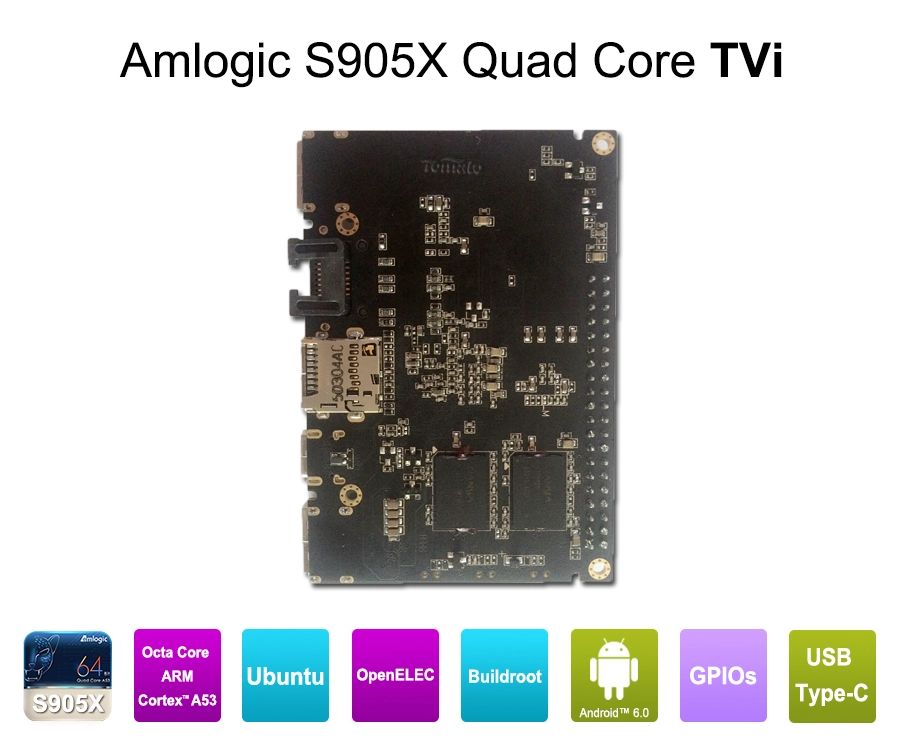
Amlogic: The Media Streaming and Codec Benchmark
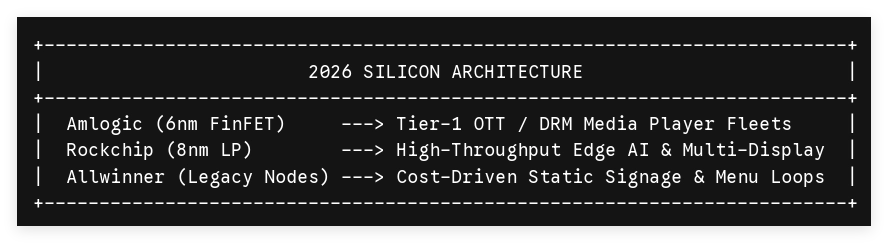
Amlogic dominates deployment profiles requiring official Tier-1 Digital Rights Management (DRM) licensing (e.g., Widevine L1, PlayReady) and seamless integration with custom operator launchers.
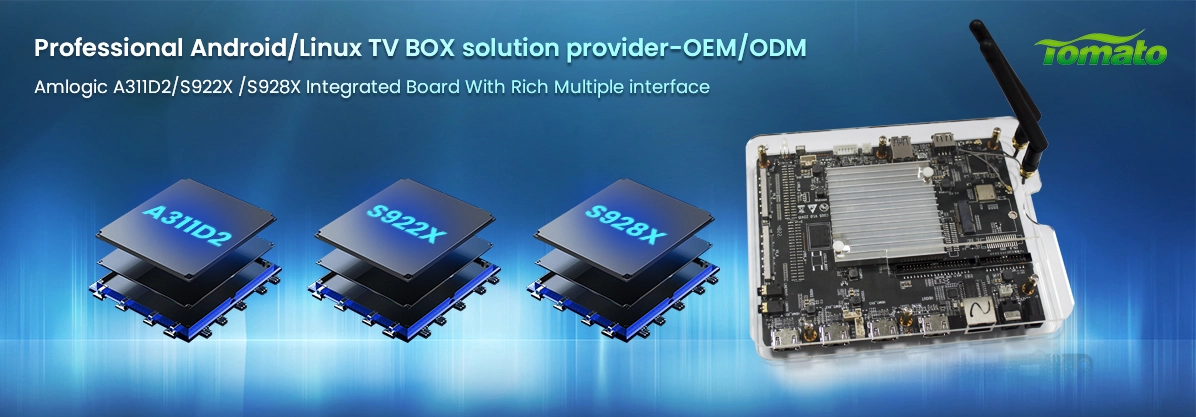
- Flagship 8K Architecture (Amlogic S928X): Utilizes a hybrid big.LITTLE CPU design combining ARM Cortex-A76 and Cortex-A55 cores, paired with a Mali-G57 MP6 GPU. This platform is engineered for premium commercial media installations requiring simultaneous 8K playback at 60 frames per second and complex multi-channel Electronic Program Guides (EPG).
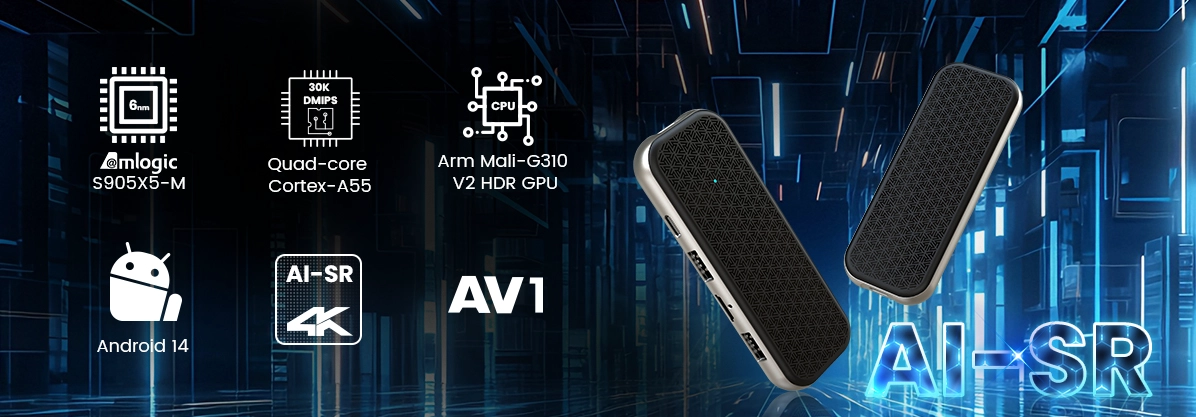
- Mainstream 4K Efficiency Node (Amlogic S905X5 / S905X5M): Built on an advanced 6nm fabrication process, this chip represents the efficiency standard for 2026. By migrating to a smaller node size, it minimizes current draw and internal thermal dissipation, making it highly stable when mounted within enclosed spaces like hospitality display cavities.
Rockchip: The Heavy-Duty Industrial and Edge Computing Platform
Rockchip optimizes its silicon layouts for high-compute capabilities, raw multi-core processing ceilings, and extensive hardware breakout configurations rather than pure consumer streaming applications.
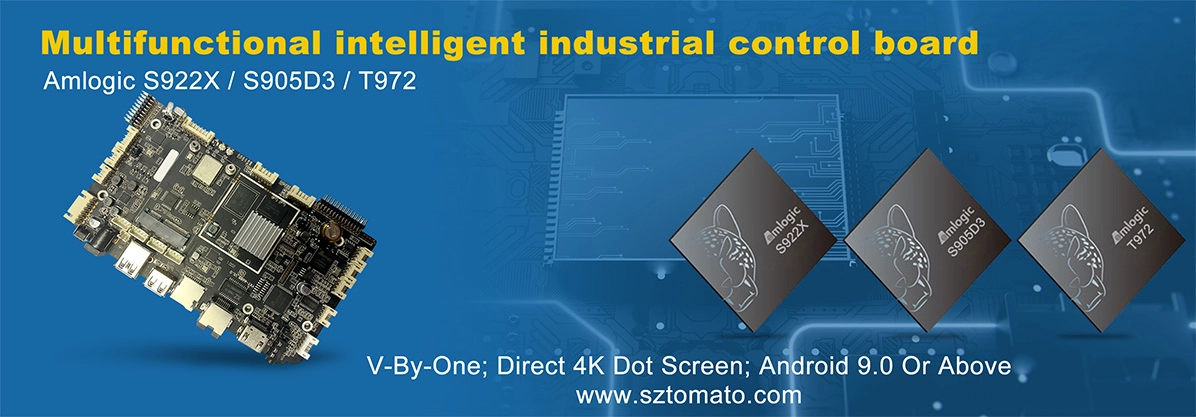
- High-Compute Tier (Rockchip RK3588 / RK3576): Features an octa-core layout (4× Cortex-A76 and 4× Cortex-A55) paired with an embedded Neural Processing Unit (NPU) delivering up to 6 TOPS of artificial intelligence compute power. It is ideal for interactive retail kiosks executing local computer vision analytics, multi-stream surveillance monitors, and hardware configurations requiring native multi-channel HDMI output.
Allwinner: Cost-Optimized Static Nodes
Allwinner services projects where budget constraints dictate hardware selection. SoCs like the Allwinner H728 provide basic 4K multimedia looping capabilities but lack the advanced NPU accelerators of Rockchip or the comprehensive native DRM certification paths of Amlogic.
2. Hardware Decoding Engines and Bitrate Thresholds
Evaluating processor performance must focus heavily on the silicon's dedicated hardware-accelerated video decoding pipelines. Running modern codecs purely via software emulation will induce system instability and high packet-drop rates.
| Technical Metric | Amlogic (S928X / S905X5) | Rockchip (RK3588) | Allwinner (H728) |
|---|---|---|---|
| Primary Deployment Profile | Certified OTT / Operator IPTV | Edge AI / Multi-Display Hub | Budget Signage / Static Loops |
| Max Native Resolution | 8K @ 60fps | 8K @ 60fps / 4K @ 120fps | 4K @ 60fps |
| AV1 Hardware Decoding | Full Native Support | Full Native Support | Basic Profile Only |
| VVC (H.266) Support | Integrated (S905X5 series) | Software Emulated | Not Supported |
| AI Super-Resolution (SR) | Integrated at Silicon Level | Dependent on Custom NPU Code | Not Supported |
| Fabrication Node | 6nm / 12nm FinFET | 8nm LP | 22nm / 28nm Legacy |
Codec Validation: Bandwidth Mitigation
By 2026, AV1 has completely replaced older H.264 formats across major Content Delivery Networks (CDNs), reducing required streaming bandwidth by roughly 30%. Enterprise procurement mandates must require native AV1 decoding blocks. Furthermore, premium Amlogic nodes incorporate AI Super-Resolution (AI-SR), which allows local upscaling of 1080p source video streams to near-4K output directly at the edge, reducing backhaul network data usage across hospitality and hospitality networks.
3. Peripheral Bus Integration and PCBA Engineering
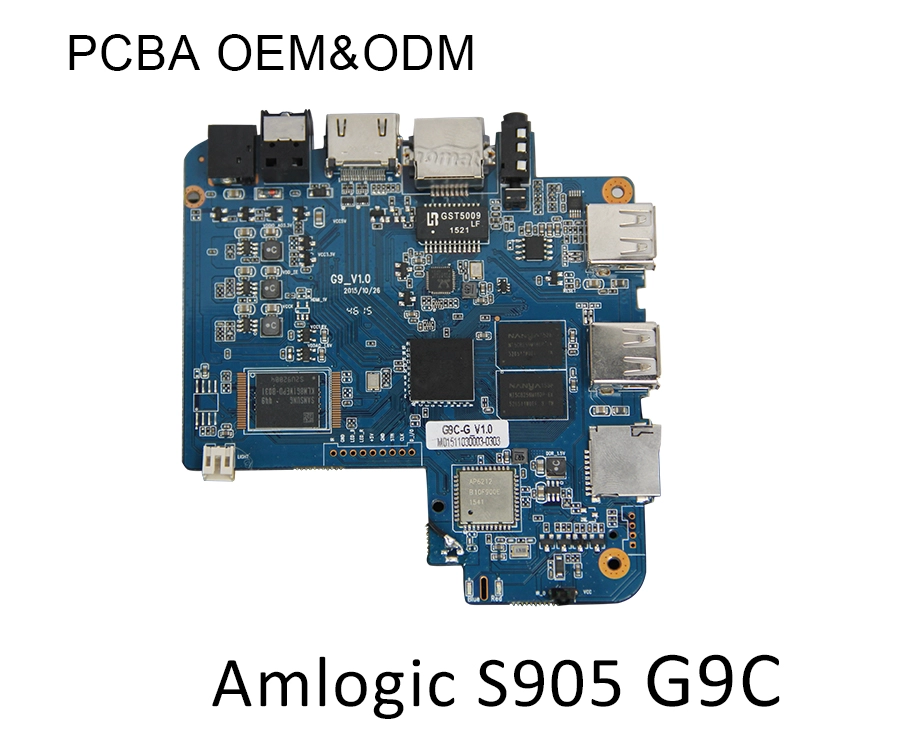
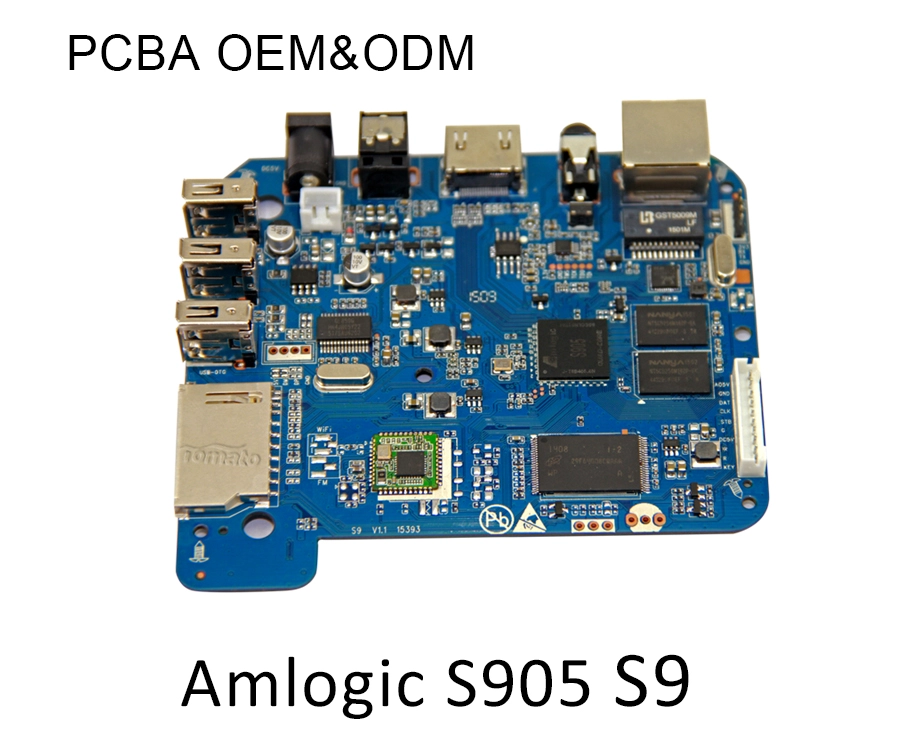
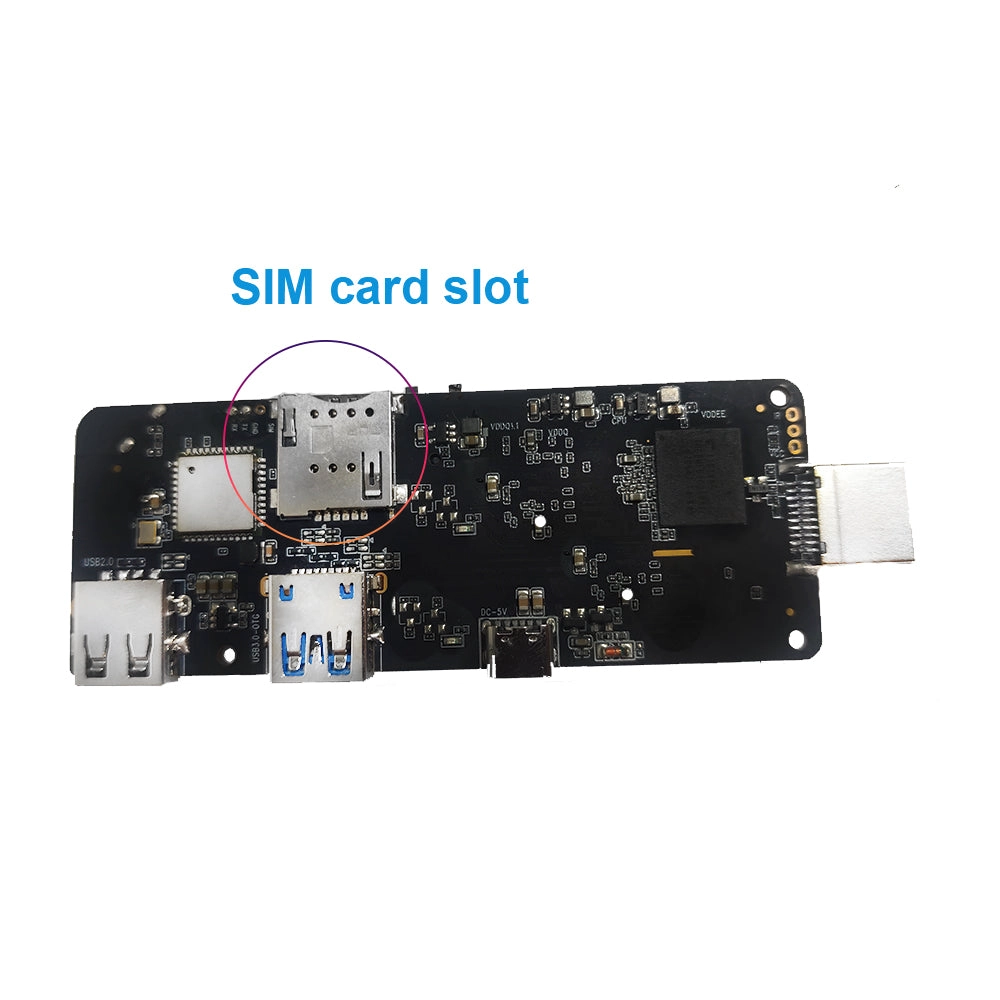
The choice of CPU dictates the layout limitations of the printed circuit board assembly (PCBA). For interactive installations, the SoC must act as an expandable data router.
High-Throughput Bus Routing: [Rockchip RK3588] ---> Native PCIe 3.0 (4 Lanes) ---> Ultra-Low Latency NVMe Storage
                                                                                                                                   ---> Dual Gigabit Ethernet Controllers
- Data Bus Routing (Rockchip): Rockchip platforms provide substantial peripheral flexibility, providing native PCIe 3.0 lanes, dual Gigabit Ethernet interfaces, and SATA 3.0 controllers. This lets hardware engineers attach high-speed local NVMe solid-state drives, dual-band Wi-Fi 6 modules, or capture cards directly onto the custom PCBA.
- Media Bus Routing (Amlogic): Amlogic platforms typically utilize USB-bound internal multiplexing. While efficient for streamlined media playback devices, this topology restricts the deployment of high-bandwidth external drive arrays or local diagnostic data logging systems.
4. Resolving Firmware Locking and OS Longevity Barriers
Enterprise-grade Google TV hardware rollouts require deep operating system customization to ensure security, compliance, and long-term serviceability.
Consumer streaming devices restrict access to the system root, preventing remote management. Custom B2B firmware engineering bypasses these retail constraints by implementing:
-
Custom Android-Level HAL/Drivers: Integrating custom drivers directly into the Hardware Abstraction Layer (HAL) to support specialized hardware components, such as RS232/RS485 serial ports or localized Power over Ethernet (PoE) power routing switches.
-
Isolated Root Access Control: Providing secure, authenticated root access to enterprise mobile device management (MDM) clients while isolating it from standard user applications to protect system security.
-
Private OTA Target Addressing: Hardcoding the system update client to point to private, secure enterprise servers rather than public endpoints, ensuring that updates can be thoroughly tested and validated before deploying across the field network.
Establish Your Hardware Architecture
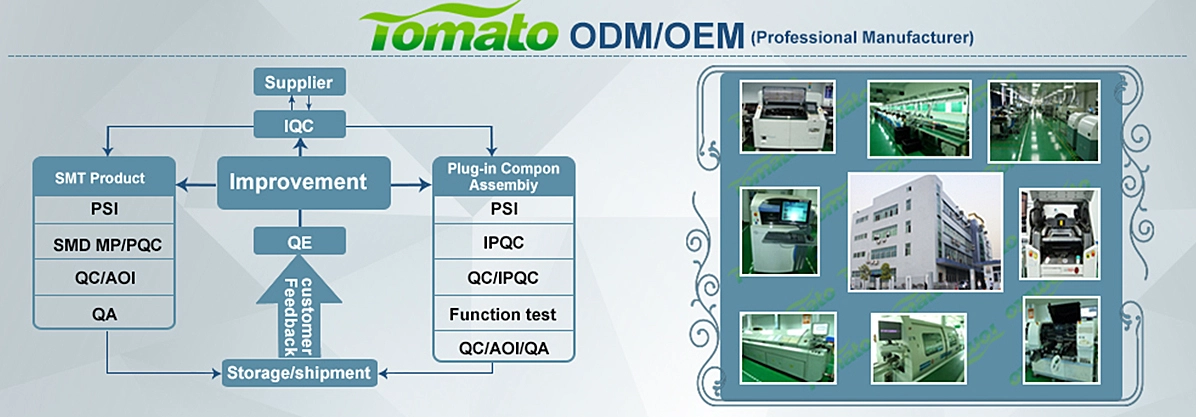
Successfully rolling out a Google TV Box ecosystem requires partner engineering depth that bridges the gap between raw processor silicon and industrial reliability. We design and manufacture specialized OEM/ODM hardware solutions engineered for continuous operational life cycles, providing customized PCBA development, low-level firmware architecture, and reliable global compliance management.
Contact our senior engineering and product architecture team today to review your technical schematics, evaluate SoC options, or schedule a prototype build for your next hardware deployment.
For an in-depth visual breakdown of real-world hardware performance across these platforms, you can watch this analysis of High-Performance Android Streaming Boxes. This review examines field stability, device temperatures, and real-world codec playback capabilities under heavy user workloads.