
Best CPU Platforms for TV Box in 2026
Best CPU Platforms for TV Box in 2026: A Practical B2B Selection Guide
The TV Box market in 2026 is no longer defined by CPU core count alone. The more important shift is the integration of dedicated video engines, AI acceleration, modern display interfaces, AV1 decoding, security architecture, and longer software support into the SoC platform.
A four-core processor with efficient hardware decoding can outperform a higher-core platform in a pure OTT workload, while an eight-core AI SoC may be the better choice for digital signage, computer vision, multi-display control, or local AI. For B2B buyers, selecting the right TV Box CPU therefore starts with workload architecture—not benchmark scores.
Amlogic's S905X5 family represents the current 4K mainstream direction, while S928X remains relevant for 8K-class playback. Rockchip's RK3576 targets higher-performance edge and multimedia workloads, while RK3588 moves the TV Box concept toward AI computing, multi-display processing, and industrial edge applications.
1. The Best TV Box CPU Is Determined by Workload
A common procurement mistake is comparing SoCs through CPU frequency or the number of CPU cores.
That approach is inadequate for a modern TV Box.
A streaming device spends a large portion of its workload in dedicated hardware blocks:
Network → demux → video decoder → image processing → compositor → HDMI → display
The CPU coordinates the pipeline, but hardware video decoding performs the computationally expensive codec operations.
This means a platform with four efficient CPU cores and a strong VPU can be a better commercial TV Box platform than an eight-core processor designed for a completely different workload.
For 2026 projects, evaluate the SoC through seven layers:
-
CPU architecture
-
GPU performance
-
Hardware video decoder/encoder
-
NPU/AI capability
-
Display and I/O interfaces
-
Security and DRM architecture
-
Linux/Android software support
The last two are particularly important for commercial products.
A TV Box that can decode AV1 but cannot satisfy the required HDCP, DRM, OTA, or application-integration requirements is not a successful platform.
CPU Selection Should Follow the Application
| Application | Recommended Platform Direction |
|---|---|
| Basic 4K OTT | Amlogic S905X5 / S905X5M |
| IPTV / operator STB | Amlogic S905X5-class platform |
| Premium 8K media player | Amlogic S928X |
| AI-enabled TV Box | Rockchip RK3576 / RK3588 |
| Digital signage | RK3576 or RK3588 |
| Multi-display system | RK3588 |
| Edge AI / computer vision | RK3588 or newer AI-oriented platform |
| Industrial multimedia | RK3576 / RK3588 depending on workload |
| Linux-based customized appliance | Rockchip platforms offer strong flexibility |
This is not a universal ranking. It is an architecture decision.
2. Amlogic S905X5: The Strong Mainstream 4K TV Box Platform
For standard 4K TV Box products, Amlogic S905X5 is one of the most important platforms to evaluate in 2026.
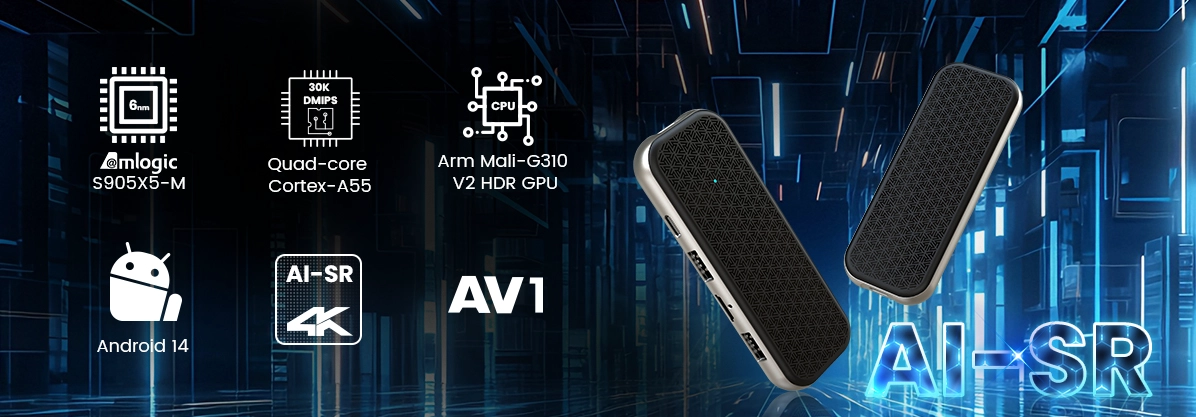
Amlogic currently positions the S905X5 as a 6nm flagship SoC for next-generation 4K UHD set-top boxes. The manufacturer's product portfolio also includes the S905X5M, S905X4, S928X, and other platforms targeting different performance and integration levels.
The S905X5 family is particularly attractive when the product requires:
-
4K streaming
-
AV1 hardware decoding
-
HDR processing
-
Efficient thermal behavior
-
Android-based firmware
-
Compact enclosure design
-
Competitive BOM cost
-
Long-volume production
The platform direction also reflects a broader industry trend: video decoding is becoming increasingly specialized while AI-assisted image processing is moving into mainstream consumer hardware.
For a conventional OTT TV Box, this is often a better commercial strategy than paying for excess CPU and GPU capacity that the application never uses.
Why S905X5 Makes Sense for High-Volume Products
The key advantage is system balance.
A high-volume TV Box must balance:
SoC + RAM + eMMC + Wi-Fi + PMIC + PCB + thermal solution + enclosure + firmware
Increasing CPU performance without optimizing the rest of the platform does not necessarily improve user experience.
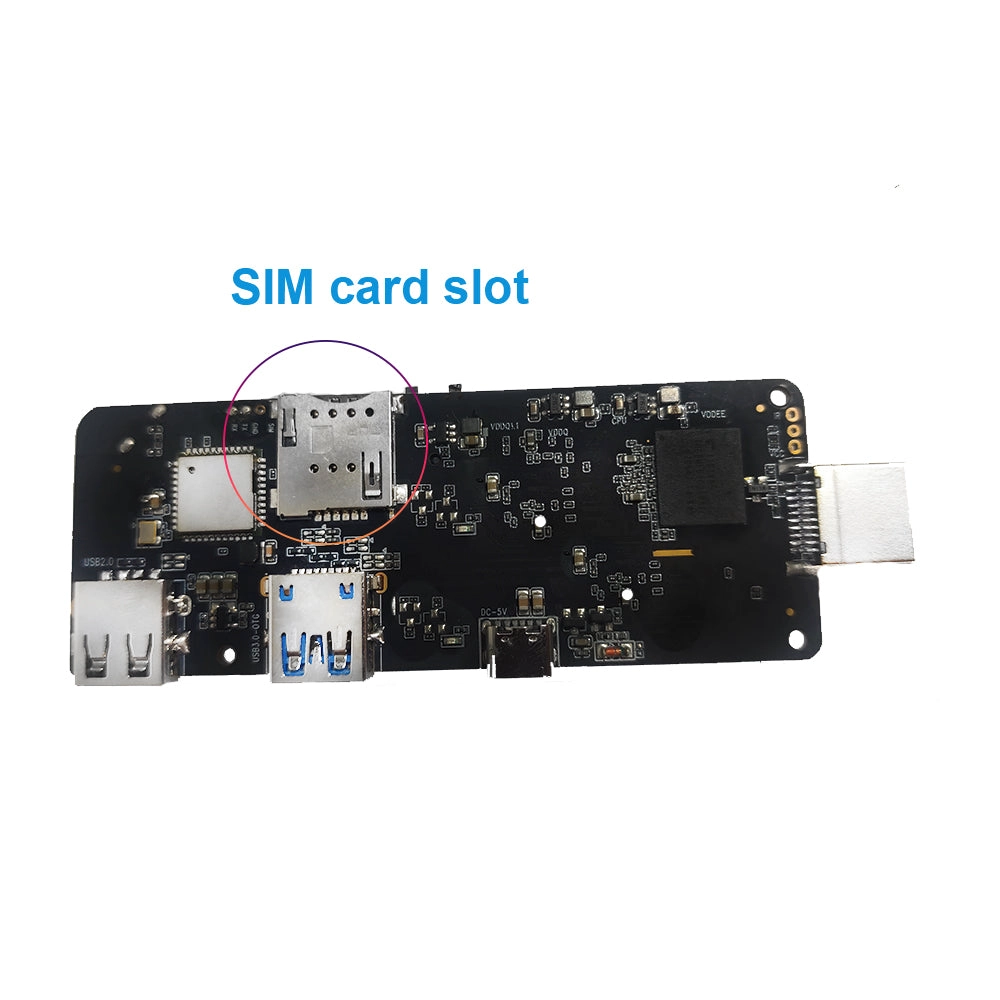
PCBA layout is especially important in compact designs. High-speed DDR routing, power integrity, RF placement, HDMI signal integrity, and thermal transfer must be considered together.
For an OEM project, the objective should therefore be a validated platform rather than simply purchasing the newest processor.
3. S928X: When 8K and Premium Multimedia Matter
If the product roadmap requires 8K playback, premium image processing, or higher multimedia headroom, Amlogic S928X remains a relevant platform.
S928X combines a Cortex-A76 performance core with four Cortex-A55 cores, Mali-G57 MC2 graphics, and an integrated AI processor rated at up to 3.2 TOPS. Its video engine supports AV1, VP9, H.265, and AVS-family codecs at up to 8K-class resolutions, with support for multiple simultaneous 4K video streams in its published specifications.
Its platform capabilities make it suitable for:
-
Premium 8K TV Boxes
-
High-end OTT players
-
Local media playback
-
Advanced home entertainment
-
Commercial multimedia terminals
-
AI-assisted image enhancement
-
Multi-stream video applications
The important point is that 8K decoding does not automatically mean an 8K TV Box is a better product.
If the customer's content infrastructure is predominantly 1080p and 4K, an 8K SoC may add unnecessary BOM cost.
For B2B procurement, 8K should be treated as a requirement rather than a marketing specification.
4. Rockchip RK3576: A Strong Choice for AI-Enabled TV Boxes
Rockchip RK3576 occupies a different position.
Its architecture combines four Cortex-A72 cores and four Cortex-A53 cores with a Mali-G52 MC3 GPU and a 6 TOPS NPU. Rockchip specifies AV1, VP9, H.265, and related video decoding up to 4K120, alongside 4K60 H.264/H.265 encoding. It also supports HDMI 2.1/eDP combinations, PCIe/SATA interfaces, dual Gigabit Ethernet, and Linux/Android software environments.
That makes RK3576 interesting when the TV Box is evolving into an edge-computing device.
Potential applications include:
-
AI-enhanced OTT
-
Smart home gateways
-
Digital signage
-
Interactive displays
-
Computer vision terminals
-
Industrial HMI
-
Multi-camera processing
-
Local AI inference
The 6 TOPS NPU changes the product architecture.
Instead of using the CPU for every intelligent function, an OEM can move selected AI workloads to the NPU.
Examples include:
-
Image classification
-
Object detection
-
Person counting
-
Visual analytics
-
Local recommendation engines
-
AI image processing
This is particularly useful for commercial displays where the device is expected to do more than decode video.
5. Rockchip RK3588: Best for High-Performance and AI-Heavy TV Box Designs
For projects that require substantial computing headroom, Rockchip RK3588 remains one of the strongest TV Box-class platforms.
The RK3588 integrates four Cortex-A76 cores and four Cortex-A55 cores, Mali-G610 MC4 graphics, and a 6 TOPS NPU. Its multimedia engine supports H.265, H.264, VP9 and AV1 decoding, with up to 8K60-class decoding for several codecs and AV1 decoding up to 4K60. The platform also provides extensive PCIe, SATA, USB, Gigabit Ethernet, HDMI, DisplayPort, and camera interfaces.
This is not merely a faster TV Box processor.
It is closer to an ARM edge-computing platform that can be configured as a multimedia appliance.
Where RK3588 Has a Clear Advantage
RK3588 becomes particularly attractive when the product requires:
-
Multiple displays
-
High-resolution video processing
-
Local AI inference
-
Multiple camera inputs
-
Large memory configurations
-
NVMe storage
-
High-speed USB
-
PCIe expansion
-
Dual Gigabit Ethernet
-
Linux customization
-
Industrial computing workloads
Its hardware security architecture also includes secure boot, TrustZone, cryptographic functions, key ladder support, and HDCP 2.x support.
For digital signage and AI Box projects, these interfaces can be more valuable than raw CPU performance.
A single RK3588 platform can support workloads that would require several conventional consumer TV Boxes.
6. 2026 TV Box CPU Comparison
| Platform | CPU | AI | Video Position | Best Application |
|---|---|---|---|---|
| Amlogic S905X5 | Quad Cortex-A55-class architecture | AI/image processing features | Mainstream 4K | OTT / IPTV |
| Amlogic S905X5M | Quad Cortex-A55 | AI-assisted multimedia | 4K60 AV1 | Cost-sensitive 4K TV Box |
| Amlogic S928X | Cortex-A76 + 4×A55 | 3.2 TOPS | Up to 8K60-class | Premium multimedia |
| Rockchip RK3576 | 4×A72 + 4×A53 | 6 TOPS | Up to 4K120 | AI TV Box / signage |
| Rockchip RK3588 | 4×A76 + 4×A55 | 6 TOPS | Up to 8K-class | AI / signage / edge computing |
The specifications should not be interpreted as a universal performance ranking. CPU architecture, firmware optimization, memory bandwidth, storage, cooling, and application software can materially change actual product performance.
For example, RK3588 has considerably more I/O and computing headroom than an S905X5-class platform, but that does not make it the economically correct choice for a simple 4K IPTV receiver.
7. The Real Differentiator: Firmware and Hardware Engineering
The SoC is only the starting point.
A production TV Box requires an integrated engineering stack.
PCBA Hardware Modification
Different projects may require different:
-
DDR configurations
-
eMMC capacities
-
Wi-Fi modules
-
Ethernet PHYs
-
USB configurations
-
HDMI interfaces
-
GPIO assignments
-
Power-management components
-
RF layouts
-
Connector arrangements
A capable OEM/ODM manufacturer should be able to modify the PCBA rather than simply rebrand an existing development board.
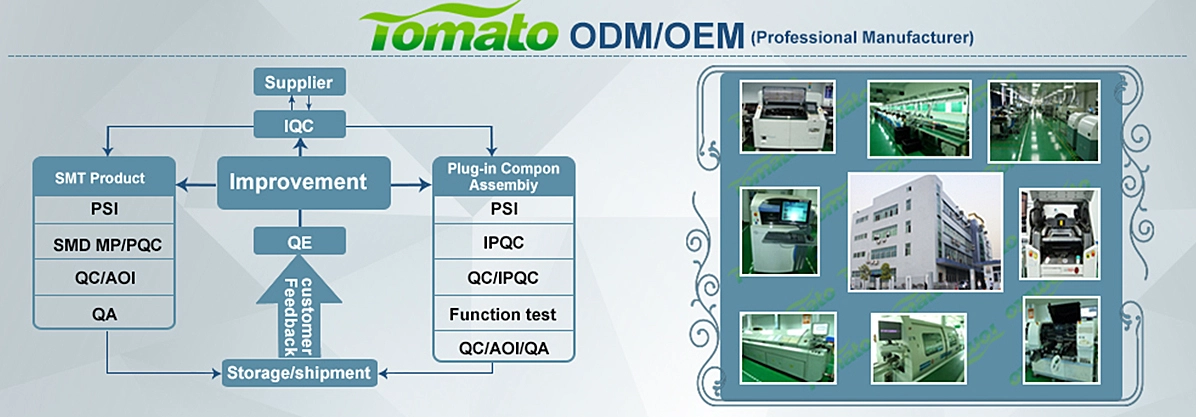
SZTomato's engineering approach supports PCBA modification around the selected SoC, allowing the hardware platform to match the customer's enclosure, connectivity, power, and deployment requirements.
SDK and API Integration
Commercial customers often need the TV Box integrated with an existing software ecosystem.
This can involve:
-
IPTV middleware
-
OTT applications
-
Cloud device management
-
Digital signage CMS
-
Enterprise applications
-
Remote diagnostics
-
Device provisioning
-
Third-party SDKs
-
REST APIs
-
Hardware APIs
The value of the SoC depends partly on how efficiently these software layers can access its hardware acceleration.
Custom UI/UX Firmware
A commercial TV Box rarely needs a generic launcher.
A hotel platform may require room-service controls.
An IPTV operator may need a branded EPG.
A digital signage system may need an application that launches automatically after boot.
An OEM firmware package can implement:
-
Custom boot logo
-
Branded launcher
-
Kiosk mode
-
Restricted settings
-
Default application assignment
-
Silent APK installation
-
Automatic application restart
-
Remote configuration
-
Custom OTA mechanism
This is where Android framework modification and Linux/Android kernel optimization become practical engineering requirements rather than theoretical specifications.
8. Thermal Design Is Part of CPU Selection
A powerful SoC without a suitable thermal design can become a liability.
This is particularly relevant to RK3588-class TV Boxes and industrial systems operating continuously.
Thermal engineering should consider:
SoC → thermal interface material → heat spreader → heatsink → enclosure → ambient environment
A TV Box operating in a living room at 22°C has very different requirements from a digital signage player installed behind a commercial display at elevated ambient temperature.
Thermal throttling can reduce CPU frequency, GPU performance, NPU throughput, and overall system responsiveness.
For industrial applications, SZTomato can develop specialized cooling solutions based on the actual enclosure and workload rather than using a standard heatsink across every configuration.
This is one of the areas where OEM engineering has a direct impact on field reliability.
9. Do Not Select a TV Box CPU Before Checking DRM, HDCP, and OTA
Three technical areas are frequently underestimated during procurement.
DRM and HDCP
Premium OTT services can require specific DRM certification, secure execution, content keys, and HDCP behavior.
A SoC's advertised decoding capability does not guarantee certification for every streaming service.
The complete chain must be evaluated:
SoC → secure boot → TEE → DRM → application → HDMI → HDCP → display
OTA Architecture
A commercial TV Box should be designed for maintenance from the first engineering phase.
A robust OTA system should support:
-
Firmware version control
-
Signed images
-
Incremental or full updates
-
Remote deployment
-
Staged rollout
-
Failure recovery
-
Rollback
-
Device grouping
-
Update logs
This becomes critical when the installed base reaches thousands of units.
Kernel and Driver Support
Android and Linux performance depends heavily on BSP quality.
A processor may have excellent silicon specifications but weak practical value if the available BSP, drivers, multimedia framework, or kernel support cannot satisfy the application.
For B2B buyers, evaluate the software development ecosystem alongside the silicon roadmap.
A slightly less powerful SoC with mature SDK support can produce a better commercial product than a theoretically superior platform with difficult software integration.
10. Which TV Box CPU Should You Choose in 2026?
There is no single "best" CPU for every TV Box.
The better decision is:
Choose Amlogic S905X5 when:
You need a mainstream 4K OTT/IPTV product with controlled BOM cost, efficient power consumption, modern video decoding, and a compact consumer-oriented design.
Choose Amlogic S928X when:
You need premium multimedia performance, 8K-class decoding, and a higher-end entertainment platform.
Choose Rockchip RK3576 when:
You want to combine TV Box functionality with AI, digital signage, edge processing, or more flexible I/O.
Choose Rockchip RK3588 when:
The product requires high computing performance, multiple displays, local AI, multiple cameras, NVMe/PCIe expansion, industrial workloads, or a highly customized Linux/Android platform.
The most important point is that CPU selection should follow the product architecture, not the specification sheet.
Conclusion: The Best TV Box CPU Is the One That Fits the Product Lifecycle
The 2026 TV Box market is separating into two clear directions.
The first is efficient 4K streaming, where platforms such as Amlogic S905X5 and S905X5M provide a strong balance between multimedia capability, power consumption, BOM cost, and product integration. Amlogic itself positions S905X5 as a next-generation 4K UHD set-top-box platform.
The second is the convergence of TV Box, digital signage, and edge computing. Rockchip RK3576 and RK3588 are better suited to products where AI inference, multi-display output, high-speed interfaces, camera processing, and Linux customization are part of the specification.
For B2B procurement managers, the correct evaluation should therefore include:
SoC capability + PCBA architecture + thermal design + BSP/SDK + DRM/HDCP + firmware + OTA + application integration + supply lifecycle.
SZTomato approaches TV Box development from this complete-system perspective. Its OEM/ODM engineering capability covers PCBA hardware modification, SDK/API integration, custom UI/UX firmware, Linux/Android kernel optimization, OTA systems, and specialized cooling for demanding commercial environments.
If you are developing a new IPTV box, OTT device, digital signage player, AI TV Box, or customized Android/Linux multimedia terminal, the right next step is not to ask which CPU has the highest benchmark score.
Ask which CPU platform can support your target workload, BOM, firmware architecture, thermal envelope, certification requirements, and five-year product strategy.
That is the CPU decision that determines whether a TV Box becomes a scalable commercial product—or an expensive hardware prototype.
