
Streaming Media Player for Hotels
Streaming Media Player for Hotels: A Scalable Platform for In-Room Entertainment
Hotel TV infrastructure is moving beyond linear channels and basic HDMI playback. Guests increasingly expect casting, OTT applications, 4K video, multilingual interfaces, and reliable access to their own streaming accounts. At the same time, hotel operators need centralized device management, secure content delivery, long service lifecycles, and predictable deployment costs.
For hotel groups and system integrators, the critical decision is therefore not simply which streaming media player has the highest CPU performance. The more important question is whether the hardware, operating system, firmware, network stack, content protection, and remote-management architecture can be engineered around a hotel deployment.
Why Hotels Need More Than a Consumer Streaming Device
A consumer streaming media player may work well in a living room, but hotel deployments introduce requirements that change the engineering specification.
A typical hospitality deployment may require:
-
4K UHD video output with stable 60 Hz playback
-
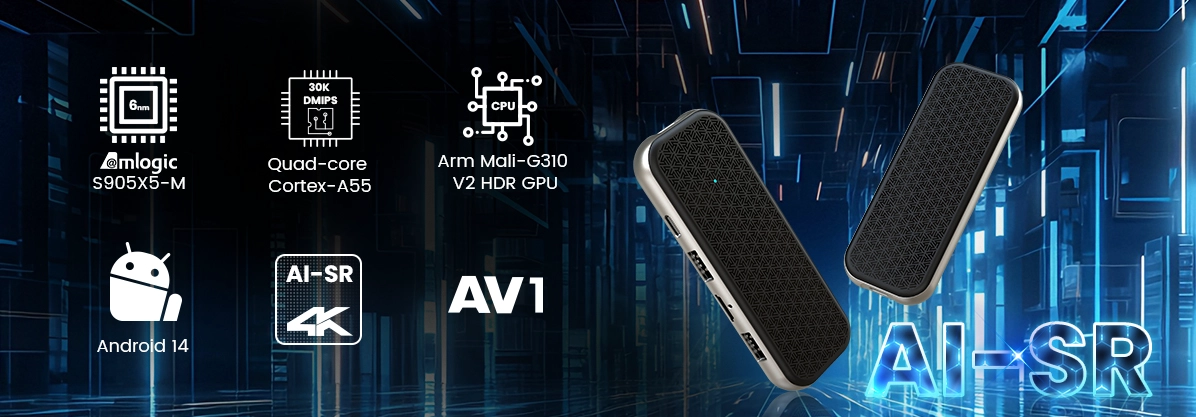
H.265/HEVC and increasingly AV1 codec support
-
HDMI-CEC for television control
-
HDCP-compliant content protection
-
Dual-band Wi-Fi and Gigabit Ethernet
-
Bluetooth for remote controls and peripherals
-
Captive-portal or enterprise network compatibility
-
Custom hotel launcher and branded UI
-
Centralized OTA firmware updates
-
Kiosk or restricted-user operation
-
Remote diagnostics and device monitoring
-
Integration with PMS, CMS, IPTV, OTT, or casting platforms
This changes the product definition from a simple playback box to a managed edge-computing terminal.
The SoC is only one part of the system. Memory configuration, storage endurance, PCB power design, thermal performance, Wi-Fi antenna layout, HDMI signal integrity, firmware stability, and OTA architecture all influence the total deployment cost.
For hotel operators, reliability matters more than peak benchmark scores. A device that performs well in a laboratory but overheats inside a restricted cabinet or requires manual firmware intervention across 500 rooms is an expensive deployment failure.
How to Engineer a Hotel-Grade Streaming Media Player
1. Select the SoC Around the Actual Workload
The correct SoC depends on the hotel application.
For standard 4K OTT playback, an efficient ARM platform with hardware video decoding may be sufficient. More demanding installations can require higher-performance platforms capable of handling multiple applications, advanced UI rendering, AI-assisted functions, or local edge processing.
The hardware design should evaluate:
-
CPU architecture and sustained performance
-
GPU capability for 2D/3D UI rendering
-
Hardware video decoder and encoder
-
H.265, VP9 and AV1 support
-
4K@60fps output capability
-
DDR memory bandwidth
-
eMMC storage performance and endurance
-
Wi-Fi 5/6 capability
-
Gigabit Ethernet
-
USB and expansion interfaces
-
Long-term SoC availability
AV1 adoption is particularly relevant for new deployments because operators increasingly need codec flexibility for future content platforms. Selecting hardware solely around current application requirements can shorten the useful lifecycle of a hotel device.
2. Treat PCBA Design as a Deployment Requirement
Hotel environments expose weaknesses that may not appear during normal consumer use.
A customized PCBA can address application-specific requirements such as:
-
Power-management optimization
-
HDMI layout and signal integrity
-
Ethernet and USB placement
-
Wi-Fi antenna positioning
-
GPIO or serial interfaces
-
Additional storage or memory
-
Customized connector configurations
-
IR receiver and LED positioning
-
EMI/EMC considerations
-
Industrial power input requirements
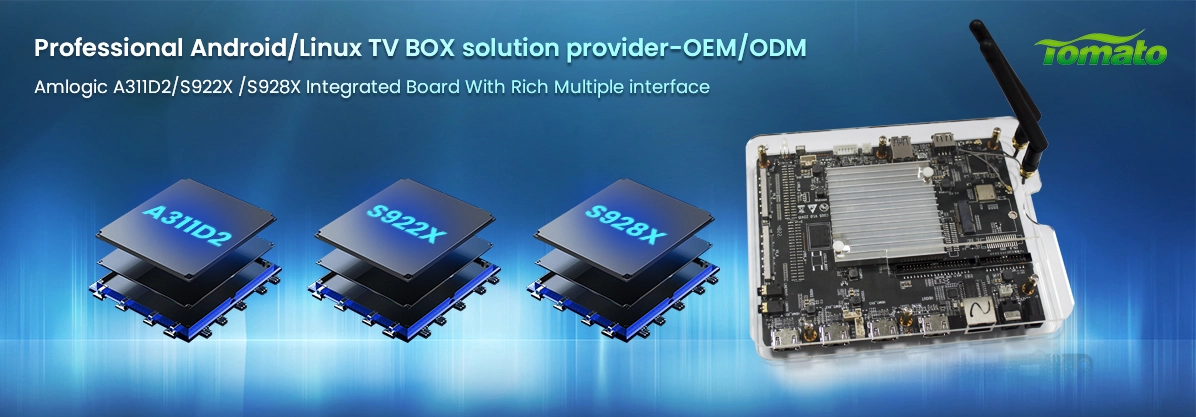
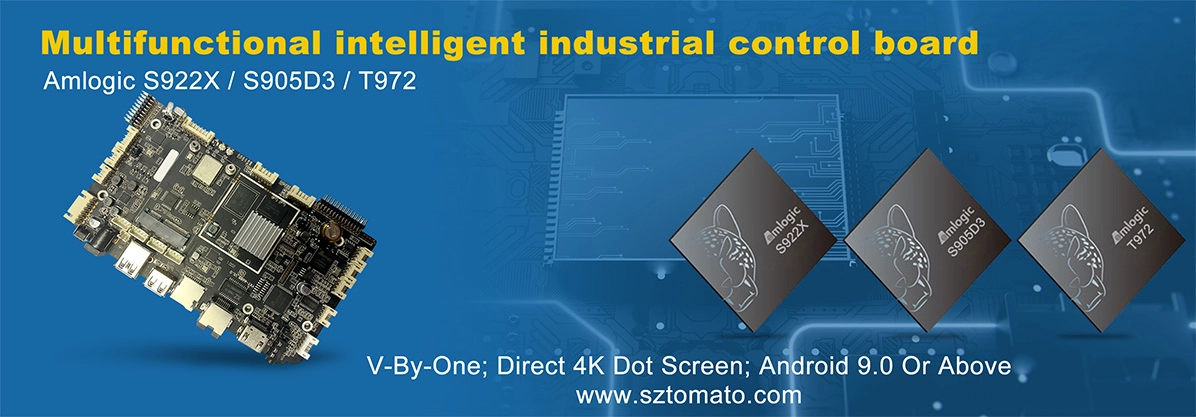
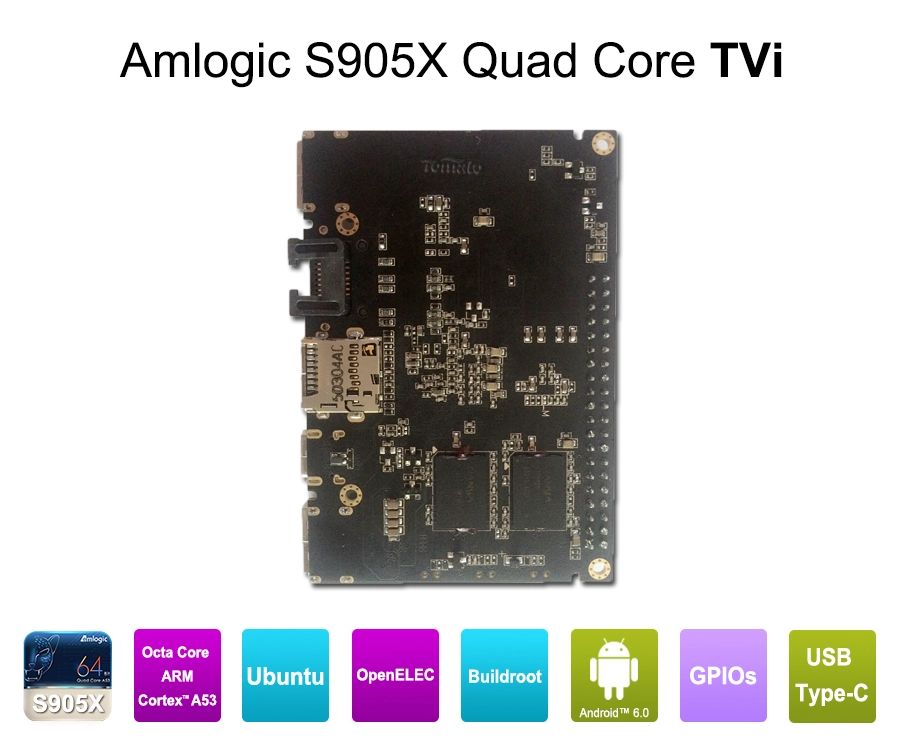
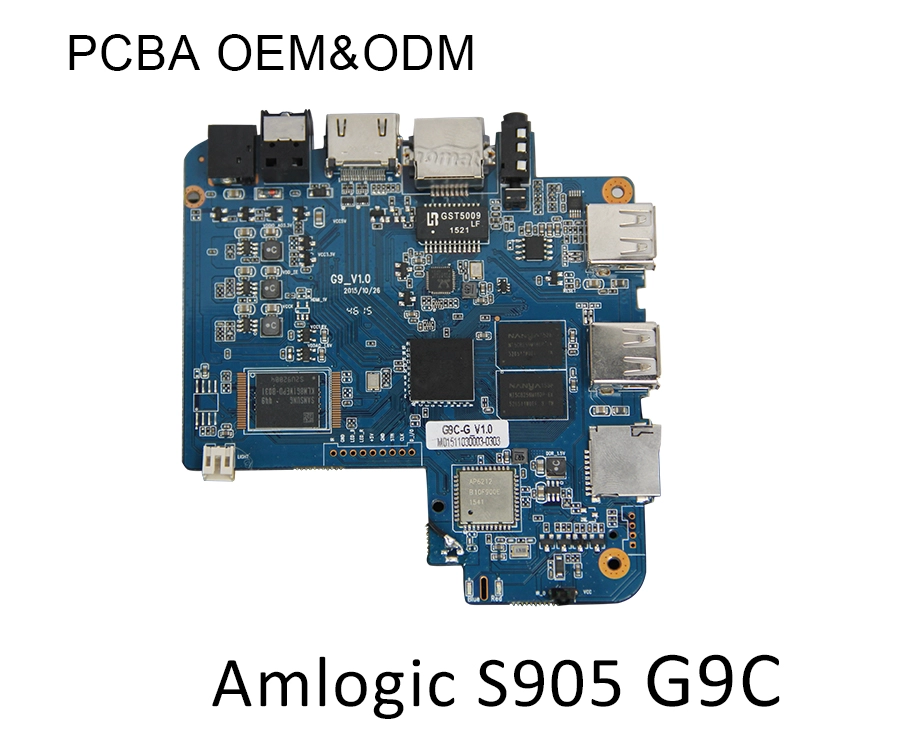
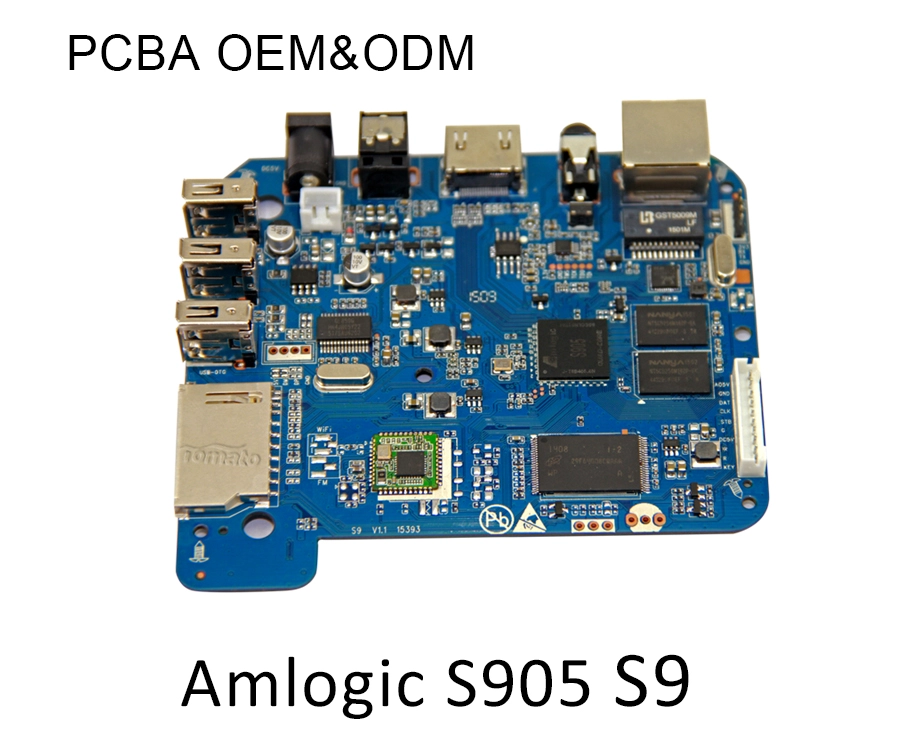
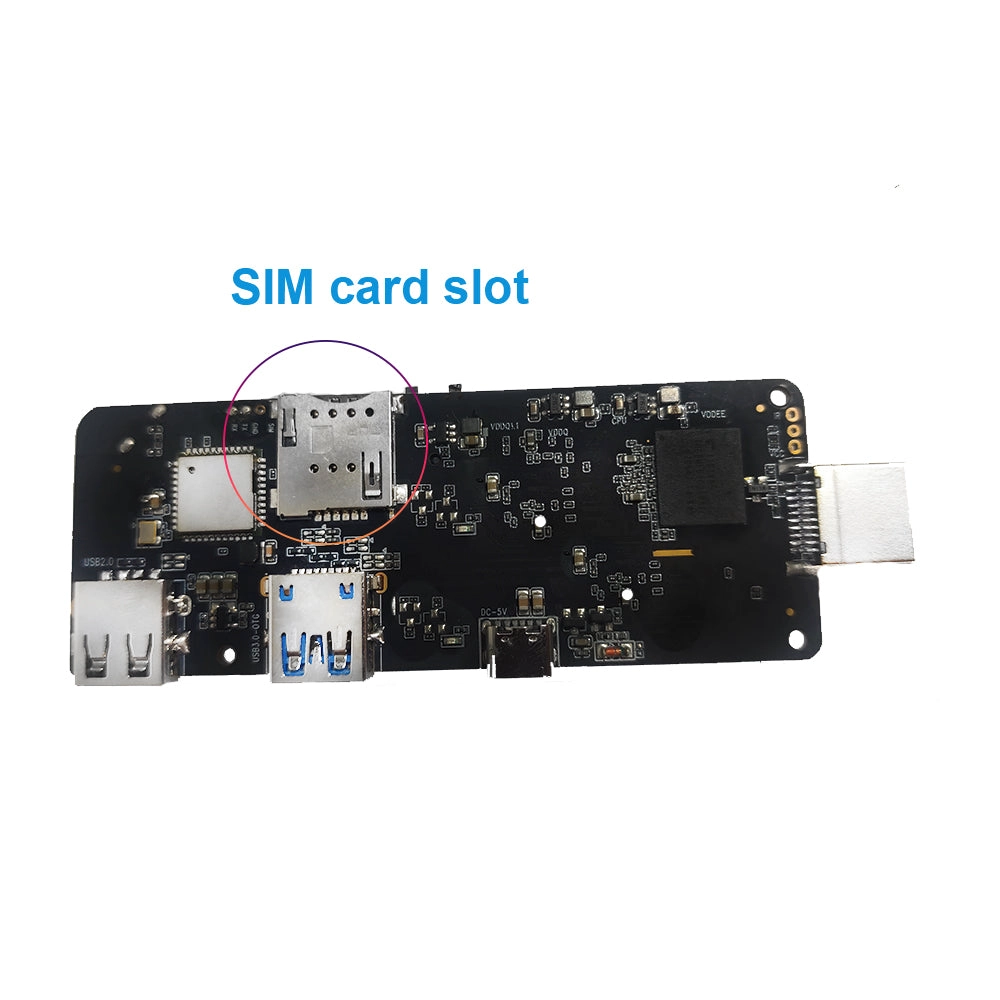
For OEM projects, SZTomato can modify the PCBA according to the customer's enclosure, interface, networking, and application requirements rather than forcing the project into a fixed retail hardware design.
This is important when the streaming media player must fit behind a specific hotel television, inside an AV cabinet, or into an existing hospitality infrastructure.
3. Build Firmware Around Hotel Operations
Firmware is where many hotel deployments succeed or fail.
A hospitality streaming media player should not behave like an unrestricted consumer Android device. The software environment can be customized to provide a controlled operating model.
Typical firmware engineering includes:
Custom launcher and UI/UX
The home screen can be branded for the hotel group and organized around hotel services, OTT applications, local information, room-service functions, promotions, and casting.
Device Owner and kiosk controls
Android Device Owner capabilities can restrict unauthorized configuration changes, control application access, establish a default launcher, and support kiosk-style deployments.
Silent application deployment
Enterprise installations can require background APK installation and updates without requiring staff to physically operate every device.
OTA update architecture
A scalable OTA system should support staged firmware releases, version control, rollback strategies, device grouping, and remote recovery. This is especially important when a hotel group operates thousands of rooms across multiple properties.
API and middleware integration
The streaming media player can be integrated with hotel PMS, CMS, IPTV middleware, casting systems, digital signage platforms, or proprietary hospitality applications through SDK/API development.
Linux-based deployments can also be considered when the project requires a more controlled embedded software stack. Android and Linux kernel optimization should be selected according to the application rather than treated as interchangeable operating systems.
Solving the Four Common Hotel Deployment Problems
Thermal Stability
A hotel device may operate continuously for years. Enclosed installation locations can restrict airflow and raise internal temperatures.
Thermal engineering should therefore consider:
-
SoC heat generation
-
Heatsink dimensions
-
Thermal interface materials
-
Enclosure airflow
-
CPU/GPU frequency management
-
Sustained-load testing
-
Ambient temperature conditions
SZTomato can develop specialized cooling solutions for industrial and commercial deployments, including customized heatsinks and thermal structures matched to the enclosure.
The goal is sustained stability, not a short benchmark peak.
Network Reliability
A streaming media player depends on both local networking and cloud services. Poor Wi-Fi performance can produce buffering, casting failures, application timeouts, and remote-management problems.
Hotel projects should evaluate Wi-Fi antenna design, Ethernet availability, DNS behavior, network segmentation, captive-portal compatibility, and remote diagnostics during the engineering stage.
For large deployments, wired Gigabit Ethernet can remain the preferred option where infrastructure permits it because it reduces wireless interference and simplifies operational troubleshooting.
Content Protection
Commercial OTT services may require secure playback paths and HDCP compliance. The complete HDMI chain must be considered, including the SoC, HDMI interface, firmware, television, and content service.
This is one reason a generic Android TV Box cannot automatically be treated as a compliant hotel streaming platform. DRM, HDCP, application certification, and service-specific requirements must be validated against the intended deployment.
Fleet Management
Managing 20 devices is different from managing 2,000.
A hotel-grade deployment should support centralized monitoring and maintenance, including:
-
Firmware version reporting
-
OTA updates
-
Application updates
-
Device health monitoring
-
Remote reboot
-
Configuration management
-
Failure diagnostics
-
Device grouping by hotel or room
-
Update scheduling
TR-069 or other remote-management mechanisms may be incorporated where the network architecture requires standardized CPE management.
The objective is to reduce truck rolls and eliminate unnecessary room visits.
Market Direction: From Streaming Box to Hospitality Edge Device
The hotel streaming media player is becoming part of a broader digital infrastructure.
The hardware can serve simultaneously as an entertainment terminal, hotel information interface, digital signage endpoint, casting receiver, smart-room gateway, and edge-computing platform.
This creates opportunities for hotel operators and solution providers to consolidate several devices into one managed platform.
For example, a sufficiently capable Android or Linux platform can support 4K video playback while running a customized hotel application, receiving remote management commands, displaying promotional content, and communicating with backend services.
That architecture creates a stronger business case for OEM/ODM development.
Instead of purchasing an off-the-shelf streaming media player and adapting the hotel system around its limitations, system integrators can specify the hardware interfaces, operating system, launcher, firmware functions, management architecture, and enclosure from the beginning.
Why OEM/ODM Engineering Matters for Hotel Projects
For procurement managers, the lowest unit price is rarely the lowest project cost.
A better evaluation model includes:
Hardware fit + firmware control + certification requirements + remote management + lifecycle support + deployment efficiency.
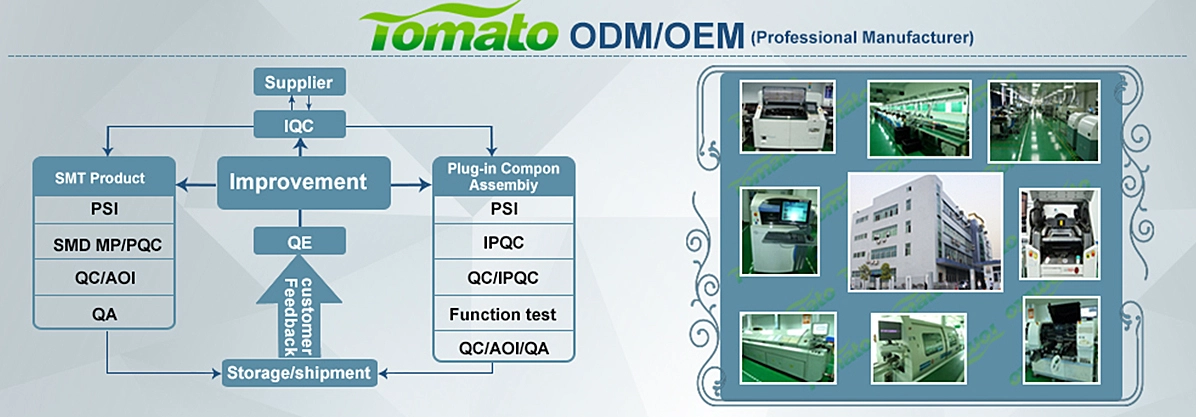
SZTomato approaches hotel streaming media player projects as an engineering platform rather than a retail product. Customization can cover PCBA hardware modification, enclosure design, memory and storage configuration, cooling, Android/Linux firmware, UI/UX, SDK/API integration, OTA systems, and application deployment.
This model is particularly suitable for hotel groups, IPTV operators, hospitality technology companies, distributors, and system integrators that require a branded product or a controlled software environment.
Conclusion: Specify the Platform, Not Just the Box
A hotel streaming media player should be evaluated as a long-term infrastructure component.
4K decoding, AV1 capability, Wi-Fi, HDMI, and CPU performance are important, but they represent only the hardware layer. The deployment value comes from the complete platform: reliable PCBA design, thermal management, secure content delivery, customized firmware, API integration, OTA updates, and centralized fleet management.
For B2B buyers planning a hotel deployment, the right starting point is to define the number of rooms, TV models, streaming services, network architecture, PMS/CMS requirements, UI requirements, remote-management strategy, and expected product lifecycle.
SZTomato can then translate those requirements into a production-ready streaming media player through hardware customization, firmware engineering, SDK/API integration, and OEM/ODM manufacturing.
For hotel groups and system integrators, that approach provides something a generic consumer device cannot: a streaming platform engineered around the operational requirements of the property rather than a product that the property must adapt to.
