Does a TV Box really work?
Does a TV Box Really Work? A Technical Guide for B2B Buyers
A TV Box is only as effective as the hardware and software platform behind it. The shift from conventional H.264 streaming toward AV1, higher-resolution content, AI-assisted image processing and multi-display applications has changed what buyers should expect from a modern TV Box.
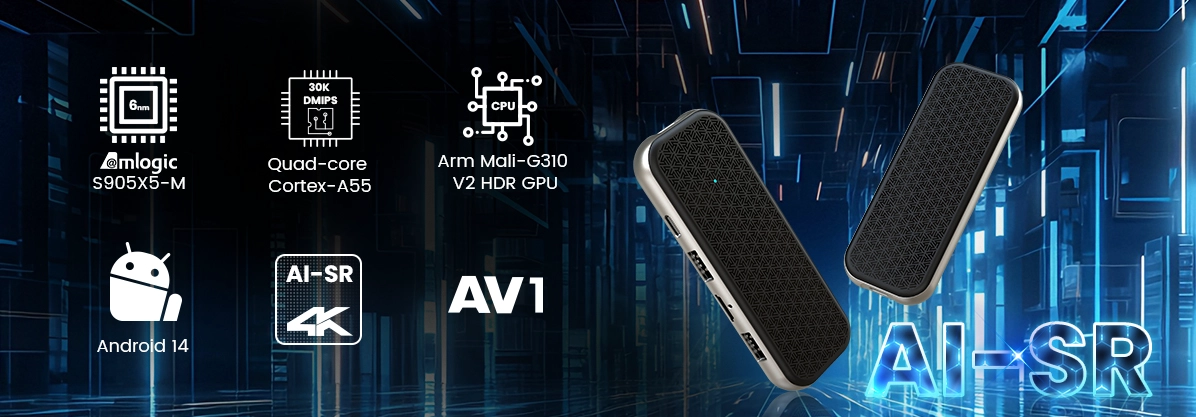
For example, Amlogic's newer S905X5 platform supports hardware-accelerated AV1 and H.266/VVC decoding at 4Kp60, while Rockchip's RK3588 combines an eight-core CPU, 6-TOPS NPU, hardware video processing and extensive display and peripheral interfaces.
So, does a TV Box really work?
Yes—but the answer depends on what “work” means.
For a consumer, it may mean playing Netflix, IPTV or local 4K video without buffering. For an operator, system integrator or commercial project buyer, it means something much broader: stable decoding, reliable networking, protected content playback, controlled firmware, OTA updates, sustained thermal performance and hardware that can be adapted to the deployment environment.
What Does a TV Box Actually Do?
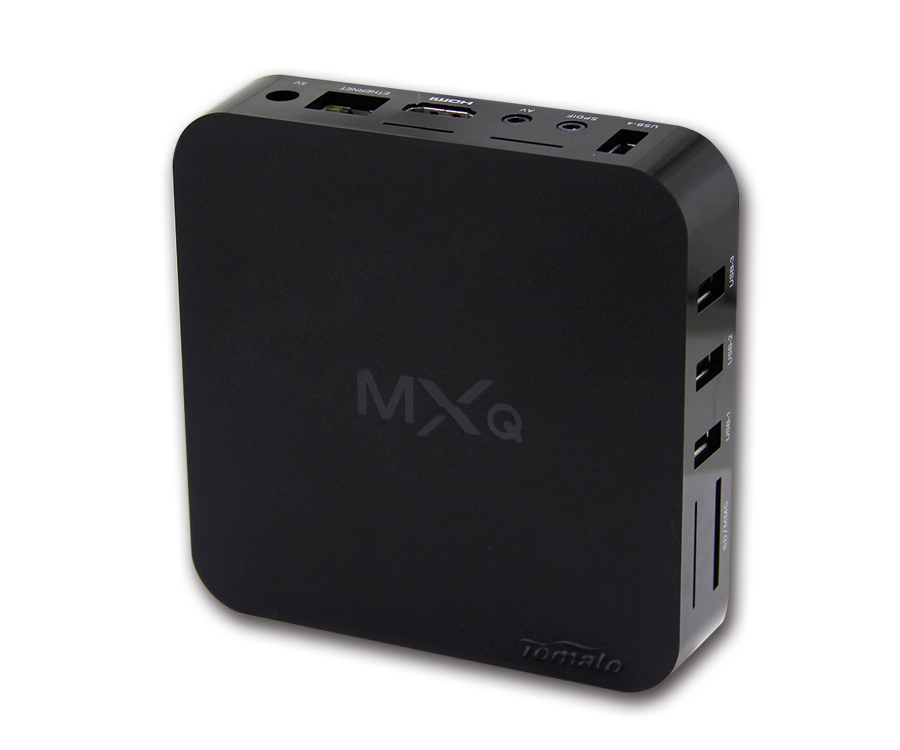
At its basic level, a TV Box is an ARM-based computing device that connects a television or display to network-based and local digital content.
The typical processing chain is:
Network or storage → application → media framework → hardware decoder → GPU/display engine → HDMI/display output
The TV Box handles tasks that a conventional television may not support well, including:
-
OTT streaming
-
IPTV applications
-
Local media playback
-
Web applications
-
Video conferencing
-
Digital signage
-
Cloud applications
-
Interactive applications
-
Remote device management
-
AI-assisted media processing
The important point is that a TV Box is not simply an HDMI accessory.
Modern platforms can contain a multi-core ARM CPU, GPU, NPU, dedicated video codec engines, Wi-Fi, Bluetooth, Ethernet, USB, PCIe and multiple display interfaces.
Rockchip's RK3588 illustrates the difference between a basic streaming device and a higher-performance embedded computing platform. It combines four Cortex-A76 cores with four Cortex-A55 cores, a Mali-G610 GPU and a 6-TOPS NPU. Its multimedia subsystem supports H.265, H.264, VP9, AV1 and AVS2 decoding, while the platform supports display output and interfaces including HDMI, eDP, MIPI, USB 3.1, PCIe and SATA.
That architecture allows a TV Box to become part of a much larger system rather than remaining a simple home-entertainment peripheral.
When Does a TV Box Actually Work Well?
The first requirement is matching the hardware to the application.
A common purchasing mistake is to compare TV Boxes by RAM and storage alone. “4GB + 64GB” tells you very little about actual multimedia performance.
1. The SoC must support the required workload
For normal OTT playback, an efficient quad-core ARM platform may be sufficient.
For example, the Amlogic S905X5 targets 4K streaming and incorporates modern video capabilities including AV1 and H.266/VVC decoding.
For heavier workloads, a platform such as RK3588 provides considerably more processing headroom, including a 6-TOPS NPU and extensive hardware acceleration.
The correct question is therefore not:
“Which TV Box has the fastest processor?”
It is:
“Which SoC has the hardware acceleration and interfaces required by my application?”
A device intended for 4K IPTV playback has very different requirements from one running AI video analytics, multi-screen rendering or an industrial application.
2. Hardware video decoding matters
Video decoding is one of the strongest reasons to use a dedicated TV Box.
Modern SoCs can offload decoding from the CPU to dedicated hardware engines. This reduces CPU utilization and provides smoother playback.
AV1 is particularly important because it offers higher compression efficiency than older codecs, reducing bandwidth requirements for comparable image quality.
However, buyers should not stop at “AV1 supported.”
Check:
-
AV1 profile
-
Maximum resolution
-
Maximum frame rate
-
8-bit/10-bit support
-
HDR capability
-
H.265/HEVC support
-
VP9 support
-
Hardware encoding
-
Simultaneous decoding capability
Rockchip specifies AV1 Main Profile 8/10-bit decoding up to 4K@60fps on RK3588, alongside 8K decoding capabilities for several other codecs.
This distinction matters when a project involves mixed media sources rather than a single standardized video format.
Why Some TV Boxes Buffer, Freeze or Become Unstable
When a TV Box performs poorly, the problem is not necessarily the internet connection.
There are several potential bottlenecks.
Network performance
The device needs sufficient network bandwidth and a stable connection.
Evaluate:
-
Ethernet speed
-
Wi-Fi generation
-
Antenna design
-
2.4GHz/5GHz performance
-
Bluetooth coexistence
-
Network driver stability
-
DNS and application behavior
A Gigabit Ethernet interface does not guarantee Gigabit throughput in a real installation. PCB layout, PHY selection, signal integrity, thermal conditions and software drivers all influence practical performance.
Thermal throttling
A TV Box can perform well during a short benchmark and become unstable after hours of continuous operation.
The reason is straightforward:
Higher workload → higher power consumption → higher temperature → thermal throttling
This is particularly relevant to commercial installations.
Digital signage, hotel systems, industrial terminals and operator deployments may run 12–24 hours per day. A cooling design that works for short consumer sessions may not be appropriate for continuous commercial operation.
The thermal design should therefore consider:
-
SoC heat generation
-
Heatsink size
-
Thermal interface material
-
Enclosure ventilation
-
Ambient temperature
-
Wi-Fi module temperature
-
Storage temperature
-
Sustained CPU/GPU/NPU workload
For an OEM project, thermal engineering should be considered together with the PCBA layout rather than added after the enclosure has been finalized.
Software bottlenecks
A powerful SoC does not automatically produce a good TV Box.
The software stack matters:
Bootloader → Linux/Android kernel → BSP → HAL → multimedia framework → application
A poorly optimized kernel or incomplete BSP can prevent applications from taking full advantage of hardware acceleration.
This is one reason firmware engineering becomes a major differentiator in B2B TV Box development.
Does a TV Box Support Netflix, IPTV and Protected Streaming?
This is where consumer expectations and B2B engineering requirements often diverge.
A TV Box can technically run an Android application without being authorized to deliver every protected streaming service at the required quality.
Protected content may involve:
-
DRM
-
HDCP
-
Secure video paths
-
Device certification
-
Application certification
-
Secure boot
-
Key management
-
Hardware-backed security
For example, RK3588 documentation specifies ARM TrustZone, secure boot, key ladder functionality and HDCP 2.x support for HDMI and DP/eDP.
But the presence of a hardware security feature does not mean that a device is automatically certified for a particular commercial streaming service.
For B2B projects, buyers should verify the exact certification and DRM requirements with the content provider, operator or platform owner.
This is especially important for:
-
IPTV operators
-
OTT service providers
-
Hospitality TV
-
Telecom operators
-
Pay-TV platforms
-
Commercial content distribution
A supplier claiming that an application can simply be installed should not be considered sufficient technical validation.
TV Box vs. Generic Android Box: Why Firmware Matters
There is a major difference between a generic Android box and an engineered TV Box platform.
A generic product typically provides:
-
Standard PCBA
-
Standard Android image
-
Standard enclosure
-
Fixed interfaces
-
Limited firmware modification
That may be sufficient for retail use.
A commercial project can require something very different.
For example, an operator may need a customized launcher, while an industrial integrator may need RS-232, GPIO or a proprietary peripheral. A digital-signage company may require automatic boot, kiosk mode, scheduled playback and remote OTA updates.
These requirements cannot always be solved at the application layer.
They may require:
-
PCBA hardware modification
-
GPIO/UART driver development
-
SDK/API integration
-
Android/Linux kernel optimization
-
Custom bootloader configuration
-
Custom UI/UX firmware
-
System-level permissions
-
OTA update infrastructure
-
Secure firmware signing
-
Watchdog and recovery mechanisms
This is where the OEM/ODM model becomes important.
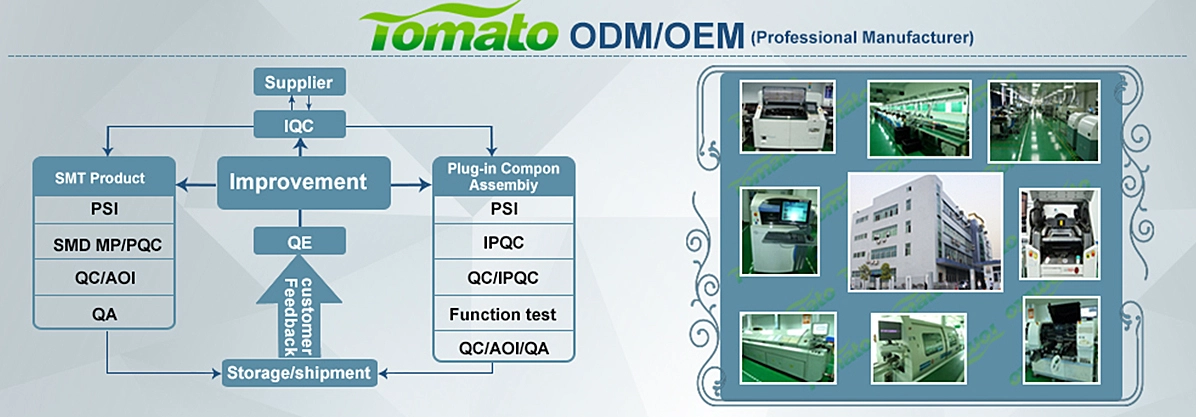
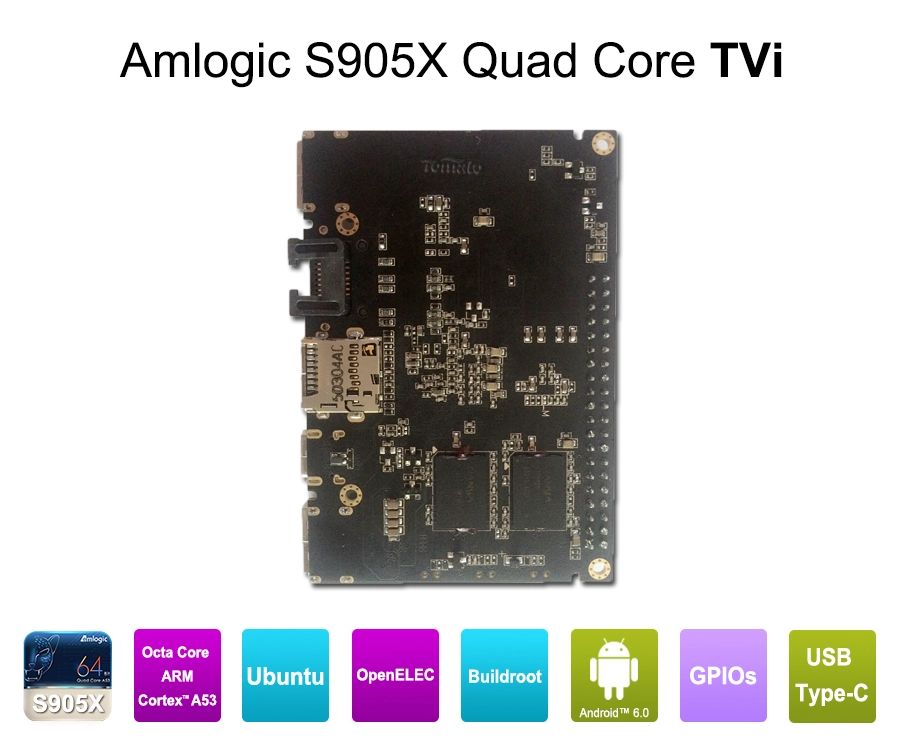
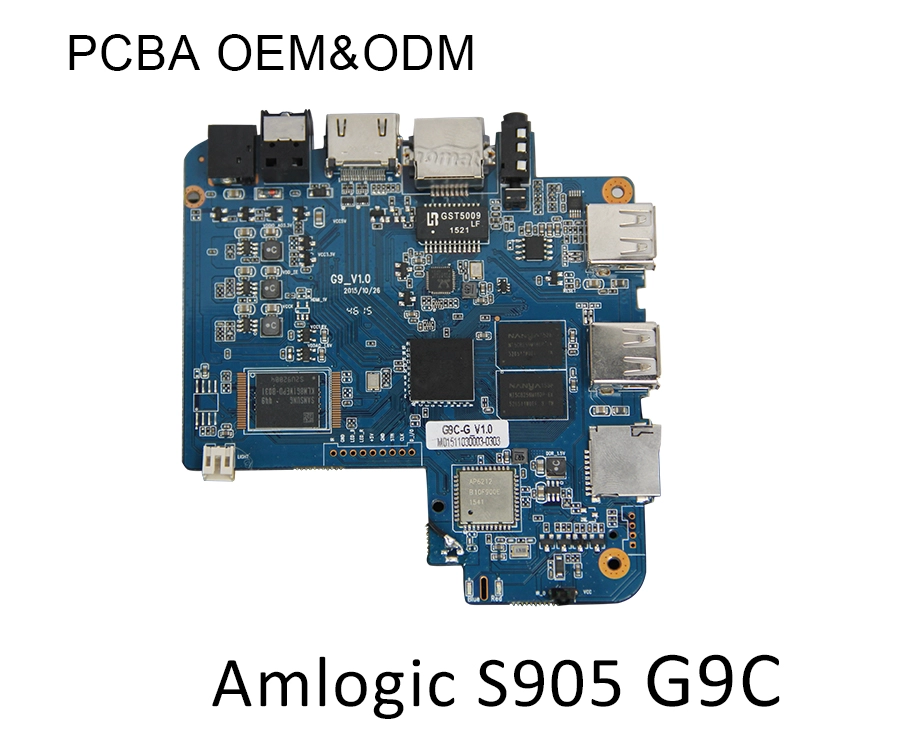
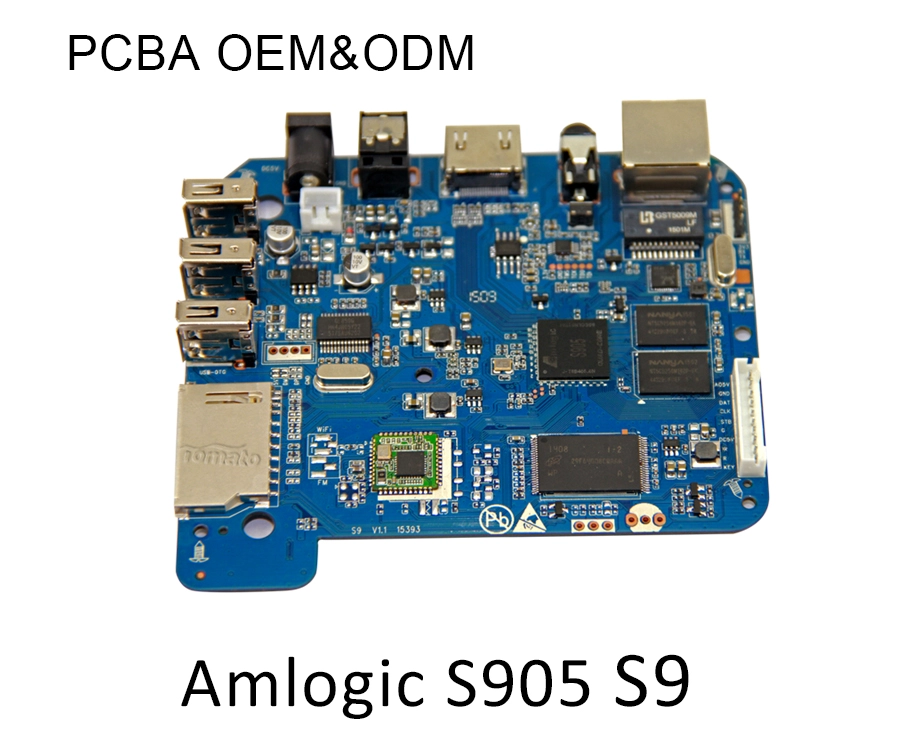
SZTomato focuses on TV Box customization beyond logo printing and enclosure changes. Depending on the project, engineering can extend into PCBA modification, interface configuration, SDK/API integration, custom UI/UX firmware and application-specific cooling solutions.
The objective is to make the TV Box fit the project rather than forcing the project to fit a standard box.
Can a TV Box Be Used for Commercial and Industrial Applications?
Yes, provided the platform is designed for the workload.
A TV Box can serve as the computing core for:
Digital signage
The device can decode and render advertising, information and promotional content on commercial displays.
For larger installations, requirements often include:
-
Remote management
-
Scheduled playback
-
Automatic recovery
-
Multiple display outputs
-
Centralized OTA
-
Content caching
-
Network monitoring
Hospitality
Hotel and hospitality systems may require customized UI, room-specific services, casting, IPTV integration and centralized device management.
The firmware must be designed around the operator's service architecture rather than a consumer launcher.
Education
An Android TV Box can drive interactive displays, teaching screens and multimedia systems.
Depending on the application, USB, HDMI input/output, camera interfaces, Wi-Fi and Bluetooth become important.
Edge AI
A high-performance platform such as RK3588 can extend the concept beyond media playback.
Its 6-TOPS NPU supports multiple AI frameworks and data types, while the platform provides camera interfaces and substantial video-processing capability.
This enables applications such as:
-
People counting
-
Object detection
-
Retail analytics
-
Visual inspection
-
Smart advertising
-
Local AI inference
At that point, the device is no longer simply a “TV Box.” It is an embedded edge-computing platform with display capabilities.
What Should B2B Buyers Verify Before Ordering a TV Box?
Before approving a TV Box for production, procurement and engineering teams should verify the following:
| Area | Key Questions |
|---|---|
| SoC | Does the CPU/GPU/NPU match the application workload? |
| Video | Does it support the required AV1, H.265, H.264 and VP9 profiles? |
| Display | What HDMI, DP or MIPI outputs are available? |
| DRM | What DRM and content-protection requirements are supported? |
| HDCP | Which HDCP version is implemented and validated? |
| Network | Is Gigabit Ethernet or Wi-Fi 6 required? |
| Memory | Is RAM sufficient for the application stack? |
| Storage | Is eMMC/NVMe/SATA appropriate for the workload? |
| Firmware | Can the Android/Linux system be customized? |
| OTA | Can firmware updates be deployed and rolled back remotely? |
| I/O | Are UART, RS-232/485, GPIO, CAN, PCIe or other interfaces required? |
| Thermal | Can the device maintain performance under sustained load? |
| Security | Are secure boot and hardware security features required? |
| Lifecycle | Can the supplier maintain the firmware and hardware platform? |
| OEM | Can the PCBA and enclosure be modified for the project? |
This checklist is more useful than comparing retail specifications line by line.
Conclusion: A TV Box Works When the Platform Is Engineered for the Job
A TV Box absolutely works for streaming, IPTV, local media playback and commercial display applications. The real issue is not whether the concept works. The issue is whether the selected platform can reliably execute the required workload.
For a straightforward 4K streaming application, a modern Amlogic platform with dedicated video acceleration may provide sufficient performance. For AI edge computing, multi-display systems or demanding industrial applications, a platform such as RK3588 provides substantially more CPU, GPU, NPU, video and I/O capability.
The difference between a successful deployment and an expensive hardware replacement often comes down to details that are invisible on a retail product page: PCBA layout, thermal engineering, BSP quality, kernel optimization, hardware decoding, DRM integration, OTA architecture and long-term firmware support.
For B2B procurement managers and system integrators, the right question is therefore not simply whether a TV Box works.
The better question is:
Can the manufacturer engineer the TV Box to work reliably within your specific application, software stack and deployment environment?
SZTomato provides OEM/ODM TV Box development with PCBA hardware modification, SDK/API integration, custom UI/UX firmware, Android/Linux optimization and application-specific thermal engineering. For projects that require more than a standard retail configuration, these capabilities should be evaluated before the hardware platform is finalized.