
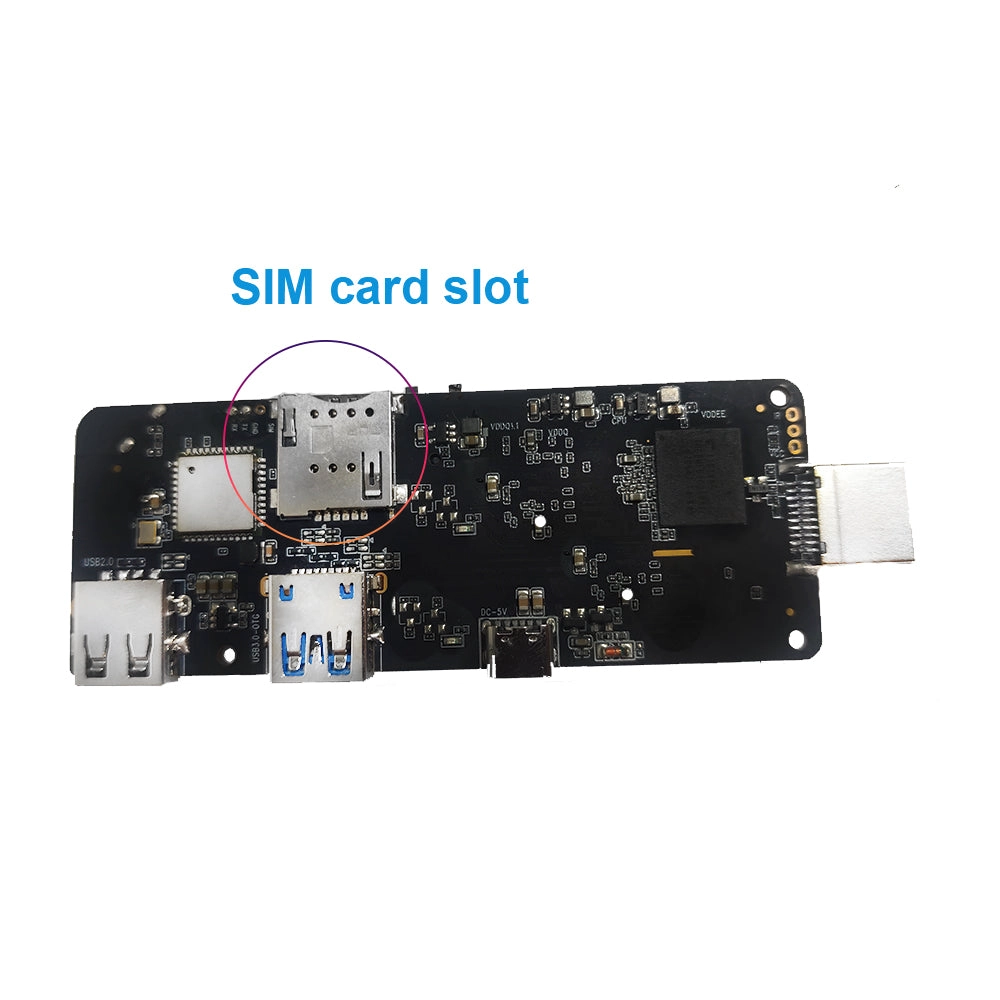
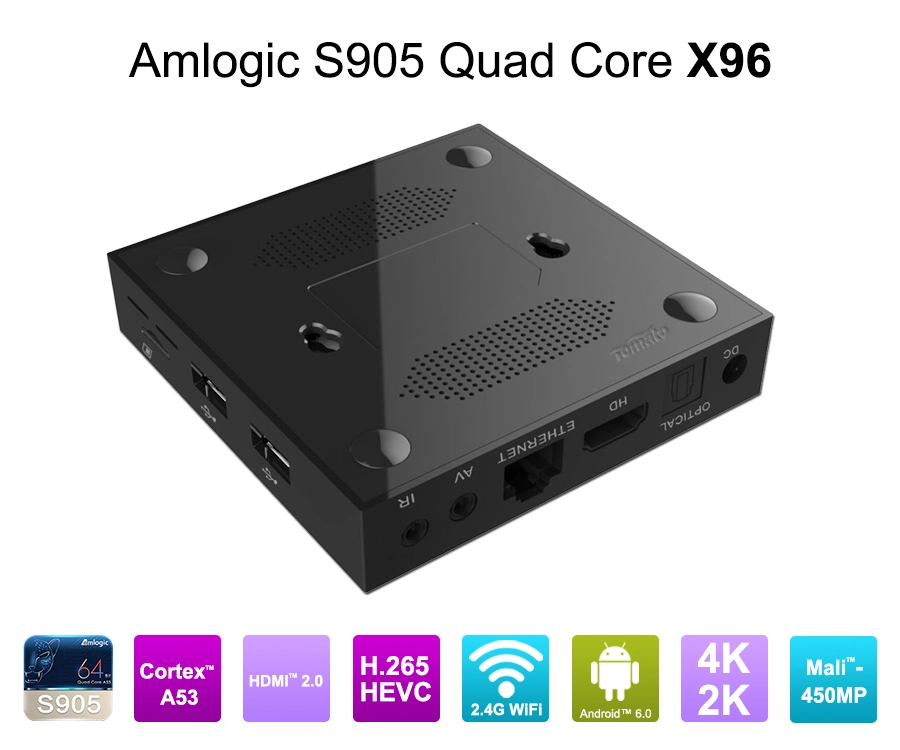
Ensuring stable 4K streaming performance under high network congestion conditions
Ensuring Stable 4K Streaming Performance Under High Network Congestion
A 4K stream can fail even when the nominal internet connection is rated at 1 Gbps. In commercial IPTV, hospitality, digital signage, and multi-room streaming deployments, the limiting factor is often not peak bandwidth but congestion, packet loss, latency variation, buffer depletion, Wi-Fi interference, and inefficient traffic handling inside the playback device.
For an Android TV Box manufacturer, stable 4K playback therefore requires more than a powerful SoC. The complete system must coordinate the network interface, Wi-Fi chipset, Ethernet PHY, memory subsystem, video decoder, Android/Linux network stack, media framework, buffer strategy, thermal design, and application layer.
Why 4K Streaming Becomes Unstable During Network Congestion
A 4K video stream requires sustained throughput rather than a short burst of high bandwidth.
Depending on codec, frame rate, HDR configuration, compression efficiency, and content complexity, actual bitrate requirements can vary significantly. HEVC and AV1 can reduce bandwidth requirements compared with older codecs at similar visual quality, but they do not eliminate the effects of congestion.
The critical network parameters are:
-
Available throughput
-
Packet loss
-
Round-trip latency
-
Jitter
-
TCP retransmission
-
UDP packet loss
-
Wi-Fi interference
-
Buffer occupancy
-
DNS and connection latency
-
Concurrent device traffic
A network connection advertised as 500 Mbps may perform poorly if multiple devices compete for bandwidth and latency increases sharply during peak usage.
For IPTV operators and commercial streaming deployments, consistent throughput and predictable latency are usually more important than headline speed.
Buffer Depletion Is the Immediate Playback Problem
Most streaming systems use a buffer between network reception and video decoding.
When incoming data exceeds playback consumption, the buffer grows.
When network throughput falls below playback consumption for a sustained period, the buffer shrinks.
Once the buffer reaches a critical level, the player may experience:
-
Rebuffering
-
Frame drops
-
Audio/video synchronization problems
-
Resolution reduction
-
Playback interruptions
-
Long recovery times after congestion
A properly engineered Android TV Box should therefore optimize the entire data path rather than attempting to solve the problem at the application level alone.
Network Hardware and PCBA Design Directly Affect 4K Stability
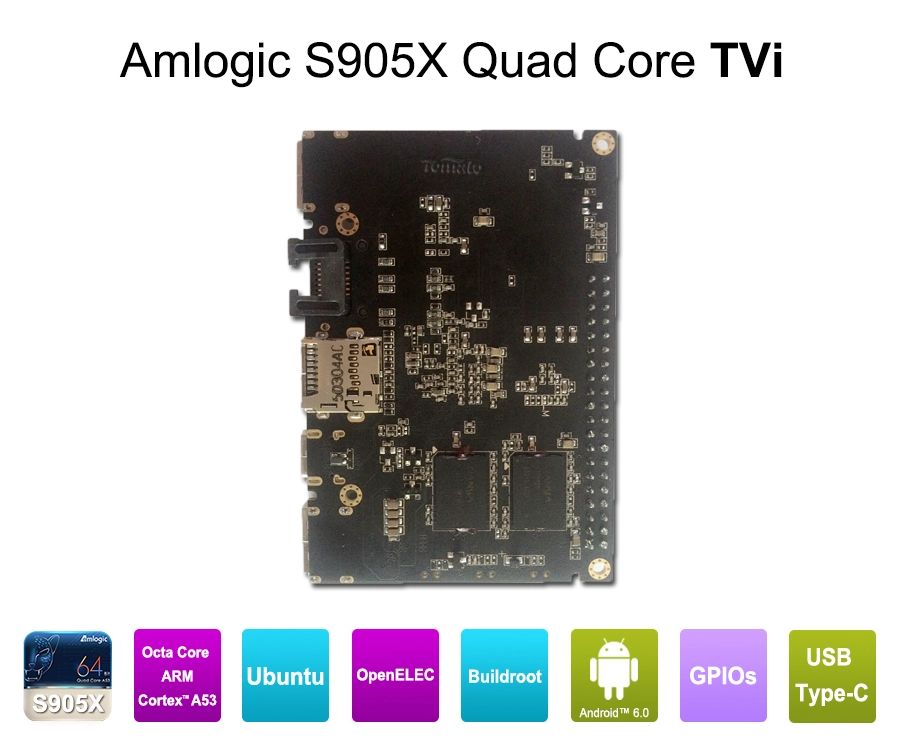
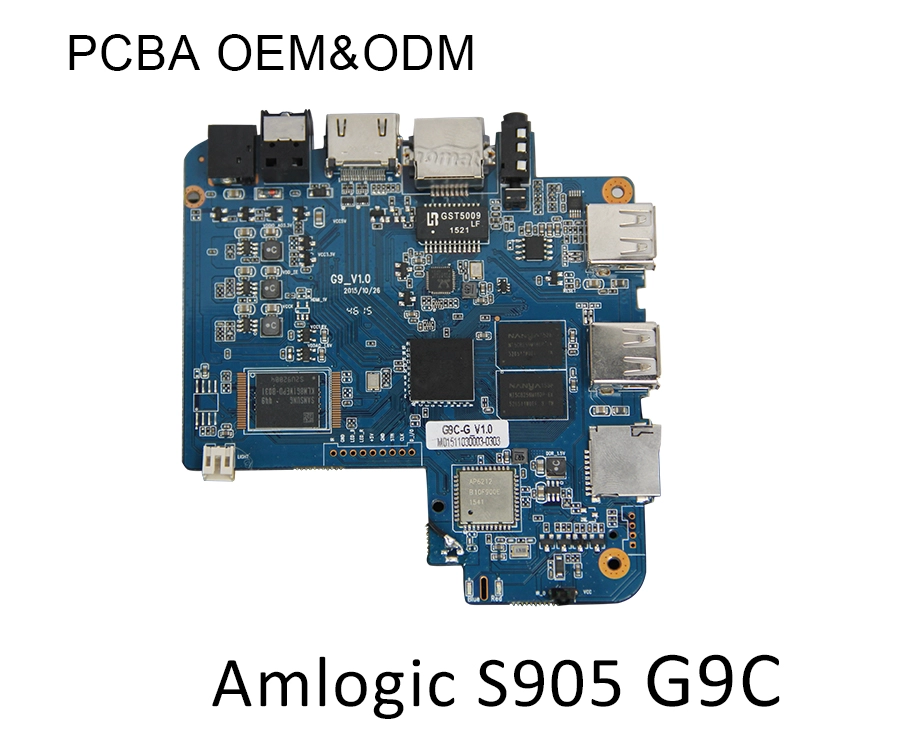
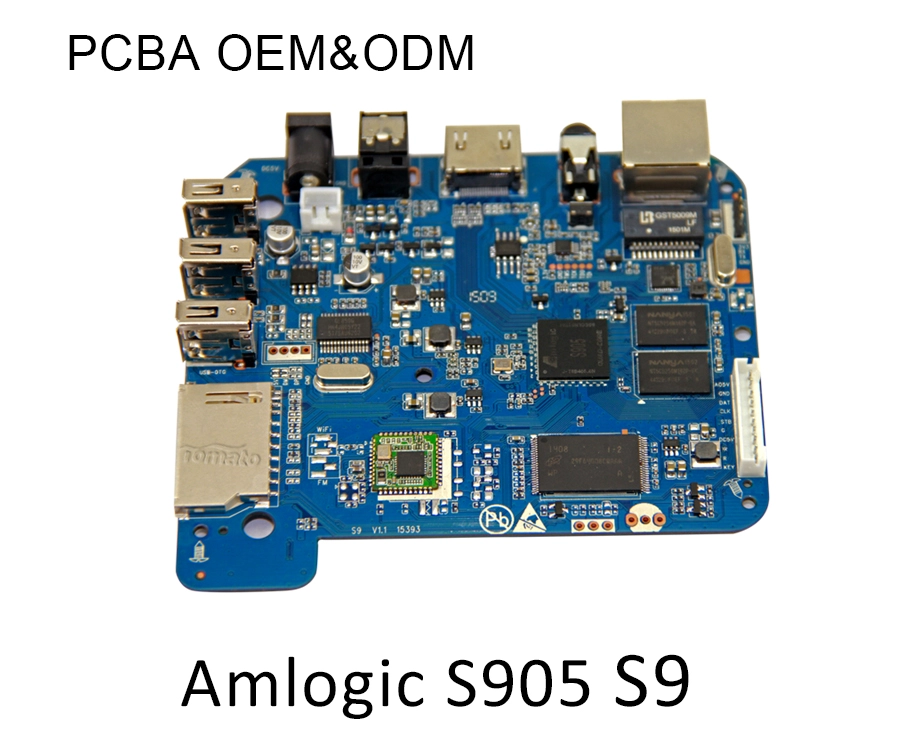
The Ethernet and Wi-Fi subsystems should be treated as core multimedia components.
For fixed IPTV installations, Gigabit Ethernet is often preferable to Wi-Fi because it provides a more predictable physical link and avoids radio-frequency interference.
However, the quality of the Ethernet implementation depends on the complete design:
RJ45 → magnetics → Ethernet PHY → MAC → SoC → kernel driver → network stack → media player
A weak implementation at any point can reduce real-world throughput.
PCBA layout also matters. High-speed differential pairs require controlled impedance, appropriate routing, correct termination, and careful separation from noisy power and RF sections.
For Wi-Fi-based installations, antenna placement becomes equally important. The enclosure, PCB ground design, shielding, USB interfaces, power circuitry, and antenna clearance can all affect RF performance.
A high-performance Wi-Fi 6 module does not guarantee high throughput if the antenna environment is poorly designed.
Wi-Fi 6 Helps, but It Is Not a Congestion Cure
Wi-Fi 6 introduces technologies such as OFDMA, MU-MIMO and improved spectrum efficiency. These capabilities can improve network utilization in environments with many connected devices.
However, the Android TV Box still depends on:
-
Router capability
-
Access-point configuration
-
Channel utilization
-
Signal strength
-
Channel width
-
RF interference
-
Client density
-
Driver quality
-
Antenna design
For hotel rooms, apartment deployments, classrooms, hospitals, and commercial facilities, these factors can create significantly different results from a laboratory benchmark.
For this reason, professional validation should include congested-network testing rather than only measuring maximum throughput beside the router.
Android and Linux Network Stack Optimization
Hardware is only half of the streaming architecture.
The software stack determines how efficiently the device handles congestion, buffering, retransmission, packet scheduling, and media decoding.
An Android TV Box may include:
Network driver → Linux kernel → TCP/IP stack → Android framework → Media framework → Decoder → Surface compositor → HDMI output
Each layer can introduce latency or resource contention.
Kernel optimization can address:
-
Network driver stability
-
Interrupt handling
-
Receive-buffer configuration
-
TCP parameters
-
CPU scheduling
-
Network queue behavior
-
Power-management states
-
Thermal throttling
-
I/O contention
The objective is not to maximize every parameter. Excessive socket buffers, aggressive CPU frequencies, or unrestricted background traffic can create other bottlenecks.
Keep Background Services From Competing With Video
Commercial Android devices often run more services than consumer users realize.
Remote management, application updates, telemetry, cloud synchronization, advertising systems, content downloads, and OTA operations can all compete with the video stream.
A customized firmware architecture can prioritize media traffic and restrict unnecessary background activity.
For managed IPTV or digital signage deployments, the firmware can also define:
-
Application priority
-
Network policies
-
Background download windows
-
OTA scheduling
-
Automatic recovery
-
Watchdog behavior
-
Player restart mechanisms
-
Cache management
This is one area where firmware-level engineering can produce a measurable difference without changing the SoC.
Optimize the Streaming Buffer Instead of Chasing Peak Bandwidth
Buffer management should reflect the deployment environment.
A player operating on a stable wired enterprise network does not require the same strategy as a Wi-Fi device operating in a congested apartment building.
A practical adaptive streaming architecture should consider:
-
Current throughput
-
Recent throughput variation
-
Buffer occupancy
-
Segment download time
-
Packet-loss behavior
-
Estimated sustainable bitrate
The player can then select an appropriate representation rather than repeatedly attempting a bitrate that the network cannot sustain.
This is the principle behind adaptive bitrate streaming.
If congestion reduces available throughput, the player can temporarily switch from a higher-bitrate 4K representation to a lower-bitrate representation before the playback buffer reaches zero.
The goal is not to preserve the maximum resolution at any cost.
The goal is to preserve continuous playback quality.
AV1 and HEVC Change the Bandwidth Equation
Codec efficiency has a direct impact on network requirements.
HEVC/H.265 and AV1 can deliver high-quality video at lower bitrates than H.264 under appropriate encoding conditions.
For a 4K deployment, hardware decoding is essential.
A modern SoC may provide hardware acceleration for:
-
H.264
-
H.265/HEVC
-
VP9
-
AV1
However, codec support must be evaluated together with:
-
Maximum decode resolution
-
Maximum frame rate
-
HDR format
-
Bit-depth support
-
Reference-frame limitations
-
Hardware decoder driver
-
Android MediaCodec integration
-
Linux multimedia framework
A datasheet stating "4K AV1 decoding" is not sufficient evidence of production readiness. The complete BSP and application stack must be validated with actual streams.
Thermal Throttling Can Look Like a Network Problem
One of the more difficult troubleshooting scenarios occurs when network performance appears normal but 4K playback still becomes unstable after extended operation.
The root cause may be thermal throttling.
A high-performance SoC performing continuous 4K decoding, Wi-Fi traffic, graphics rendering, and background processing generates sustained heat.
When the SoC reaches its thermal control threshold, CPU/GPU frequencies may decrease.
This can cause:
-
Decoder processing delays
-
Dropped frames
-
UI latency
-
Audio/video synchronization issues
-
Slower network processing
-
Delayed buffer consumption
The user may interpret this as network instability even when the network remains within specification.
For commercial Android TV Box deployments, thermal validation should therefore include several-hour continuous playback tests at realistic ambient temperatures.
SZTomato can address this through specialized cooling solutions, thermal-interface optimization, heatsink design, PCBA layout optimization, and firmware-level power-management tuning.
How to Test 4K Stability Under Real Network Congestion
A useful validation procedure should deliberately create network stress.
Instead of testing only:
4K playback + unrestricted 1 Gbps connection
engineers should test:
4K playback + competing traffic + packet loss + latency variation + sustained operation
A practical test matrix can include:
| Test Condition | What to Measure |
|---|---|
| Normal network | Baseline throughput and playback |
| 70% bandwidth utilization | Buffer stability |
| 85% utilization | ABR response |
| 90%+ utilization | Rebuffering behavior |
| Packet loss | Recovery performance |
| High latency | Startup and buffering |
| High jitter | Frame continuity |
| Wi-Fi interference | Wireless stability |
| Multiple clients | Network fairness |
| 4–8 hour playback | Thermal stability |
| Background OTA activity | Traffic isolation |
| CPU/GPU stress | Resource contention |
Important KPIs include:
-
Rebuffering ratio
-
Average startup time
-
Buffer occupancy
-
Effective bitrate
-
Dropped frames
-
Packet retransmissions
-
Network throughput
-
CPU utilization
-
SoC temperature
-
Decoder utilization
These measurements provide substantially more useful information than a simple internet speed test.
How SZTomato Approaches 4K Streaming Stability
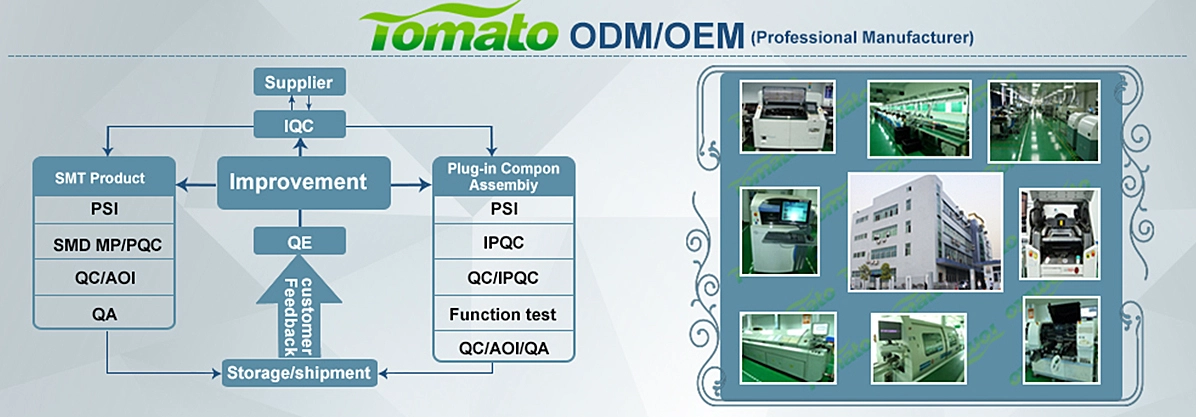
For OEM/ODM projects, the solution often requires changes at several layers simultaneously.
SZTomato can support:
PCBA hardware modification
Ethernet PHY, Wi-Fi module, antenna configuration, memory, storage, power architecture, connector placement, and board layout can be adapted to the deployment requirements.
SDK/API integration
Custom applications, IPTV middleware, network-management systems and third-party services can be integrated into the firmware architecture.
Custom UI/UX firmware
The launcher, player interface, system settings and device-management interface can be customized for operators and commercial brands.
Linux/Android kernel optimization
Network drivers, power management, hardware acceleration, peripheral drivers and system-level performance can be optimized around the selected SoC and application.
OTA update infrastructure
Firmware updates can be structured around controlled releases, version management, staged deployment and recovery mechanisms, reducing the risk of uncontrolled updates across large device fleets.
Thermal engineering
For continuous 4K playback and industrial deployments, specialized heatsinks, thermal interfaces and enclosure-level cooling can be developed around the actual PCBA and operating environment.
This integrated approach is more effective than simply upgrading from one consumer TV Box to another.
Build for Sustained Throughput, Not Peak Speed
Stable 4K streaming under congestion is a system-engineering problem.
The strongest solution combines an appropriate SoC, hardware video decoding, reliable Ethernet or Wi-Fi implementation, optimized PCBA layout, efficient kernel networking, adaptive bitrate logic, controlled background services, sufficient memory bandwidth, thermal headroom, and validated firmware.
For B2B deployments, procurement teams and system integrators should request congestion testing data rather than relying on maximum Wi-Fi or Ethernet specifications.
If the project involves IPTV, OTT streaming, digital signage, hospitality, education, commercial displays, or other continuous 4K applications, SZTomato can support the complete engineering chain—from SoC and PCBA configuration through SDK/API integration, Android/Linux firmware optimization, thermal design, OTA infrastructure, pilot production and OEM/ODM manufacturing.
The correct target is not simply a TV Box that can decode 4K.
It is a platform that can continue decoding 4K predictably when the network, temperature, CPU load and application environment are no longer ideal.
