
Google TV and Android TV OS Set-Top Box Compatibility: 4G LTE Integration Guide
1. Google TV Certification and Android TV OS Compatibility: What Buyers Must Verify
A set-top box can boot Android, display 4K video, and connect to a cellular network without qualifying as a Google TV-certified product. This distinction matters when procurement teams evaluate devices for operator deployments, branded streaming services, or international distribution.
Android TV OS is the underlying television platform, while Google TV is a user experience available on eligible devices. The two terms are related, but they are not interchangeable. Google's developer documentation confirms that Android TV applications can run across the Android TV and Google TV device ecosystem, subject to the applicable device and application requirements.
For an OEM/ODM project, buyers should separate three compatibility layers.
Operating-system and application compatibility
The first layer concerns the Android build, television interface, and application environment.
Engineering teams should verify:
-
Android TV OS compatibility: Confirm the intended Android version, television-specific requirements, remote-control navigation, and application behavior.
-
Google service availability: Establish whether the proposed device is eligible for the required Google Mobile Services (GMS), Google Play, and Google TV experience.
-
Application compatibility: Test the target IPTV, OTT, video-on-demand, and operator applications on the actual production hardware.
-
DRM and secure playback: Confirm the required Widevine DRM level, provisioning, supported codecs, and content-provider authorization.
-
HDMI protection: Validate HDCP support and the content-protection requirements of the target streaming services.
Passing Android compatibility tests does not automatically grant access to Google Play or Google branding. Google identifies compatibility as a prerequisite for pursuing the relevant service licensing; device qualification and licensing remain separate considerations.
For this reason, a supplier should not describe a generic Android TV box as Google TV-certified solely because it runs Android or includes a launcher resembling the Google TV interface.
Hardware compatibility and performance
The second layer concerns whether the selected hardware can support the target software and streaming workload.
A practical specification review should cover:
|
Component |
Compatibility requirement |
|---|---|
|
SoC |
Supported platform, video decoder, GPU, security features, and vendor software support |
|
RAM and storage |
Sufficient capacity for the OS, applications, caching, and future updates |
|
HDMI |
Required output resolution, refresh rate, HDCP version, and display interoperability |
|
Wi-Fi and Ethernet |
Suitable throughput, driver stability, and coexistence with LTE |
|
Cellular modem |
Supported LTE bands, regional carrier requirements, host interface, and firmware |
|
Security |
Secure boot, trusted execution capabilities where required, DRM provisioning, and update integrity |
The exact requirements depend on the target product, software release, content partners, and operator specifications. They should be established before the PCBA design is frozen.
2. Integrating 4G LTE Without Compromising Streaming Stability
Adding a 4G LTE modem to a set-top box introduces RF, thermal, power-management, and software integration requirements that are absent from a conventional Wi-Fi-only design.
The principal challenge is not simply establishing a mobile data connection. It is maintaining usable throughput and stable playback while the modem, application processor, memory, and video decoder operate concurrently.
LTE band selection and regional compatibility
A modem that works in one country may provide limited coverage in another. Procurement teams should specify the destination countries and mobile operators before choosing the modem module.
The engineering review should include:
-
Supported LTE frequency bands and regional carrier requirements.
-
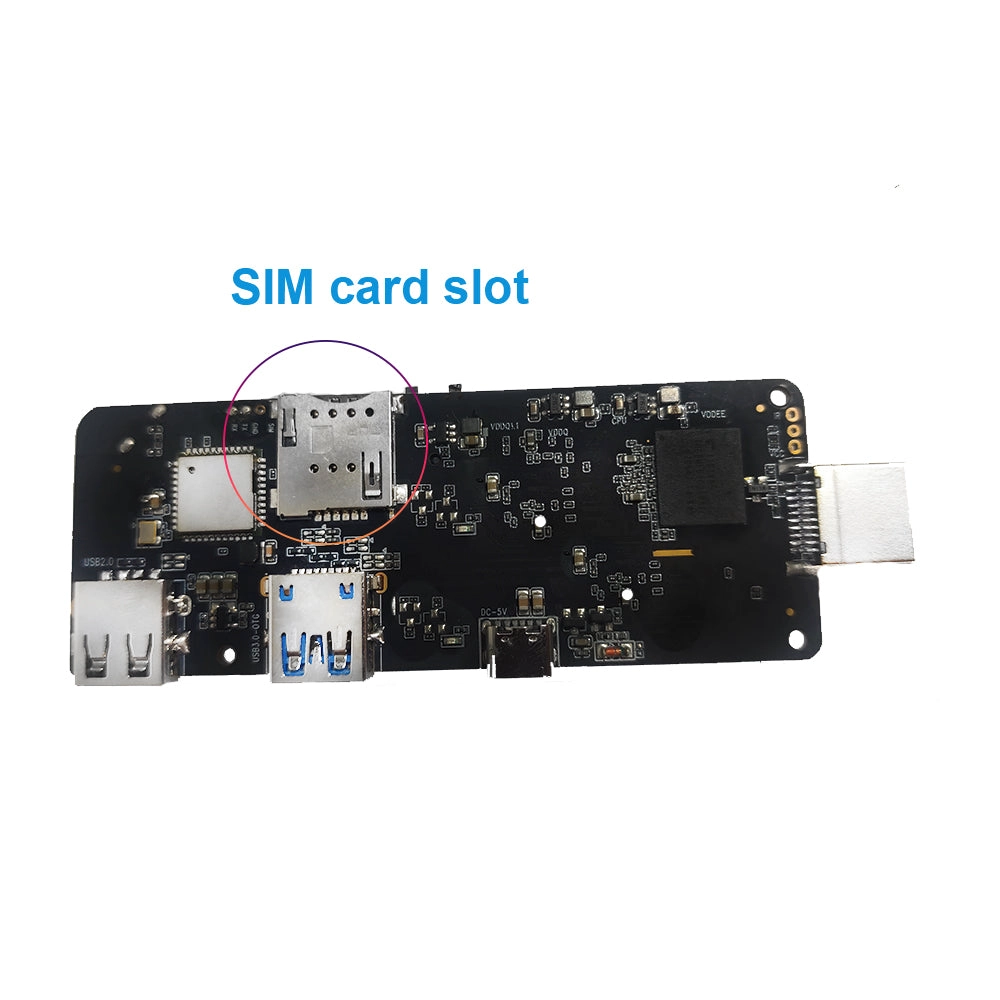
SIM or eSIM requirements, where applicable, and carrier provisioning.
-
Modem-to-host interfaces such as USB or PCIe, depending on the selected platform.
-
Antenna placement, RF matching, shielding, and conducted or radiated performance testing.
-
Recovery behavior after signal loss, network handover, SIM errors, and modem resets.
-
Coexistence between LTE, Wi-Fi, Bluetooth, HDMI, and high-speed digital interfaces.
The final LTE configuration must be validated against the actual module, antenna system, enclosure, and intended carrier network. A modem's published band list alone does not demonstrate end-product compatibility.
Power delivery and PCBA layout
LTE transmission can introduce transient power demands that affect the stability of the main board. Poor power-rail design may cause modem resets, USB disconnects, boot failures, or intermittent playback interruptions.
A custom PCBA design should evaluate:
-
Power-supply capacity and transient response under modem transmission peaks.
-
Ground-plane continuity and return-current paths around RF and high-speed circuits.
-
Antenna isolation from switching regulators, memory buses, and HDMI circuitry.
-
USB or PCIe signal integrity, depending on the modem interface.
-
Thermal coupling between the SoC, LTE module, power-management components, and enclosure.
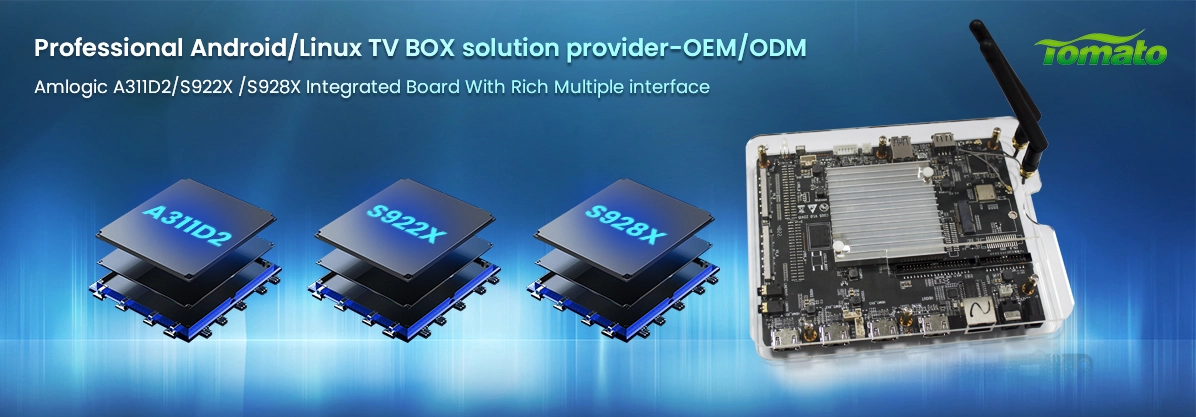
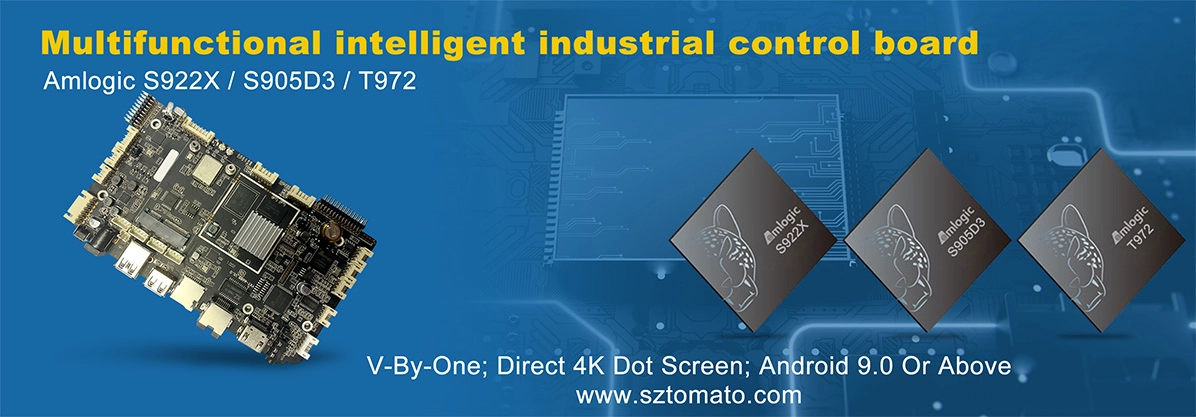
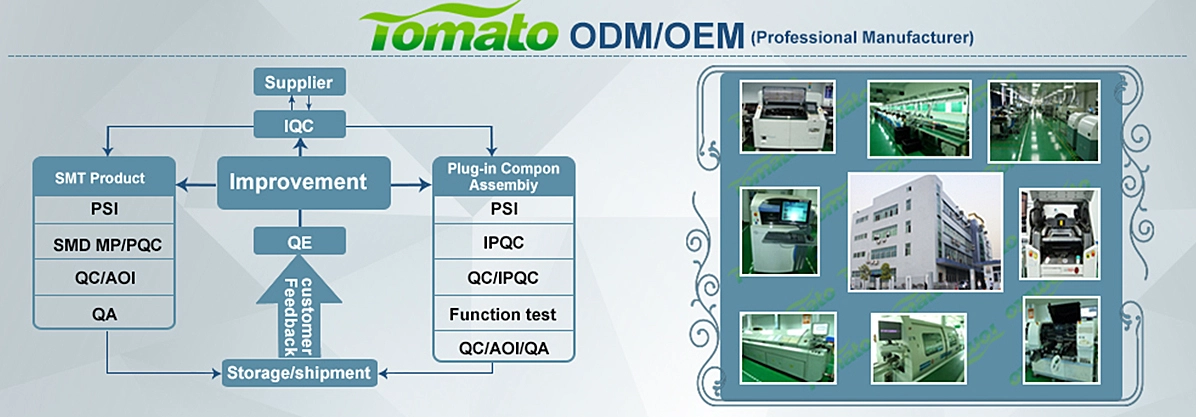
SZTomato's PCBA hardware modification capabilities can support interface changes, component placement adjustments, power-system optimization, and board-level adaptation for specific OEM/ODM projects.
These changes should be driven by measured electrical and RF performance rather than layout appearance alone.
Streaming performance under real network conditions
LTE throughput varies with signal strength, cell loading, radio conditions, carrier configuration, and network congestion. A device that streams smoothly during a laboratory test may buffer during peak-hour deployment.
For this reason, validation should cover:
-
Sustained throughput and latency under weak and moderate signal conditions.
-
Packet loss, jitter, and changes in available bandwidth.
-
Video startup time, rebuffering frequency, and recovery after temporary disconnections.
-
Concurrent cellular transmission and hardware video decoding.
-
Automatic recovery following network loss or modem reconnection.
For video delivery, adaptive bitrate streaming can reduce interruptions by adjusting video quality to available bandwidth. However, adaptive bitrate logic cannot compensate for every severe or prolonged connectivity failure.
The correct acceptance criteria should be defined against the target service. For example, a 4K OTT service may require a different throughput margin and buffering strategy from an operator-managed 1080p IPTV service.
3. Firmware, DRM, OTA Updates, and Long-Term Compatibility
Hardware integration is only part of the problem. Firmware determines how the set-top box handles cellular connectivity, media playback, security, and maintenance after deployment.
Android and Linux kernel integration
A stable platform requires coordinated support for the SoC, LTE modem, USB or PCIe interface, Wi-Fi chipset, display pipeline, audio subsystem, and power-management system.
Depending on the selected architecture, engineering work may include:
-
Linux kernel driver integration and device-tree configuration.
-
Android framework and vendor service adjustments.
-
Modem initialization, connection management, and reconnection logic.
-
Power-state coordination between the application processor and cellular module.
-
Logging and diagnostic interfaces for field troubleshooting.
-
Performance profiling to identify CPU, memory, I/O, or thermal bottlenecks.
Custom firmware should be developed against the selected hardware platform and its supported software baseline. Applying generic Android firmware to a different PCBA revision can introduce driver incompatibilities, unstable interfaces, and update failures.
Google TV requirements and protected media playback
Protected streaming services introduce requirements beyond basic video decoding.
A device may support H.265 or AV1 decoding at the hardware level yet still fail to play a particular service's content because the DRM configuration, certification status, secure video path, application authorization, or HDCP requirements are not satisfied.
Before committing to a production configuration, buyers should confirm:
-
Whether the required Google TV or Android TV product qualification is available for the proposed platform.
-
Which DRM systems and security levels the target content providers require.
-
Whether protected playback works at the intended resolution and refresh rate.
-
Whether HDMI displays, AV receivers, and other connected equipment maintain the required HDCP behavior.
-
Whether firmware changes affect previously validated security or content-protection functions.
These checks should be completed using the intended production configuration rather than inferred from the SoC datasheet.
OTA update management
Over-the-air updates are essential for correcting defects, maintaining security, and managing distributed deployments. For telecom operators and system integrators, an update failure can create support costs across thousands of installed devices.
A production-ready OTA strategy should address:
-
Firmware version control and hardware-revision identification.
-
Signed update packages and integrity verification.
-
Recovery from interrupted downloads or power loss.
-
Staged deployment, rollout monitoring, and rollback where supported by the platform.
-
Compatibility between updates, modem firmware, DRM components, and operator applications.
-
Remote diagnostics and controlled maintenance policies.
SZTomato can integrate custom UI/UX firmware, SDK/API interfaces, and project-specific software behavior into an OEM/ODM development plan. The implementation scope should be agreed upon in advance, including ownership of source code, update infrastructure, certification responsibilities, and long-term maintenance.
4. OEM/ODM Customization for Telecom Operators and System Integrators
A reference-design set-top box can shorten initial development, but it may not meet every operator's requirements for connectivity, enclosure design, service integration, or deployment management.
The right customization strategy begins with a documented product specification rather than a request for a generic Android box with an LTE modem added afterward.
Define the platform around the deployment
The following framework helps procurement teams translate business requirements into engineering decisions.
|
Project requirement |
Engineering response |
|---|---|
|
Google TV experience |
Confirm platform eligibility, licensing route, and required qualification |
|
Regional LTE coverage |
Select modem and antenna configuration for target markets |
|
Continuous streaming |
Validate RF performance, power stability, and network recovery |
|
Operator-specific applications |
Integrate approved SDKs, APIs, and application packages |
|
Branded user experience |
Customize the interface within platform and certification constraints |
|
Industrial or continuous operation |
Evaluate thermal design, component selection, and enclosure airflow |
|
Fleet-wide maintenance |
Plan OTA updates, device identification, logging, and recovery |
|
Product differentiation |
Adapt PCBA, interfaces, enclosure, and firmware to the approved specification |
Thermal design for continuous operation
LTE modems, application processors, and power regulators can generate significant heat during sustained operation. In compact enclosures, inadequate thermal management may cause reduced CPU frequency, unstable modem behavior, or shortened component life.
SZTomato can evaluate specialized cooling solutions for industrial use, including heatsink selection, thermal-interface materials, enclosure airflow, and component placement changes. The appropriate solution depends on the SoC's thermal design, modem power consumption, ambient temperature, enclosure geometry, and duty cycle.
Thermal acceptance testing should reproduce the expected operating conditions and workload. A short boot test is not sufficient to establish reliability for continuous streaming or unattended deployments.
A practical OEM/ODM validation sequence
A disciplined project typically follows five stages:
-
Requirements definition: Confirm the operating system, certification goals, LTE markets, target applications, video specifications, interfaces, and operating environment.
-
Platform selection: Choose the SoC, memory, modem, antenna configuration, and board architecture.
-
Engineering sample validation: Test power integrity, RF performance, video playback, application behavior, and thermal performance.
-
Software and service integration: Complete firmware customization, SDK/API integration, OTA planning, and the required qualification work.
-
Production validation: Verify the final PCBA, enclosure, software build, and test procedures against the approved product specification.
This sequence reduces the risk of discovering fundamental compatibility problems after tooling, certification, or mass production has begun.
Conclusion: Build a Set-Top Box Around Verified Compatibility
For telecom operators, IPTV providers, distributors, and system integrators, a Google TV or Android TV OS set-top box with 4G LTE must be evaluated as a complete hardware-software system. Cellular connectivity, television-platform compatibility, protected content playback, thermal stability, and long-term firmware support are interdependent engineering requirements.
SZTomato supports OEM/ODM development for B2B customers requiring PCBA hardware modification, custom UI/UX firmware, SDK/API integration, and specialized thermal solutions. The scope of Google TV certification, licensing, and third-party service approval must be established separately for each project; it should never be assumed from Android compatibility alone.
For your next project, prepare a target-market list, required LTE bands, preferred SoC, operating-system requirements, streaming applications, and expected deployment volume. These inputs provide a practical starting point for evaluating feasibility, customization scope, and production readiness.
Discuss your project with SZTomato at www.sztomato.com to assess a suitable OEM/ODM Set-Top Box platform for your deployment requirements.
