
Secure Firmware Flashing and UI Customization for Android TV Box Brand Owners
Why Firmware Flashing and UI Customization Become OEM/ODM Bottlenecks
An Android TV Box can pass hardware validation and still fail commercial acceptance because its firmware does not match the final PCBA revision, bootloader configuration, peripheral drivers, or customer application requirements. These problems become more difficult when a brand owner needs multiple memory configurations, regional variants, custom launchers, and different update policies under one product family.
Firmware flashing is the process of writing software images to the target device. UI customization changes the presentation and interaction layer, but it can also affect system permissions, application startup, resource consumption, and update compatibility.
The two workstreams must therefore share a controlled engineering baseline.
Common Causes of Firmware Deployment Failure
Bootloader and image incompatibility. Firmware images may depend on a particular SoC, partition layout, bootloader version, or device-tree configuration. Flashing an image built for a different hardware revision can cause boot failures, missing peripherals, or unstable operation.
Uncontrolled firmware branches. Engineering samples, production units, and customer-specific variants may gradually diverge. Without a clear release structure, the wrong build can reach manufacturing or an after-sales service team.
Driver and peripheral mismatches. A PCBA revision may introduce a different Wi-Fi module, memory configuration, remote-control receiver, or power-management component. The firmware must include compatible drivers and configuration data.
UI changes that conflict with system behavior. A custom launcher may start before essential services are ready, consume excessive memory, mishandle remote-control navigation, or interfere with application lifecycle management.
Inadequate recovery procedures. An interrupted flash or failed OTA update can leave a device unable to boot. Recovery depends on the bootloader, partition design, supported flashing interfaces, and the availability of a valid recovery image.
For brand owners, these failures translate into longer qualification cycles, increased rework, and higher support costs. The solution is a repeatable firmware engineering process with defined hardware compatibility, controlled releases, and measurable acceptance criteria.
How to Build a Secure and Repeatable Firmware Flashing Workflow
A production-grade firmware process must protect image integrity, enforce hardware compatibility, and provide a documented recovery path. The implementation depends on the selected SoC and platform, but several engineering principles apply across Android TV Boxes and Linux-based streaming devices.
Establish a Controlled Firmware Baseline
Start by defining the exact hardware and software combination for each product variant.
The baseline should identify:
-
SoC model and board revision.
-
RAM, eMMC or other storage configuration.
-
Bootloader and partition-layout versions.
-
Kernel, device tree, drivers, and vendor components.
-
Android/Linux release and required system services.
-
Firmware image version, build identifier, and release date.
-
Supported peripherals and customer-specific software components.
Every production image should be associated with an approved hardware configuration. A firmware compatibility matrix helps engineering teams identify which images can be deployed to which devices.
For example, a Wi-Fi module change may require a driver or firmware update even when the product enclosure and marketing model remain unchanged. The change should trigger compatibility testing rather than an assumption that the existing image will continue to work.
Apply Image Authentication and Access Controls
A secure flashing workflow should verify that firmware originates from an authorized build and has not been modified.
Depending on platform support, relevant mechanisms include cryptographic signatures, image integrity checks, secure boot, restricted flashing permissions, and controlled access to manufacturing tools.
Android Verified Boot can help establish a chain of trust for supported Android implementations by verifying protected software components during startup. Its configuration depends on the platform, bootloader, and key-management design. It should not be treated as a substitute for secure manufacturing procedures or update validation.
Production and service procedures should distinguish between development access and end-user operation. Engineering interfaces may be necessary during manufacturing, but debug access and flashing privileges should be controlled according to the product's security requirements.
A practical release process includes:
-
Build firmware from a controlled source and configuration.
-
Record the build identifier and associated hardware revision.
-
Sign or authenticate release images using the platform's supported mechanism.
-
Verify image integrity before flashing.
-
Confirm that the target device matches the approved configuration.
-
Run boot, peripheral, connectivity, and media-playback tests.
-
Record the flashed version and final test result.
These controls improve traceability and reduce the risk of deploying incorrect or unauthorized firmware.
Design for Interrupted Updates and Recovery
Firmware reliability depends on how the device behaves when an update fails. Power loss, insufficient storage, corrupted downloads, and incompatible packages can all interrupt the update process.
Where supported, A/B system updates allow the device to install a new system image in an inactive slot and switch to it after successful installation. If the updated system fails to boot, the implementation may revert to a previously bootable slot. Not every Android platform supports A/B updates, so the partition architecture must be confirmed during product design.
Other platforms may require a recovery partition, a bootloader-based recovery mechanism, or a manufacturer service tool.
OTA packages should include appropriate integrity checks and compatibility validation. The update process should also account for available storage, installation time, first-boot behavior, and the possibility of a failed update.
SZTomato can support firmware customization and OTA workflow integration according to the selected hardware platform and customer requirements. The final implementation should be validated against the actual bootloader, partition scheme, and recovery capabilities rather than assuming that one update method fits every device.
How to Customize the UI Without Destabilizing the Firmware
A branded launcher is visible to the customer, but its quality depends on the underlying system. An effective custom UI must work with remote-control navigation, application permissions, system services, display settings, media playback, and firmware updates.
Separate the Presentation Layer from Core System Functions
Where platform architecture permits, the custom launcher should handle presentation, navigation, and application entry points without unnecessarily modifying low-level system components.
This separation makes visual changes easier to maintain and reduces the risk that a new menu design will affect device boot behavior or system recovery.
A robust customization plan should cover:
Brand identity and navigation. Implement approved logos, color schemes, menu layouts, remote-control focus behavior, language options, and application shortcuts.
Application lifecycle. Validate launcher startup, foreground behavior, background applications, and recovery after a system restart. Devices intended for IPTV or hospitality services may need to return users to a defined home screen.
Resource utilization. Measure memory consumption, CPU load, GPU rendering performance, and startup time. Animations and background services should be assessed on the target RAM configuration, not only on a high-memory engineering sample.
Display and audio behavior. Confirm resolution handling, refresh-rate switching where supported, HDMI output behavior, audio routing, and compatibility with required content-protection mechanisms.
Accessibility and regional requirements. Validate text scaling, localization, input methods, and remote-control navigation across the intended markets.
These checks help prevent a common OEM/ODM problem: a UI that looks correct during a demonstration but performs poorly after extended operation or under real application workloads.
Integrate SDKs and APIs Through a Defined Interface
Brand owners often need to connect the device to IPTV platforms, OTT applications, provisioning systems, analytics services, or remote device management.
SDK/API integration should begin with a documented interface specification. Define authentication, permissions, data formats, error handling, timeout behavior, and version compatibility before integrating third-party components.
Platform-specific services should be accessed through supported interfaces wherever possible. Direct modifications to proprietary system components can create maintenance problems when the Android version, vendor BSP, or security patch level changes.
For example, an operator-managed Streaming Media Player may require device registration, configuration delivery, application installation, and status reporting. These functions should be tested under network interruption, server unavailability, and device reboot conditions.
For HDCP-protected video output or DRM-controlled content, UI and application integration must also respect the platform's licensing and security requirements. A custom launcher cannot compensate for missing DRM provisioning or an incompatible media pipeline.
SZTomato supports custom UI/UX firmware and SDK/API integration for customer-specific products. The engineering scope should identify which functions belong in the launcher, application layer, system image, or backend service to keep future maintenance manageable.
Firmware Lifecycle Management for Scalable OEM/ODM Production
A firmware image that works on an engineering sample is not automatically ready for mass production. Production readiness requires repeatable builds, hardware compatibility checks, regression testing, and a controlled method for maintaining devices after shipment.
Introduce Release Gates Before Mass Production
A useful validation program should include several stages.
| Validation stage | Required checks |
|---|---|
| Hardware compatibility | Confirm the image matches the SoC, PCBA revision, memory, storage, and peripheral configuration |
| Flashing validation | Verify image integrity, successful installation, and recovery after interrupted operations |
| Boot validation | Test cold boot, reboot, recovery, and startup behavior |
| UI validation | Check remote navigation, localization, launcher stability, and application transitions |
| Media validation | Test supported codecs, resolution, frame rate, audio output, and protected playback where required |
| Connectivity validation | Test Ethernet, Wi-Fi, Bluetooth, and network recovery according to product specifications |
| OTA validation | Test package verification, update interruption, first boot, and rollback where supported |
| Regression testing | Confirm that firmware changes do not break previously approved functions |
| Production validation | Record firmware version, hardware revision, and final inspection results |
Testing depth should reflect the intended application, product risk, and expected service life. Devices used in continuous commercial operation may require longer-duration playback, thermal validation, and repeated reboot or update testing.
Control Versioning and Engineering Changes
A structured release system should identify the source revision, build configuration, hardware compatibility, and approved release status of every firmware package.
Engineering changes should follow a documented review process. A change to the PCB, Wi-Fi module, kernel driver, launcher, or OTA mechanism may require different levels of regression testing depending on its impact.
For long-term deployments, the firmware maintenance plan should also define security patch handling, supported software branches, update ownership, and customer notification procedures. Brand owners should agree with the manufacturer on which party maintains the source code, signing keys, build environment, and update infrastructure.
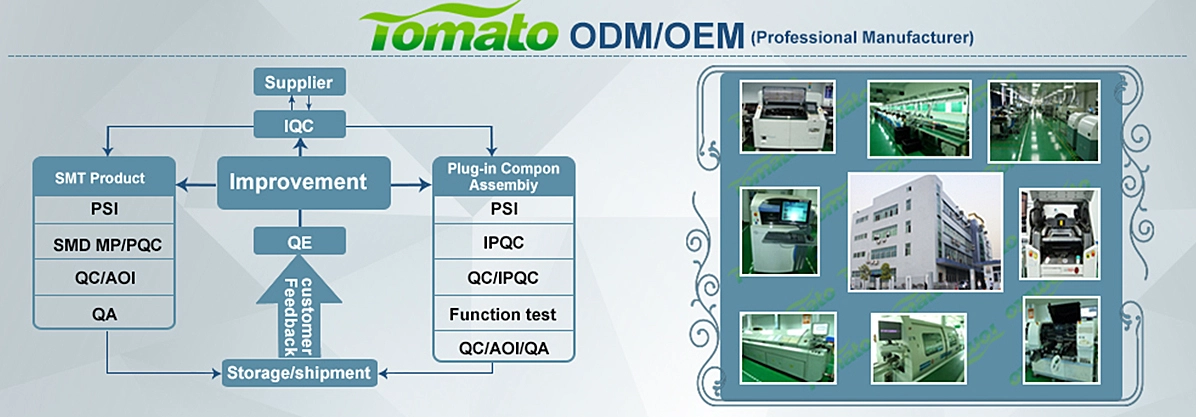
SZTomato's OEM/ODM engineering approach can incorporate PCBA hardware modification, Android/Linux firmware adaptation, custom UI/UX, and integration support. Specialized cooling solutions for industrial use can also be evaluated when continuous workloads or constrained installation conditions create additional thermal requirements.
The objective is a maintainable product platform, not simply a one-time firmware image.
Work with SZTomato to Reduce Firmware Customization Bottlenecks
For Android TV Box brand owners, the main challenge is coordinating secure flashing, hardware compatibility, custom UI development, and long-term software maintenance without creating separate, difficult-to-manage product branches.
A qualified OEM/ODM partner should help establish a stable hardware baseline, implement an appropriate firmware security and recovery strategy, validate the customized interface, and maintain clear version control through production.
SZTomato supports B2B customers with PCBA hardware modification, custom Android/Linux firmware, UI/UX customization, SDK/API integration, and application-specific engineering for streaming devices. Project requirements can be aligned with the target SoC, memory configuration, interfaces, update strategy, operating environment, and expected production volume.
Contact SZTomato at https://www.sztomato.com to discuss your firmware customization project. Provide your target chipset, current firmware status, UI requirements, required system integrations, OTA expectations, and projected order volume to begin a practical engineering assessment.
A controlled firmware lifecycle gives brand owners a stronger foundation for product differentiation, production consistency, and long-term customer support.
