
How to Choose the Right OEM Partner for Your Android TV Box Brand?
Strategic Architecture: How to Choose the Right OEM Partner for Your Android TV Box Brand
The consumer electronics sector is saturated with generic, catalog-sourced set-top boxes that fail under the rigorous performance demands of commercial deployments and premium brand positioning. For enterprise operators, system integrators, and hardware brands, selecting an Original Equipment Manufacturer (OEM) or Original Design Manufacturer (ODM) is the most critical inflection point in the product lifecycle.
A misaligned hardware partner introduces systemic risks: unoptimized firmware causing high field-failure rates, uncertified DRM layers resulting in downgraded streaming resolutions, and poorly engineered board layouts leading to thermal degradation. This whitepaper delivers a definitive engineering and supply chain framework for vetting, auditing, and selecting an enterprise-grade manufacturing partner.
1. Silicon Engineering Alignment: Auditing the System-on-Chip (SoC) Competency
An OEM partner's primary technical value lies in their ability to manipulate the low-level silicon architecture of the device. Hardware brands must ensure the manufacturer possesses native engineering pipelines for the specific processor ecosystem required by the target market.
                    ┌─── [Amlogic S905X5 / S928X] ───> Best for: Multi-Screen OTT / AV1 / VVC Streaming
│
[Processor Audit] ──┼─── [Rockchip RK3588] ─────────> Best for: Edge AI / 8K Video Walls / Heavy I/O
│
└─── [Allwinner H728] ──────────> Best for: Cost-Optimized Static Signage
Protocol Validation: Amlogic vs. Rockchip vs. Allwinner
-
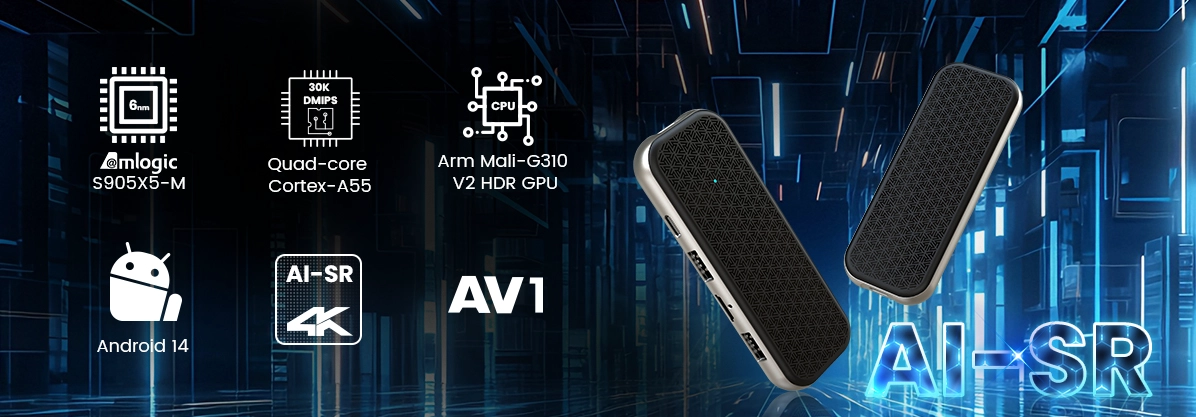
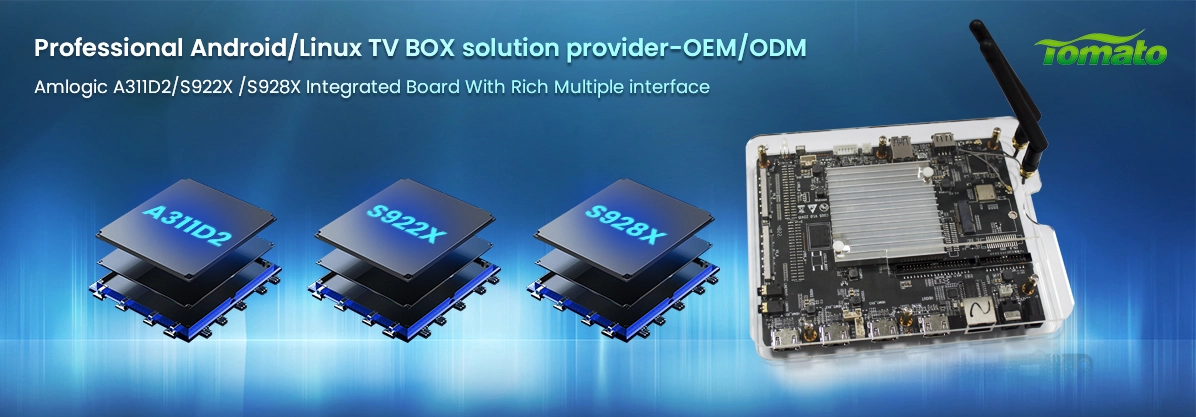
Amlogic Deployments: If your brand targets streaming-heavy environments, premium OTT architectures, or telecom IPTV deployments, your OEM must demonstrate mastery over platforms like the Amlogic S905X5 (6nm process node) or the 8K-capable S928X. The vendor must verify hardware-accelerated decoding support for modern codecs like AV1 and Versatile Video Coding (VVC/H.266), alongside implementation protocols for Widevine L1 and PlayReady DRM layers at the secure OS level.
-
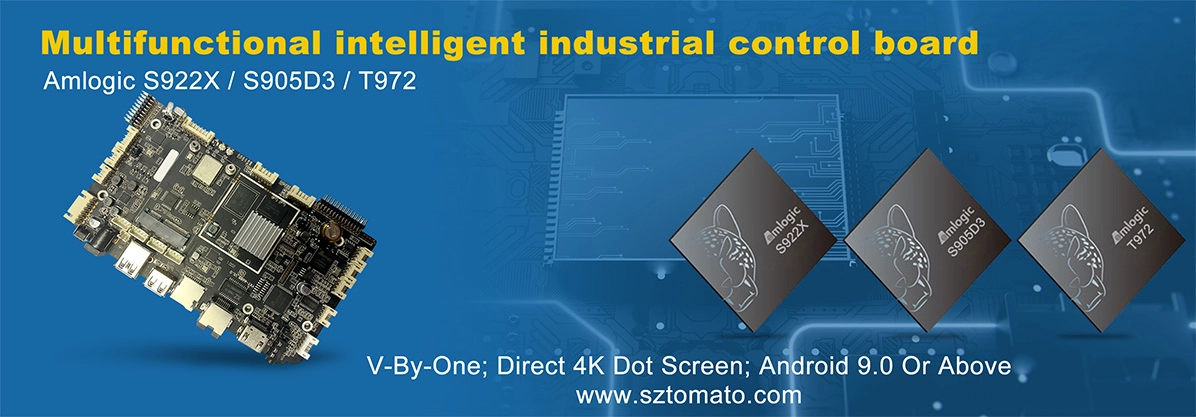
Rockchip Deployments: For edge AI computing, multi-display video walls, or complex peripheral integrations, the partner should possess deep experience with the Rockchip RK3588 platform. The audit must confirm their capability to utilize the integrated NPU for computer vision algorithms or complex multi-channel video demuxing.
2. PCBA Hardware Architecture and Thermal Dissipation Engineering
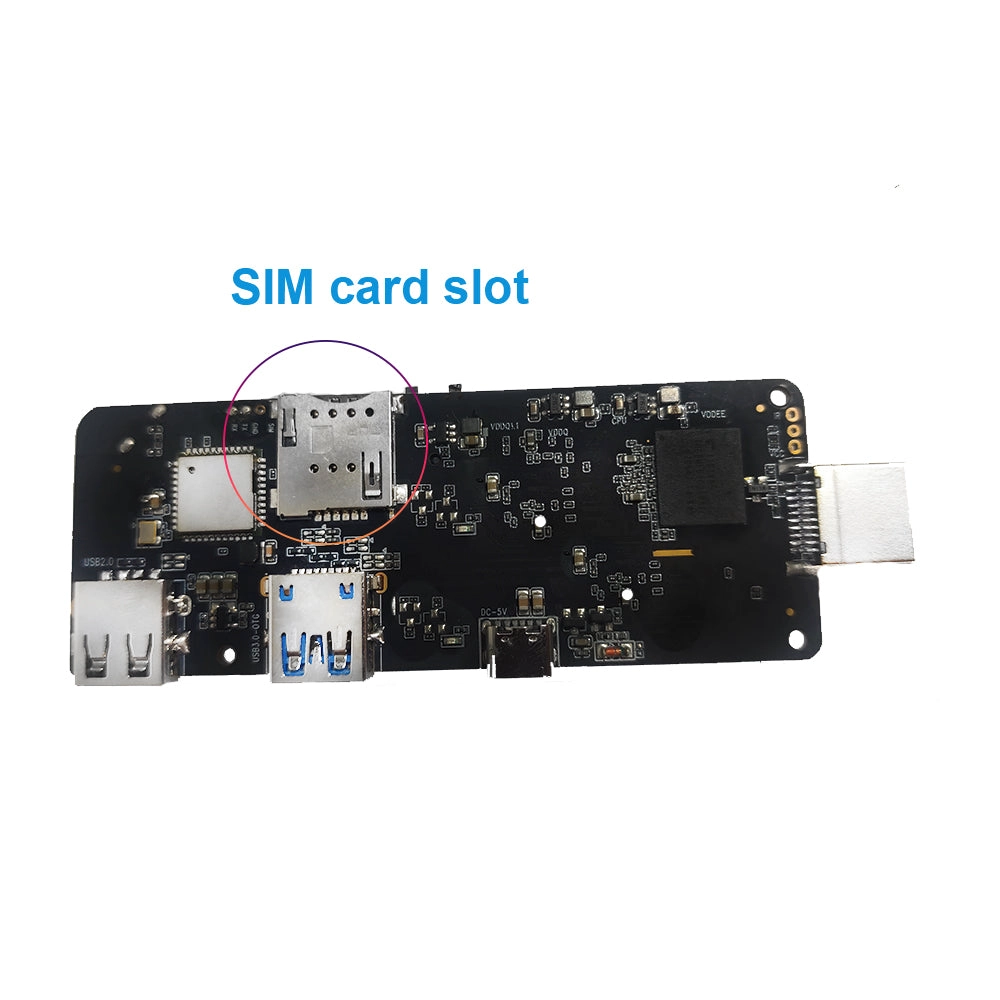
A glossy enclosure frequently masks substandard internal hardware engineering. Brands must look past external aesthetics and perform structural audits of the Printed Circuit Board Assembly (PCBA).
   [Enclosure Top]
───────────────────────────────
[High-Conductivity Thermal Pad]
───────────────────────────────
[Die-Cast Aluminum Heatsink]   <--- Must be sized to cover CPU & PMIC
───────────────────────────────
[SoC / RAM / eMMC Modules]
───────────────────────────────
[4-to-6 Layer FR-4 PCB]        <--- Prevents signal cross-talk
───────────────────────────────
Signal Integrity and Layer Stacking
Low-tier manufacturers minimize component costs by designing 2-layer or sub-standard 4-layer PCBs. This compromises high-speed signal tracing for components like LPDDR4X/DDR4 RAM and eMMC 5.1 storage chips, introducing data corruption and signal cross-talk under continuous processing loads.
Insist on an architectural review of the PCB layout Gerber files:
-
Verify that high-frequency data lines (such as the RAM bus and HDMI differential pairs) feature precise impedance matching.
-
Ensure that the power distribution network (PDN) dedicates independent planes to isolate high-current switching regulators from sensitive analog audio/video circuits.
Passive Thermal Management Protocols
Sustained 4K video rendering at 60 frames per second generates significant thermal energy. Without proper dissipation, internal junction temperatures rapidly climb above 85°C, triggering aggressive CPU throttling and framing drops.
Your OEM partner must demonstrate structured thermal design:
-
Heatsink Volume: Reject lightweight stamped-metal plates. The design should utilize heavy, die-cast aluminum or copper-alloy heatsinks coupled directly to the SoC via high-conductivity thermal pads (≥3.0 W/m⋅K).
-
Component Isolation: Power Management ICs (PMICs) and Wi-Fi/Bluetooth RF front-ends must be spatially separated from the main processor or shielded with dedicated metal cans to prevent cumulative thermal bottlenecks.
3. Firmware Customization and Operating System Lifecycles
Hardware is inert without a stable Board Support Package (BSP) and localized software optimizations. Enterprise buyers must evaluate the vendor's software engineering division with the same scrutiny applied to their assembly lines.
| Technical Benchmarks | Low-Tier Assembler | High-Authority OEM Partner |
|---|---|---|
| AOSP Source Access | Uses stock, unoptimized vendor blobs | Direct modification of kernel drivers & bootloader |
| System Modification | Sideloaded root apps (unsecure) | True ROM-level /system/priv-app/ injection |
| Watchdog Integration | Software-only handling (prone to failure) | Dedicated hardware watchdog circuit on PCBA |
| OTA Delivery Network | Non-existent or manual flashing | Proprietary, global delta-update OTA infrastructure |
Kernel and Bootloader Manipulation
A true ODM partner provides extensive access to the Android Open Source Project (AOSP) tree. The developer team must possess the capability to strip out consumer-grade stock launchers, remove telemetry packages, and implement a secure, unbrickable system environment:
-
Hardware Watchdog Configuration: The firmware must interface with an on-board hardware watchdog timer circuit. If the main OS crashes or hangs for a predetermined threshold (e.g., 30 seconds), the circuit forces a hard electrical reset to guarantee high availability in unmonitored field settings.
-
AC-Power Boot Execution: The bootloader code ( u-boot ) must be customizable to alter the default power-state machine, forcing the Android TV Box to boot immediately into an active operational state upon receiving AC mains power, completely bypassing the physical standby button state.
Technical Sales Framework & Production Inquiry
Building a defensible hardware brand requires a manufacturing partner that operates as an extension of your own engineering department. Consumer-oriented trading vendors cannot provide the firmware-level code modifications, structural PCBA enhancements, and regulatory compliance validation (CE, FCC, RoHS) essential for international B2B deployment.
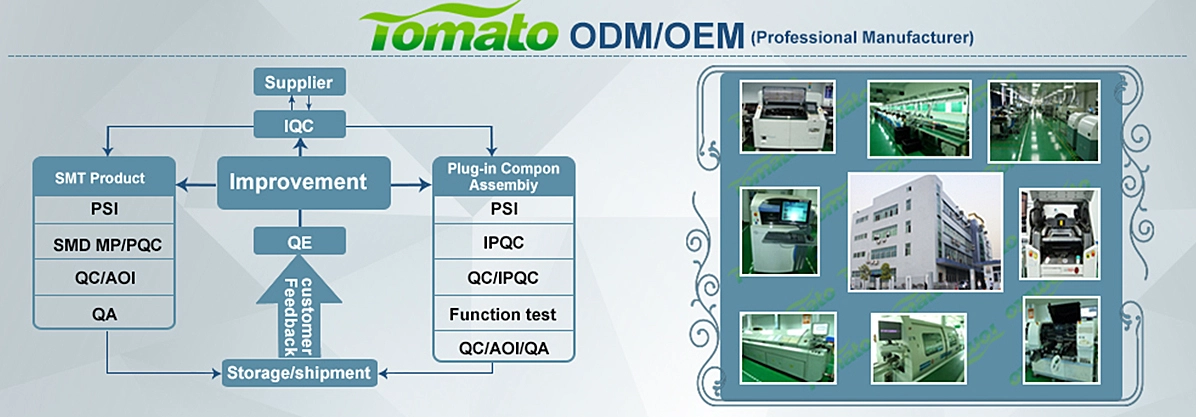
Shenzhen Tomato Technology delivers over 16 years of specialized OEM/ODM expertise within the Android TV Box and digital signage sectors. From initial PCBA layout modifications and system component sourcing to root-level AOSP firmware adaptation and automated QA validation, we engineer long-lifecycle platforms optimized for enterprise operations. Contact our engineering division today to schedule a technical blueprint review, evaluate reference validation samples, and establish your production scaling metrics.
