

How to choose a Set-Top Box (STB)?
How to Choose a Set-Top Box (STB)? The Architectural Procurement Framework
Selecting a Set-Top Box (STB) for mass enterprise deployment represents a critical engineering decision. While consumer procurement focuses on superficial UI fluidity and commercial application streaming licenses, B2B procurement demands a granular audit of underlying silicon capabilities, thermal physics, and low-level firmware flexibility.
When deploying thousands of terminal nodes across managed hospitality networks, telecom infrastructures, or high-density digital signage environments, a minor oversight in hardware validation can escalate into severe maintenance overhead.
1. Silicon Evaluation: Matching the Application to the Silicon Core
The processing foundation of a Set-Top Box (STB) dictates its decoding limits, peripheral interface speeds, and long-term operating viability. The 2026 silicon landscape requires operators to classify deployments into distinct application tiers to prevent both under-powered terminal drops and unnecessary over-engineering expenses.
| Technical Metric | Utility Signage Node | Premium IPTV / Hospitality | High-Compute Edge AI |
|---|---|---|---|
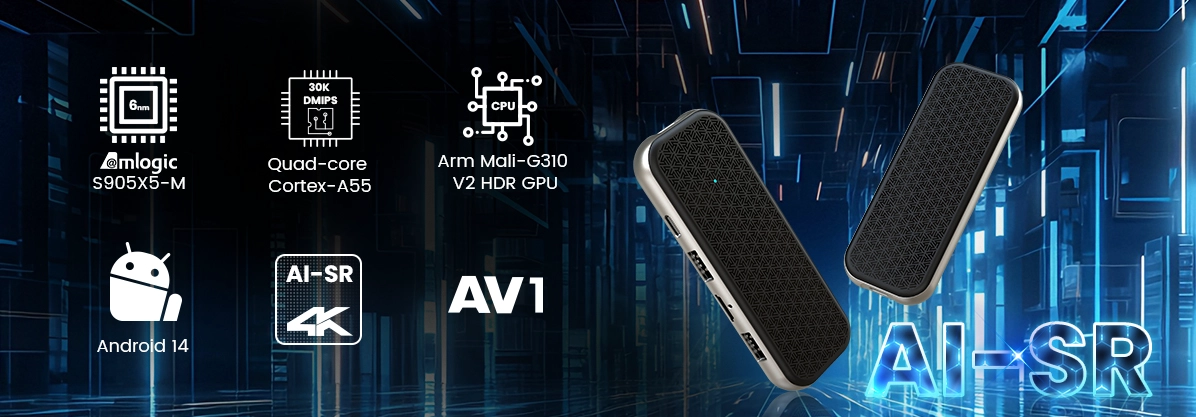
| Target SoC | Amlogic S905X4 | Amlogic S905X5 / S905X5M | Rockchip RK3588 |
| Fabrication Node | 12nm | 6nm FinFET | 8nm LP |
| Max Decoding Ceil | 4K @ 60fps | 4K @ 60fps / 8K support | 8K @ 60fps / 4K @ 120fps |
| Codec Architecture | AV1, H.265, VP9 | AV1, H.266 (VVC), H.265 | AV1, H.265, VP9 |
| AI Integration | None | Inline AI Super-Resolution (AI-SR) | 6 TOPS Dedicated NPU |
The Efficiency Paradigm Shift
For mainstream managed networks and telecom IPTV infrastructures, the introduction of the 6nm FinFET Amlogic S905X5 series has redefined baseline parameters. The shift from older 12nm nodes directly lowers internal thermal output, mitigating the risk of processor degradation in enclosed hospitality environments. Crucially, selecting a Set-Top Box (STB) with native hardware-accelerated AV1 and H.266 (VVC) decoding blocks reduces streaming bandwidth costs across large-scale content delivery networks by up to 30% compared to legacy H.265 processing profiles.
2. Hardware Engineering: PCBA Customization and Industrial Survival
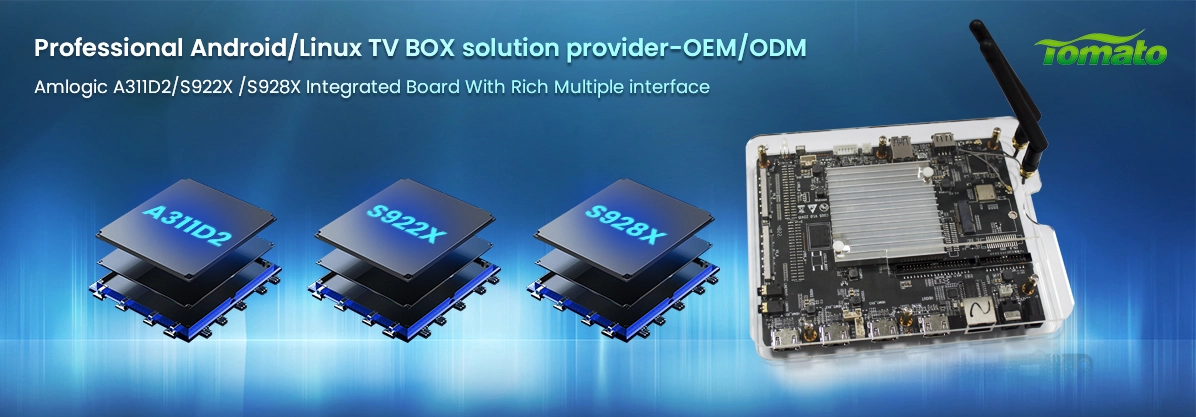
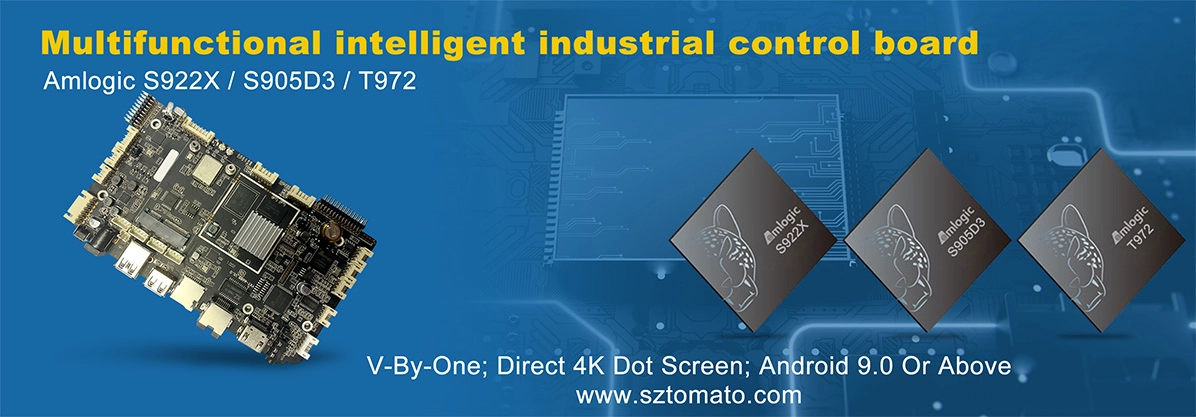
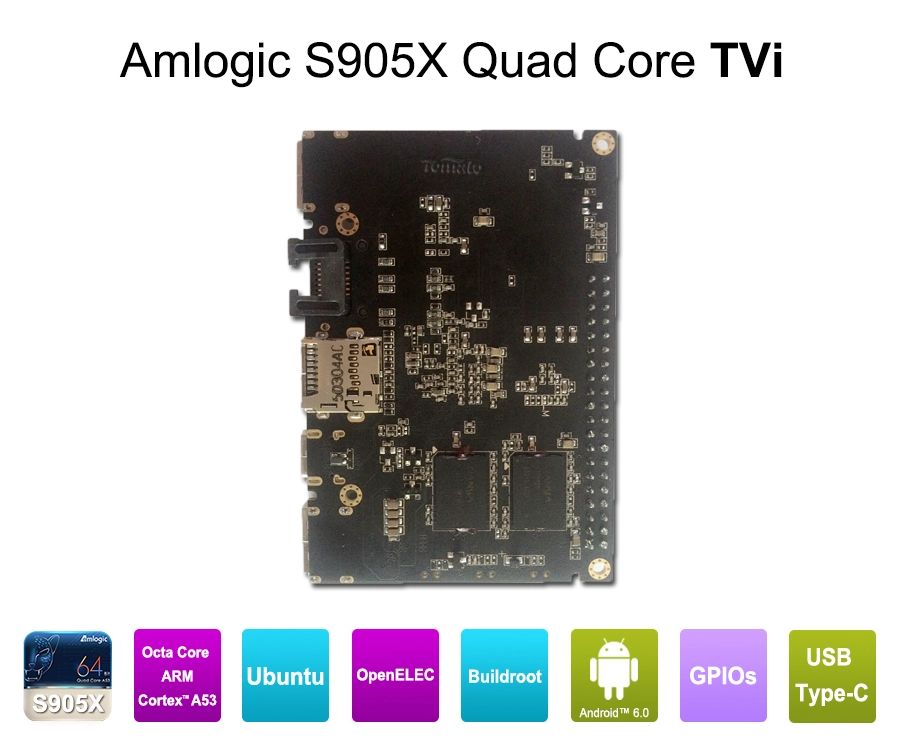
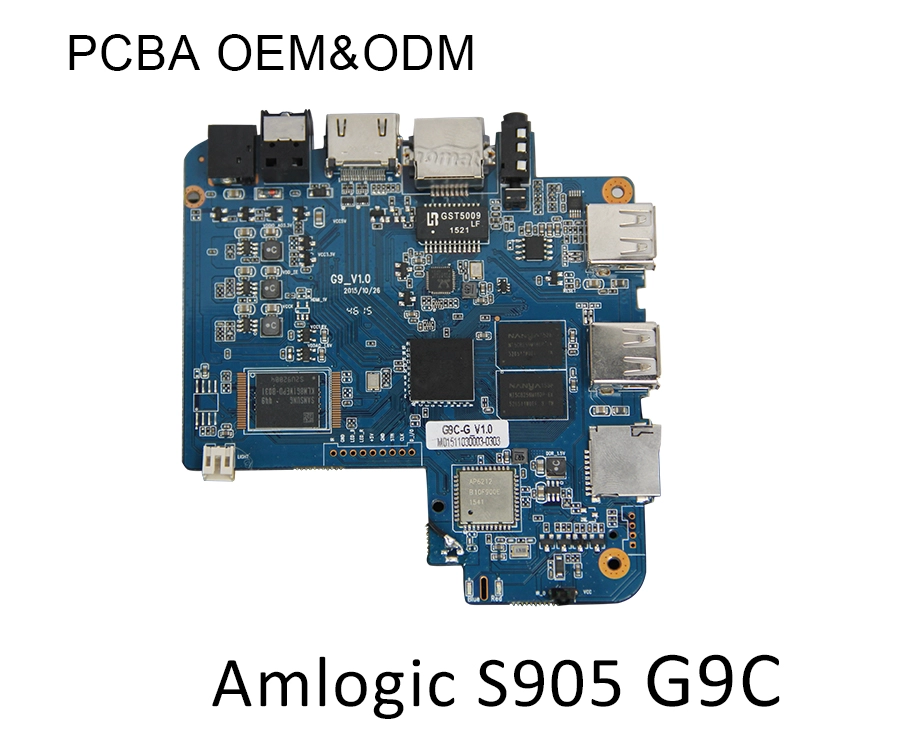
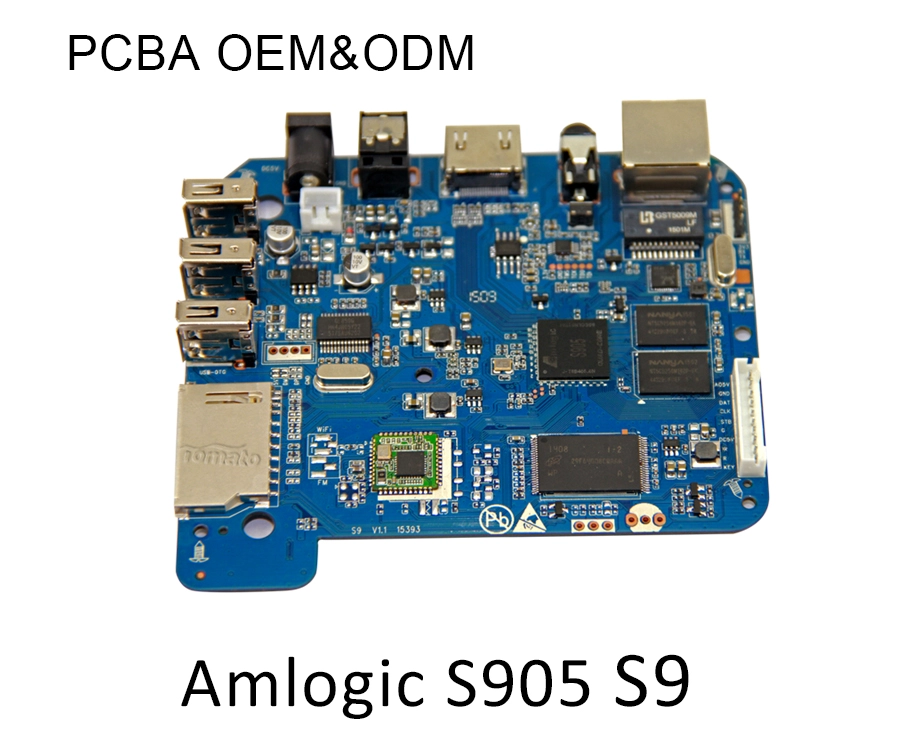
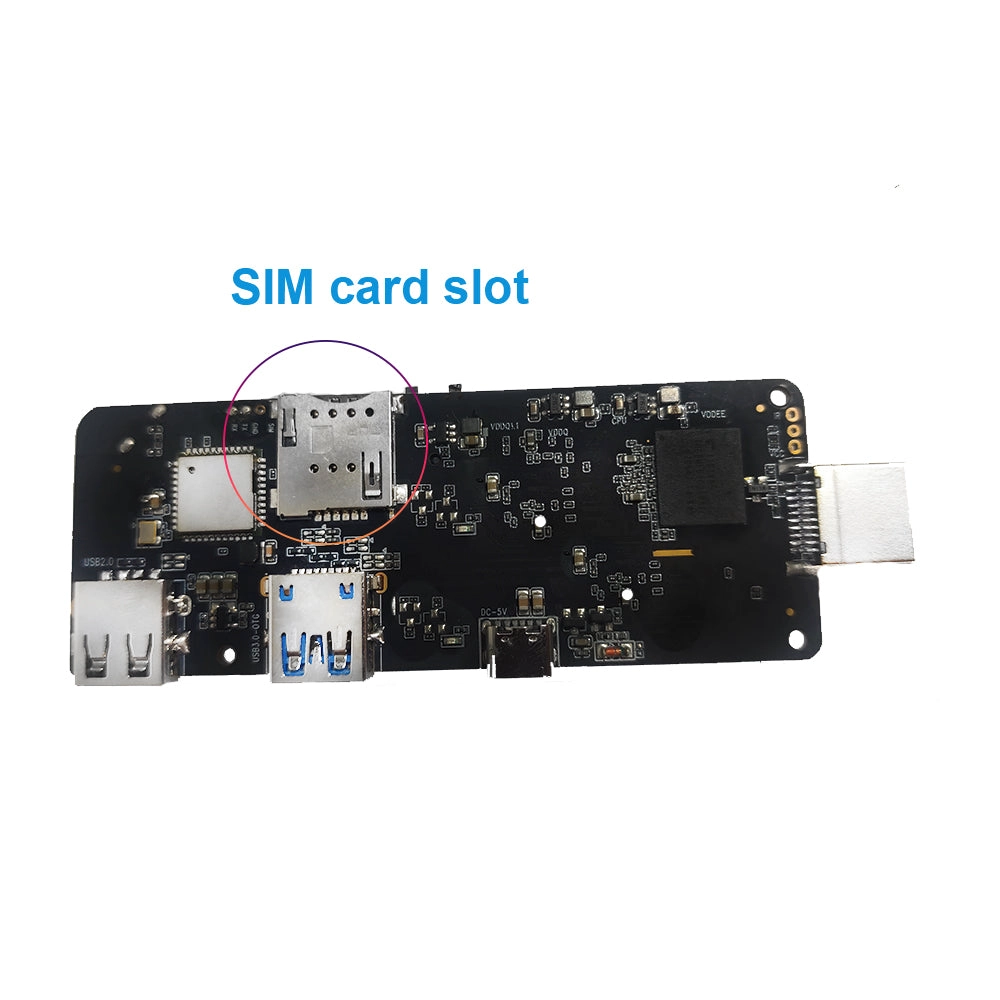
Off-the-shelf consumer retail boxes prioritize minimal bill-of-materials (BOM) costs over long-term structural reliability. True industrial-grade hardware selection requires moving beyond the plastic housing to analyze the Printed Circuit Board Assembly (PCBA) layout.
Essential Hardware Additions for Commercial Uptime
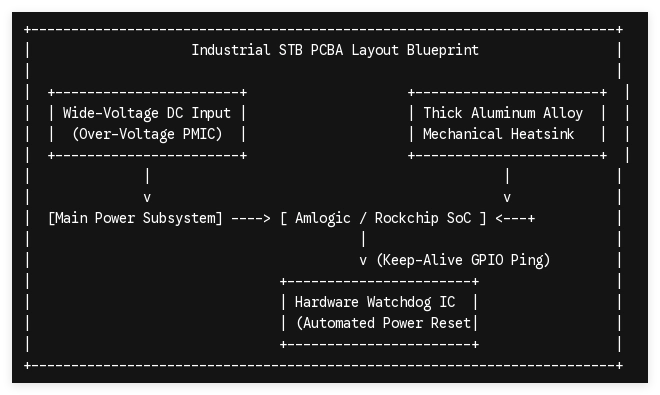
- Hardware Watchdog Timers (WDT): Standard software loops are vulnerable to unexpected lockups. B2B engineers must verify that the Set-Top Box (STB) integrates an independent hardware watchdog circuit directly onto the PCBA. This discrete integrated circuit (IC) expects a regular keep-alive GPIO ping from the kernel; if the operating system freezes, the watchdog cuts power to the SoC, triggering an automated cold hardware reboot within milliseconds.
- Power Delivery Infrastructure: Commercial installations frequently feature volatile voltage lines or require Power over Ethernet (PoE) integration to transmit power and gigabit data via a single Cat6 cable. Ensure your hardware partner can substitute basic consumer power circuits with wide-voltage protection modules or step-down PMICs capable of running 24/7/365 without degradation.
-
Thermal Mitigation: Passive cooling strategies designed for domestic environments fail in tight kiosk cavities. Look for custom thermal architectures where thick-gauge aluminum or copper heatsinks are mechanically secured to the board with spring-loaded screws rather than generic adhesive tape.
3. Firmware Layer Security: Kernel Optimization and Custom Ecosystems
A well-constructed hardware assembly is rendered ineffective if the operating system permits unauthorized end-user interference or suffers from fragmented updating schemes. Choosing a Set-Top Box (STB) requires confirming the manufacturer's ability to manipulate the Android Open Source Project (AOSP) or Linux kernel at the code level.
Disabling Consumer Overhead
Standard operating system profiles include high volumes of unneeded telemetry, consumer-facing setup wizards, and default application packages. A customized commercial image must allow system integrators to disable these features directly in the system properties (build.prop) and framework layers. This structural lockdown ensures that if an application experiences an unhandled exception, the device displays a custom splash screen or launches a dedicated fallback client, completely blocking user access to the underlying OS settings.
Centralized OTA Fleet Management
Enterprise deployments cannot rely on manual USB flashing procedures for maintenance. Field management requires a structured Over-The-Air (OTA) update system framework built directly into the custom firmware. This setup lets engineers distribute signed differential updates, patch system vulnerabilities, or adjust network protocols silently in the background, minimizing truck rolls and operational disruptions.
4. Establishing a Resilient Procurement Channel
For project managers and system integrators, selecting a Set-Top Box (STB) is not about finding a generic product supplier—it is about choosing a manufacturing partner capable of executing complex OEM/ODM hardware and firmware adjustments.
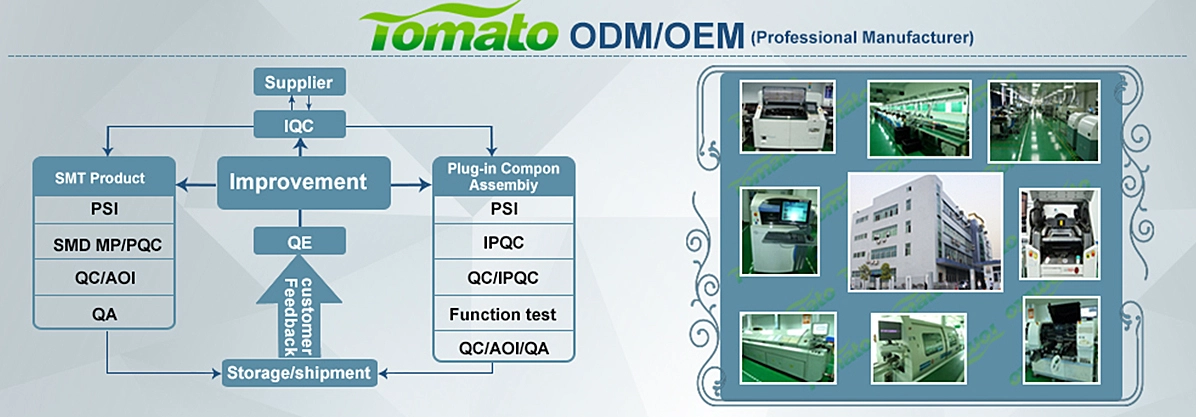
SZTomato provides direct factory engineering support to align equipment with your exact project infrastructure requirements. From initial PCBA layout revisions and custom metal chassis manufacturing to low-level kernel locking and private OTA configuration deployment, we build the reliable backbone that drives your enterprise streaming and signage systems.
Consult with our engineering team regarding your specific PCBA layout or firmware modification needs.
