
How to choose the Best Custom Android TV Box Manufacturer in China?
How to Choose the Best Custom Android TV Box Manufacturer in China?
AV1 decoding, newer Amlogic SoCs, higher AI compute requirements, and Android kernel updates are changing what B2B buyers should expect from an Android TV Box manufacturer. For a consumer buyer, enclosure design and processor specifications may be enough. For a distributor, IPTV operator, system integrator, or commercial project owner, they are not.
A custom Android TV Box is an engineering project. The manufacturer must be able to modify the PCBA, integrate SDKs and APIs, customize the Android or Linux firmware, manage OTA updates, solve thermal constraints, and maintain the product after mass production.
That is why choosing the right Chinese manufacturer requires a technical supplier audit rather than a simple price comparison.
1. Start With the SoC and PCBA, Not the Product Shell
Many Chinese TV box factories can modify the enclosure, logo, packaging, and memory configuration. Far fewer can make meaningful changes at the PCBA and firmware levels.
For a serious OEM/ODM project, the first question should be:
Can the manufacturer modify the hardware platform to match the application?
The answer depends on several technical capabilities.
SoC selection
The processor determines much more than CPU performance. It affects video codecs, display outputs, NPU capability, memory architecture, peripheral interfaces, power consumption, and software support.
For example, an Android TV Box designed for standard 4K streaming has very different requirements from an industrial edge device that needs AI inference, multiple displays, high-speed networking, or customized peripherals.
A supplier should be able to explain why a particular platform is appropriate rather than simply recommending whichever chipset is already available in its warehouse.
Relevant evaluation parameters include:
-
CPU architecture and core configuration
-
GPU architecture
-
NPU performance where AI processing is required
-
AV1, H.264 and H.265 decoding capabilities
-
4K/8K display output
-
HDMI version and HDCP requirements
-
RAM and eMMC architecture
-
Ethernet bandwidth
-
Wi-Fi and Bluetooth chipset options
-
USB, GPIO, UART, MIPI and other interfaces
-
Linux/Android BSP availability
-
Long-term chipset availability
PCBA engineering
For customization projects, PCBA engineering is often more important than the industrial design.
A capable manufacturer should be able to evaluate:
-
PCB layer requirements
-
Power supply design
-
High-speed signal integrity
-
DDR routing
-
HDMI signal integrity
-
RF layout
-
USB and Ethernet implementation
-
GPIO expansion
-
Connector placement
-
EMI/EMC considerations
-
Heat-generating component locations
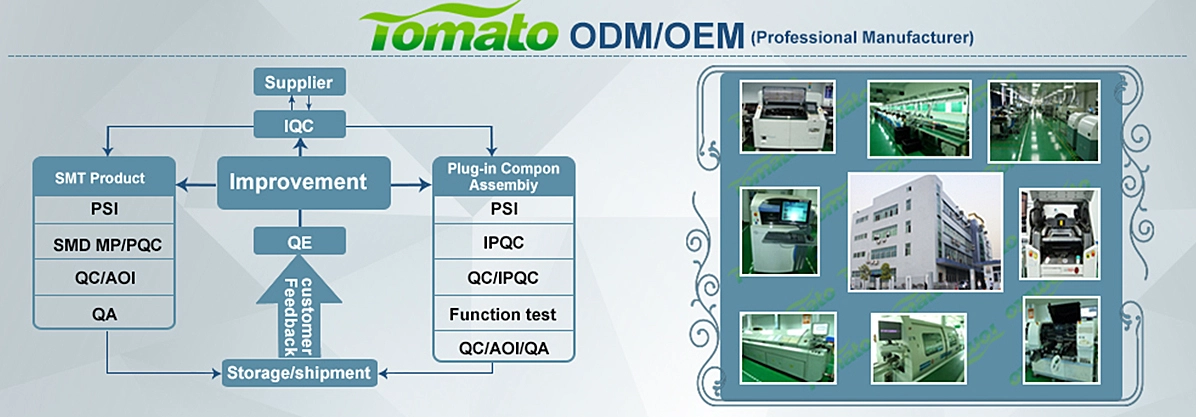
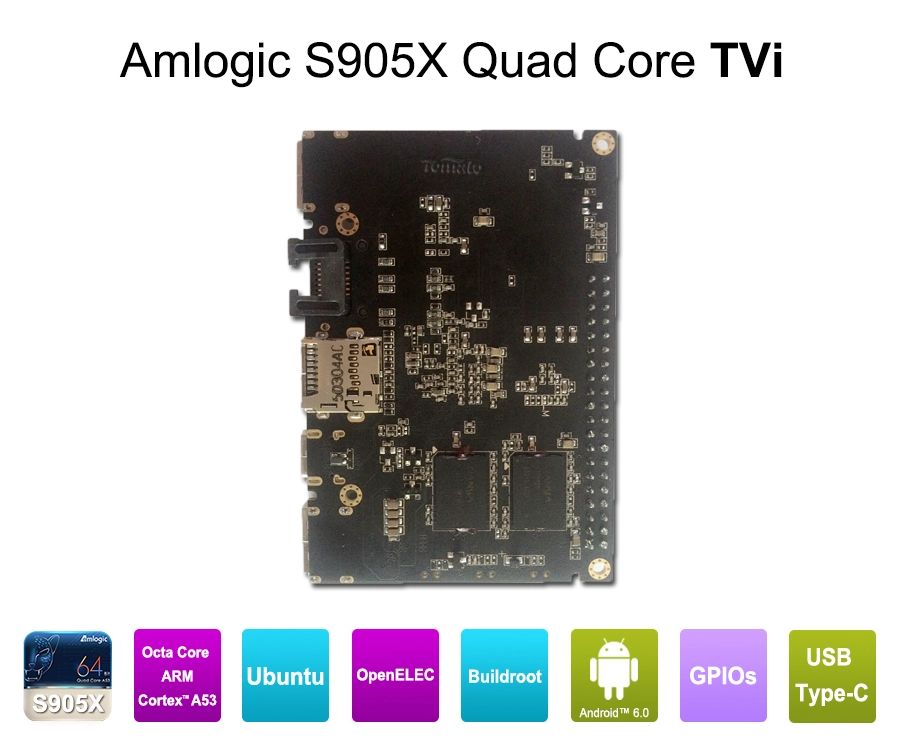
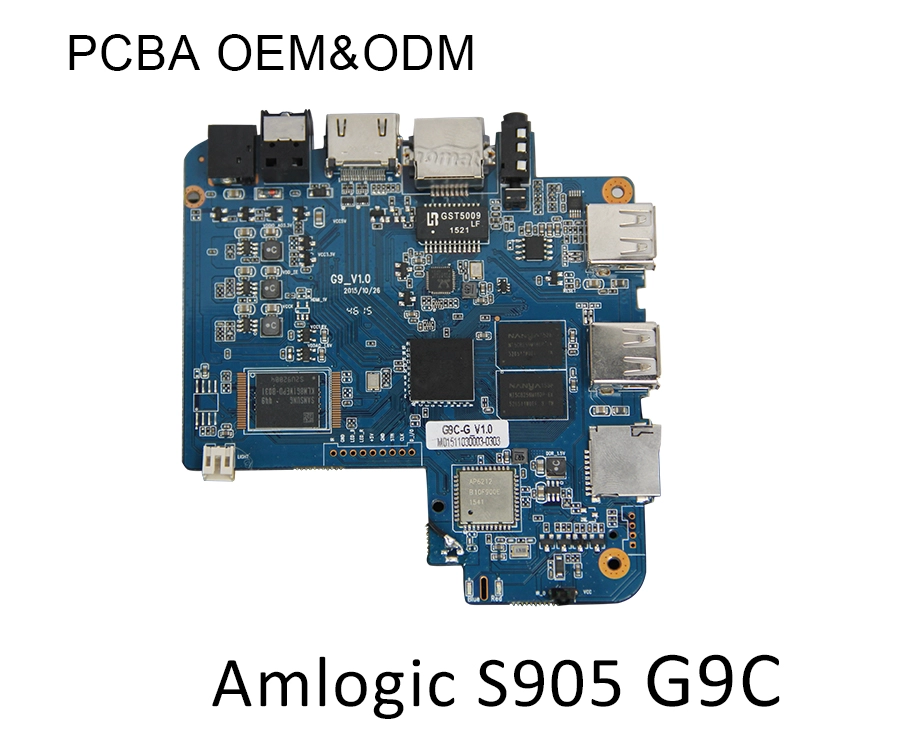
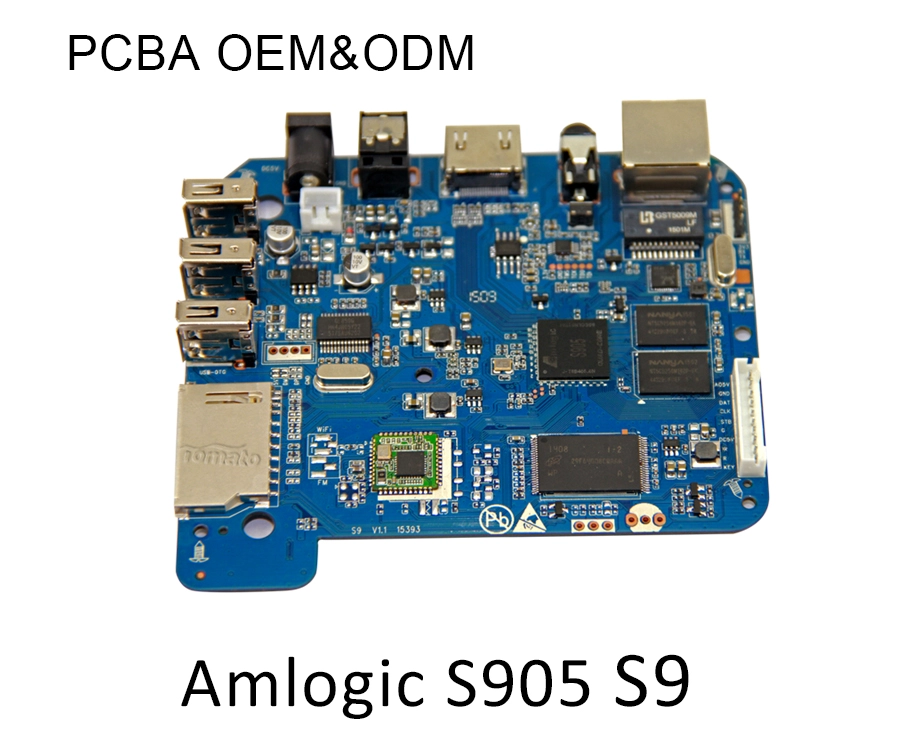
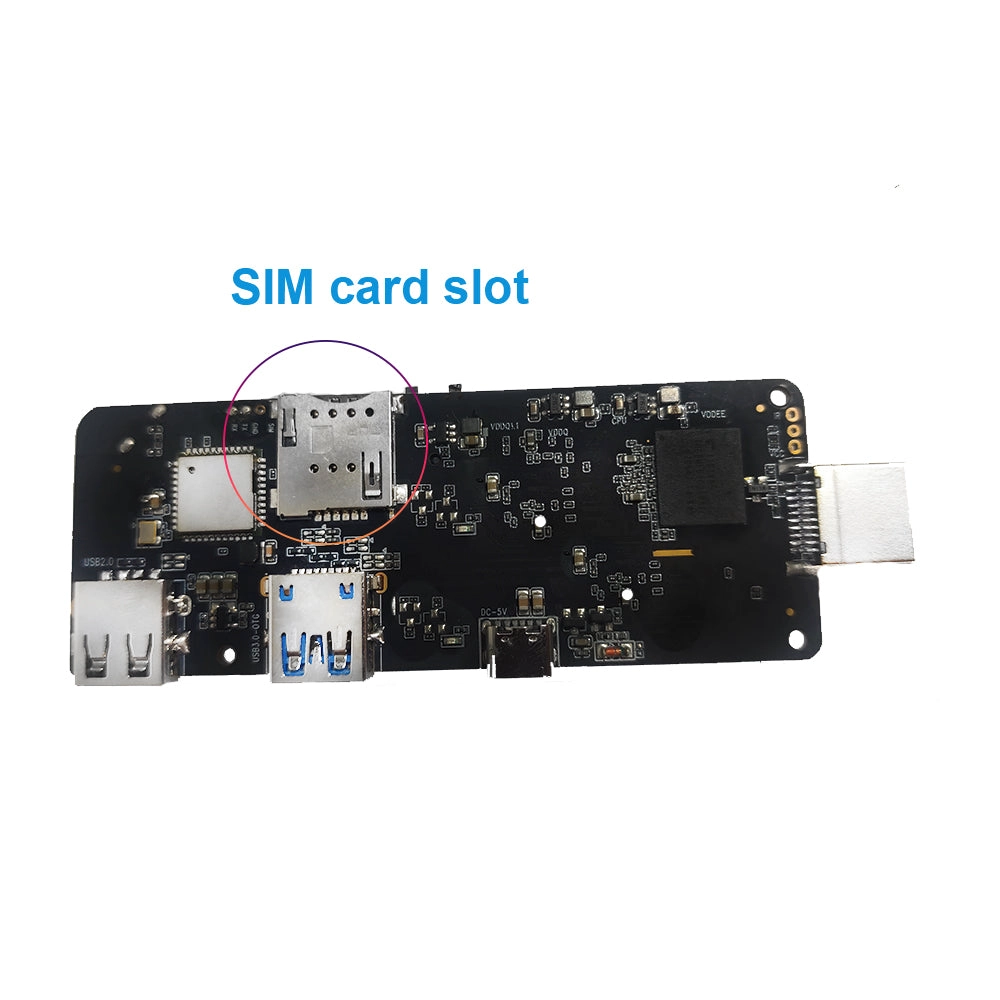
SZTomato supports PCBA hardware modification for projects that require changes beyond the standard reference design. This is particularly relevant when a customer needs additional interfaces, different memory configurations, specialized peripherals, or a board optimized for an industrial enclosure.
The practical test is simple: ask the supplier to provide the engineering change process before discussing the final unit price.
A manufacturer that can explain the schematic, PCB, firmware, prototype, validation, and mass-production workflow is fundamentally different from a factory that only changes the housing.
2. Audit Firmware Engineering Before Signing an OEM Contract
Hardware customization without software engineering is incomplete.
An Android TV Box used in an IPTV deployment, hotel network, digital signage system, telecom project, or enterprise application may require changes to almost every software layer.
A proper OEM/ODM evaluation should therefore include the Android BSP, Linux kernel, system framework, middleware, applications, boot process, OTA mechanism, and device-management architecture.
Android and Linux kernel optimization
The supplier should be able to work with:
-
Android BSP
-
Linux kernel
-
device tree configuration
-
HAL integration
-
driver modification
-
bootloader configuration
-
system services
-
hardware acceleration
-
display configuration
-
network configuration
-
power management
-
watchdog mechanisms
For example, adding a peripheral may require more than installing an Android application. The hardware driver, kernel configuration, HAL layer, permissions, and system service may all require modification.
This distinction matters because many suppliers describe themselves as “OEM factories” when their actual capability is limited to logo printing and launcher replacement.
SDK and API integration
A commercial Android TV Box frequently needs to communicate with external systems.
Typical requirements include:
-
IPTV middleware
-
OTT platforms
-
CMS systems
-
digital signage platforms
-
device-management systems
-
enterprise authentication
-
cloud APIs
-
payment or subscription systems
-
remote-control APIs
-
proprietary applications
SZTomato supports SDK/API integration and custom UI/UX firmware development, allowing the Android TV Box to function as part of a larger software ecosystem rather than as an isolated consumer device.
For B2B buyers, this is a major supplier-selection criterion.
Ask the manufacturer:
-
Who owns the source code?
-
Can the boot animation and launcher be customized?
-
Can system applications be pre-installed?
-
Can unwanted Android applications be removed?
-
Can system permissions be modified?
-
Can APIs be integrated into the firmware?
-
Can OTA updates be controlled by the customer?
-
Can the firmware support multiple hardware revisions?
-
How are security patches handled?
-
What happens when the original SoC SDK reaches end-of-life?
These questions reveal the real engineering capability of the supplier much faster than a factory tour.
3. Treat OTA, HDCP and Certification as Project Requirements
A customized Android TV Box is not finished when the first 500 units pass production testing.
The software lifecycle must be considered before mass production.
OTA architecture
For large deployments, manual firmware upgrades are operationally expensive.
A suitable OTA system should support controlled firmware distribution, version management, update verification, rollback strategies, and device grouping where required.
For example, a project may need different firmware branches for:
-
different countries
-
different operators
-
different hardware revisions
-
different customer applications
-
different Android versions
The manufacturer should therefore explain the complete OTA workflow before signing the project.
HDCP and content protection
For commercial video applications, HDMI output and content protection can become critical technical issues.
HDCP implementation, DRM requirements, display compatibility, and streaming-service certification should be evaluated according to the target application.
This is particularly important when the project involves premium video content. A box can have excellent CPU performance and still fail the actual deployment because the required DRM, HDCP, certification, or application environment is unavailable.
The supplier should clearly distinguish between:
AOSP Android TV Box capability
and
Google-certified Android TV / Google TV capability.
These are not interchangeable terms.
A manufacturer should never be allowed to resolve certification requirements with vague statements such as “Google compatible” or “supports all apps.”
Ask for the exact certification status and the intended deployment market.
4. Evaluate Thermal Engineering for Long-Term Commercial Operation
Thermal design is often ignored during product selection because a sample may operate normally on a test bench.
Commercial installations create different conditions.
An Android TV Box installed behind a display, inside a cabinet, in a hotel room, in a digital signage enclosure, or in an industrial environment can experience restricted airflow and sustained processor utilization.
Thermal engineering may therefore require:
-
enlarged heatsinks
-
thermal pads
-
optimized component placement
-
improved airflow
-
custom enclosure ventilation
-
fan-assisted cooling
-
specialized cooling solutions
-
CPU frequency and power-management tuning
This becomes even more important for high-performance platforms used for AI inference, 8K video processing, computer vision, or edge computing.
SZTomato can develop specialized cooling solutions for industrial applications where sustained performance is more important than the short benchmark performance of a consumer sample.
A supplier should be able to provide more than a statement such as “the box does not overheat.”
Ask for measurable validation.
Relevant parameters include:
-
CPU temperature
-
SoC temperature
-
thermal throttling behavior
-
sustained CPU load
-
sustained GPU load
-
NPU workload where applicable
-
ambient temperature
-
enclosure temperature
-
power consumption
-
long-duration stability
A 30-minute sample test is not equivalent to a commercial reliability test.
5. Use a Technical Supplier Audit Instead of Comparing Factory Prices
The lowest quotation rarely represents the lowest project cost.
A better purchasing model evaluates the complete engineering chain.
| Evaluation Area | Questions to Ask |
|---|---|
| SoC | Does the supplier recommend the platform based on application requirements? |
| PCBA | Can the PCB be modified rather than simply relabeled? |
| Firmware | Can Android/Linux system software be customized? |
| SDK/API | Can proprietary applications and external platforms be integrated? |
| UI/UX | Can the launcher and system interface be redesigned? |
| OTA | Can the customer control firmware deployment and versioning? |
| DRM/HDCP | Can the required content-protection environment be supported? |
| Thermal | Can the enclosure and cooling system be engineered for sustained load? |
| Certification | Can the supplier provide market-specific certification support? |
| Testing | Are thermal, EMC, reliability and long-duration tests available? |
| Production | Can engineering changes be transferred reliably into mass production? |
| After-sales | Is there a defined firmware maintenance process? |
This approach exposes a common B2B procurement problem: a factory may be competitive on unit price but expensive after engineering changes, firmware debugging, certification delays, field failures, and repeated tooling modifications are included.
For a project involving thousands or tens of thousands of devices, engineering capability can have a larger financial impact than the initial difference in unit price.
6. Why Custom Android TV Box Projects Need an Engineering Partner
The right manufacturer should function as an extension of the customer's engineering and product team.
A distributor may need a branded Android TV Box with a custom launcher.
An IPTV operator may need middleware integration, remote device management, and controlled OTA updates.
A hotel project may require a customized UI, network configuration, and centralized content management.
A system integrator may need additional interfaces, modified PCBA architecture, and proprietary applications.
An industrial customer may require Linux support, specialized cooling, GPIO interfaces, AI processing, or long-term hardware availability.
These are different projects, even when the products look almost identical from the outside.
This is where an experienced OEM/ODM manufacturer becomes valuable.
SZTomato combines Android TV Box manufacturing with PCBA modification, SDK/API integration, custom UI/UX firmware development, and specialized cooling solutions. The objective is not simply to put a customer's logo on an existing box, but to adapt the hardware and software platform to the project's actual requirements.
Conclusion: Select the Manufacturer That Can Own the Engineering Problem
Choosing the best custom Android TV Box manufacturer in China should start with one question:
Can this supplier solve the engineering problem behind my product, or can it only customize the appearance?
For B2B procurement managers and system integrators, the evaluation should cover the entire product lifecycle—from SoC selection and PCBA design to Android/Linux kernel optimization, SDK/API integration, OTA architecture, HDCP and certification requirements, thermal engineering, testing, and long-term firmware support.
A serious OEM/ODM project should begin with a technical specification, not a price sheet.
If your project requires a customized Android TV Box, provide the target SoC or performance level, memory configuration, interfaces, operating system, application environment, certification requirements, enclosure constraints, and expected deployment volume. SZTomato can then evaluate the hardware, firmware, PCBA, thermal, and production requirements as an integrated OEM/ODM project.
