
What is the difference between Amlogic S928X and Rockchip RK3588 Android TV Boxes?
Amlogic S928X vs RK3588: The Difference Starts With the SoC Architecture
The most important distinction is not that one platform has five CPU cores and the other has eight. It is that Amlogic S928X was developed with high-end smart STB and multimedia workloads in mind, while RK3588 is positioned as a broader high-performance AIoT processor.
Amlogic describes S928X as an 8K UHD smart STB SoC integrating Cortex-A76, Cortex-A55 and a neural-network processor. Its hardware video engine supports 8Kp60 decoding for AV1, H.265, VP9, AVS3 and AVS2.
RK3588 takes a more expansive approach. Its architecture combines four Cortex-A76 cores with four Cortex-A55 cores, Mali-G610 MP4 graphics and a 6 TOPS NPU. Its interface set includes PCIe 3.0, SATA 3.0, multiple USB interfaces, dual Gigabit Ethernet, HDMI 2.1, MIPI-CSI and MIPI-DSI.
That difference becomes important when an Android TV Box moves beyond ordinary streaming.
Core Hardware Comparison
| Specification | Amlogic S928X | Rockchip RK3588 |
|---|---|---|
| CPU | 1× Cortex-A76 + 4× Cortex-A55 | 4× Cortex-A76 + 4× Cortex-A55 |
| CPU architecture | ARM 64-bit | ARM 64-bit |
| GPU | Mali-G57 MC2 | Mali-G610 MP4 |
| NPU | Up to 3.2 TOPS | 6 TOPS |
| AV1 decoding | Up to 8Kp60 | Up to 4Kp60 |
| H.265 decoding | Up to 8Kp60 | Up to 8Kp60 |
| H.264 encoding | Up to 4Kp60 | Up to 8Kp30 |
| H.265 encoding | Up to 4Kp60 | Up to 8Kp30 |
| HDMI | HDMI 2.1a, up to 8Kp60 | HDMI 2.1/eDP, up to 8K-class output |
| PCIe | PCIe 2.0-class connectivity | PCIe 3.0 + PCIe 2.0 |
| SATA | More limited platform architecture | SATA 3.0 support |
| Camera interfaces | Available through SoC multimedia interfaces | Extensive MIPI-CSI capability |
| Typical positioning | High-end STB / multimedia | AIoT / multimedia / industrial computing |
The exact capabilities of a finished Android TV Box still depend on the board design, memory configuration, firmware, drivers and enabled interfaces. A SoC specification should not be treated as a guarantee that every retail or OEM box exposes every function.
1. CPU and GPU: RK3588 Has More Computing Headroom
The CPU difference is substantial.
S928X uses 1× Cortex-A76 + 4× Cortex-A55, whereas RK3588 uses 4× Cortex-A76 + 4× Cortex-A55.
This matters when an Android TV Box is expected to execute several workloads simultaneously:
- 4K/8K video playback
- local AI inference
- database or application processing
- multi-screen rendering
- camera analysis
- digital signage
- browser-based applications
- containerized Linux services
- industrial control applications
The RK3588's four performance cores provide considerably more CPU resources for parallel workloads.
The GPU difference is also significant. S928X integrates Mali-G57 MC2, while RK3588 uses Mali-G610 MP4.
For a conventional Android TV Box focused on video playback, this additional GPU capacity may not translate into a proportional user-visible benefit. Android UI rendering and hardware video decoding are already highly accelerated.
For applications involving 3D graphics, multiple displays, computer vision, AI visualization or industrial dashboards, however, the RK3588 architecture provides substantially more room for software developers.
The practical question for an OEM buyer is therefore:
Is the box primarily a media endpoint, or is it becoming a computing platform?
That distinction is more useful than simply asking which SoC is "faster."
2. 8K Video: S928X Has a Strong Multimedia Advantage
For a pure 8K multimedia application, S928X is particularly interesting.
Amlogic specifies 8Kp60 decoding for AV1, H.265, VP9, AVS3 and AVS2. It also supports HDMI 2.1a output with features including HDCP 2.2/2.3, eARC, VRR, QMS, QFT, ALLM and other HDMI functions depending on implementation.
This is a strong fit for:
- 8K streaming terminals
- premium OTT devices
- operator STBs
- high-end IPTV equipment
- commercial media players
- 8K digital signage
- home-theater platforms
RK3588 also has a powerful multimedia subsystem. Rockchip documents 8K 10-bit video decoding, 8K video encoding and support for H.265, H.264, VP9 and AV1. However, its published brief specification lists AV1 decoding at up to 4Kp60, while H.265 and VP9 can reach 8Kp60.
That creates an important distinction for buyers specifying AV1 8K.
If the project requirement is specifically:
AV1 → 8K → 60 fps → hardware decoding
S928X has a clearer specification advantage.
If the requirement is:
8K display + AI inference + multiple peripherals + cameras + industrial interfaces
RK3588 becomes much more attractive.
3. AI: 3.2 TOPS vs 6 TOPS Is Only the Beginning
S928X provides an NPU rated at up to 3.2 TOPS, while RK3588 provides a 6 TOPS NPU.
On paper, RK3588 therefore provides substantially more AI compute capacity.
But B2B buyers should avoid using TOPS as the only AI selection criterion.
Real application performance depends on:
- INT8/INT16/FP16 support
- supported neural-network operators
- SDK maturity
- TensorFlow/PyTorch/ONNX conversion
- NPU runtime
- memory bandwidth
- CPU/NPU data transfer
- camera pipeline
- ISP capability
- thermal throttling
- application optimization
RK3588's NPU supports INT4, INT8, INT16 and FP16/BF16/TF32-related acceleration capabilities in Rockchip's documentation, together with multiple AI frameworks.
This makes RK3588 better suited to projects such as:
- face detection
- object detection
- people counting
- video analytics
- edge AI
- AIoT gateways
- smart retail
- industrial vision
- intelligent digital signage
S928X can still support AI-assisted multimedia functions. Amlogic specifically positions the SoC for functions such as intelligent super-resolution and customized high-end applications.
The distinction is therefore multimedia-first AI versus compute-intensive edge AI.
4. Interfaces: This Is Where RK3588 Pulls Far Ahead
For an ordinary Android TV Box, HDMI, USB, Ethernet, Wi-Fi and Bluetooth may be enough.
For an engineered B2B product, the interface map can determine whether the project is practical.
RK3588 provides a much richer hardware platform. Rockchip's documentation lists:
- PCIe 3.0
- PCIe 2.0
- SATA 3.0
- USB 3.1
- USB 2.0
- dual Gigabit Ethernet
- HDMI 2.1
- HDMI 2.0 input
- DisplayPort
- MIPI-CSI
- MIPI-DSI
- eMMC
- SD/MMC
- multiple UART/SPI/I²C interfaces
It also includes a 48MP-class ISP architecture and multiple camera input paths.
This matters for an Android TV Box that must connect to external hardware.
For example, a system integrator may need:
Camera → RK3588 ISP → NPU inference → Android application → HDMI display
That is a very different product from:
OTT stream → hardware decoder → HDMI → television
S928X is better aligned with the second architecture.
RK3588 has greater flexibility for the first.
5. Android TV Box OEM Projects: The SoC Is Only Half the Engineering
A common purchasing mistake is to compare two SoCs and then select the lowest BOM cost.
For an OEM Android TV Box, the actual engineering stack is closer to:
SoC + PCBA + PMIC + DDR + storage + thermal design + bootloader + kernel + BSP + Android framework + application layer + OTA + certification + production validation
This is where customization capability becomes more important than the chip name.
For example, changing the enclosure is relatively easy.
Changing:
- DDR configuration
- PCIe routing
- USB topology
- Ethernet architecture
- HDMI design
- MIPI interfaces
- power sequencing
- heat dissipation
- antenna layout
- boot configuration
- kernel drivers
- OTA mechanism
requires substantially deeper engineering involvement.
PCBA Design and Thermal Management
RK3588's higher computing capability also creates a thermal-design challenge.
An RK3588 Android TV Box running sustained AI inference, 8K processing and high-speed I/O cannot be treated like a low-power streaming dongle.
The PCBA needs consideration for:
- SoC thermal pad design
- copper area
- heat-spreader contact
- heatsink selection
- airflow
- enclosure ventilation
- DDR placement
- PMIC thermal behavior
- sustained-load throttling
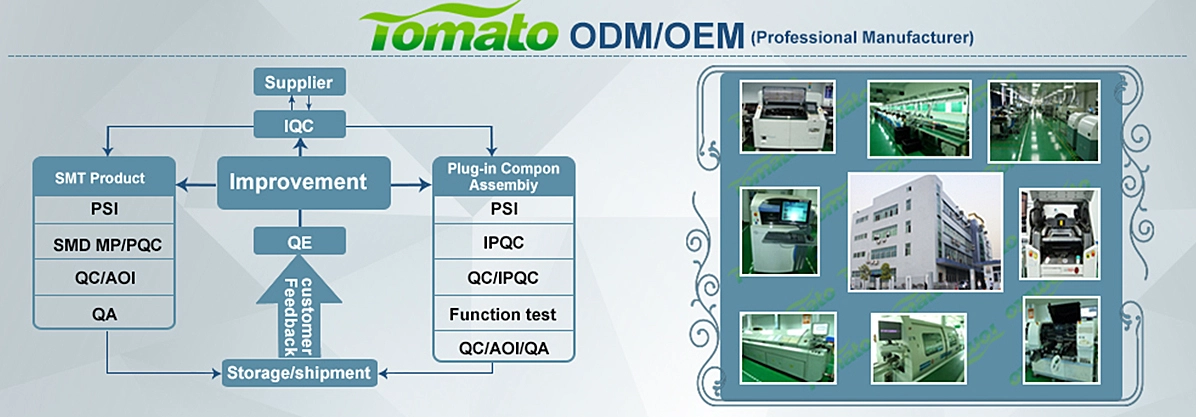
For industrial deployments, SZTomato can customize the PCBA layout and specialized cooling structure rather than simply changing the external enclosure.
This distinction matters when the box will operate continuously in:
- hotels
- control rooms
- commercial displays
- education systems
- telecom environments
- digital signage networks
- industrial installations
6. Firmware and Software: Android TV Box Projects Often Fail Here
A high-performance SoC does not automatically produce a high-quality commercial Android TV Box.
The firmware layer determines how much of the silicon can actually be used.
A serious OEM project may require:
Android / Linux Kernel Optimization
The kernel and BSP must correctly support:
- HDMI
- USB
- Ethernet
- Wi-Fi
- Bluetooth
- storage
- display
- audio
- camera
- GPIO
- serial interfaces
- power management
For Linux-oriented RK3588 projects, Rockchip's official brief documentation references Linux 5.10 and Android 12 as supported software baselines in that specification.
The actual production software stack should be evaluated separately because Android versions, BSP releases and vendor SDKs change over a product's lifecycle.
OTA Update Architecture
A commercial Android TV Box also needs a controlled OTA system.
For B2B deployments, the OTA design should address:
- signed firmware packages
- incremental updates
- rollback
- version control
- device identification
- staged deployment
- failure recovery
- remote diagnostics
This becomes critical when a customer has thousands of deployed devices.
Custom UI/UX
A generic launcher is rarely sufficient for a branded commercial device.
An OEM may require:
- branded boot animation
- custom launcher
- controlled application environment
- kiosk mode
- remote management
- custom settings
- restricted user access
- API integration
- customized navigation
- operator-specific UI
SZTomato's OEM/ODM model can extend beyond enclosure and logo customization into custom UI/UX firmware, SDK/API integration and system-level development.
7. Which Android TV Box Should a B2B Buyer Choose?
The answer depends on the project architecture.
Choose Amlogic S928X when the project emphasizes:
- 8K multimedia playback
- AV1 8K decoding
- premium OTT
- IPTV
- operator STB
- HDMI-centric applications
- high-end home entertainment
- efficient multimedia processing
- customized TV-oriented products
S928X's 8K AV1 hardware decoding and STB-oriented design make it a strong platform for these applications.
Consider RK3588 when the project requires:
- high CPU performance
- 6 TOPS-class AI acceleration
- computer vision
- multiple cameras
- multiple displays
- PCIe expansion
- SATA storage
- industrial interfaces
- edge computing
- AIoT
- Linux applications
- digital signage with local analytics
RK3588's combination of eight CPU cores, Mali-G610 graphics, NPU acceleration and extensive high-speed I/O gives it a much broader embedded-computing role.
8. The Better Procurement Method: Define the Workload Before the Chip
For system integrators and procurement managers, the most reliable selection process is to create a technical requirement matrix before requesting quotations.
At minimum, define:
| Requirement | Questions to Confirm |
|---|---|
| Video | 4K or 8K? AV1? H.265? Decode or encode? |
| Display | One screen or multiple displays? HDMI/eDP/MIPI? |
| AI | What model? INT8/FP16? NPU required? |
| Camera | Number of cameras? MIPI-CSI? ISP requirements? |
| Storage | eMMC, NVMe, SATA or SD? |
| Network | Gigabit Ethernet? Dual Ethernet? Wi-Fi 6/6E? |
| OS | Android, Android TV, Linux or dual OS? |
| Firmware | Standard image or custom BSP? |
| OTA | Local, cloud or private-server OTA? |
| Security | Secure boot, encryption, HDCP requirements? |
| Thermal | Passive or active cooling? Continuous operation? |
| Lifecycle | Expected production period and firmware support? |
This approach prevents a common B2B failure: selecting a powerful SoC that has the wrong I/O architecture or software ecosystem for the actual product.
S928X vs RK3588: The Engineering Decision
The two platforms should not be treated as direct substitutes.
Amlogic S928X is strongly optimized around high-end 8K smart STB and multimedia applications. RK3588 is a broader computing platform with significantly more CPU, GPU, NPU and I/O resources.
For an Android TV Box whose primary task is 8K AV1 multimedia, S928X's hardware video architecture is particularly relevant.
For an Android TV Box that must also function as an AI edge computer, multi-display controller, camera-processing platform or industrial multimedia terminal, RK3588 provides a broader hardware foundation.
For OEM/ODM projects, the final decision should also include PCBA modification, thermal engineering, BSP availability, Android/Linux kernel optimization, SDK/API integration, OTA architecture and long-term firmware maintenance.
SZTomato supports this deeper customization model, including PCBA hardware modification, custom UI/UX firmware, SDK/API integration and specialized cooling solutions for industrial applications. The objective is not simply to put a customer logo on an existing Android TV Box, but to align the hardware and firmware architecture with the project's actual requirements.
For procurement managers and system integrators, the right starting point is therefore not “Which chip is more powerful?” but “Which SoC architecture gives this project the required video pipeline, AI capability, interfaces, thermal margin and software control?”
That question usually produces a more reliable Android TV Box specification—and a more predictable OEM project.
